
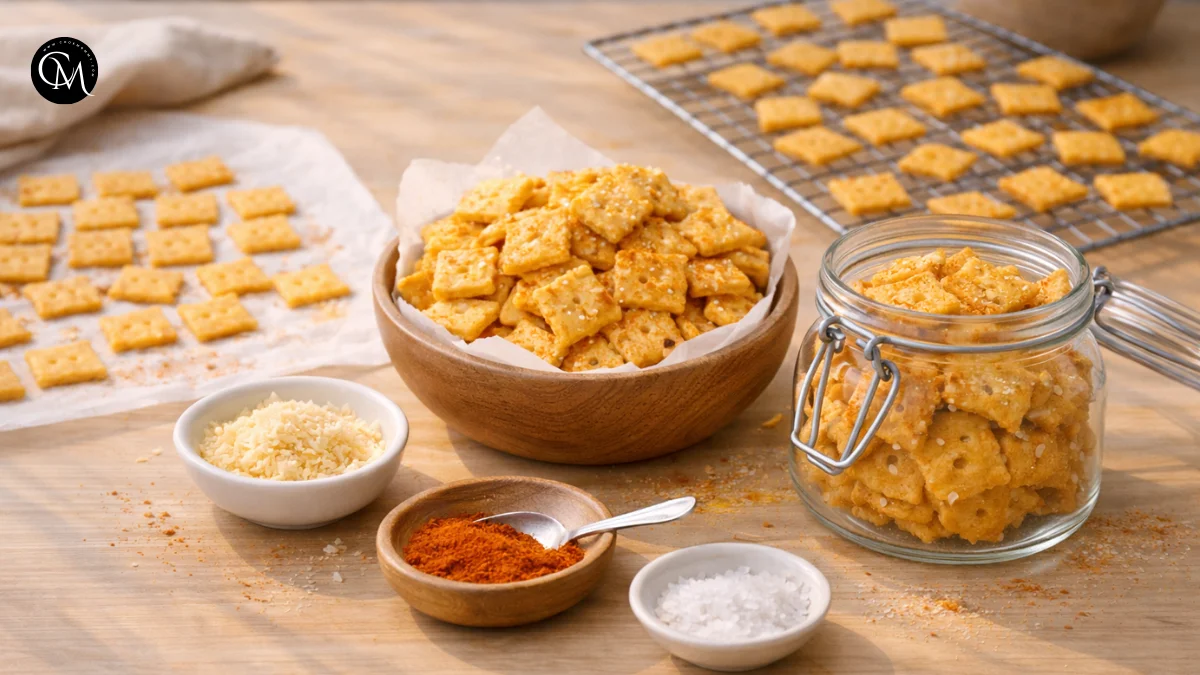
Homemade Cheese Crackers: 5 Easy Ways to Boost Flavor
Did you know that most packaged cheese crackers rely on extra salt, artificial flavoring, or powdered cheese to taste bold, while truly satisfying flavor can come from just a few well-chosen ingredients and one smart baking method? That is exactly why these homemade cheese crackers are worth making. They are crisp, deeply savory, and far more customizable than anything from a box.
I started making homemade cheese crackers when I wanted a snack that felt a little more wholesome but still gave that same cheesy, crunchy satisfaction. What surprised me most was how easy it was to control the texture and flavor. A sharper cheddar, a pinch of smoked paprika, or even a touch of garlic powder can completely change the final result. These homemade crackers are simple enough for a weekday kitchen session, but they taste special enough to serve on a snack board when guests come over. If you want a reliable, flavorful recipe that works for both kids and adults, this one earns a regular place in the kitchen.
Table of Contents
Ingredients List
The beauty of this recipe is that the ingredient list is short, but each item matters. When you make homemade cheese crackers, every ingredient contributes to either flavor, crispness, or tenderness.
You will need:
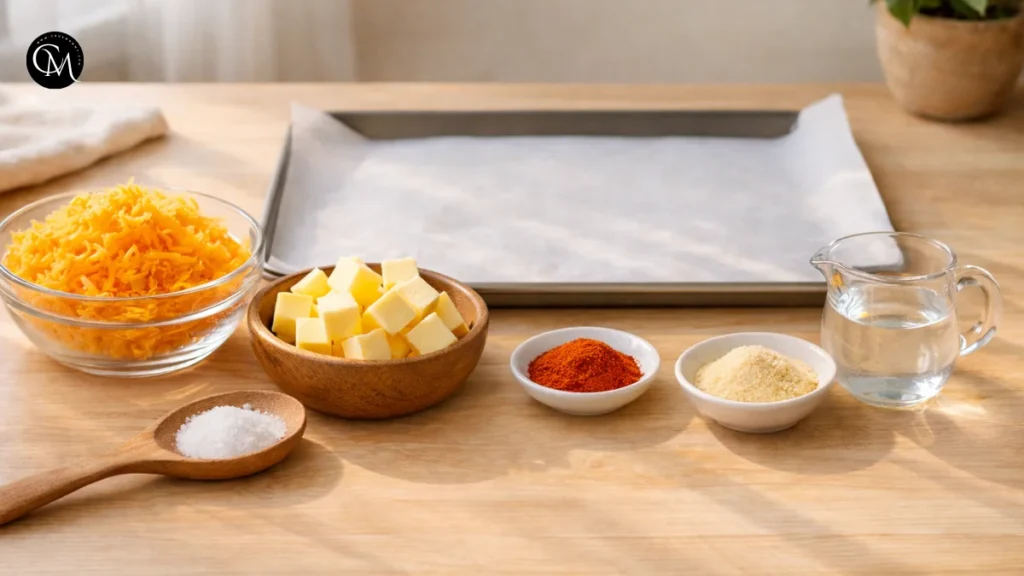
- 2 cups sharp cheddar cheese, freshly grated
- 1 cup all-purpose flour
- 4 tablespoons unsalted butter, chilled and diced into small pieces
- 1/2 teaspoon fine salt
- 1/2 teaspoon paprika
- 1/4 teaspoon garlic powder
- 2 to 3 tablespoons cold water

Optional flavor boosters:
- 2 tablespoons grated Parmesan for a nuttier finish
- 1/4 teaspoon black pepper for gentle heat
- 1/4 teaspoon mustard powder for a sharper cheese note
- 1 teaspoon dried rosemary or thyme, very finely crushed
- A small pinch of cayenne if you like a mild kick
Substitution ideas:
- Whole wheat flour can replace part of the all-purpose flour for a heartier taste.
- Gluten-free all-purpose flour blend can work, though the texture may be slightly more delicate.
- Vegan butter and dairy-free shredded cheese can be used for a dairy-free version.
- Gouda, aged Edam, Gruyère, or a mix of cheddar and Parmesan all work well if you want to vary the flavor.
Freshly grated cheese is one of the biggest upgrades you can make. Pre-shredded cheese often contains anti-caking agents, which can slightly affect how smoothly the dough comes together.
Timing
These homemade cheese crackers come together faster than many people expect.
- Preparation time: 20 minutes
- Chilling time: 20 minutes
- Baking time: 12 to 15 minutes
- Total time: about 55 minutes
Compared with many baked snack recipes, this is relatively quick. You are not dealing with yeast, long rises, or complicated shaping. The short chill helps the dough firm up, which makes rolling and cutting much easier.
Step-by-Step Instructions
Step 1 – Prepare ingredients
Start by measuring everything before you begin. Grate the cheese, cube the butter, and line a baking sheet with parchment paper. Preheat your oven to 180°C or 350°F.
This step may seem basic, but it makes a real difference. Crackers bake quickly, and once the dough is ready, you want to move fast before the butter softens too much. Cold butter helps create a crisp, flaky texture, while evenly grated cheese blends more smoothly into the dough. When making homemade cheese crackers, good preparation keeps the dough from becoming sticky or overworked.
Step 2 – Build flavor base
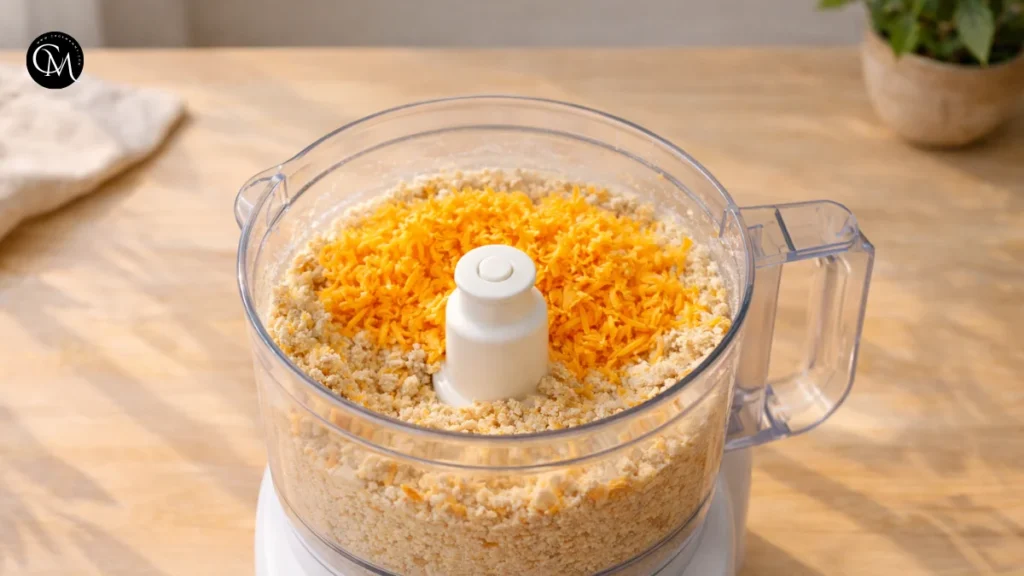
In a food processor, combine the flour, salt, paprika, and garlic powder. Pulse in the chilled butter until the mixture resembles rough, crumbly sand. Then add the grated cheddar and pulse again until the cheese is evenly distributed.
This is where the flavor starts to develop. Mixing the dry seasonings into the flour first helps spread them evenly throughout the crackers, so every bite tastes seasoned rather than patchy. The butter coats some of the flour, which limits gluten development and helps prevent tough crackers. One key to great homemade cheese crackers is finding the right balance, so they keep their shape without turning too firm or tough.
If you are using mustard powder, black pepper, or Parmesan, add them here. These small additions deepen the cheesy flavor without making the crackers taste crowded.
Step 3 – Cook the main ingredient
Although there is no stovetop cooking in this recipe, this is the stage where the main ingredient, the cheese-rich dough, is developed and baked correctly. Add 2 tablespoons of cold water to the processor and pulse until the dough begins to clump. Press a bit between your fingers. If it holds together, it is ready. If it feels too dry, add the last tablespoon little by little.
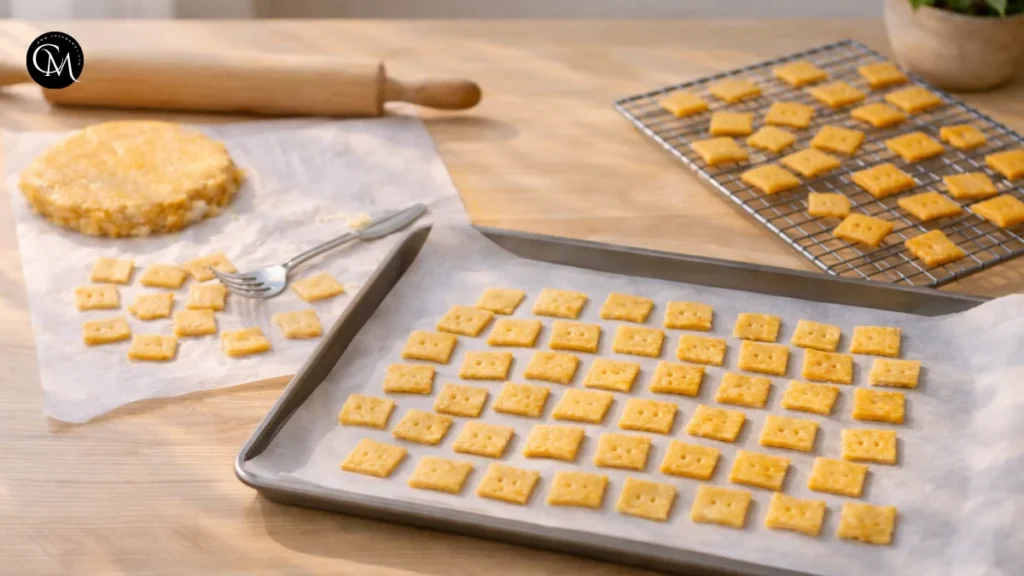
Turn the dough onto a clean surface and gently press it into a disk. Do not knead it heavily. Wrap and chill for about 20 minutes.
Once chilled, roll the dough between two sheets of parchment to about 1/8 inch thick. Thinner dough gives a crispier cracker; slightly thicker dough gives a more tender, sturdy bite. Cut into small squares, rectangles, or fun shapes. Prick each cracker lightly with a fork.
This stage matters because thickness controls texture. Uneven dough leads to mixed results, with some crackers overbaked while others stay soft in the center. For the best homemade cheese crackers, aim for even rolling and leave a little space between pieces on the tray.
Bake for 12 to 15 minutes, or until the edges are lightly golden and the centers look dry. Let them cool on the tray for 5 minutes before moving them to a rack.
Step 4 – Combine everything
As simple as crackers seem, this is the moment where flavor and texture come together. While the crackers are still warm, taste one. Warm crackers will not yet be fully crisp, but you can already judge the balance of salt, cheese, and spice.
If you want a stronger savory finish, sprinkle the next batch lightly with extra finely grated Parmesan just before baking. If you prefer brighter flavor, add a touch more paprika or a pinch of dried herbs to the dough next time. Homemade cheese crackers improve quickly once you understand how small changes affect the final taste.
The best balance usually comes from three things: a sharp cheese, enough salt to support it, and a light seasoning note that does not overpower the dairy flavor.
Step 5 – Finish & adjust seasoning
Once fully cooled, taste again. Cooling is when the crackers reach their real texture and full flavor. If they need more punch, you can dust them very lightly with extra smoked paprika, a tiny pinch of flaky salt, or finely grated Parmesan while they are still just barely warm.
This is the chef-style finishing step that makes the snack taste intentional. Many home cooks stop when the crackers come out of the oven, but a final adjustment is often what turns good homemade cheese crackers into memorable ones. Keep the finishing subtle. You want the cheese to lead, not compete.

Nutritional Information
These values are approximate and will vary based on the cheese and flour used. Per serving, assuming the recipe makes about 6 servings:
| Nutrient | Approximate Amount |
|---|---|
| Calories | 180 |
| Protein | 6 g |
| Carbohydrates | 11 g |
| Fat | 12 g |
| Saturated Fat | 7 g |
| Fiber | 0.5 g |
| Sodium | 220 mg |
These crackers are rich and satisfying, so a small portion goes a long way. They are best treated as a savory snack or part of a balanced lunch plate rather than something to eat mindlessly by the handful.
Healthier Alternatives
One reason I like homemade cheese crackers is that they are easy to adapt without losing their appeal.
For lower sugar: This recipe is already low in sugar, which makes it a better choice than many sweetened packaged snacks. Just check your cheese and seasoning blends to avoid hidden sugars.
For whole-grain options: Swap half of the all-purpose flour for whole wheat flour for a heartier texture. This adds a nuttier taste and a little more fiber, though the crackers may be slightly denser.
For dairy-free versions: Choose a dairy-free cheddar alternative and a plant-based butter for a non-dairy version. Choose a cheese alternative that melts well and has a bold taste. Mild ones can get lost after baking.
For gluten-free needs: A good one-to-one gluten-free flour blend works better than a single flour such as almond or coconut flour. The goal is to keep the dough rollable and the crackers crisp.
For children: Use mild cheddar and skip pepper or cayenne. You can cut the dough into fun shapes for a lunchbox-friendly snack.
For seniors or anyone wanting an easier bite:Roll the dough slightly thinner and bake until just crisp, not deeply browned. That keeps the crackers crunchy but easier to chew.
Serving Suggestions
These homemade cheese crackers fit into more situations than people expect. They are great on their own, but they also work beautifully as part of a snack board with grapes, apple slices, olives, and roasted nuts.
I also like serving them with:
- Tomato soup instead of croutons
- Hummus or whipped ricotta for dipping
- Sliced cucumbers and turkey for a simple lunch plate
- A soft-boiled egg and fruit for a balanced afternoon snack
- A holiday cheese board where you want a homemade element
For parties, mix two flavor versions in one basket, such as classic cheddar and paprika cheddar. It makes the platter feel thoughtful without adding much extra work.
Common Mistakes to Avoid
One of the fastest ways to improve homemade cheese crackers is to avoid the usual pitfalls.
Using pre-shredded cheese only It can work, but it often gives a less smooth dough and slightly less intense flavor.
Rolling the dough too thick Thick crackers may look appealing, but they often bake unevenly and can stay soft in the middle.
Skipping the chill Warm dough is harder to handle and more likely to spread. A short chill helps the crackers keep their shape.
Overworking the dough Too much handling can make the crackers tougher instead of crisp and delicate.
Underbaking Pale crackers may seem done but can lose crispness quickly. Look for lightly golden edges and a dry surface.
Crowding the tray Airflow helps crackers bake evenly. Give them a bit of space.
Storing Tips for the Recipe
Once cooled completely, store the crackers in an airtight container at room temperature for up to 5 days. If your kitchen is humid, place a small piece of paper towel in the container to help absorb excess moisture.
For longer storage, freeze the unbaked dough disk for up to 2 months. Thaw it in the refrigerator until firm but rollable. You can also freeze cut unbaked crackers on a tray, then transfer them to a bag and bake straight from cold with an extra minute or two.
If the finished homemade cheese crackers soften after storage, refresh them in a low oven for 3 to 4 minutes, then cool again. They usually come right back.
Conclusion
These homemade cheese crackers deliver exactly what a good snack should: bold flavor, crisp texture, and real flexibility. They are simple to make, easy to customize, and far better than most store-bought options when you want a fresher, more satisfying bite. With just a few ingredients and a handful of smart techniques, you can create crackers that taste rich, savory, and fully your own.
Whether you keep them classic with sharp cheddar or experiment with herbs, spices, and different cheeses, this recipe gives you a dependable base you can come back to again and again. Try these homemade cheese crackers the next time you want a savory bake that feels practical and special at the same time. Leave a comment with your favorite flavor twist, share your results, and subscribe for more reliable homemade recipes and kitchen-tested snack ideas.
FAQs
Is it possible to make homemade cheese crackers without using a food processor?
Yes. Use a pastry cutter or your fingertips to rub the butter into the flour, then mix in the cheese and water until the dough holds together.
Why are my crackers not crispy?
They were likely rolled too thick or slightly underbaked. Let them cool fully, then re-crisp in a low oven for a few minutes.
What cheese works best for homemade cheese crackers?
Sharp cheddar is the most reliable because it has strong flavor and melts well, but Parmesan, Gouda, and Gruyère are also excellent choices.
Can I prepare the dough ahead of time?
Yes. The dough can be refrigerated for up to 2 days or frozen for up to 2 months, which makes this recipe very prep-friendly.
Are homemade cheese crackers good for lunchboxes?
Yes. Once fully cooled, they pack well in a sealed container and hold their texture better than many softer homemade snacks.
Can I add seeds or herbs?
Absolutely. Finely chopped rosemary, thyme, sesame seeds, or poppy seeds can add great flavor and texture without changing the method.
How do I make the flavor stronger?
Use a sharper cheese, add a little Parmesan or mustard powder, and finish with a light seasoning touch after baking for extra impact.
Tried it before ?
There are no reviews yet. Be the first one to write one.