
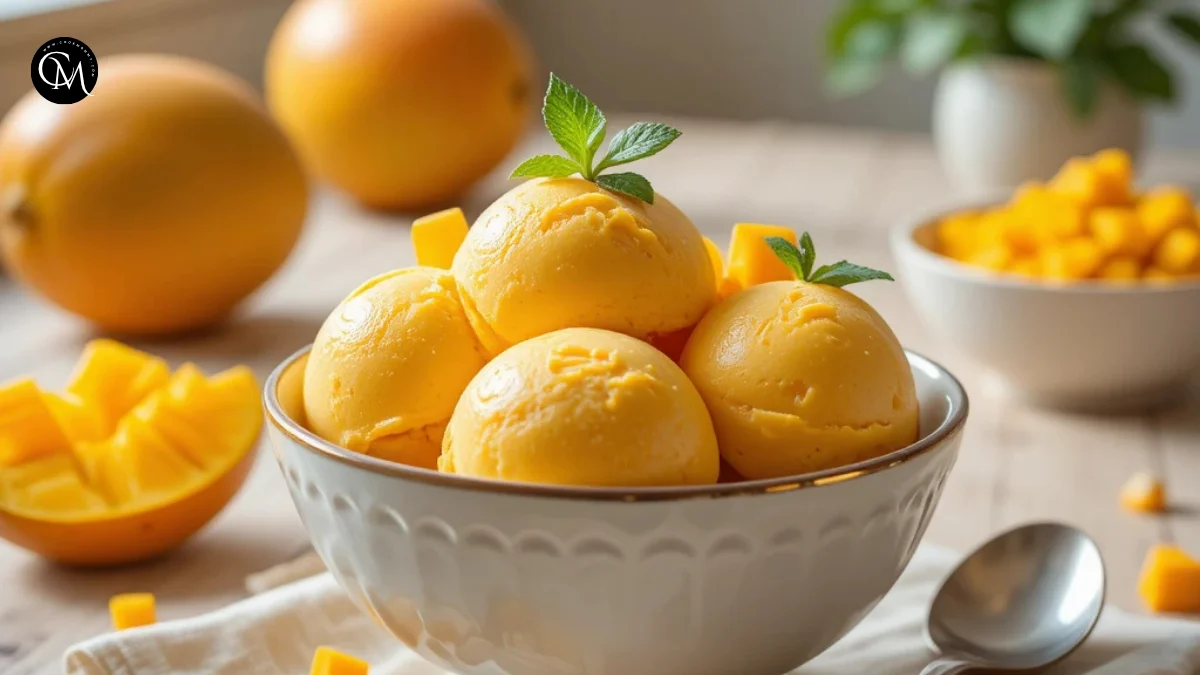
Best Mango Ice Cream: 7 Easy Tricks for Summer Flavor
Did you know that mango is one of the world’s most loved tropical fruits, yet many homemade frozen desserts lose that bright mango flavor once they freeze? That is exactly why this Mango Ice Cream recipe is worth making the right way. A ripe mango can taste sweet, floral, and almost honey-like, but when mixed without balance, it can turn icy, flat, or too sweet.
This recipe focuses on creamy texture, fresh fruit flavor, and simple kitchen tricks that make a real difference. You do not need fancy equipment or professional pastry skills. With ripe mangoes, a few pantry ingredients, and smart preparation, you can make a homemade frozen dessert that tastes smooth, rich, and refreshing.
Whether you want a summer dessert for kids, a weekend treat, or a fruity no-churn option, this Mango Ice Cream gives you a reliable base you can adjust to your taste.
Table of Contents
Ingredients List
For the best flavor, use ripe, fragrant mangoes. They should feel slightly soft when pressed and smell sweet near the stem.
- 3 cups Ripe mangoes, peeled and chopped : Fresh mango gives the brightest flavor. Frozen mango works if thawed and drained.
- 2 cups Heavy cream: Use chilled cream for better whipping and a smoother texture.
- 1 cup Sweetened condensed milk: Adds sweetness and helps keep the texture creamy.
- ½ cup Whole milk: Lightens the mixture so it is not too heavy.
- 1 tablespoon Lemon or lime juice: Brightens the mango flavor and balances sweetness.
- 1 teaspoon Vanilla extract: Adds warmth without hiding the fruit taste.
- ⅛ teaspoon Pinch of salt: Makes the mango taste fuller and more rounded.
- Optional ½ cup mango chunks: Fold in at the end for fruity bites.
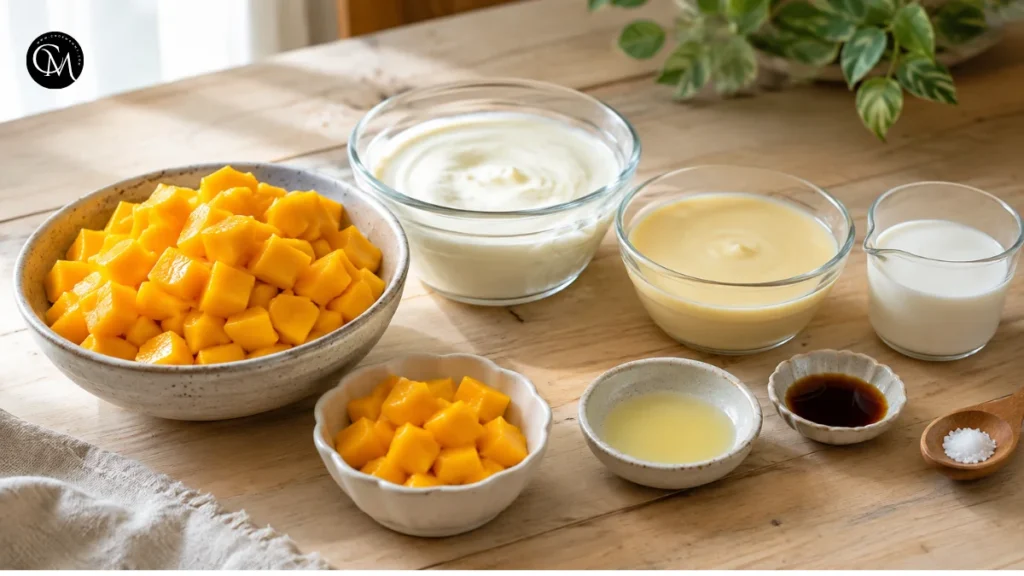
If your mangoes are very sweet, reduce the condensed milk slightly. If they are mildly tart, keep the full amount. This small adjustment helps your Mango Ice Cream taste balanced instead of sugary.
Timing
| Task | Time |
|---|---|
| Preparation Time | 20 minutes |
| Cooking/Baking Time | 0 minutes |
| Freezing Time | 6 hours |
| Total Time | 6 hours 20 minutes |
Most homemade ice cream recipes take 8 hours or more when they require cooking a custard base and chilling it overnight. This Mango Ice Cream is faster because it uses a no-cook creamy base, which saves time while still giving a smooth result.
Step-by-Step Instructions
Step 1 – Prepare Ingredients
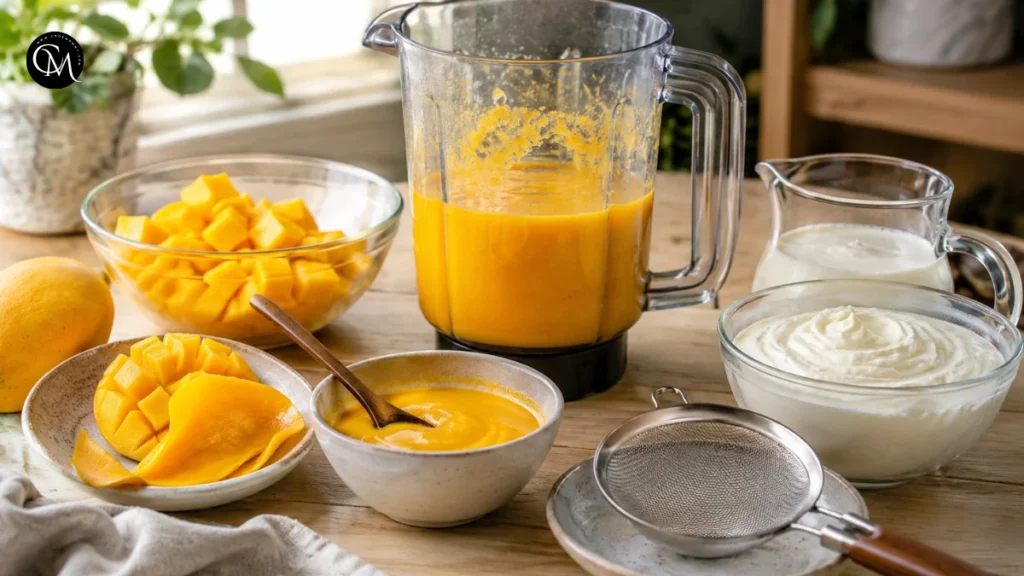
Start by peeling and chopping the mangoes. Place the pieces in a blender or food processor and blend until smooth. If your mangoes are fibrous, pass the puree through a fine sieve. This extra step takes a few minutes, but it makes the final texture much silkier.
Good preparation matters because ice cream does not hide texture problems once frozen. Stringy mango fibers or large fruit pieces can feel icy after freezing. A smooth puree helps your Mango Ice Cream taste creamy from the first spoonful.
Chill the heavy cream before using it. Cold cream whips better and holds air more easily. That trapped air gives homemade ice cream a lighter, softer texture.
Step 2 – Build Flavor Base
In a large bowl, mix the mango puree with condensed milk, whole milk, lemon or lime juice, vanilla extract, and a pinch of salt. Stir until everything looks smooth and glossy.
This is where the flavor base forms. Mango is naturally sweet, but sweetness alone is not enough. Lemon or lime juice adds brightness, salt strengthens the fruit flavor, and vanilla gives a soft dessert-style finish. The condensed milk adds body and helps reduce iciness because sugar affects how firm the mixture freezes.
Taste the base before adding the whipped cream. It should taste slightly stronger and sweeter than you want the final dessert to be. Frozen foods taste less sweet and less aromatic than room-temperature mixtures, so a bold base creates better Mango Ice Cream after freezing.
Step 3 – Cook the Main Ingredient
This recipe does not require cooking, but this step focuses on treating the main ingredient properly. Mango is the star, so the goal is to preserve its fresh flavor instead of dulling it with heat.
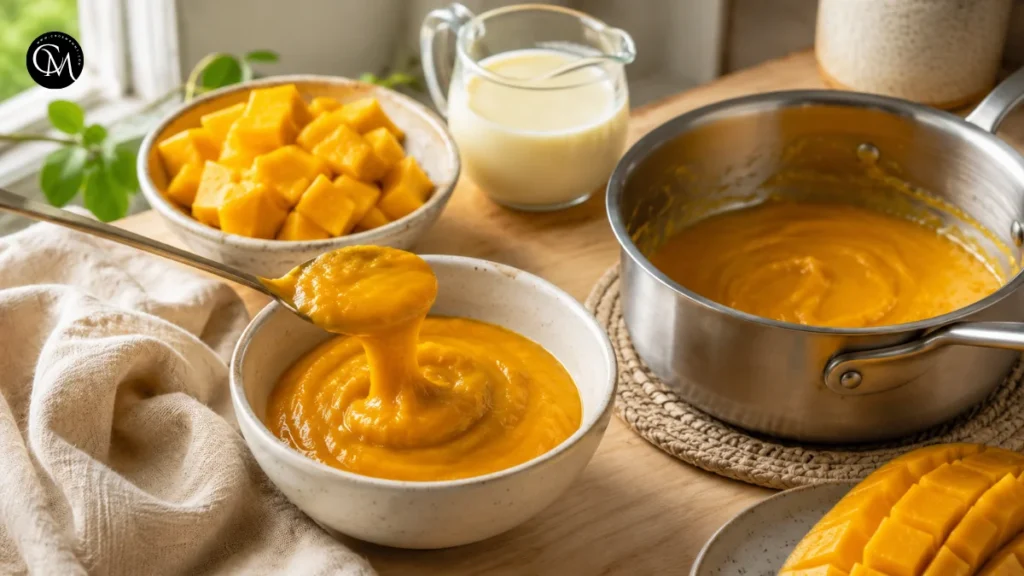
If your mangoes are very watery, simmer the puree gently for 5–7 minutes, then cool it completely before mixing. This optional step reduces excess water and gives a thicker fruit base. However, do not overcook it. Too much heat can make mango taste jammy instead of fresh.
For texture, the puree should be thick enough to coat a spoon. If it looks thin, your Mango Ice Cream may freeze harder. You can fix this by adding one extra tablespoon of condensed milk or by reducing the puree slightly.
Step 4 – Combine Everything
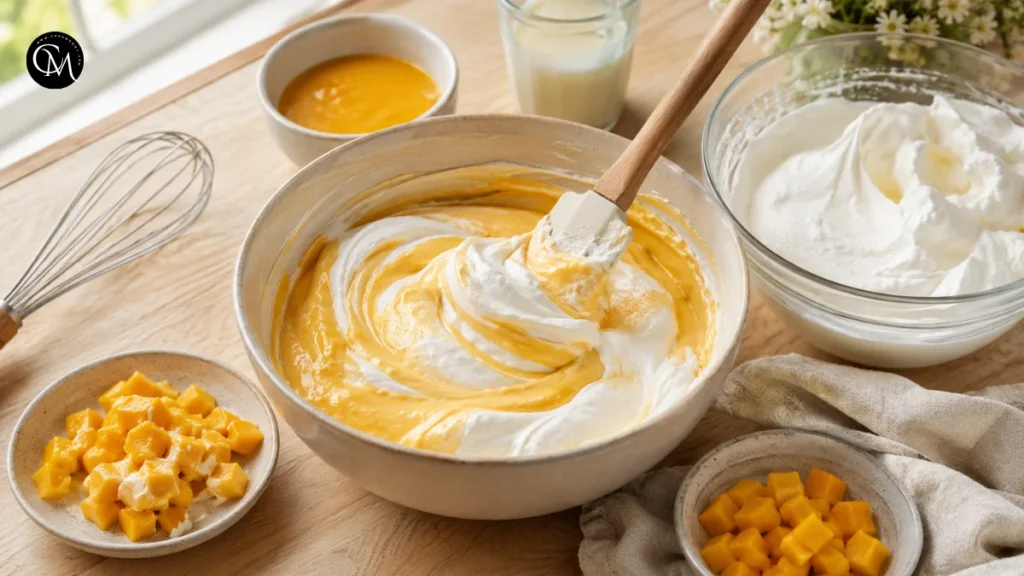
In a separate bowl, whip the cold heavy cream until soft peaks form. The cream should look fluffy but not stiff or grainy. Soft peaks blend more smoothly into the mango mixture.
Add one-third of the whipped cream into the mango base and stir gently to loosen it. Then fold in the rest using a spatula. Move slowly and scrape from the bottom of the bowl so the mixture stays airy.
This step is important because balance is not only about flavor. It is also about structure. The whipped cream adds air, the mango puree adds fruitiness, and the condensed milk adds sweetness and softness. Together, they create a Mango Ice Cream that feels creamy instead of dense.
If you want small mango pieces, fold them in at the end. Keep them small because large chunks freeze very hard.
Step 5 – Finish & Adjust Seasoning
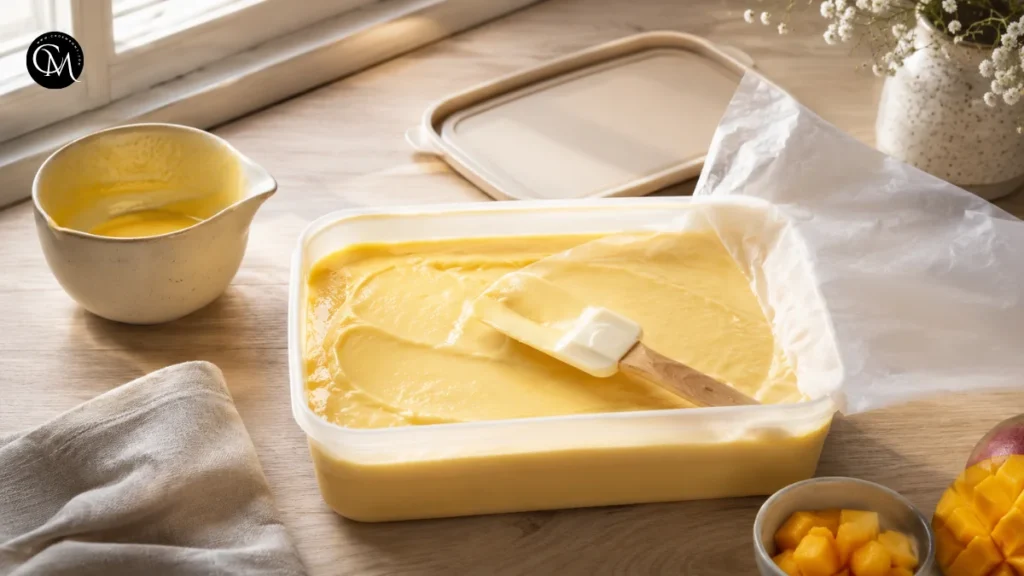
Pour the mixture into a freezer-safe container. Smooth the top with a spatula, then press a piece of parchment paper or plastic wrap directly against the surface. Cover tightly with a lid.
Freeze for at least 6 hours, or until firm enough to scoop. For the best texture, let the container sit at room temperature for 5–8 minutes before serving.
Chef-style advice: always taste before freezing. Add a little more citrus juice if the mixture feels too sweet, or a little more condensed milk if your mangoes are tart. That final adjustment is what makes homemade Mango Ice Cream taste intentional and well-balanced.
Nutritional Information
Approximate values per serving, based on 8 servings:
| Nutrient | Amount |
|---|---|
| Calories | 285 |
| Carbohydrates | 35 g |
| Sugar | 31 g |
| Fat | 16 g |
| Saturated Fat | 10 g |
| Protein | 4 g |
| Fiber | 2 g |
| Sodium | 75 mg |
These values are estimates and can change depending on the mango variety, cream brand, and serving size. This Mango Ice Cream is a dessert, so it is meant to be enjoyed in moderate portions. The fresh mango adds natural fruit flavor and fiber, while the cream and condensed milk create the rich texture people expect from homemade ice cream.
Healthier Alternatives
To make a lower-sugar version, reduce the condensed milk to ¾ cup and add a little extra mango puree for natural sweetness. You can also use very ripe mangoes, because they need less added sugar.
- For a dairy-free version, replace heavy cream with chilled coconut cream and use sweetened condensed coconut milk. This gives a tropical flavor that works beautifully with mango. The texture will be slightly different, but still rich and satisfying.
- For a gluten-free version, no major changes are needed because this Mango Ice Cream is naturally gluten-free when made with simple ingredients. Always check labels if you use flavored extracts or toppings.
- For children, serve smaller scoops with fresh fruit or crushed graham crackers. For seniors, let the ice cream soften slightly before serving so it is easier to scoop and enjoy. For lighter portions, serve one small scoop with sliced mango, berries, or a spoonful of yogurt.
A whole-grain option works best as a topping. Try a sprinkle of toasted oats or whole-grain granola for crunch instead of cookies.
Serving Suggestions
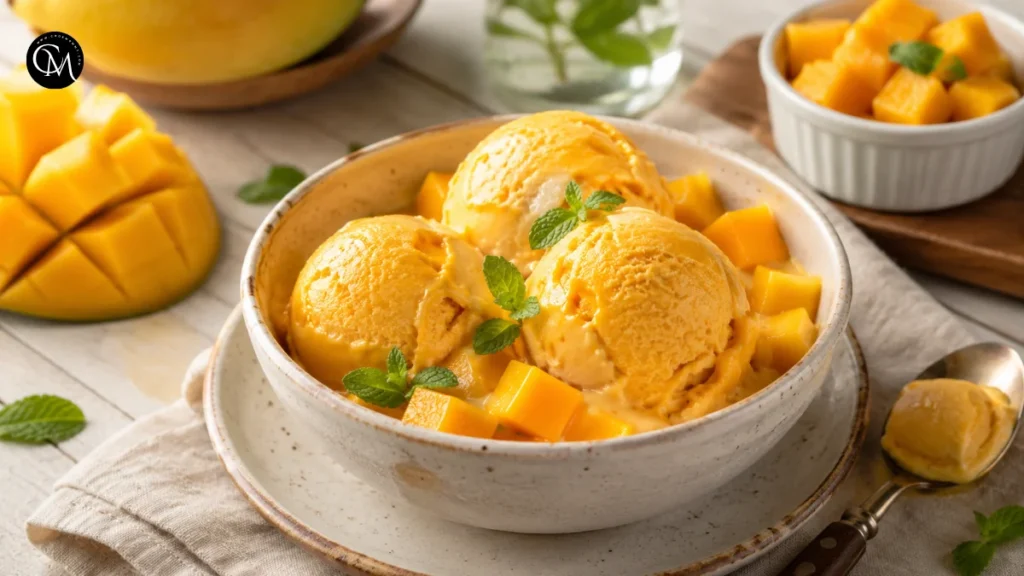
Serve Mango Ice Cream in chilled bowls with diced fresh mango, toasted coconut, or crushed pistachios. The contrast between creamy, cold ice cream and crunchy toppings makes each bite more interesting.
For a simple summer dessert, add a few mint leaves and a squeeze of lime. This keeps the flavor fresh and bright. For a more elegant plate, serve one scoop beside coconut cake, almond cookies, or a thin slice of vanilla sponge cake.
You can also turn it into a mango float-style dessert by layering scoops with crushed biscuits and whipped cream. For a drinkable treat, blend one scoop with cold milk to make a quick mango milkshake.
For guests, scoop the ice cream 10 minutes before serving and place the scoops on a chilled tray in the freezer. This makes serving faster and cleaner.
Common Mistakes to Avoid
- Using unripe mangoes: Unripe mangoes can taste sour and flat. Choose ripe fruit with a strong aroma for the best Mango Ice Cream flavor.
- Adding too much liquid: Extra milk or watery mango puree can make the texture icy. Keep the base thick and creamy.
- Overwhipping the cream: Cream that is whipped too far can turn grainy. Stop when soft peaks form.
- Skipping citrus juice: A small amount of lemon or lime juice keeps the flavor bright. Without it, the dessert may taste too heavy.
- Freezing without covering the surface: Air exposure can cause ice crystals. Press parchment or plastic wrap directly on the surface before sealing.
- Serving straight from the freezer: Homemade ice cream often needs a few minutes to soften. Let it rest briefly for smoother scoops.
Storing Tips for the Mango Ice Cream
Store Mango Ice Cream in a shallow, airtight freezer container. A shallow container helps it freeze evenly and makes scooping easier. Press parchment paper or plastic wrap onto the surface before adding the lid to reduce ice crystals.
For the best flavor, enjoy it within 2 weeks. It will still be safe longer if stored properly, but the fresh mango flavor is brightest during the first several days.
If you want to prep ahead, make the mango puree one day in advance and keep it covered in the refrigerator. You can also chill your mixing bowl and cream before preparing the recipe.
This recipe became one of my regular desserts because it feels special without being complicated. It is the kind of treat I can make before guests arrive, keep in the freezer, and serve with almost no effort.
Conclusion
Homemade Mango Ice Cream is one of the easiest ways to turn ripe mangoes into a refreshing summer dessert. With a smooth fruit puree, chilled cream, balanced sweetness, and a touch of citrus, you get a frozen treat that tastes bright, creamy, and homemade in the best way. The recipe is flexible enough for dairy-free swaps, lighter portions, and fun toppings, so it works for family desserts, weekend gatherings, or warm afternoons when you want something cold and fruity.
Try this recipe the next time mangoes are in season, then leave a comment or review with your favorite topping. For more easy homemade dessert ideas, subscribe and explore more simple recipes made for real kitchens.
FAQs
Can I make Mango Ice Cream without an ice cream maker?
Yes. This recipe is designed as a no-churn dessert, so you only need a blender, bowl, whisk, and freezer-safe container.
What mango variety works best?
Alphonso, Ataulfo, Kent, or any sweet, low-fiber mango works well. Choose ripe mangoes with a strong fruity aroma.
Can I use frozen mango?
Yes. Thaw it first, drain excess liquid, then blend it into a thick puree before mixing the base.
Why is my homemade ice cream icy?
Too much water, thin mango puree, or poor storage can cause iciness. Use thick puree and cover the surface tightly.
How long should it freeze before serving?
Freeze for at least 6 hours. For cleaner scoops, let it soften at room temperature for 5–8 minutes.
Can I make this recipe dairy-free?
Yes. Use coconut cream and sweetened condensed coconut milk for a creamy tropical dairy-free version.
What toppings go best with Mango Ice Cream?
Fresh mango cubes, toasted coconut, pistachios, mint, lime zest, or crushed cookies all pair beautifully with the flavor.
Tried it before ?
There are no reviews yet. Be the first one to write one.