
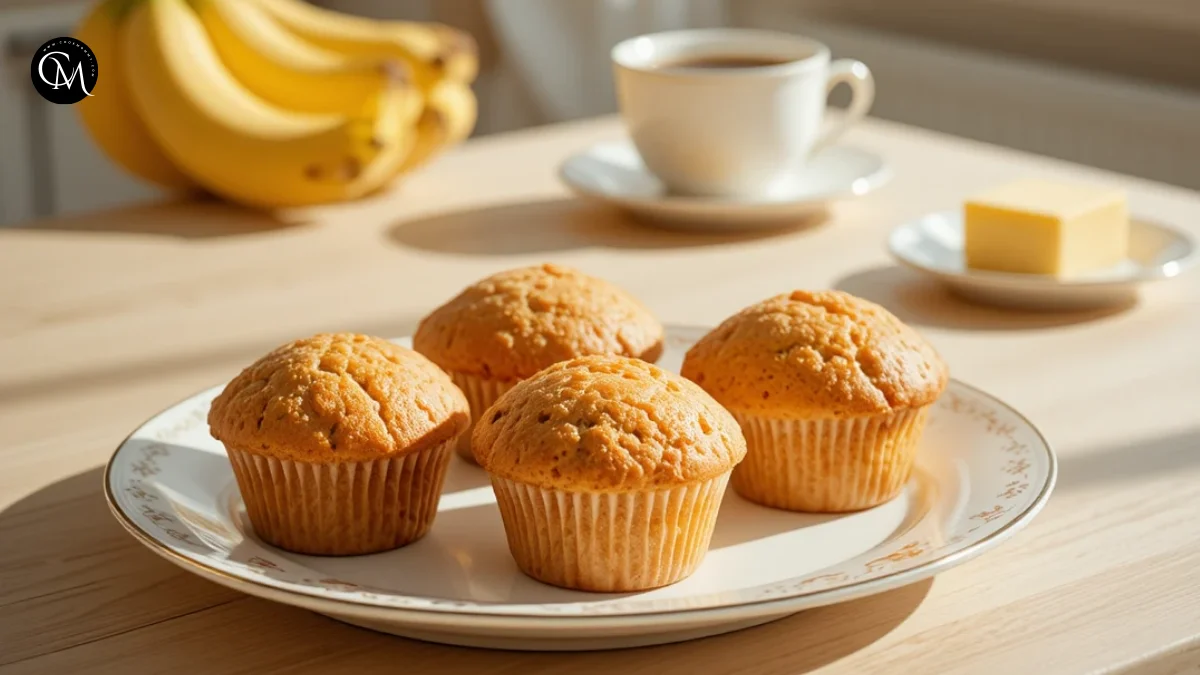
Easy banana bread muffins: How 7 Steps Boost Flavor Fast
Have you ever wondered why some homemade muffins taste bakery-quality while others feel flat, dense, or overly sweet even when using the same ingredients? According to baking science, small technique changes like ripeness of fruit, mixing order, and oven temperature can dramatically affect flavor development and texture.
That’s exactly where banana bread muffins shine. They combine the comforting taste of classic banana bread with the speed and convenience of individual muffins. This recipe focuses on flavor-building steps that enhance aroma, moisture, and natural sweetness without relying on excess sugar or complicated methods.
Whether you’re baking for breakfast, school snacks, or a quick treat, this guide shows how simple techniques transform everyday ingredients into rich, fluffy, and deeply satisfying muffins.
Table of Contents
Ingredients List
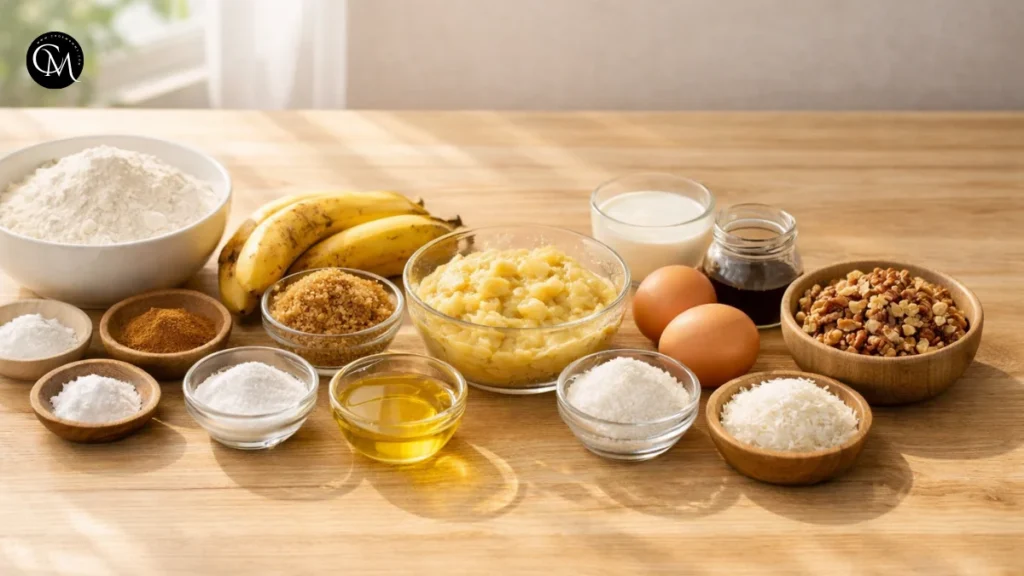
Here’s everything you need to make flavorful, soft, and balanced muffins. Each ingredient plays a role in texture, aroma, and structure.
Dry ingredients
- 1 ¾ cups all-purpose flour
- 1 tsp baking soda
- ½ tsp baking powder
- ½ tsp salt
- 1 tsp cinnamon (optional but boosts aroma)
Wet ingredients
- 3 ripe bananas, mashed (very spotty = best flavor)
- ½ cup brown sugar
- ¼ cup white sugar
- ½ cup melted butter or neutral oil
- 2 eggs, room temperature
- 1 tsp vanilla extract
- ¼ cup milk or yogurt
Optional flavor add-ins
- Chopped walnuts or pecans
- Dark chocolate chips
- Oats for a rustic texture
- Shredded coconut
Substitutions
- Whole-wheat flour for part of the white flour
- Honey or maple syrup instead of refined sugar
- Dairy-free milk or plant yogurt
- Coconut oil instead of butter
These simple swaps keep the taste of banana bread muffins intact while adapting to dietary needs.
Timing
- Preparation time: 10 minutes
- Baking time: 18–22 minutes
- Total time: about 30 minutes
Compared to traditional banana bread (which often takes 60–70 minutes), these muffins deliver similar flavor in half the time.
Step-by-Step Instructions
Step 1 – Prepare Ingredients
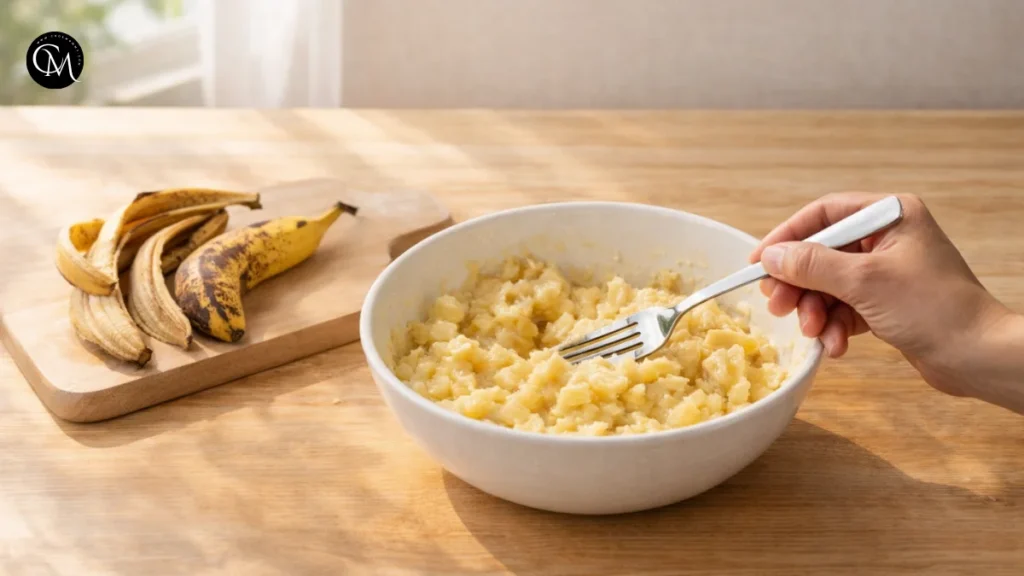
Start by peeling the bananas and mashing them in a medium bowl using a fork or potato masher. Aim for a mostly smooth texture with a few soft lumps this gives the muffins a pleasant, moist bite rather than a purée-like consistency.
Why this step matters:
Well-mashed bananas distribute their natural sugars and moisture evenly through the batter. Large chunks tend to sink during baking, creating uneven sweetness and dense spots.
Pro tip:
Choose bananas with deep brown speckles or nearly black skins. At this stage, starch has converted into natural sugars, which enhances flavor, improves browning, and reduces the need for extra sweeteners.
Step 2 – Build the Flavor Base
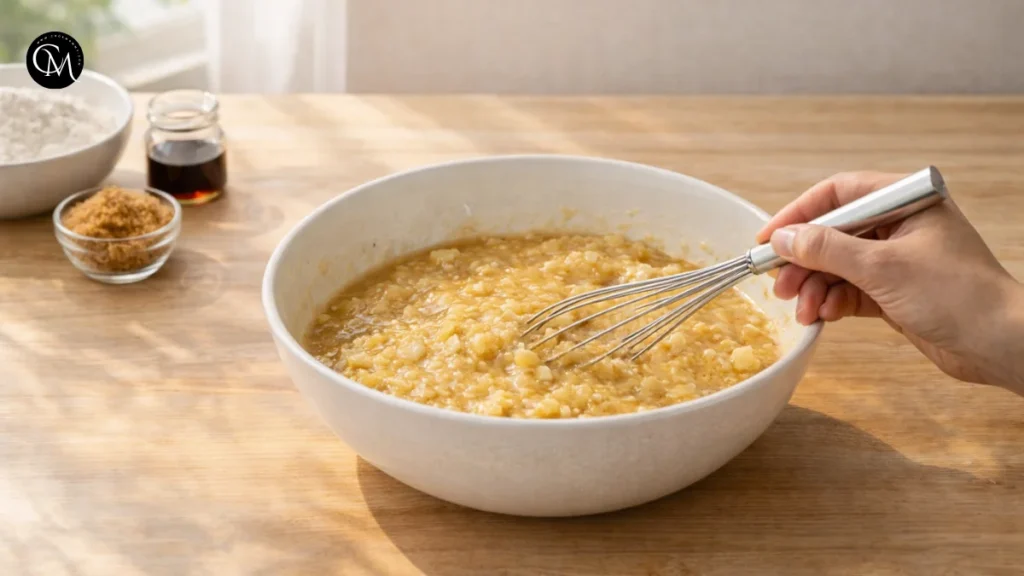
In a large mixing bowl, whisk together the sugars, melted butter (or oil), eggs, vanilla extract, and mashed bananas until the mixture looks glossy and slightly thick. Take an extra 20–30 seconds to blend well this helps create a cohesive base.
Cooking science insight:
When sugar dissolves into the wet ingredients early, it supports caramelization during baking. This process deepens flavor, enhances aroma, and gives banana bread muffins their signature golden top and rich taste.
Practical tip:
Use room-temperature eggs. They blend more easily and help create a smoother batter with better structure.
Step 3 – Prepare the Dry Mixture
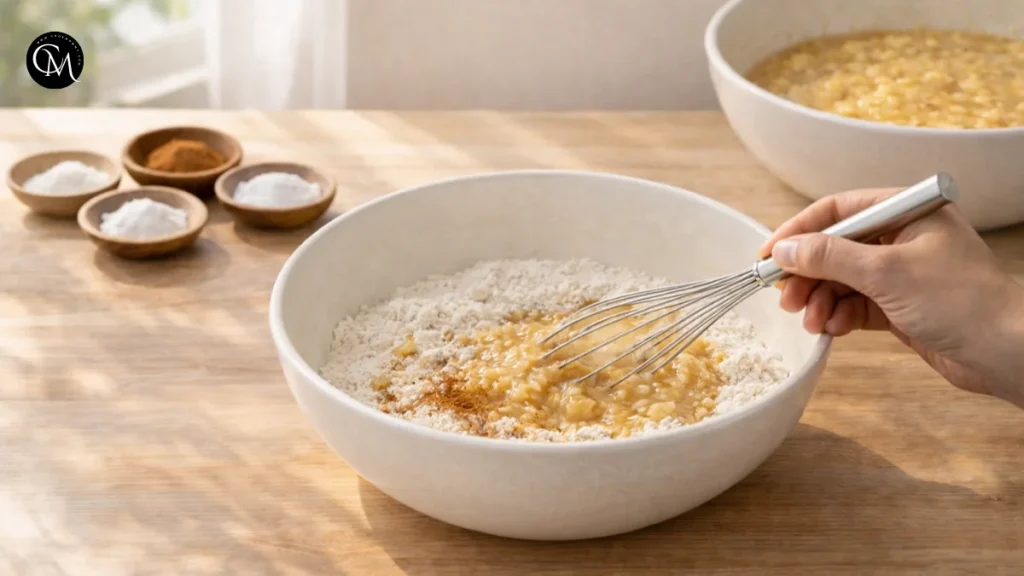
In a separate bowl, combine flour, baking soda, baking powder, salt, and cinnamon. Stir or whisk gently to ensure everything is evenly distributed before adding to the wet ingredients.
Why it matters:
Leavening agents must be evenly mixed to create consistent rise. If baking soda or powder clumps, muffins may bake unevenly some rising well while others stay dense.
Texture tip:
Sifting the flour is optional but helpful if it feels compacted. It aerates the mixture and supports a lighter crumb.
Step 4 – Combine Everything
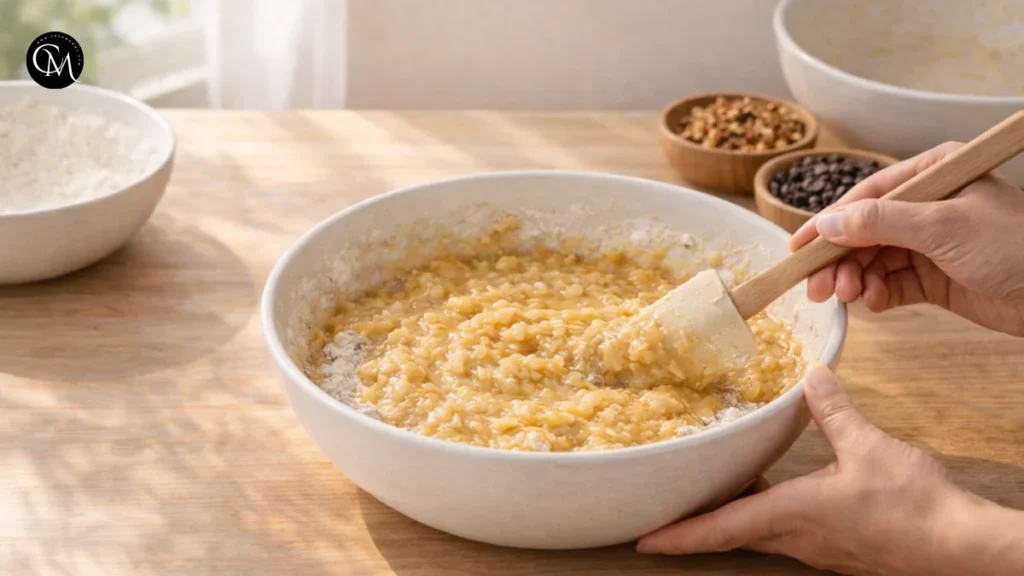
Gradually fold the dry mixture into the wet ingredients using a spatula. Stir just until no visible flour streaks remain. The batter should look slightly lumpy, not perfectly smooth.
Flavor and texture balance:
Gentle folding prevents gluten from developing too much. Overmixing leads to tight, chewy muffins instead of soft, tender ones.
Add-ins moment:
This is the ideal stage to incorporate chopped nuts, chocolate chips, or oats. Folding them in now ensures even distribution without overworking the batter.
Step 5 – Finish & Adjust Before Baking
Line a muffin tin with paper liners or lightly grease it. Spoon the batter into each cup, filling about three-quarters full to allow space for rising. Bake in a preheated oven at 180°C (350°F) for 18–22 minutes.
Chef-style advice:
Rotate the pan halfway through baking to promote even browning and prevent hot-spot baking. Avoid opening the oven too often temperature drops can affect rise.
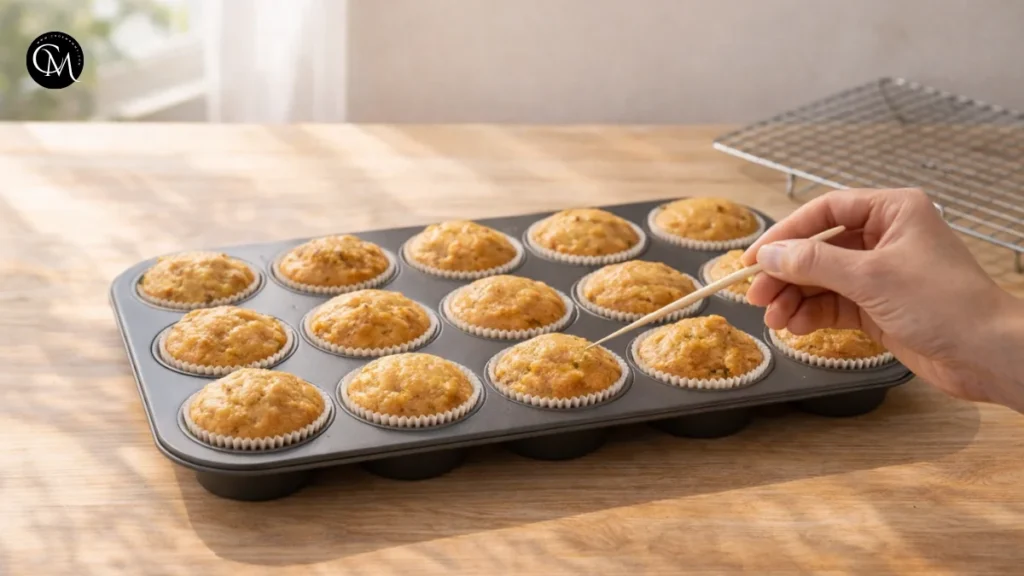
Doneness check:
Muffins are ready when:
- A toothpick inserted in the center comes out clean
- The tops feel lightly springy when pressed
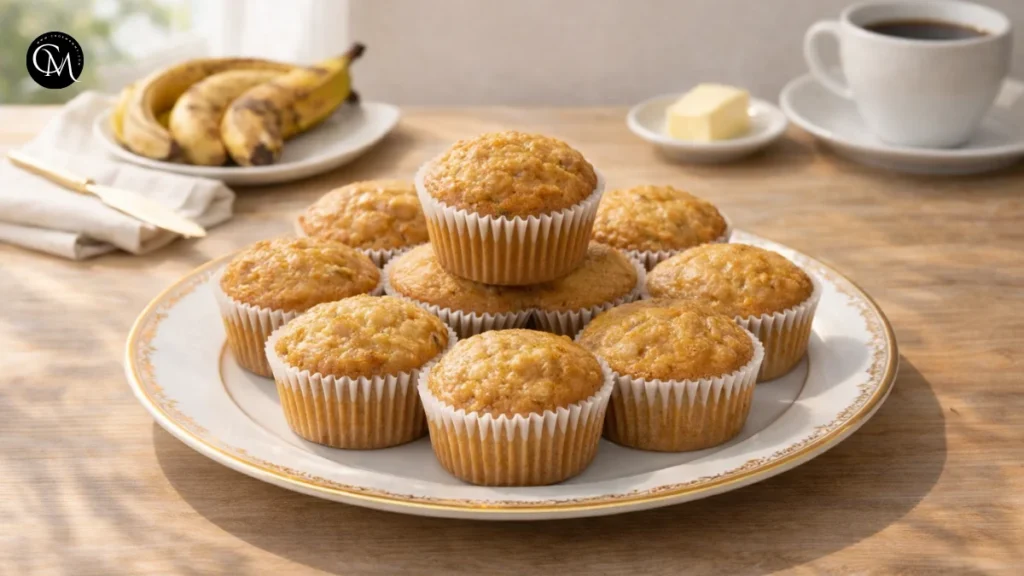
- Edges appear lightly golden and set
Let them rest in the pan for 5 minutes before transferring to a rack. This short resting time helps the structure stabilize and keeps the crumb soft and moist.
Nutritional Information
Approximate values per muffin (based on 12 servings):
- Calories: 190–220
- Carbohydrates: 28 g
- Protein: 4 g
- Fat: 8 g
- Fiber: 2 g
- Sugar: 12 g
These values vary depending on ingredient choices, portion size, and optional add-ins. Using whole grains, reducing sugar, or adding nuts can change the nutritional profile significantly while maintaining taste.
Healthier Alternatives
Making muffins healthier doesn’t mean sacrificing taste. With thoughtful ingredient swaps, you can keep the soft crumb and rich flavor while improving nutrition.
Lower sugar options
- Replace part of the sugar with mashed dates or unsweetened applesauce.
- Use very ripe bananas for natural sweetness and aroma.
- Add cinnamon or vanilla to enhance flavor perception without extra sugar.
These adjustments maintain moisture and reduce refined sugar while keeping the muffins satisfying.
Whole-grain alternatives
- Swap half of the all-purpose flour with oat flour or whole wheat flour.
- Add ground flaxseed for fiber and a mild nutty taste.
- Use rolled oats on top for texture and visual appeal.
Whole-grain versions add nutrients and provide longer-lasting energy without changing the overall structure.
Dairy-free and gluten-free adaptations
- Replace butter with neutral oils like sunflower or coconut oil.
- Use plant-based yogurt for moisture.
- Choose a gluten-free flour blend with binding agents for stability.
The goal is maintaining softness while adapting to dietary needs.
Tailored for different audiences
- Children: add mini chocolate chips or blueberries for excitement.
- Dieters: reduce fat slightly and increase yogurt for a lighter crumb.
- Seniors: use softer textures, extra banana, and less sugar for easier digestion.
The versatility of banana bread muffins makes them suitable for nearly any lifestyle.
Serving Suggestions
Presentation and pairing can make a simple muffin feel special.
- Serve warm with a light spread of peanut butter or almond butter for added protein.
- Pair with yogurt and fruit for a balanced breakfast.
- Offer alongside tea or coffee during casual gatherings.
- Slice and lightly toast for a crispy outside and soft interior.
- Turn them into mini dessert bites with a drizzle of honey or dark chocolate.
For food bloggers or home hosts, placing muffins on a wooden board with fresh fruit creates a welcoming, shareable presentation that encourages engagement and conversation.
Common Mistakes to Avoid
Even simple recipes can fail when small details are overlooked.
1. Using underripe bananas
Greenish bananas lack sweetness and aroma. Fully ripe bananas improve flavor depth and moisture.
2. Overmixing the batter
Too much mixing activates gluten and creates dense, rubbery muffins. Stir just until combined.
3. Baking at the wrong temperature
Ovens that are too hot dry the edges quickly. Too low, and muffins become heavy. A stable, moderate temperature ensures even baking.
4. Filling cups unevenly
Uneven portions cause inconsistent cooking and appearance. Use a scoop for uniform distribution.
5. Ignoring resting time
Let muffins cool slightly before removing them. This prevents breakage and improves texture.
6. Skipping ingredient balance
Too much sugar, fat, or flour disrupts structure and flavor harmony.
Real kitchen observations show that these simple adjustments significantly improve final results.
Storing Tips for the Recipe
Proper storage keeps banana bread muffins fresh and flavorful.
- Store at room temperature in an airtight container for up to two days.
- Refrigerate for longer storage, especially in warm climates.
- Freeze individually wrapped muffins for up to two months.
- Reheat gently in a microwave or oven to restore softness.
- Prepare batter ahead and refrigerate overnight for quick morning baking.
Maintaining moisture and protecting from air exposure are the keys to preserving quality.
Conclusion
Banana bread muffins combine comfort, convenience, and versatility in one simple recipe. By focusing on ingredient balance, mixing techniques, and baking precision, you can achieve moist texture, rich aroma, and consistent results. Healthier swaps make them suitable for different diets, while thoughtful serving ideas transform them into breakfast, snacks, or desserts.
Try this recipe in your kitchen and experiment with flavors that match your preferences. Share your experience in the comments, leave a review to help other readers, and subscribe for more practical recipes, cooking insights, and flavor-focused ideas designed for real home kitchens.
FAQs
1. How ripe should bananas be for the best muffins?
They should be very ripe with dark spots. This ensures natural sweetness, better moisture, and deeper flavor.
2. Can I make banana bread muffins without sugar?
Yes. Natural sweeteners like dates, honey, or applesauce can replace part of the sugar while keeping flavor balanced.
3. Why do my muffins turn dense instead of fluffy?
Overmixing the batter and incorrect oven temperature are common causes. Mix gently and bake at a stable temperature.
4. Can I freeze banana bread muffins?
Yes. Wrap individually and freeze for up to two months. Reheat gently before serving.
5. How can I make them more kid-friendly?
Add chocolate chips, blueberries, or a touch of cinnamon to make them more appealing and flavorful.
6. Are whole-grain versions as soft as regular ones?
Yes, when balanced properly with moisture-rich ingredients like yogurt or mashed banana.
7. What’s the best way to keep muffins moist?
Use ripe bananas, avoid overbaking, and store them in airtight containers to retain softness.
Tried it before ?
There are no reviews yet. Be the first one to write one.