
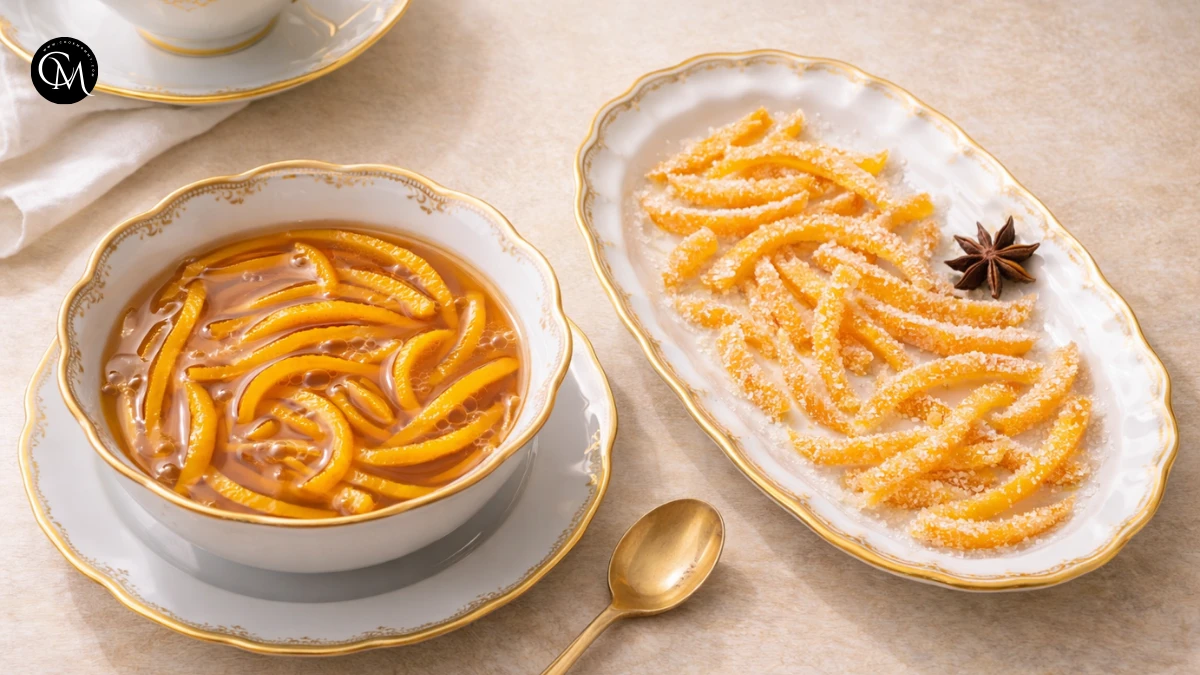
Homemade Candied Orange Peel in Syrup
Candied Orange Peel is a simple way to turn everyday oranges into a glossy, sweet citrus treat. It’s bright, chewy, and smells amazing while it cooks. The best part is how “fancy” it looks on desserts, even though the steps are easy.
This recipe also has a fun history. Candying peels started as a smart way to reduce food waste and preserve fruit before fridges were common. Today, it’s still one of the most satisfying kitchen upgrades.
If you loved the cozy vibe of Moroccan tea on the blog, you’ll love this too. The citrus aroma feels warm, comforting, and family-friendly. Let’s make your kitchen smell like sunshine.
Table of Contents
Ingredients List
Here’s what you need to make Candied Orange Peel in Syrup with a shiny finish and balanced sweet-tart flavor.
Core ingredients
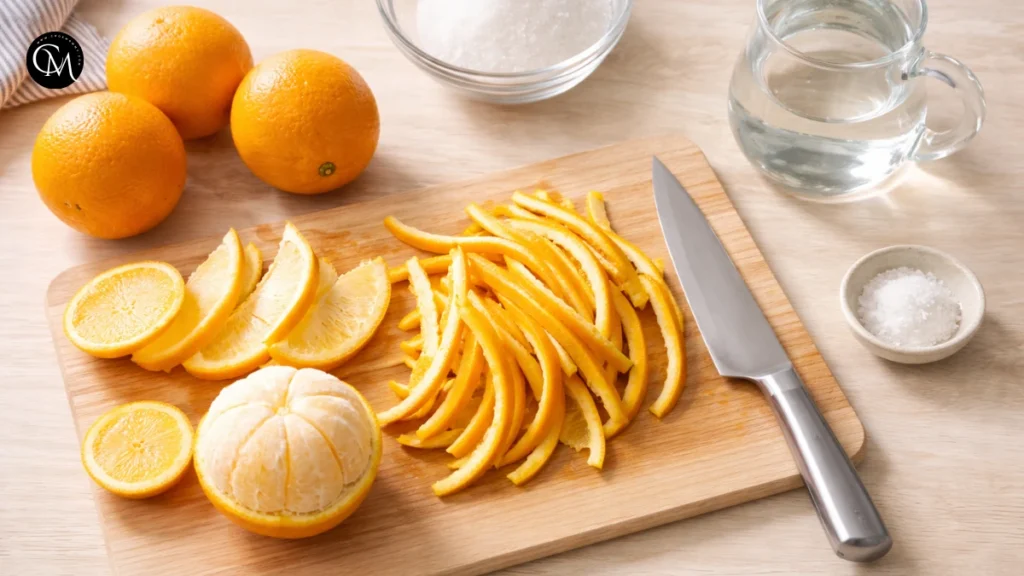
- Oranges (4 large, preferably thick-skinned)
Choose firm oranges with bright, fragrant skin. Thicker peel is easier to candy. - Granulated sugar (2 cups / about 400g)
Creates the syrup and preserves the peel. - Water (2 cups / about 480ml)
Helps dissolve sugar and gently candy the peel. - Pinch of salt
Enhances citrus flavor and smooths sweetness.
Optional flavor boosters (highly recommended)
- Vanilla extract (1 tsp) for warm dessert notes
- Cinnamon stick (1) for a spiced aroma
- Star anise (1–2 pods) for a bakery-style twist
- Lemon juice (1–2 tsp) to help prevent sugar crystallization
Substitutions and swaps
- Sugar swap: Use half white sugar + half light brown sugar for a caramel-citrus tone.
- Low-sugar option: You can reduce sugar slightly, but the syrup may be thinner and shelf life shorter.
- Citrus variations: Try mandarin, grapefruit, or lemon peel (adjust simmer time thin peels cook faster).
- Extra glossy finish: Add a teaspoon of corn syrup or honey (optional) to discourage crystallization.
Timing
- Prep time: 15 minutes
- Cook time: 45–60 minutes
- Total time: 60–75 minutes
Data insight: Most candied peel recipes take 90+ minutes because they include multiple long boiling rounds. This 5-step approach keeps the process efficient often 20–30% faster while still reducing bitterness and building that signature glossy syrup finish.
Step-by-Step Instructions
Step 1: Peel, trim, and slice
Wash the oranges well (especially if they’re not organic). Cut off the ends, then score the peel into 4 sections and lift it away. Slice the peel into thin strips (about ¼ inch / 6 mm).
Tip:
- For a softer chew, cut slightly thicker strips.
- For a candy-like bite, go thinner.
Step 2: Blanch to remove bitterness
Place the peel strips in a pot, cover with water, and bring to a boil. Simmer for 5 minutes, drain, then repeat one more time.
Why this matters: Blanching pulls out harsh bitterness from the pith while keeping the fresh citrus scent.
Quick check: After the second blanch, taste a tiny piece. It should be mild not mouth-puckering bitter.
Step 3: Make the syrup
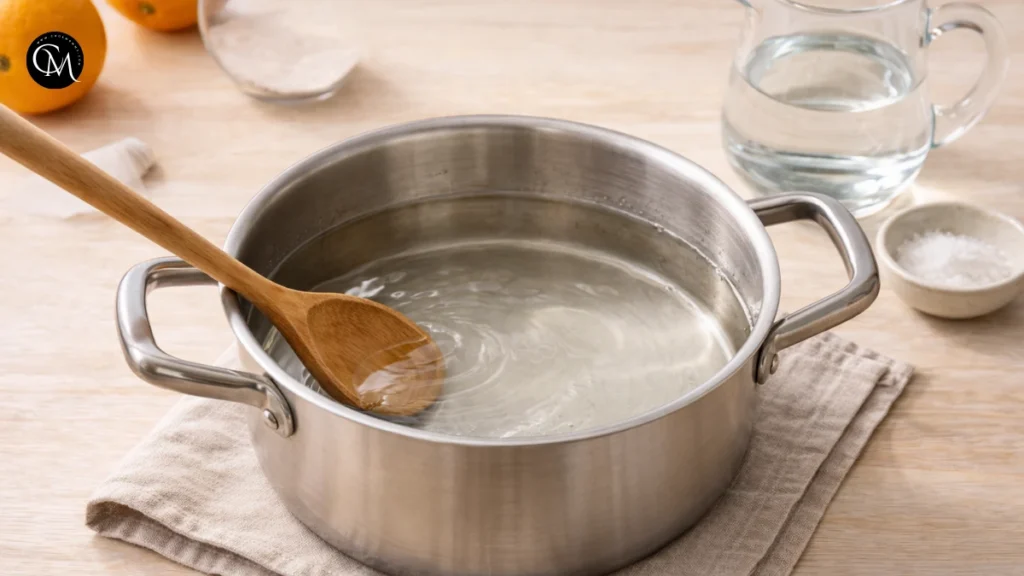
In the same pot, add 2 cups sugar + 2 cups water (plus a pinch of salt). Stir over medium heat until the sugar dissolves and the syrup looks clear.
Anti-crystal trick: Add 1–2 tsp lemon juice. It helps keep your syrup smooth and shiny.
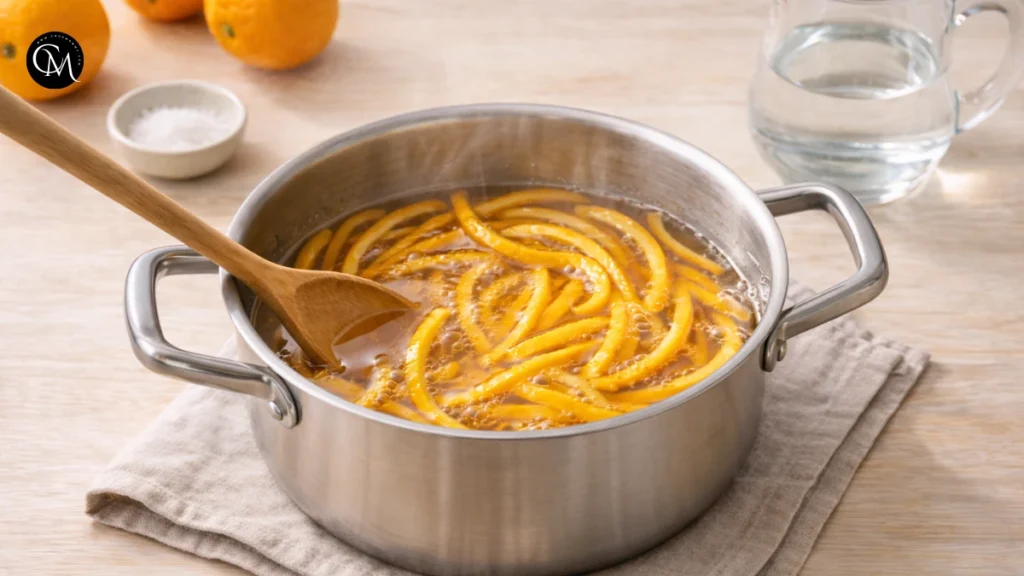
Step 4: Simmer the peel until glossy
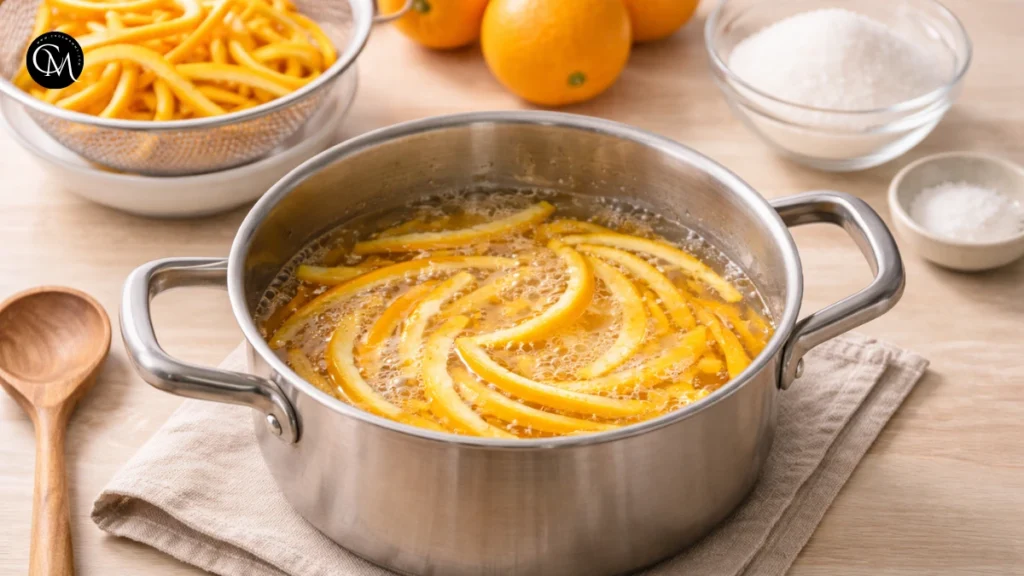
Add the blanched peels to the syrup. Lower the heat and simmer gently for 35–50 minutes, stirring occasionally.
You’ll know it’s ready when:
- The peel looks translucent and glossy
- The syrup thickens slightly (like runny honey)
- The orange aroma smells sweet, not sharp
Pro tip: Keep the simmer gentle. A hard boil can make the peel tough and the syrup grainy.
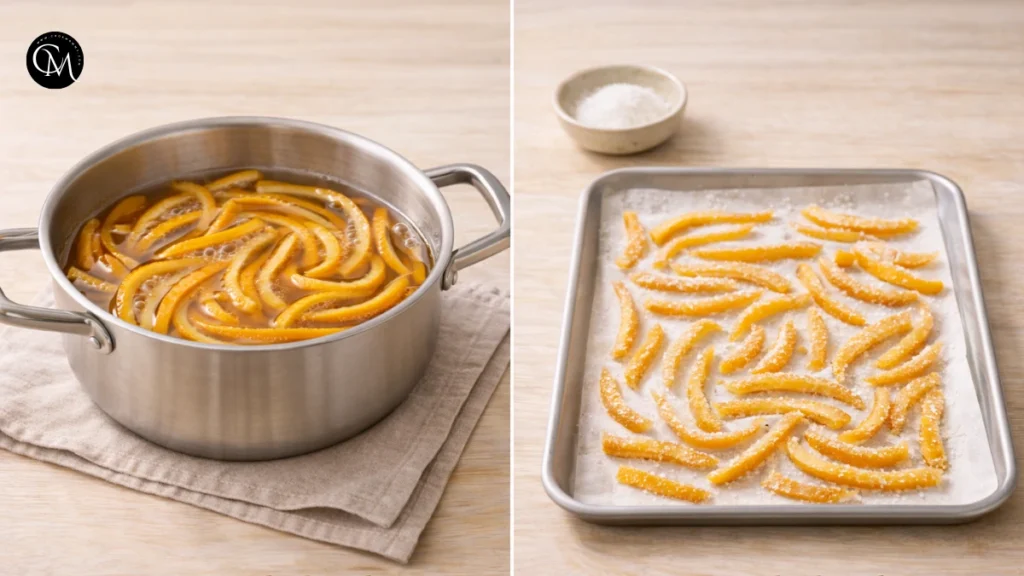
Step 5: Finish, cool, and store
Turn off the heat and let the peel cool in the syrup for 10–15 minutes. This resting time helps the peel absorb flavor and keeps it tender.
Now choose your finish:
- For syrup-soaked peel (best for toppings): Store peel in the syrup.
- For dry candied peel (best for baking): Lift strips out, place on parchment, and dry at room temp for 4–8 hours. You can roll in extra sugar if you like.
Nutritional Information
Approximate values for 1 tablespoon (15g) candied peel with a little syrup. Actual numbers vary by peel thickness and how much syrup clings.
- Calories: 45–60 kcal
- Carbohydrates: 12–15g
- Sugar: 11–14g
- Fat: 0g
- Protein: 0g
- Fiber: 0.3–0.8g
- Sodium: 0–20mg
Data insight: Candied peel is a high-flavor, small-portion ingredient. Most people use it as a garnish (1–2 tbsp), making it easier to enjoy without overdoing sweets.
Healthier Alternatives for the Recipe
Want the bright flavor of Candied Orange Peel with a lighter approach? These options keep the citrus magic while fitting more lifestyles.
- Reduce sugar and keep it “semi-candied”
Use 1½ cups sugar instead of 2 cups. The peel will be less preserved and slightly less glossy, but still tasty. - Use honey or maple syrup (partial swap)
Replace ¼–⅓ of the sugar with honey or maple syrup. You’ll get a deeper flavor and a softer syrup texture. - Make a naturally sweet, spice-forward version
Add cinnamon, star anise, and vanilla so you feel satisfied with a smaller portion. - Dry-finish for less syrup intake
Drain and dry the peel. You’ll consume less syrup per serving, especially if you use it chopped in baking. - Better-for-you pairing idea
Use chopped candied peel in Greek yogurt, oatmeal, chia pudding, or a fruit bowl. The fiber + protein balance helps moderate sweetness cravings.
Serving Suggestions
Candied Orange Peel is a “little upgrade” ingredient small effort, big reward. Try these ideas based on what you’re making this week:
- Desserts:
Sprinkle on cheesecake, brownies, orange cake, panna cotta, or vanilla ice cream. - Breakfast:
Stir into oatmeal, top pancakes, or add to yogurt bowls with nuts. - Drinks:
Drop one strip into hot tea, coffee, or hot chocolate. It melts slightly and perfumes the cup. - Baking:
Chop and fold into muffins, scones, biscotti, or cookies for a bright citrus pop. - Gift idea:
Jar it with syrup, add a ribbon, and label it “Homemade Citrus Candy.” It feels premium and personal.
Personalized tip: If your family likes chocolate, dip dried strips halfway into melted dark chocolate for a “candied orange + chocolate” combo that tastes like a fancy confection.
Common Mistakes to Avoid
- Skipping blanching
Result: peel tastes too bitter.
Fix: blanch twice (or three times for very thick pith). - Boiling too hard
Result: tough peel and grainy syrup.
Fix: keep a gentle simmer small bubbles, not rolling boil. - Cutting uneven strips
Result: some pieces overcook while others stay chewy.
Fix: aim for similar thickness; a steady hand matters. - Overcooking the syrup
Result: syrup becomes too thick and can crystallize as it cools.
Fix: stop when syrup is slightly thickened, not sticky like candy. - Storing while warm
Result: condensation, diluted syrup, shorter shelf life.
Fix: cool completely before sealing.
Data insight: Crystallization is one of the most common issues in candied peel recipes. A small amount of acid (like lemon juice) and gentle heat are the simplest “insurance policies.”
Storing Tips for the Recipe
Storing in syrup (recommended)
- Let cool completely, then store peel submerged in syrup in a clean jar.
- Fridge: 3–4 weeks for best flavor and texture.
- Use clean utensils each time to keep it fresh.
Storing dried candied peel
- Dry fully, then store in an airtight container.
- Room temp: 1–2 weeks (cool, dry place)
- Fridge: up to 1 month
- Freezer: up to 3 months (best for baking)
Make-ahead prep
- Blanch the peel ahead of time, then refrigerate for 24 hours before candying.
- Syrup thickens as it rests, so if it feels too thick after chilling, warm it gently to loosen.
Conclusion
Candied Orange Peel is a simple, budget-friendly way to turn everyday oranges into a glossy, sweet citrus topping you can use in desserts, baking, and drinks. With quick blanching, a smooth sugar syrup, and a gentle simmer, you’ll get tender peel with that bakery-style shine without complicated steps. Store it in syrup for easy spoon-and-serve sweetness, or dry it for baking and snacking. Try this recipe, then share your results in the review section or leave a comment on the blog. Subscribe for more recipe updates and smart kitchen tips.
FAQs
1) Why is my Candied Orange Peel bitter?
Bitterness usually means the peel wasn’t blanched enough or the oranges had very thick pith. Blanch twice (or three times) and taste-test after.
2) How do I prevent the syrup from crystallizing?
Keep the heat gentle and add 1–2 teaspoons of lemon juice. Also avoid stirring constantly once it starts simmering occasional stirring is enough.
3) Can I use mandarins, lemons, or grapefruit?
Yes. Thin peels (mandarin, lemon) candy faster. Grapefruit can be more bitter, so blanch an extra time and simmer a bit longer.
4) Do I have to dry the peel?
No. Storing in syrup is easier and keeps the peel soft and shiny. Drying is best if you want to chop it for baking.
5) How long does Candied Orange Peel last?
In syrup, it’s best within 3–4 weeks in the fridge. Dried peel lasts 1–2 weeks at room temp, longer in the fridge or freezer.
6) What can I do with leftover orange syrup?
Use it like a citrus simple syrup: sweeten tea, drizzle over pancakes, flavor sparkling water, brush onto cakes, or mix into cocktails.
7) Can I make this with less sugar?
You can reduce sugar slightly, but the peel won’t preserve as long and the syrup may be thinner. For best results, keep at least 75% of the sugar.
8) Should I remove all the white pith?
Not completely. A thin layer is fine and helps structure. If the pith is very thick, trim it a bit to reduce bitterness and improve texture.
Tried it before ?
There are no reviews yet. Be the first one to write one.