
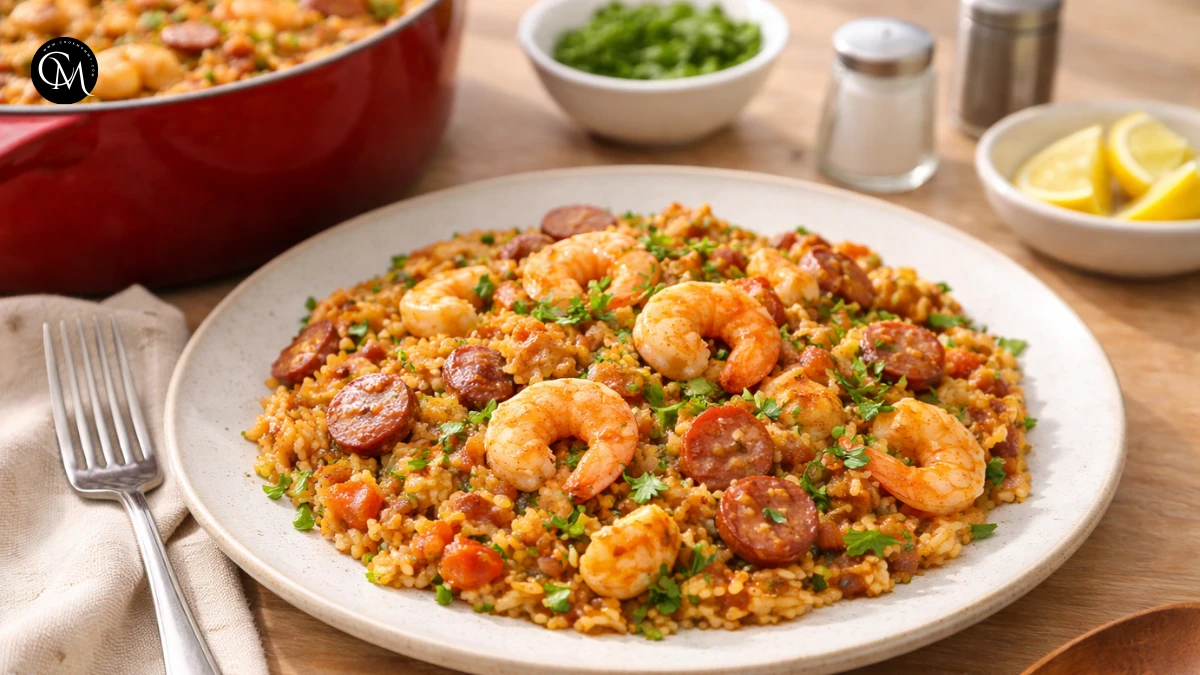
Jambalaya Recipe: 7 Best Tips for Bold Cajun Flavor
Did you know that one of the biggest mistakes home cooks make with Cajun dishes is overcomplicating them when the real secret is balance, timing, and heat control? A great Jambalaya Recipe isn’t about fancy techniques; it’s about understanding flavor layers, rice texture, and how spices interact in one pot.
This guide walks you through a deeply flavorful, experience-driven approach that helps you cook with confidence. Whether you’re new to Cajun cuisine or looking to refine your go-to Jambalaya Recipe, you’ll learn how to build bold flavor, avoid common pitfalls, and achieve the rich, comforting results this Louisiana classic is known for.
By the end, you’ll have more than a Jambalaya Recipe you’ll have a reliable cooking method you can repeat, adapt, and make your own.
Table of Contents
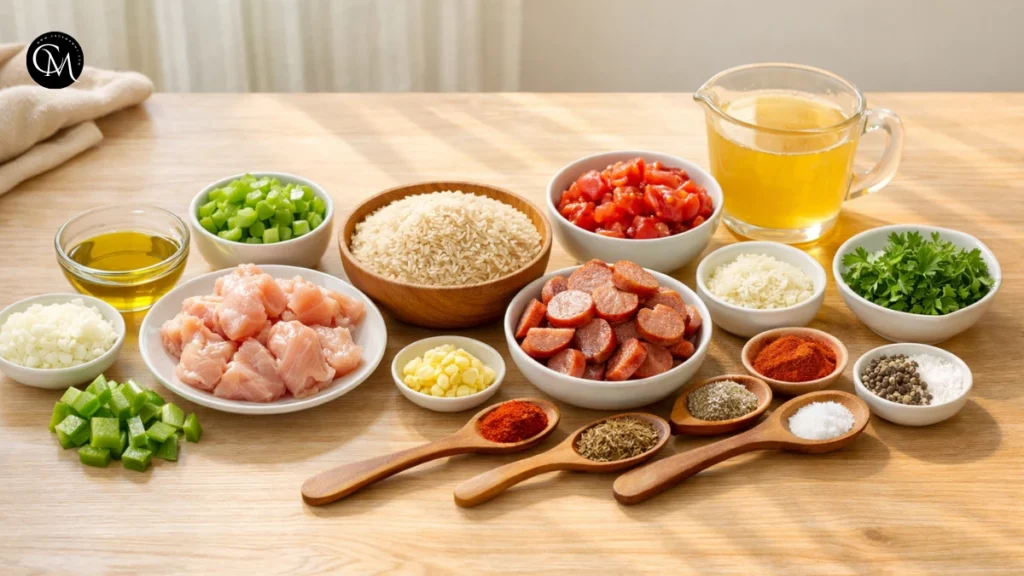
Ingredients List
A traditional Cajun-style jambalaya relies on a balance of smoky protein, aromatic vegetables, and well-seasoned rice.
Core ingredients
- 2 tbsp olive oil
- 1 onion, finely chopped
- 1 green bell pepper, diced
- 2 celery stalks, sliced
- 3 cloves garlic, minced
- 1 cup long-grain rice
- 400 g chicken thighs, cut into pieces
- 250 g smoked sausage, sliced
- 200 g shrimp, peeled and deveined
- 2 cups chicken broth
- 1 can diced tomatoes
- 1 tsp smoked paprika
- 1 tsp Cajun seasoning
- ½ tsp dried thyme
- Salt and black pepper to taste
- Fresh parsley for garnish
Substitution ideas
- Swap chicken with turkey for a leaner option
- Use brown rice for added fiber (increase cooking time)
- Replace shrimp with mushrooms for a pescatarian-free version
- Add okra for extra texture and authentic Southern flavor
The aroma of onion, garlic, and smoked sausage cooking together is what gives this dish its unmistakable identity.
Timing
- Preparation time: 15 minutes
- Cooking time: 35–40 minutes
- Total time: about 55 minutes
Compared with many traditional Cajun meals that take over an hour, this Jambalaya Recipe offers faster results without sacrificing depth of flavor.
Step-by-Step Instructions
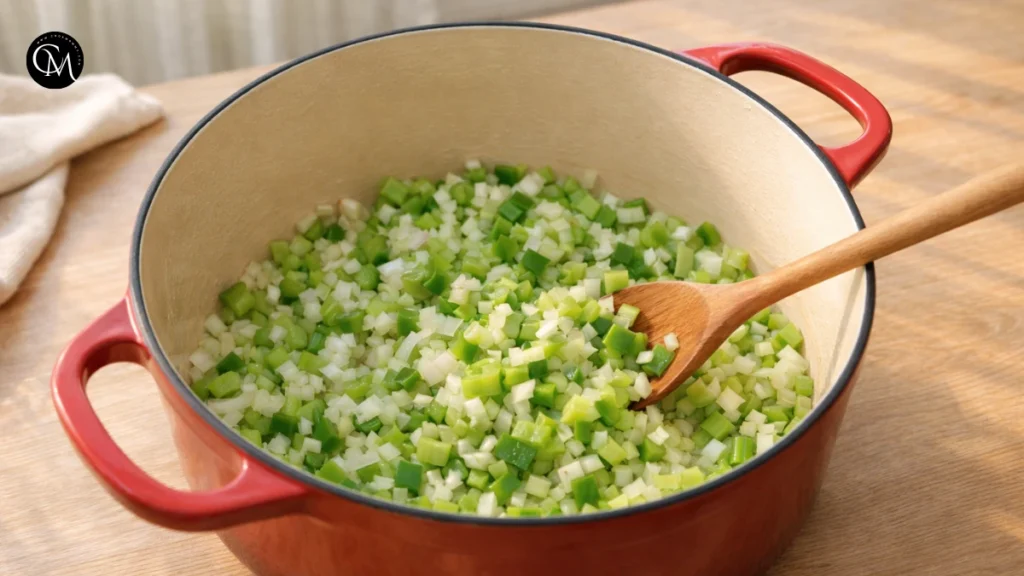
Step 1: Build the flavor base
Warm the olive oil in a heavy-bottomed pot or Dutch oven over medium heat. Add the chopped onion, celery, and bell pepper, stirring occasionally for 5–7 minutes until they become soft and slightly glossy. Take your time here. This mixture known as the Cajun “holy trinity” creates the backbone of the dish. Properly softening these vegetables releases natural sweetness and prevents harsh, raw flavors later. You’re not aiming for browning yet, just a gentle sauté that builds aroma and depth.
Tip: If the vegetables begin to brown too quickly, lower the heat slightly. Slow cooking equals better flavor.
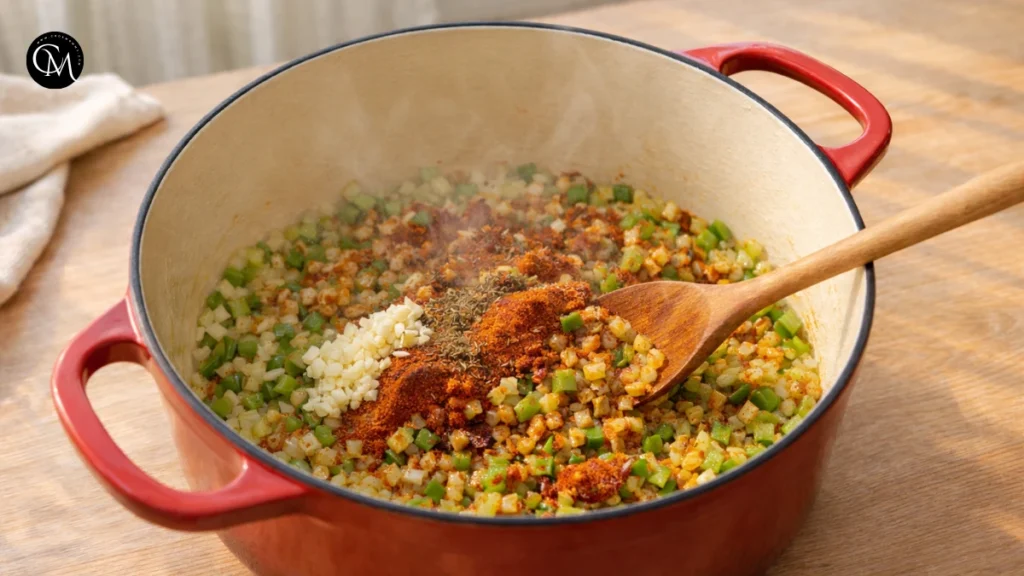
Step 2: Add garlic and spices
Stir in the minced garlic, paprika, thyme, and Cajun seasoning. Cook for about 30–45 seconds, stirring constantly.Spices bloom when heated in oil, releasing their essential oils and intensifying the overall flavor. You’ll notice a stronger, richer aroma almost immediately. Avoid cooking longer than a minute, as garlic can burn and turn bitter.
Pro insight: This step sets the flavor tone of the entire dish. If the spices smell vibrant here, the final jambalaya will taste layered and balanced.
Step 3: Brown the proteins
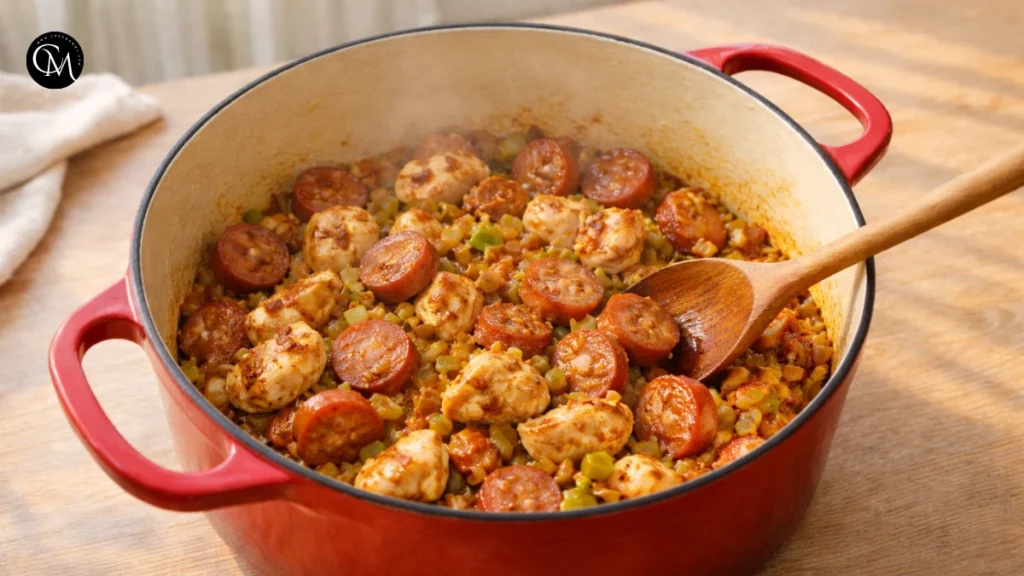
Add the chicken pieces and sliced sausage to the pot. Cook for 4–6 minutes, stirring occasionally, until the chicken begins to brown and the sausage edges caramelize. Browning creates what cooks call “fond” the flavorful bits that stick to the bottom of the pot. These bits dissolve into the liquid later, enriching the dish with a deeper, savory profile.
Practical tip: Don’t overcrowd the pot. If needed, brown in batches so the proteins sear rather than steam.
Step 4: Incorporate the rice
Add the rice directly to the pot and stir for 1–2 minutes so each grain becomes lightly coated in the seasoned oil. This quick toasting step helps the rice maintain structure during cooking. It also encourages even absorption of broth and spices, preventing uneven texture.
Experience note: Skipping this step often leads to rice that tastes separate from the rest of the dish instead of integrated.
Step 5: Add liquids and simmer
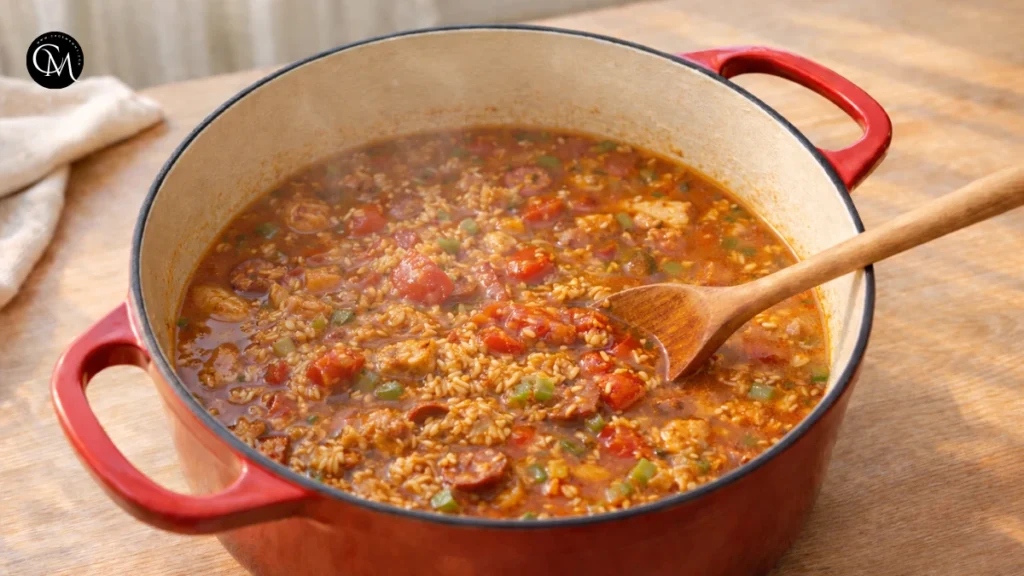
Pour in the chicken broth and diced tomatoes, scraping the bottom of the pot gently to release any browned bits. Bring everything to a gentle simmer, then reduce heat and cover. Maintaining a steady, low simmer is key. High heat breaks down the rice and makes it mushy, while too little heat slows absorption and affects timing.
Chef’s tip: Once covered, resist stirring too often. Let the rice cook undisturbed so it develops the right texture.
Step 6: Add shrimp at the right moment
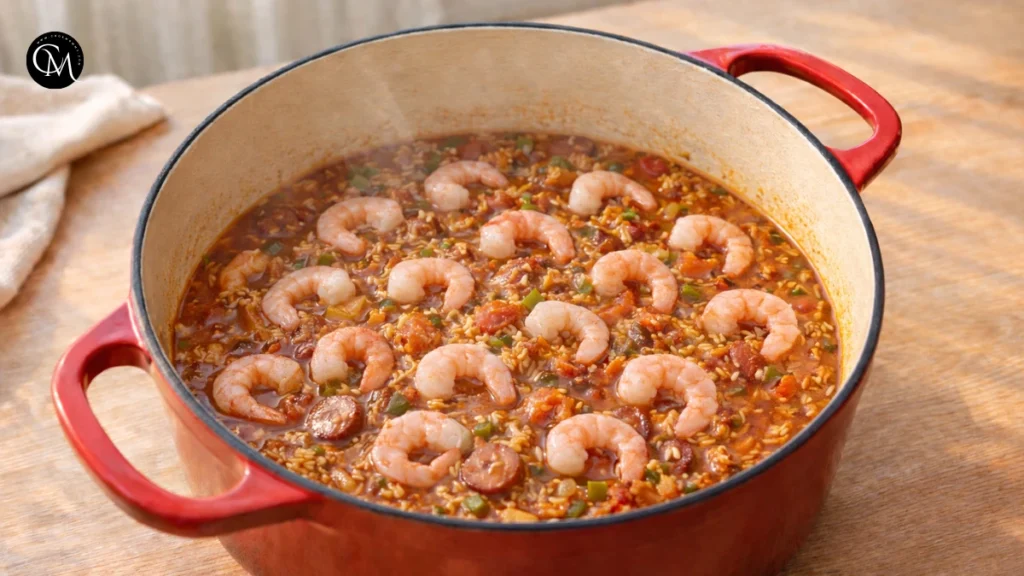
After about 18–20 minutes, when the rice is nearly tender, scatter the shrimp over the surface and lightly press them into the mixture. Cover again and cook for 4–5 minutes until they turn pink and opaque. Shrimp cooks quickly and continues to cook with residual heat. Adding it at the end keeps it juicy and prevents the rubbery texture that happens when seafood is overcooked.
Optional variation: If using pre-cooked shrimp, add them during the final 2 minutes just to warm through.
Step 7: Rest and finish
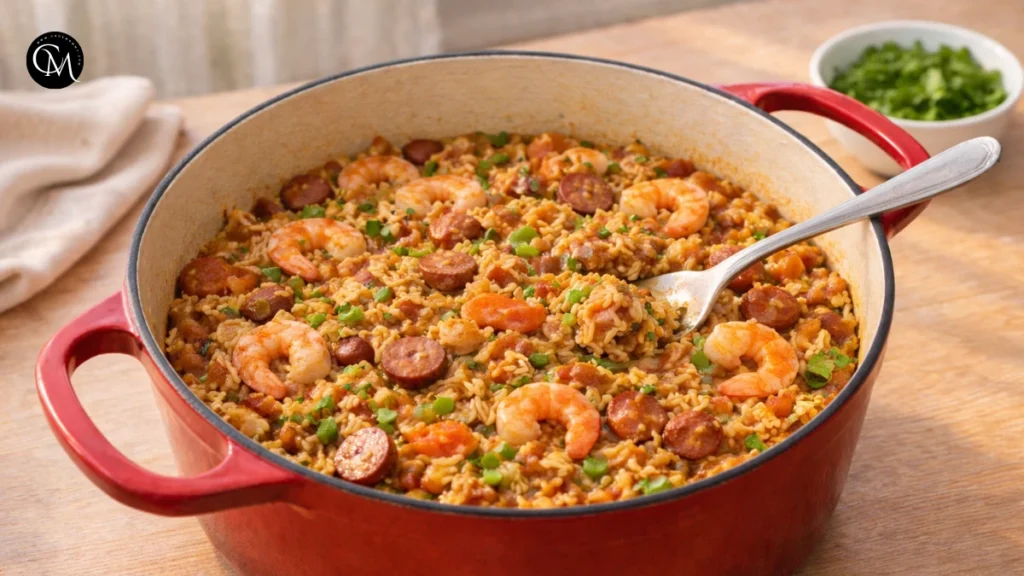
Remove the pot from heat and keep it covered for 5 minutes before serving. Then gently fluff the rice with a fork and taste for seasoning, adjusting salt or spice if needed. Resting allows moisture to redistribute evenly and helps the rice firm up slightly. It also lets the flavors settle and blend together, creating a more cohesive final dish.
Final touch: Sprinkle chopped parsley or green onions over the top for freshness and color just before serving.
Nutritional Information for the Jambalaya Recipe
Approximate values per serving:
- Calories: 420–480
- Protein: 28 g
- Carbohydrates: 42 g
- Fat: 16 g
- Fiber: 4 g
- Sodium: varies depending on sausage and seasoning
This dish provides a balanced mix of protein, carbohydrates, and fats, making it satisfying without being overly heavy. Using leaner proteins or brown rice can improve nutritional balance while preserving flavor.
Healthier Alternatives
You can adapt this Jambalaya Recipe to fit different dietary needs without losing its signature taste.
- Lower sodium: choose low-sodium broth and reduce seasoning
- Whole grain option: use brown rice for more fiber and slower digestion
- Dairy-free: naturally dairy-free as written
- Gluten-free: ensure sausage and seasoning are certified gluten-free
- Kid-friendly: reduce spice and add sweet bell peppers
- Diet-friendly: increase vegetables and reduce sausage portion
For seniors or lighter diets, smaller protein portions and softer-cooked rice make the dish easier to digest.
Serving Suggestions for the Jambalaya Recipe
Jambalaya is versatile and works in many settings.
- Serve with a crisp green salad for balance
- Pair with cornbread for a traditional Southern touch
- Add hot sauce for those who enjoy extra heat
- Garnish with fresh parsley or green onions for color and freshness
For gatherings, serve it family-style in a large pot it keeps warm and tastes even better after resting.
Common Mistakes to Avoid
- Overcooking the rice Rice becomes mushy if liquid ratios or heat are incorrect.
- Adding shrimp too early It turns rubbery when overcooked.
- Skipping browning Flavor depth depends on caramelization.
- Overseasoning at the start Season gradually; Cajun flavors intensify during cooking.
- Using the wrong rice Short-grain rice absorbs too much liquid and alters texture.
Experience shows that controlling heat and timing is more important than adding more spices.
Storing Tips for the Jambalaya Recipe
Proper storage helps preserve both texture and flavor.
- Refrigerate leftovers within 2 hours
- Store in airtight containers for up to 3 days
- Reheat gently with a splash of broth
- Freeze portions for up to 2 months
Rice continues absorbing moisture, so adding liquid when reheating restores consistency
Conclusion
A well-prepared Jambalaya Recipe delivers more than a comforting meal it brings together bold Cajun flavor, balanced texture, and a satisfying one-pot cooking experience. By focusing on timing, seasoning, and ingredient quality, you can transform a simple dish into something deeply memorable.
Try this Jambalaya Recipe at home and adjust it to your taste preferences. Share your experience in the comments, leave a review, or explore other Cajun-inspired meals to continue building your cooking skills. If you enjoy practical, flavor-driven recipes like this, subscribe for more kitchen-tested ideas and helpful tips.
FAQs
What type of rice works best?
Long-grain rice is ideal because it stays firm and absorbs flavor without becoming sticky.
Can I make it ahead of time?
Yes. In fact, flavors deepen after resting overnight, making leftovers even tastier.
Is this dish spicy?
It has moderate heat, but you can adjust Cajun seasoning to control spice levels.
Can I make it vegetarian?
Yes. Replace meat with mushrooms, beans, or plant-based sausage.
Why is my rice mushy?
Too much liquid or high heat can break down the grains.
Can I cook this in a slow cooker?
Yes, but add shrimp at the end to avoid overcooking.
What proteins work besides chicken and sausage?
Turkey, seafood mixes, or tofu all work well depending on dietary preferences.
Tried it before ?
There are no reviews yet. Be the first one to write one.