
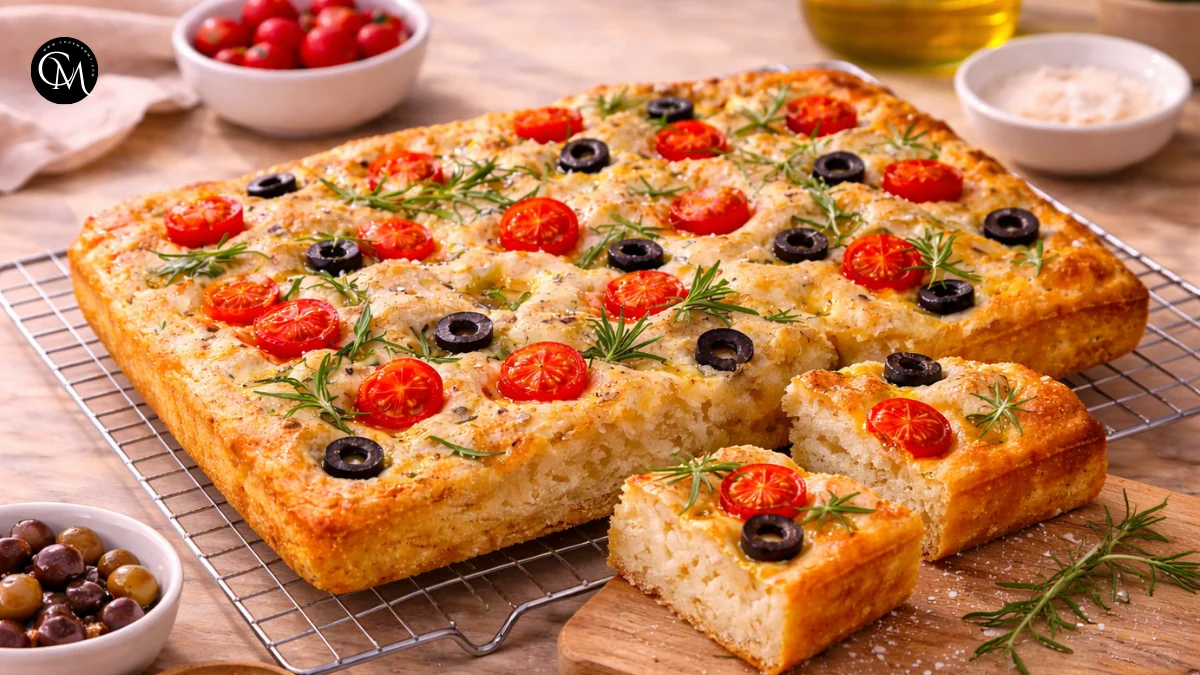
Sourdough Focaccia Bread: How to Bake It in 4 Easy Steps
Did you know that dough with higher hydration can create the light, open crumb many home bakers chase, yet it is also the reason so many focaccia attempts feel intimidating? That contrast is exactly why this recipe matters. Good focaccia is not about complicated shaping or perfect scoring. It is about learning how moisture, fermentation, olive oil, and gentle handling work together in your favor.
This Sourdough Focaccia Bread recipe is worth your time because it gives you the flavor depth of natural fermentation without turning the process into a weekend project that feels stressful. You get a golden crust, airy pockets, a tender chew, and the rich aroma of olive oil in a format that is beginner-friendly and satisfying for experienced bakers too. I come back to Sourdough Focaccia Bread whenever I want bread that feels special but still fits into real home cooking. It is forgiving, flexible, and ideal for family meals, sandwiches, snack boards, or serving alongside soup and salad.
Table of Contents
Ingredients List
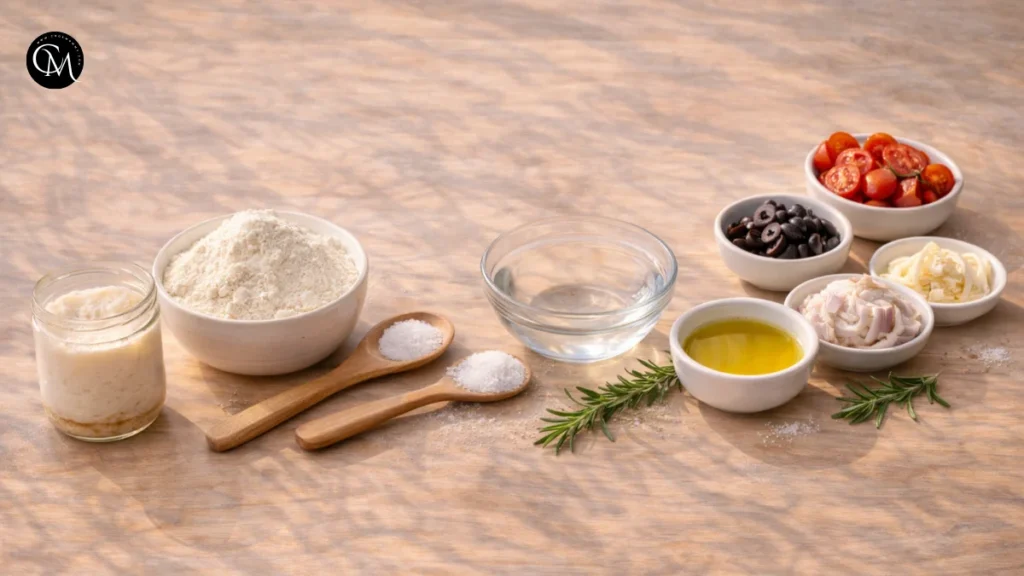
One of the best things about Sourdough Focaccia Bread is that the ingredient list is simple, but each ingredient plays a big role in flavor and texture.
- 100 g active sourdough starter, bubbly and recently fed
- 500 g bread flour
- 400 g lukewarm water
- 10 g fine sea salt
- 25 g extra-virgin olive oil for the dough
- 2 to 3 tablespoons extra-virgin olive oil for the pan and topping
- 1 teaspoon flaky sea salt for finishing
- 1 tablespoon fresh rosemary leaves, optional
- 6 to 10 cherry tomatoes, halved, optional
- 2 tablespoons sliced olives, optional
- Thinly sliced garlic or onions, optional
Substitution ideas:
- Bread flour gives the best chew, but all-purpose flour can work if that is what you have. The crumb may be slightly less structured.
- Whole wheat flour can replace 10 to 20 percent of the white flour for a nuttier taste and more fiber.
- If you prefer a milder finish, use less rosemary and top with only flaky salt and olive oil.
- For a softer, slightly richer result, you can mix in a teaspoon of honey, though traditional Sourdough Focaccia Bread does not need it.
- If you are avoiding garlic or onions for a gentler flavor, fresh herbs and olives still make the bread feel generous and aromatic.
When choosing olive oil, use one you actually enjoy tasting. Focaccia highlights it rather than hiding it.
Timing
The timing of Sourdough Focaccia Bread depends more on your room temperature and starter strength than on the clock alone, but this schedule works well in a typical home kitchen.
- Preparation time: 25 minutes active time
- Resting and fermentation time: 8 to 12 hours
- Baking time: 25 to 30 minutes
- Total time: about 9 to 13 hours
Compared with many enriched breads or shaped loaves, this style is easier because there is no tight shaping, no complicated slashing, and no need to create dramatic oven spring. The long fermentation is doing most of the heavy lifting for flavor.
Step-by-Step Instructions
Step 1 – Prepare ingredients
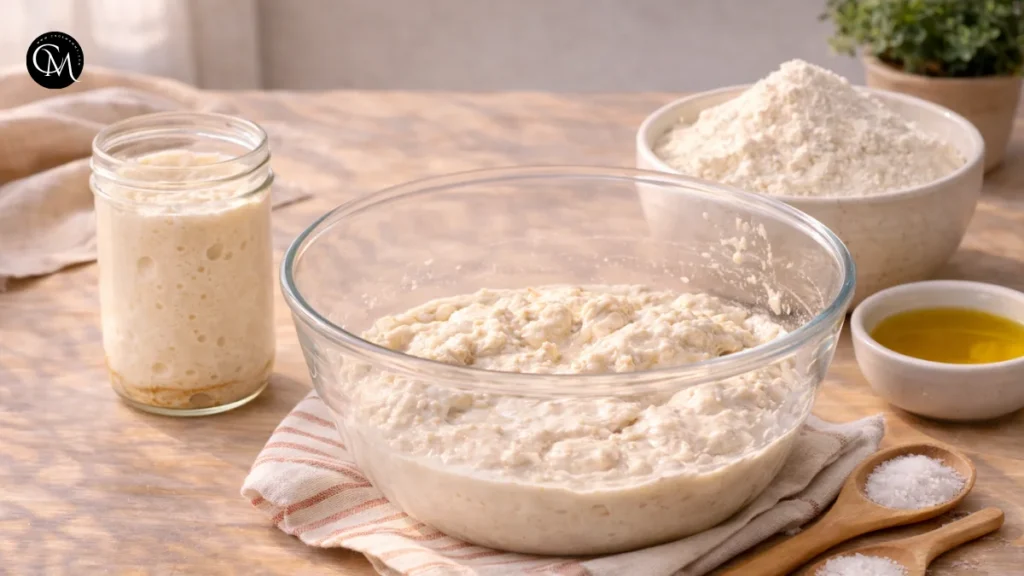
Start by making sure your starter is active. It should look puffy, airy, and ready to lift dough rather than drag it down. Cold starter straight from the fridge can work in some recipes, but for reliable Sourdough Focaccia Bread, I get better results when the starter has been fed and has clearly risen.
Measure everything before mixing. This matters more than many people think. Focaccia dough is wetter than standard sandwich bread dough, so it can feel sticky and messy if you try to improvise. Having your flour, water, salt, and olive oil ready helps you move with confidence instead of rushing and adding extra flour too soon.
In a large bowl, combine the water and starter. Stir until cloudy, then add the flour. Mix until no dry spots remain. Let the dough rest for 20 to 30 minutes. This short pause, often called an autolyse, gives the flour time to hydrate. That simple rest makes the dough easier to handle and helps create the airy texture people expect from Sourdough Focaccia Bread.
Step 2 – Build flavor base
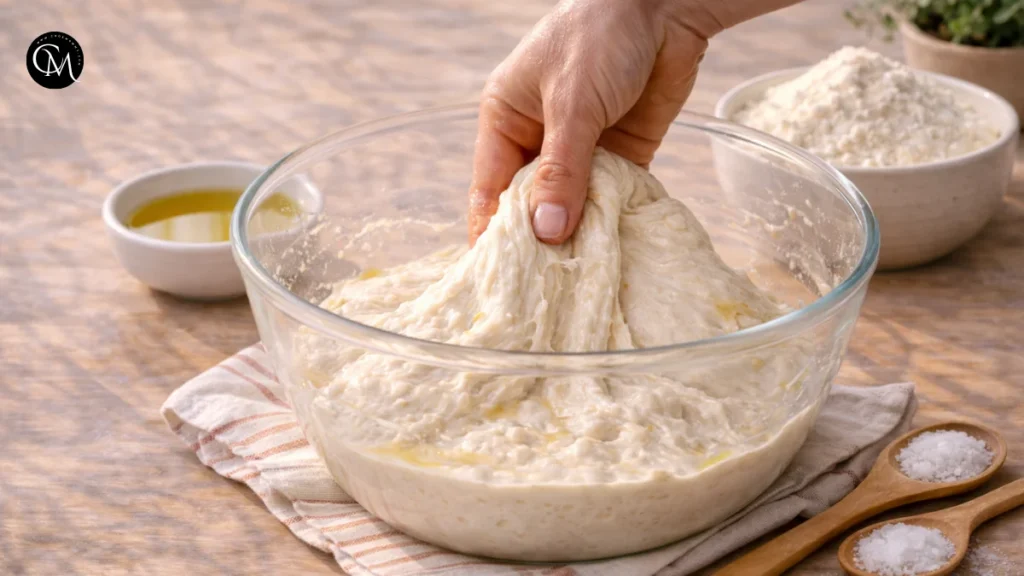
After the rest, add the salt and 25 g olive oil. Pinch and fold the dough until the ingredients are fully incorporated. At first the dough may seem slippery and uneven, but keep going. It will come together.
Now begin a series of stretch-and-folds over the next 1 to 2 hours. Every 30 minutes, wet your hand, lift one side of the dough, and fold it over itself. Turn the bowl and repeat a few times. You are not kneading in the traditional way. You are building structure while preserving the dough’s moisture.
This is where the cooking science becomes useful. Salt strengthens gluten, olive oil contributes tenderness and flavor, and gentle folding organizes the dough without knocking out fermentation. When I first started baking focaccia, I assumed more kneading meant better bread. In reality, Sourdough Focaccia Bread improves when you handle it with patience rather than force.
By the final fold, the dough should feel smoother, stronger, and slightly puffier.
Step 3 – Cook the main ingredient
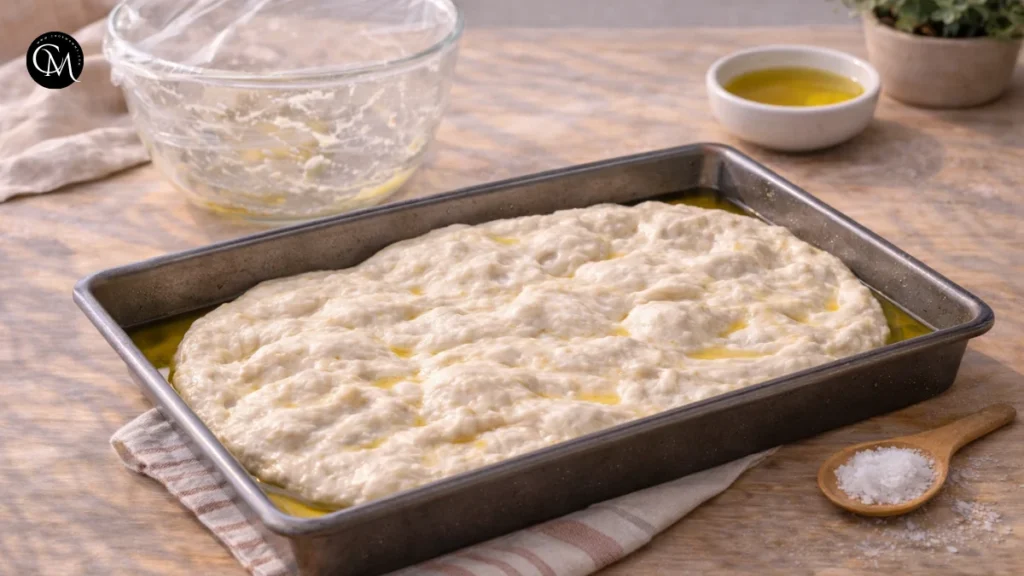
The main ingredient here is the dough itself, and this is the stage where fermentation transforms it from a sticky mixture into bread with flavor and texture. Cover the bowl and let it bulk ferment until expanded, jiggly, and visibly airy. Depending on kitchen temperature, this may take 4 to 6 hours after your folds, sometimes longer.
Do not wait only for the clock. Watch the dough. This matters because overproofed focaccia can collapse, while underproofed dough bakes up dense. A well-fermented dough will look lively, with bubbles forming at the sides and surface.
Generously oil a baking pan. For a thicker, softer focaccia, use a smaller pan. For thinner, crisp-edged Sourdough Focaccia Bread, use a larger rectangular pan. Transfer the dough gently to the pan and fold it once if needed to fit. Let it rest for 15 to 20 minutes, then stretch it toward the corners. If it resists, stop and wait another 10 minutes before trying again.
This rest is a texture secret. Forcing the dough will tear the gluten and flatten the gas you worked to build. Gentle handling keeps the crumb open and the finished bread lighter.
Step 4 – Combine everything
Let the dough proof in the pan until it looks pillowy and relaxed, usually 2 to 4 hours. Preheat the oven to 230°C or 450°F while the dough finishes rising.
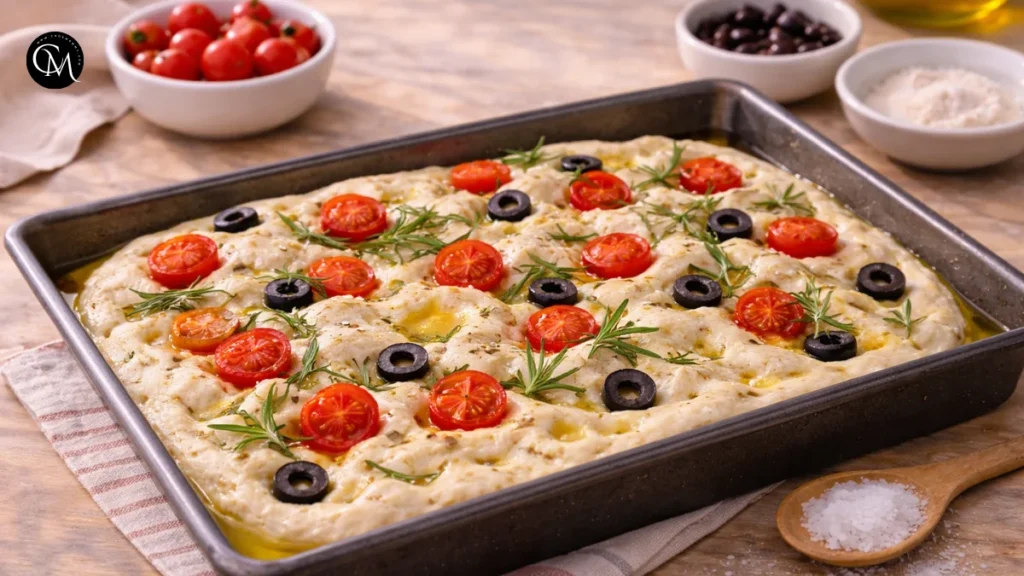
Drizzle the top generously with olive oil. Oil your fingertips and press deep dimples all over the surface. This is one of the most satisfying steps in making Sourdough Focaccia Bread. The dimples help the olive oil pool in little pockets and prevent the dough from ballooning unevenly.
Now add your toppings. Flaky salt and rosemary are classic, but cherry tomatoes, olives, or thin onion slices also work beautifully. Keep the toppings balanced. Too many wet toppings can weigh the surface down, while too little seasoning can make the bread taste flat.
This is where flavor balance comes together. The dough brings tang and chew, the olive oil brings richness, the salt sharpens everything, and herbs or vegetables add freshness and contrast. When those elements are balanced, Sourdough Focaccia Bread feels far more complex than its modest ingredient list suggests.
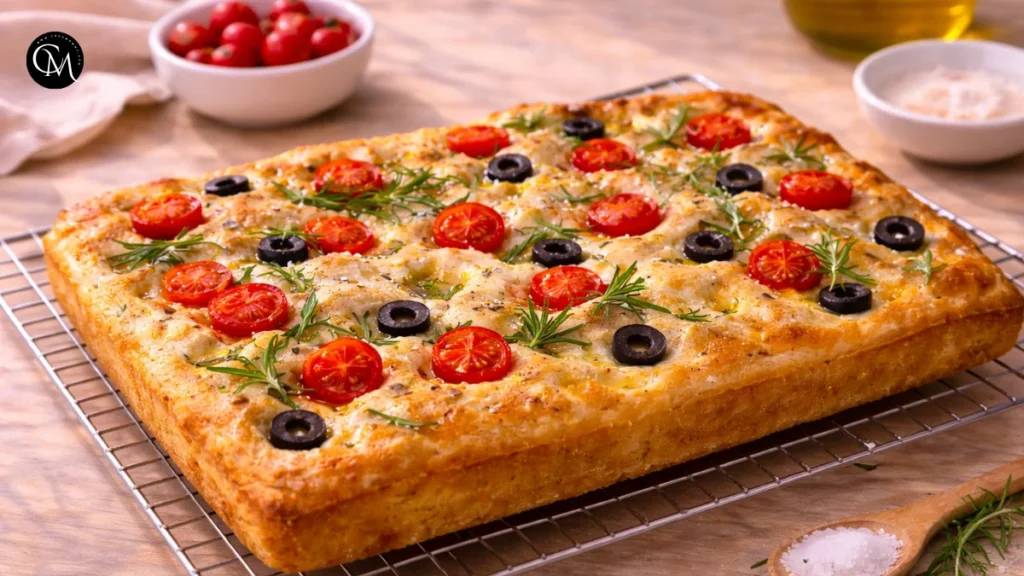
Bake for 25 to 30 minutes until deeply golden with crisp edges and a lightly bronzed top.
Step 5 – Finish and adjust seasoning
As soon as the focaccia comes out of the oven, let it cool in the pan for 5 to 10 minutes, then transfer it to a rack if you want to preserve the crispest bottom. If you leave it in the pan too long, steam can soften the crust.
Taste a small corner once it is warm, not piping hot. This is the best moment to decide whether it needs another pinch of flaky salt, a little extra olive oil, or even a few more fresh herbs. That final adjustment is what gives homemade bread a more polished, bakery-style feel.
A chef-style tip I use often: brush the top very lightly with olive oil right after baking only if the crust looks dry. Do not overdo it. The goal is sheen and aroma, not greasiness. Great Sourdough Focaccia Bread should feel rich but still light enough to keep reaching for another piece.
Nutritional Information
Approximate nutrition per serving, based on 12 servings without heavy toppings:
- Calories: 180 to 210
- Carbohydrates: 28 to 32 g
- Protein: 4 to 6 g
- Fat: 5 to 7 g
- Fiber: 1 to 2 g
- Sodium: 220 to 300 mg
These values vary based on flour type, olive oil amount, and toppings. Sourdough Focaccia Bread is not a low-calorie food, but it can absolutely fit into a balanced meal. Pairing it with vegetables, lean protein, soup, or salad makes it more satisfying than treating it as only a side of bread.
Healthier Alternatives
You can adapt Sourdough Focaccia Bread without losing the qualities that make it comforting.
For lower sugar: This recipe is already naturally low in sugar since it does not rely on sweeteners.
For whole-grain options: Replace 50 to 100 g of the bread flour with whole wheat flour. Add a little extra water if the dough feels tight, since whole grain absorbs more moisture.
For dairy-free: Good news, classic Sourdough Focaccia Bread is naturally dairy-free if you skip cheese toppings.
For gluten-free: A true gluten-free version needs a separate gluten-free focaccia formula, not just a one-to-one flour swap. A direct substitution will not give the same structure.
For children: Keep toppings simple with olive oil, mild herbs, or a little tomato. Bake in smaller squares for easier serving.
For lighter eating: Pair a smaller slice with a bean salad, roasted vegetables, or grilled chicken instead of serving it as the main part of the meal.
For seniors: Bake it slightly thicker for a softer bite and avoid overly crisp edges if texture sensitivity is a concern.
Serving Suggestions
Sourdough Focaccia Bread is incredibly versatile, which is one reason I make it so often.
Serve it warm with:
- A bowl of tomato soup or lentil soup
- Scrambled eggs and roasted tomatoes for brunch
- A salad with chickpeas, cucumber, and lemon vinaigrette
- Sliced mozzarella, basil, and marinated peppers
- Olive oil and balsamic vinegar for a simple appetizer board
For a more filling meal, split Sourdough Focaccia Bread horizontally and use it for sandwiches. It is especially good with grilled vegetables, roasted chicken, tuna salad, or turkey and fresh greens. I also love serving it alongside pasta on nights when dinner needs a homemade touch without extra effort.
If you are entertaining, cut it into small squares and arrange it on a wooden board with olives, dips, and seasonal vegetables. It looks generous and inviting with very little styling.
Common Mistakes to Avoid
Here are the most common issues I see with Sourdough Focaccia Bread and how to avoid them.
- Using weak starter If your starter is sluggish, the dough will struggle to rise. Feed it and use it when it is active and airy.
- Adding too much flour Sticky dough is normal here. Extra flour may feel safer, but it can make the bread heavy.
- Underproofing the dough If the dough has not become puffy and jiggly, it is not ready. Dense focaccia often comes from impatience.
- Overloading with toppings Too many tomatoes, onions, or wet vegetables can weigh the surface down and create soggy spots.
- Skipping enough olive oil Olive oil is not just for flavor. It helps with browning, crisp edges, and the classic focaccia finish.
- Baking until only pale gold Focaccia needs color. A deeper golden top usually means better flavor and texture.
Storing Tips for the Recipe
Sourdough Focaccia Bread is best the day it is baked, especially if you love crisp edges. That said, it stores better than many homemade breads because the olive oil helps it stay tender.
- Store cooled focaccia in an airtight container or wrapped well at room temperature for up to 2 days.
- Reheat in a hot oven for 5 to 8 minutes to restore some crispness.
- For longer storage, freeze slices or squares for up to 2 months.
- Thaw at room temperature, then warm in the oven instead of the microwave for a better texture.
You can also prep ahead. After placing the dough in the pan, cover and refrigerate it overnight. The next day, let it sit at room temperature until puffy, then dimple, top, and bake.
This recipe became one of my regular meals because it gives me bakery-quality bread with very little last-minute work. I can start it earlier in the day, let time do most of the job, and still pull out something that makes a simple dinner feel complete.
Conclusion
Sourdough Focaccia Bread is one of those recipes that proves great baking does not have to be complicated. With a strong starter, a well-hydrated dough, generous olive oil, and patient fermentation, you get crisp edges, a soft interior, and deep flavor that tastes far more impressive than the ingredient list suggests. It works for weeknight meals, casual gatherings, lunch sandwiches, or slow weekend baking when you want something comforting and homemade.
Try this recipe and make it your own with herbs, tomatoes, olives, or a plain flaky-salt finish. If you bake it, leave a comment or review and share how you topped it. Subscribe for more practical, flavor-first recipes and simple baking tips you can actually use in a home kitchen.
FAQs
Can I make Sourdough Focaccia Bread without bread flour?
Yes. All-purpose flour works well, though the crumb may be slightly less chewy and structured than with bread flour.
Why is my focaccia dense instead of airy?
The most likely causes are weak starter, underproofing, or adding too much flour during handling.
Can I refrigerate the dough overnight?
Yes. Cold proofing in the pan overnight can improve flavor and make timing easier the next day.
How do I know when the dough is ready to bake?
It should look puffy, jiggly, and airy, with visible bubbles and a relaxed shape in the pan.
Can I freeze Sourdough Focaccia Bread?
Yes. Freeze fully cooled slices in a sealed bag or container, then reheat in the oven for best texture.
Which toppings work best?
Rosemary, flaky salt, olives, cherry tomatoes, garlic, and thin onions are all reliable and flavorful choices.
Is Sourdough Focaccia Bread good for sandwiches?
Absolutely. Slice it horizontally after cooling, and use it for hearty sandwiches with vegetables, cheese, or cooked proteins.
Tried it before ?
There are no reviews yet. Be the first one to write one.