
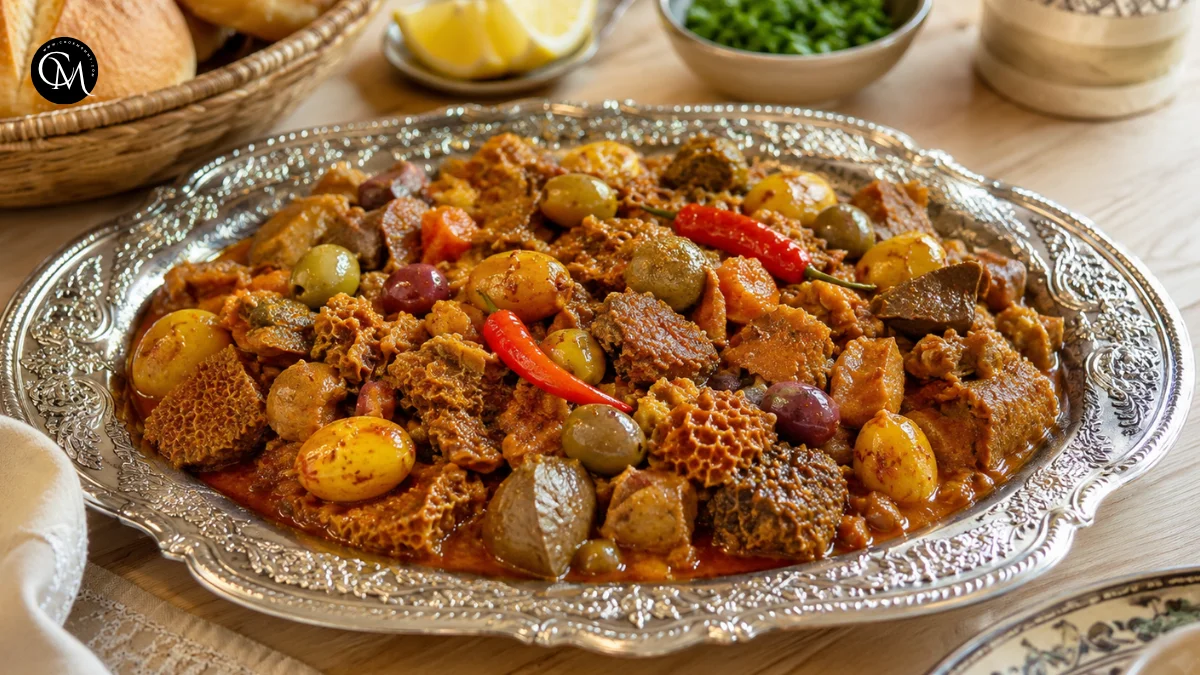
Offal in the Moroccan way (Tkelia): 5 Best Eid Cooking Ideas
Did you know that in many traditional kitchens, some of the most flavorful Eid dishes come from ingredients that are often overlooked? Offal in the Moroccan way is a perfect example. Instead of treating liver, heart, kidney, or tripe as difficult cuts, Moroccan cooking turns them into deeply seasoned, tender, and memorable dishes full of cumin, paprika, garlic, coriander, preserved lemon, and olive oil.
This recipe is worth reading because it helps you cook offal with confidence, especially during Eid when families often prepare special dishes after the celebration. The goal is simple: clean flavor, soft texture, warm spices, and a dish that feels festive without being complicated. Whether you are making a quick liver sauté, a slow-cooked tripe stew, or a mixed offal platter, Offal in the Moroccan way gives you practical steps that make the result taste balanced, aromatic, and homemade.
Table of Contents
Ingredients List
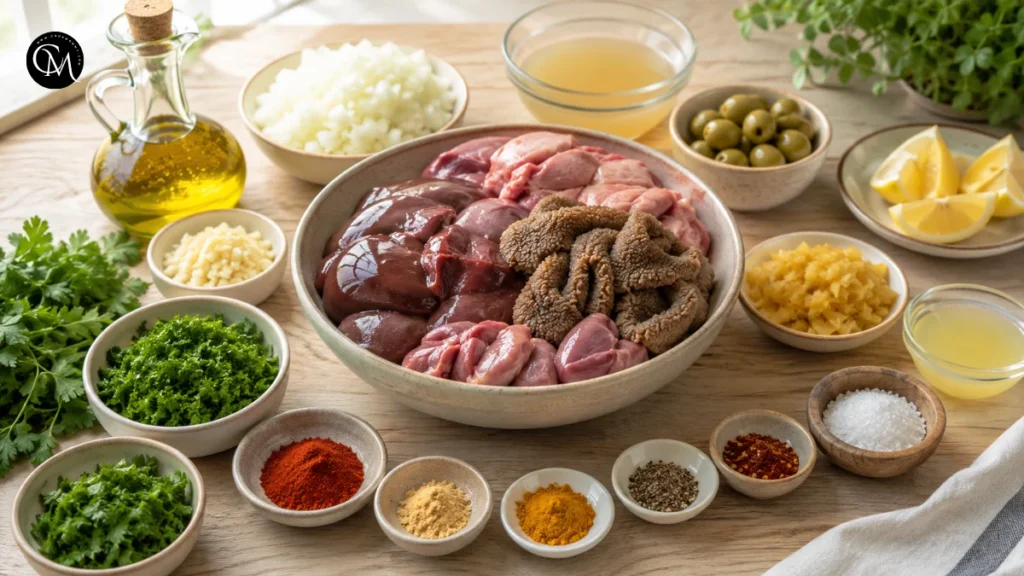
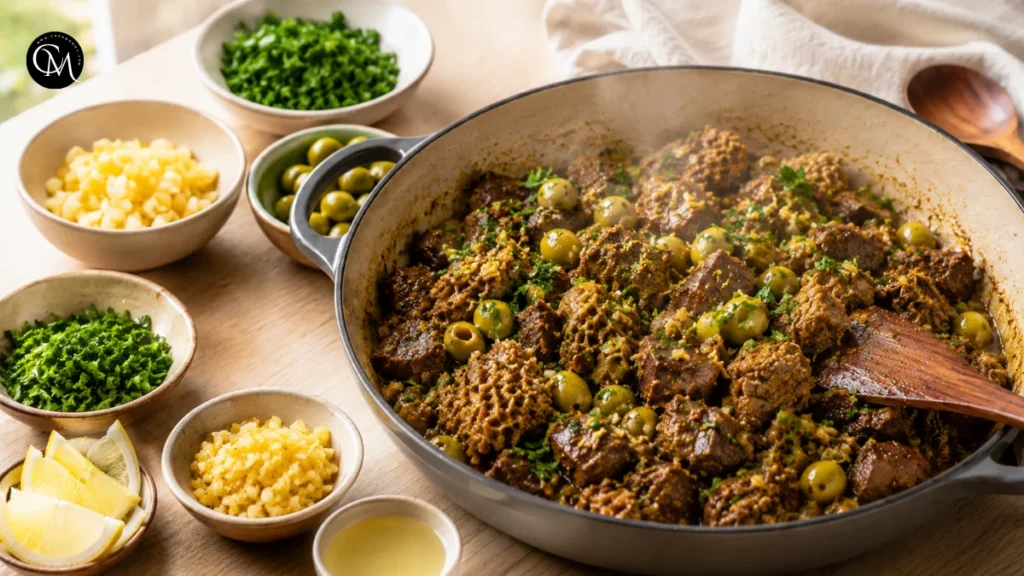
For this version of Offal in the Moroccan way, you can use a mix of lamb or beef liver, heart, kidney, and small pieces of tripe. Choose what you have available and what your family enjoys most.
Main Ingredients
- 700 g mixed offal, cleaned and cut into bite-size pieces
- 3 tablespoons olive oil
- 1 medium onion, finely chopped
- 3 garlic cloves, minced
- 1 small bunch fresh coriander, chopped
- 1 small bunch parsley, chopped
- 1 teaspoon ground cumin
- 1 teaspoon sweet paprika
- ½ teaspoon ground ginger
- ½ teaspoon turmeric
- ¼ teaspoon black pepper
- Salt, to taste
- ½ teaspoon chili flakes or cayenne, optional
- 1 small preserved lemon, finely chopped
- 2 tablespoons lemon juice
- ½ cup water or light broth
- Green olives, optional
- Lemon wedges, for serving
Smart Substitutions
If preserved lemon is not available, use fresh lemon zest with a little extra lemon juice. If you prefer a milder dish, skip the chili and use more sweet paprika. For a richer Eid flavor, add a pinch of saffron threads soaked in warm water. Fresh coriander gives the dish a classic Moroccan aroma, but parsley alone can still work if needed.
Timing
- Preparation time: 25 minutes
- Cooking time: 35–60 minutes, depending on the offal used
- Total time: 1 hour to 1 hour 25 minutes
A quick liver-only version of Offal in the Moroccan way can be ready in about 35 minutes. A mixed version with heart or tripe takes longer because these cuts need gentle cooking to become tender. Compared with many traditional Eid recipes that can take several hours, this method is practical for a family meal without losing the Moroccan character.
Step-by-Step Instructions
Step 1 – Prepare ingredients
Good preparation matters more than people think, especially when cooking offal. Rinse the pieces carefully under cold water, then pat them dry with paper towels. Remove tough membranes, excess fat, or any strong-smelling parts. Cut everything into similar-sized pieces so they cook evenly.
For kidney, soaking briefly in water with lemon juice can help soften the flavor. For liver, avoid soaking too long because it can lose its natural texture. If using tripe, make sure it is already cleaned and partially cooked, because raw tripe needs much more time.
This step is the foundation of Offal in the Moroccan way. Clean ingredients absorb spices better, cook more evenly, and taste fresher.
Step 2 – Build flavor base
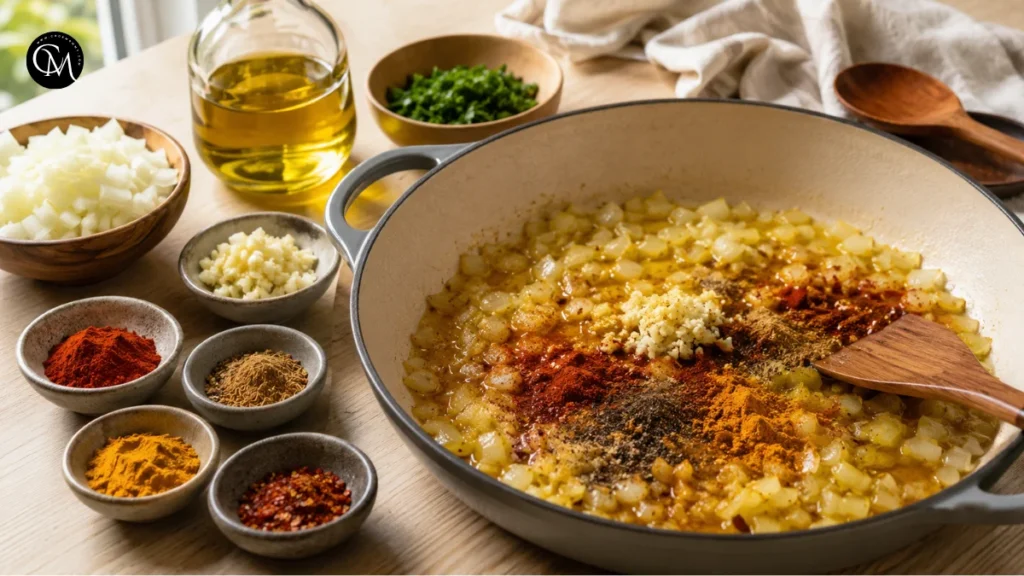
Heat olive oil in a wide pan or heavy pot over medium heat. Add the chopped onion with a small pinch of salt and cook until soft and lightly golden. Add garlic and stir for about 30 seconds, just until fragrant.
Now add cumin, paprika, ginger, turmeric, black pepper, and chili if using. Stir the spices into the warm oil. This step wakes up the spices and helps their flavor spread through the dish. Moroccan cooking often depends on this simple science: spices bloom in fat, which makes them taste deeper and more rounded.
For Offal in the Moroccan way, the flavor base should smell warm, earthy, and slightly sweet before the meat goes in.
Step 3 – Cook the main ingredient
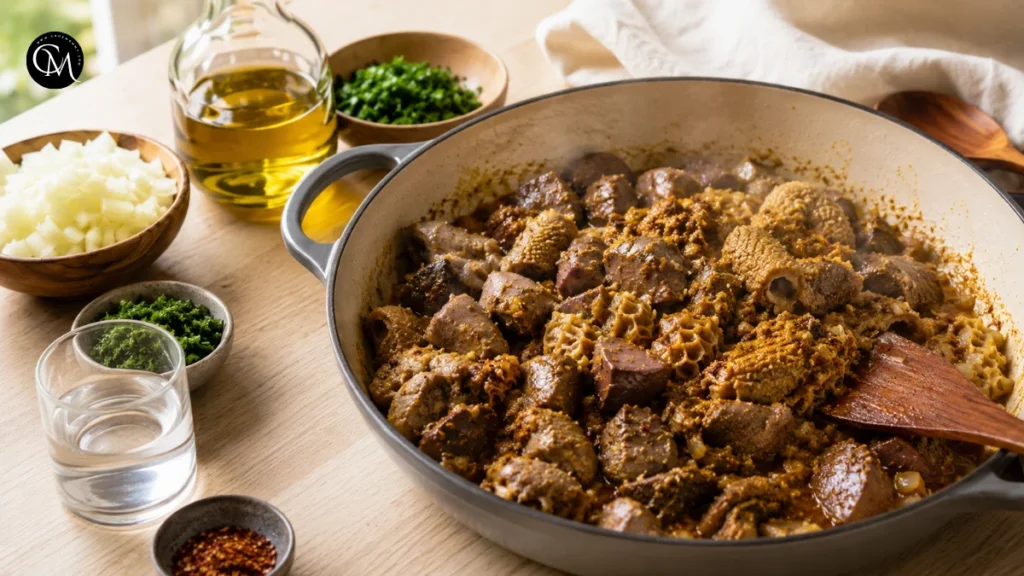
Add the prepared offal to the pan and stir well so every piece is coated with the onion and spice mixture. Cook for a few minutes until the outside changes color. This quick sear helps lock in flavor and gives the dish a better texture.
If using liver, cook gently and avoid overcooking. Liver becomes dry and grainy when cooked too long. If using heart, give it more time because it is lean and firm. If using tripe, add extra water and simmer until tender.
Cover the pan and let everything cook on low heat. Stir occasionally and add small splashes of water if the sauce gets too thick. The goal is tender pieces, not a watery stew.
Step 4 – Combine everything
Once the offal is almost cooked, add chopped coriander, parsley, preserved lemon, lemon juice, and olives if using. Stir gently and let the sauce simmer for another 8–10 minutes.
This is where Offal in the Moroccan way becomes balanced. The preserved lemon cuts through richness, the herbs add freshness, and the olives bring a salty, savory note. If the dish tastes heavy, add more lemon juice. If it tastes sharp, let it simmer a few more minutes to mellow.
The sauce should lightly coat the pieces, not drown them. Moroccan-style offal is often best when it feels glossy, aromatic, and concentrated.
Step 5 – Finish & adjust seasoning
Taste before serving. Add salt only at the end because preserved lemon and olives can already be salty. Add more cumin if you want a deeper Moroccan flavor, or more lemon juice if you want brightness.
Chef-style advice: let the dish rest for 5 minutes off the heat before serving. This short rest helps the spices settle and allows the sauce to cling better to the offal. Serve Offal in the Moroccan way hot, with warm bread and lemon wedges on the side.
Nutritional Information
Approximate values per serving, based on 4 servings:
| Nutrient | Amount |
|---|---|
| Calories | 310–380 kcal |
| Protein | 28–35 g |
| Fat | 18–24 g |
| Carbohydrates | 6–10 g |
| Fiber | 1–2 g |
| Sodium | Varies by olives and preserved lemon |
Offal can be naturally rich in protein and minerals, but values depend on the specific cuts used. Liver, heart, kidney, and tripe all have different nutrition profiles. This recipe uses olive oil, herbs, and spices to build flavor without needing heavy sauces. As with any rich Eid dish, enjoy it as part of a balanced meal with bread, salad, and vegetables.
Healthier Alternatives
- To make Offal in the Moroccan way lighter while keeping the flavor, start with the cooking fat. Use 1–2 tablespoons olive oil instead of 3, and add small splashes of water when needed. This keeps the sauce moist without making it greasy.
- For a lower-salt version, reduce the preserved lemon and olives, then add fresh lemon juice at the end. This gives brightness without too much sodium.
- For whole-grain options, serve the dish with whole-wheat Moroccan bread, barley bread, or brown rice. These sides make the meal feel more filling and balanced.
- For gluten-free serving, skip bread and pair the offal with roasted potatoes, steamed rice, or a warm chickpea salad. The recipe itself is naturally dairy-free when prepared as written.
- For children, use mild spices and cut the pieces smaller. For seniors, cook the offal a little longer with extra sauce to make the texture softer. For dieters, serve a smaller portion with a large tomato, cucumber, and herb salad.
Serving Suggestions
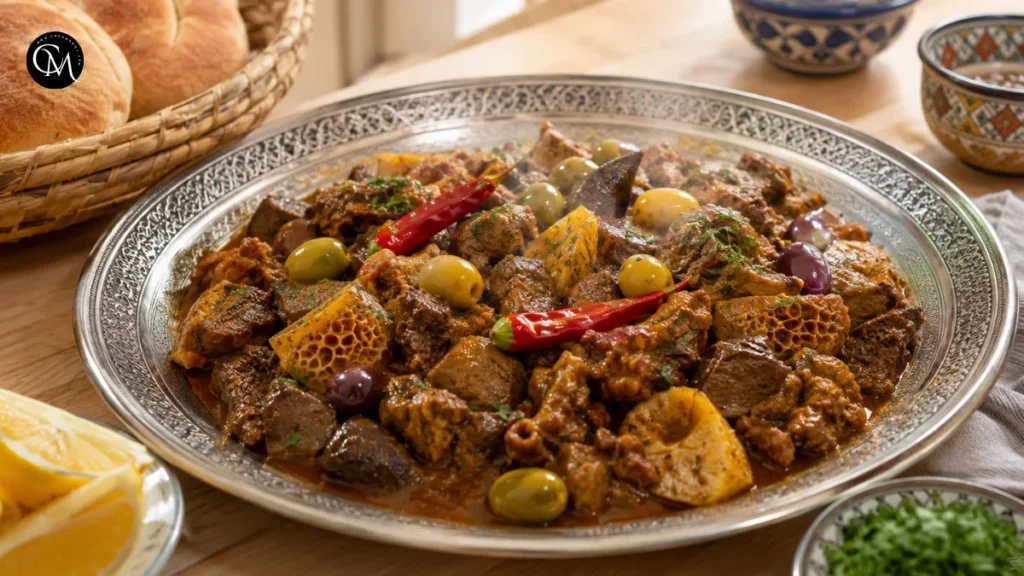
Offal in the Moroccan way is best served hot, straight from the pan, with fresh bread to scoop up the sauce. For an Eid table, place it in a shallow serving dish and garnish with chopped parsley, coriander, lemon wedges, and a light sprinkle of cumin.
For a family-style meal, serve it with Moroccan bread, mint tea, grilled peppers, olives, and a fresh tomato salad. If you want a fuller dinner, add roasted potatoes or simple rice on the side.
You can also turn leftovers into a quick sandwich. Warm the offal gently, tuck it into bread, and add chopped salad, a squeeze of lemon, and a little harissa. This gives the dish a street-food feeling while still keeping the Moroccan flavor.
For a festive platter, serve Offal in the Moroccan way beside other Eid dishes like grilled skewers, zaalouk, taktouka, or spiced lentils.
Common Mistakes to Avoid
- Skipping the cleaning step: Offal needs careful preparation. Removing membranes, rinsing well, and drying the pieces helps create a cleaner flavor and better texture.
- Overcooking liver: Liver cooks quickly. Too much heat makes it dry and chalky. Cook it gently and remove it from heat as soon as it is tender.
- Adding too much water: This dish should have a concentrated sauce. Add water slowly, only when needed, so the spices stay bold.
- Salting too early: Preserved lemon and olives can be salty. Taste near the end before adding more salt.
- Using weak seasoning: Offal has a strong character, so it needs confident seasoning. Cumin, paprika, garlic, herbs, and lemon are important for balance.
- Serving it cold: The texture is best when hot or warm. Reheat gently and avoid boiling, especially if liver is included.
Storing Tips for the Offal in the Moroccan way
Store leftovers in an airtight container in the refrigerator for up to 2 days. Let the dish cool before storing, but do not leave it at room temperature for too long. To reheat, warm it slowly in a pan with a splash of water. Avoid high heat because it can make the pieces tough.
You can prepare the ingredients ahead by cleaning and cutting the offal earlier in the day. Keep it covered in the refrigerator until cooking time. You can also chop herbs, onions, and garlic in advance to make the final cooking easier.
This recipe became one of my regular meals because it turns a traditional Eid ingredient into something practical, flavorful, and less intimidating. Once you understand the cleaning, seasoning, and timing, Offal in the Moroccan way becomes much easier to repeat.
Conclusion
Offal in the Moroccan way is a beautiful example of how traditional cooking can transform simple ingredients into a rich, festive, and memorable meal. With the right cleaning method, warm Moroccan spices, fresh herbs, preserved lemon, and careful cooking, offal becomes tender, aromatic, and full of Eid flavor. The best part is that the recipe is flexible: you can make it mild or spicy, quick with liver, or slow and hearty with tripe and heart.
Try this recipe for your next Eid table or family lunch, then leave a comment or review with your favorite version. Subscribe for more Moroccan recipes, cooking tips, and easy traditional dishes made for real home kitchens.
FAQs
Can I make Offal in the Moroccan way with only liver?
Yes. Liver works very well, but cook it gently and briefly. Overcooked liver becomes dry, so keep the heat moderate and watch the texture.
What spices are best for Moroccan offal?
Cumin, paprika, turmeric, ginger, garlic, black pepper, and fresh herbs are classic choices. Preserved lemon adds brightness and balances the richness.
How do I reduce the strong smell of offal?
Clean it well, remove membranes, use lemon juice, and cook with garlic, onion, herbs, and spices. Fresh ingredients make a big difference.
Can I prepare this recipe before Eid lunch?
Yes, you can clean and cut the offal ahead. For best texture, cook it close to serving time, especially if using liver.
What should I serve with Moroccan offal?
Serve it with Moroccan bread, olives, tomato salad, roasted peppers, or rice. Lemon wedges and fresh herbs make it brighter.
Is this recipe spicy?
It can be mild or spicy. Use sweet paprika for warmth, then add chili flakes or cayenne only if you enjoy heat.
Can I freeze Offal in the Moroccan way?
You can freeze some versions, especially heart or tripe, but liver may change texture. Refrigerating and eating within 2 days gives the best result.
Tried it before ?
There are no reviews yet. Be the first one to write one.