
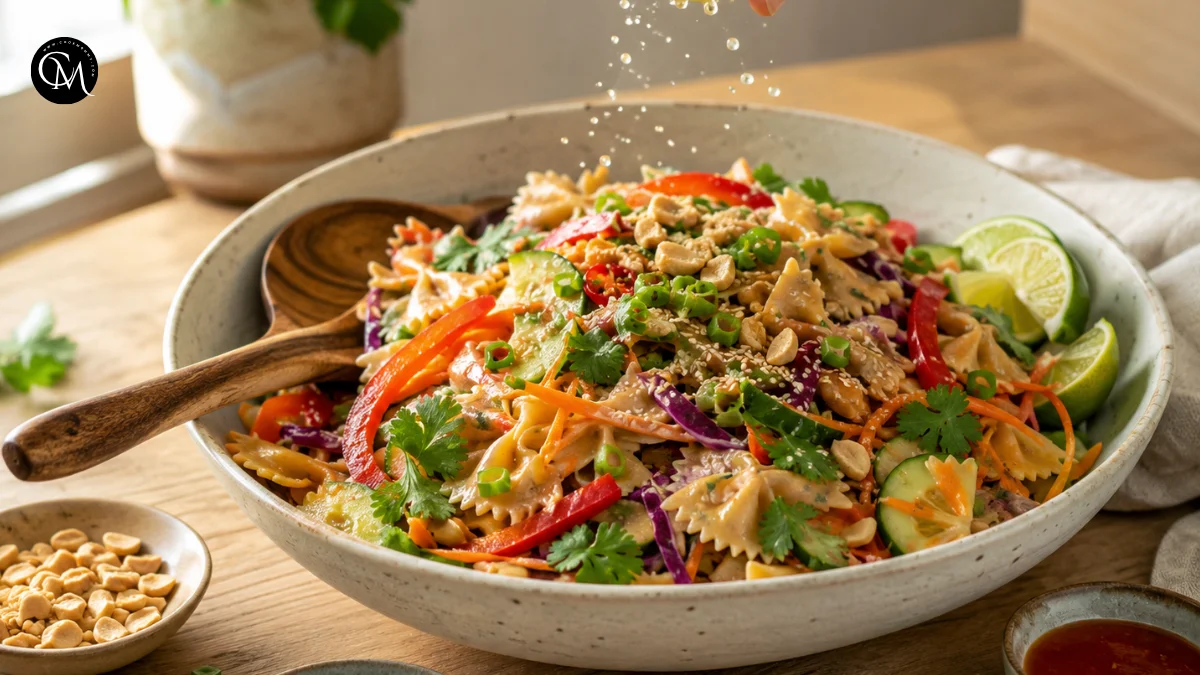
Spicy Thai Pasta Salad: Why 5 Minutes Can Save Dinner
Did you know that many home cooks spend more time deciding what to make for dinner than actually preparing a quick meal? That is exactly where Thai Pasta Salad becomes a weeknight hero. It is fast, colorful, flexible, and packed with sweet, spicy, salty, and tangy flavors that make a simple bowl of pasta feel exciting.
This recipe is worth keeping because it solves a real dinner problem: you need something fresh, filling, and flavorful without standing over the stove for an hour. With cooked pasta, crunchy vegetables, herbs, and a quick Thai-inspired peanut-lime dressing, Thai Pasta Salad can turn into dinner, lunch prep, or a party side dish in minutes.
The best part is balance. The noodles give comfort, the vegetables add crunch, the herbs bring freshness, and the dressing ties everything together with creamy heat.
Table of Contents
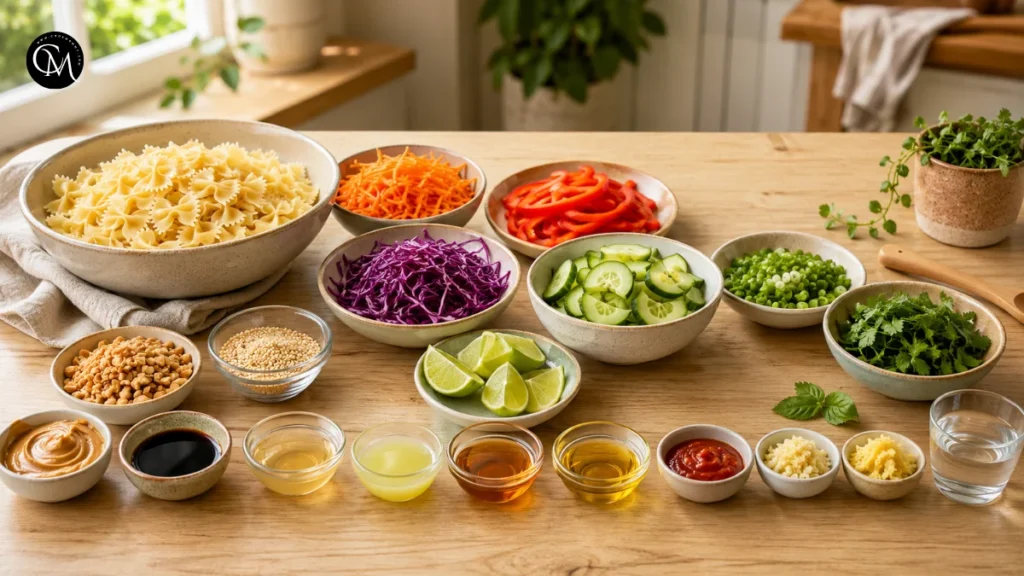
Ingredients List
For the Thai Pasta Salad:
- 12 oz pasta, such as rotini, bowties, penne, or spaghetti
- 1 cup shredded carrots
- 1 red bell pepper, thinly sliced
- 1 cup purple cabbage, finely shredded
- ½ cup cucumber, sliced into thin half-moons
- ¼ cup green onions, chopped
- ¼ cup fresh cilantro or basil
- ¼ cup roasted peanuts, chopped
- 1 tablespoon sesame seeds, optional
- Lime wedges, for serving
For the spicy Thai-style dressing:
- ⅓ cup creamy peanut butter
- 2 tablespoons soy sauce
- 1 tablespoon rice vinegar
- 1 tablespoon fresh lime juice
- 1 tablespoon honey or maple syrup
- 1 tablespoon sesame oil
- 1–2 teaspoons sriracha or chili garlic sauce
- 1 small garlic clove, finely grated
- 1 teaspoon fresh ginger, grated
- 2–4 tablespoons warm water, to thin the dressing
Substitution ideas:
Use almond butter or sunflower seed butter instead of peanut butter. Swap soy sauce for tamari if you need a gluten-free option. If you want a lighter dressing, use half peanut butter and half Greek yogurt or coconut milk. For extra protein, add grilled chicken, shrimp, tofu, or edamame.
Timing
- Preparation time: 10 minutes
- Cooking time: 10 minutes
- Total time: 20 minutes
If your pasta is already cooked, this Spicy Thai Pasta Salad: can come together in about 5 minutes. Compared with many pasta salad recipes that need chilling time, layered sauces, or roasted vegetables, this one is quick enough for a busy evening but still tastes fresh and complete.
Step-by-Step Instructions
Step 1 – Prepare ingredients
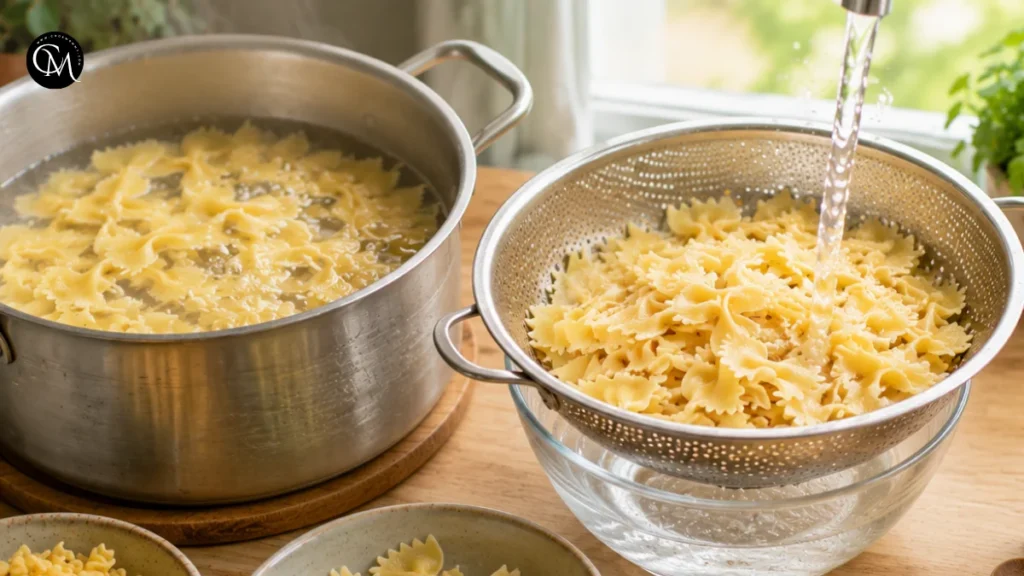
Start by cooking the pasta in salted boiling water until just al dente. Do not overcook it. Pasta that is too soft will break apart once mixed with the dressing. After draining, rinse it briefly under cool water to stop the cooking and remove extra surface starch.
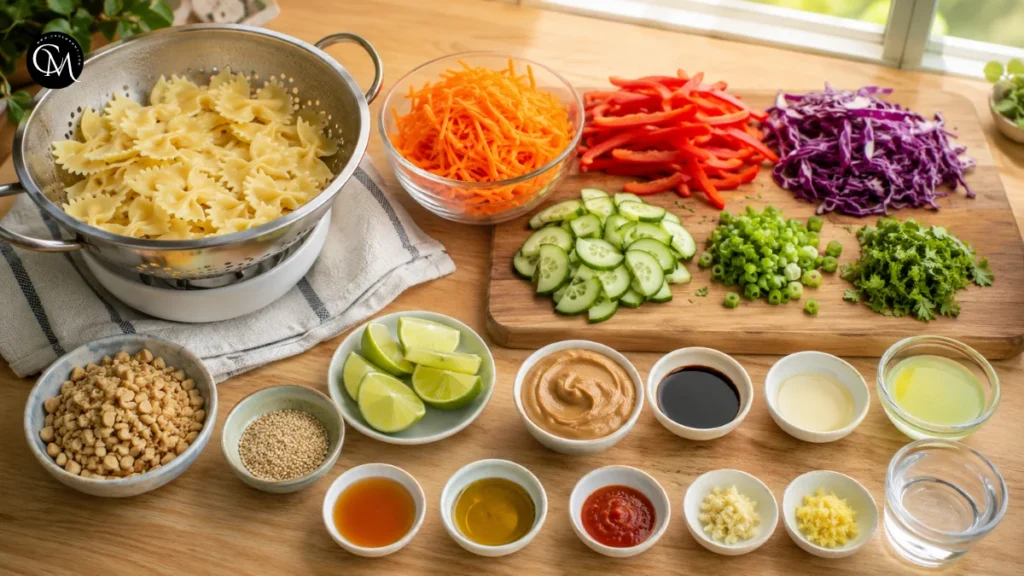
While the pasta cools, slice the vegetables. Thin, even cuts matter because they make every bite balanced. A forkful of Thai Pasta Salad should give you pasta, crunch, herbs, and dressing all at once. If the vegetables are too large, the salad feels uneven.
Preparation matters more than people think. When everything is chopped before mixing, you avoid overworking the pasta and bruising the herbs.
Step 2 – Build flavor base
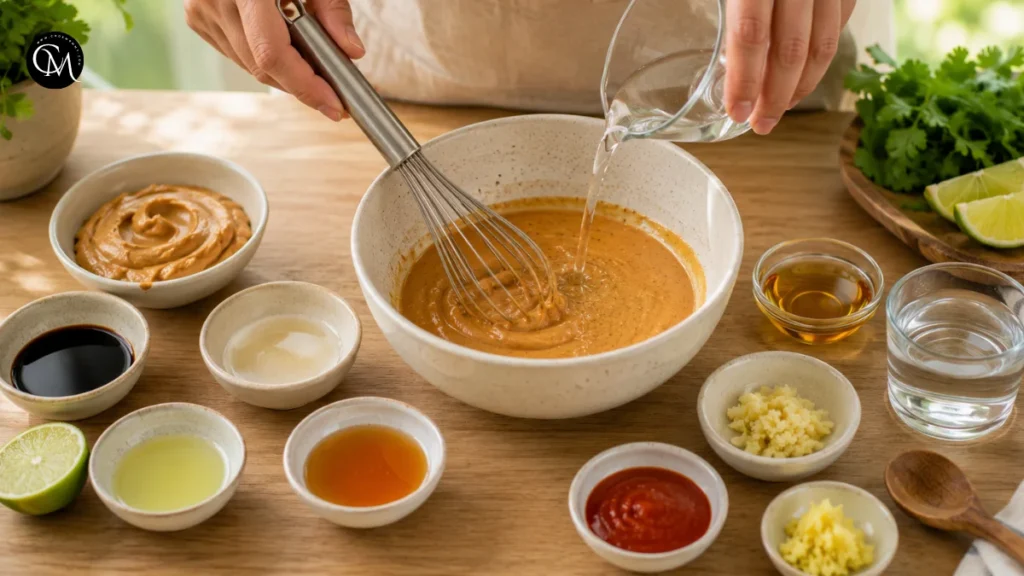
In a medium bowl, whisk together peanut butter, soy sauce, rice vinegar, lime juice, honey, sesame oil, sriracha, garlic, and ginger. Add warm water one tablespoon at a time until the dressing becomes smooth and pourable.
This is where the cooking science comes in. Peanut butter contains fat and protein, so it needs liquid and steady whisking to loosen into a sauce. Warm water helps it emulsify, meaning the ingredients blend into one creamy dressing instead of separating.
Taste the dressing before adding it to the salad. It should be savory first, then lightly sweet, tangy, and spicy. That balance is what gives Thai Pasta Salad its bold flavor.
Step 3 – Cook the main ingredient
The pasta is the main ingredient, so texture is important. Cook it until firm but tender, usually one minute less than the package suggests if you prefer a springy bite. Pasta continues to soften slightly after it meets the dressing.
Short pasta shapes work best because they hold sauce in their curves and edges. Rotini catches peanut dressing beautifully, while bowties give a fun texture. Spaghetti can also work, especially if you want a noodle-salad style dish.
For the best Thai Pasta Salad, let the pasta cool before dressing it. Hot pasta can wilt herbs and soften crisp vegetables too quickly.
Step 4 – Combine everything
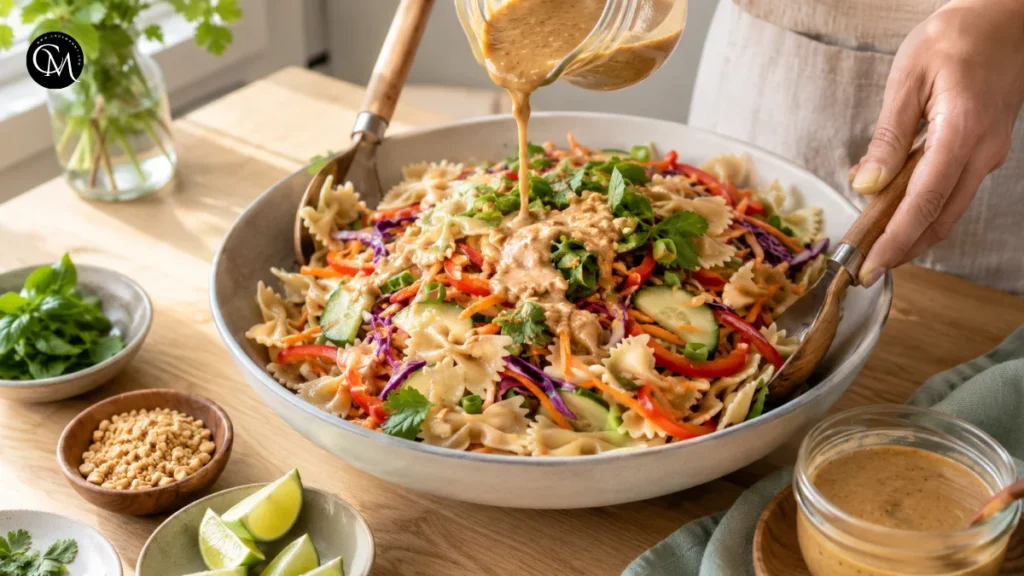
Add the cooled pasta to a large mixing bowl. Scatter in carrots, bell pepper, cabbage, cucumber, green onions, and herbs. Pour most of the dressing over the top, then toss gently with tongs or two large spoons.
Do not dump in all the dressing at once. Pasta absorbs sauce as it sits, and vegetables release a little moisture. Start with about three-quarters of the dressing, then add more as needed.
This step is all about balance. The creamy dressing should coat the pasta without drowning the vegetables. The crunch should still stand out, and the herbs should taste bright. A good Thai Pasta Salad feels fresh, not heavy.
Step 5 – Finish & adjust seasoning
Finish with chopped peanuts, sesame seeds, extra herbs, and a squeeze of lime. Taste again before serving. If it tastes flat, add lime juice. If it needs more depth, add soy sauce. If it feels too rich, add cucumber or cabbage. If you want more heat, add another small spoon of sriracha.
Chef-style advice: always adjust after mixing. Ingredients change the final flavor. Pasta softens spice, vegetables add water, and herbs brighten the whole bowl. The final taste should be lively and layered.
Serve Thai Pasta Salad slightly chilled or at room temperature. It should taste creamy, crunchy, fresh, and spicy without feeling too heavy.
Nutritional Information
Approximate nutrition per serving, based on 6 servings:
| Nutrient | Amount |
|---|---|
| Calories | 360–420 |
| Protein | 10–14 g |
| Carbohydrates | 45–52 g |
| Fat | 16–20 g |
| Fiber | 4–6 g |
| Sodium | 520–680 mg |
These values depend on the pasta type, dressing amount, and added protein. Thai Pasta Salad can be a satisfying meal because it includes carbohydrates for energy, vegetables for fiber, and healthy fats from peanuts and sesame oil. For a more filling dinner, add tofu, chicken, shrimp, or edamame.
Healthier Alternatives
- For lower sugar, reduce the honey or maple syrup to 1 teaspoon. You can also use extra lime juice and a little orange juice for natural sweetness without making the dressing too sugary.
- For whole-grain options, choose whole-wheat pasta, chickpea pasta, lentil pasta, or brown rice noodles. These options add fiber and can make Thai Pasta Salad more filling.
- For dairy-free needs, this recipe is naturally dairy-free if you avoid yogurt-based dressing swaps. For gluten-free versions, use gluten-free pasta and tamari instead of soy sauce.
- For children, reduce the chili sauce and serve extra sriracha on the side. For seniors, cut vegetables thinner and choose a softer pasta shape. For lighter meal prep, increase the vegetables and use less pasta while keeping the dressing flavorful.
- The goal is not to remove everything delicious. The goal is to keep the creamy, tangy, crunchy character while adjusting the recipe for different needs.
Serving Suggestions
Serve Thai Pasta Salad as a quick dinner with grilled chicken, shrimp skewers, crispy tofu, or a fried egg on top. It also works beautifully as a cold lunch bowl because the flavors become deeper after resting.
For a picnic or potluck, serve it in a wide bowl with lime wedges around the edges and peanuts sprinkled just before eating. This keeps the topping crunchy and makes the dish look fresh.
You can also turn it into a meal-prep jar. Add dressing at the bottom, then pasta, firm vegetables, herbs, and peanuts on top. Shake when ready to eat.
For a summer table, pair Thai Pasta Salad with cucumber lemonade, fresh fruit, grilled vegetables, or simple lettuce wraps. The cool crunch and spicy dressing make it especially good on warm days.
Common Mistakes to Avoid
- Overcooking the pasta Soft pasta becomes mushy once mixed with dressing. Cook it al dente for the best texture.
- Adding dressing while pasta is too hot Hot pasta can wilt herbs and make vegetables lose their crisp bite.
- Using too much dressing at once Start with less, toss, then add more. This keeps the salad creamy but not heavy.
- Skipping the lime juice Lime balances the peanut butter and makes the salad taste fresh instead of flat.
- Cutting vegetables too large Thin slices mix better and create a more balanced bite.
- Adding peanuts too early Peanuts soften as they sit. Add them right before serving for crunch.
Storing Tips for the Thai Pasta Salad
Store leftovers in an airtight container in the refrigerator for up to 3 days. Before serving again, stir well and add a splash of lime juice or warm water to loosen the dressing. Pasta absorbs sauce over time, so a quick refresh makes a big difference.
For meal prep, keep the dressing separate until the day you plan to eat. You can chop the vegetables ahead and store them in containers lined with a paper towel to reduce moisture.
This recipe became one of my regular meals because it saves me on nights when I want something homemade but do not want a complicated dinner. Thai Pasta Salad feels colorful, satisfying, and flexible enough to use whatever vegetables I already have.
Conclusion
Thai Pasta Salad is the kind of recipe that proves quick food can still taste thoughtful. It brings together tender pasta, crisp vegetables, fresh herbs, crunchy peanuts, and a creamy spicy dressing in a way that feels bright and satisfying. It works for busy weeknights, packed lunches, potlucks, and warm-weather dinners.
What makes this dish special is how easily it adapts. You can make it mild or spicy, add protein, use gluten-free pasta, or prepare parts of it ahead of time. Try this recipe, adjust it to your taste, and make it your own. If you enjoy it, leave a comment or review, and subscribe for more simple recipes that make everyday cooking easier.
FAQs
Can I make Thai Pasta Salad ahead of time?
Yes. Prepare it up to 24 hours ahead, but keep some dressing and peanuts separate. Add them before serving for better texture.
What pasta shape works best?
Rotini, bowties, penne, or spaghetti all work well. Short pasta holds dressing nicely, while spaghetti gives a noodle-style salad texture.
Can I make it less spicy?
Yes. Use less sriracha or replace it with a mild sweet chili sauce. Serve extra spice on the side for others.
Is this recipe good for meal prep?
Yes. Store the salad and dressing separately when possible. Mix before eating so the vegetables stay crisp and fresh.
Can I add protein?
Absolutely. Grilled chicken, shrimp, tofu, edamame, or sliced steak can turn this salad into a more filling meal.
How do I keep the dressing creamy?
Use warm water to thin the peanut butter slowly. Whisk until smooth, then adjust with lime juice or soy sauce.
Can I serve this warm?
Yes, but it is best slightly chilled or at room temperature. Warm pasta can soften the vegetables and herbs too much.
Tried it before ?
There are no reviews yet. Be the first one to write one.