
roasted asparagus recipe: How 5 Ingredients Add Big Flavor
Did you know that asparagus can go from crisp and grassy to tender, caramelized, and almost nutty in less than 15 minutes? That is exactly why this roasted asparagus recipe deserves a place in your regular dinner rotation. Many people think asparagus needs a complicated sauce or a long list of ingredients to taste good, but the opposite is true. With just five simple ingredients, the oven does most of the work.
This roasted asparagus recipe is quick, elegant, and practical enough for a weeknight meal, yet pretty enough to serve with roasted chicken, salmon, pasta, or a holiday dinner. The secret is using high heat, the right amount of oil, and a bright finishing touch so every spear tastes fresh, savory, and flavorful.
If you have ever ended up with limp, soggy asparagus, this guide will help you fix that. I’ll walk you through each step like I would in my own kitchen, with simple tips that make the texture better and the flavor brighter.
Table of Contents
Ingredients List
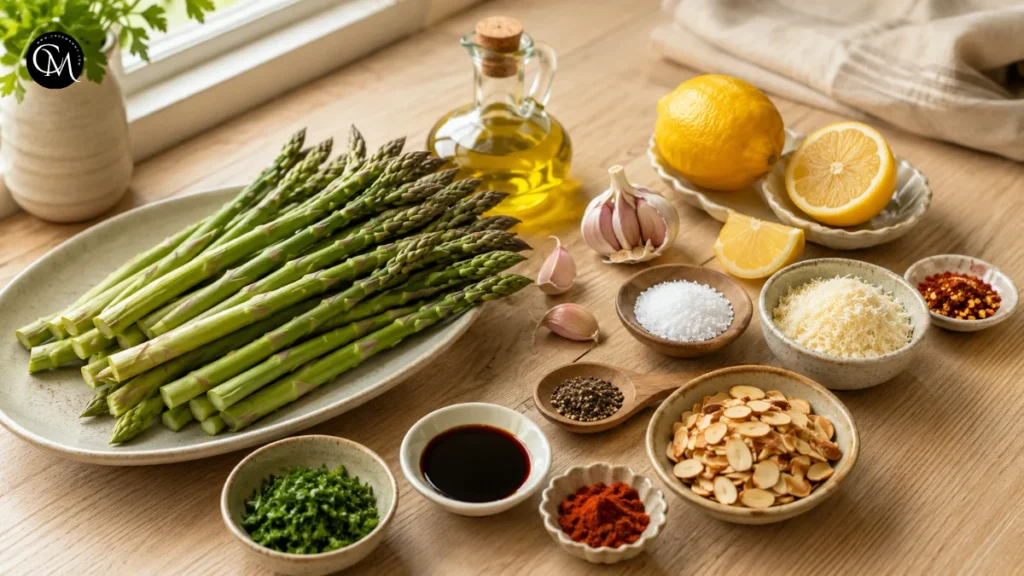
This roasted asparagus recipe uses only five main ingredients, but each one has a job. Choose fresh asparagus with firm stalks, tight tips, and a bright green color.
- Fresh asparagus
Use 1 pound of asparagus, about one medium bunch. Thin spears cook quickly and become crisp at the tips, while thicker spears turn juicy and tender inside. Both work well, but try to choose spears that are similar in size. - Olive oil
A little olive oil helps the asparagus roast instead of dry out. It also carries the garlic and seasoning across the stalks. Avocado oil works too if you prefer a more neutral flavor. - Garlic
Fresh minced garlic adds warmth and savory depth. Garlic powder is a good substitute if you want less risk of burning, especially at higher oven temperatures. - Lemon
Lemon juice or zest brings freshness and balances the earthy flavor of asparagus. Add it after roasting for the brightest taste. - Salt and black pepper
Simple seasoning makes the vegetables taste more complete. Fine sea salt spreads evenly, while freshly cracked black pepper adds a gentle kick.
Optional add-ins: grated Parmesan, red pepper flakes, toasted almonds, balsamic glaze, fresh parsley, or a pinch of smoked paprika.
Timing
Preparation time: 10 minutes
Cooking time: 10–14 minutes
Total time: 20–24 minutes
Most oven vegetable sides take around 30 minutes from start to finish, but this roasted asparagus recipe is faster because asparagus cooks quickly at high heat. That makes it a great option when your main dish is almost ready and you need a fresh green side without extra stress.
For thin asparagus, start checking at 8–10 minutes. For thicker stalks, 12–14 minutes is usually better. The goal is tender stalks with lightly browned tips, not soft, wrinkled spears.
Step-by-Step Instructions
Step 1 – Prepare ingredients
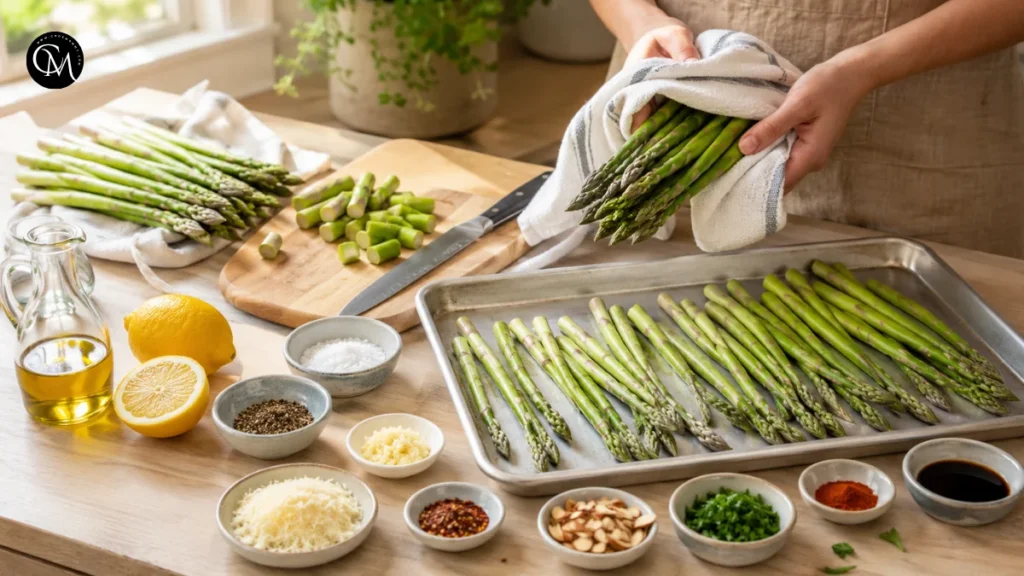
Start by washing the asparagus under cool water, then dry it well with a clean towel. This step matters more than people think. If the asparagus is wet, the moisture turns into steam in the oven, and steam prevents browning.
Trim the woody ends by cutting off about 1 inch from the bottom, or gently bend one spear until it snaps naturally, then use that as a guide for the rest. Place the asparagus on a large baking sheet in a single layer. Crowding the pan is one of the biggest reasons roasted vegetables turn soft instead of crisp.
For this roasted asparagus recipe, I prefer using a rimmed baking sheet because it gives the stalks enough space while keeping oil from dripping into the oven.
Step 2 – Build flavor base
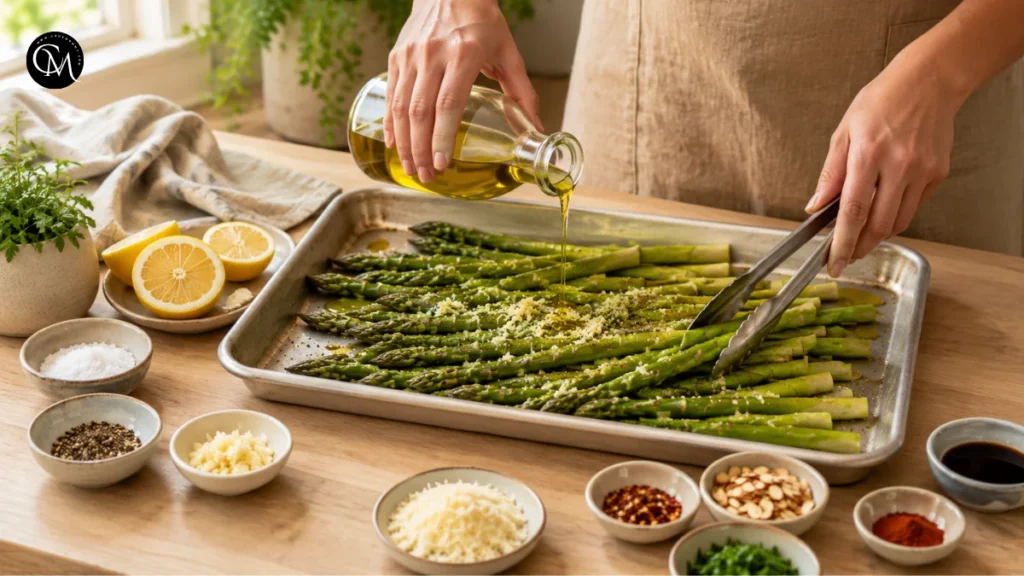
Drizzle the asparagus with olive oil, then add minced garlic, salt, and black pepper. Toss everything with your hands or tongs until the spears are lightly coated.
The cooking science here is simple: oil helps transfer heat evenly and encourages browning. Salt draws out a little moisture, which concentrates flavor as the asparagus roasts. Garlic adds aroma, but it can burn if it sits in large pieces, so mince it finely or rub it into the oil before tossing.
This is where this roasted asparagus recipe gets most of its flavor before the vegetables even enter the oven. You do not need a heavy marinade. A thin, even coating is enough.
Step 3 – Cook the main ingredient
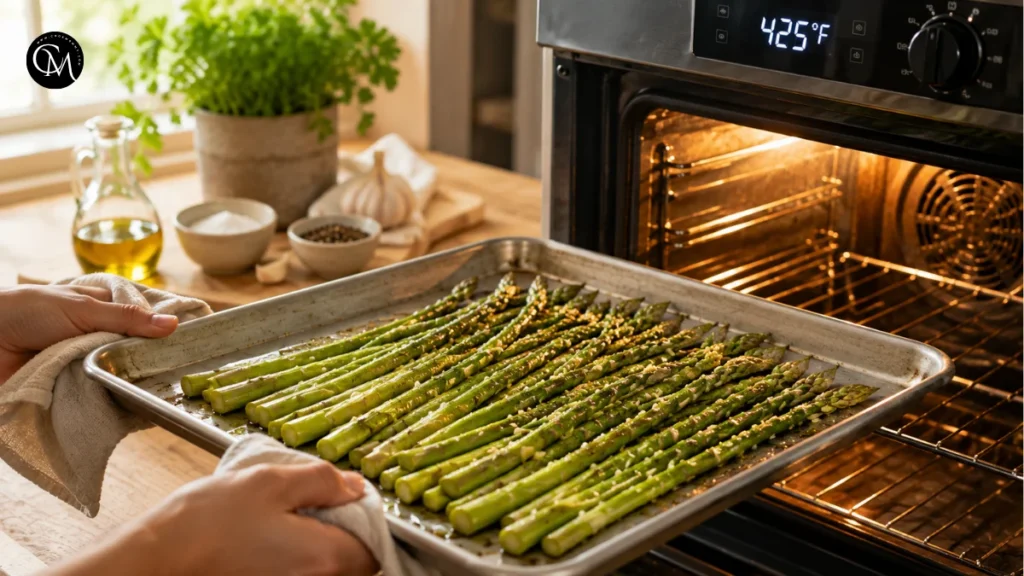
Preheat the oven to 425°F, or 220°C. Roast the asparagus for 10–14 minutes, depending on thickness. Keep the spears in a single layer and avoid stirring too often. Letting them sit against the hot pan helps create golden edges.
Thin asparagus may be done when the tips look slightly crisp and the stalks are just tender. Thick asparagus should feel tender when pierced with a fork but still hold its shape.
Texture tip: if you want a more roasted flavor, place the baking sheet in the oven while it preheats. When the asparagus hits the hot pan, it starts browning faster. This small trick makes this roasted asparagus recipe taste more restaurant-style.
Step 4 – Combine everything
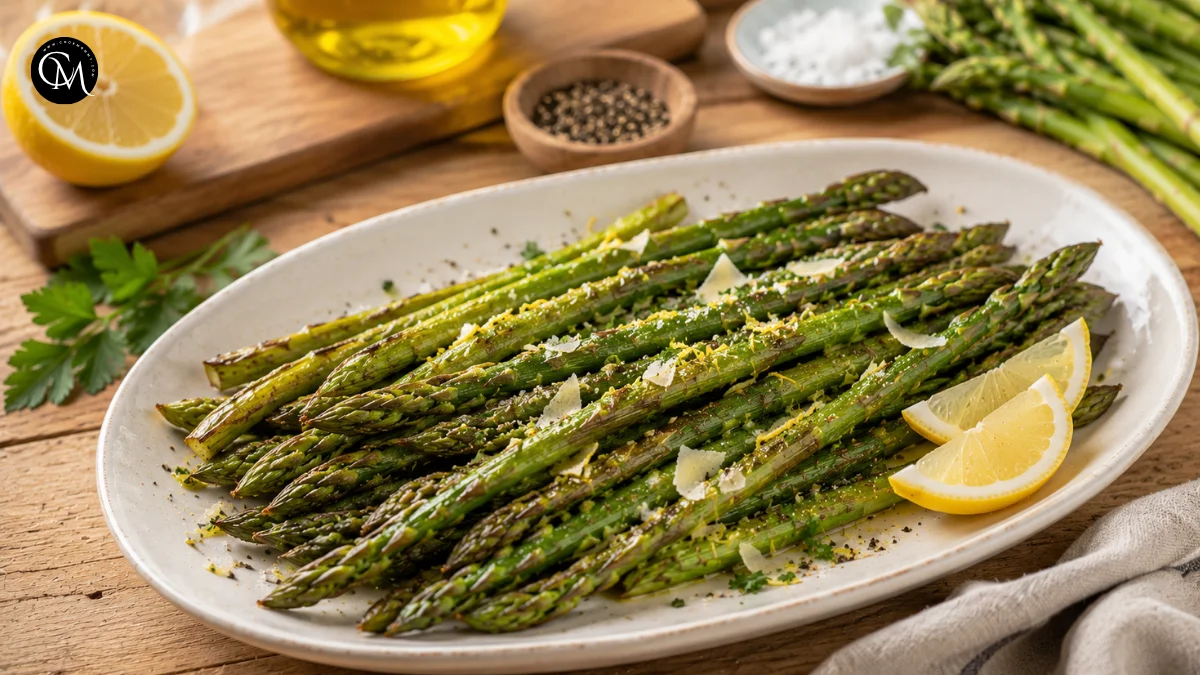
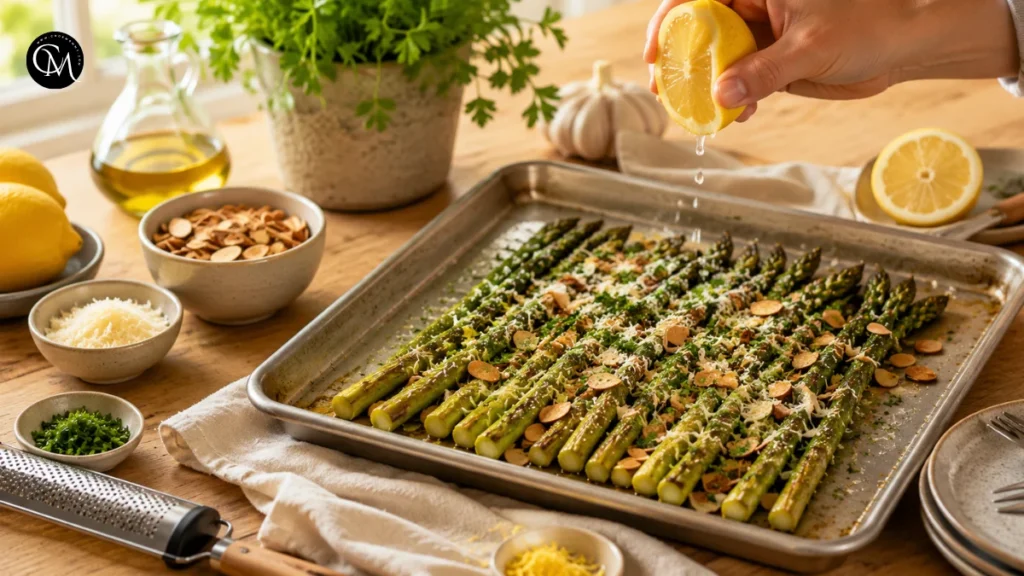
Once the asparagus is roasted, transfer it to a serving plate or leave it on the warm baking sheet for a casual family-style side. Add fresh lemon juice or lemon zest while the asparagus is still hot. The heat releases the lemon aroma and makes the flavor feel brighter.
This step is all about balance. Roasted asparagus has earthy, savory, slightly sweet notes. Lemon adds acidity, which keeps the dish from tasting flat. If you are adding Parmesan, almonds, or herbs, sprinkle them on now so they stay fresh and noticeable.
For a richer version of this roasted asparagus recipe, finish with a light dusting of Parmesan. For a fresher version, use lemon zest and chopped parsley.
Step 5 – Finish & adjust seasoning
Taste one spear before serving. Add a tiny pinch of salt if the flavor feels dull, more black pepper if you want warmth, or extra lemon if the asparagus tastes too rich.
Chef-style advice: seasoning at the end is what makes a simple vegetable side taste complete. The first seasoning layer builds flavor during roasting, while the final seasoning adjusts brightness and balance.
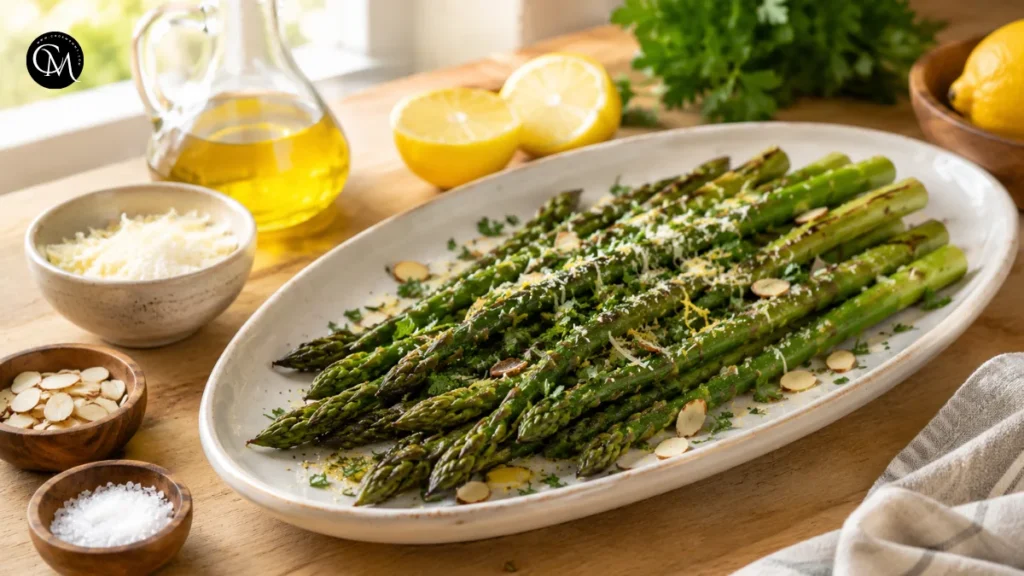
Serve the asparagus right away if possible. This roasted asparagus recipe tastes best when the tips are still crisp and the stalks are warm, tender, and juicy.
Nutritional Information
Approximate values per serving, based on 4 servings:
| Nutrient | Amount |
|---|---|
| Calories | 75 |
| Carbohydrates | 6 g |
| Protein | 3 g |
| Fat | 5 g |
| Fiber | 3 g |
| Sodium | 220 mg |
| Sugar | 2 g |
These numbers are estimates and may change depending on the amount of oil, salt, or toppings you use. Asparagus is naturally light and full of fresh vegetable flavor, while olive oil adds richness and helps with roasting. This roasted asparagus recipe is a good choice when you want a simple side dish that feels satisfying without being heavy.
Healthier Alternatives
- This roasted asparagus recipe is already naturally gluten-free and dairy-free if you skip cheese, but it is easy to adjust for different needs.
- For a lighter version, use a spray of olive oil instead of a full drizzle. The asparagus will still roast well as long as it is lightly coated. For lower sodium, reduce the salt and use extra lemon zest, garlic, black pepper, or fresh herbs to boost flavor.
- There is no added sugar in this roasted asparagus recipe, so you do not need a lower-sugar swap. If you like a sweet finish, choose a small drizzle of balsamic glaze rather than a sugary sauce.
- For a dairy-free version, skip Parmesan and use toasted almonds, sesame seeds, or nutritional yeast for a savory finish. For children, cut the roasted asparagus into smaller pieces and serve it with a mild yogurt dip or alongside pasta. For seniors or anyone who prefers softer vegetables, roast thicker spears a few minutes longer until extra tender.
- Whole-grain options can come in through serving ideas. Pair the asparagus with brown rice, quinoa, farro, or whole-grain pasta for a more filling meal.
Serving Suggestions for the roasted asparagus recipe
- This roasted asparagus recipe works with almost any main dish because the flavor is clean, bright, and not overpowering. Serve it with baked salmon and lemon wedges for a fresh dinner, or pair it with roast chicken and mashed potatoes for a cozy meal.
- For a spring lunch, add the asparagus to a grain bowl with quinoa, chickpeas, cucumbers, and a lemony dressing. For brunch, serve it beside scrambled eggs, omelets, or avocado toast. The roasted tips add a nice contrast to soft eggs.
- You can also chop leftovers and add them to pasta, risotto, couscous, or a warm salad. One of my favorite quick meals is roasted asparagus with garlic butter pasta and a little Parmesan. It tastes special but takes very little effort.
- For a holiday table, arrange the spears on a long platter and finish with lemon zest, toasted almonds, and fresh herbs. It looks colorful, elegant, and homemade.
Common Mistakes to Avoid
- Not drying the asparagus Water creates steam, and steam makes asparagus soft. Dry the stalks well before adding oil.
- Crowding the pan Asparagus needs space for hot air to move around it. Use two pans if needed.
- Using too much oil A heavy coating can make the vegetables greasy. A light drizzle is enough for this roasted asparagus recipe.
- Roasting at low heat Low heat can make asparagus cook slowly and lose its fresh texture. High heat gives better browning.
- Adding lemon too early Lemon juice can dull during roasting. Add it after cooking for a fresher taste.
- Ignoring spear thickness Thin and thick asparagus cook at different speeds. Check early so you do not overcook them.
Storing Tips for the roasted asparagus recipe
- Store leftover asparagus in an airtight container in the refrigerator for up to 3 days. Let it cool first, but do not leave it at room temperature too long. To reheat, use a skillet over medium heat or a hot oven for a few minutes. The microwave works, but it can make the texture softer.
- For meal prep, wash and trim the asparagus up to 2 days ahead. Keep it wrapped in a slightly damp paper towel inside a container or bag in the refrigerator. Add oil and seasoning only right before roasting for the best texture.
- This recipe became one of my regular meals because it saves dinner on busy nights. When I have a protein ready but no side dish planned, this roasted asparagus recipe gives me something fresh, colorful, and flavorful in about 20 minutes.
Conclusion
This roasted asparagus recipe proves that simple ingredients can create big flavor when you use the right method. With fresh asparagus, olive oil, garlic, lemon, salt, and pepper, you get a side dish that is crisp at the tips, tender in the center, and bright enough to pair with almost any meal. It is fast, flexible, and easy to adjust for different tastes.
Try this recipe the next time you need a quick vegetable side that still feels special. After you make it, leave a comment or review with your favorite topping, whether it is Parmesan, almonds, herbs, or extra lemon. Subscribe for more easy, flavor-focused recipes that make everyday cooking feel simple and delicious.
FAQs
Can I make this roasted asparagus recipe with frozen asparagus?
Fresh asparagus gives the best texture, but frozen can work. Roast it from frozen at high heat and expect a softer result.
What temperature is best for roasting asparagus?
425°F, or 220°C, is ideal because it cooks the stalks quickly while helping the tips brown and crisp.
How do I know when asparagus is done?
The stalks should be tender when pierced with a fork, and the tips should look lightly browned, not burnt or mushy.
Can I add Parmesan cheese?
Yes. Add Parmesan after roasting so it melts slightly without burning. It gives the asparagus a salty, savory finish.
Why is my roasted asparagus soggy?
It was likely wet, overcrowded, or cooked at too low a temperature. Dry it well and spread it in one layer.
Can I prepare asparagus ahead of time?
Yes. Wash and trim it ahead, then store it chilled. Add oil and seasoning just before roasting.
What main dishes go well with roasted asparagus?
It pairs well with salmon, chicken, steak, pasta, eggs, grain bowls, and simple rice dishes.
Tried it before ?
There are no reviews yet. Be the first one to write one.