
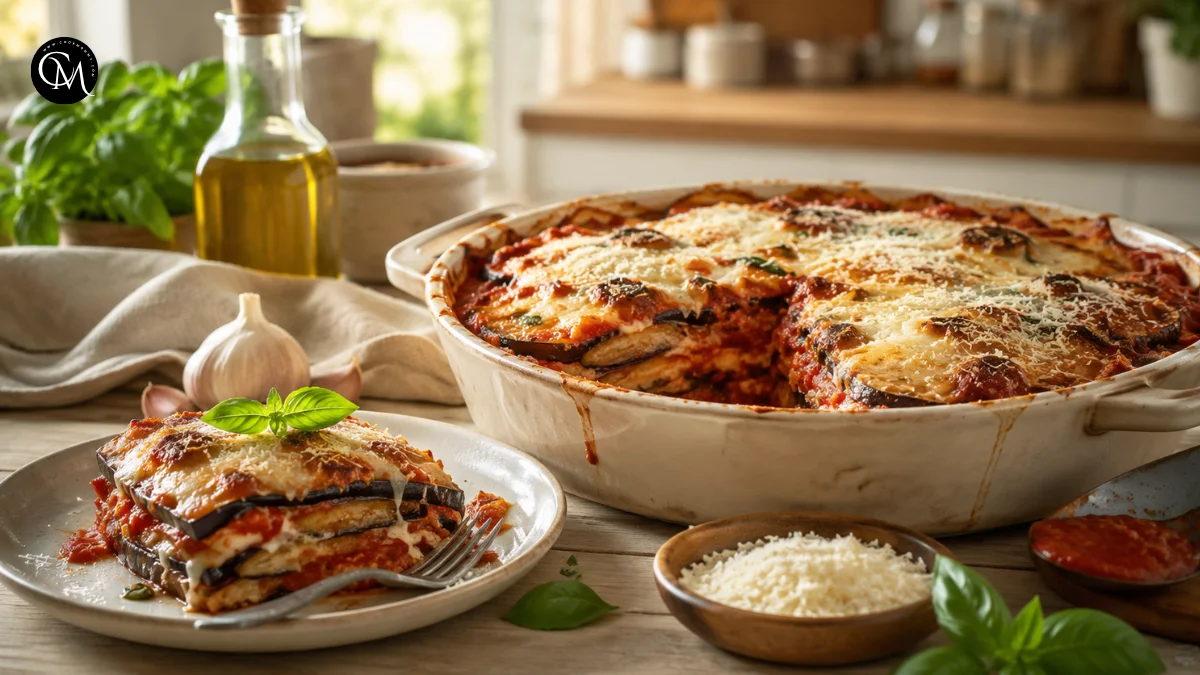
Italian eggplant parmesan: How 5 Steps Make It Easy
Can a comfort food recipe feel rich and satisfying without turning heavy or greasy? That is the question many home cooks ask when making eggplant parmesan for the first time. The dish looks simple: eggplant, tomato sauce, cheese, and herbs. But the difference between a soft, flavorful bake and a watery, oily casserole comes down to a few smart kitchen steps.
This Italian-style eggplant parmesan is worth making because it gives you all the cozy flavor of a classic baked dish while keeping the method clear and manageable. You do not need restaurant tools or complicated techniques. With good eggplant, a balanced tomato sauce, and the right layering method, you can create a golden, bubbling dinner that tastes homemade in the best way.
I like this recipe because it feels special enough for Sunday dinner but practical enough for a weeknight when I already have marinara sauce and mozzarella in the fridge.
Table of Contents
Ingredients List
For the best eggplant parmesan, choose firm eggplants with glossy skin and no soft spots. Smaller or medium eggplants often have fewer seeds and a sweeter taste.
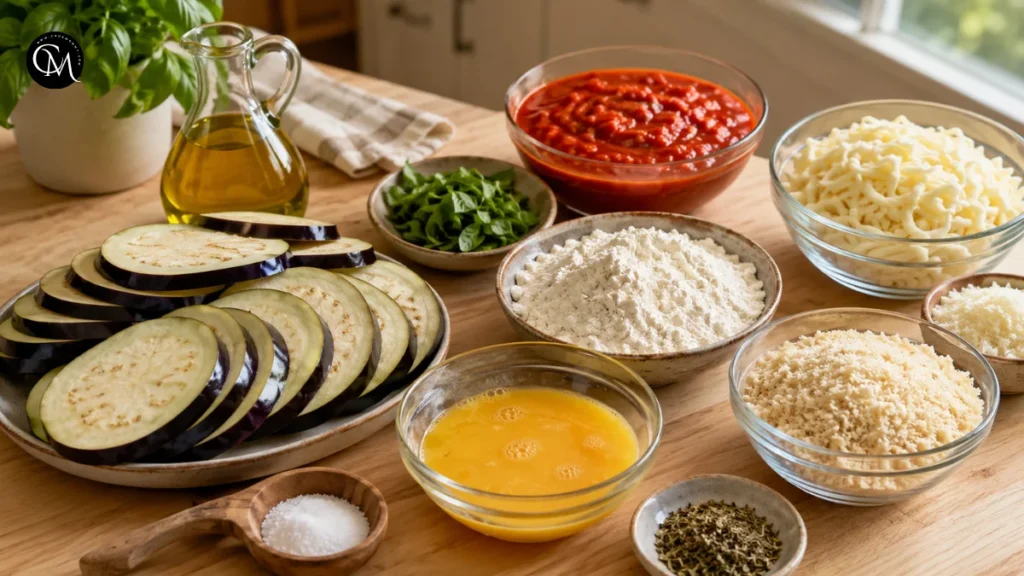
Main ingredients
- 2 medium eggplants, sliced into 1/4-inch rounds
- 1 1/2 teaspoons salt, divided
- 1 cup all-purpose flour
- 2 large eggs, beaten
- 1 1/2 cups breadcrumbs or panko
- 1/2 cup grated Parmesan cheese
- 2 cups marinara sauce or homemade tomato sauce
- 2 cups shredded mozzarella cheese
- 1/2 cup fresh basil leaves, torn
- 1 teaspoon dried oregano
- 1/2 teaspoon black pepper
- Olive oil for baking or light pan-frying
Optional substitutions
You can use panko for a crispier coating or Italian-seasoned breadcrumbs for deeper herb flavor. For a gluten-free version, use gluten-free breadcrumbs and a gluten-free flour blend. If you prefer a lighter eggplant parmesan, bake the coated slices instead of frying them. Fresh mozzarella gives a softer, creamier finish, while shredded mozzarella melts more evenly and is easier for layering.
For the sauce, homemade marinara is wonderful, but a good-quality jarred sauce works well when time is short. Look for one with tomatoes, olive oil, garlic, basil, and no overly sweet flavor.
Timing
- Preparation time: 25 minutes
- Cooking/Baking time: 40 minutes
- Total time: 1 hour 5 minutes
- Servings: 6
Many traditional eggplant parmesan recipes take closer to 90 minutes because they include longer salting, frying, and resting steps. This version keeps the flavor but makes the process more realistic for home kitchens.
Step-by-Step Instructions
Step 1 – Prepare ingredients
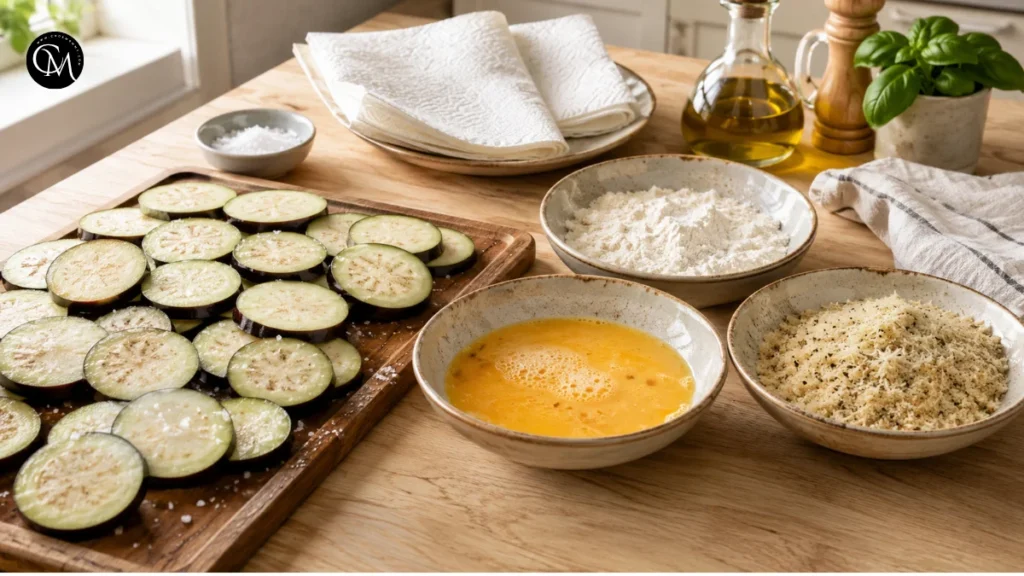
Start by slicing the eggplants into even rounds. Try to keep the slices similar in thickness so they cook at the same speed. Place them on a tray or cutting board, sprinkle lightly with salt, and let them sit for 15 to 20 minutes. This step helps draw out extra moisture, which is one of the biggest secrets to better eggplant parmesan.
After resting, pat the slices dry with paper towels. Do not skip this part. Extra moisture can make the coating slide off and can also water down the sauce during baking.
Set up three shallow bowls: one with flour, one with beaten eggs, and one with breadcrumbs mixed with Parmesan, oregano, pepper, and a small pinch of salt. Having everything ready before you start coating makes the process cleaner and faster.
Step 2 – Build flavor base
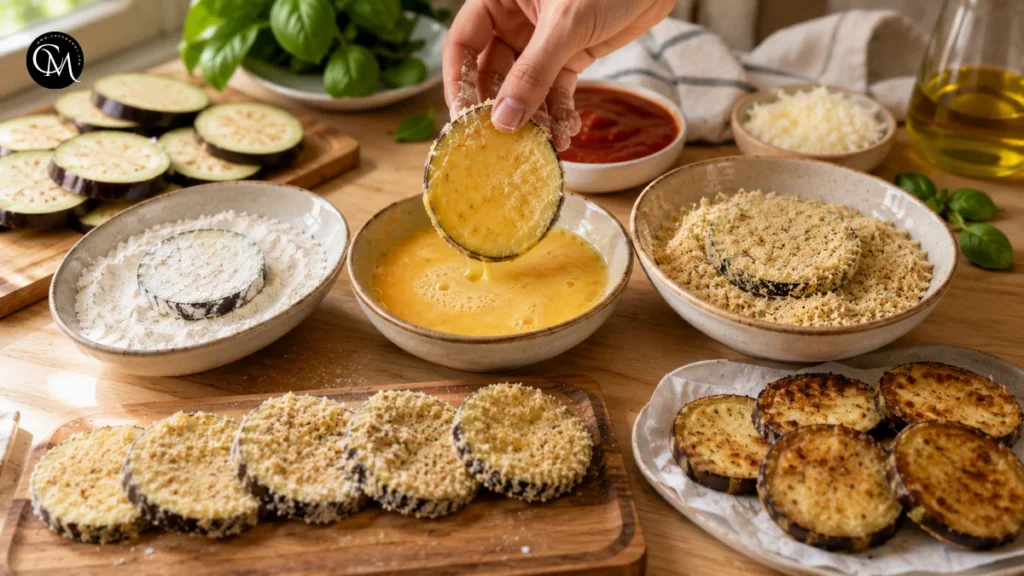
The flavor base of this recipe comes from the coating, the cheese, and the sauce. Eggplant has a mild, slightly earthy taste, so it needs seasoning at every stage. Flour helps the egg stick, egg helps the breadcrumbs cling, and breadcrumbs create the crisp layer that keeps the eggplant from becoming mushy.
Dip each eggplant slice first into flour, then egg, then breadcrumb mixture. Press gently so the crumbs stick. A thin, even coating is better than a thick, clumpy one. Too much coating can make eggplant parmesan feel heavy instead of balanced.
From a cooking science point of view, browning matters because it creates deeper flavor. Whether you bake or lightly fry the slices, the goal is to develop a golden surface before layering them with sauce.
Step 3 – Cook the main ingredient
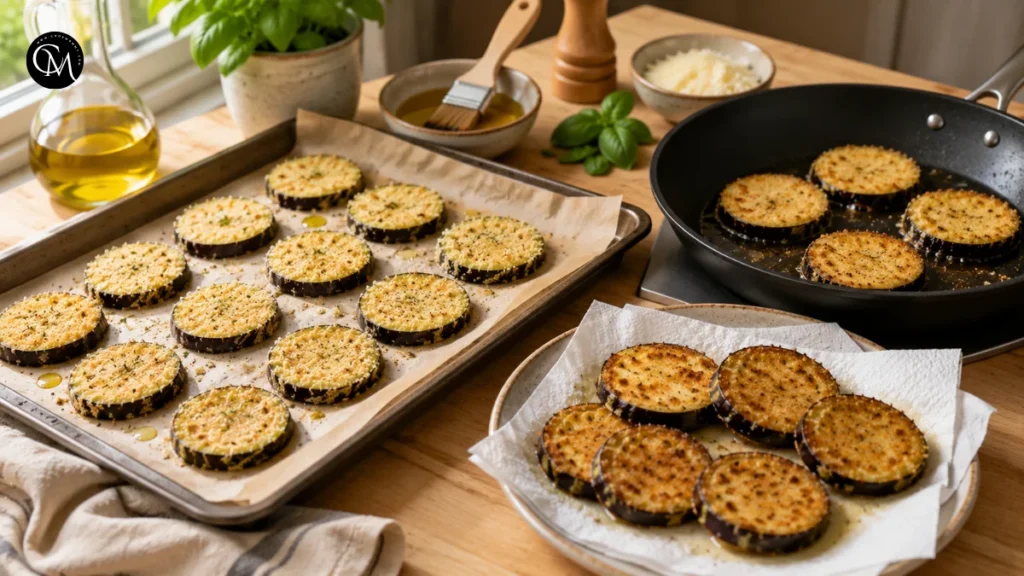
For a lighter method, arrange the coated eggplant slices on a parchment-lined baking sheet. Brush or spray lightly with olive oil and bake at 425°F for about 20 minutes, flipping halfway through. The slices should look golden and feel tender when pierced with a fork.
For a more traditional texture, heat a thin layer of olive oil in a skillet and cook the slices for 2 to 3 minutes per side. Place them on a paper towel-lined plate to remove extra oil.
The key is texture. The eggplant should be tender inside but not wet or collapsing. When the slices are cooked before layering, the final eggplant parmesan holds together better and has a more pleasant bite.
Step 4 – Combine everything
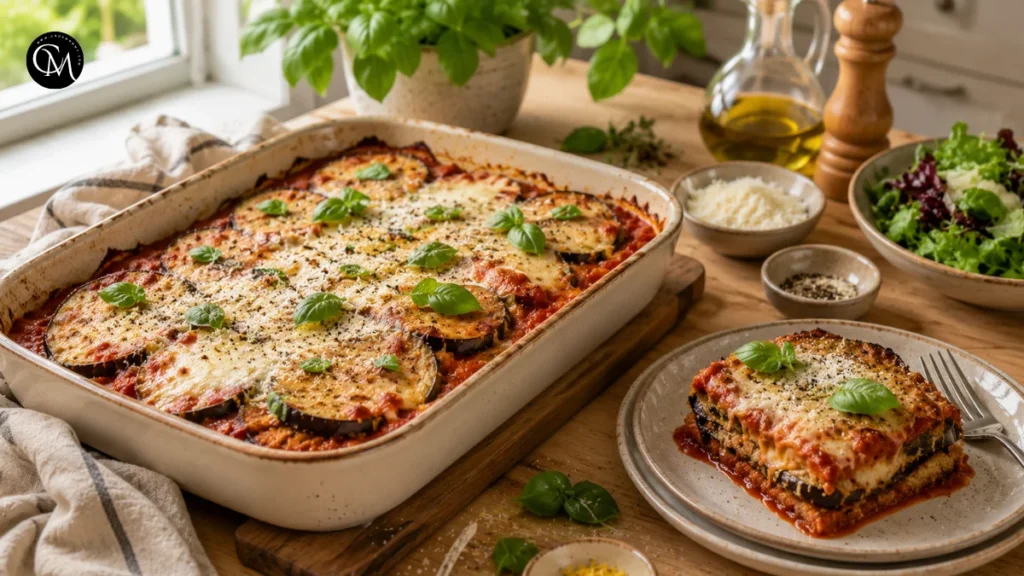
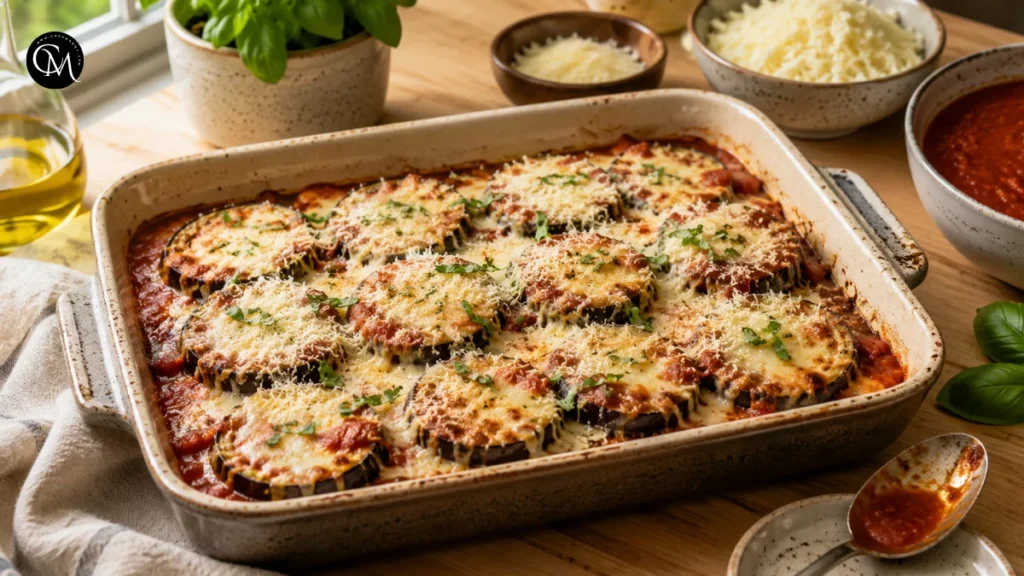
Spread a thin layer of marinara sauce in the bottom of a baking dish. Add a layer of cooked eggplant slices, then spoon over more sauce. Sprinkle with mozzarella, Parmesan, and a little basil. Repeat the layers until all ingredients are used, finishing with sauce and cheese on top.
Balance is important here. Too much sauce can make the dish loose, while too little sauce can make it dry. I like to spoon sauce lightly over each layer instead of drowning the eggplant. This keeps the coating from disappearing completely while still giving every bite that rich tomato flavor.
Bake uncovered at 375°F for 20 to 25 minutes, or until the cheese is melted and bubbling around the edges. If you want a more golden top, broil for 1 to 2 minutes at the end, watching carefully.
Step 5 – Finish & adjust seasoning
Let the baked eggplant parmesan rest for 10 minutes before cutting. This short resting time helps the layers settle, making it easier to serve neat portions.
Before serving, add fresh basil, a light sprinkle of Parmesan, and a little black pepper. Taste the sauce before baking if possible. If it tastes too acidic, add a small pinch of sugar or a drizzle of olive oil. If it tastes flat, add more oregano, basil, or a tiny pinch of salt.
Chef-style advice: finish with freshness. A rich baked dish needs a bright final touch. Fresh herbs, a little lemon zest, or a crisp green salad on the side can make the meal feel lighter and more complete.
Nutritional Information
Approximate nutrition per serving:
| Nutrient | Amount |
|---|---|
| Calories | 360–430 |
| Protein | 16–20 g |
| Carbohydrates | 35–42 g |
| Fat | 18–24 g |
| Fiber | 6–8 g |
| Sodium | 600–750 mg |
These values depend on the amount of cheese, oil, breadcrumbs, and sauce used. Baked eggplant parmesan is usually lighter than a heavily fried version, especially if you use moderate oil and a tomato sauce that is not high in added sugar or salt.
This recipe offers vegetables, protein from cheese and eggs, and satisfying carbohydrates from the coating. It is a comfort food, so the goal is balance rather than turning it into something completely different.
Healthier Alternatives
- For a lower-sugar version, choose a marinara sauce with no added sugar or make a quick tomato sauce using crushed tomatoes, garlic, olive oil, basil, and oregano. The natural sweetness of tomatoes becomes stronger as the sauce simmers.
- For whole-grain options, use whole-wheat breadcrumbs. They add a slightly nutty flavor and a heartier texture. You can also serve eggplant parmesan with whole-grain pasta or a simple farro salad instead of white bread.
- For a dairy-free version, use dairy-free mozzarella-style shreds and nutritional yeast in place of Parmesan. The flavor will be different, but the dish can still feel savory and satisfying.
- For gluten-free eggplant parmesan, use gluten-free flour and breadcrumbs. Make sure your marinara sauce is also gluten-free, especially if using a store-bought brand.
- For children, cut the finished bake into smaller squares and serve it with pasta or soft bread. For seniors or anyone who prefers a softer texture, bake the eggplant a little longer before layering. For people watching portions, serve a smaller square with a large salad or steamed vegetables.
Serving Suggestions
- Serve eggplant parmesan with a crisp green salad dressed with lemon vinaigrette. The acidity cuts through the richness of the cheese and sauce beautifully. Garlic bread is a classic choice, but toasted sourdough or warm focaccia also works well.
- For a complete Italian-style dinner, pair it with spaghetti, roasted zucchini, or a simple tomato cucumber salad. If you want something lighter, serve it over arugula with a drizzle of balsamic glaze.
- This dish also makes a great vegetarian main course for family gatherings. I often serve it in the center of the table with extra basil, grated Parmesan, and chili flakes so everyone can finish their plate the way they like.
- For a cozy lunch, tuck a leftover slice into a toasted roll and make an eggplant parmesan sandwich. It is messy, warm, and honestly one of the best ways to enjoy leftovers.
Common Mistakes to Avoid
- Skipping the salting step Eggplant contains a lot of moisture. Even a short salting time helps improve texture and prevents a watery bake.
- Cutting uneven slices Thin slices can burn while thick slices stay undercooked. Aim for even 1/4-inch rounds for consistent results.
- Using too much sauce More sauce does not always mean more flavor. Too much can make eggplant parmesan soggy and difficult to serve.
- Not pre-cooking the eggplant Raw eggplant releases moisture during baking. Cooking it first gives better flavor, better texture, and cleaner layers.
- Overloading the cheese Cheese is delicious, but too much can make the dish greasy. Use enough for creamy layers without covering every detail.
- Serving it immediately Resting for 10 minutes helps the layers settle. This small step makes the final dish easier to slice and more enjoyable to eat.
Storing Tips for the Recipe
- Let leftovers cool before storing. Place them in an airtight container and refrigerate for up to 4 days. To reheat, use the oven at 350°F until warm. This helps bring back some texture, while the microwave makes it softer.
- You can also assemble eggplant parmesan ahead of time. Prepare the eggplant slices, layer everything in the baking dish, cover tightly, and refrigerate for up to 24 hours before baking. Add 5 to 10 extra minutes to the baking time if it goes into the oven cold.
- For freezing, bake the dish first, cool completely, then wrap well. Freeze for up to 2 months. Thaw overnight in the refrigerator and reheat in the oven.
- This recipe became one of my regular meals because it gives me the comfort of a baked pasta-style dinner without needing meat, and it always feels generous enough to share.
Conclusion
Italian eggplant parmesan is one of those recipes that rewards careful, simple steps. When the eggplant is salted, coated, cooked, layered with balanced sauce, and finished with fresh herbs, the result is rich, cozy, and full of homemade flavor. It is perfect for family dinners, meal prep, vegetarian guests, or any night when you want something warm and satisfying.
Try this eggplant parmesan recipe the next time you want a comforting Italian-inspired meal that feels both classic and practical. After you make it, leave a comment or review with your favorite variation. And if you enjoy simple home-cooked recipes with real kitchen tips, subscribe for more easy dinner ideas and cooking guides.
FAQs
Can I make eggplant parmesan without frying?
Yes. Baking the coated slices works very well. Brush them lightly with olive oil and bake until golden before layering with sauce and cheese.
Do I need to peel the eggplant?
No, the skin is edible and helps the slices hold their shape. If your eggplant is large with tough skin, you can peel it partially.
Why is my eggplant parmesan watery?
It usually happens when the eggplant is not salted or cooked before layering. Too much sauce can also make the final dish loose.
Can I prepare this recipe ahead of time?
Yes. You can assemble it up to 24 hours ahead, refrigerate it covered, and bake when ready. Add extra baking time if chilled.
What cheese works best?
Mozzarella melts smoothly, while Parmesan adds salty, savory depth. A mix of both gives eggplant parmesan the best flavor and texture.
Can I freeze leftovers?
Yes. Cool the dish completely, wrap it tightly, and freeze for up to 2 months. Reheat in the oven for the best texture.
What can I serve with it?
Serve it with salad, pasta, garlic bread, roasted vegetables, or a light soup. Fresh basil and chili flakes make a lovely finishing touch.
Tried it before ?
There are no reviews yet. Be the first one to write one.