
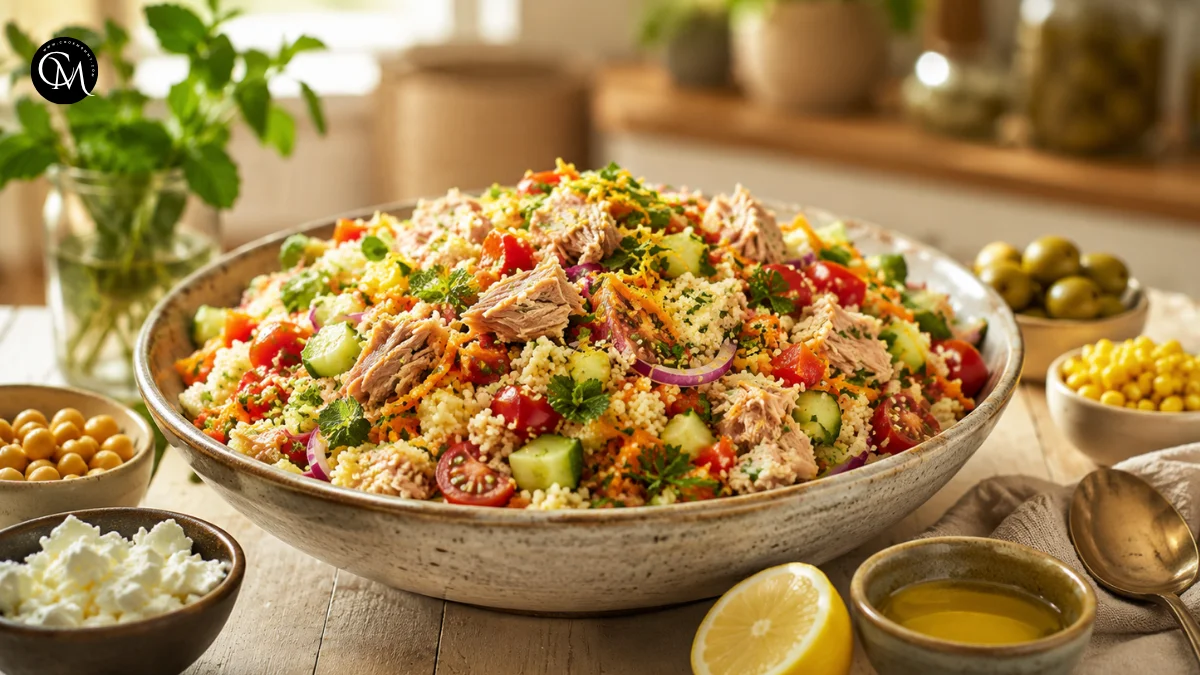
Salad Couscous with tuna and vegetables: 5 Best Easy Tips
Did you know that meals with a balance of grains, protein, vegetables, and healthy fats often feel more satisfying than a plain salad alone? That is exactly why Couscous with tuna has become such a reliable kitchen favorite for busy days. It looks colorful, tastes fresh, and comes together faster than many warm dinner recipes.
This salad is perfect when you want something light but still filling. The couscous gives a soft, fluffy base, the tuna adds savory protein, and the vegetables bring crunch, color, and freshness. I especially love this recipe because it works for lunch boxes, family dinners, picnics, and quick meal prep.
The best part is that Couscous with tuna does not need complicated cooking skills. With a few smart tips, you can turn simple pantry ingredients into a bright Mediterranean-style salad that tastes homemade, balanced, and satisfying.
Table of Contents
Ingredients List
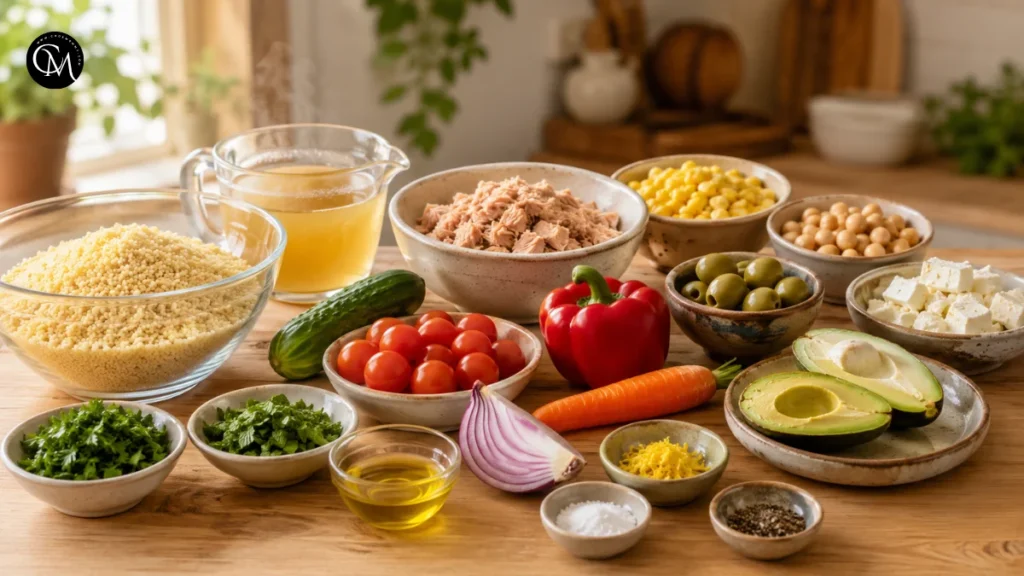
To make this Couscous with tuna salad, use fresh, simple ingredients that are easy to find.
Main ingredients:
- 1 cup dry couscous
- 1 cup hot water or vegetable broth
- 1 can tuna, drained
- 1 small cucumber, diced
- 1 cup cherry tomatoes, halved
- 1 small red bell pepper, diced
- 1 small carrot, grated
- 1/4 red onion, finely chopped
- 2 tablespoons fresh parsley, chopped
- 1 tablespoon fresh mint, chopped
- 2 tablespoons olive oil
- 1 tablespoon lemon juice
- 1 teaspoon lemon zest
- Salt, to taste
- Black pepper, to taste
Optional add-ins:
- Sweet corn for extra color
- Chickpeas for more texture
- Green olives for a salty bite
- Feta cheese for creaminess
- Avocado for a richer finish
Easy substitutions:
If you do not have couscous, use quinoa, bulgur, or small pasta. For the tuna, canned salmon or shredded cooked chicken also works well. If red onion tastes too strong, soak it in cold water for 5 minutes before adding it to the salad.
For a deeper flavor, prepare Couscous with tuna using vegetable broth instead of plain water. It gives the grains a gentle savory taste without adding much effort.
Timing
Preparation time: 15 minutes
Cooking time: 5 minutes
Total time: 20 minutes
This recipe is quicker than many traditional grain salads, which often take 30 to 45 minutes because the grains need longer cooking. Couscous is very fast because it only needs hot liquid and a short resting time. That makes Couscous with tuna a smart choice for a fresh lunch when you do not want to spend too much time in the kitchen.
Step-by-Step Instructions
Step 1 – Prepare ingredients
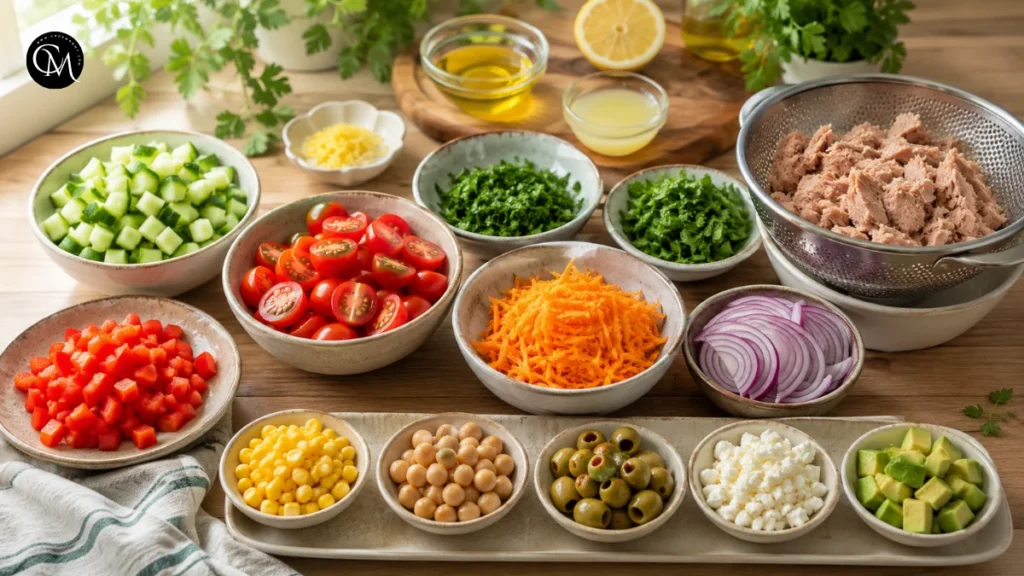
Start by washing and cutting all the vegetables. Dice the cucumber, halve the cherry tomatoes, chop the bell pepper, grate the carrot, and finely slice the red onion. Chop the parsley and mint just before using them so they stay fragrant.
Good preparation matters because this salad is all about balance. If the vegetables are cut too large, they can overpower the fluffy couscous. Smaller pieces help every forkful taste complete.
Drain the tuna well before adding it. Too much liquid can make Couscous with tuna watery and heavy instead of light and fresh.
Step 2 – Build flavor base
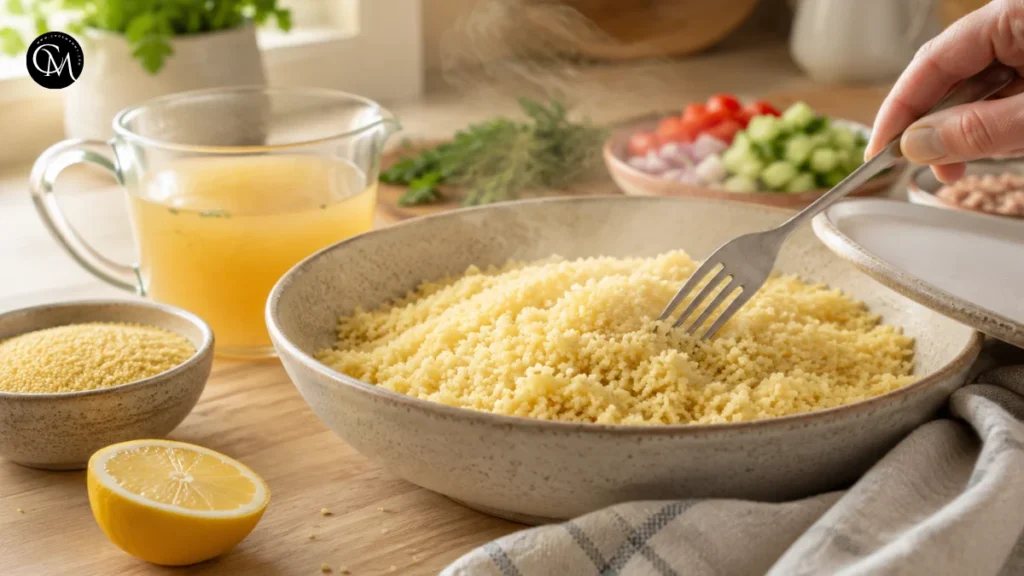
Place the dry couscous in a large bowl. Pour hot water or vegetable broth over it, then cover the bowl with a plate or clean towel. Let it sit for about 5 minutes.
This step works because couscous absorbs hot liquid quickly. Covering the bowl traps steam, which helps the grains soften evenly. If you use broth, the couscous absorbs flavor from the beginning instead of relying only on dressing later.
After resting, fluff the couscous with a fork. Do not stir too hard, because that can make the grains clump together. A fork keeps the texture light and separated, which is important for a good Couscous with tuna salad.
Step 3 – Cook the main ingredient
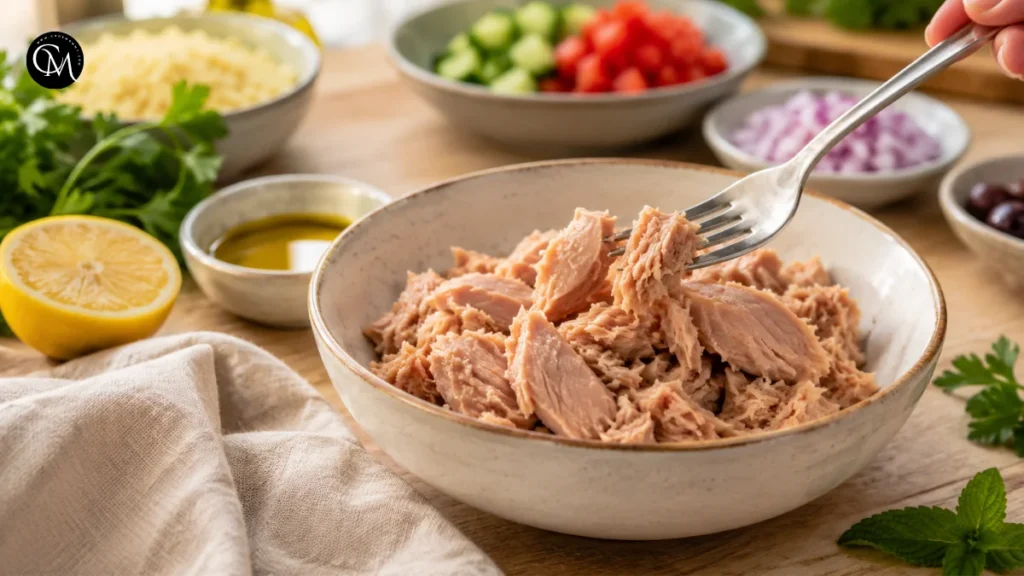
In this recipe, the main ingredient does not need traditional cooking because canned tuna is already cooked. The key is handling it properly. Drain it, then gently break it into medium flakes with a fork.
Avoid crushing the tuna into tiny pieces. Larger flakes give better texture and make the salad feel more satisfying. If you are using tuna packed in olive oil, you can use a little of that oil in the dressing for extra richness.
For a lighter version, choose tuna packed in water. For a fuller Mediterranean flavor, tuna in olive oil works beautifully. Either way, Couscous with tuna should taste fresh, not greasy.
Step 4 – Combine everything
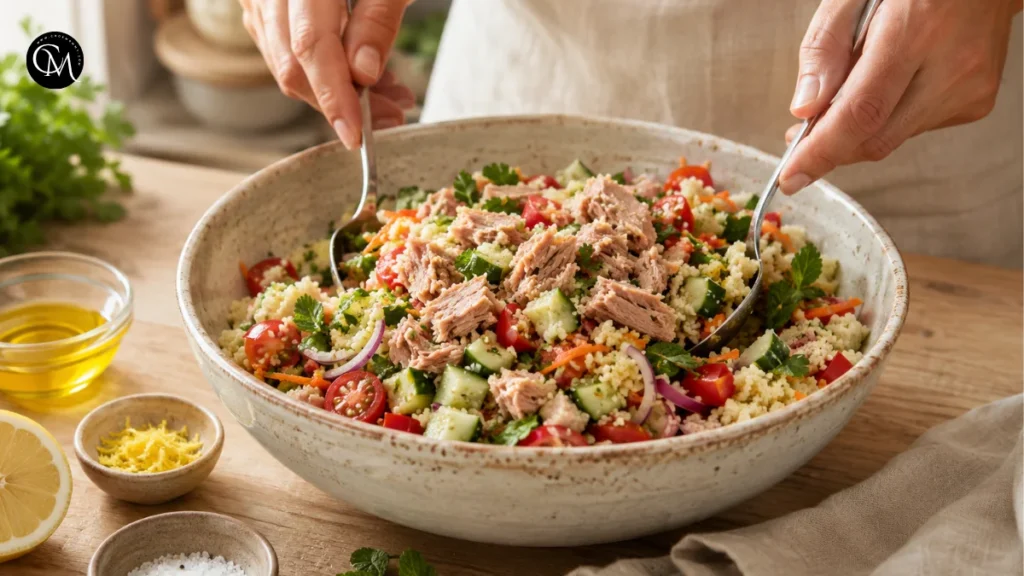
Add the cucumber, tomatoes, bell pepper, carrot, red onion, parsley, and mint to the fluffed couscous. Add the tuna last so it keeps its shape.
Pour in olive oil, lemon juice, and lemon zest. Season with salt and black pepper. Toss gently using two spoons, lifting the ingredients instead of pressing them down.
This is where flavor balance matters. Couscous is mild, tuna is savory, vegetables are crisp, and lemon brings brightness. If one flavor feels too strong, adjust slowly. A little more lemon can wake up the salad, while a small drizzle of olive oil can soften sharpness.
Step 5 – Finish & adjust seasoning
Taste the salad before serving. This small step makes a big difference. Add more salt if it tastes flat, more lemon if it needs freshness, or more herbs if you want a garden-style flavor.
For best texture, let Couscous with tuna rest for 10 minutes before eating. This gives the couscous time to absorb the dressing while the vegetables stay crisp.
A chef-style tip: finish with fresh herbs and a final drizzle of olive oil right before serving. It makes the salad look brighter and taste fresher.
Nutritional Information
Approximate values per serving:
- Calories: 330
- Protein: 22g
- Carbohydrates: 34g
- Fat: 12g
- Fiber: 4g
- Sodium: 420mg
- Sugar: 4g
These numbers are estimates and can change depending on the tuna, oil, vegetables, and add-ins you use. Couscous with tuna gives a balanced mix of protein, grains, and vegetables, making it a practical meal for lunch or a light dinner. It is filling without feeling too heavy, especially when served with fresh herbs and lemon.
Healthier Alternatives
- If you want a lighter version, reduce the olive oil to one tablespoon and add extra lemon juice or a splash of vinegar for brightness. This keeps the flavor fresh without making the salad dry.
- For whole-grain options, use whole wheat couscous, quinoa, or bulgur. Whole wheat couscous adds a slightly nutty taste and more fiber while keeping the recipe quick and easy.
- For a gluten-free version, replace couscous with quinoa, rice, or millet. The texture will be slightly different, but the salad will still work well with tuna and vegetables.
- For a dairy-free version, simply skip cheese add-ins like feta. Add olives, avocado, or chickpeas instead to keep the salad satisfying.
- For children, keep the onion mild or leave it out. Add sweet corn or diced carrots for a sweeter, friendlier flavor. For seniors, chop the vegetables smaller and use a softer grain base so the salad is easier to enjoy.
- For dieters, increase the vegetables and use tuna packed in water. This makes Couscous with tuna lighter while still keeping it filling and flavorful.
Serving Suggestions
- Serve this salad chilled, slightly warm, or at room temperature. That flexibility makes it great for meal prep, lunch boxes, and outdoor meals.
- For a simple lunch, enjoy Couscous with tuna in a bowl with extra lemon wedges on the side. For dinner, serve it with grilled vegetables, roasted zucchini, or a small bowl of soup.
- If you are preparing a picnic plate, spoon the salad into lettuce cups or serve it with whole-grain crackers. It also works beautifully as a side dish next to grilled chicken, boiled eggs, or roasted potatoes.
- For a more elegant presentation, serve it on a large platter and top it with fresh herbs, olives, and tomato slices. The colors make it look fresh and inviting without needing much decoration.
- You can also turn leftovers into a wrap. Add the salad to a tortilla with lettuce and a spoonful of yogurt sauce for a quick next-day meal.
Common Mistakes to Avoid
- Using too much liquid: Couscous needs just enough hot water or broth to soften. Too much liquid makes it mushy.
- Skipping the fluffing step: Always fluff with a fork after resting. This keeps the grains light instead of compact.
- Adding tuna while the couscous is too hot: Warm couscous can make the tuna smell stronger. Let it cool slightly first.
- Overloading the dressing: Couscous absorbs liquid quickly, so start with a small amount and adjust after tasting.
- Cutting vegetables too large: Smaller pieces give better balance in every bite.
- Forgetting acidity: Lemon juice is important because it lifts the flavor of Couscous with tuna and keeps the salad from tasting flat.
Storing Tips for the Recipe
- Store leftovers in an airtight container in the refrigerator for up to 3 days. For the freshest texture, keep extra herbs and lemon juice separate and add them just before serving.
- If you want to meal prep, cook the couscous and chop the vegetables ahead of time, but store them separately from the tuna and dressing. This helps the vegetables stay crisp and prevents the salad from becoming too wet.
- Avoid freezing this recipe. The vegetables lose their crunch, and the couscous can become soft after thawing.
- This recipe became one of my regular meals because it solves a real problem: I often need something quick, filling, and fresh without cooking a full dinner. Couscous with tuna gives me that balance in about 20 minutes, and it still tastes good the next day.
Conclusion
Salad Couscous with tuna and vegetables is one of those easy recipes that feels simple but delivers big value. It is quick, colorful, filling, and flexible enough for lunch, dinner, picnics, or meal prep. With fluffy couscous, savory tuna, crisp vegetables, lemon, olive oil, and fresh herbs, every bite feels bright and balanced.
The five easy tips in this recipe help you avoid mushy couscous, watery salad, and flat flavor. Try Couscous with tuna this week, then adjust it with your favorite vegetables or add-ins. If you enjoy it, leave a comment or review, and subscribe for more practical homemade recipes that make everyday cooking easier.
FAQs
Can I make Couscous with tuna ahead of time?
Yes, you can make it a day ahead. Store it in the fridge and add fresh herbs or lemon juice before serving to refresh the flavor.
Is Couscous with tuna better warm or cold?
It tastes great both ways. I prefer it slightly chilled because the vegetables stay crisp and the lemon flavor becomes brighter.
Can I use fresh tuna instead of canned tuna?
Yes, cooked fresh tuna works well. Let it cool, flake it gently, and mix it into the salad without breaking it too much.
What vegetables work best in this salad?
Cucumber, tomatoes, peppers, carrots, corn, and red onion work especially well. Choose vegetables with crunch and color for the best texture.
How do I stop couscous from becoming mushy?
Use the correct amount of hot liquid, cover it briefly, then fluff with a fork. Avoid overmixing or adding too much dressing.
Can I make this recipe gluten-free?
Yes. Replace couscous with quinoa, rice, or millet. The flavor stays fresh, and the salad still pairs well with tuna and vegetables.
What dressing goes best with this recipe?
A simple lemon and olive oil dressing works best. You can also add vinegar, mustard, or a little garlic for stronger flavor.
Tried it before ?
There are no reviews yet. Be the first one to write one.