
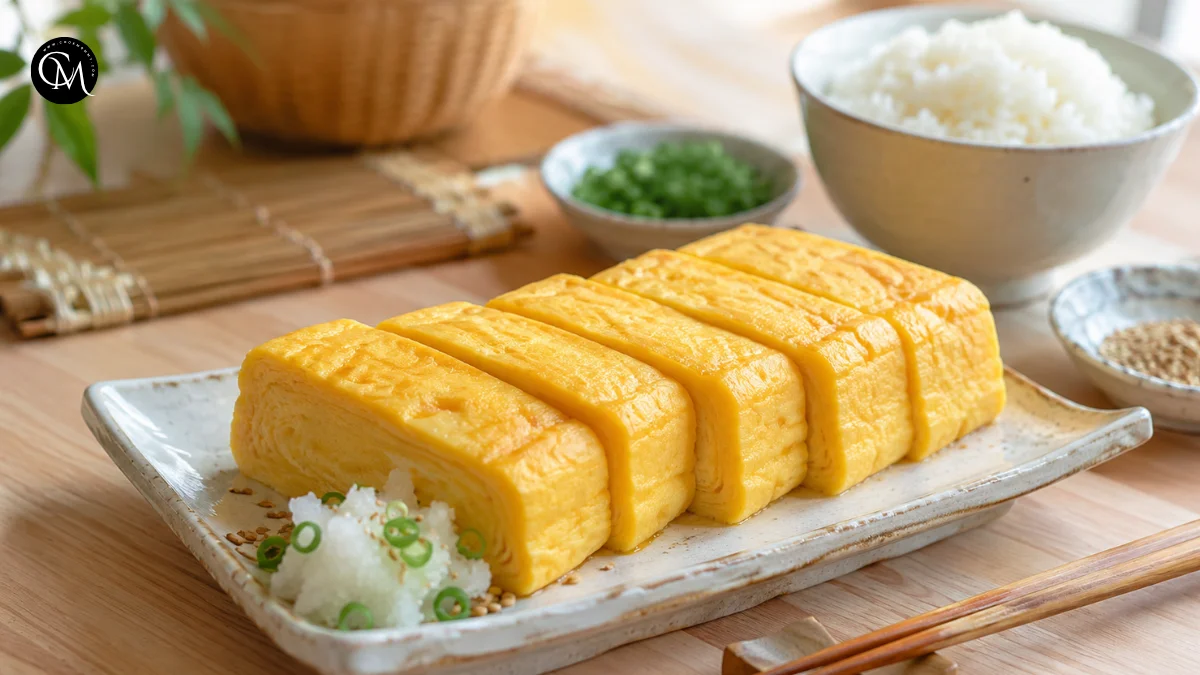
Egg Tamagoyaki: 7 Best Tips for Fluffy Japanese Omelet
Did you know that a simple rolled omelet can taste completely different depending on heat control, pan movement, and how gently you season the eggs? That is exactly why Egg Tamagoyaki is such a beautiful recipe to master. It looks simple, but the magic is in the soft layers, light sweetness, and delicate texture.
Egg Tamagoyaki is a Japanese rolled omelet often served for breakfast, in bento boxes, or alongside rice and miso soup. What makes it special is the balance between savory egg flavor, a little sweetness, and a tender layered shape. Once you learn the technique, it becomes one of those recipes you can make quickly without feeling rushed.
I love this recipe because it uses basic ingredients but teaches real kitchen skills: gentle heat, patient rolling, and careful seasoning. With the right tips, you can make a fluffy Japanese omelet that feels homemade, comforting, and restaurant-worthy.
Table of Contents
Ingredients List
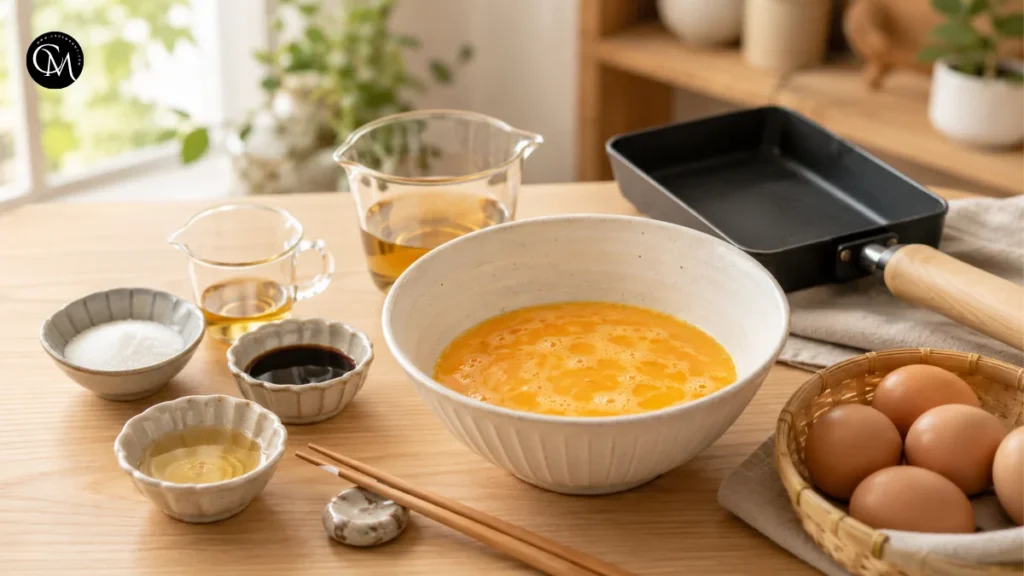
To make Egg Tamagoyaki, you only need a few simple ingredients. The flavor is mild, slightly sweet, and savory, so every ingredient matters.
Ingredients:
- 4 large eggs
- 1 tablespoon mirin
- 1 teaspoon soy sauce
- 1 teaspoon sugar
- 1 tablespoon dashi stock or water
- 1 small pinch of salt
- 1 teaspoon neutral oil, for cooking

Optional substitutions:
- Mirin: Use a small splash of water with a pinch of sugar if you do not have mirin.
- Soy sauce: Use light soy sauce for a gentle color, or tamari for a gluten-free option.
- Dashi stock: Water works well, but dashi gives a deeper Japanese flavor.
- Sugar: Reduce it slightly if you prefer a more savory omelet.
- Neutral oil: Canola, sunflower, or vegetable oil is best because it does not overpower the eggs.
The goal is not to make the egg mixture too strong. Egg Tamagoyaki should taste soft, balanced, and slightly sweet, not salty or heavy.
Timing
Preparation time: 10 minutes
Cooking time: 8–10 minutes
Total time: 18–20 minutes
Compared with many breakfast recipes, Egg Tamagoyaki is quick, but it needs attention. The cooking time is short, yet the technique matters more than speed. A regular omelet may take 5 minutes, but this Japanese rolled omelet rewards you for slowing down and cooking each thin layer gently.
Step-by-Step Instructions
Step 1 – Prepare Ingredients
Start by cracking the eggs into a medium bowl. Add mirin, soy sauce, sugar, dashi or water, and a small pinch of salt. Beat gently with chopsticks or a fork until the yolks and whites are combined.
Do not overbeat the eggs. Too much air can create bubbles and make the surface uneven. For a smoother Egg Tamagoyaki, stir in one direction and break up the egg whites carefully.
For an extra silky texture, you can strain the egg mixture through a fine sieve. This step is optional, but it helps remove thick egg white strands and creates a more even omelet.
Preparation matters because tamagoyaki cooks quickly. Once the pan is hot, you will not have time to search for oil, a spatula, or a plate. Keep everything close before you start cooking.
Step 2 – Build Flavor Base
The flavor base comes from the balance of eggs, mirin, soy sauce, sugar, and dashi. This is where Egg Tamagoyaki gets its gentle sweet-savory taste.
Sugar helps with tenderness and light browning. Mirin adds soft sweetness and shine. Soy sauce gives savory depth, while dashi brings umami. If you use too much liquid, the omelet can tear easily. If you use too little, it may taste plain or dry.
From a cooking science point of view, eggs firm up when proteins heat and set. Adding a small amount of liquid slows this process, helping the omelet stay tender. That is why Egg Tamagoyaki should be cooked over medium-low heat, not high heat.
Before cooking, taste is impossible to fully judge because the eggs are raw, so trust the measurements. After making it once, you can adjust the sweetness or saltiness to your taste.
Step 3 – Cook the Main Ingredient
Place a tamagoyaki pan or small nonstick skillet over medium-low heat. Lightly oil the pan using a folded paper towel dipped in oil. The pan should look shiny, not greasy.
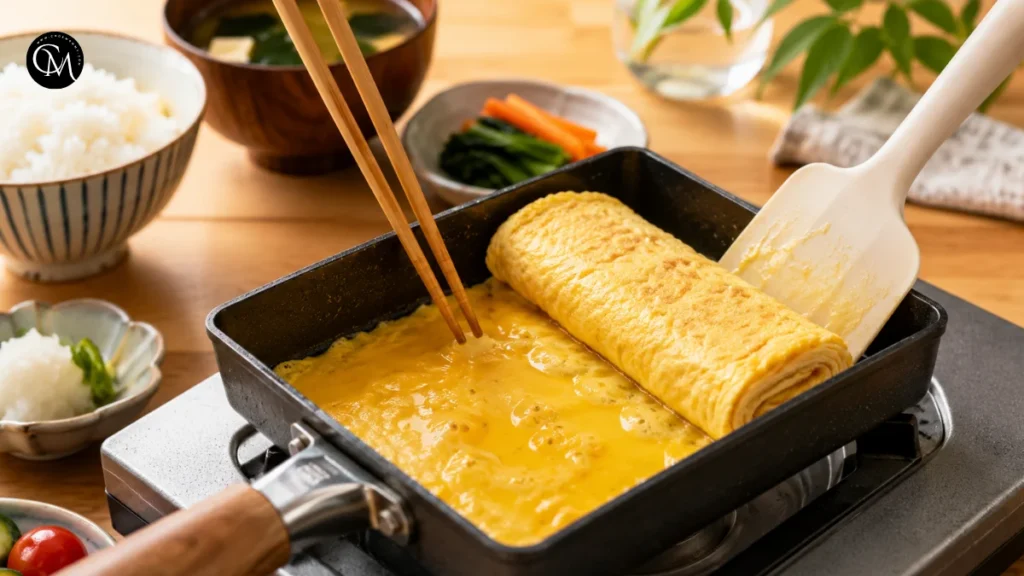
Pour in a thin layer of the egg mixture. Tilt the pan so it spreads evenly. When the egg is mostly set but still slightly moist on top, start rolling it from one end to the other.
This first roll does not need to look perfect. It becomes the center of the omelet, so do not worry if it is slightly uneven. Push the roll to one side of the pan, lightly oil the empty space, and pour in another thin layer of egg. Lift the first roll slightly so the new egg mixture flows underneath. This helps the layers connect.
Repeat the process until all the egg mixture is used. The best Egg Tamagoyaki has soft layers that hold together without becoming rubbery. If the egg browns too fast, lower the heat. If it stays wet too long, increase the heat slightly.
Texture tip: roll while the top is still a little glossy. If the layer becomes fully dry before rolling, the omelet can crack.
Step 4 – Combine Everything
As you add each layer, the omelet becomes thicker and more structured. This is where the flavor and texture come together. Each thin layer holds a little moisture, and the rolling creates that classic soft Japanese omelet shape.
Use a spatula, chopsticks, or both, depending on what feels comfortable. A flexible spatula is easier for beginners. Chopsticks are traditional, but they take practice.
The balance of flavors should be gentle. Egg Tamagoyaki is not meant to be bold or spicy. It should feel light, slightly sweet, and savory enough to pair with rice, vegetables, soup, or sushi-style meals.
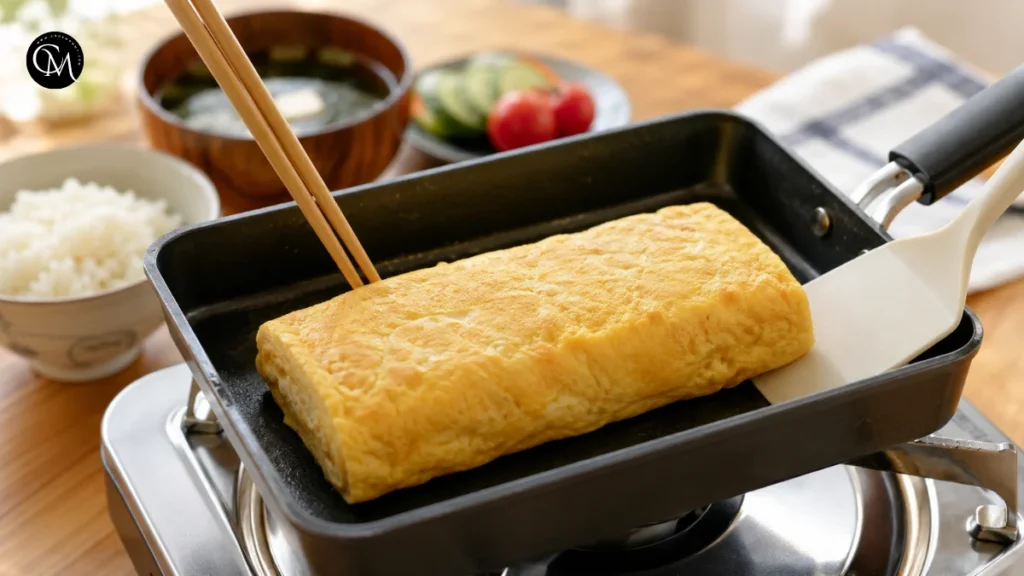
After the final layer is rolled, let the omelet sit in the pan for about 20–30 seconds with the seam side down. This helps seal the shape without overcooking the inside.
Step 5 – Finish & Adjust Seasoning
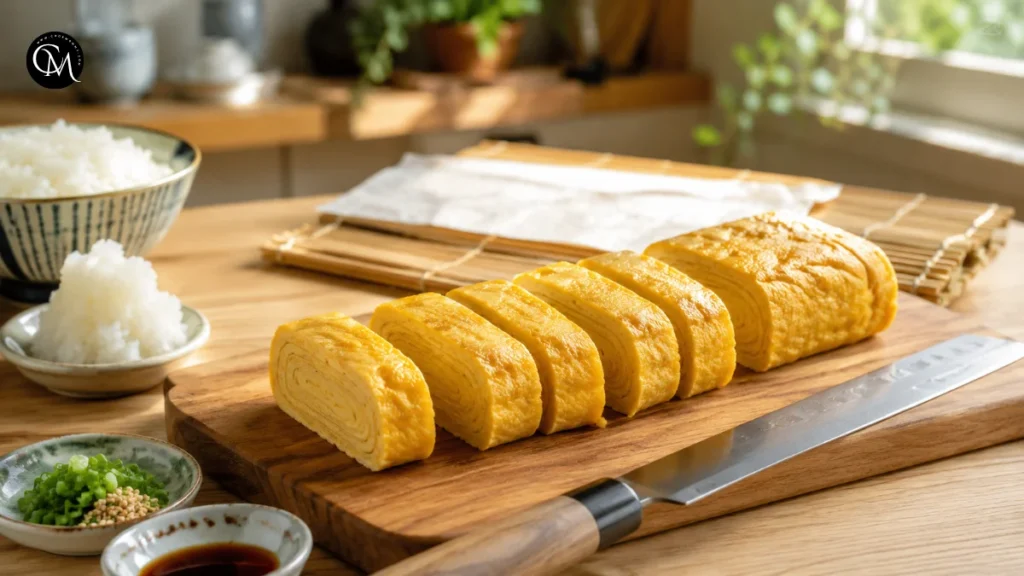
Transfer the omelet to a cutting board. Let it rest for 2–3 minutes before slicing. Resting helps the layers settle, so the pieces cut more cleanly.
For a neat shape, wrap the hot omelet gently in a bamboo sushi mat or parchment paper and press lightly. This step is optional, but it gives Egg Tamagoyaki a beautiful rectangular look.
Slice into thick pieces using a sharp knife. Wipe the knife between cuts if needed for cleaner edges.
Chef-style advice: serve it warm for the softest texture, or at room temperature for bento boxes. Add grated daikon, a few drops of soy sauce, sliced green onion, or toasted sesame seeds if you want a simple garnish.
Taste the finished omelet and note what you would change next time. More sugar gives a sweeter bento-style flavor. More dashi makes it softer and more savory. Less soy sauce keeps the color brighter.
Nutritional Information
Approximate nutrition per serving, based on 2 servings:
| Nutrient | Amount |
|---|---|
| Calories | 160–190 kcal |
| Protein | 12–14 g |
| Carbohydrates | 4–6 g |
| Fat | 10–12 g |
| Sugar | 2–4 g |
| Sodium | 350–500 mg |
Egg Tamagoyaki is a protein-rich recipe made mainly from eggs. The sugar and mirin add a small amount of carbohydrates, while soy sauce contributes sodium. These values are approximate and can change depending on the size of the eggs, the amount of oil used, and whether you use dashi, soy sauce, or substitutions.
It is a satisfying option for breakfast or a light meal, especially when served with rice, vegetables, or soup.
Healthier Alternatives
- You can adapt Egg Tamagoyaki while keeping its soft texture and traditional flavor.
- For lower sugar: Use half the sugar or skip it completely if you prefer a more savory omelet. A small amount of mirin still gives gentle sweetness without making the dish taste like dessert.
- For whole-grain options: The omelet itself does not need grains, but you can serve it with brown rice, barley rice, or whole-grain toast for a more filling meal.
- For dairy-free: Traditional Egg Tamagoyaki is already dairy-free because it does not use milk, cream, or cheese. Just check your seasonings if you use store-bought sauces.
- For gluten-free: Use tamari instead of regular soy sauce. Also make sure your mirin and dashi are labeled gluten-free.
- For children: Make the flavor slightly sweeter and cut the omelet into small bite-size pieces. It works well in lunch boxes because it stays soft at room temperature.
- For dieters: Use a good nonstick pan and only a thin film of oil. Serve with cucumber salad, steamed vegetables, or miso soup for a lighter plate.
- For seniors: Keep the texture soft by cooking over low heat and avoiding too much browning. The tender layers make it easy to chew and pleasant to eat.
Serving Suggestions
- Egg Tamagoyaki is very versatile. You can serve it simply or turn it into a complete meal.
- For breakfast, pair it with steamed rice, miso soup, and sliced cucumber. This gives you a balanced Japanese-style plate with soft, warm, and fresh textures.
- For lunch, pack slices into a bento box with rice balls, cherry tomatoes, edamame, and fruit. The omelet holds its shape well, which makes it practical for meal prep.
- For a quick snack, place a slice of Egg Tamagoyaki on toasted bread with a little mayo and green onion. It becomes a simple Japanese-inspired egg sandwich.
- For dinner, serve it beside grilled fish, stir-fried vegetables, or noodle soup. The mild flavor balances stronger dishes beautifully.
- You can also use it in sushi. Place a slice over seasoned rice and wrap it with a thin strip of nori. It looks elegant but is surprisingly easy once the omelet is ready.
- My favorite way is warm, with rice and a small bowl of soup. It feels simple, comforting, and complete.
Common Mistakes to Avoid
- Cooking on heat that is too high High heat makes the egg brown quickly and can create a dry, rubbery texture. Medium-low heat gives better control and softer layers.
- Pouring too much egg at once Thick layers are harder to roll and more likely to tear. Thin layers cook evenly and create the classic rolled texture.
- Waiting until the egg is fully dry Roll each layer when the top is still slightly moist. This helps the layers stick together instead of separating.
- Forgetting to oil between layers A very light coating of oil prevents sticking. You do not need much, but skipping it can make rolling difficult.
- Over-seasoning the mixture Too much soy sauce can make the omelet salty and dark. Egg Tamagoyaki should taste balanced, not heavy.
- Cutting it immediately Let the omelet rest for a few minutes before slicing. This keeps the layers neat and helps the shape settle.
Based on kitchen experience, most problems come from heat control. If your first try is uneven, do not worry. The second or third attempt usually improves quickly because your hands learn the rolling rhythm.
Storing Tips for the Recipe
- Egg Tamagoyaki stores well, which is one reason it is popular in bento meals. Let the omelet cool completely before storing it. Place slices in an airtight container and refrigerate for up to 2 days.
- To keep the texture soft, avoid leaving it uncovered in the fridge. Eggs can dry out quickly when exposed to air.
- For reheating, use a microwave for 10–15 seconds, just until warm. Do not overheat it, or the texture can become firm. You can also enjoy it at room temperature, especially in lunch boxes.
- If you want to prep ahead, mix the seasonings in a small bowl the night before, but beat the eggs fresh before cooking. This gives the best texture.
- This recipe became one of my regular meals because it feels special without being complicated. It uses ingredients I usually have at home, cooks quickly, and works for breakfast, lunch boxes, or a light dinner side.
Conclusion
Egg Tamagoyaki is one of those recipes that proves simple food can still feel special. With eggs, a little seasoning, gentle heat, and a patient rolling method, you can make a fluffy Japanese omelet that is soft, flavorful, and beautiful on the plate. The best part is that the recipe becomes easier every time you make it.
Try this Egg Tamagoyaki when you want a quick breakfast, a bento-friendly dish, or a new way to enjoy eggs at home. After you make it, leave a comment or review with your favorite version. And if you enjoy simple, practical recipes like this, subscribe for more home-cooking ideas and kitchen tips.
FAQs
Can I make Egg Tamagoyaki without a special pan?
Yes. A small nonstick skillet works well. The shape may be rounder, but the flavor and soft layered texture can still be delicious.
Why does my tamagoyaki break when rolling?
It usually breaks because the heat is too high or the egg layer is too dry. Roll while the surface is still slightly glossy.
Can I make Egg Tamagoyaki without mirin?
Yes. Use water with a small pinch of sugar. The flavor will be simpler, but the omelet will still taste good.
Is Egg Tamagoyaki sweet or savory?
It is both. Traditional versions are gently sweet with savory notes from soy sauce and dashi, creating a balanced Japanese omelet flavor.
Can I prepare it for a lunch box?
Yes. Let it cool fully, slice it neatly, and pack it in a sealed container. It is commonly used in bento boxes.
How do I make it fluffier?
Use medium-low heat, avoid overcooking, and add a small amount of dashi or water. Thin layers also help keep the texture soft.
Can I add vegetables?
Yes, but keep them finely chopped and use small amounts. Green onion, spinach, or grated carrot can work without making rolling difficult.
Tried it before ?
There are no reviews yet. Be the first one to write one.