
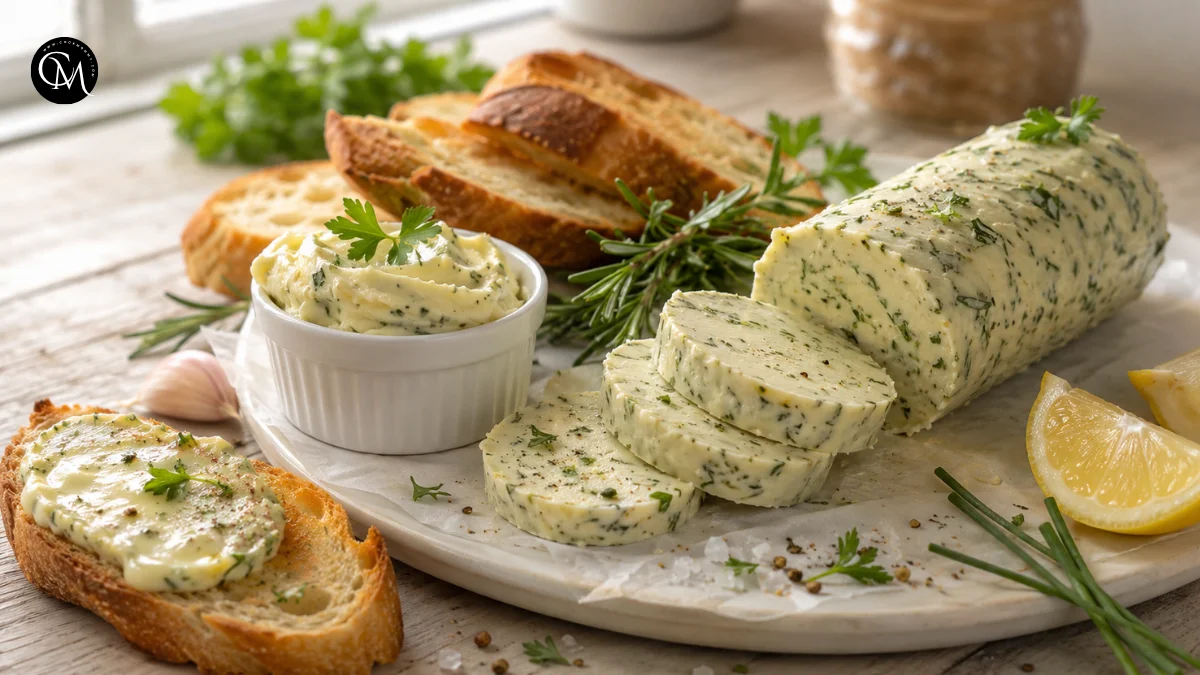
homemade Flavored Butter: 8 Best Herbs and Garlic Ideas
Did you know that a small spoonful of compound butter can change the flavor of an entire meal in less than one minute? That is why homemade Flavored Butter has become one of my favorite kitchen shortcuts. It looks simple, but it gives bread, steak, chicken, roasted vegetables, potatoes, pasta, and even breakfast toast a richer, fresher taste.
This recipe is worth making because it uses everyday ingredients, requires no cooking, and stores beautifully. Instead of buying expensive specialty butter from the store, you can mix your own with fresh herbs, garlic, citrus, spices, or a little sweetness. The best part is control: you choose the salt level, the texture, and the flavor strength.
In this guide, I’ll show you how to make homemade Flavored Butter with eight herb and garlic ideas, plus storage tips, healthier swaps, serving inspiration, and common mistakes to avoid.
Table of Contents
Ingredients List
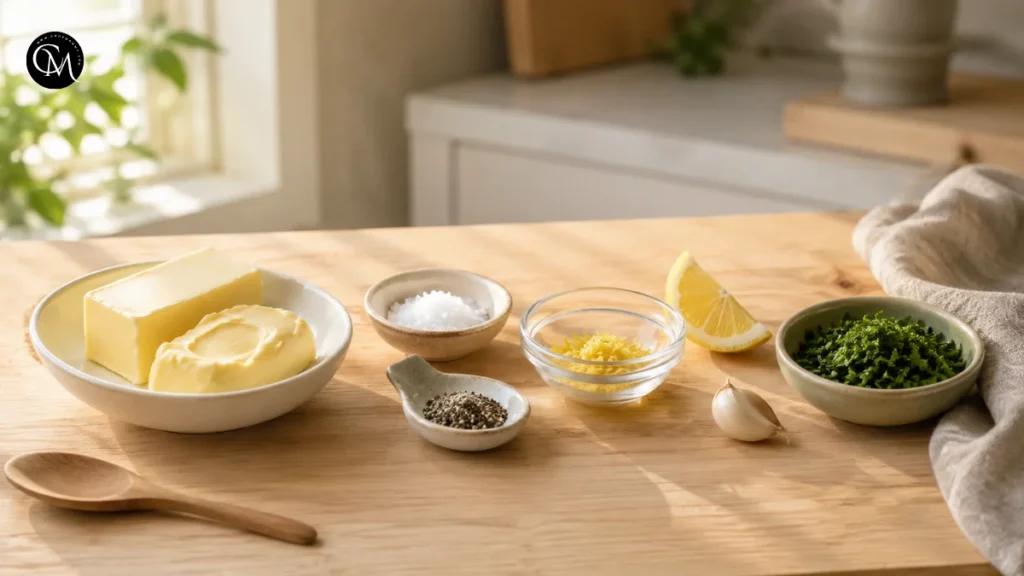
To make a basic batch of homemade Flavored Butter, start with simple, high-quality ingredients. Butter is the main ingredient, so choose one with a creamy flavor you already enjoy.
For the base:
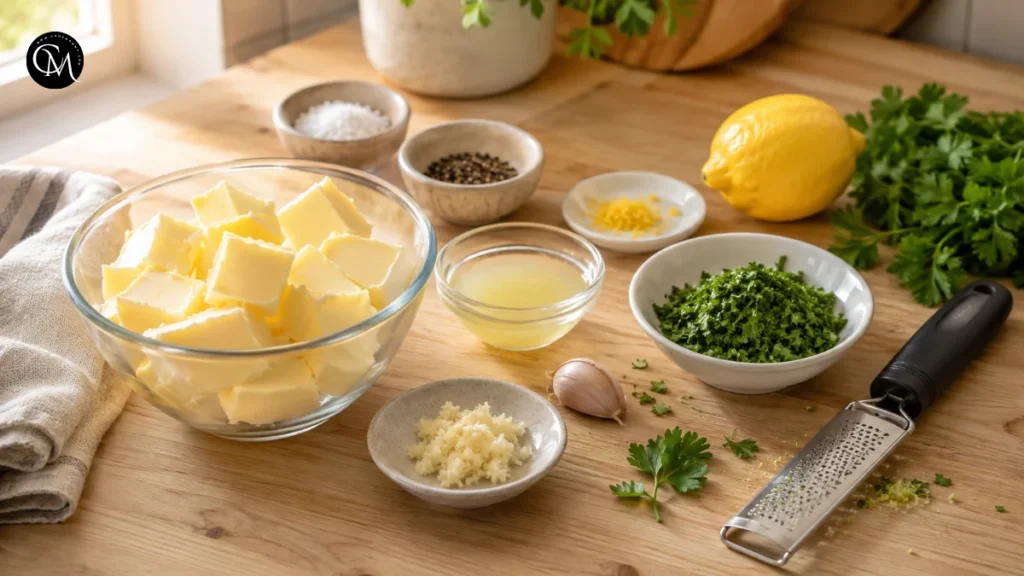
- 1 cup unsalted butter, softened to room temperature
- 1/2 teaspoon fine sea salt, or to taste
- 1/4 teaspoon black pepper
- 1 to 2 teaspoons lemon juice or lemon zest
- 1 small garlic clove, finely grated
- 2 to 3 tablespoons finely chopped fresh herbs
Best herb and garlic ideas:
- Parsley and garlic for a classic steakhouse flavor
- Chives and cracked pepper for baked potatoes
- Basil and lemon zest for pasta or grilled vegetables
- Rosemary and roasted garlic for chicken or lamb
- Thyme and honey for carrots or dinner rolls
- Dill and lemon for fish or cucumbers
- Cilantro and lime for corn, rice, or tacos
- Sage and garlic for roasted squash or holiday dishes
Substitution ideas:
- Use salted butter, but reduce added salt.
- Use vegan butter for a dairy-free version.
- Use roasted garlic instead of raw garlic for a sweeter, softer flavor.
- Use dried herbs in smaller amounts if fresh herbs are not available.
For the best homemade Flavored Butter, I prefer fresh herbs because they taste brighter and look beautiful when sliced.
Timing
Preparation time: 10 minutes
Cooking time: 0 minutes
Chilling time: 30 minutes
Total time: 40 minutes
Most flavored butter recipes take about 10 to 15 minutes of active work, so this version is quick and realistic for busy home cooks. The chilling time is optional if you want to use the butter right away, but it helps the flavors settle and makes slicing easier.
Step-by-Step Instructions
Step 1 – Prepare Ingredients
Start by taking the butter out of the refrigerator 30 to 45 minutes before mixing. It should be soft enough to press with a spoon, but not melted or oily. This texture matters because softened butter blends smoothly with garlic, herbs, citrus, and seasoning.
Wash and dry your herbs very well. Extra water can make homemade Flavored Butter look separated or dull. Chop the herbs finely so every bite has balanced flavor. If you are using garlic, grate it with a microplane or mince it very finely. Large garlic pieces can taste sharp and overpower the butter.
I like to prepare everything before mixing because flavored butter comes together quickly. Once the butter is soft, the goal is to blend, taste, adjust, and chill without overworking it.
Step 2 – Build Flavor Base
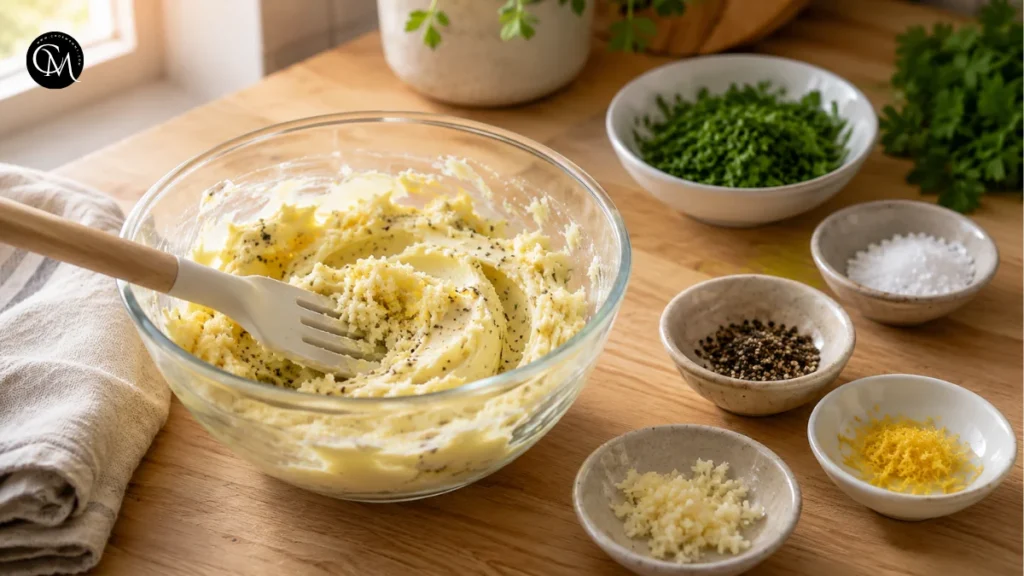
Place the softened butter in a medium bowl. Add salt, black pepper, lemon zest, and garlic. Mash everything together with a fork or flexible spatula until the base looks creamy and even.
This is where the cooking science is simple but important. Butter is mostly fat, and fat carries flavor beautifully. Garlic oils, herb aromas, pepper, and citrus zest spread through the butter, creating a stronger taste than sprinkling herbs on food at the end.
If you want a gentler garlic flavor, use roasted garlic. If you want a bold garlic bread flavor, use raw garlic. For homemade Flavored Butter that tastes balanced, start with less garlic and add more only after tasting.
Step 3 – Cook the Main Ingredient
This recipe does not require traditional cooking, but the main ingredient still needs care. The “main ingredient” is the butter itself, and the key is texture. Stir the butter until it becomes smooth, creamy, and spreadable.
If your butter is too cold, it will be lumpy and difficult to mix. If it is too warm, it may become greasy and lose its whipped texture. The best texture feels like soft frosting.
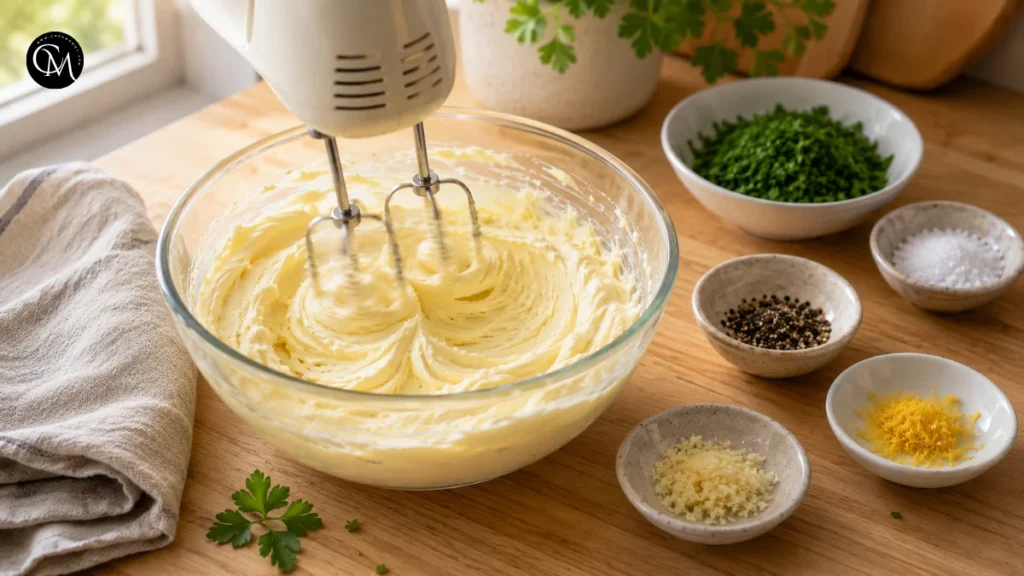
For a lighter result, whip the butter for 30 to 60 seconds with a hand mixer. This adds a little air and makes homemade Flavored Butter easier to spread on bread, rolls, pancakes, or toast. For a rustic version, use a fork and keep the texture slightly chunky.
Step 4 – Combine Everything
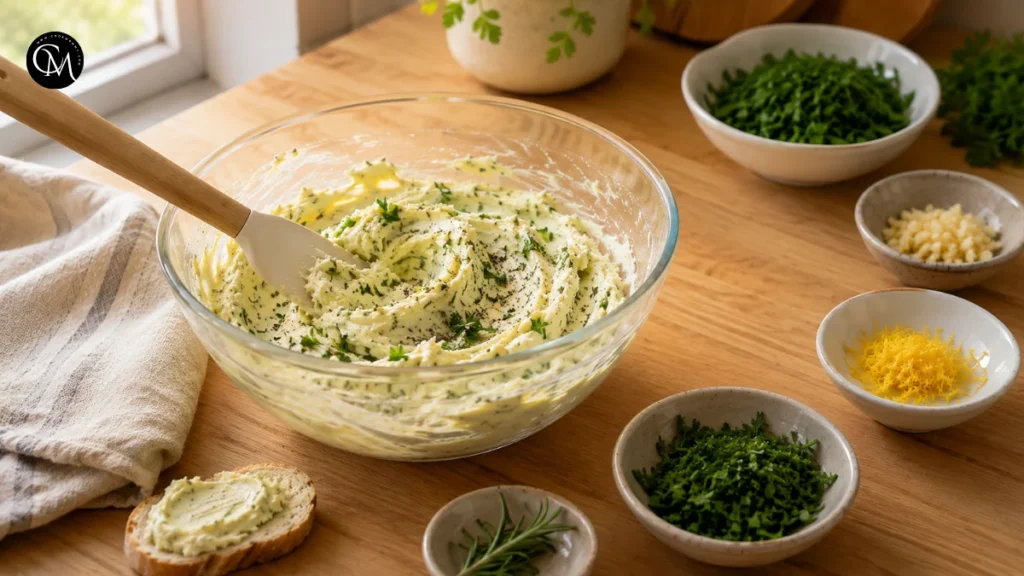
Fold in your chosen herbs and extra flavorings. For example, parsley and garlic make a classic savory butter, while basil and lemon zest taste fresh and summery. Rosemary and roasted garlic are deeper and more comforting, perfect for roasted meats or potatoes.
The secret is balance. Butter is rich, herbs are fresh, garlic is sharp, and lemon brings brightness. When all four are used carefully, homemade Flavored Butter tastes full without feeling heavy.
Taste a tiny amount on a piece of bread or cracker. This gives you a more accurate idea than tasting it plain. Add more salt for depth, more lemon for brightness, or more herbs for freshness.
Step 5 – Finish & Adjust Seasoning
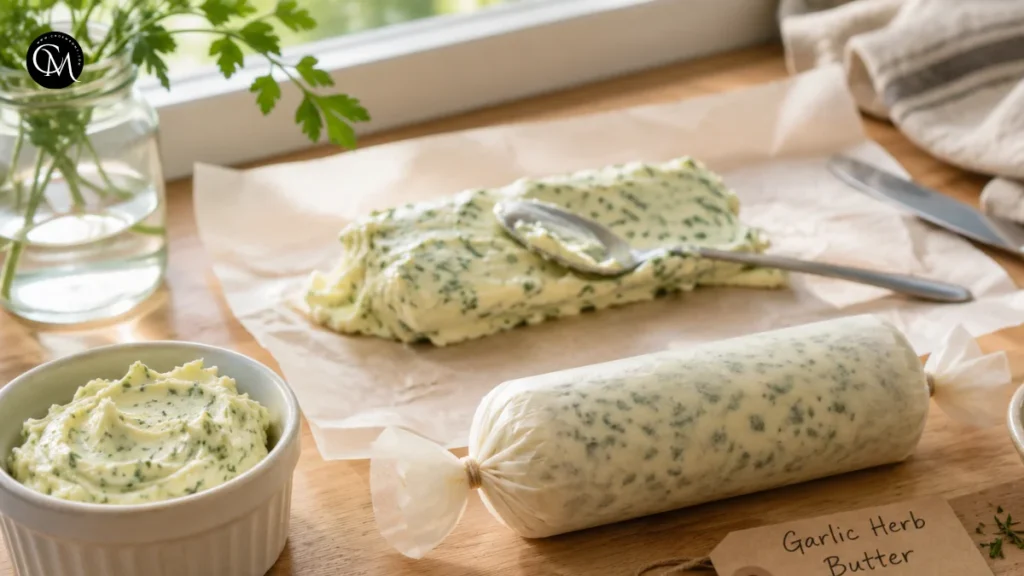
Once the flavor tastes right, spoon the butter onto parchment paper or plastic wrap. Shape it into a log, twist the ends, and chill for at least 30 minutes. You can also pack it into a small ramekin if you prefer a spreadable style.
Chef-style advice: label the flavor and date before storing. It sounds simple, but it helps when you make several versions at once. I often keep one garlic herb butter for dinner and one sweet cinnamon honey butter for breakfast.
Before serving, let homemade Flavored Butter sit at room temperature for 5 to 10 minutes. This softens the texture without melting it completely.
Nutritional Information
Approximate nutrition per 1 tablespoon serving:
| Nutrient | Amount |
|---|---|
| Calories | 100 |
| Fat | 11 g |
| Saturated Fat | 7 g |
| Carbohydrates | 0–1 g |
| Protein | 0 g |
| Sodium | 35–80 mg |
| Sugar | 0 g |
These values are estimates and depend on the butter brand, salt amount, and added ingredients. homemade Flavored Butter is rich, so a small amount goes a long way. One tablespoon can flavor vegetables, bread, grilled meat, or pasta without needing a heavy sauce.
Healthier Alternatives
If you want a lighter version, try blending half butter and half olive oil. The texture will be softer, but the flavor stays rich and savory. You can also use whipped butter, which feels lighter because it contains more air.
For lower sugar, keep the recipe savory and avoid honey, maple syrup, or sweet mix-ins. If making a sweet version, use a small amount of honey and add cinnamon or citrus zest to create flavor without relying on extra sweetness.
For whole-grain options, serve homemade Flavored Butter with whole-grain bread, seeded toast, brown rice, farro, or roasted sweet potatoes. The butter adds richness while the grains add texture and a more filling bite.
For dairy-free needs, use a good-quality plant-based butter. Choose one that tastes pleasant on its own and firms up well in the refrigerator.
This recipe is naturally gluten-free, but always check labels if serving someone with gluten sensitivity. Butter, herbs, garlic, and lemon are usually gluten-free, but flavored products may contain additives.
For children, use mild herbs like parsley or chives and keep garlic light. For seniors or anyone who prefers softer flavors, roasted garlic is often easier to enjoy than raw garlic.
Serving Suggestions
One of the best things about homemade Flavored Butter is how many meals it can improve. Spread it over warm bread, dinner rolls, biscuits, or toast. The butter melts into the crumb and gives every bite a fresh herb aroma.
For dinner, add a slice over grilled steak, roasted chicken, baked salmon, shrimp, or turkey burgers. The heat gently melts the butter and creates a quick sauce without extra work.
For vegetables, try it on corn on the cob, roasted carrots, asparagus, green beans, mushrooms, or baked potatoes. Garlic herb butter makes simple vegetables taste more complete.
You can also stir a spoonful into pasta, rice, mashed potatoes, scrambled eggs, or soup. I especially like basil lemon butter tossed with hot pasta and a little Parmesan.
For entertaining, serve several flavors on a board with warm bread, radishes, crackers, and roasted vegetables. It feels special, but it is easy to prepare ahead.
Common Mistakes to Avoid
Using melted butter is one of the most common mistakes. Melted butter may separate and will not hold herbs evenly. Softened butter gives the best creamy texture.
Adding wet herbs can also cause problems. After washing herbs, dry them thoroughly with a towel or salad spinner. Too much moisture shortens freshness and weakens the flavor.
Using too much raw garlic can make homemade Flavored Butter harsh. Raw garlic becomes stronger as it sits, so start small and adjust carefully.
Skipping the taste test is another mistake. Always taste the butter on bread, crackers, or vegetables because plain butter tastes different from butter on food.
Overloading the butter with too many ingredients can muddy the flavor. Choose two or three main flavors, such as garlic, parsley, and lemon, instead of adding everything at once.
Forgetting to label freezer portions can be frustrating. Different flavors look similar once frozen, so write the flavor and date clearly.
Storing Tips for the Recipe
Store homemade Flavored Butter in an airtight container in the refrigerator for up to 1 week. If you use very fresh herbs and clean utensils, it stays brighter and better tasting.
For longer storage, wrap the butter tightly in parchment paper, then place it in a freezer-safe bag. Freeze for up to 2 months. Slice off small rounds as needed, then return the rest to the freezer.
You can also freeze butter in small spoonfuls on a tray. Once firm, transfer the pieces to a bag. This makes it easy to add one portion to vegetables, steak, rice, or pasta.
This recipe became one of my regular meals because it helps me make quick dinners taste finished, even when I only have basic ingredients in the kitchen. A small slice of herb garlic butter can turn plain potatoes, chicken, or toast into something that feels thoughtful and homemade.
Conclusion
homemade Flavored Butter is one of those simple recipes that delivers more than you expect. It is quick, flexible, budget-friendly, and full of fresh flavor. With butter, garlic, herbs, lemon, and a few smart tips, you can create a spread that works for bread, vegetables, meat, seafood, pasta, and breakfast dishes.
The best part is that you can customize it for the season, the meal, or your own taste. Make one classic garlic herb version first, then try basil lemon, rosemary roasted garlic, or dill lemon next. Try this recipe in your kitchen, leave a comment or review with your favorite flavor, and subscribe for more practical homemade recipe ideas.
FAQs
Can I make homemade Flavored Butter with salted butter?
Yes. Salted butter works well, but reduce or skip the added salt. Taste before chilling so the final butter does not become too salty.
Can I use dried herbs instead of fresh herbs?
Yes, but use less. Dried herbs are more concentrated, so start with about one teaspoon dried herbs for every tablespoon of fresh herbs.
How long does homemade Flavored Butter last?
It usually lasts up to 1 week in the refrigerator when stored airtight. For longer storage, freeze it tightly wrapped for up to 2 months.
Can I freeze garlic herb butter?
Yes. Shape it into a log, wrap tightly, and freeze. Slice off small pieces whenever you need quick flavor for vegetables, meat, or bread.
Why does my flavored butter taste too strong?
Raw garlic or strong herbs may overpower the butter. Add more plain butter, lemon zest, or mild herbs to soften and balance the flavor.
What is the best butter to use?
Use a creamy, good-quality unsalted butter. Unsalted butter gives you better control over seasoning and lets the herbs and garlic shine.
Can I make a dairy-free version?
Yes. Use plant-based butter that firms well when chilled. Add herbs, garlic, lemon, and seasoning the same way as the classic version.