
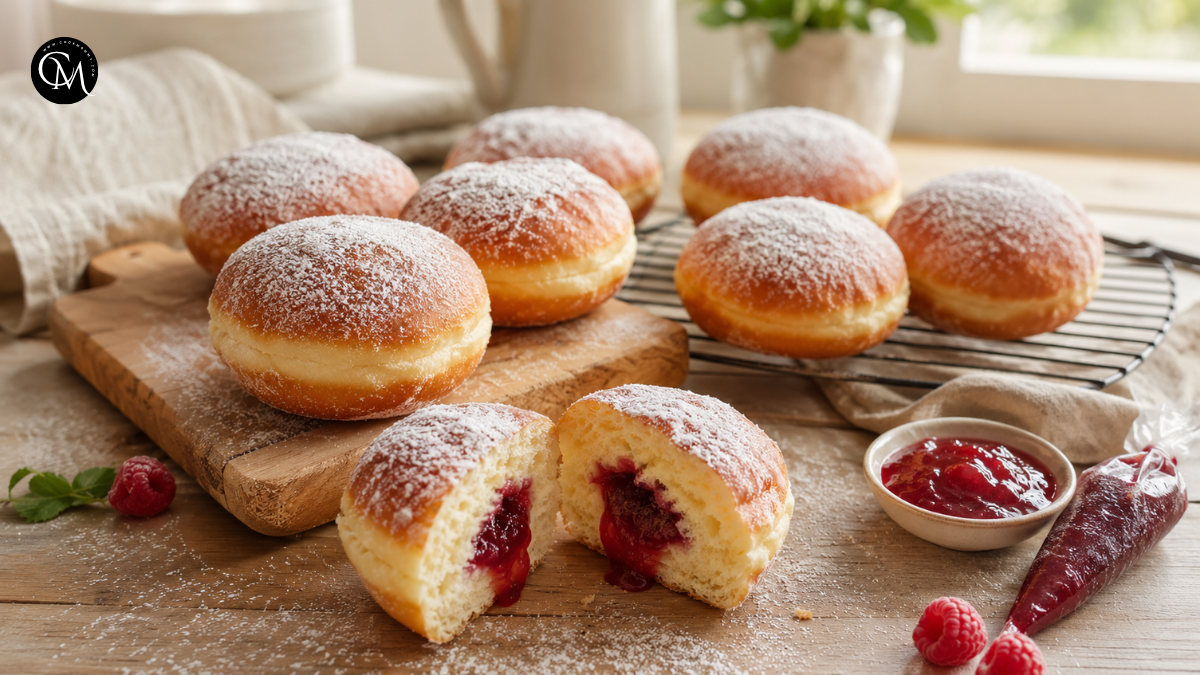
Berlin Doughnut: Why 5 Baking Secrets Matter
Why can a difference of only a few degrees turn a soft, airy doughnut into one that is greasy outside and undercooked in the center? Yeast pastries depend on temperature, proofing, dough strength, and frying time working together. A Berlin Doughnut may appear simple, but its tender crumb and jam-filled center require several small decisions before the dough reaches the oil.
This recipe is worth learning because it explains why each technique matters instead of giving instructions without context. You will learn how to prepare a supple yeast dough, judge proofing by touch, maintain the correct oil temperature, and fill each pastry neatly.
The five baking secrets are straightforward: use properly warmed ingredients, develop enough gluten, allow complete proofing, fry at a steady temperature, and avoid overfilling. Follow them carefully, and your homemade Berlin Doughnut will have a golden exterior, a light interior, and a delicious pocket of fruit jam.
Table of Contents
Ingredients List
For the yeast dough
- 500 g all-purpose flour, plus extra for shaping
- 7 g instant yeast
- 60 g granulated sugar
- ½ teaspoon fine salt
- 240 ml whole milk, lukewarm
- 2 large eggs, at room temperature
- 60 g unsalted butter, softened
- 1 teaspoon vanilla extract
- 1 teaspoon finely grated lemon zest, optional
- Neutral frying oil, such as sunflower or canola oil
For the filling and coating
- 200–250 g smooth raspberry, strawberry, apricot, or plum jam
- 60 g granulated sugar or powdered sugar
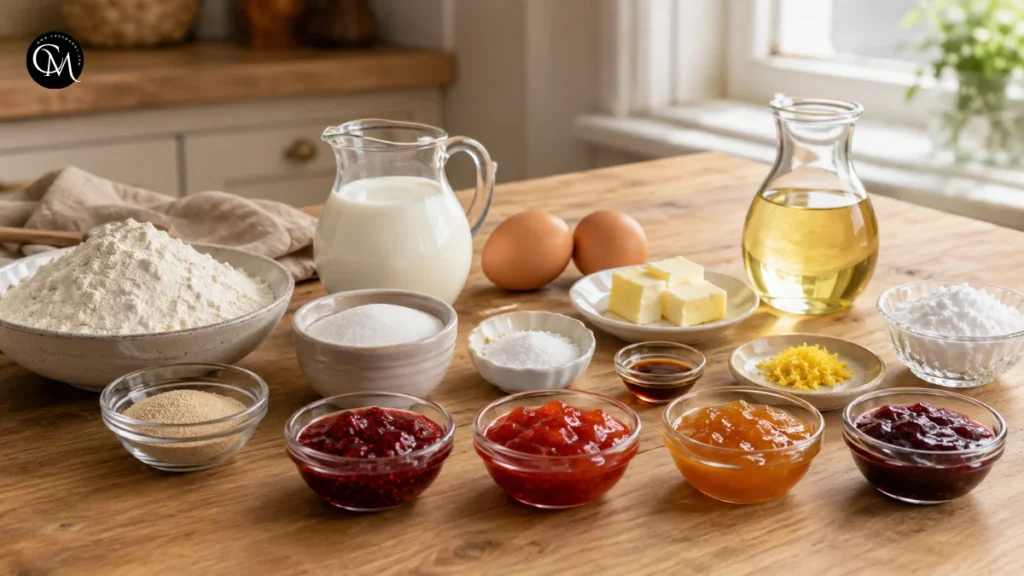
Whole milk gives the Berlin Doughnut a rich and tender texture, although 2% milk can also be used. For a dairy-free version, replace the milk with unsweetened soy or oat milk and use a firm dairy-free baking block instead of butter.
Choose a smooth, seedless jam because it moves through a piping nozzle more easily. When the filling is extremely thick, stir in one teaspoon of warm water. Avoid making it runny, as thin jam may leak from the pastries.
Timing
- Preparation time: 30 minutes
- First proof: 60–90 minutes
- Shaping and second proof: 35–50 minutes
- Frying and filling: 25 minutes
- Total time: approximately 2 hours 30 minutes
Most of the schedule is inactive rising time. A yeast-raised Berlin Doughnut takes longer than a cake doughnut, but slow fermentation produces a lighter texture and more developed flavor.
Room temperature affects the timing. Dough rises faster in a warm kitchen and more slowly during cold weather, so use the appearance and texture of the dough rather than depending entirely on the clock.
Step-by-Step Instructions
Step 1 – Prepare the ingredients
Measure all the ingredients before beginning. Yeast dough starts changing as soon as the liquid touches the flour, and organized preparation makes the mixing process smoother.
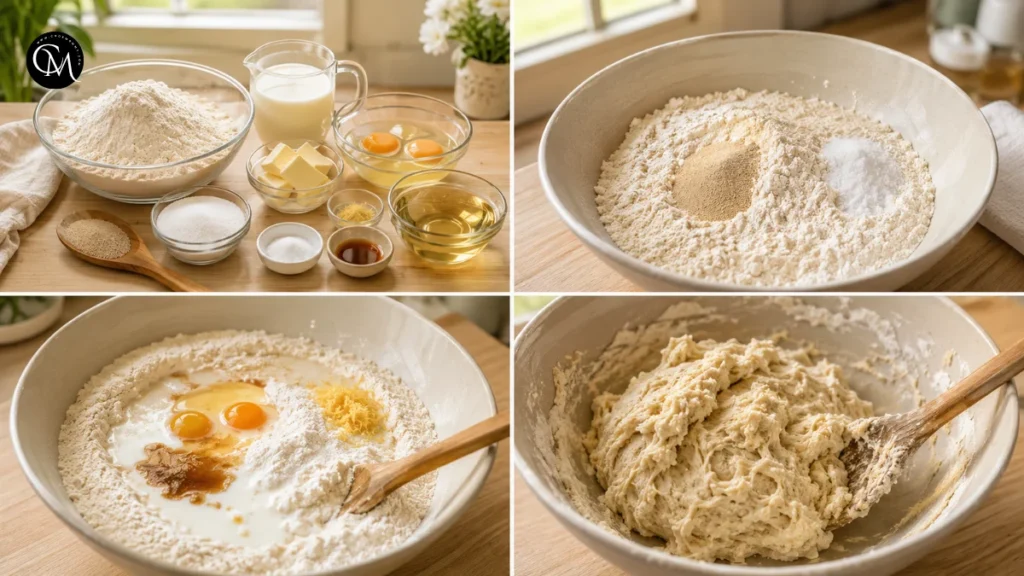
Place the flour, yeast, sugar, and salt in a large bowl. Position the salt and yeast on opposite sides before mixing because concentrated salt can slow yeast activity.
Add the lukewarm milk, eggs, vanilla, and lemon zest. Mix until no dry flour remains. The dough will initially look rough and sticky.
The milk should feel gently warm rather than hot. A temperature of approximately 35–38°C encourages yeast activity. Hot milk can damage the yeast, while cold milk makes the rising process slower.
Step 2 – Build the flavor base
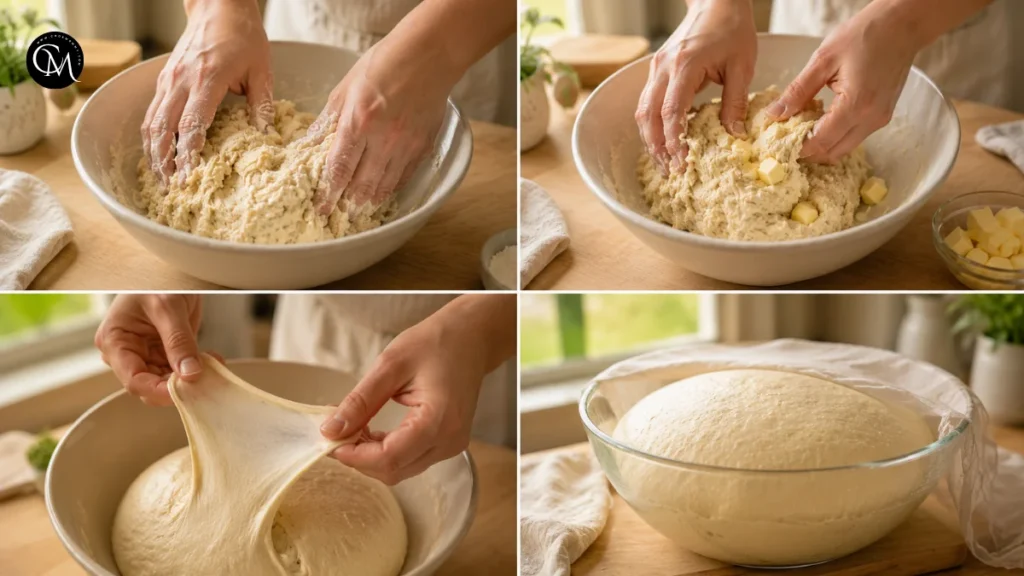
Knead the mixture for about five minutes before gradually adding the softened butter. Continue kneading for another eight to ten minutes by hand or six to eight minutes in a stand mixer.
Adding butter gradually allows the flour to absorb the liquid and develop gluten before the fat coats the flour proteins. This creates enough structure to support a light Berlin Doughnut while keeping the crumb tender.
Properly kneaded dough should look smooth and elastic. It may feel slightly tacky, but it should not coat your hands like wet batter.
Stretch a small piece gently between your fingers. When it forms a thin membrane before tearing, the gluten is sufficiently developed. Place the dough in a lightly greased bowl, cover it, and leave it to rise until approximately doubled in size.
Step 3 – Shape and proof the main dough
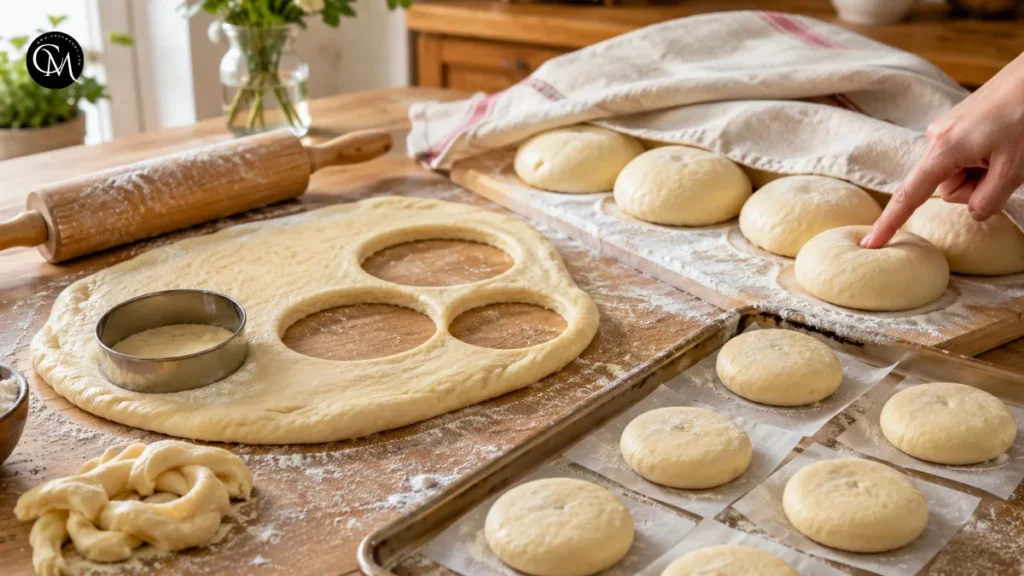
Gently press the risen dough to remove oversized air pockets. Turn it onto a lightly floured surface and roll it to approximately 1.5 cm thick.
Cut rounds with a 7–8 cm cutter. Re-roll the leftover dough only once because repeated rolling can produce a firmer texture.
Place the rounds on small parchment squares or a lightly floured tray. Cover them loosely and leave them to proof for 35–50 minutes.
A properly proofed round should appear puffy and feel delicate. Press the surface lightly with one fingertip. The indentation should return slowly while leaving a faint mark.
If it springs back immediately, it needs additional time. If it collapses or does not recover at all, it may be overproofed. Correct proofing helps the Berlin Doughnut expand evenly and develop its characteristic light center.
Step 4 – Fry and combine everything
Pour 7–8 cm of neutral oil into a deep, heavy pot. Heat it to 170–175°C and monitor the temperature with a kitchen thermometer.
Carefully lower two or three rounds into the oil, placing the top side down first. Fry for approximately 90 seconds, turn once, and cook the other side until evenly golden.
Avoid overcrowding the pot. Every piece of dough lowers the oil temperature, and frying too many at once can result in greasy pastries.
Oil below approximately 165°C allows the dough to absorb excess fat before the crust forms. Oil above 180°C may darken the exterior before the center has enough time to cook.
Transfer each Berlin Doughnut to a cooling rack with paper towels placed underneath. While still warm, roll it gently in granulated sugar. For powdered sugar, wait until the pastry has cooled so the coating remains visible.
Step 5 – Fill and finish
Allow the doughnuts to cool until they are only slightly warm. Fit a piping bag with a narrow filling nozzle and add the smooth jam.
Make a small opening in the side of each pastry. Pipe in approximately one to two teaspoons of filling, stopping when the Berlin Doughnut feels slightly heavier or the jam reaches the opening.
Fill one pastry first and taste it before completing the batch. This allows you to adjust the balance between the coating and filling.
When the jam is especially sweet, apply powdered sugar lightly. When using tart raspberry or plum jam, a slightly more generous sugar coating creates a pleasant balance.
Do not overfill the pastries. Too much jam can split the soft interior, leak through the side, and make the Berlin Doughnut difficult to eat.


Nutritional Information
Approximate values per filled doughnut, based on 14 servings:
| Nutrient | Approximate amount |
|---|---|
| Calories | 285 kcal |
| Carbohydrates | 43 g |
| Protein | 5 g |
| Fat | 10 g |
| Saturated fat | 3 g |
| Sugar | 16 g |
| Sodium | 95 mg |
These figures are estimates. The final values depend on the size of each Berlin Doughnut, the amount of oil absorbed during frying, the sugar coating, and the quantity of jam used.
This pastry is best enjoyed as an occasional homemade treat. Serving it with fresh fruit, unsweetened coffee, or tea can create a more balanced snack without changing the traditional texture.
Healthier Alternatives
- For a lower-sugar version, reduce the sugar in the dough from 60 g to 40 g and choose a fruit spread containing less added sugar. Do not remove all the sugar because a small amount supports browning and balances the yeast flavor.
- For a whole-grain option, replace up to 25% of the all-purpose flour with finely milled whole-wheat flour. Using a larger proportion can make the Berlin Doughnut noticeably denser. Add one or two tablespoons of milk when the dough feels too firm.
- For a dairy-free version, use unsweetened plant milk and dairy-free block butter. Soy milk generally provides a rich texture, while oat milk gives the dough a mild sweetness.
- A gluten-free version requires a bread-style gluten-free flour blend containing a binder such as xanthan gum or psyllium. Regular flour cannot simply be exchanged for a single gluten-free flour because yeast dough needs structure to trap air.
- For children, prepare smaller rounds and add less filling. Seniors may prefer a soft Berlin Doughnut with smooth apricot jam and a light powdered-sugar coating. Those managing portions can serve half a pastry with berries or sliced orange.
Serving Suggestions for the Berlin Doughnut
- Serve the Berlin Doughnut slightly warm with coffee, black tea, or hot chocolate. The soft interior and fruity filling pair especially well with drinks that are not overly sweet.
- For brunch, prepare several fillings, such as raspberry, apricot, plum, chocolate cream, and vanilla pastry cream. Mark each flavor with a small fruit garnish so guests can identify their preferred option.
- For a festive presentation, arrange the pastries on a large serving plate and dust them lightly with powdered sugar immediately before serving.
- Mini versions work well for parties because guests can try several fillings without committing to a full-size pastry. Add a bowl of fresh strawberries or orange segments to provide a refreshing contrast to the fried dough.
- Avoid filling warm pastries with cream or custard. Heat can soften the filling and increase the need for immediate refrigeration.
Common Mistakes to Avoid
- Using milk that is too hot Very hot liquid can damage the yeast and prevent a reliable rise. Use gently warm milk rather than estimating with boiling or steaming liquid.
- Adding too much flour The dough should remain slightly tacky. Adding flour until it feels completely dry usually creates a heavy and less tender Berlin Doughnut.
- Rushing the second proof Underproofed rounds often remain dense and may split unpredictably while frying. Wait until they look visibly puffy and pass the gentle finger test.
- Frying at an unstable temperature Oil that is too cool creates greasy results, while excessively hot oil produces a dark exterior and an undercooked center. Maintain 170–175°C.
- Overcrowding the pot Frying in small batches keeps the temperature steady and gives each Berlin Doughnut enough space to expand without sticking to another piece.
- Adding too much filling Excess jam can tear the internal crumb or leak out. One to two teaspoons is normally enough for a medium doughnut.
Storing Tips for the Berlin Doughnut
- These pastries have the best flavor and texture on the day they are fried. Store unfilled leftovers in an airtight container at room temperature for up to 24 hours.
- A jam-filled Berlin Doughnut can usually remain at room temperature for the same day, provided the jam is shelf-stable. Pastries filled with custard, whipped cream, or pastry cream must be refrigerated promptly.
- To refresh an unfilled doughnut, warm it for a few seconds in the microwave or for three to four minutes in a low oven. Excessive heating can make the crumb chewy.
- Freeze completely cooled, unfilled doughnuts for up to one month. Place parchment paper between them and store them in an airtight freezer container. Thaw at room temperature, warm briefly, and add the filling afterward.
- The dough can also be prepared the evening before. Cover it securely and let it rise slowly in the refrigerator overnight. Shape and proof it the following morning.
- This recipe became one of my regular weekend treats because overnight preparation divides the work into manageable stages and develops a deeper yeast flavor.
Conclusion
A successful Berlin Doughnut depends on five careful habits: accurate measuring, sufficient kneading, complete proofing, controlled frying, and balanced filling. These simple techniques create the contrast that makes the pastry special a thin golden exterior, a light yeast-raised center, and a bright pocket of fruit jam.
Prepare the dough on a relaxed morning or refrigerate it overnight to make the schedule easier. Experiment with raspberry, apricot, plum, chocolate cream, or vanilla custard, and discover which filling works best for your family.
Try the recipe, leave a comment or review describing your results, and subscribe for more practical recipes, baking guidance, and dependable troubleshooting tips.
FAQs
Is a Berlin Doughnut the same as a Berliner?
Yes. Berliner and Berlin-style doughnut commonly describe a similar yeast-raised pastry filled with jam, although names, fillings, and coatings vary by region.
Can I bake the doughnuts instead of frying them?
Yes, but the result will be more like a soft filled bun. Bake at approximately 190°C until golden, then brush with butter before adding sugar.
Why did my doughnuts become greasy?
The oil was probably too cool, the pot was overcrowded, or the dough was overproofed. Maintain 170–175°C and fry only a few pieces at once.
Which filling works best?
Smooth raspberry and apricot jams are traditional and easy to pipe. Choose a moderately thick, seedless filling to prevent clogging and leaking.
Can I prepare the dough overnight?
Yes. Refrigerate the covered dough after mixing, then shape and complete the second proof the next day. Slow fermentation also develops additional flavor.
How can I tell when the center is cooked?
Maintain the correct frying temperature and cook both sides evenly. A finished doughnut should feel light and springy rather than wet, dense, or unusually heavy.
Why did the doughnuts collapse?
They may have been overproofed or handled too roughly. Proof until visibly puffy, then lift each round gently and lower it carefully into the oil.
Tried it before ?
There are no reviews yet. Be the first one to write one.