
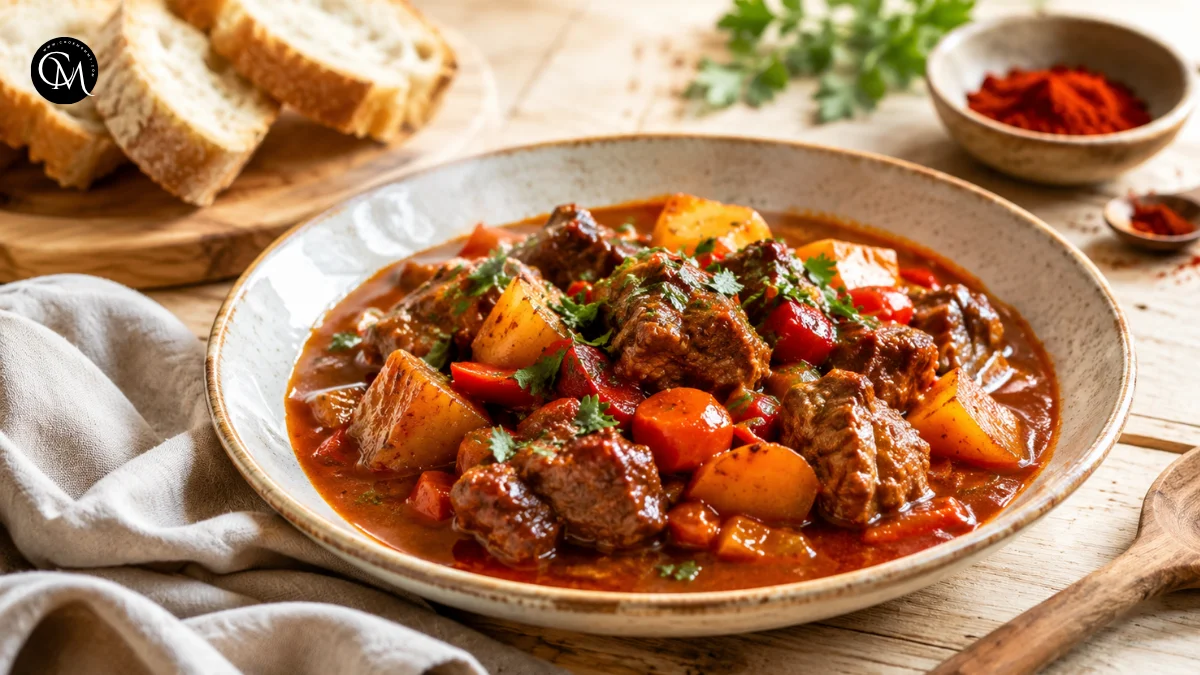
Hungarian beef goulash : 6 Best One-Pot Ideas
Did you know that one-pot meals can cut cleanup time by nearly half compared with multi-pan dinners? That is one reason beef goulash has stayed popular for generations: it gives you deep, slow-cooked flavor without turning your kitchen into a pile of dishes. This Hungarian-style recipe is warm, rich, practical, and perfect for anyone who wants a comforting dinner with simple ingredients.
What makes beef goulash special is not only the tender beef or the beautiful paprika color. It is the way onions, garlic, spices, broth, and vegetables slowly come together into a hearty stew that tastes even better the next day. This recipe is worth reading because it focuses on real cooking tips: how to build flavor, how to avoid tough meat, and how to make one pot taste like you spent all day in the kitchen.
Table of Contents
Ingredients List
For a cozy pot of beef goulash, you need simple ingredients that work together beautifully.
- 2 pounds beef chuck, cut into medium cubes
Beef chuck works beautifully in this recipe because low, steady heat turns it soft, juicy, and easy to pull apart. You can also use stewing beef. - 2 tablespoons olive oil or vegetable oil
A little oil helps the meat sear properly and creates the first layer of rich flavor in the pot. - 2 large onions, finely chopped
Onions give sweetness and body to the sauce. - 3 garlic cloves, minced
Garlic adds warmth and depth. - 2 tablespoons sweet Hungarian paprika
This is the heart of beef goulash. Use fresh paprika for the best color and aroma. - 1 teaspoon smoked paprika, optional
Adds a gentle smoky flavor. - 1 teaspoon caraway seeds, lightly crushed
Traditional and earthy, but you can reduce it if you prefer a milder taste. - 2 tablespoons tomato paste
Gives richness and a slight tang. - 4 cups beef broth
Choose reduced-salt broth so you can adjust the final taste more easily as the stew cooks. - 2 carrots, sliced
They add natural sweetness. - 2 potatoes, peeled and cubed
Potatoes make the stew filling and comforting. - 1 red bell pepper, chopped
Adds color and soft sweetness. - 1 bay leaf
Gives a subtle background aroma. - Salt and black pepper, to taste
- Fresh parsley, for serving
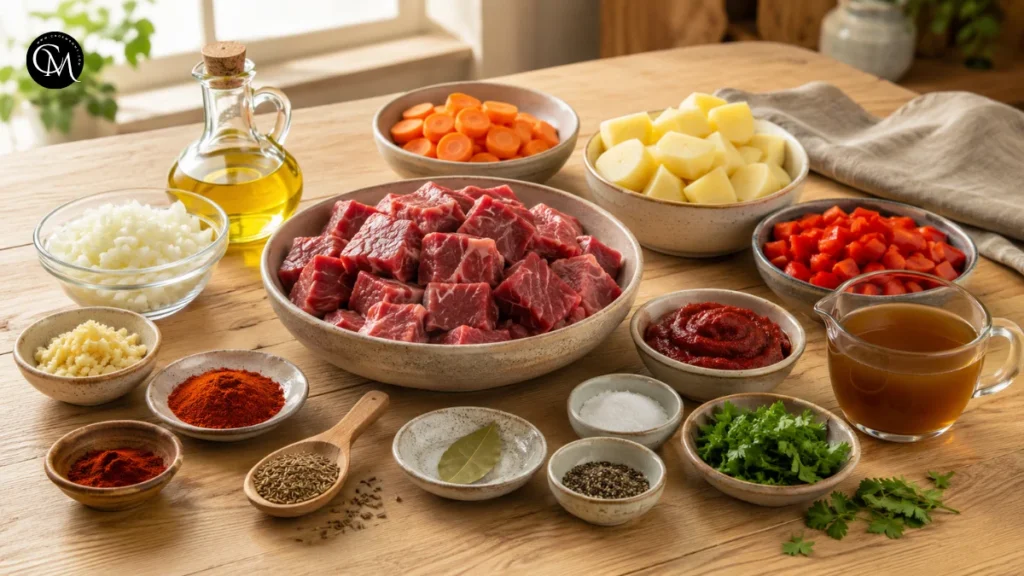
Optional substitutions: use sweet potatoes instead of regular potatoes, vegetable broth in a lighter version, or add a small pinch of chili flakes for gentle heat.
Timing
- Preparation time: 20 minutes
- Cooking time: 1 hour 45 minutes
- Total time: 2 hours 5 minutes
Many traditional stew recipes need 3 hours or more, but this beef goulash keeps the process practical by using good browning, chopped onions, and steady simmering. You still get tender meat and deep flavor without needing an entire afternoon.
Step-by-Step Instructions
Step 1 – Prepare ingredients
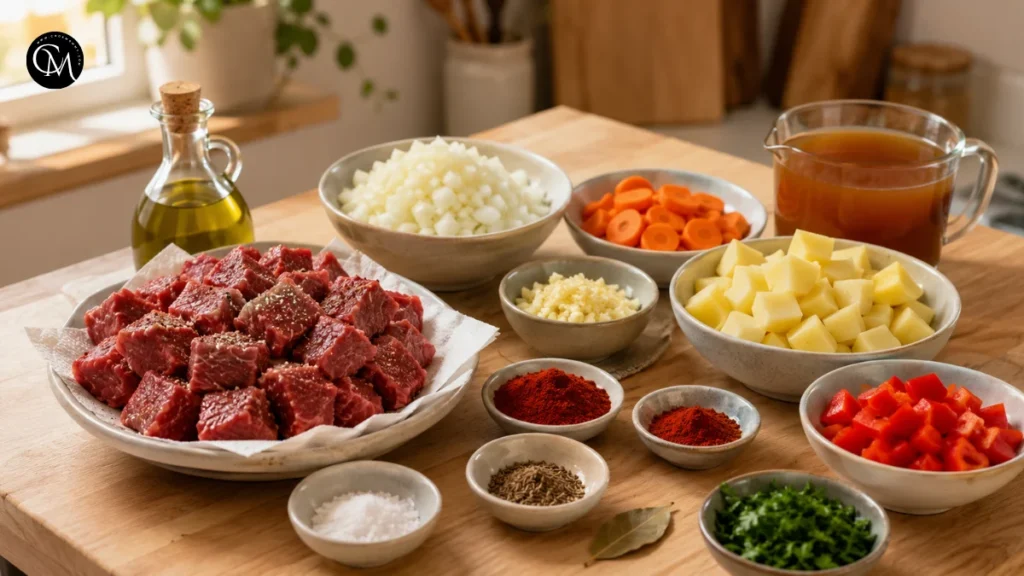
Start by cutting the beef into even cubes, about 1 to 1½ inches. Pat the meat dry with paper towels before seasoning it with salt and pepper. This small step matters because dry beef browns better. If the surface is wet, the meat steams instead of sears.
Chop the onions, mince the garlic, slice the carrots, cube the potatoes, and chop the bell pepper before turning on the stove. Having everything ready makes beef goulash much easier because the early steps move quickly. Paprika can burn if left alone too long, so preparation helps you cook calmly and confidently.
Step 2 – Build flavor base
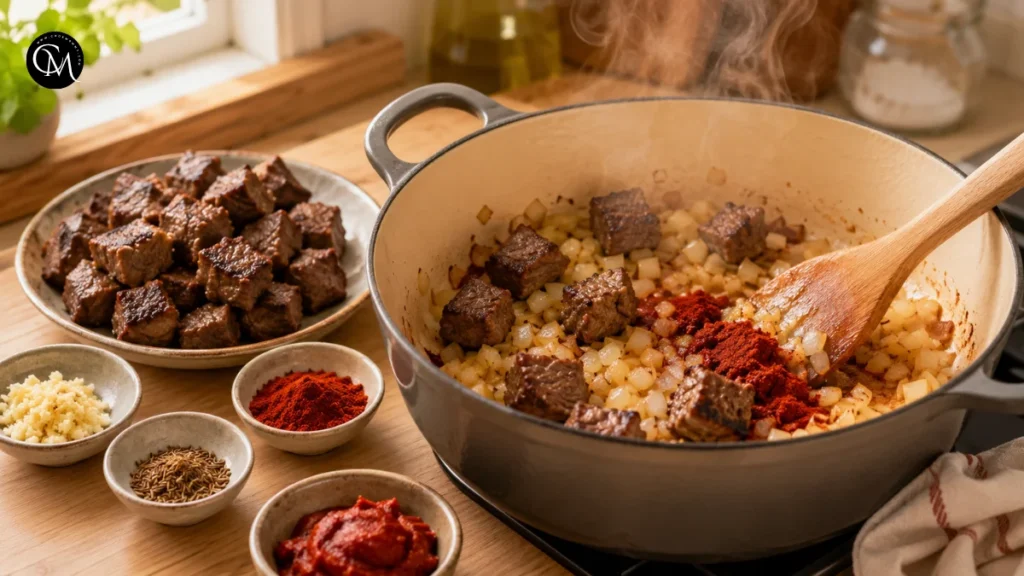
Warm the oil in a sturdy pot or Dutch oven, then sear the beef in small batches until the pieces develop a deep golden crust. Do not crowd the pot. If too much meat goes in at once, the temperature drops and you lose that rich browned flavor.
Remove the browned beef and set it aside. Lower the heat to medium, then add the chopped onions. Cook them slowly for 8 to 10 minutes until soft and lightly golden. This is where the flavor base begins. Onions release natural sugars as they cook, giving the sauce a mellow sweetness.
Stir in the garlic, tomato paste, paprikas, and crushed caraway so the spices release their warm aroma. Stir for about 30 seconds. The fat in the pot helps the spices bloom, which means their aroma and color become stronger. This step gives beef goulash its classic warmth.
Step 3 – Cook the main ingredient
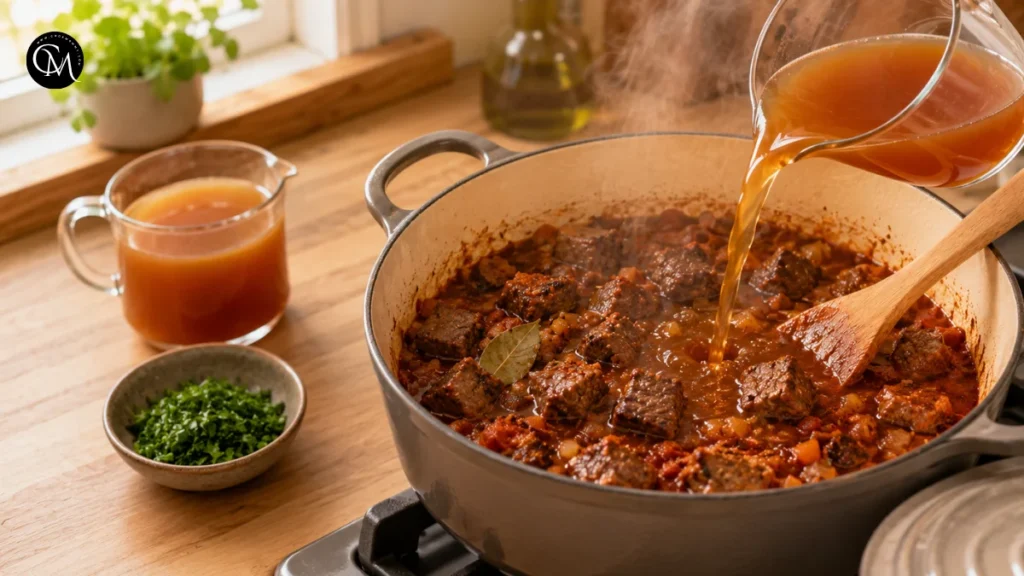
Return the browned beef to the pot and stir until each piece is coated with the paprika-onion mixture. Add the broth, then gently loosen the browned bits from the bottom of the pot because they give the sauce a deeper, savory taste.
Drop in the bay leaf, let the stew come just to a light bubble, then cover and cook slowly for around one hour. The key is patience. A low simmer breaks down the connective tissue in chuck roast, turning firm cubes of beef into tender bites.
Check the pot once or twice and stir gently. If the stew starts looking too thick before the beef is tender, pour in a small amount of broth or water. Good beef goulash should be hearty, not dry.
Step 4 – Combine everything
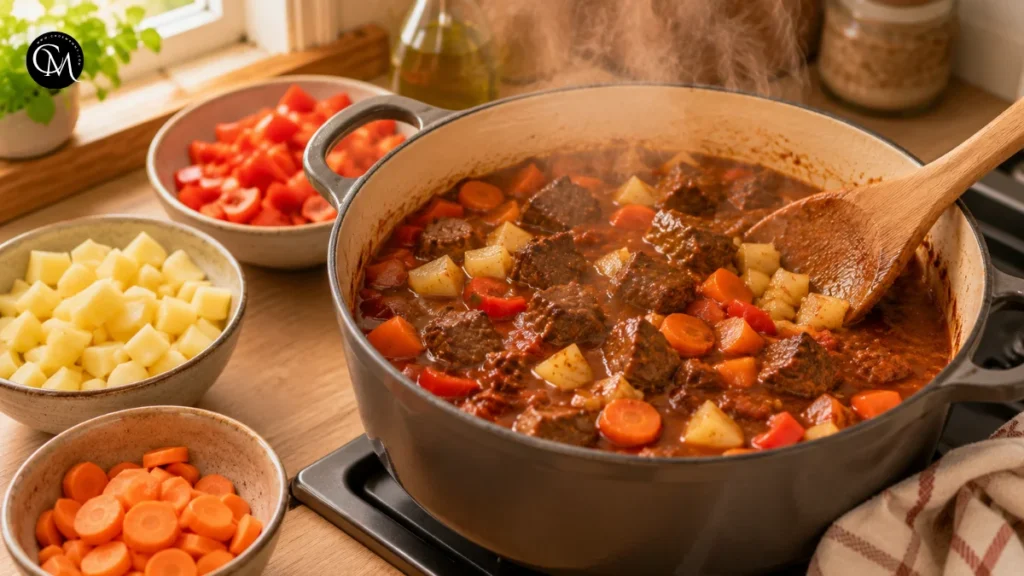
Once the meat is partly tender, mix in the carrots, potatoes, and red pepper so they cook without falling apart.Stir carefully so the vegetables settle into the broth. Cover again and cook for another 35 to 45 minutes, or until the potatoes are tender and the beef is easy to pierce with a fork.
This is where balance happens. The potatoes absorb savory broth, the carrots bring sweetness, and the bell pepper adds a soft vegetable note. Together, they make beef goulash feel complete rather than heavy.
For a thicker stew, lightly mash a few potato pieces against the side of the pot and stir them back in. This thickens the sauce naturally without flour.
Step 5 – Finish & adjust seasoning
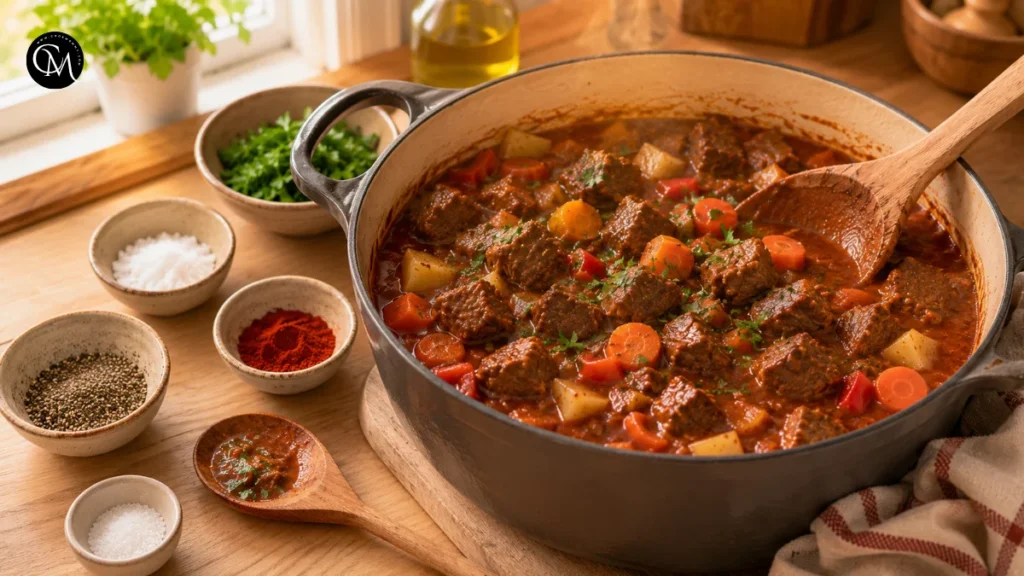
Remove the bay leaf and taste the sauce. Add more salt, black pepper, or paprika if needed. A small pinch of sugar can help if your tomatoes taste too sharp, but it is optional.
Let the pot rest off the heat for 10 minutes before serving. This short pause allows the sauce to settle and the flavors to round out. Finish with fresh parsley for color and freshness. At this stage, beef goulash should taste rich, savory, slightly sweet from the onions, and warmly spiced from the paprika.
Nutritional Information
Approximate values per serving, based on 6 servings:
| Nutrient | Amount |
|---|---|
| Calories | 430 |
| Protein | 34 g |
| Carbohydrates | 28 g |
| Fat | 21 g |
| Fiber | 5 g |
| Sodium | 620 mg |
These numbers are estimates and can change depending on the beef, broth, and portion size you use. Beef goulash is naturally protein-rich and filling, especially when made with potatoes and vegetables. To reduce sodium, choose low-sodium broth and season gradually.
Healthier Alternatives
- For a lower-sugar version, avoid adding sugar at the end and rely on onions, carrots, and bell pepper for natural sweetness. Since tomato paste naturally adds both mild sweetness and brightness, you usually do not need to add sugar.
- For whole-grain options, serve beef goulash with barley, brown rice, or whole-wheat egg noodles instead of white bread. These sides add more fiber and keep the meal satisfying.
- For a gluten-free version, the recipe is naturally gluten-free if your broth and spices are certified gluten-free. Avoid flour-based thickeners and use mashed potatoes to thicken the sauce.
- For dairy-free needs, no changes are required unless you like serving it with sour cream. Use dairy-free yogurt or skip the topping.
- For children, reduce the caraway and smoked paprika if they prefer mild flavors. For seniors or anyone who likes softer textures, cook the stew a little longer until the beef and vegetables are very tender.
Serving Suggestions
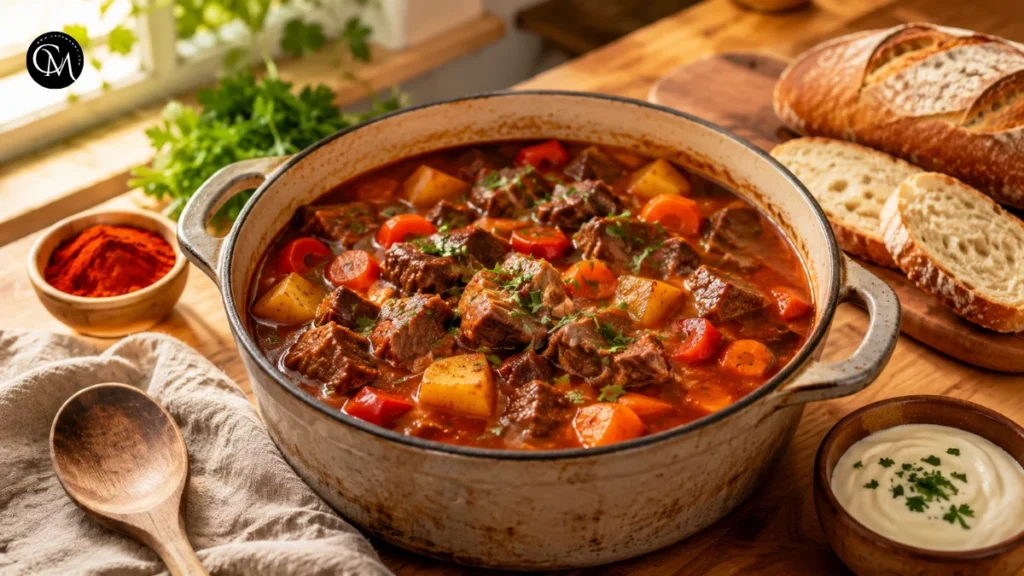
- Serve beef goulash in deep bowls with a sprinkle of parsley and a slice of crusty bread for soaking up the sauce. If you want a more traditional feel, pair it with buttered egg noodles or small dumplings.
- For a lighter plate, serve it with steamed green beans, cucumber salad, or roasted cabbage. The freshness balances the richness of the stew.
- For family dinners, place the pot in the center of the table and let everyone serve themselves. It feels casual, generous, and comforting. If you are meal prepping, divide beef goulash into containers with rice or noodles for easy lunches during the week.
- A spoonful of sour cream on top can add creaminess, but the stew is flavorful enough without it.
Common Mistakes to Avoid
- Burning the paprika Paprika can turn bitter if cooked too long over high heat. Add it after the onions soften and stir briefly before adding liquid.
- Skipping the browning step Browning the beef creates deep flavor. It may take a few extra minutes, but it makes a big difference.
- Cooking at a hard boil A rapid boil can make beef tough. Cook the beef goulash slowly over low heat so the meat stays tender and the sauce develops smoothly.
- Adding vegetables too early Potatoes and carrots can fall apart if cooked from the beginning. Add them after the beef has simmered for a while.
- Using old paprika Paprika loses flavor over time. If it smells flat or dusty, replace it before making this recipe.
- Not tasting at the end Stews need final seasoning. Taste before serving and adjust salt, pepper, and paprika as needed.
Storing Tips for the Recipe
- Let leftovers cool before storing them in airtight containers. Store leftover beef goulash in a sealed container in the fridge and enjoy it within four days. The flavor often improves overnight because the spices and sauce have more time to blend.
- For freezing, let the stew cool completely, pack it into freezer-safe containers, and keep it for up to three months. Defrost it in the fridge overnight, then warm it slowly on the stove with a little broth or water if needed.
- You can also prep ingredients ahead. Chop onions, carrots, potatoes, and bell pepper earlier in the day. Keep potatoes covered in cold water to prevent browning, then drain before cooking.
- This recipe became one of my regular meals because it is dependable, filling, and easy to reheat. It works for Sunday dinner, busy weeknights, and make-ahead lunches without losing its comforting flavor.
Conclusion
Hungarian beef goulash is the kind of recipe that proves simple ingredients can create unforgettable comfort food. With tender beef, sweet onions, rich paprika, hearty vegetables, and one reliable pot, this meal delivers big flavor without complicated steps. It is warm enough for cold nights, practical enough for meal prep, and flexible enough for different tastes.
Try this recipe the next time you want a cozy homemade dinner that feels generous and satisfying. After you make it, leave a comment or review to share how it turned out in your kitchen. Subscribe for more friendly, practical recipes that bring comfort, flavor, and confidence to everyday cooking.
FAQs
Can I make beef goulash ahead of time?
Yes. Beef goulash tastes even better the next day because the paprika, onions, and broth have more time to blend into a richer sauce.
What cut of beef works best?
Beef chuck is the best choice because it becomes tender with slow simmering. Skip extra-lean beef cuts, as they may become tough or dry during long cooking.
Can I make this recipe without potatoes?
Yes. You can leave out potatoes and serve the stew with noodles, rice, dumplings, or bread instead.
Is beef goulash spicy?
Traditional beef goulash is usually warm and savory, not very spicy. Use sweet paprika for mild flavor or add chili flakes for heat.
How do I thicken the sauce?
Mash a few cooked potato pieces into the broth or simmer uncovered for 10 minutes. This thickens the sauce naturally.
Can I use a slow cooker?
Yes, you can use a slow cooker. Sear the beef and cook the onions first, then move everything into the slow cooker to finish cooking. Cook on low for 7 to 8 hours.
What can I serve with beef goulash?
Serve it with egg noodles, crusty bread, rice, dumplings, or a fresh cucumber salad for a balanced meal.
Tried it before ?
There are no reviews yet. Be the first one to write one.