
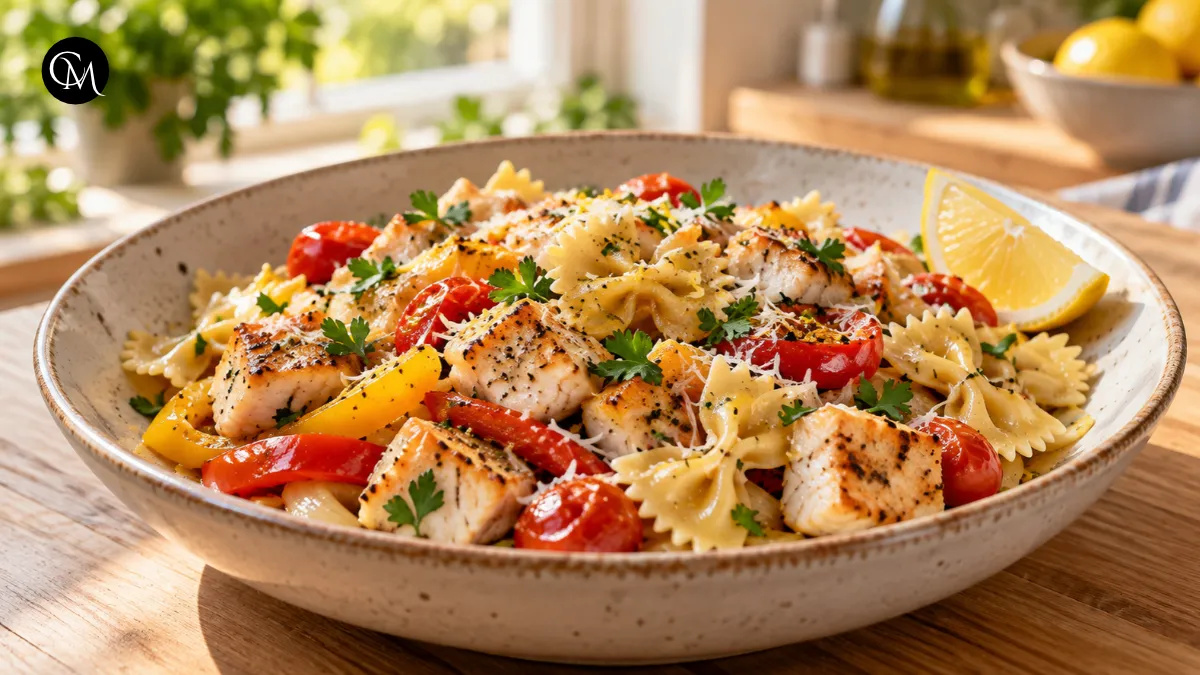
Bow Tie Pasta Shark and Peppers: 5 Simple Cooking Tips
Did you know the USDA recommends cooking fish to an internal temperature of 145°F (62.8°C)? That leaves little room between perfectly cooked seafood and fish that turns dry or tough, which is why timing matters so much in this Bow Tie Pasta Shark and Peppers recipe.
Pasta Shark may sound a little unusual at first, but the combination works surprisingly well. Firm pieces of fish pair beautifully with sweet bell peppers, juicy tomatoes, garlic, lemon, herbs, and tender bow tie pasta, creating a colorful skillet meal with plenty of texture and fresh flavor.
Table of Contents
Ingredients List
For 4 servings:
- 12 ounces bow tie pasta (farfalle)
- 1 pound shark steak, skin and cartilage removed, cut into 1-inch cubes
- 2 tablespoons olive oil, divided
- 1 red bell pepper, thinly sliced
- 1 yellow bell pepper, thinly sliced
- 1 small yellow onion, sliced
- 3 garlic cloves, minced
- 1 cup cherry tomatoes, halved
- 1/2 teaspoon smoked paprika
- 1/2 teaspoon dried oregano
- 1/4 teaspoon red pepper flakes, optional
- 1/2 teaspoon kosher salt, plus more for pasta water
- 1/4 teaspoon black pepper
- 1 tablespoon fresh lemon juice
- 1 teaspoon lemon zest
- 1/3 cup reserved pasta water
- 1/4 cup chopped parsley
- 2 tablespoons grated Parmesan, optional
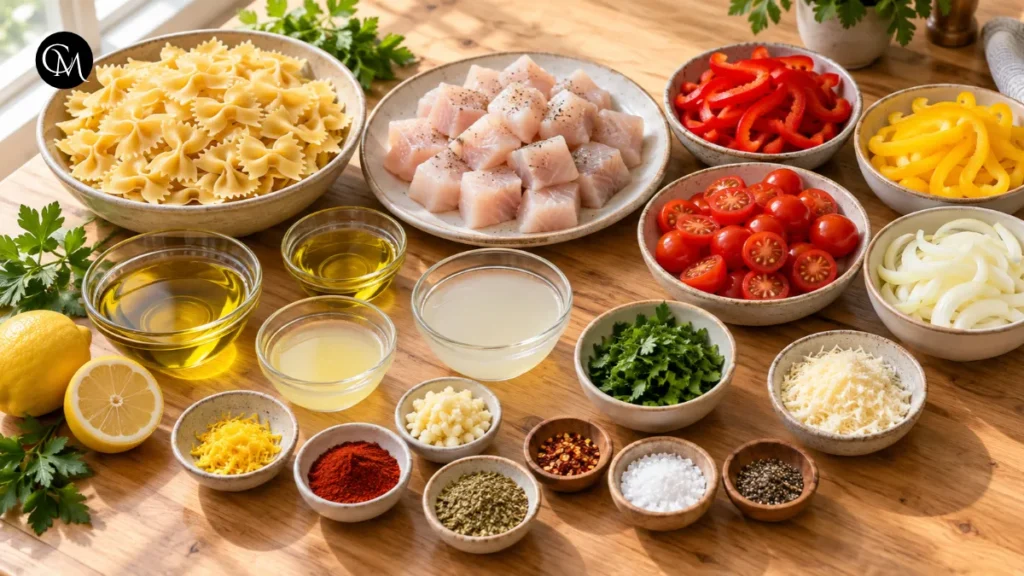
For good Pasta Shark texture, choose firm, fresh-looking fish with a clean aroma. If shark is unavailable or unsuitable, use cod, salmon, mahi-mahi, shrimp, tilapia, or another firm fish.
Timing
- Preparation time: 15 minutes
- Cooking time: 20 minutes
- Total time: 35 minutes
- Servings: 4
Pasta Shark is practical for a weeknight because much of the prep happens while the pasta water heats. Slicing vegetables and portioning fish before cooking prevents seafood from overcooking while you prepare the next ingredient.
Step-by-Step Instructions
Step 1 – Prepare the Ingredients
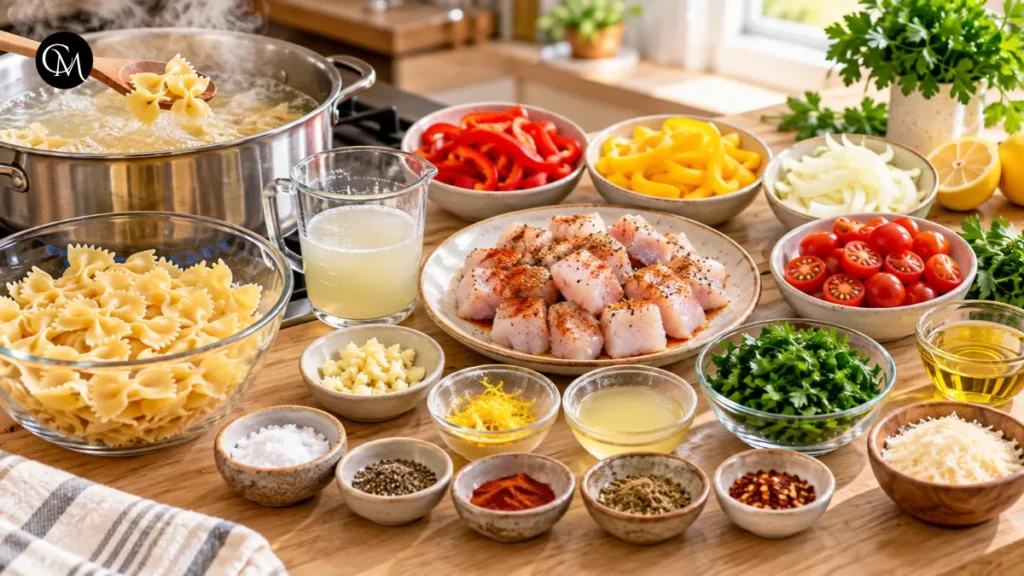
Bring a large pot of salted water to a boil. Cut the shark into even 1-inch pieces, pat dry, and season lightly with salt, pepper, and smoked paprika. Slice the peppers and onion, mince the garlic, halve the tomatoes, and zest the lemon.
Preparation matters because Pasta Shark cooks quickly. Even fish pieces cook at a similar rate, while a dry surface browns better than a wet one.
Cook the bow tie pasta until just al dente according to package directions. Before draining, reserve at least 1/3 cup pasta water.
Step 2 – Build the Flavor Base
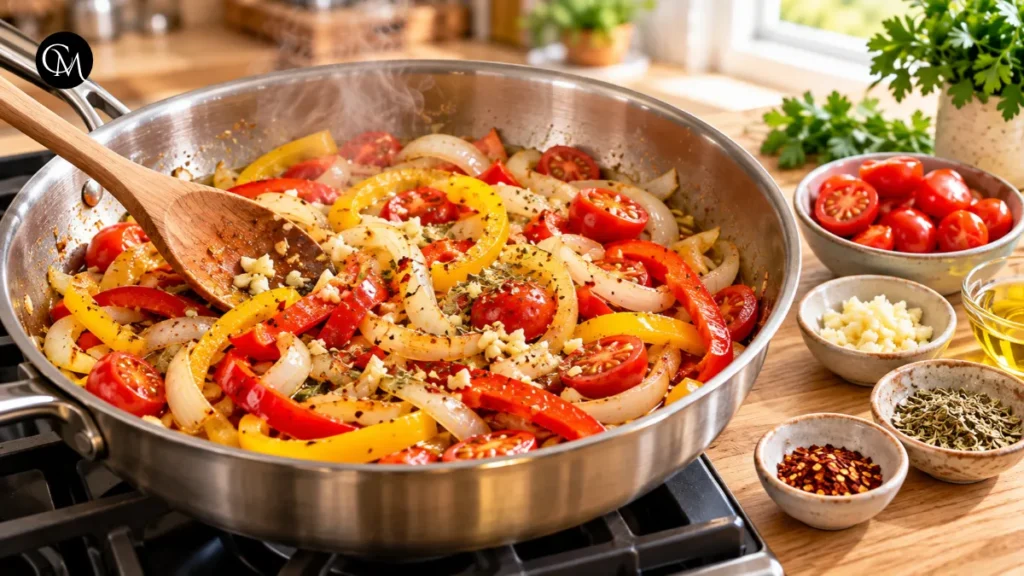
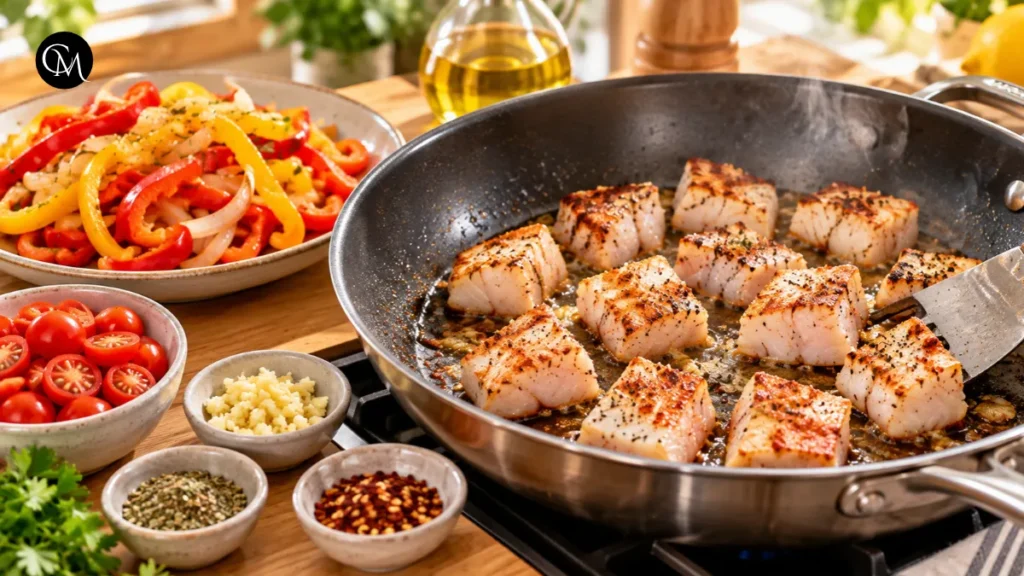
Heat 1 tablespoon olive oil in a wide skillet over medium-high heat. Add onion and peppers with a small pinch of salt. Cook 5 to 6 minutes, stirring occasionally, until softened but still slightly crisp.
Add garlic, oregano, and red pepper flakes. Cook about 30 seconds, then add tomatoes and cook 2 minutes more.
The order matters. Peppers and onions need time to soften, while garlic can turn bitter over high heat. This layered base gives Pasta Shark savory depth without a heavy sauce.
Step 3 – Cook the Main Ingredient
Move the vegetables to a plate or the edge of a large skillet. Add the remaining olive oil, then arrange shark pieces in one layer.
Cook about 2 to 3 minutes on the first side, turn, and continue until opaque and the thickest piece reaches 145°F (62.8°C). Depending on size, the second side may need only 1 to 3 minutes. USDA food-safety guidance identifies 145°F as the safe minimum internal temperature for fish.
Avoid cooking Pasta Shark longer just in case. Lean fish can become dry and tough quickly. A food thermometer is more dependable than appearance alone.
Step 4 – Combine Everything
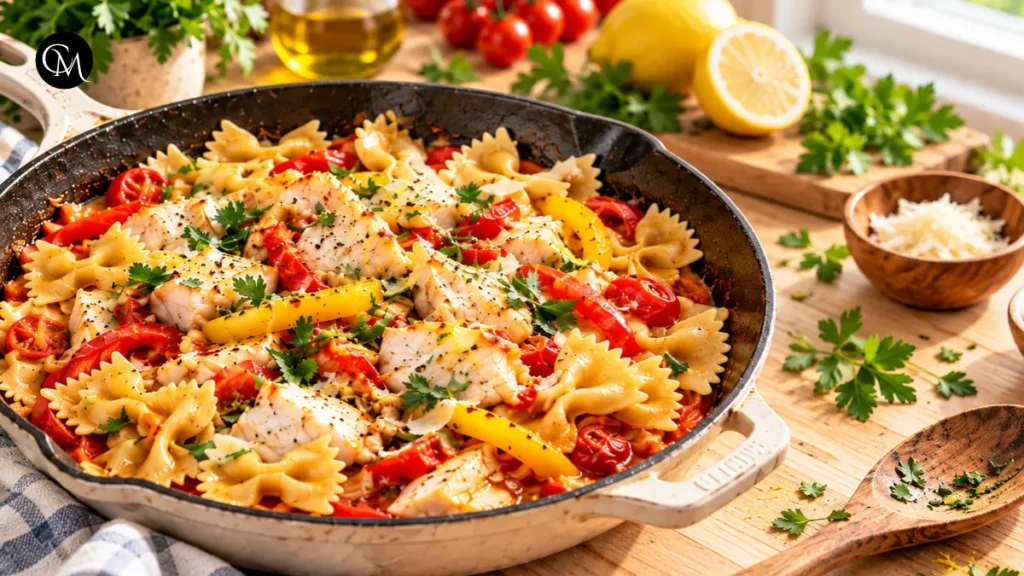
Return the vegetables to the skillet. Add drained farfalle and about 1/4 cup reserved pasta water. Toss gently over medium-low heat.
The starch in pasta water helps olive oil, tomato juices, and seasonings coat the bow ties. Add another splash if the pan looks dry.
Fold the Pasta Shark pieces through gently. The goal is tender fish, bright peppers, and a balanced mix of sweet vegetables, savory seafood, tomato acidity, and mild heat.
Step 5 – Finish and Adjust the Seasoning
Turn off the heat. Add lemon juice, zest, parsley, and Parmesan if using. Taste before adding extra salt.
This final check makes Pasta Shark taste more polished. Lemon added off heat stays bright, while parsley freshens the dish. If it tastes flat, add a pinch of salt or lemon. If too sharp, a small drizzle of olive oil softens the acidity.
Nutritional Information
Approximate values per serving, including Parmesan:
- Calories: 510
- Protein: 34 g
- Carbohydrates: 60 g
- Fat: 15 g
- Saturated fat: 3 g
- Fiber: 5 g
- Sodium: 520 mg
These are estimates; actual values depend on the fish, pasta brand, seasoning, and substitutions. Pasta Shark combines a substantial protein component with pasta, peppers, tomatoes, herbs, and olive oil. Portion size and ingredient choices will affect the final nutrition profile.
Healthier Alternatives
- For more whole grains, use whole-wheat farfalle. Its nutty flavor works nicely with peppers and lemon. If you are new to whole-grain pasta, using half whole-wheat and half regular pasta can make the change gentler.
- This Pasta Shark recipe contains virtually no added sugar. If substituting canned tomato products, choose versions without added sugar when that matters to you.
- For gluten-free Pasta Shark, use sturdy corn-, rice-, chickpea-, or lentil-based pasta and monitor cooking carefully. For dairy-free servings, omit Parmesan and add extra parsley, lemon zest, or dairy-free breadcrumbs.
- For children, pregnant people, and others following FDA fish guidance, substitute a lower-mercury fish. For seniors who prefer softer textures, slice peppers thinly and cook them a little longer. For a lighter plate, increase vegetables and slightly reduce the pasta portion without sacrificing volume.
Serving Suggestions
- Serve Pasta Shark from the skillet with lemon wedges and fresh parsley. A cucumber salad, arugula salad, roasted zucchini, green beans, or asparagus adds freshness without overwhelming the seafood.
- For guests, spoon the bow ties into shallow bowls and arrange the fish visibly on top. Finish with lemon zest for aroma and color.
- If your family has mixed spice preferences, keep the base mild and serve chili flakes separately. You can also pair this meal with related seafood pasta recipes, vegetable sides, or pasta-sauce guides to create a fuller menu
Common Mistakes to Avoid
- Overcooking the fish. USDA guidance gives 145°F as the safe minimum for fish; cooking much longer can make firm fish dry.
- Crowding the skillet. A crowded pan traps steam and reduces browning. Cook in batches if necessary.
- Forgetting pasta water. Its starch helps create a light sauce that clings to farfalle.
- Cooking garlic too early. Burnt garlic can give Pasta Shark an unpleasant bitterness.
- Overcooking the pasta. Drain it al dente because it spends another minute in the skillet.
- Overseasoning early. Pasta water, Parmesan, and seafood affect saltiness, so make final adjustments after combining.
Storing Tips for the Recipe
- Cool leftovers promptly and refrigerate in a shallow, airtight container. USDA guidance recommends refrigerating perishable food within two hours and using most cooked leftovers within 3 to 4 days. Reheat leftovers to 165°F.
- For better texture, warm Pasta Shark gently in a covered skillet with a spoonful of water. If microwaving, use shorter intervals so the fish does not become rubbery.
- Peppers and onion can be sliced a day ahead and refrigerated separately. Cut the fish near cooking time and keep it chilled until needed.
- This recipe became one of my regular meals because it comes together quickly, uses vegetables I often keep on hand, and feels more interesting than another basic tomato pasta. The same method also works when I change the seafood.
Conclusion
Bow tie pasta, colorful peppers, lemon, herbs, and carefully cooked seafood make Pasta Shark flavorful without requiring a complicated sauce. The biggest improvements come from small habits: prepare everything first, build the vegetable base in stages, use a thermometer, save pasta water, and adjust seasoning only after the dish comes together.
If shark is not appropriate for your household, use a lower-mercury firm fish or shrimp and keep the same cooking method. Try the recipe, adapt the peppers or seafood to your taste, and leave a comment or review sharing what worked for you. Subscribe for more practical weeknight recipes, seafood cooking tips, and flexible meal ideas.
FAQs
Can I use frozen shark for Pasta Shark?
Yes. Thaw it completely in the refrigerator, drain excess liquid, and pat the fish dry before seasoning. A dry surface browns more effectively.
What can I use instead of shark?
Cod, salmon, mahi-mahi, tilapia, shrimp, or another firm seafood can work. Adjust cooking time to the size and type of seafood.
Why is my fish tough?
Overcooking is the usual cause. Keep pieces evenly sized and stop cooking when the thickest portion reaches the recommended safe temperature.
Can I make Pasta Shark gluten-free?
Yes. Use a gluten-free short pasta and reserve some cooking water. Different gluten-free blends absorb sauce differently, so add water gradually.
Can I prepare the recipe ahead?
Prep vegetables and seasonings in advance, but cook the pasta and seafood close to serving for the best texture and freshest flavor.
Which peppers work best?
Red, yellow, and orange bell peppers provide sweetness and color. Green peppers also work but have a sharper, slightly more bitter flavor.
Is shark suitable for everyone?
No. FDA guidance lists shark among fish with the highest mercury levels. Children and people who are pregnant or breastfeeding should choose lower-mercury alternatives.
Tried it before ?
There are no reviews yet. Be the first one to write one.