
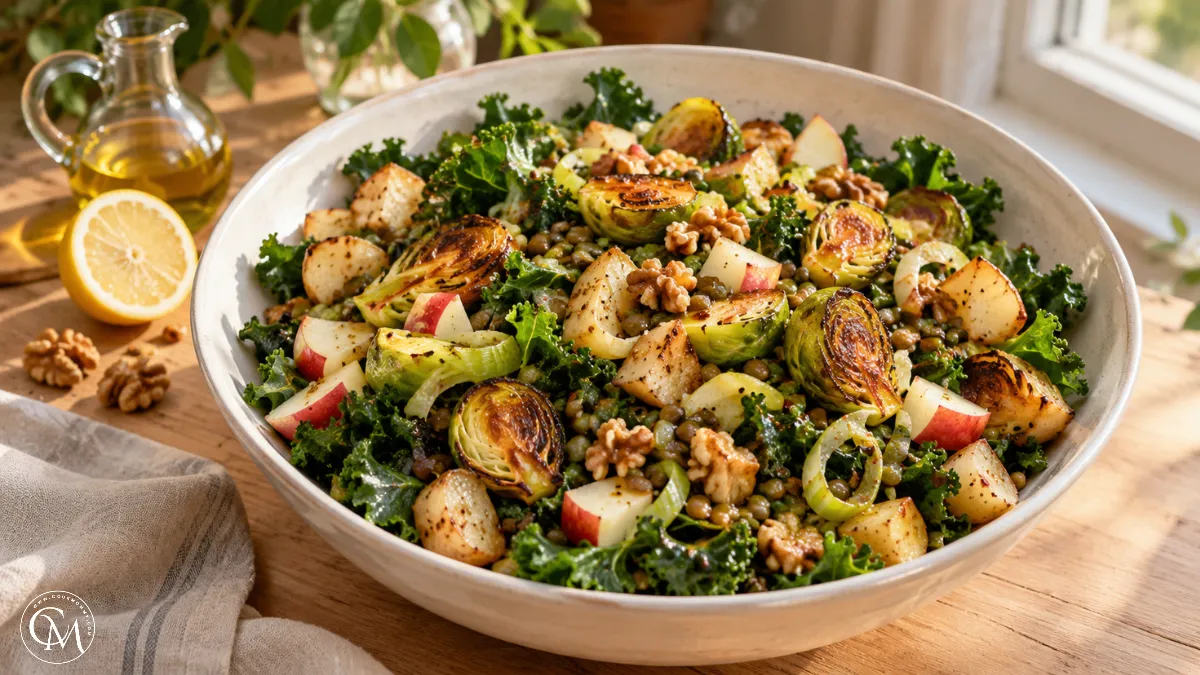
Prebiotic Winter Salad: 7 Best Ingredients for Gut Health
Did you know that American adults consume far less dietary fiber than recommended? USDA research found that average fiber intake was just 8.1 grams per 1,000 calories, compared with the recommended 14 grams. What if a delicious winter salad could help you close that gap?
This Prebiotic Winter Salad combines roasted vegetables, tender lentils, crisp apples, and crunchy walnuts into one colorful, satisfying dish. Unlike ordinary green salads, this recipe offers comforting textures, natural sweetness, and plenty of plant-based fiber. The secret lies in choosing ingredients that nourish beneficial gut bacteria while delivering great flavor.
Whether you’re looking for a healthy winter lunch, a nutritious side dish, or a make-ahead meal, this Prebiotic Winter Salad deserves a place on your weekly menu. Best of all, you don’t need expensive supplements or complicated cooking techniques to enjoy it.
Table of Contents
Ingredients List
The beauty of this Prebiotic Winter Salad comes from seven wholesome ingredients, each contributing distinctive flavors and nutrients.
The 7 Best Ingredients
- 1 medium leek, sliced: Mild and slightly sweet, leeks contain inulin-type prebiotic fibers. Substitute a small onion if necessary.
- 1 pound Jerusalem artichokes, scrubbed and chopped: Also called sunchokes, these nutty vegetables are naturally rich in inulin. Parsnips offer a milder, lower-inulin alternative.
- 1 pound Brussels sprouts, halved: Roasting brings out their sweetness while preserving a pleasant bite. Broccoli works as a substitute.
- 1½ cups cooked green lentils: These provide plant protein, dietary fiber, and satisfying texture. Cooked chickpeas are an excellent alternative.
- 1 medium apple, diced: Choose a crisp variety such as Granny Smith or Honeycrisp for sweetness, acidity, and pectin-containing fiber.
- 2 cups chopped kale: This hearty winter green provides vitamins, minerals, and fiber. Baby spinach creates a softer salad.
- ⅓ cup chopped walnuts: Their rich flavor and crunch balance the tender vegetables. Pumpkin seeds make a delicious alternative.
For the Dressing
- 3 tablespoons extra-virgin olive oil, divided between roasting and dressing
- 2 tablespoons fresh lemon juice
- 1 teaspoon Dijon mustard
- 1 teaspoon maple syrup, optional
- 1 small garlic clove, minced
- ½ teaspoon sea salt, divided
- ¼ teaspoon black pepper
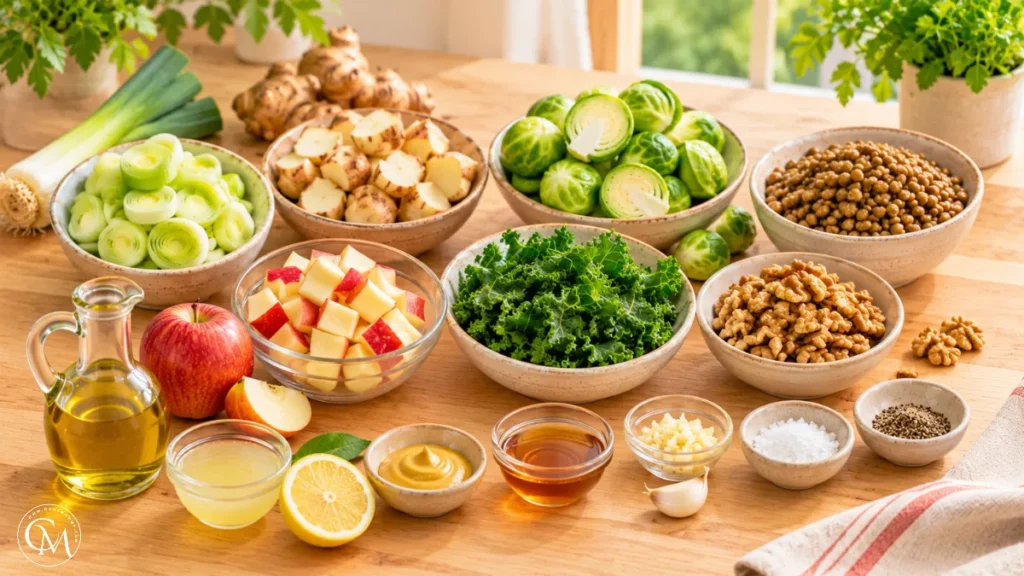
Kitchen tip: Choose similarly sized vegetables so everything roasts evenly. Fresh lemon juice gives the dressing a brighter flavor than bottled juice.
Timing
Preparing this Prebiotic Winter Salad is straightforward, especially when using previously cooked lentils.
| Task | Time |
|---|---|
| Preparation | 20 minutes |
| Cooking | 30 minutes |
| Total | 50 minutes |
| Servings | 4 |
- The vegetables require most of the cooking time, but the process is largely hands-off.
- While they roast, prepare the dressing, massage the kale, and chop the apple.
- For busy evenings, cook the lentils a day ahead or use drained, no-salt-added canned lentils.
Step-by-Step Instructions
Follow these five simple steps to create a Prebiotic Winter Salad with crisp edges, tender vegetables, and balanced flavors.
Step 1 – Prepare the Ingredients
- Preheat your oven to 425°F (220°C).
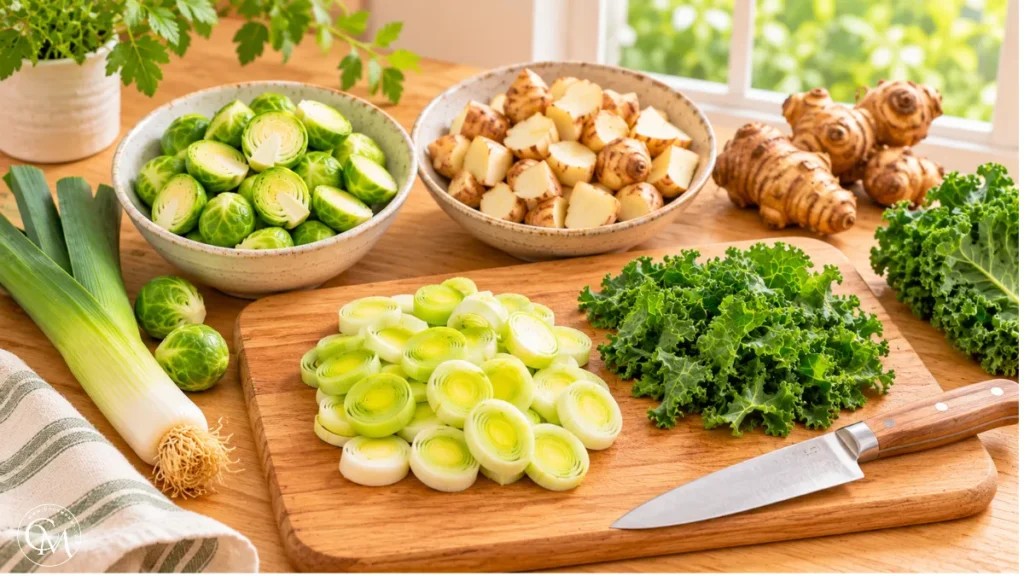
- Wash the Brussels sprouts, remove damaged outer leaves, and slice them in half.
- Scrub the Jerusalem artichokes thoroughly and cut them into bite-sized pieces.
- Rinse the leek carefully between its layers to remove trapped dirt, then slice into thin rings.
- Remove the tough kale stems and chop the leaves.
- Good preparation matters because evenly sized vegetables cook at similar speeds, preventing some pieces from burning while others remain firm.
Step 2 – Build the Flavor Base
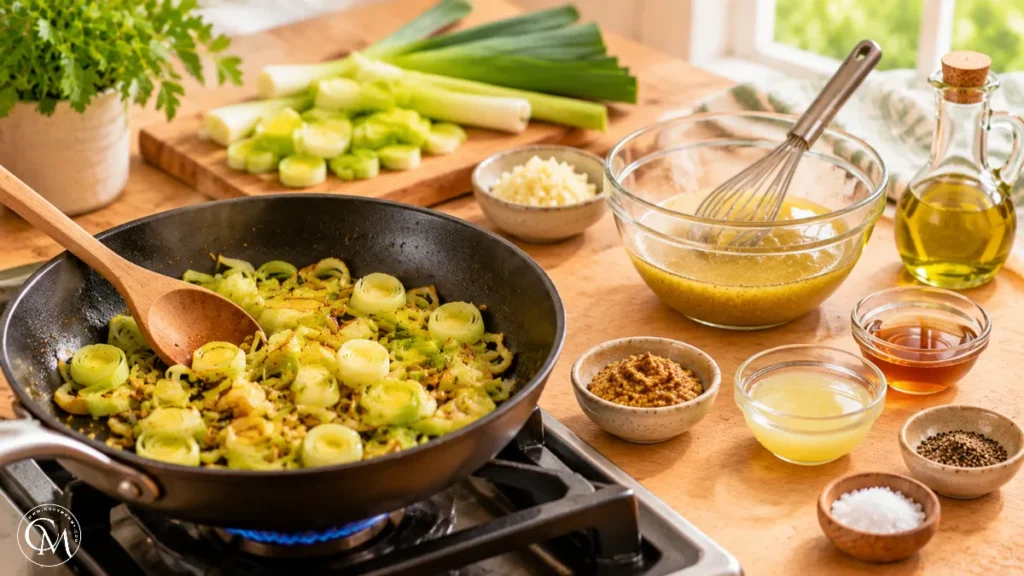
- Place a skillet over medium heat, pour in 1 teaspoon of olive oil, and let it warm gently before adding the vegetables.
- Toss the chopped leeks into the warm skillet and sauté for about 5–7 minutes, giving them an occasional stir until tender with a delicate golden color.
- Add the garlic during the final 30 seconds.
- Gentle heat develops the leeks’ natural sweetness without scorching their delicate edges.
- Meanwhile, whisk together the lemon juice, mustard, maple syrup, remaining dressing oil, and a pinch of salt.
- The mustard helps combine the oil and lemon juice into a smoother dressing.
Step 3 – Roast the Main Vegetables
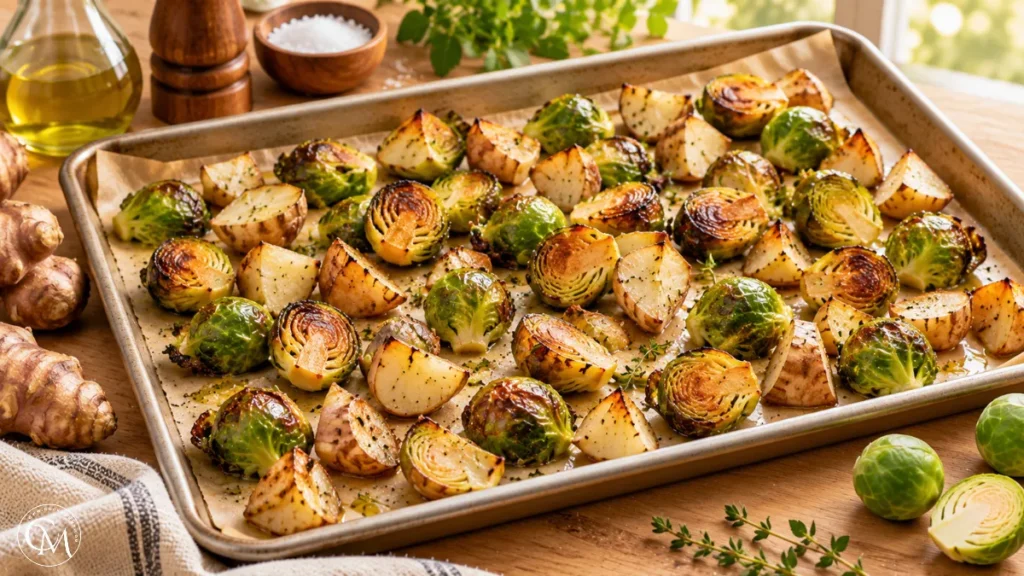
- Spread the Brussels sprouts and Jerusalem artichokes across a large baking sheet.
- Toss with 1 tablespoon olive oil, black pepper, and some of the remaining salt.
- Roast for 25–30 minutes, turning halfway through.
- The Brussels sprouts should develop browned edges, while the artichokes become tender inside.
- Avoid overcrowding the pan. Too many vegetables release moisture and steam instead of roast.
- For extra caramelization, place the Brussels sprouts cut-side down.
Step 4 – Combine Everything
- Place the kale in a large serving bowl.
- Add a small spoonful of dressing and massage the leaves for approximately one minute to soften their texture.
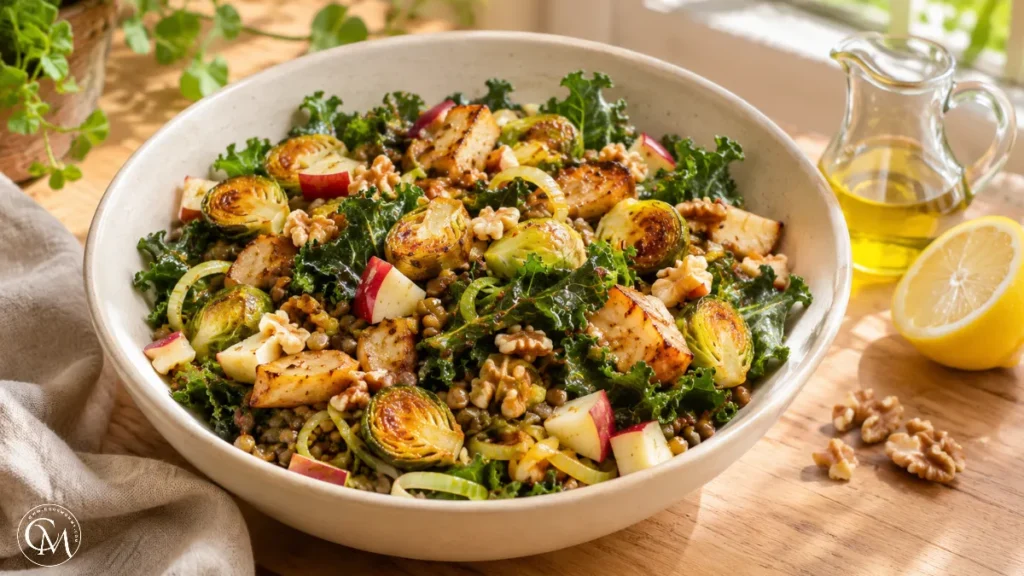
- Fold in the cooked lentils, sautéed leeks, roasted vegetables, and diced apple.
- Toss gently until everything is distributed evenly.
- This stage creates the signature balance of a great Prebiotic Winter Salad: warm vegetables, earthy lentils, refreshing fruit, and pleasantly chewy greens.
Step 5 – Finish and Adjust Seasoning
- Drizzle the remaining dressing over the mixture.
- Sprinkle chopped walnuts across the top and toss lightly.
- Taste before serving.
- If the salad seems flat, add another squeeze of lemon. If it’s overly sharp, a few drops of maple syrup can restore balance.
- A final pinch of salt often brings the roasted vegetables and sweet apples together beautifully.
- Serve the Prebiotic Winter Salad slightly warm or at room temperature for the best combination of flavors and textures.
Nutritional Information
This Prebiotic Winter Salad offers dietary fiber, plant protein, and a variety of naturally occurring micronutrients.
Approximate nutrition per serving:
| Nutrient | Amount |
|---|---|
| Calories | 400–430 kcal |
| Protein | 12–14 g |
| Carbohydrates | 48–55 g |
| Dietary fiber | 13–16 g |
| Total fat | 18–21 g |
| Saturated fat | 2–3 g |
| Sodium | 300–400 mg |
Values are estimates and vary with ingredient sizes, brands, and portions.
- Prebiotics are substances used by certain microorganisms in ways that can benefit their host. Leeks and Jerusalem artichokes provide inulin-type fibers, while the other plants contribute additional varieties of dietary fiber.
- Not every fiber is technically a prebiotic, but eating diverse plant foods supports a balanced dietary pattern.
- If you’re unfamiliar with high-fiber meals, begin with a smaller serving and increase gradually to reduce digestive discomfort.
Healthier Alternatives
- One advantage of this Prebiotic Winter Salad is how easily it adapts to different preferences.
- Lower sugar: Skip the maple syrup and choose a tart green apple. The roasted vegetables provide natural sweetness.
- Whole-grain boost: Add cooked quinoa, barley, or farro for extra substance. Quinoa is especially convenient when you want a gluten-free grain.
- Dairy-free: The original recipe contains no dairy, so no substitutions are necessary.
- Gluten-free: Use naturally gluten-free ingredients and verify the labels on mustard and packaged additions.
- For children: Chop vegetables into smaller pieces, reduce the mustard, and offer dressing separately.
- For older adults: Roast vegetables until tender and finely chop the walnuts, or replace them with a smooth seed-based dressing.
- For lighter meals: Reduce the walnut portion slightly while keeping the vegetables and lentils generous.
- These changes preserve the satisfying flavor and texture of your Prebiotic Winter Salad.
Serving Suggestions
- A good Prebiotic Winter Salad works equally well as a standalone lunch or a colorful side dish.
- Serve it alongside roasted chicken, baked salmon, or crispy tofu for additional protein.
- For a hearty vegetarian dinner, spoon the salad over warm quinoa and finish with fresh parsley.
- Hosting guests? Arrange the ingredients on a wide platter, keeping the apples and walnuts on top for visual appeal.
- For meal preparation, divide the salad into individual containers and add the dressing just before eating.
- My favorite serving approach for this combination is slightly warm, allowing the roasted vegetables to contrast with the cool, crunchy apple.
Common Mistakes to Avoid
Even a simple Prebiotic Winter Salad benefits from a few kitchen precautions.
- Overcrowding the baking sheet: Crowded vegetables steam instead of brown. Use two trays if necessary.
- Skipping the kale massage: Raw kale can taste tough. A little dressing and gentle rubbing make the leaves more enjoyable.
- Cooking lentils for too long: Keep an eye on their tenderness, as overly soft lentils can break apart and make your salad lose its satisfying texture. Cook until tender but still holding their shape.
- Mixing in apples too soon: Save the freshly chopped apple pieces until just before serving to maintain their bright appearance and refreshing crispness. Add them close to serving time.
- Using too much dressing: Excess liquid makes the salad soggy. Start with less and add gradually.
- Increasing prebiotic fiber too quickly: Large portions of Jerusalem artichokes may cause gas or bloating, particularly for sensitive eaters. Adjust the quantity according to your tolerance.
Storing Tips for the Recipe
- Proper storage keeps your Prebiotic Winter Salad convenient for weekday lunches.
- Refrigerate leftovers in an airtight container at 40°F (4°C) or below for up to 3–4 days, provided the ingredients were cooled and refrigerated promptly.
- To keep every bite fresh and flavorful, refrigerate the dressing, crunchy walnuts, and chopped apples in separate containers until you’re ready to assemble the salad.
- Roasted vegetables and cooked lentils can be prepared up to three days ahead, making final assembly quick.
- Avoid freezing the complete salad because thawed apples and kale lose their appealing texture.
- This recipe became one of my regular meals because the ingredients can be prepared ahead, assembled quickly, and adjusted according to what’s available in the kitchen.
- That flexibility makes healthy winter eating far more manageable.
Conclusion
This Prebiotic Winter Salad proves that nutritious food doesn’t need to be complicated or boring. By combining seven flavorful ingredients, you get a colorful winter meal featuring dietary fiber, plant protein, crunchy textures, and naturally sweet roasted vegetables.
Leeks and Jerusalem artichokes supply prebiotic fibers, while lentils, kale, apples, Brussels sprouts, and walnuts create a satisfying combination of nutrients and flavors. Whether you’re preparing lunch for work, planning a family dinner, or simply trying to eat more vegetables, this recipe offers a practical starting point.
Try this Prebiotic Winter Salad during your next meal-prep session and experiment with your favorite seasonal ingredients. If you make it, leave a comment or review sharing your favorite variation. Subscribe for more easy, wholesome recipes and practical cooking inspiration.
FAQs
1. What makes this Prebiotic Winter Salad good for gut health?
Leeks and Jerusalem artichokes contain prebiotic fibers that certain beneficial gut bacteria can use. The remaining ingredients provide additional dietary fiber, supporting a varied, plant-rich diet.
2. Is it possible to make this winter salad in advance?
Absolutely! Prepare the roasted vegetables and tender lentils ahead of schedule to make assembling your salad quicker and easier when mealtime arrives. Store apples, walnuts, and dressing separately, then combine everything shortly before serving for freshness.
3. Is this Prebiotic Winter Salad suitable for weight management?
With its combination of fiber-rich vegetables and nourishing plant-based protein, this colorful salad can be a satisfying addition to a well-rounded eating routine. Adjust portions and additions according to your individual nutritional needs.
4. Can I eat this salad cold?
Absolutely. This salad tastes delicious chilled or at room temperature. For a softer texture and more pronounced roasted flavors, gently warm the vegetable mixture before assembling.
5. What can replace Jerusalem artichokes?
Try roasted parsnips or carrots for similar sweetness and texture. These alternatives generally contain less inulin, so the finished salad will have a different prebiotic fiber profile.
6. Is this Prebiotic Winter Salad vegan?
Yes. The recipe uses plant-based ingredients. If adding optional toppings, choose vegan alternatives and check packaged ingredient labels to maintain a completely plant-based dish.
7. Can this salad cause bloating?
It may, especially if you’re sensitive to inulin or suddenly increase your fiber intake. Begin with a smaller portion, reduce Jerusalem artichokes if needed, and drink adequate water.
Tried it before ?
There are no reviews yet. Be the first one to write one.