
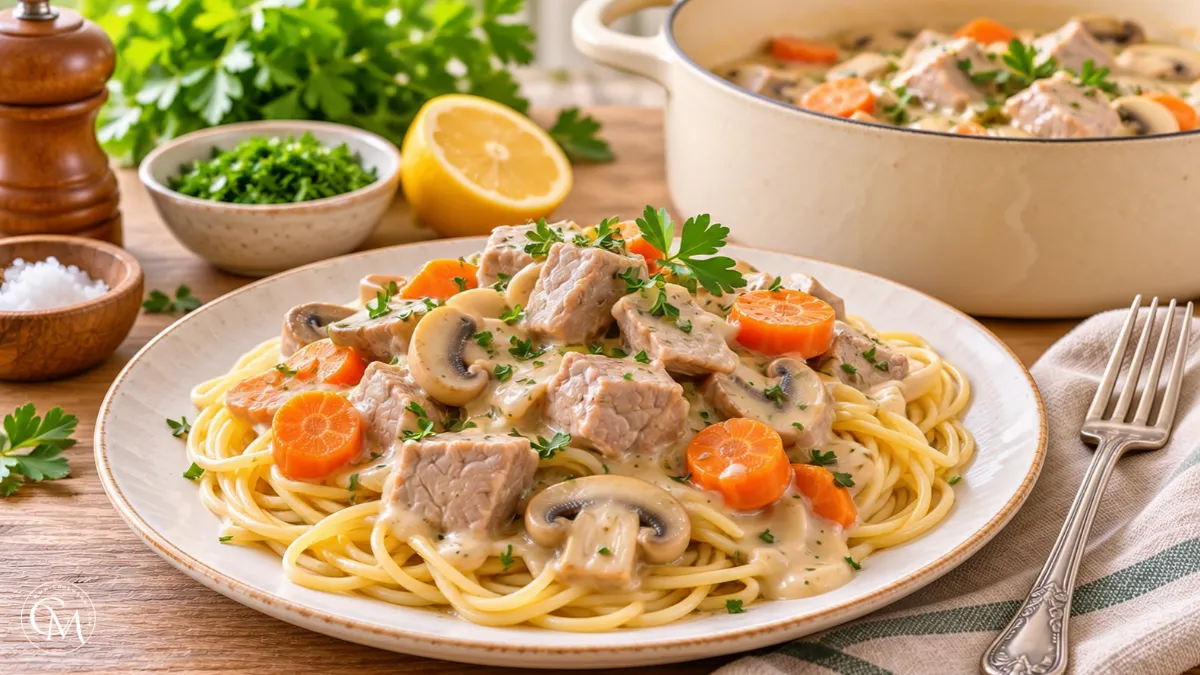
Veal Blanquette Served With Spaghetti: 5 Steps to Perfection
Did you know that a traditional French stew can transform into a satisfying pasta dinner with just 20 minutes of hands-on preparation? While classic French cooking often sounds complicated, Veal Blanquette proves that comforting, restaurant-quality food doesn’t require advanced culinary skills.
Traditionally known as Blanquette de Veau, this beloved French dish features tender veal simmered gently with aromatic vegetables in a delicate, creamy white sauce. It’s commonly served with rice, but spaghetti offers a delicious alternative that catches every spoonful of sauce.
The secret to exceptional Veal Blanquette isn’t expensive equipment or complicated techniques. It’s gentle simmering, balanced seasoning, and a little patience.
This recipe walks you through five manageable steps, from preparing the ingredients to creating a beautifully silky sauce. Whether you’re cooking for your family or planning a cozy weekend dinner, you’ll discover how to make this French classic approachable, flavorful, and wonderfully satisfying.
Table of Contents
Ingredients List
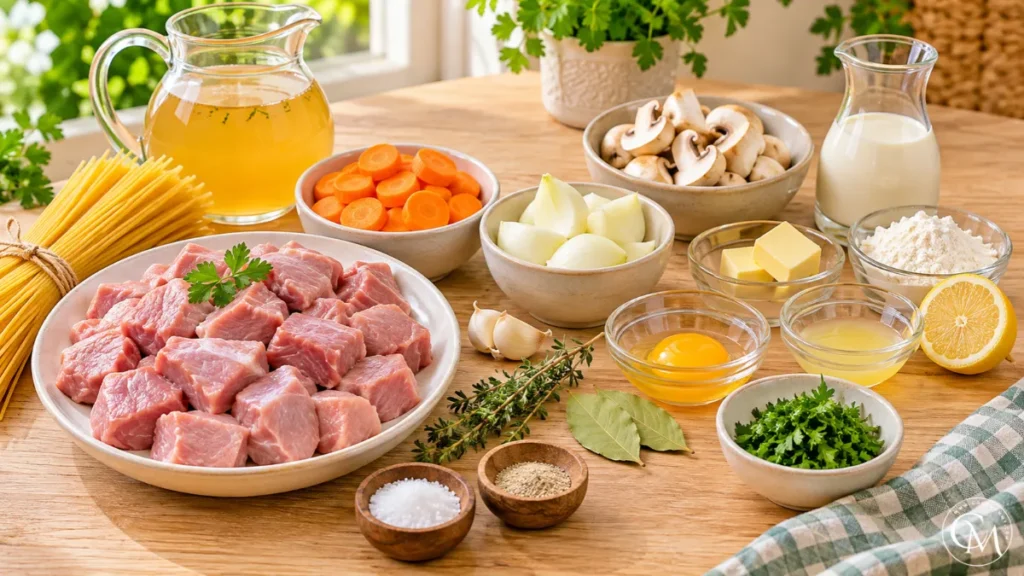
The beauty of Veal Blanquette lies in its simple ingredients. Each contributes to the stew’s delicate flavor, creamy texture, and comforting aroma.
For the Veal and Vegetables
- 1½ pounds (680 g) boneless veal shoulder: Cut into 1½-inch cubes for tender, juicy bites.
- 2 medium carrots: Peeled and sliced into thick rounds.
- 1 medium onion: Quartered to release gentle sweetness.
- 2 garlic cloves: Lightly crushed.
- 8 ounces (225 g) button mushrooms: Halved or quartered.
- 2 tablespoons unsalted butter: Adds richness to the vegetables.
- 3 cups low-sodium chicken or veal stock: Creates a flavorful cooking liquid.
- 1 bay leaf: Provides subtle herbal depth.
- 3 fresh thyme sprigs: Add a delicate earthy aroma.
- Salt and white pepper: For balanced seasoning.
For the Creamy White Sauce
- 2 tablespoons unsalted butter: Forms the foundation of the sauce.
- 2 tablespoons all-purpose flour: Helps create a smooth, velvety consistency.
- ½ cup heavy cream: Adds luxurious richness.
- 1 egg yolk: Optional, for a traditional silky finish.
- 1 tablespoon fresh lemon juice: Brightens the creamy flavors.
- 2 tablespoons chopped parsley: For a fresh finishing touch.
For the Spaghetti
- 12 ounces (340 g) dry spaghetti: Choose good-quality pasta.
- Salted water: For cooking the spaghetti.
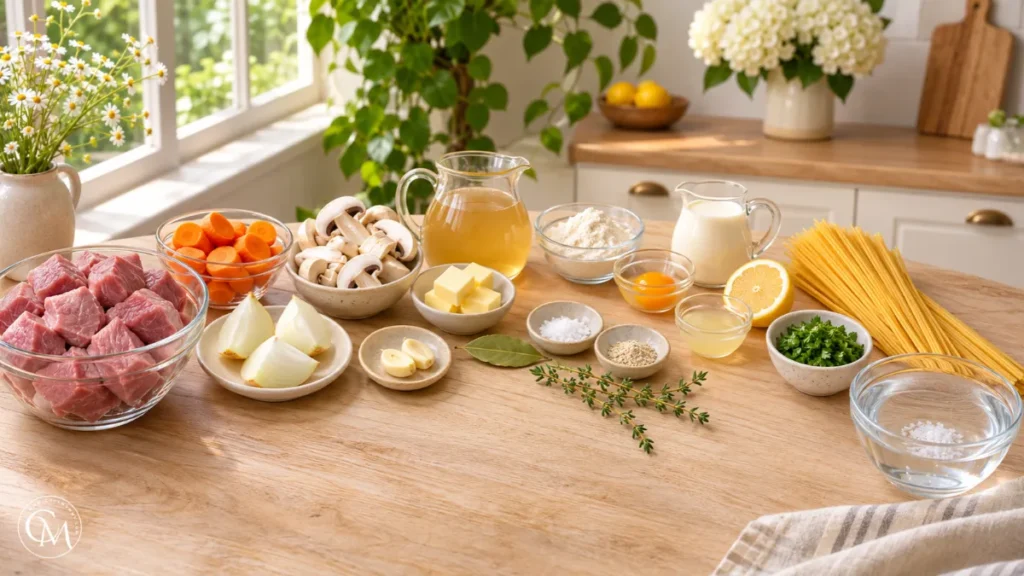
Ingredient substitutions: Beef chuck offers a budget-friendly alternative, although its cooking time may differ. Chicken thighs work for a lighter variation. For a less rich sauce, replace some cream with whole milk, adding it gently to prevent curdling.
Timing
Veal Blanquette rewards patience, but most of the cooking happens without constant attention.
| Stage | Time |
|---|---|
| Preparation | 20 minutes |
| Cooking | 1 hour 40 minutes |
| Total time | 2 hours |
| Servings | 4 |
- The exact cooking time depends on the cut and size of your veal pieces. Shoulder generally needs gentle, prolonged cooking to soften its connective tissue.
- Time-saving tip: Slice the vegetables and measure the sauce ingredients ahead of time. This keeps the cooking process organized and stress-free.
Step-by-Step Instructions
Making Veal Blanquette becomes surprisingly straightforward when you understand how each cooking stage contributes to the final result.
Step 1: Prepare the Ingredients
- Begin by cutting the veal into evenly sized cubes. Uniform pieces cook at a similar rate, preventing some from becoming dry while others remain tough.
- Pat the meat dry with paper towels. Prepare the carrots, onion, garlic, and mushrooms before heating the pot.
- Unlike browned meat stews, traditional Veal Blanquette maintains a pale appearance. Avoid searing the veal aggressively, as browning changes the dish’s characteristic color and delicate flavor.
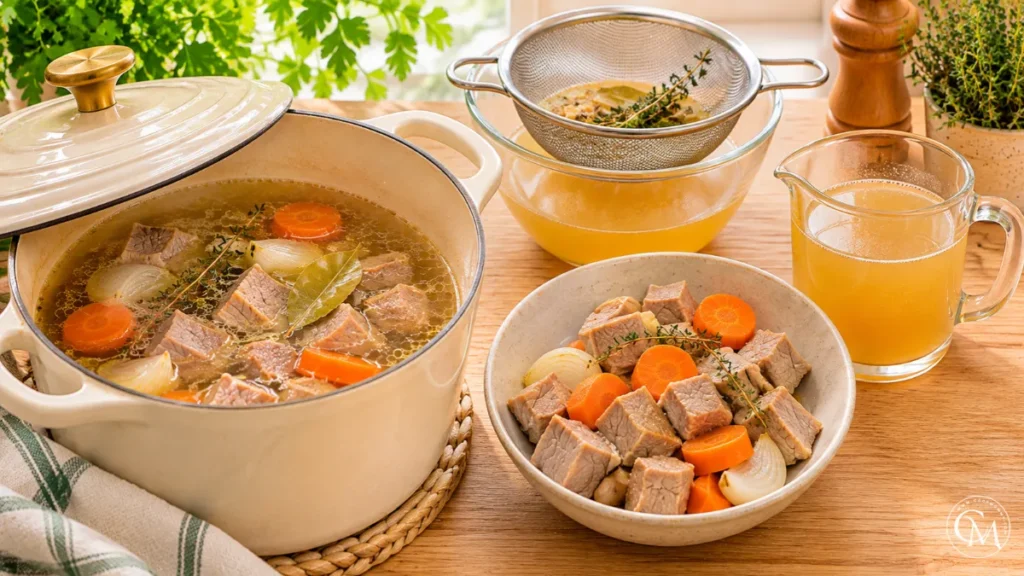
- Place the veal in a heavy-bottomed pot, cover with cold water, and bring just to a simmer. After two minutes, drain and rinse the meat.
- This optional blanching step removes surface impurities, helping produce a cleaner-tasting, lighter-colored broth.
Step 2: Build the Flavor Base
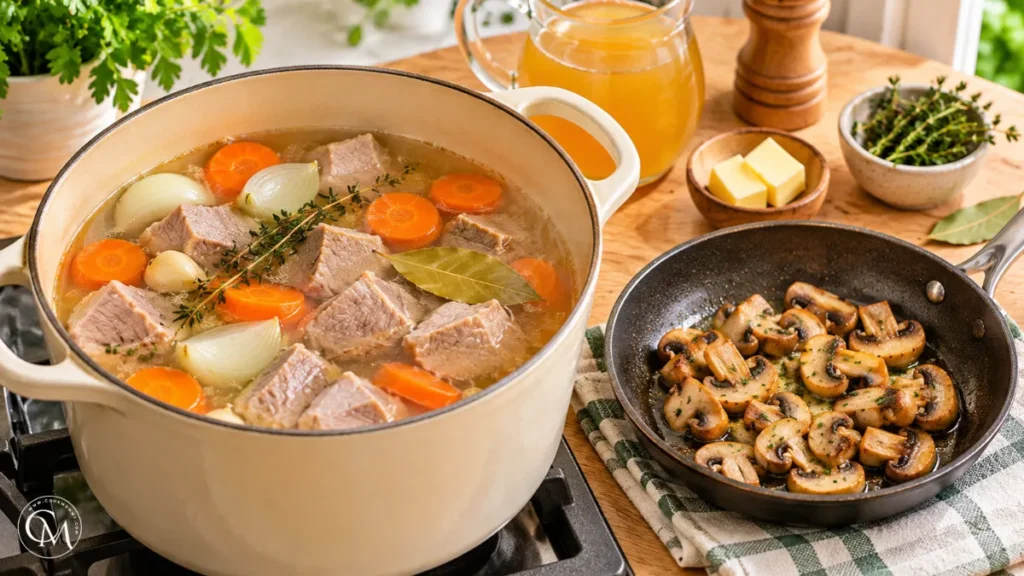
- Return the blanched veal to the clean pot. Add the onion, carrots, garlic, thyme, bay leaf, and stock.
- Bring everything to a gentle simmer rather than a vigorous boil.
- Here’s why that matters: high heat tightens muscle proteins quickly, while slower moist cooking gradually softens collagen-rich connective tissue.
- Maintain small bubbles at the surface and skim away any foam.
- Meanwhile, melt two tablespoons of butter in a skillet and cook the mushrooms over medium heat until tender, approximately 6–8 minutes. Set aside.
- The mushrooms introduce savory depth without overpowering the sauce.
Step 3: Cook the Main Ingredient
- Cover the pot partially and simmer the veal for approximately 75–90 minutes, checking occasionally.
- The goal is fork-tender meat that holds its shape rather than falling apart.
- Test a piece after 75 minutes. If the fork meets resistance, continue cooking in 10-minute increments.
- Once tender, remove the veal and vegetables with a slotted spoon. Strain and reserve approximately two cups of the cooking liquid.
- Kitchen tip: Never discard this broth. Its developed flavors form the foundation of an authentic Veal Blanquette sauce.
Step 4: Combine Everything
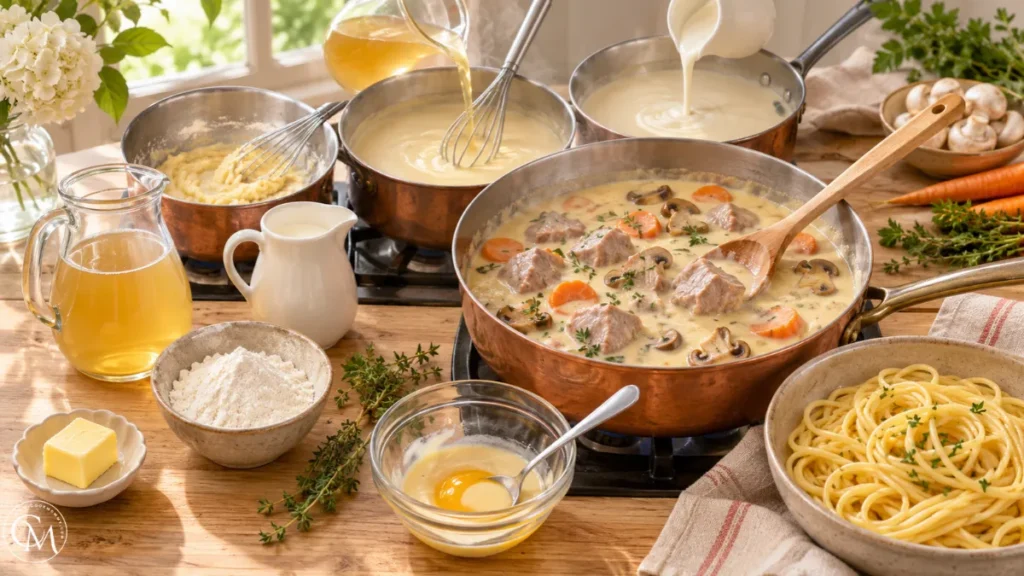
- Melt two tablespoons of butter in a saucepan over medium-low heat. Whisk in the flour and cook for approximately two minutes without allowing it to brown.
- Gradually add the reserved warm broth, whisking continuously to prevent lumps.
- Simmer for 5–7 minutes until the sauce lightly coats a spoon.
- Reduce the heat and stir in the cream. Return the veal, carrots, and mushrooms to the sauce.
- If using egg yolk, whisk it with two tablespoons of warm sauce before slowly incorporating it into the saucepan. Avoid boiling afterward.
- Meanwhile, cook the spaghetti according to package directions until al dente.
- This combination gives Veal Blanquette its signature creamy richness while allowing the spaghetti to remain pleasantly firm.
Step 5: Finish and Adjust Seasoning
- Add the lemon juice, then taste the sauce carefully.
- Season with salt and white pepper, adjusting gradually. Lemon provides acidity that balances the richness without making the dish taste sour.
- If the sauce seems too thick, add reserved broth one tablespoon at a time.
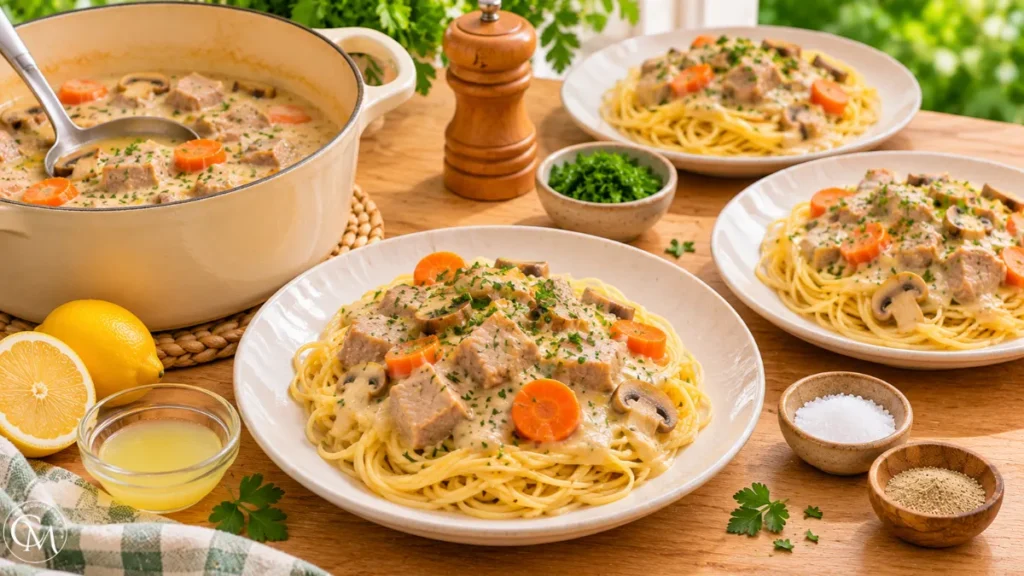
- Drain the spaghetti and divide it among four warm plates. Spoon the creamy veal mixture generously over the pasta.
- Finish with chopped parsley and serve immediately.
- The result is Veal Blanquette with tender meat, delicate vegetables, and a silky sauce that clings beautifully to every strand.
Nutritional Information
A serving of Veal Blanquette with spaghetti provides a substantial combination of protein, carbohydrates, and fats.
Approximate nutrition per serving:
| Nutrient | Amount |
|---|---|
| Calories | 850–950 kcal |
| Protein | 50–58 g |
| Carbohydrates | 70–80 g |
| Total fat | 38–45 g |
| Saturated fat | 19–24 g |
| Fiber | 4–6 g |
| Sodium | 650–950 mg |
- These estimates assume four servings and include pasta, cream, butter, and sauce. Actual values depend on ingredient brands, veal fat content, and portion sizes.
- For more precise nutritional tracking, calculate values using the specific products and quantities used.
Healthier Alternatives
Traditional Veal Blanquette is rich and comforting, but thoughtful substitutions can accommodate different preferences without sacrificing its appeal.
- Lower-sugar approach: This recipe contains no added sugar. Use unsweetened cream alternatives and check packaged stock labels for unnecessary sweeteners.
- Whole-grain option: Replace regular spaghetti with whole-wheat spaghetti for additional fiber and a pleasantly nutty flavor.
- Dairy-free version: Use olive oil instead of butter and an unsweetened oat-based cooking cream. The sauce will taste slightly different but can remain smooth and satisfying.
- Gluten-free option: Substitute rice-based spaghetti and thicken the sauce with cornstarch instead of wheat flour.
- For children, cut the veal into smaller pieces and serve a modest amount of sauce. Seniors may appreciate especially tender meat and softer-cooked vegetables.
- Those seeking lighter portions can increase the vegetables and reduce the pasta serving.
Serving Suggestions
- Veal Blanquette served with spaghetti makes an inviting centerpiece for family dinners and special occasions.
- Pair it with steamed green beans, roasted asparagus, or a crisp salad dressed with lemon vinaigrette. Their freshness contrasts beautifully with the creamy sauce.
- For an elegant presentation, twist the spaghetti into a neat mound using tongs, then arrange the veal and vegetables on top.
- A little parsley adds color without overwhelming the delicate flavors.
- For casual family meals, place the sauce and spaghetti in separate serving bowls so everyone can customize their portions.
- Warm plates are especially helpful because cream-based sauces thicken as they cool.
Common Mistakes to Avoid
Even an uncomplicated Veal Blanquette can disappoint when a few important details are overlooked.
- Boiling the meat aggressively: Rapid boiling can produce tougher, less appealing results. Maintain a gentle simmer throughout cooking.
- Browning the veal: Traditional blanquette should remain pale. Skip heavy searing to preserve its characteristic appearance.
- Adding cream over high heat: Excessive heat increases the risk of separation. Lower the temperature before incorporating dairy.
- Overcooking spaghetti: Pasta continues softening when coated with hot sauce. Stop cooking when it still has a slight bite.
- Skipping acidity: Without lemon juice, the cream sauce may taste heavy. Add a little acidity near the end for balance.
- Overthickening the sauce: Remember that the sauce thickens as it cools. Aim for a consistency that coats a spoon rather than resembling paste.
Storing Tips for the Recipe
- One practical advantage of Veal Blanquette is that the stew can be prepared ahead, making dinner preparation easier.
- Refrigerate leftovers in shallow, airtight containers within two hours of cooking. Store at 40°F (4°C) or below and consume within 3–4 days.
- Keep spaghetti separate whenever possible to prevent it from absorbing too much sauce.
- Reheat the stew gently, adding a splash of broth if necessary. Heat leftovers thoroughly to 165°F (74°C).
- For longer storage, freeze the veal and sauce for up to 2–3 months for best quality. Cream sauces may separate after thawing, so reheat slowly while stirring.
- This recipe became a regular meal in my kitchen because the stew can be made ahead, allowing me to prepare fresh spaghetti right before serving.
Conclusion
Veal Blanquette served with spaghetti combines the elegance of French home cooking with the familiar comfort of pasta. Its tender veal, aromatic vegetables, and creamy white sauce create a satisfying meal that feels special without requiring complicated techniques.
The five essential steps preparing ingredients, building flavor, simmering gently, combining the sauce, and adjusting seasoning make the process manageable even for cooks unfamiliar with French cuisine. Remember that patience is the most valuable ingredient. Gentle cooking and careful seasoning deliver the best results.
Try this Veal Blanquette recipe for your next family dinner, and experiment with the suggested substitutions to make it your own. If you enjoyed the recipe, leave a comment or rating describing your results, and subscribe to the blog for more comforting homemade meals, cooking tips, and approachable French-inspired recipes.
FAQs
1. What is Veal Blanquette?
Veal Blanquette is a traditional French stew made with tender veal, aromatic vegetables, and a creamy white sauce. Unlike many stews, the meat is generally simmered without browning.
2. Can I make Veal Blanquette ahead of time?
Yes. Prepare the stew one day ahead, refrigerate promptly, and reheat gently before serving. Cook the spaghetti fresh for the best texture.
3. What is the best cut of veal for this recipe?
Veal shoulder is an excellent choice because its connective tissue softens during slow cooking. Veal breast can also work, although cooking times may vary.
4. Can I use chicken instead of veal?
Absolutely. Boneless chicken thighs are a flavorful substitute. Adjust the cooking time and ensure the chicken reaches an internal temperature of 165°F (74°C).
5. Why is my blanquette sauce too thin?
The sauce may need additional simmering or thickening. Mix a little cornstarch with cold water, stir it into the sauce, and heat gently until thickened.
6. Can I freeze Veal Blanquette?
Yes, although cream-based sauces sometimes separate after thawing. Freeze in airtight containers, thaw safely in the refrigerator, and reheat slowly while stirring.
7. What pasta works best with Veal Blanquette?
Spaghetti is excellent because its long strands carry the creamy sauce beautifully. Linguine, tagliatelle, and fettuccine are equally delicious alternatives when you want a different texture.
Tried it before ?
There are no reviews yet. Be the first one to write one.