
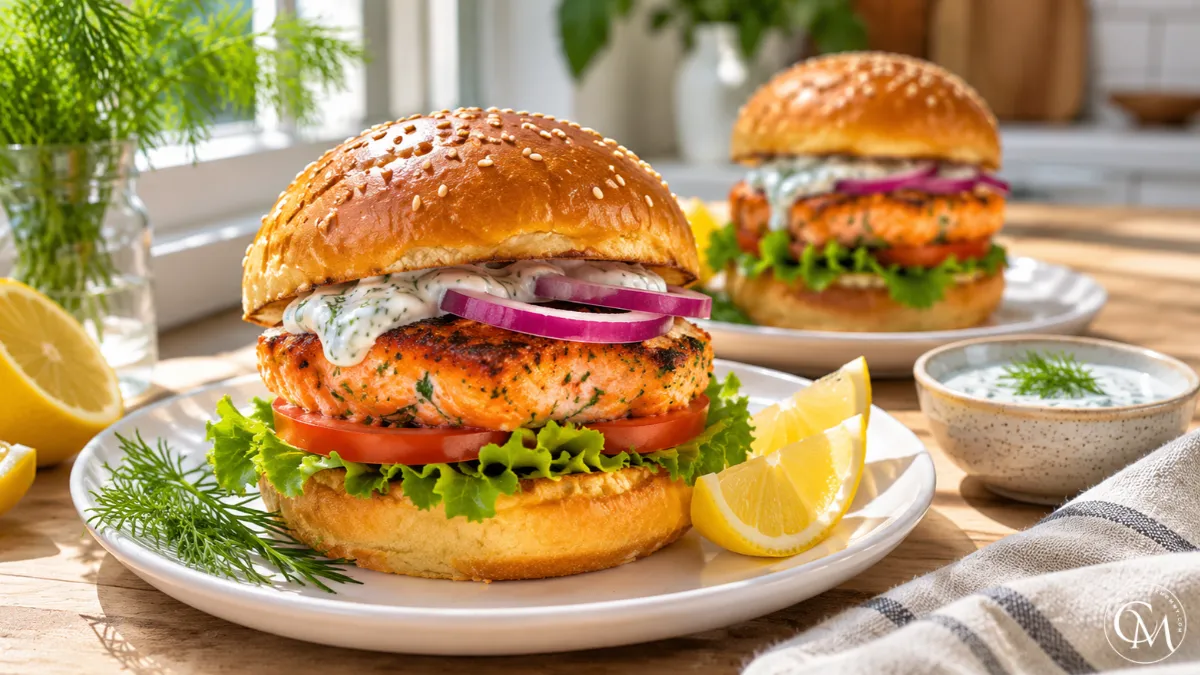
Best Salmon Burgers: 5 Easy Steps for the Best Homemade Recipe
Did you know that 100 grams of raw Atlantic salmon provides approximately 20 grams of protein, according to USDA nutrition data? With that much protein in one ingredient, why settle for dry, bland fish patties when you can make delicious Salmon Burgers at home?
The secret to great Salmon Burgers isn’t a complicated recipe or expensive equipment. It’s choosing quality salmon, balancing the seasonings, and cooking the patties carefully to preserve their moisture. This homemade recipe delivers a lightly crispy exterior, a tender center, and bright, fresh flavor from lemon, garlic, and herbs.
Whether you’re planning a quick weeknight dinner, a family lunch, or a healthier alternative to traditional beef burgers, these Salmon Burgers are an excellent choice. You’ll learn five straightforward steps, helpful cooking techniques, easy ingredient substitutions, and practical ways to prevent your patties from falling apart.
Table of Contents
Ingredients List
The best Salmon Burgers begin with fresh, flavorful ingredients that complement the fish without overpowering its naturally rich taste.
For the patties (4 servings)
- 1 lb (450 g) skinless, boneless salmon
- ½ cup panko breadcrumbs
- 1 large egg
- 2 tablespoons mayonnaise
- 1 tablespoon Dijon mustard
- 1 tablespoon fresh lemon juice
- 2 tablespoons chopped parsley
- 2 tablespoons finely chopped green onion
- 2 garlic cloves, minced
- ½ teaspoon smoked paprika
- ½ teaspoon salt
- ¼ teaspoon black pepper
- 1 tablespoon olive oil, for cooking
For serving
- 4 burger buns
- 4 lettuce leaves
- 1 tomato, sliced
- ¼ red onion, thinly sliced
- ¼ cup Greek yogurt
- 1 teaspoon lemon juice
- 1 teaspoon chopped fresh dill
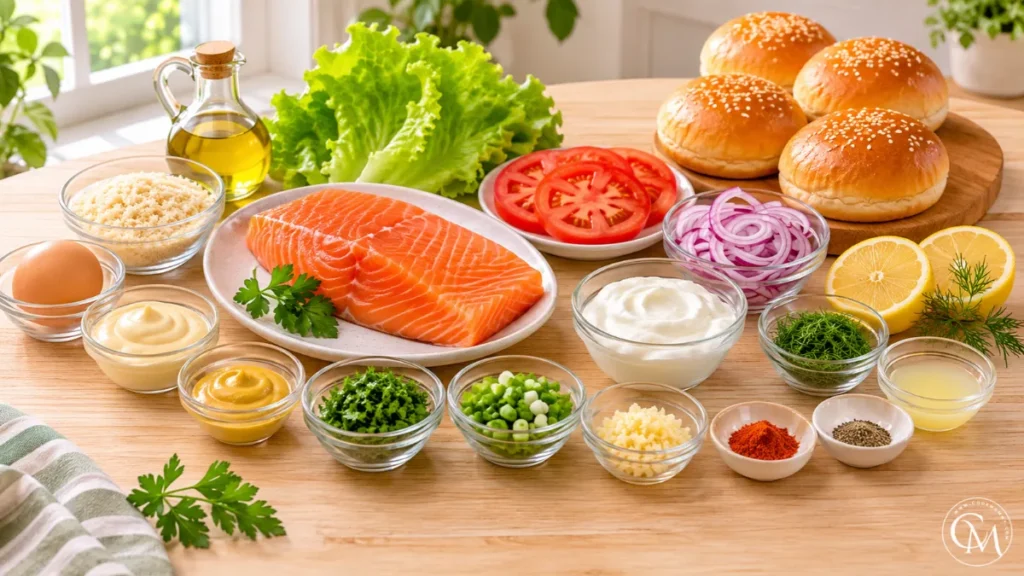
Easy ingredient substitutions
- Canned salmon works when fresh fish isn’t available; drain it thoroughly and remove any unwanted bones. Replace parsley with dill for a brighter flavor, or use crushed gluten-free crackers instead of panko.
- For a dairy-free sauce, substitute unsweetened dairy-free yogurt for Greek yogurt.
- Kitchen tip: Fresh salmon produces a tender, slightly chunky texture. Avoid blending it into a completely smooth paste, which can create dense patties.
Timing
- Prep time 15 min
- Cook time 10 min
- Total time 25 min
- Servings 4 burgers
- Difficulty Easy
- Optional chilling 10–15 minutes extra
These Salmon Burgers are particularly convenient for busy evenings because the patties cook quickly in a skillet. If your mixture feels soft, allow additional chilling time before cooking.
Step-by-Step Instructions
Follow these five steps to prepare homemade Salmon Burgers with a golden crust, balanced seasonings, and satisfying texture.
Step 1: Prepare the Ingredients
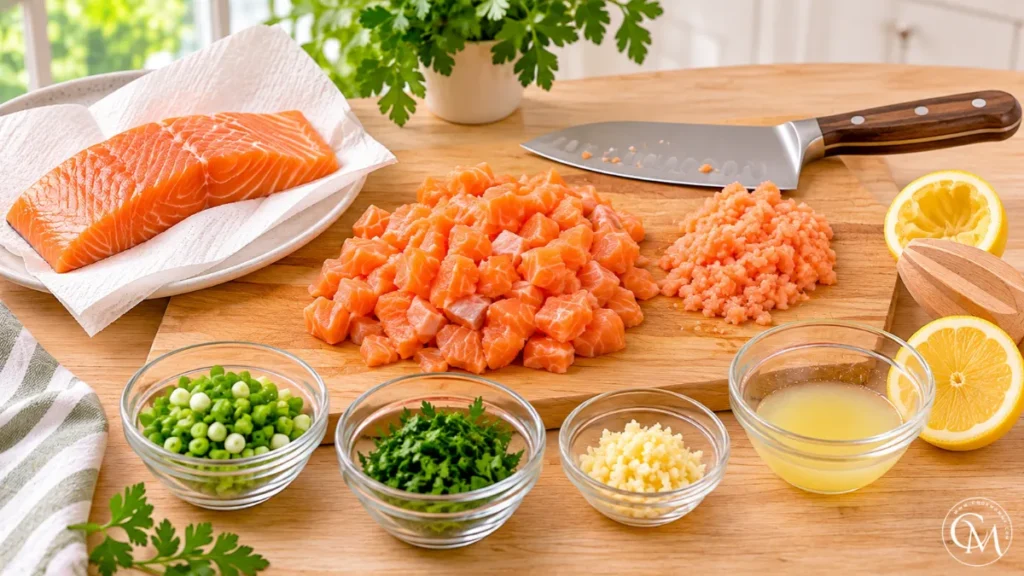
- Pat the salmon dry with paper towels. Remove the skin and check carefully for pin bones.
- Using a sharp knife, chop approximately three-quarters of the fish into small pieces. Finely mince the remaining quarter to help bind everything together.
- Wash and finely chop the green onions and parsley. Mince the garlic and squeeze the lemon.
- Why does preparation matter? Excess moisture makes patties difficult to shape, while unevenly chopped fish can lead to inconsistent cooking.
- Pro tip: Keep the salmon cold until you’re ready to mix. Chilled fish is easier to handle and maintains a firmer texture.
Step 2: Build the Flavor Base
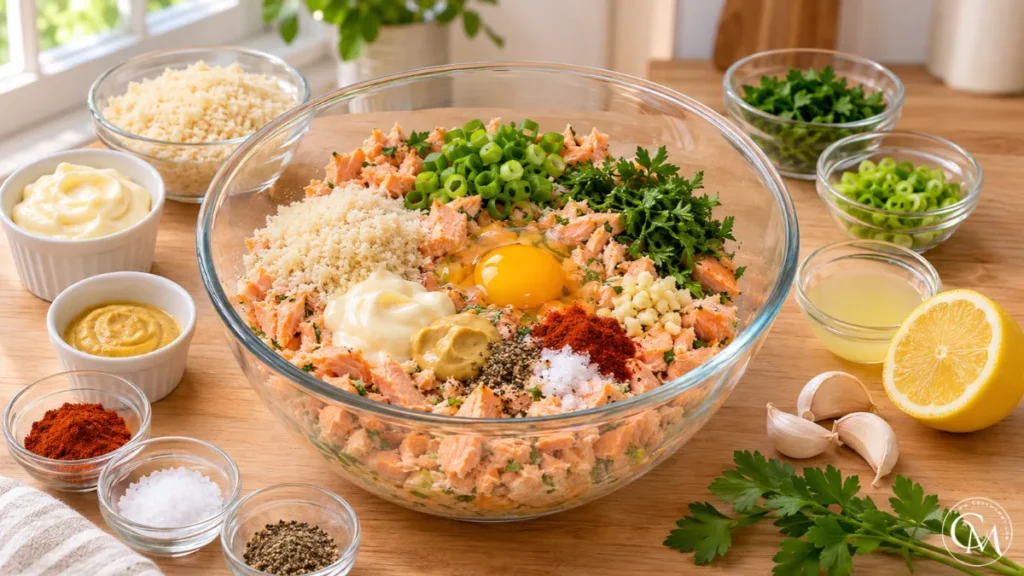
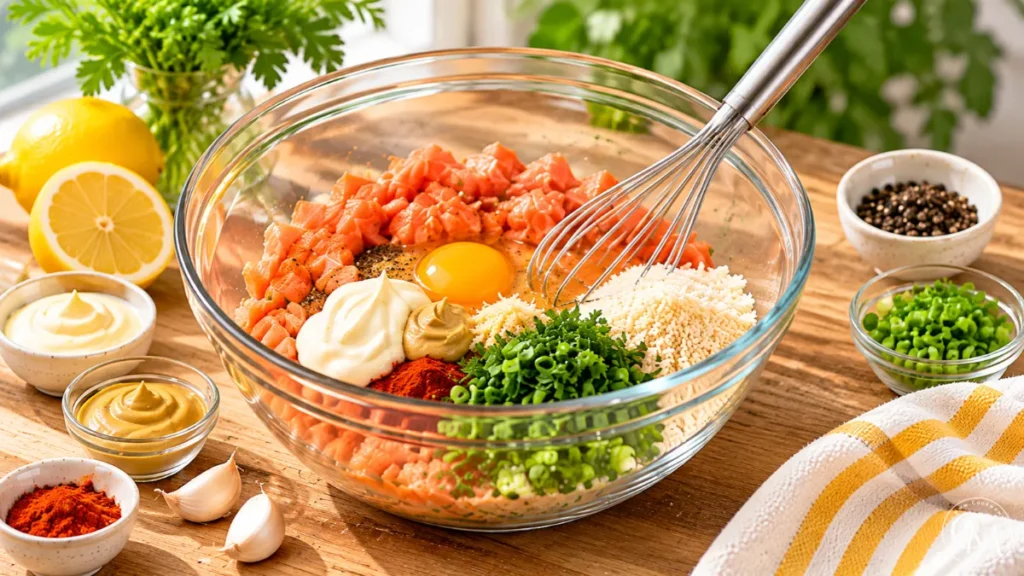
- In a large mixing bowl, whisk together the egg, mayonnaise, Dijon mustard, lemon juice, garlic, paprika, salt, and pepper.
- Stir in the parsley and green onions, followed by the panko breadcrumbs.
- The egg helps bind the ingredients, while breadcrumbs absorb moisture and give the patties structure.
- Mayonnaise adds richness, mustard contributes mild sharpness, and lemon juice balances the salmon’s natural oils.
- Fold the mixture gently rather than beating it aggressively.
- Kitchen secret: Letting the seasoned mixture rest briefly allows the breadcrumbs to hydrate, making the patties easier to shape.
Step 3: Cook the Main Ingredient
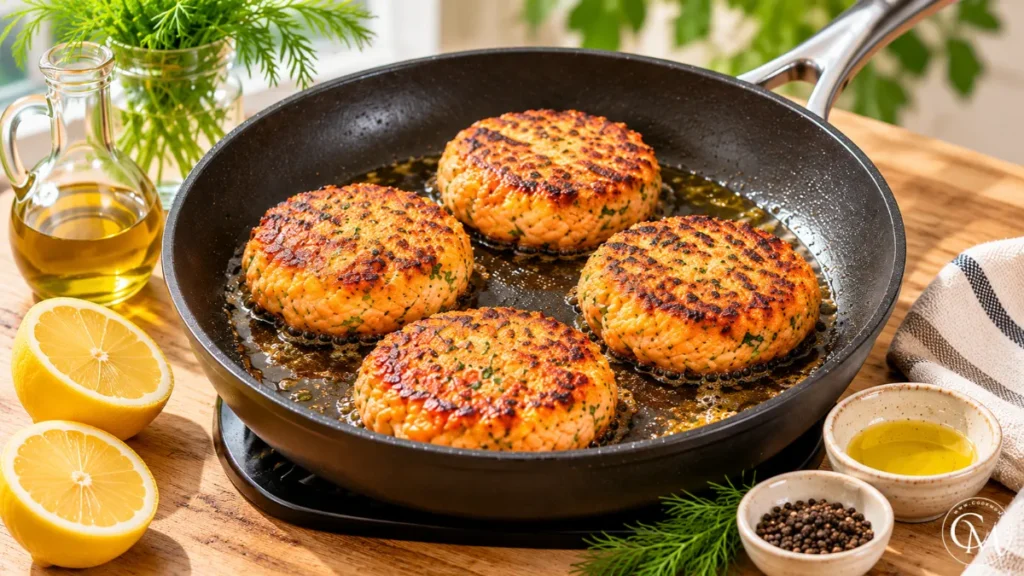
- Fold the chopped salmon into the flavor base and divide into four equal portions. Shape each into a patty approximately ¾ inch thick.
- Heat olive oil in a nonstick or well-seasoned skillet over medium heat.
- Place the patties in the skillet without overcrowding.
- Cook for approximately 4–5 minutes per side, adjusting for thickness.
- Avoid pressing the patties with a spatula because this can squeeze out flavorful juices.
- Cook until the center reaches 145°F (63°C), the FDA-recommended temperature for finfish. FDA
- Texture tip: Allow the first side to develop a golden crust before turning. That crust helps the patty hold together.
Step 4: Combine Everything
- While the patties finish cooking, lightly toast the burger buns.
- Combine Greek yogurt, lemon juice, and fresh dill in a small bowl to create a refreshing sauce.
- Spread the sauce onto the bottom buns, then add lettuce, tomato slices, and the cooked patties.
- Finish with thinly sliced red onion and the top buns.
- The creamy sauce balances the savory salmon, while crisp vegetables contribute freshness.
- These Salmon Burgers taste especially satisfying when the buns are warm and the vegetables are cool.
Step 5: Finish and Adjust Seasoning
- Taste the prepared sauce and adjust with additional lemon juice, dill, or black pepper if needed.
- For extra brightness, squeeze fresh lemon over the cooked patties just before assembling.
- Allow the patties to rest for approximately two minutes before serving.
- If you enjoy a little heat, add a pinch of chili flakes or a few drops of hot sauce to the yogurt dressing.
- Chef-style advice: Taste and adjust the sauce rather than tasting the raw salmon mixture. This provides an easy, safe way to refine the final flavor.
Nutritional Information
Salmon Burgers offer protein, naturally occurring omega-3 fatty acids, and several essential nutrients. The following values are approximate for one assembled burger, including a bun, vegetables, and yogurt sauce.
| Nutrient | Approximate amount |
|---|---|
| Calories | 490 kcal |
| Protein | 32 g |
| Carbohydrates | 36 g |
| Total fat | 24 g |
| Saturated fat | 5 g |
| Fiber | 2 g |
| Sodium | 760 mg |
- Actual values vary depending on salmon variety, bun size, ingredient brands, and cooking oil absorption.
- Salmon provides vitamin B12, selenium, and omega-3 fatty acids. The vegetables add small amounts of fiber and micronutrients.
- For a lighter meal, serve the patty over a leafy salad instead of using a bun.
Healthier Alternatives
One advantage of homemade Salmon Burgers is how easily you can adapt them to different dietary preferences.
- Lower sugar: Choose unsweetened yogurt and buns without added sweeteners. Avoid sugary bottled sauces.
- Whole grains: Replace white buns with whole-wheat buns and standard panko with whole-grain breadcrumbs.
- Dairy-free: Use unsweetened plant-based yogurt or a lemon-tahini dressing.
- Gluten-free: Choose certified gluten-free breadcrumbs and buns, and check your mustard and other packaged ingredients.
- Lower calorie: Serve the patties in lettuce wraps and use a lighter yogurt-based dressing.
For children, prepare smaller patties with mild seasonings. For older adults who prefer softer textures, serve the fish patties without crunchy toppings.
These adjustments preserve the delicious character of Salmon Burgers while making the meal more flexible.
Serving Suggestions
- Salmon Burgers pair beautifully with fresh, colorful side dishes.
- For a classic meal, serve them with baked sweet potato wedges, coleslaw, or crispy oven-roasted potatoes.
- For something lighter, try cucumber salad, steamed asparagus, or a quinoa bowl with avocado.
- Hosting friends? Arrange the patties alongside toasted buns, sliced vegetables, and several sauces so guests can assemble their own burgers.
- For summer gatherings, a lemon-dill dressing and crunchy cabbage slaw create a refreshing combination.
- My favorite flavor pairing for this recipe is creamy yogurt sauce with fresh lemon and crisp lettuce. It complements the richness of the fish without hiding its natural taste.
Common Mistakes to Avoid
Even simple Salmon Burgers can become dry or crumbly if a few details are overlooked.
- Overprocessing the salmon: Blending the fish too finely can create rubbery patties. Keep some small pieces for texture.
- Adding too many breadcrumbs: Excess breadcrumbs absorb moisture and make the finished burgers dense. Measure them carefully.
- Skipping moisture control: Wet salmon or watery vegetables can weaken the mixture. Pat ingredients dry before combining.
- Using excessive heat: A very hot skillet may burn the exterior before the center cooks. Medium heat offers better control.
- Flipping too early: Allow a crust to form before turning the patties carefully with a wide spatula.
- Overcooking: Check the thickest part with a thermometer instead of relying entirely on cooking time.
Remember that patty thickness and skillet temperature affect cooking speed more than the clock alone.
Storing Tips for the Recipe
- Salmon Burgers are excellent for meal preparation when stored correctly.
- Refrigeration: Place cooked patties in airtight containers and refrigerate promptly. Consume within 3–4 days.
- Freezing: Wrap cooked patties individually, place them in freezer-safe packaging, and freeze for approximately 2–3 months for best quality.
- Reheating: Warm refrigerated patties gently in a covered skillet or oven until the center reaches 165°F (74°C). FDA
- Make-ahead preparation: Shape uncooked patties up to one day ahead, keep them covered and refrigerated, and cook within the salmon’s safe storage window.
- Store buns, vegetables, and sauce separately to prevent sogginess.
- This recipe can become a regular weeknight meal because the ingredients are straightforward, the patties cook quickly, and the leftovers are easy to repurpose in salads or grain bowls.
Conclusion
Homemade Salmon Burgers prove that a delicious seafood dinner doesn’t need complicated techniques or lengthy preparation. With five easy steps, you can create golden, flavorful patties using fresh salmon, simple seasonings, and ingredients commonly found in home kitchens.
The combination of tender fish, crisp vegetables, toasted buns, and creamy lemon-dill sauce makes this recipe a satisfying choice for family dinners, casual lunches, and meal preparation. Better still, it’s easy to adapt with whole-grain buns, gluten-free breadcrumbs, or dairy-free toppings.
Try these Salmon Burgers the next time you’re craving something fresh and comforting. If you make the recipe, leave a comment or review sharing your favorite toppings or cooking tips. And don’t forget to subscribe for more easy homemade recipes, practical kitchen advice, and flavorful meal inspiration.
FAQs
1. Can I make Salmon Burgers with canned salmon?
Yes! Drain canned salmon thoroughly before mixing it with the other ingredients. Since canned salmon is already cooked, handle the patties gently and heat them thoroughly.
2. How do I keep Salmon Burgers from falling apart?
Use an egg and measured breadcrumbs to bind the mixture. Keep the salmon cold, chill soft patties before cooking, and wait until a crust forms before flipping.
3. Can I bake Salmon Burgers instead of frying them?
Absolutely. Bake on a lightly oiled baking sheet at 400°F (200°C) for approximately 12–16 minutes, depending on thickness, until the centers reach 145°F (63°C).
4. What sauce goes best with Salmon Burgers?
Lemon-dill yogurt sauce is an excellent choice because its fresh acidity balances rich salmon. Garlic aioli, avocado sauce, and lightly spiced mayonnaise also work beautifully.
5. Can I prepare Salmon Burgers ahead of time?
Yes. Prepare and shape the patties ahead, refrigerate them in a covered container, and cook the following day, provided the fish remains within its safe refrigerated storage period.
6. Are frozen salmon fillets suitable for this recipe?
Yes. Thaw frozen salmon safely in the refrigerator, then pat it thoroughly dry before chopping. Removing excess water helps the burgers maintain their shape during cooking.
7. What should I serve with Salmon Burgers for dinner?
Try roasted sweet potatoes, cucumber salad, steamed vegetables, or a fresh cabbage slaw. For a satisfying meal, add whole-grain buns and a homemade yogurt dressing.
Tried it before ?
There are no reviews yet. Be the first one to write one.