
thousand-hole pancake: 7 Best Tips for Perfect Baghrir
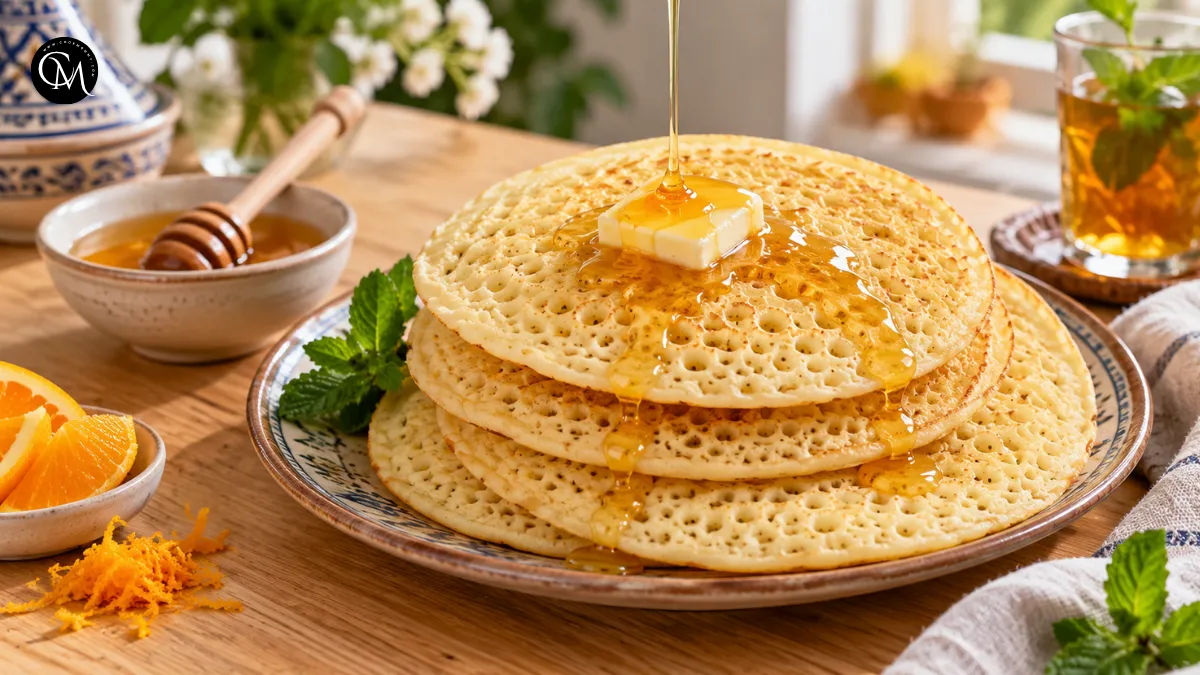
Did you know a well-made baghrir can develop more than a hundred tiny bubbles across a single pancake as it cooks? That honeycomb surface helps this Moroccan favorite soak up butter, honey, or syrup. If yours turns out smooth or gummy, the problem is usually technique rather than the recipe.
This thousand-hole pancake recipe shows you how to get soft, airy baghrir with an evenly perforated top. The batter is blended, rested briefly, and cooked on one side only. I’ll share the seven details that matter most: fine semolina, active yeast, thorough blending, a short rest, steady heat, minimal grease, and cooling before stacking.
Once you understand how the batter should look and behave, the thousand-hole pancake becomes surprisingly reliable.
Table of Contents
Ingredients List
For about 10 medium pancakes:
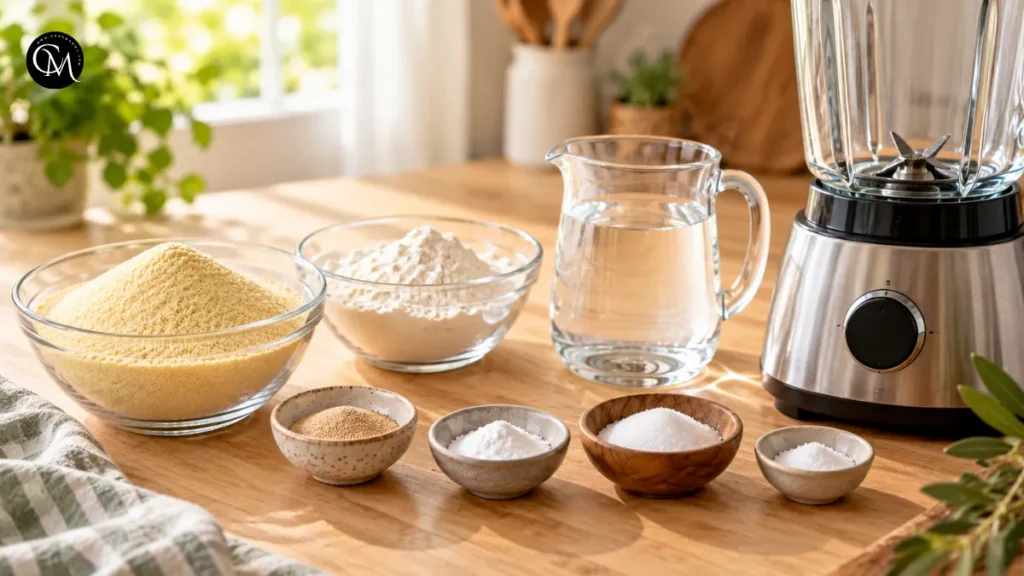
- 1 cup fine semolina flour
- 1/2 cup all-purpose flour
- 2 cups warm water, about 100–110°F or 38–43°C
- 1 teaspoon instant yeast
- 1 teaspoon baking powder
- 1 tablespoon granulated sugar
- 1/2 teaspoon salt
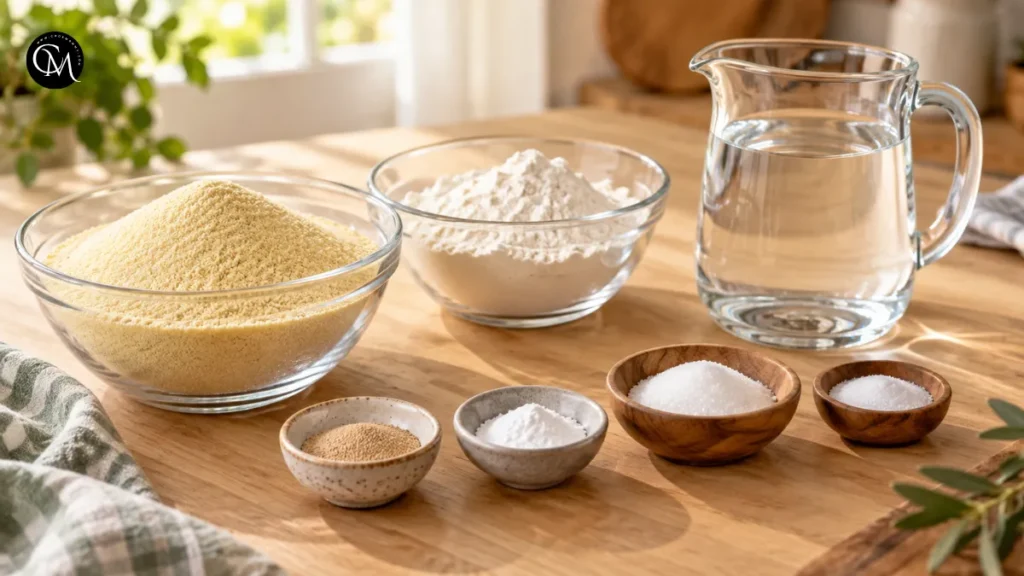
For serving, I like equal parts melted butter and honey. Orange blossom honey is especially good, but any mild honey works.
Bread flour can replace all-purpose flour, although the result may be slightly chewier. For dairy-free serving, use maple syrup or honey without butter. Avoid coarse semolina; it hydrates too slowly and can make the thousand-hole pancake gritty.
Timing
- Preparation time: 10 minutes
- Resting time: 15–20 minutes
- Cooking time: 20–25 minutes
- Total time: about 50–55 minutes
Many yeasted pancake recipes need 45–60 minutes of proofing, but baghrir is quicker. Blending aerates the batter while yeast and baking powder help bubbles form quickly.
Step-by-Step Instructions for thousand-hole pancake
Step 1 – Prepare ingredients
Measure everything first, especially the water. Water that is too hot can damage yeast; cold water slows it down. Aim for comfortably warm water.
Add water, semolina, flour, sugar, salt, and yeast to a blender. Evenly dispersed ingredients help the holes form consistently.
Tip 1: Use fine semolina. It hydrates quickly and gives a thousand-hole pancake its tender, lightly textured crumb.
Step 2 – Build flavor base
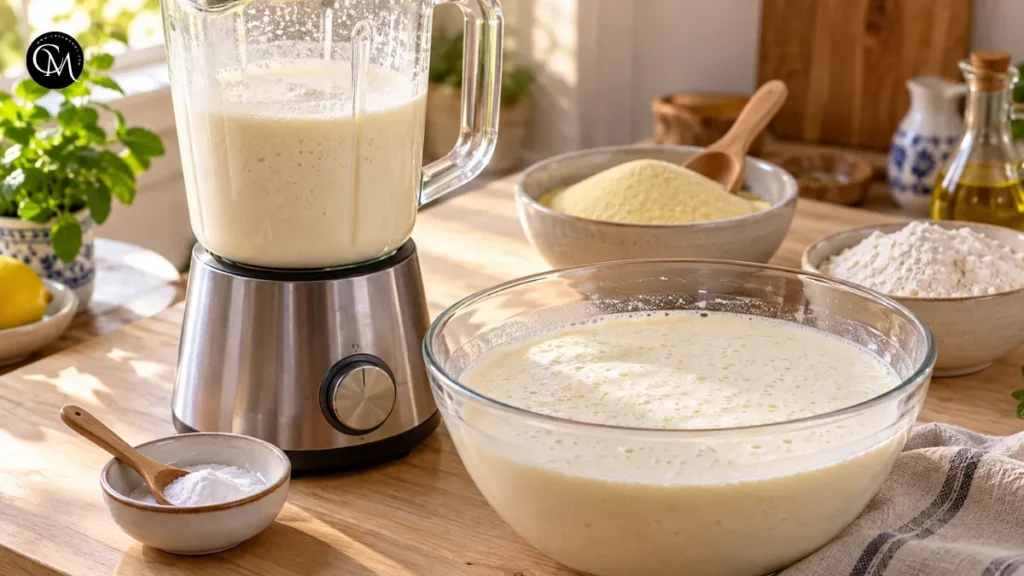
Blend for 60–90 seconds until smooth and lightly foamy. Add baking powder, blend for another 10 seconds, then pour the batter into a bowl and rest it for 15–20 minutes.
Here, the flavor base is really fermentation. Yeast creates gas, baking powder adds lift, and blending traps tiny air pockets that encourage the honeycomb pattern.
Tip 2: Check your yeast. If the batter shows no light foam after resting, the yeast may be inactive.
Tip 3: Blend thoroughly. Lumps can interrupt even bubble formation in a thousand-hole pancake.
Step 3 – Cook the main ingredient
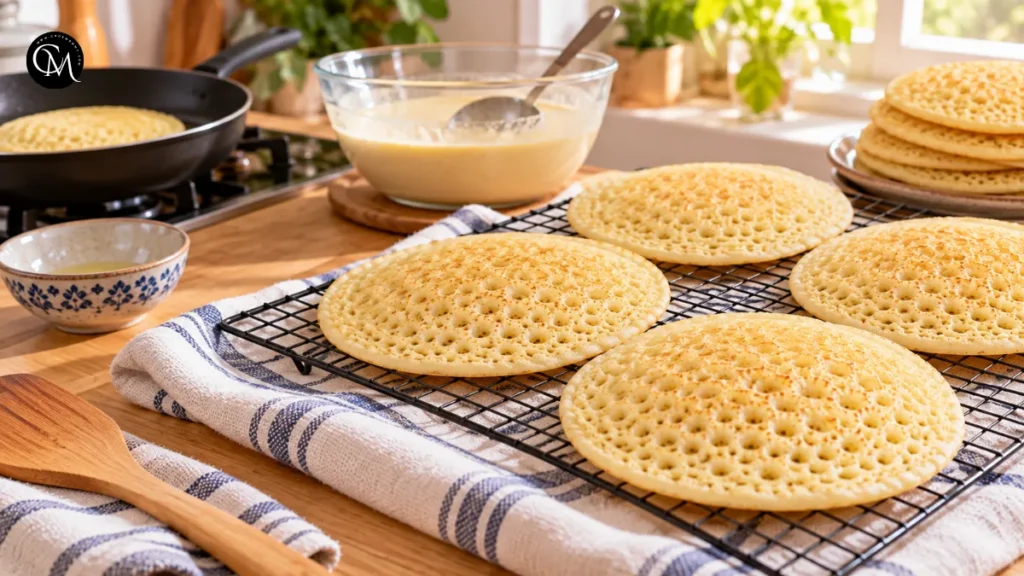
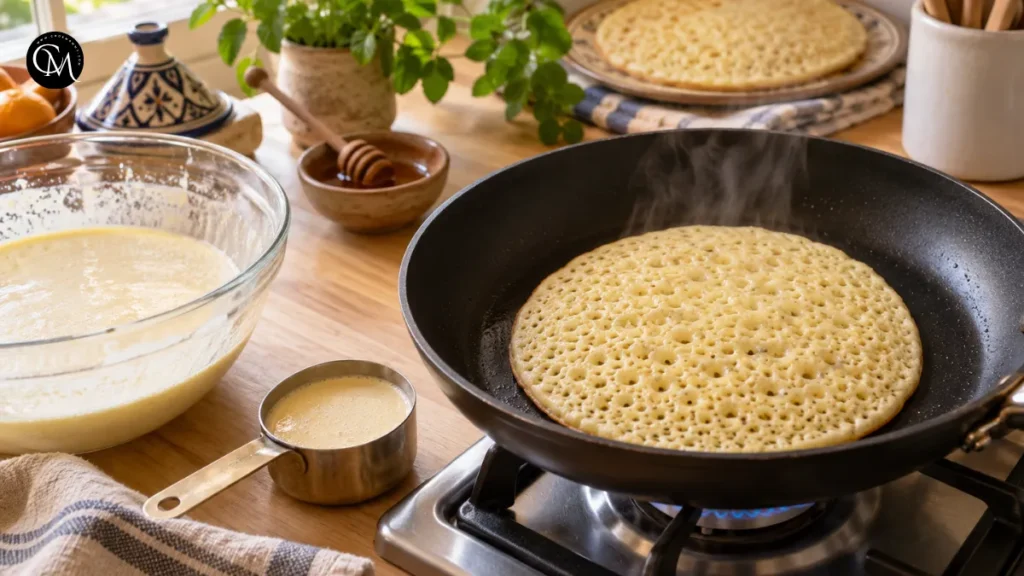
Heat a nonstick skillet over medium heat. Stir the batter gently, then pour about 1/4 cup into the center. Let it spread naturally; do not swirl the pan.
Bubbles should rise and burst within seconds. Cook on one side until the top is dry and no wet patches remain, about 1 1/2 to 2 minutes. The base should be lightly golden.
Tip 4: Respect the rest. Cooking too soon often produces fewer holes.
Tip 5: Control the heat. Too hot, and the bottom browns before the top sets. Too cool, and the thousand-hole pancake may turn pale and rubbery.
Step 4 – Combine everything
Transfer each cooked pancake to a clean towel or cooling rack in a single layer. Continue with the remaining batter, adjusting the heat as needed.
Do not stack hot pancakes. Trapped steam can make them sticky and compress the holes. Stack them loosely only after they stop steaming.
Tip 6: Skip heavy greasing. A good nonstick pan usually needs no oil. Excess fat can interfere with the batter’s contact with the pan.
Step 5 – Finish & adjust seasoning
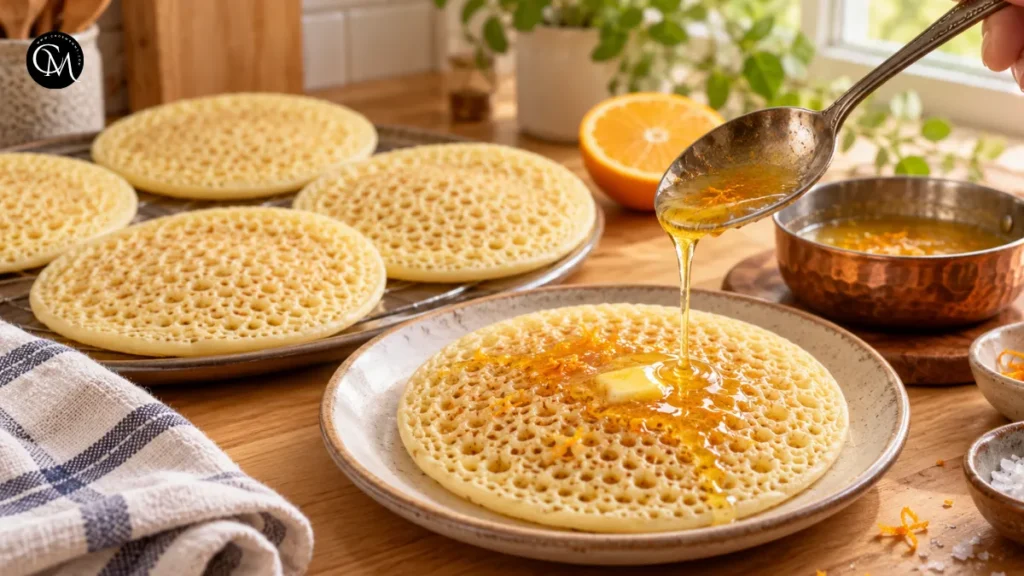
Warm equal parts butter and honey over low heat, then spoon the mixture over the baghrir just before serving. The porous top absorbs it beautifully.
Taste the first pancake before finishing the batch. A tiny pinch of salt in the topping can sharpen the sweetness, while orange zest adds freshness.
Tip 7: Cool before stacking. This keeps every thousand-hole pancake soft and separate instead of gummy.
Nutritional Information
Approximate values per plain pancake, based on 10 pancakes:
- Calories: 95–110
- Carbohydrates: 20–22 g
- Protein: 3–4 g
- Fat: less than 1 g
- Fiber: 1–2 g
- Sodium: about 120 mg
Values vary by brand, pancake size, and toppings. Butter and honey increase calories and sugar, so add them to taste. A plain thousand-hole pancake is naturally low in fat, while semolina provides carbohydrates, some protein, and a little fiber.
Healthier Alternatives
- For lower sugar, reduce the tablespoon of sugar in the batter by half and serve with fresh fruit, plain yogurt, or a light honey drizzle.
- For more whole grains, replace up to one-third of the all-purpose flour with whole-wheat flour. Using much more can make a thousand-hole pancake noticeably denser.
- For dairy-free serving, choose maple syrup, date syrup, fruit compote, or honey without butter. The batter itself is dairy-free.
- For gluten-free baghrir, use a tested gluten-free formula rather than a direct one-to-one flour swap because gluten helps hold the bubbles. For children, make smaller pancakes and add banana or yogurt. For seniors or anyone who prefers softer foods, cook gently and serve with a moist topping.
Serving Suggestions
- The classic butter-honey topping is ideal because it settles into every hole. I like serving the thousand-hole pancake with mint tea, orange slices, toasted almonds, and thick yogurt.
- For a less sweet plate, try labneh or soft cheese with a small drizzle of honey. Almond butter and sliced banana make it more filling.
- For guests, arrange baghrir on a wide platter with berries, honey, nuts, and warm butter so everyone can customize a plate. Related Moroccan recipes worth exploring include msemen, harcha, mint tea, and amlou.
Common Mistakes to Avoid
- Using coarse semolina. Fine semolina creates a softer batter and cleaner holes in a thousand-hole pancake.
- Overheating the pan. A dark bottom with a wet top usually means the pan is too hot.
- Flipping the pancake. Baghrir cooks on one side only; flipping can flatten its delicate surface.
- Skipping the blender. Hand whisking works, but blending makes the batter more uniform and the bubbles more dependable.
- Stacking while hot. In my kitchen, this is the quickest way to make a good batch sticky.
- Ignoring batter consistency. It should pour easily, closer to crepe batter than American pancake batter. If it thickens, blend in 1–2 tablespoons of warm water.
Storing Tips for the Recipe
- Cool leftovers, separate them with parchment, and refrigerate airtight for up to three days. Reheat briefly in a dry skillet or under a slightly damp paper towel in the microwave.
- For longer storage, freeze the thousand-hole pancake with parchment between each piece for up to two months. Thaw at room temperature or warm gently from frozen.
- You can measure the dry ingredients the night before, but I do not recommend refrigerating mixed batter overnight. The yeast and baking powder lose their ideal timing, making the hole pattern less predictable.
- This recipe became one of my regular meals because it turns simple pantry staples into something warm and special without demanding a long morning in the kitchen.
Conclusion
Baghrir looks delicate, but the method is easy once you know what to watch for. The best thousand-hole pancake comes down to seven repeatable habits: fine semolina, active yeast, thorough blending, a short rest, moderate heat, minimal pan grease, and patience before stacking. Those details create the airy texture and open honeycomb surface that make butter and honey soak into every bite.
Try the recipe as written, then make it your own with fruit, yogurt, nuts, or a lighter topping. Leave a comment or review, especially if you tested a substitution, and subscribe for more practical recipes, troubleshooting tips, and breakfast ideas.
FAQs
Why does my thousand-hole pancake have very few holes?
Inactive yeast, thick batter, insufficient blending, or a cool pan are common causes. Check those four factors before changing the ingredient ratios.
Can I make baghrir without a blender?
Yes, but a blender is more consistent. If mixing by hand, whisk vigorously until smooth, rest the batter, and expect a slightly less uniform hole pattern.
Why do I cook baghrir on only one side?
Steam cooks the porous top while the skillet browns the base. Flipping is unnecessary and can compress the delicate holes that define a traditional thousand-hole pancake.
Can I prepare the batter the night before?
It is better to make it shortly before cooking. Overnight fermentation changes the balance between yeast and baking powder and can make the texture less predictable.
What should baghrir batter look like?
It should be smooth, lightly foamy, and thinner than American pancake batter. If it barely spreads, blend in one or two tablespoons of warm water.
Can I freeze thousand-hole pancake leftovers?
Yes. Cool them completely, separate with parchment, and freeze in an airtight bag for up to two months. Reheat gently to keep them soft.
What is the best topping for baghrir?
Warm butter and honey is classic because it sinks into the holes. For lighter options, try fruit compote, yogurt, maple syrup, or a thin layer of nut butter.
Tried it before ?
There are no reviews yet. Be the first one to write one.