
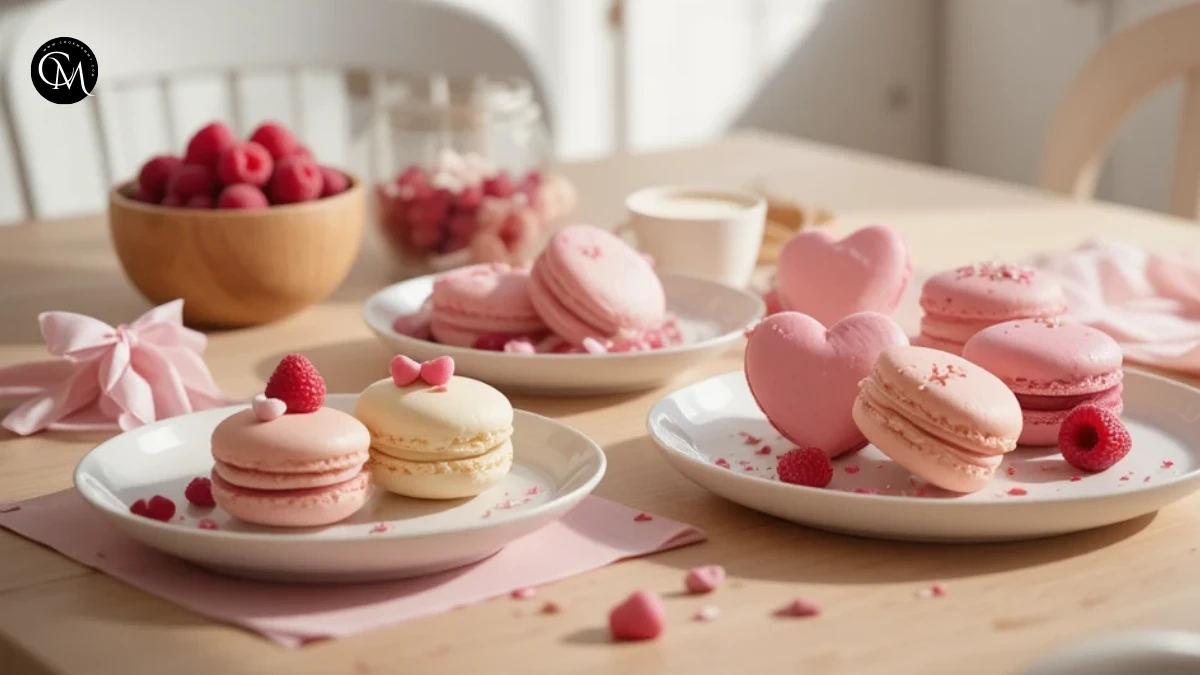
valentines macarons recipe: 7 Best Flavors to Impress Love
Have you ever wondered why nearly 70% of home bakers say macarons are the most intimidating dessert to make yet also the most rewarding? This valentines macarons recipe is designed to remove the fear and replace it with confidence, guiding you step by step toward bakery-quality treats that feel personal, romantic, and unforgettable.
Macarons are more than just delicate cookies; they’re a statement dessert. With their crisp shells, soft centers, and endless flavor possibilities, they capture the spirit of Valentine’s Day better than almost any other sweet. In this guide, you’ll learn how to master texture, flavor balance, and presentation using proven techniques from experienced home baking. Whether you’re baking for a partner, friends, or yourself, these 7 flavor ideas will help you create a thoughtful, elegant dessert worth sharing.
Table of Contents
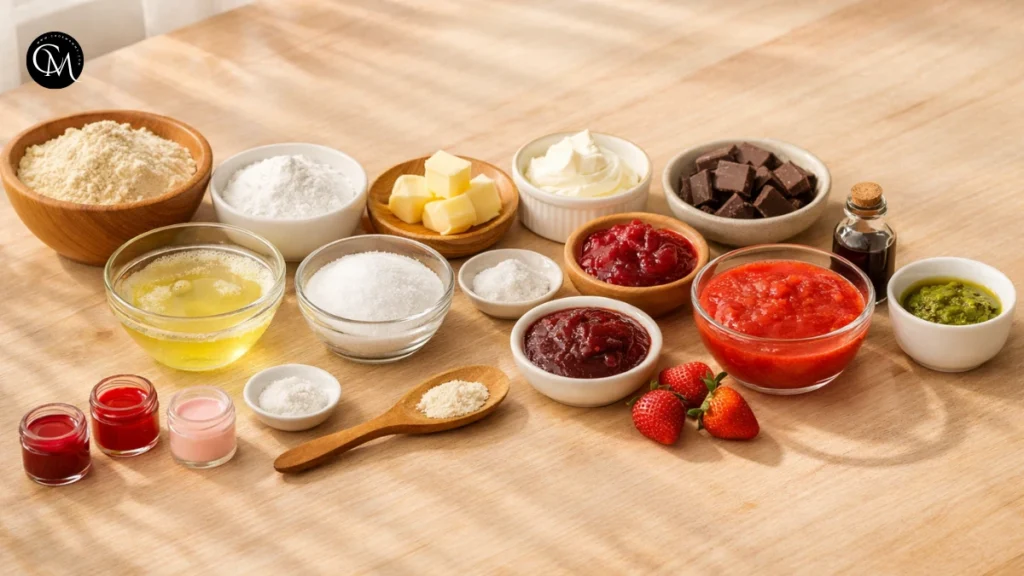
Ingredients List
A great macaron starts with precision and quality ingredients. Each component plays a key role in structure and flavor.
For the macaron shells:
- 100 g almond flour – fine and smooth for delicate texture
- 100 g powdered sugar – ensures sweetness and structure
- 75 g egg whites (room temperature) – helps create stable meringue
- 100 g granulated sugar – stabilizes peaks
- 1/4 tsp cream of tartar (optional) – improves meringue stability
- Gel food coloring – for soft romantic tones like pink or red
For fillings (choose flavors below):
- Unsalted butter
- Cream cheese
- Dark or white chocolate
- Raspberry jam
- Strawberry puree
- Pistachio paste
- Vanilla extract
Substitution ideas:
- Almond flour → finely ground sunflower seed flour (nut-free option)
- Buttercream → dairy-free plant-based butter
- Sugar → coconut sugar for fillings (not shells)
Timing
- Preparation time: 30 minutes
- Baking time: 15 minutes per batch
- Resting time: 30–45 minutes
- Total time: About 1 hour 30 minutes
Compared to most homemade desserts, macarons require a bit more patience, but they bake quickly and reward precision with impressive results.
Step-by-Step Instructions
Step 1: Prepare and sift the dry ingredients
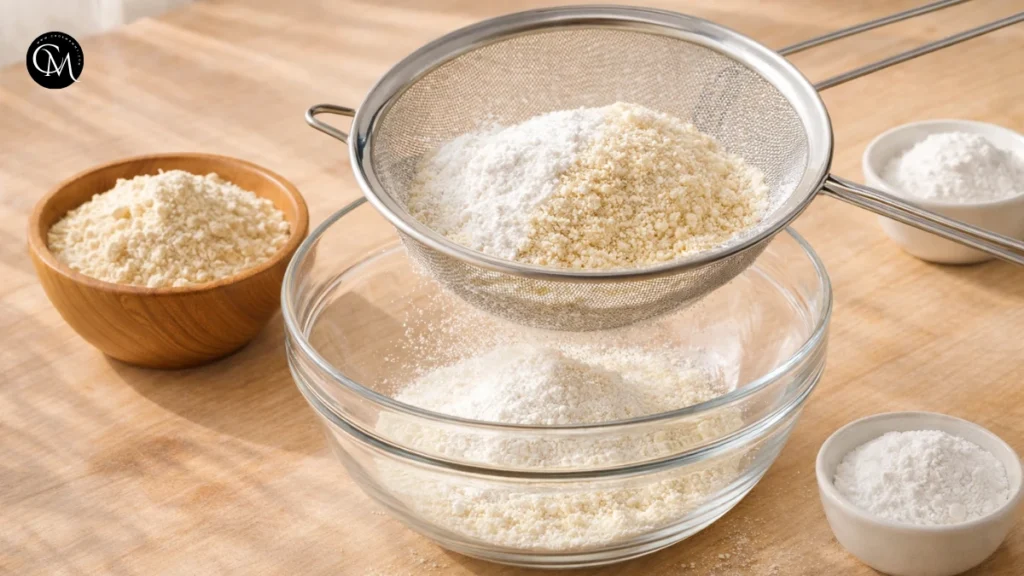
Start by weighing the almond flour and powdered sugar for accuracy macarons rely heavily on precise ratios. Sift both ingredients together at least twice using a fine-mesh sieve. This removes any large almond particles and prevents dense spots in the batter. If you notice coarse bits left behind, discard them rather than forcing them through the sieve. Smooth, airy dry ingredients are the foundation of delicate, even shells and help prevent bumpy tops or cracks during baking.
Step 2: Make the meringue
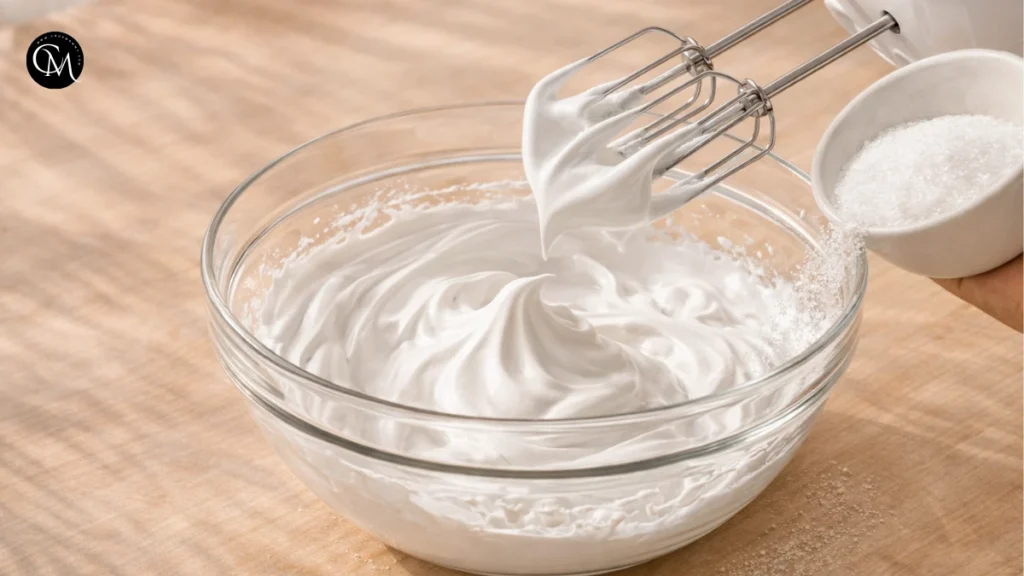
Place room-temperature egg whites in a clean, grease-free bowl and beat on medium speed until foamy. Slowly add the granulated sugar in small increments rather than all at once this stabilizes the meringue and improves structure. Continue whipping until the mixture becomes glossy and forms stiff peaks that hold their shape when the whisk is lifted. The meringue should look smooth and slightly elastic, not dry or grainy. Properly whipped meringue is what creates the iconic macaron “feet” and gives the shells their light interior.
Step 3: Fold the batter (macaronage)
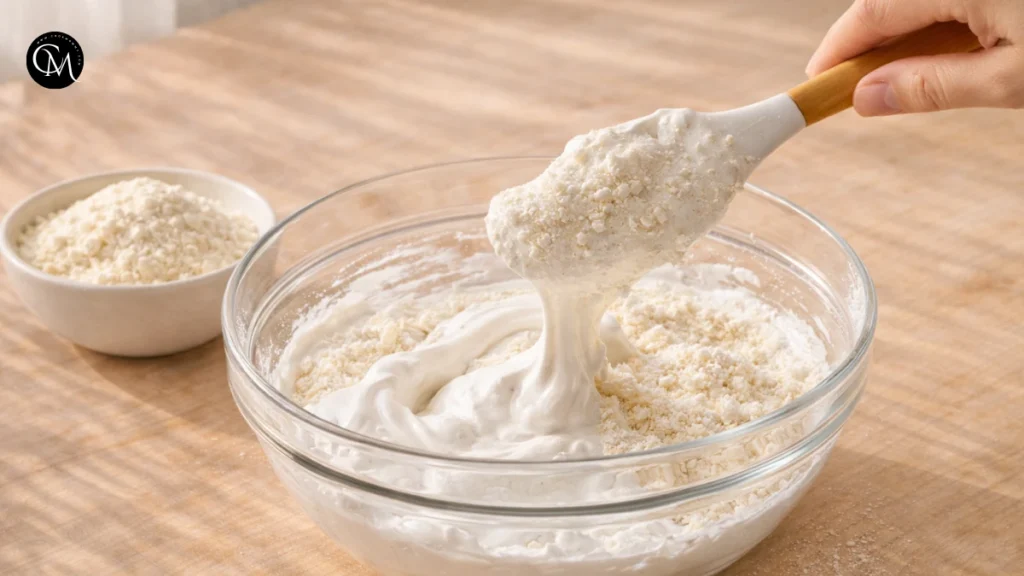
Add the sifted dry mixture to the meringue in two portions. Using a spatula, gently fold from the bottom upward, pressing lightly against the bowl to remove excess air. This stage is where many bakers struggle aim for a batter that flows slowly like lava and forms a ribbon that disappears into itself within about 10 seconds. If the batter is too thick, the shells will have peaks; if too runny, they’ll spread and lose structure. Take your time and stop mixing as soon as the texture is just right.
Step 4: Pipe the shells
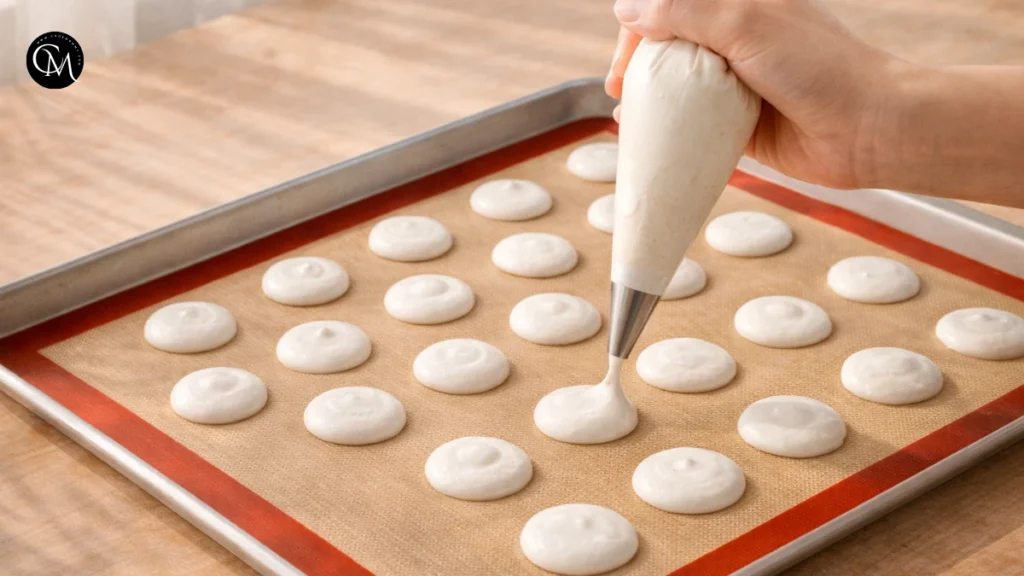
Transfer the batter into a piping bag fitted with a round tip. Hold the bag vertically and pipe small, even circles onto parchment paper or a silicone mat. Try to keep consistent pressure for uniform sizes. Once piped, tap the baking tray firmly but gently on the counter a few times this releases trapped air bubbles and smooths the surface. Use a toothpick to pop any visible bubbles for cleaner shells.
Step 5: Rest before baking
Let the piped shells rest at room temperature for 30–45 minutes, or until the tops feel dry to the touch and no batter sticks to your finger. This resting phase allows a thin skin to form, which is essential for achieving the crisp outer shell and the signature rise. Skipping or shortening this step is one of the most common causes of cracked macarons.
Step 6: Bake carefully
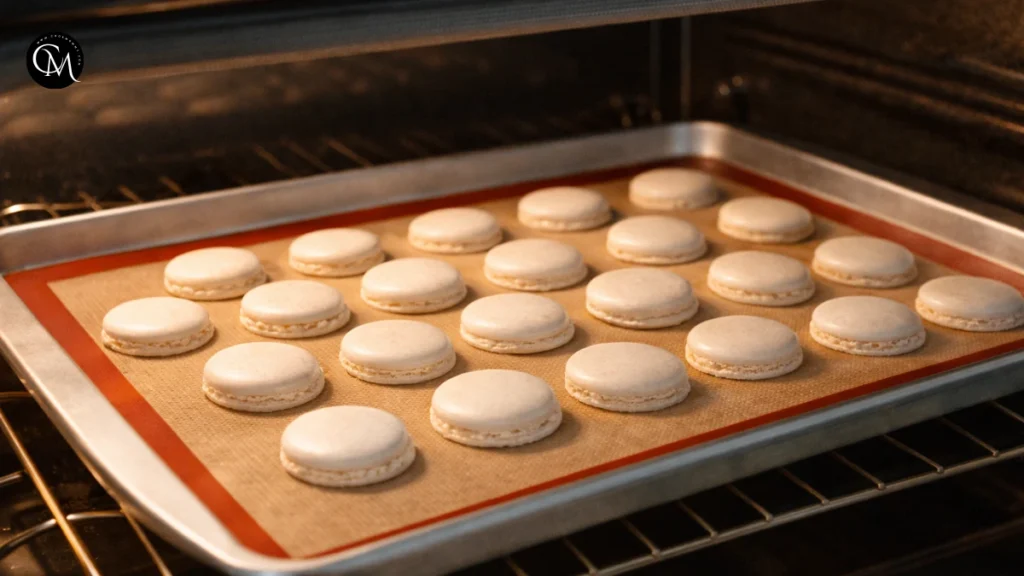
Preheat your oven to 150–160°C and ensure the temperature is stable before placing the tray inside. Bake one tray at a time on the middle rack for even heat distribution. After about 5–7 minutes, you should see the macarons begin forming their “feet.” Avoid opening the oven door early, as sudden temperature changes can cause sinking or cracking. The shells are ready when they lift easily from the parchment and feel set but not browned.
Step 7: Cool and fill
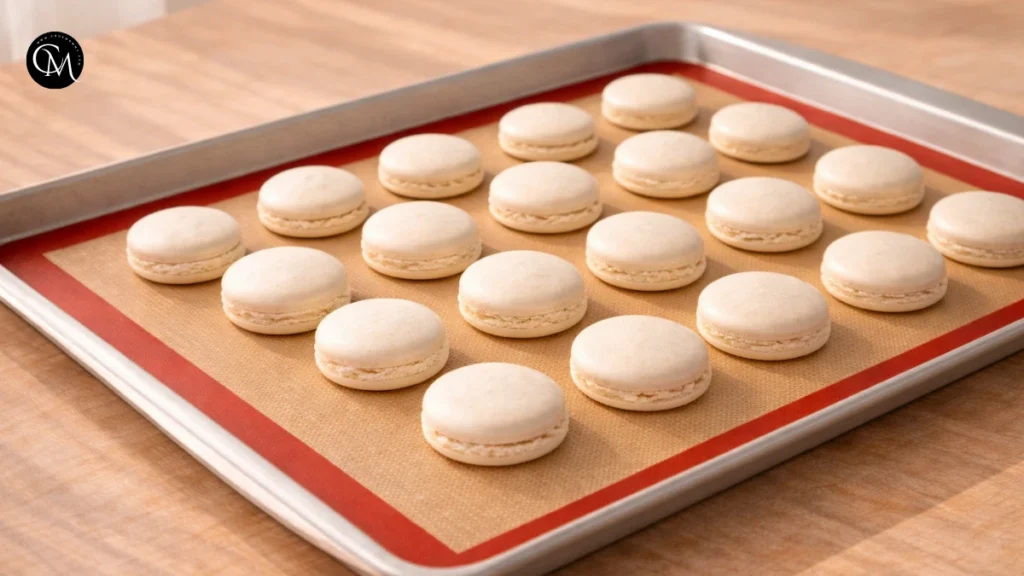
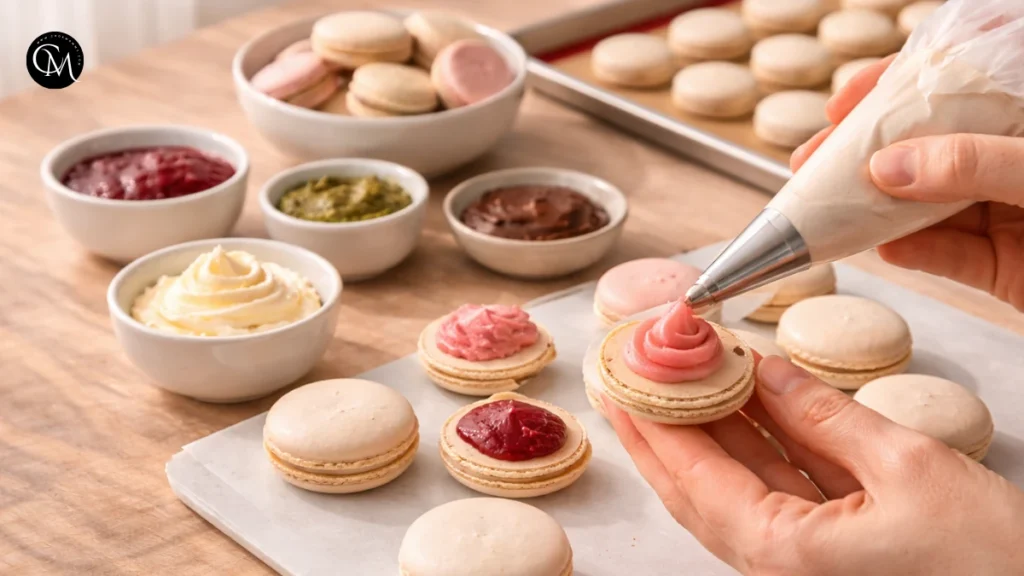
Allow the shells to cool completely on the baking tray before attempting to remove them warm shells are fragile and may stick or break. Once cooled, pair shells of similar size for a balanced look. Pipe your chosen filling onto one shell and gently sandwich with another, pressing just enough for the filling to spread to the edges. For best flavor and texture, let filled macarons rest in the refrigerator for several hours before serving; this maturation process softens the interior slightly and enhances taste.
valentines macarons recipe Flavor Ideas
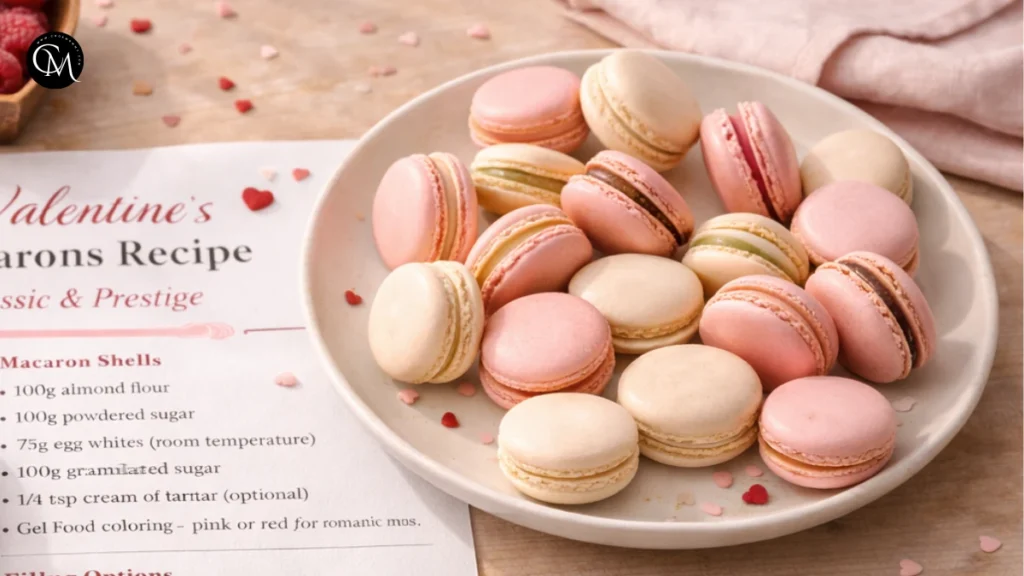
- Strawberry cream – sweet, romantic, and familiar
- Raspberry dark chocolate – tangy meets rich
- Rose vanilla – delicate floral notes
- Pistachio honey – nutty and slightly earthy
- Red velvet cream cheese – indulgent and bold
- White chocolate passion fruit – sweet-tart contrast
- Salted caramel – balanced sweetness with depth
Nutritional Information
Approximate values per macaron:
- Calories: 90–110
- Carbohydrates: 12 g
- Sugar: 10 g
- Fat: 4–5 g
- Protein: 2 g
valentines macarons are an indulgent treat rather than an everyday snack. Their small size naturally supports portion control, making them a lighter dessert option compared to cakes or pastries.
Healthier Alternatives
Lower sugar options
- Reduce sweetness in fillings rather than shells
- Use fruit-based fillings for natural sweetness
Dairy-free
- Plant-based buttercream
- Coconut cream fillings
Gluten-free
- Traditional macarons are naturally gluten-free
For children
- Use mild flavors like vanilla or strawberry
- Reduce artificial coloring
For seniors
- Use softer fillings and slightly thinner shells
These swaps preserve flavor while making the recipe more inclusive.
Serving Suggestions
- Arrange macarons in a heart-shaped box for a romantic presentation
- Pair with tea, espresso, or hot chocolate
- Add to dessert boards with fruit and chocolate
- Use as edible gifts with handwritten notes
For a memorable Valentine’s experience, serve them alongside a simple homemade drink or candlelit setting.
Common Mistakes to Avoid
- Skipping ingredient measurements
Precision is critical macarons depend on exact ratios. - Overmixing the batter
Leads to flat shells and no feet. - Under-resting the shells
Cracks form if the skin doesn’t develop. - High oven temperature
Causes browning and uneven texture. - Using liquid food coloring
Adds moisture and disrupts structure. - Filling too early
Warm shells absorb moisture and lose texture.
Storing Tips for the valentines macarons recipe
- Store filled macarons in an airtight container in the fridge for up to 3 days
- Let them sit at room temperature before serving for best flavor
- Freeze unfilled shells for up to one month
- Prepare fillings a day in advance for convenience
Proper storage enhances flavor as fillings slightly soften the shells over time.
Conclusion
This valentines macarons recipe turns a famously delicate dessert into a rewarding, approachable baking project. With the right techniques, quality ingredients, and thoughtful flavor choices, you can create treats that feel personal, elegant, and truly special. From strawberry cream to salted caramel, each variation adds its own charm and character to your celebration.
Try the valentines macarons recipe, experiment with flavors, and make it your own. Share your results in the comments, leave a review to help other bakers, and subscribe for more creative recipes and seasonal baking inspiration. Your next favorite dessert might be just one batch away.
FAQs
1. Why do my macarons crack?
Cracking usually happens when shells don’t rest long enough or oven temperature is too high.
2. Can I make macarons without almond flour?
Yes, sunflower seed flour works as a nut-free alternative, though color may vary.
3. How far in advance can I prepare them?
You can make shells two days ahead and store them unfilled.
4. Why are my macarons hollow?
Overwhipped meringue or high oven heat can create hollow shells.
5. What’s the best filling for beginners?
Simple vanilla buttercream or chocolate ganache is easiest and stable.
6. Do macarons need refrigeration?
Yes, especially when filled with cream or fruit-based fillings.
7. How do I get perfect round shapes?
Use a piping template under parchment paper and hold the bag vertically.
Tried it before ?
There are no reviews yet. Be the first one to write one.