
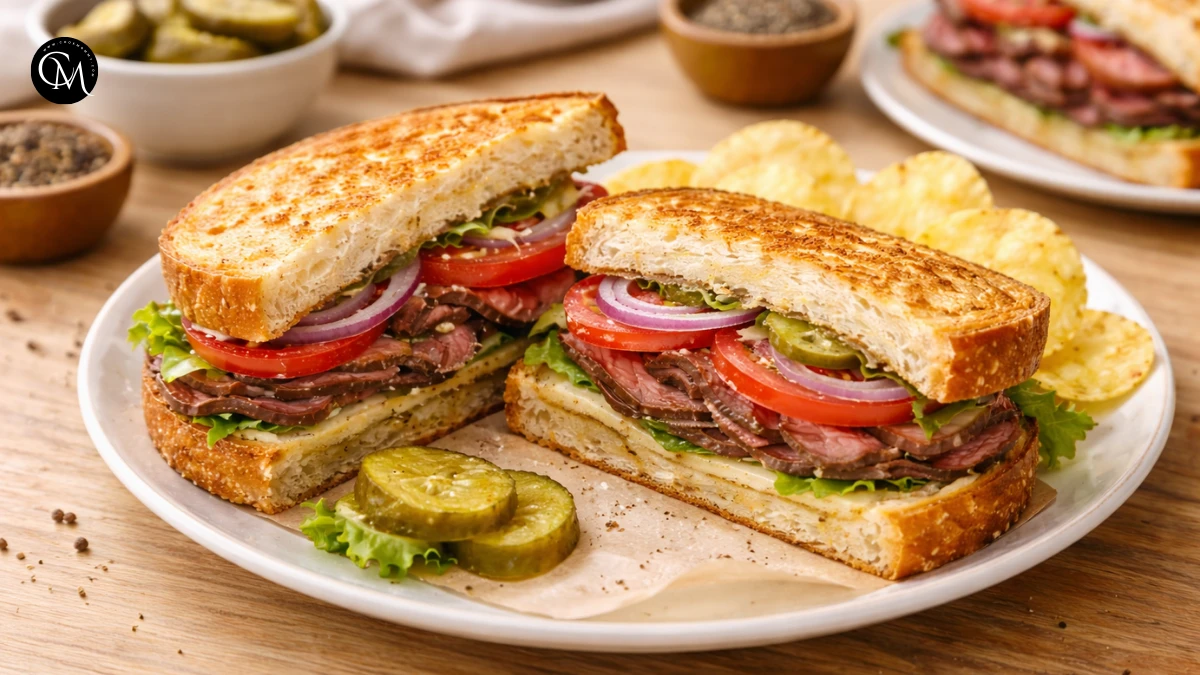
Roast Beef Sandwich: 5 Best Ways to Boost Flavor
What if the difference between a forgettable sandwich and one you crave every week comes down to just a few technique upgrades? Many home cooks assume a roast beef sandwich is simply about layering meat and bread, but small decisions like how the beef is sliced, what fat you add, and how textures are balanced can dramatically change the final result.
This Roast Beef Sandwich recipe is designed to help you build flavor intentionally, not accidentally. You’ll learn how to choose ingredients, layer them for contrast, and apply simple kitchen tricks that elevate both texture and taste. Whether you’re preparing lunch for the family, a quick dinner, or a weekend gathering, this guide turns a classic Roast Beef Sandwich into a consistently satisfying, restaurant-level meal without complexity.
Table of Contents
Ingredients List
A great sandwich begins with thoughtful ingredients. Each component contributes aroma, moisture, and texture.
Core ingredients
- Thinly sliced roast beef (400–500 g), preferably from top round or sirloin
- Fresh sandwich bread, ciabatta, or baguette
- Sharp cheddar or provolone cheese
- Caramelized onions or thin red onion slices
- Crisp lettuce or arugula
- Ripe tomato slices
- Dijon mustard or horseradish sauce
- Mayonnaise or aioli
- Butter or olive oil (for toasting bread)
- Salt and freshly cracked black pepper

Flavor boosters
- Pickles or pickled onions for acidity
- Roasted garlic spread for depth
- Fresh herbs like parsley or thyme
Substitution ideas
- Swap beef for leftover roast for a homemade touch
- Use whole-grain bread for added fiber
- Replace mayo with Greek yogurt sauce for a lighter version
- Try dairy-free cheese alternatives if needed
Choose ingredients that smell fresh and vibrant. Quality beef and bread alone can transform the entire Roast Beef Sandwich experience.
Timing
- Preparation time: 15 minutes
- Cooking/toasting time: 10 minutes
- Total time: 25 minutes
Compared with many hot sandwich recipes that take 40–50 minutes, this version is efficient yet still layered in flavor. Most time goes into prepping toppings and warming the beef gently.
Step-by-Step Instructions
Step 1: Prepare the Bread Base
Start by slicing your bread evenly to create two sturdy halves. Lightly butter each side or brush with olive oil, then toast in a skillet or oven until the surface turns golden and crisp while the inside stays soft.
Pro tip: Medium heat is best. High heat browns the outside too quickly and leaves the center dry.
Why it matters: Toasted bread forms a protective barrier against sauces and juices, preventing sogginess while adding a gentle, nutty flavor that enhances the overall sandwich.
Step 2: Warm the Beef Gently
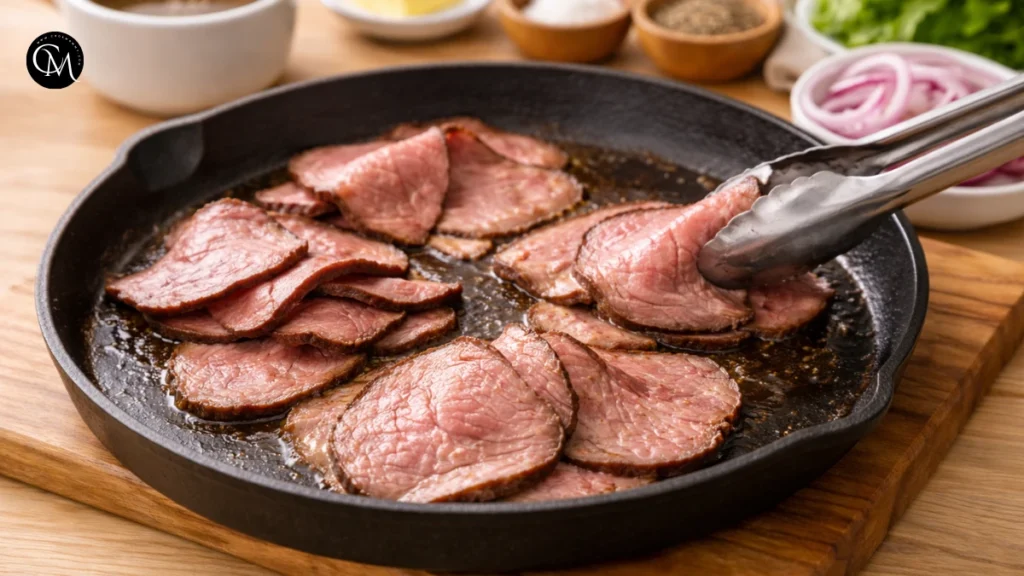
Place thin slices of roast beef in a skillet over low heat for 1–2 minutes, or briefly dip them into warm beef broth.
Pro tip: Cover the pan for a few seconds to trap moisture and keep the meat tender.
Why it matters: Gentle warming reactivates the beef’s aroma and improves juiciness. High heat tightens the fibers, making the meat dry and chewy.
Step 3: Build the Flavor Spread
In a small bowl, combine Dijon mustard with mayonnaise or Greek yogurt. Stir until smooth and creamy, then spread a thin, even layer on both sides of the bread.
Pro tip: Add a squeeze of lemon juice or a pinch of garlic powder for extra depth.
Insight: A balanced spread delivers creaminess, acidity, and subtle sharpness three elements that bring the sandwich together and highlight the beef rather than overpower it.
Step 4: Layer Cheese and Beef Strategically
Place the cheese directly onto the warm bread first, then arrange the warmed beef slices over it in soft folds rather than flat layers.
Pro tip: Folding the beef traps air and creates a juicier bite.
Why it matters: The heat from the meat slightly melts the cheese, creating a cohesive layer that binds the sandwich and improves mouthfeel.
Step 5: Add Crunch and Freshness
Layer lettuce, tomato slices, and onions on top of the beef. Add pickles or pickled onions if you enjoy a tangy contrast.
Pro tip: Pat tomatoes dry before adding them to avoid excess moisture.
Why it matters: Fresh vegetables introduce brightness and texture, balancing the richness of the meat and cheese. Alternating soft and crunchy ingredients keeps every bite dynamic.
Step 6: Season Properly
Lightly sprinkle salt and freshly cracked black pepper over the vegetables just before closing the sandwich.
Pro tip: Seasoning vegetables separately enhances their natural sweetness and prevents them from tasting flat.
Why it matters: Even simple toppings release more flavor when seasoned, making the entire sandwich taste fuller and more intentional.
Step 7: Finish and Press Lightly
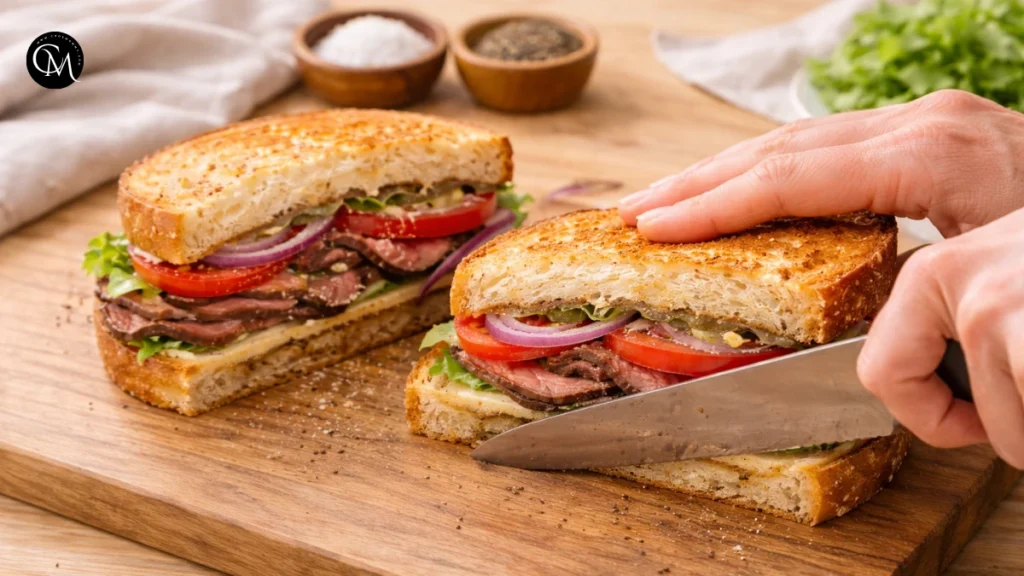
Close the sandwich and press gently with your hands or a spatula. Let it rest for 30–60 seconds, then slice diagonally with a sharp knife.
Pro tip: A short rest helps the layers settle and prevents fillings from sliding out.
Insight: Gentle pressing stabilizes the sandwich, improves bite control, and ensures every mouthful includes bread, beef, and toppings in the right proportion without flattening the texture.




Nutritional Information
Approximate values per serving:
| Nutrient | Amount |
|---|---|
| Calories | 520–600 kcal |
| Protein | 32 g |
| Carbohydrates | 40 g |
| Fat | 24 g |
| Fiber | 4–6 g |
| Sodium | 900–1,100 mg |
This Roast Beef Sandwich offers a strong protein base and balanced macronutrients. Bread and sauces influence total calories most, so small adjustments like whole-grain bread or lighter spreads can shift nutrition without sacrificing taste.
Healthier Alternatives for the Roast Beef Sandwich
A flavorful sandwich can still align with different dietary goals.
Lower-calorie approach
- Use lean roast beef cuts
- Replace mayonnaise with yogurt-based sauce
- Reduce cheese portion while adding extra vegetables
Whole-grain option: Choose multigrain bread to increase fiber and satiety
Gluten-free version: Use certified gluten-free bread or lettuce wraps
Dairy-free alternative: Replace cheese with avocado slices or plant-based cheese
Family-friendly adaptation
- Add mild cheese and roasted vegetables for kids
- Keep sauces gentle rather than spicy
For seniors or softer texture needs
- Use tender bread like brioche
- Slice ingredients thinner for easier chewing
The key is preserving the core flavor balance while adjusting for personal needs.
Serving Suggestions
The beauty of a Roast Beef Sandwich lies in its versatility.
- Pair with a warm bowl of vegetable soup for a comforting meal
- Serve with roasted potato wedges or sweet potato fries
- Add a side salad with vinaigrette to balance richness
- Offer small sandwich halves for gatherings or picnics
- Include a dipping sauce like au jus or garlic yogurt
For a more elevated presentation, stack the sandwich higher and secure with a skewer, then plate with pickled vegetables. Small visual details make it feel special.
Common Mistakes to Avoid
Even experienced cooks can overlook small details.
1. Using cold beef straight from the fridge: Cold meat dulls flavor. Gentle warming improves aroma and texture.
2. Overloading sauces: Too much moisture makes bread soggy and masks the beef’s taste.
3. Skipping seasoning on vegetables: A pinch of salt enhances tomato and lettuce flavor significantly.
4. Choosing bread that’s too soft: Weak bread collapses under fillings. Light toasting improves structure.
5. Slicing beef too thick: Thin slices create better mouthfeel and distribute flavor evenly.
6. Ignoring texture balance: A great Roast Beef Sandwich needs creamy, crunchy, and tender elements working together.
Storing Tips for the Roast Beef Sandwich
Proper storage keeps ingredients fresh and ready.
- Store cooked roast beef in an airtight container for up to 3 days
- Keep sliced vegetables separate to avoid moisture buildup
- Toast bread just before assembling for best texture
- If preparing ahead, assemble without tomatoes and sauces, then add them before serving
- Freeze leftover roast beef in portioned packs for quick future sandwiches
Maintaining separation between wet and dry components preserves the integrity of your sandwich.
Conclusion
A well-made Roast Beef Sandwich is more than a quick meal it’s a lesson in balance, layering, and thoughtful ingredient choice. By warming the beef gently, selecting sturdy bread, and combining creamy, crisp, and savory elements, you create a sandwich that feels both comforting and refined. These simple techniques consistently boost flavor without adding complexity.
Try this recipe at home and experiment with your favorite variations. Share your experience in the comments, leave a review to help other readers, and subscribe for more practical, flavor-focused recipes and kitchen insights designed for real cooks.
FAQs
1. What is the best cut of beef for a Roast Beef Sandwich?
Top round, sirloin, or leftover roasted beef work best. They slice thinly and deliver rich flavor without excessive fat.
2. Can I make this sandwich ahead of time?
Yes, but keep sauces and tomatoes separate until serving to prevent sogginess.
3. How do I keep the beef tender?
Warm it gently over low heat or in broth. Avoid microwaving at high power.
4. What bread works best?
Ciabatta, baguette, or sturdy sandwich bread provide structure and hold fillings well.
5. How can I add more flavor without more calories?
Use herbs, pickled vegetables, or mustard instead of heavier sauces.
6. Is this recipe suitable for meal prep?
Absolutely. Prepare ingredients in advance and assemble quickly when needed.
7. What cheese pairs best with roast beef Sandwich?
Provolone, cheddar, Swiss, or blue cheese all complement beef’s savory notes, depending on your flavor preference.
Tried it before ?
There are no reviews yet. Be the first one to write one.