
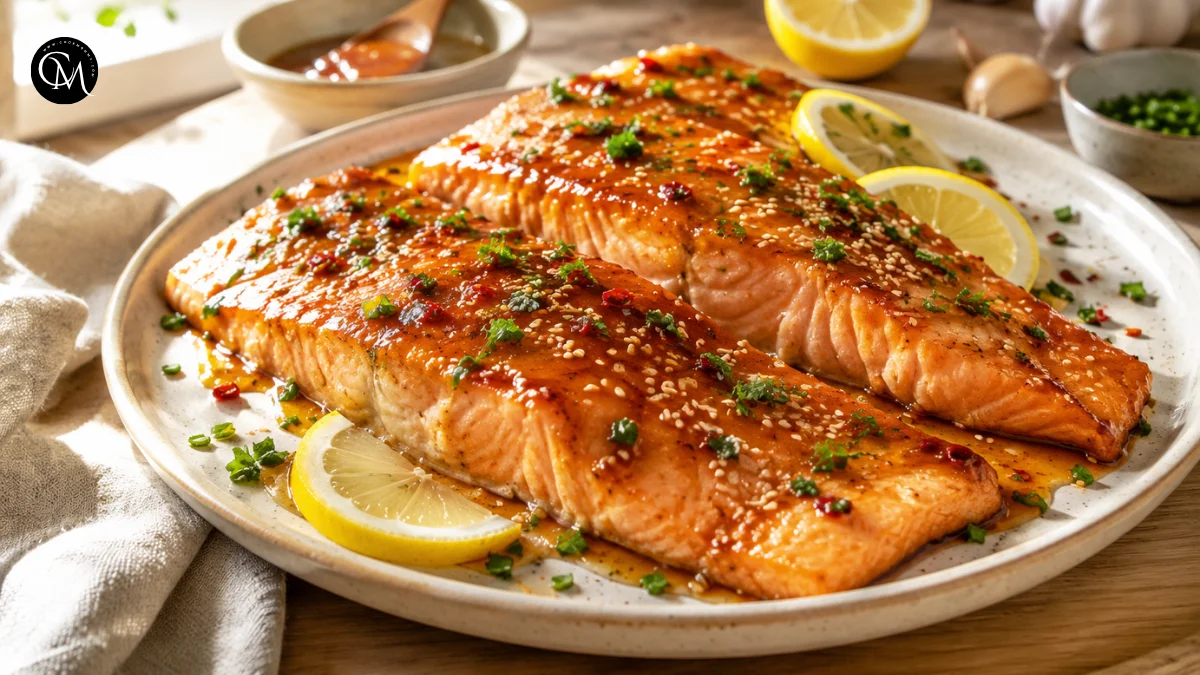
honey glazed salmon: Why 4 Ingredients Work So Well
Can just four ingredients really turn a simple piece of fish into a glossy, restaurant-style dinner in under 30 minutes? With honey glazed salmon, the answer is yes. This recipe works because it balances sweetness, savory depth, acidity, and rich salmon flavor without needing a long ingredient list or complicated technique.
The beauty of honey glazed salmon is that every ingredient has a clear job. Honey creates shine and gentle sweetness. Soy sauce adds salty umami. Garlic brings warmth and aroma. Lemon juice brightens the glaze so it does not taste heavy. When these four ingredients meet a hot pan and tender salmon fillets, the result is sticky, flavorful, and satisfying.
This is the kind of recipe I love for busy nights because it feels special but stays simple. You do not need fancy tools, rare ingredients, or advanced cooking skills. You only need good timing, a balanced glaze, and a few smart cooking tips.
Table of Contents
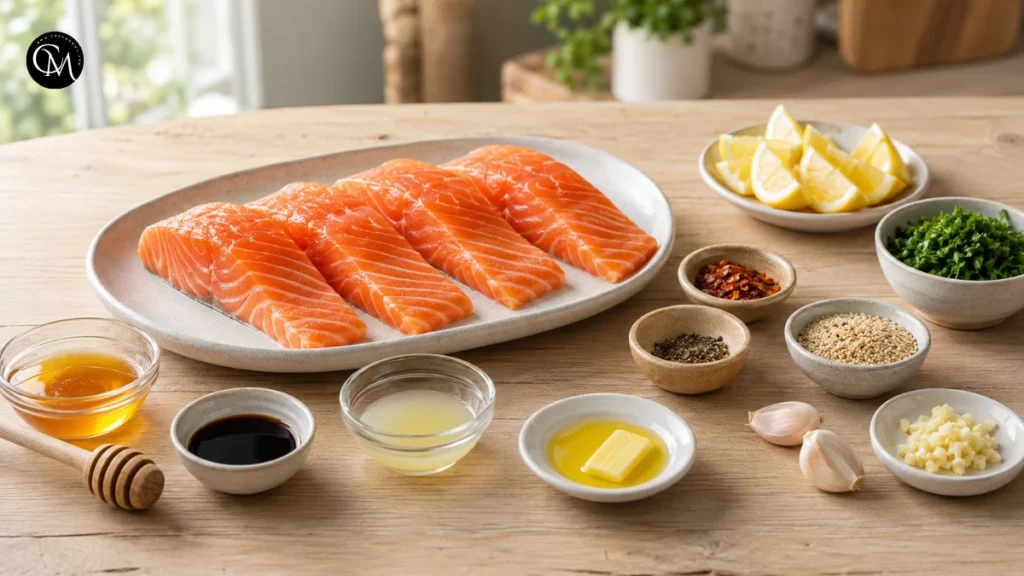
Ingredients List
For this honey glazed salmon, you only need a short list of simple ingredients, but quality matters.
Main Ingredients
- 4 salmon fillets, about 5–6 oz each
- 3 tablespoons honey
- 2 tablespoons soy sauce
- 2 garlic cloves, finely minced
- 1 tablespoon fresh lemon juice
Optional Additions
- 1 teaspoon olive oil or butter for cooking
- Black pepper to taste
- Red pepper flakes for gentle heat
- Fresh parsley, green onions, or sesame seeds for garnish
- Lemon wedges for serving
Ingredient Substitutions
If you want a lower-sodium version, use reduced-sodium soy sauce. For a gluten-free honey glazed salmon, choose tamari instead of regular soy sauce. Maple syrup can replace honey, though the glaze will taste slightly deeper and less floral. Lime juice works instead of lemon if you want a brighter, sharper finish.
Fresh garlic gives the best flavor, but garlic powder can work in a pinch. Use about ½ teaspoon. Avoid adding too much honey, because the glaze may burn before the salmon cooks through.
Timing
- Preparation Time: 10 minutes
- Cooking Time: 12–15 minutes
- Total Time: 22–25 minutes
Many salmon recipes take 35–45 minutes when they include marinating, baking, or making a separate sauce. This honey glazed salmon is faster because the glaze forms directly in the pan while the fish cooks. That means less cleanup and more flavor in every bite.
Step-by-Step Instructions
Step 1 – Prepare Ingredients
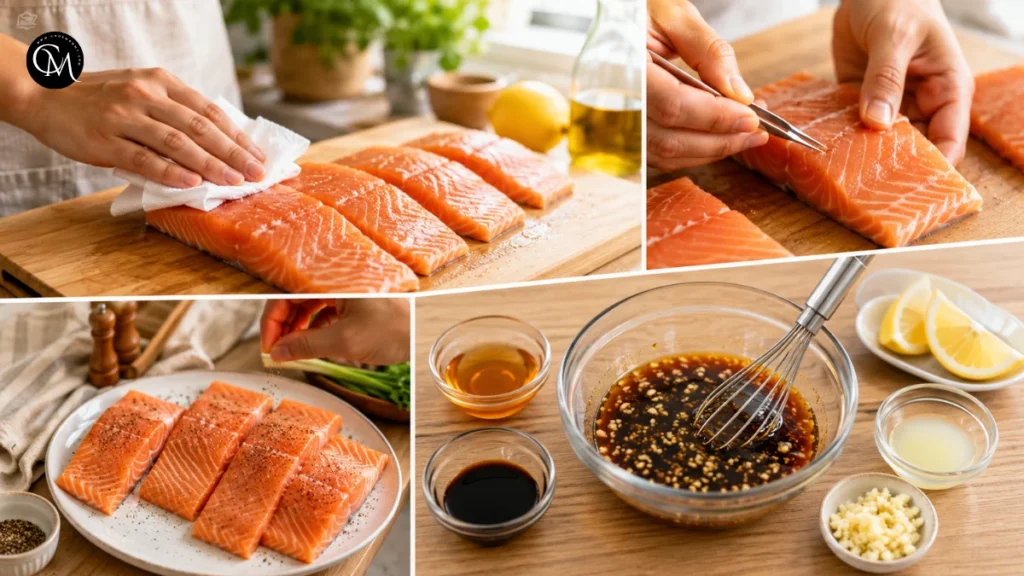
Pat the salmon fillets dry with paper towels. This step matters more than many people think. If the surface is wet, the fish will steam instead of sear, and the glaze will not cling as well.
Check the fillets for small bones, then season lightly with black pepper. You do not need much salt because soy sauce already brings enough savory flavor. In a small bowl, whisk together honey, soy sauce, minced garlic, and lemon juice until smooth.
Good preparation makes honey glazed salmon easier to cook because everything moves quickly once the pan is hot.
Step 2 – Build Flavor Base
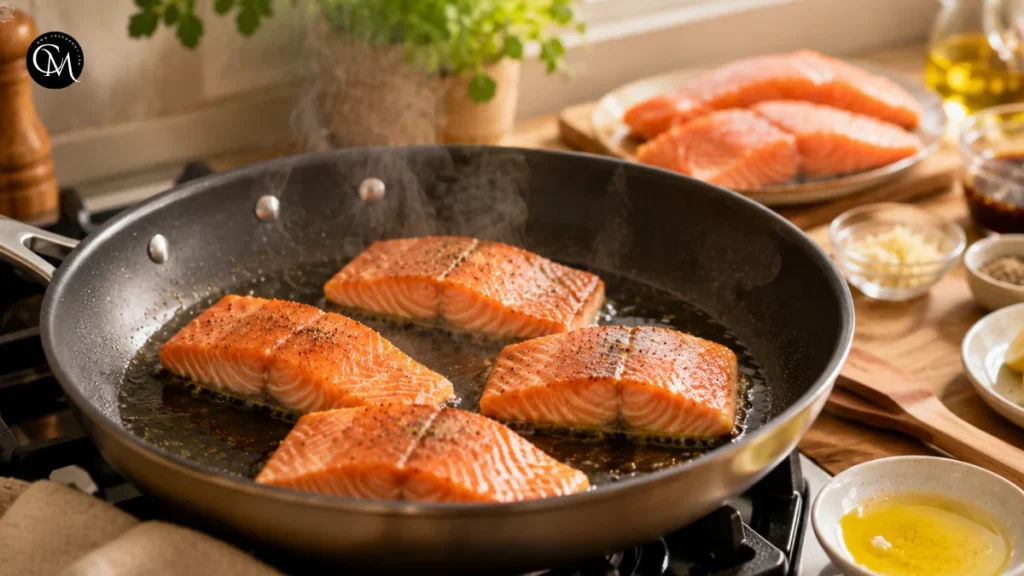
Heat a nonstick or stainless-steel skillet over medium heat. Add a small amount of olive oil or butter. When the fat looks shiny, add the salmon fillets skin-side down if they have skin.
Let the fish cook without moving it too much. This helps create a better texture and keeps the fillets from breaking. The first few minutes are important because salmon is delicate, and a steady pan temperature gives you more control.
The cooking science is simple: heat firms the proteins in the salmon while the surface begins to brown. That gentle browning adds depth, making honey glazed salmon taste richer than a plain baked fillet.
Step 3 – Cook the Main Ingredient
Cook the salmon for about 4–5 minutes on the first side, depending on thickness. Flip carefully using a thin spatula. If the fillet sticks, wait another 30 seconds before trying again.
After flipping, cook for another 2–3 minutes. The salmon should look opaque around the edges but still slightly tender in the center. Overcooking is the easiest way to make salmon dry, so watch closely.
For the best texture, aim for moist flakes rather than a firm, dry center. If you use a thermometer, many home cooks prefer salmon around 125°F to 130°F for a moist finish, or closer to 145°F for a fully cooked texture.
Step 4 – Combine Everything
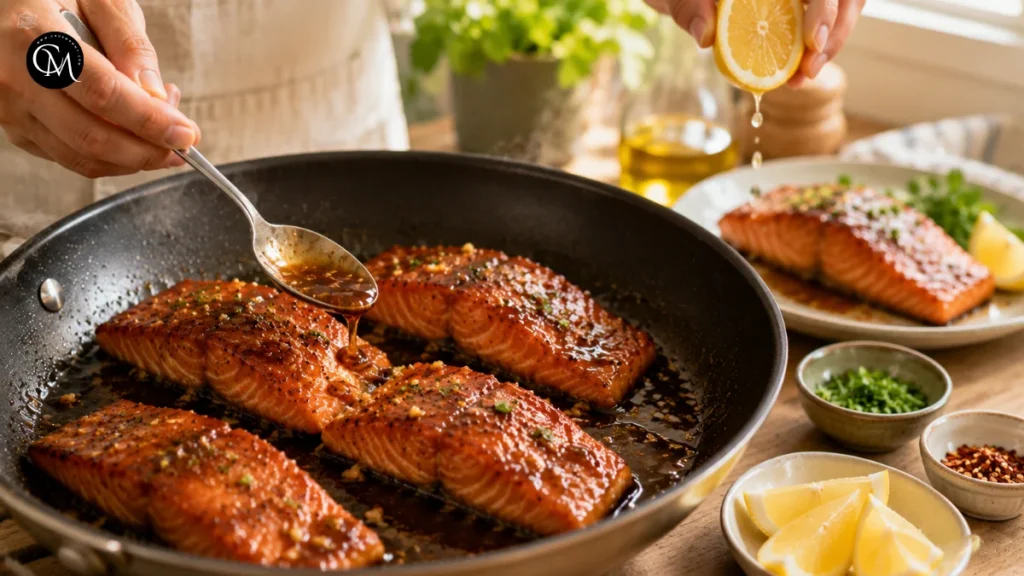
Lower the heat slightly and pour the honey glaze mixture into the pan. Let it bubble gently around the salmon. Spoon the glaze over the fillets several times so the sauce coats the top and sides.
This is where honey glazed salmon becomes glossy and flavorful. The honey thickens, the garlic softens, and the soy sauce blends with the lemon juice. The balance matters: sweet honey needs salty soy sauce and bright lemon to keep the glaze from tasting flat.
Do not walk away during this step. Honey can darken quickly, especially in a hot pan. If the glaze thickens too fast, add one tablespoon of water and swirl the pan.
Step 5 – Finish & Adjust Seasoning
When the salmon is cooked and the glaze looks shiny, remove the pan from the heat. Spoon extra sauce over each fillet. Add a squeeze of fresh lemon juice if you want a brighter finish.
Chef-style advice: taste the glaze before serving. If it feels too sweet, add lemon. If it feels too salty, add a tiny splash of water or a little more honey. If it tastes mild, add black pepper, chili flakes, or fresh herbs.
Serve honey glazed salmon right away while the glaze is warm and silky.
Nutritional Information
Approximate nutrition per serving:
| Nutrient | Amount |
|---|---|
| Calories | 330–380 |
| Protein | 30–35g |
| Carbohydrates | 14–18g |
| Fat | 16–22g |
| Sugar | 12–16g |
| Sodium | 450–650mg |
These values depend on the size of the salmon fillets and the type of soy sauce used. Honey glazed salmon provides a good amount of protein and satisfying healthy fats from the fish. The glaze does contain sugar from honey, so portion control helps keep the dish balanced.
For a lighter meal, serve it with steamed vegetables, cucumber salad, or cauliflower rice. For a heartier dinner, pair it with rice, noodles, or roasted potatoes.
Healthier Alternatives
You can easily adjust honey glazed salmon to fit different needs without losing flavor.
- For a lower-sugar version, reduce the honey to 2 tablespoons and add a little orange juice or lemon juice for balance. The glaze will be thinner but still tasty.
- For a gluten-free version, replace soy sauce with tamari or coconut aminos. Coconut aminos are slightly sweeter, so you may want to reduce the honey a little.
- For children, keep the flavors mild and skip chili flakes. Serve the salmon with rice and soft vegetables for an easy plate. For seniors, choose boneless fillets and cook the fish until it flakes easily. For dieters, serve smaller portions with a large salad or steamed greens.
- You can also make the meal more filling by serving honey glazed salmon with brown rice, quinoa, or whole-grain noodles. These add fiber and help turn the dish into a complete dinner.
Serving Suggestions
This recipe is flexible, which is one reason honey glazed salmon works so well for weeknight meals and special dinners.
- Serve it over jasmine rice with the extra glaze spooned on top. Add steamed broccoli or green beans for color and freshness. For a lighter plate, serve it with a crisp cucumber salad, avocado slices, or roasted asparagus.
- If you want a more elegant presentation, place the salmon on a white plate, drizzle the glaze around the fish, and finish with sesame seeds, sliced green onions, and lemon wedges. The glossy sauce makes the dish look beautiful with very little effort.
For meal prep, pair honey glazed salmon with rice bowls, roasted sweet potatoes, or stir-fried vegetables. The sweet-savory glaze works especially well with carrots, snap peas, bok choy, and mushrooms.
Common Mistakes to Avoid
- Using heat that is too high Honey burns quickly. Medium heat is usually enough. If the glaze darkens too fast, lower the heat immediately.
- Skipping the drying step Wet salmon does not sear well. Always pat the fillets dry before cooking.
- Adding the glaze too early If you add the glaze at the beginning, the honey may burn before the fish is done. Add it near the end.
- Overcooking the salmon Salmon continues to cook slightly after leaving the pan. Remove it when it is just cooked through and still moist.
- Using too much soy sauce Too much soy sauce can overpower the honey and garlic. Measure carefully for a balanced honey glazed salmon.
- Forgetting acidity Lemon juice is important. It cuts through richness and keeps the glaze fresh, not heavy.
Storing Tips for the Recipe
- Store leftover honey glazed salmon in an airtight container in the refrigerator for up to 3 days. Let it cool first, but do not leave it at room temperature for too long.
- To reheat, use low heat in a covered pan with a splash of water. This helps loosen the glaze and keeps the salmon from drying out. You can also reheat it gently in the microwave at short intervals, but avoid overheating.
- For meal prep, mix the glaze ahead of time and keep it in the fridge for up to 3 days. You can also portion the salmon fillets in advance, but cook them fresh for the best texture.
- This recipe became one of my regular meals because it gives me a fast dinner that still feels homemade, balanced, and satisfying. It is simple enough for a busy evening but flavorful enough to serve to guests.
Conclusion
Honey glazed salmon proves that a great dinner does not need a long ingredient list. With only four core ingredients, you get a glossy glaze, tender fish, and a sweet-savory flavor that works for both quick meals and relaxed family dinners. The key is balance: honey for shine, soy sauce for depth, garlic for warmth, and lemon juice for brightness.
Once you learn the timing, this recipe becomes easy to repeat and customize. Serve it with rice, vegetables, salad, or noodles, and you have a complete meal in less than 30 minutes. Try this honey glazed salmon, leave a comment or review with your favorite side dish, and subscribe for more simple recipes that make everyday cooking feel special.
FAQs
Can I bake honey glazed salmon instead of pan-cooking it?
Yes. Bake at 400°F for about 12–15 minutes, then brush with glaze near the end to prevent burning.
Can I use frozen salmon?
Yes, but thaw it fully first. Pat it very dry before cooking so the glaze sticks properly.
What sides go best with honey glazed salmon?
Rice, roasted vegetables, cucumber salad, noodles, quinoa, and steamed broccoli all pair well with the sweet-savory glaze.
How do I stop the honey glaze from burning?
Use medium heat and add the glaze near the end of cooking. If needed, add a splash of water.
Can I make this recipe less sweet?
Yes. Use less honey and add extra lemon juice for brightness. The glaze will taste lighter but still flavorful.
Is honey glazed salmon good for meal prep?
Yes. Store it in the fridge for up to 3 days and reheat gently to keep the salmon moist.
Can I make honey glazed salmon without soy sauce?
Yes. Use tamari, coconut aminos, or a low-sodium alternative. Adjust honey and lemon to balance the flavor.
Tried it before ?
There are no reviews yet. Be the first one to write one.