
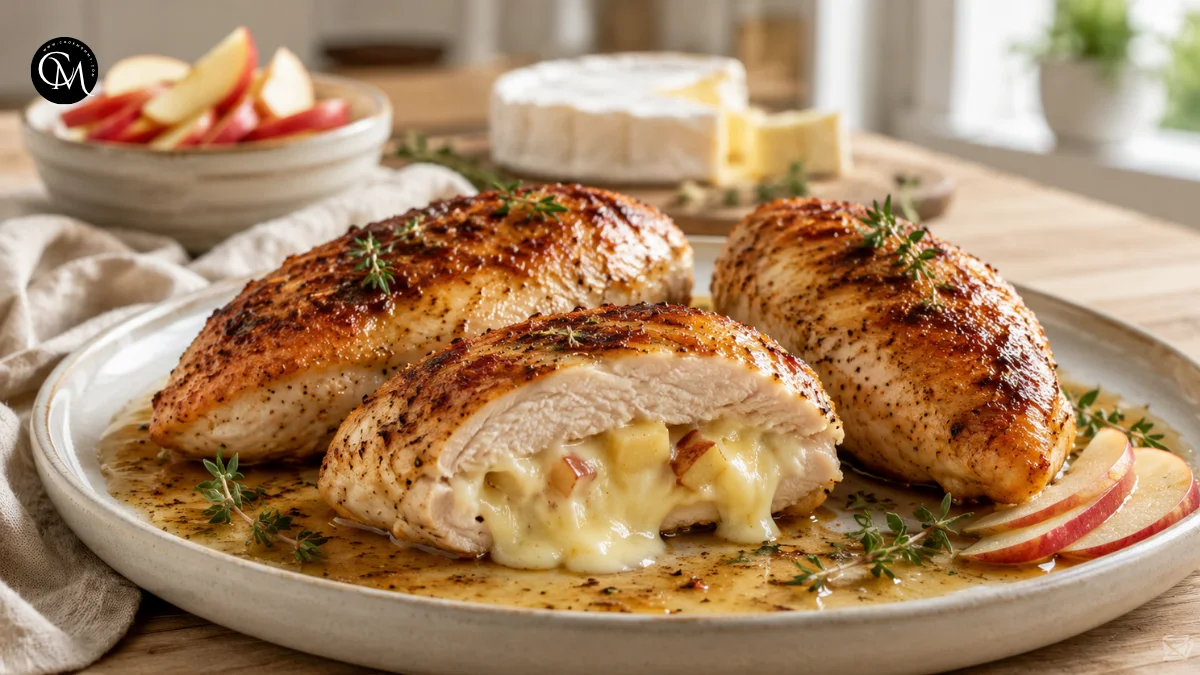
Apple and Brie Stuffed Chicken: Why 6 Steps Make It Better
Why do so many stuffed chicken breasts turn dry even though boneless chicken usually needs less than 30 minutes in the oven? The problem is rarely the filling. It is usually uneven thickness, overstuffing, weak seasoning, or cooking by time instead of temperature. This Apple and Brie Stuffed Chicken recipe solves those issues with six practical steps that keep the meat juicy while giving the center a rich, balanced flavor.
Brie Stuffed Chicken feels elegant enough for guests, yet it uses familiar ingredients and simple kitchen techniques. Crisp apple balances the richness of the Brie, fresh thyme adds an earthy aroma, and searing the chicken first gives it a beautifully browned exterior before baking.
The result is a dependable dinner that looks impressive without requiring restaurant-level skills. It is also easy to adapt with different apples, cheeses, herbs, and side dishes, making it useful for both weeknight cooking and special occasions.
Table of Contents
Ingredients List
This Brie Stuffed Chicken recipe makes four servings.
- 4 medium boneless, skinless chicken breasts, about 170–200 g each
- 120 g Brie cheese, chilled and sliced into 8 pieces
- 1 crisp apple, such as Honeycrisp, Pink Lady, or Granny Smith
- 1 tablespoon unsalted butter
- 1 teaspoon fresh thyme leaves, or ½ teaspoon dried thyme
- 1 small garlic clove, finely minced
- 1 teaspoon Dijon mustard
- ¾ teaspoon fine salt, divided
- ½ teaspoon freshly ground black pepper
- ½ teaspoon sweet paprika
- 1 tablespoon olive oil
- 60 ml chicken stock
- 1 teaspoon fresh lemon juice
- 1 teaspoon honey or maple syrup, optional
- Toothpicks or kitchen twine

Choose a firm apple that will not turn mushy during cooking. Granny Smith apples bring a lively acidity to Brie Stuffed Chicken, whereas Honeycrisp apples produce a softer, naturally sweeter flavor.
Camembert can replace Brie if you enjoy a slightly stronger cheese flavor. For a milder version, use mozzarella combined with a small spoonful of cream cheese.
Timing
- Brie Stuffed Chicken preparation time: 20 minutes
- Cooking time: 25–30 minutes
- Total time: 45–50 minutes
- Resting time: 5 minutes
Prepare the apple mixture while the oven heats to keep the recipe efficient. Compared with heavily breaded or individually rolled stuffed chicken recipes, this method requires fewer preparation steps and less cleanup.
Step-by-Step Instructions
Step 1 – Prepare the ingredients carefully
Heat the oven to 190°C or 375°F. Use clean paper towels to remove any surface moisture from the chicken breasts before seasoning them. A dry surface browns much more effectively than a damp one.
For Brie Stuffed Chicken, place each breast flat on a cutting board. Using a sharp knife, cut a deep pocket through the thickest side, stopping about 1 cm before reaching the opposite edge.
Create a wide internal pocket rather than opening the breast completely like a book. This shape holds the Brie Stuffed Chicken filling more securely. If one area is especially thick, gently pound it until the chicken has a more even thickness.
Dice the apple into small 5–7 mm pieces. Small cubes soften quickly and make the finished chicken easier to slice. Keep the Brie refrigerated until you are ready to assemble the filling because chilled cheese is less likely to escape during searing.
Step 2 – Build the apple flavor base
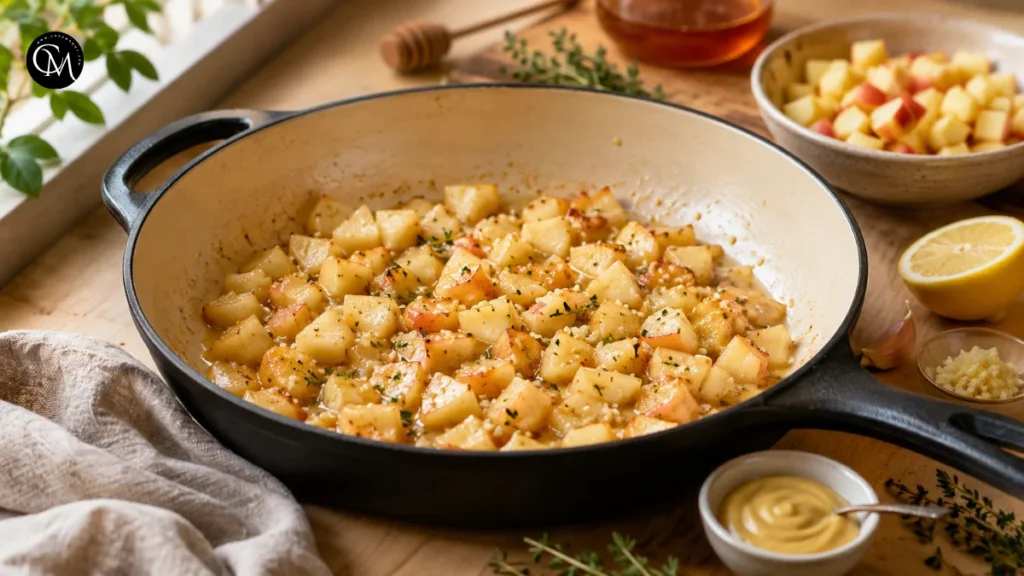
Melt the butter in an oven-safe skillet over medium heat. Add the diced apple and cook for 3–4 minutes, stirring occasionally.
The apple should soften slightly while still holding its shape. Avoid cooking it until completely tender because it will continue cooking inside the chicken.
Add the minced garlic and thyme. Cook for approximately 30 seconds, just until fragrant. Stir in the Dijon mustard, optional honey, and lemon juice. Remove the mixture from the heat and allow it to cool for a few minutes.
Raw apple can release unwanted moisture inside Brie Stuffed Chicken. Briefly sautéing the fruit concentrates its flavor and helps prevent the filling from becoming watery.
Lemon juice gives the apple mixture a fresher taste, while Dijon mustard helps unite the fruity, savory, and creamy flavors. Add honey only when the apple needs extra sweetness.
Step 3 – Season and fill the chicken
To season Brie Stuffed Chicken, mix ½ teaspoon salt with the black pepper and paprika in a small bowl.
Season the chicken inside and outside, but use only a small amount inside the pockets. Brie already contains salt, so over-seasoning the interior can make the finished dish taste unbalanced.
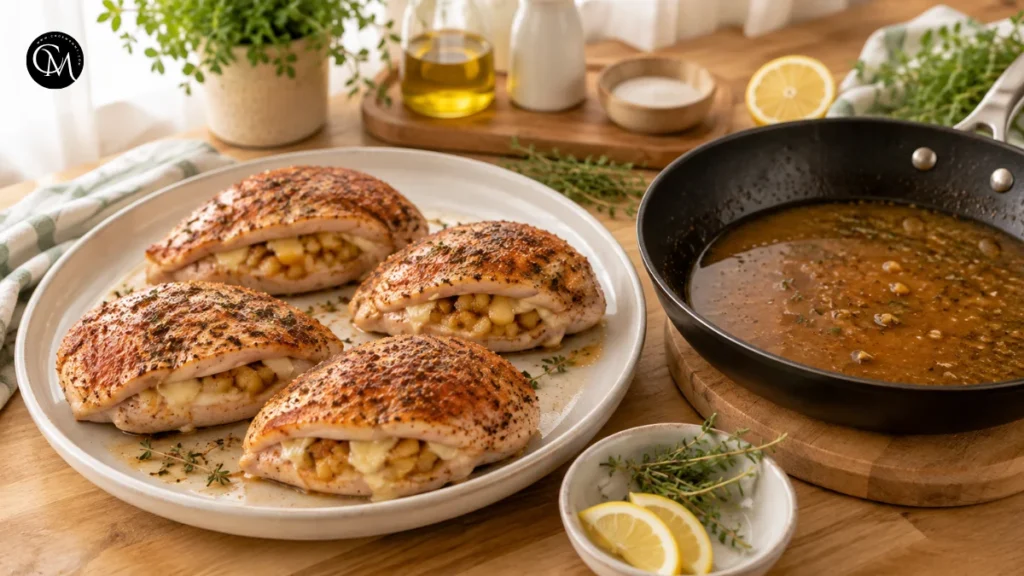
Divide the cooled apple mixture evenly among the four chicken breasts. Add two slices of Brie to each pocket, positioning the cheese behind the apple mixture rather than directly beside the opening.
Close each pocket with two or three toothpicks. Kitchen twine can also be used, especially when the pockets are wide.
Do not force every spoonful of filling inside. Overfilled Brie Stuffed Chicken leaks easily and becomes difficult to turn. Leaving a little empty space allows the cheese to soften without immediately escaping.
Step 4 – Sear for color and texture
Wipe the skillet if any sweet apple pieces remain on the bottom. Add the olive oil and heat the pan over medium-high heat. Place the chicken in the hot skillet with the smooth presentation side facing down. Sear for 3–4 minutes without moving it. Once a deep golden surface develops, turn the chicken carefully and cook the second side for approximately 2 minutes.
High heat browns the dry surface and creates roasted, savory flavor. Do not try to cook Brie Stuffed Chicken completely on the stove. Searing builds the crust, while finishing the dish in the oven cooks the center more evenly.
If the chicken sticks when you try to turn it, wait another 20–30 seconds. Properly browned chicken usually releases from the pan more easily than pale chicken.
Step 5 – Finish gently in the oven
Pour the chicken stock around the chicken breasts rather than directly over their browned surfaces. Transfer the skillet to the preheated oven and bake for 14–18 minutes. The exact time depends on the thickness of the chicken and how cold it was before cooking.
Begin checking early with an instant-read thermometer inserted into the thickest part of the meat. Avoid inserting the thermometer directly into the cheese pocket, as melted Brie may produce an inaccurate reading.
Chicken is safely cooked when the thickest part reaches 74°C or 165°F. Using temperature is more reliable than cutting the breast open, which releases both juices and melted cheese.
If the pan becomes dry, add one or two tablespoons of stock. The small amount of liquid creates a light pan sauce without making the chicken surface soggy.
Step 6 – Rest, finish, and adjust the seasoning
Transfer the cooked chicken to a clean plate and allow it to rest for 5 minutes. Remove all toothpicks or kitchen twine before serving.
Place the skillet back over medium heat as the cooked chicken rests on a separate plate. Simmer the pan juices for 1–2 minutes until slightly reduced.
Taste the sauce and adjust it with a pinch of salt, a squeeze of lemon, or a small spoonful of stock. Spoon the sauce around the chicken instead of directly over the browned top so the surface remains appealing.
Letting the chicken sit for five minutes helps it retain moisture and makes each portion easier to slice. Cutting it too soon can cause the melted filling and flavorful juices to spill out.



Nutritional Information
Approximate nutritional values per serving:
- Calories: 430
- Protein: 48 g
- Total fat: 22 g
- Saturated fat: 10 g
- Carbohydrates: 11 g
- Fiber: 1.5 g
- Sugar: 7 g
- Sodium: 650 mg
These values will vary depending on the size of the chicken breasts, the type of stock used, and the amount of Brie added.
The chicken provides substantial protein, while the cheese contributes richness and saturated fat. Serving the dish with roasted vegetables, whole grains, or a leafy salad creates a more balanced plate without making the meal feel overly heavy.
Healthier Alternatives
- For a lower-sugar version, omit the honey and choose a naturally sweet apple such as Honeycrisp or Gala. The fruit usually provides enough sweetness on its own.
- For a whole-grain meal, serve Brie Stuffed Chicken with brown rice, barley, farro, quinoa, or whole-wheat couscous. These sides absorb the pan juices and add a satisfying, chewy texture.
- For a dairy-free version, replace the Brie with a firm plant-based cheese that melts moderately well. Use olive oil instead of butter when cooking the apple mixture.
- The main recipe does not contain breadcrumbs or flour, so it can be suitable for a gluten-free meal. However, check that the mustard, chicken stock, and plant-based alternatives are certified gluten-free when necessary.
- Children may prefer mozzarella, a sweeter apple, and less Dijon mustard. For a lighter serving, reduce the amount of Brie and add extra sautéed apple.
- For seniors or anyone who prefers softer food, slice the cooked chicken thinly and serve it with mashed sweet potato, cauliflower purée, or tender steamed vegetables.
Serving Suggestions
- Serve Brie Stuffed Chicken with roasted green beans, Brussels sprouts, carrots, asparagus, or a simple arugula salad. Peppery greens are especially effective because they balance the creamy cheese.
- For a cozy autumn dinner, pair the chicken with mashed sweet potatoes, roasted squash, or sautéed cabbage. A little fresh thyme on top connects the side dishes with the filling.
- For a lighter spring meal, add asparagus, peas, and lemony couscous. A crisp apple and walnut salad also echoes the flavors inside the chicken.
- When serving guests, slice each chicken breast into thick rounds and arrange them slightly overlapping on the plate. This displays the creamy apple-and-cheese center and makes the meal feel more polished.
- A small spoonful of cranberry sauce or apple chutney can add brightness, but use it sparingly. Use sweet accompaniments sparingly so they do not hide the mild, creamy flavor of the Brie.
Common Mistakes to Avoid
- Cutting through the chicken completely: Leave a sealed edge so the filling remains inside.
- Using warm Brie: Cold cheese is easier to place and melts more slowly during searing.
- Overfilling the pocket: Too much apple or cheese increases leakage.
- Skipping the thermometer: Stuffed breasts may look cooked outside while remaining undercooked in the thickest area.
- Using a cool skillet: Low heat causes the chicken to release moisture and steam rather than brown.
- Moving the chicken too soon: Allow the first side to develop a crust before turning.
- Slicing immediately: Rest Brie Stuffed Chicken for five minutes to preserve its juices and structure.
A small amount of leaked cheese is normal. Heavy leakage usually means that the pocket was too full, cut too deeply, or not secured tightly enough.
Storing Tips for the Brie Stuffed Chicken
- Cool leftovers within two hours of cooking. Place them in a shallow airtight container and refrigerate for up to three days.
- To reheat, place the chicken in a covered baking dish with one or two tablespoons of stock. Warm it at 160°C or 325°F until heated through. Gentle reheating helps protect the chicken from drying out.
- A microwave can also be used, but heat the chicken at medium power in short intervals. High power may make the exterior rubbery before the filling becomes warm.
- The apple mixture can be prepared one day ahead and refrigerated separately. You may also stuff and secure the chicken several hours before cooking.
- Keep uncooked stuffed chicken covered and refrigerated. Let it stand at room temperature for approximately 15 minutes before searing so it cooks more evenly.
- This recipe became one of my regular meals because it gives an ordinary chicken breast enough character for a special dinner while still fitting into a realistic weeknight schedule.
Conclusion
Apple, Brie, thyme, and golden chicken create a comforting yet polished dinner. The six-step method controls moisture, balances the filling, builds a browned crust, and replaces guesswork with temperature checks. Those details make Brie Stuffed Chicken easier to prepare consistently.
Try the recipe with your favorite crisp apple and adjust the herbs or sweetness to suit your table. Once you have made it, leave a comment or review sharing the apple variety and side dish you used. Your experience may help another home cook choose the best combination.
Subscribe for more practical recipes, tested cooking tips, and approachable meals that make everyday ingredients feel special.
FAQs
Can I prepare Brie Stuffed Chicken ahead of time?
Yes. Stuff and secure the chicken up to six hours ahead. Keep it covered in the refrigerator, then let it stand for about 15 minutes before cooking.
Which apple works best in the filling?
Choose a firm apple that holds its shape. Granny Smith is tart, Honeycrisp is balanced, and Pink Lady provides gentle sweetness with a pleasantly crisp texture.
Can I use chicken thighs instead?
Boneless thighs are harder to stuff, but they can be rolled around the filling and secured with kitchen twine. Cooking time may vary, so use a thermometer.
How do I stop the Brie from leaking?
Use chilled cheese, avoid overfilling, leave a sealed edge around the pocket, and close the opening firmly with toothpicks or kitchen twine.
Can I make this recipe without searing?
Yes, although the chicken will be paler and have less roasted flavor. Brush it with olive oil and bake until the thickest part reaches 74°C.
What sauce goes well with this dish?
The simple pan sauce is usually enough. A light Dijon cream sauce, cider reduction, cranberry sauce, or apple chutney can also complement the filling.
Can I freeze cooked stuffed chicken?
Yes, but the Brie may become slightly grainy after thawing. Wrap individual portions well, freeze for up to two months, and thaw overnight before reheating.
Tried it before ?
There are no reviews yet. Be the first one to write one.