
Homemade Basil Dressing: 5 Easy Secrets for Perfect Flavor
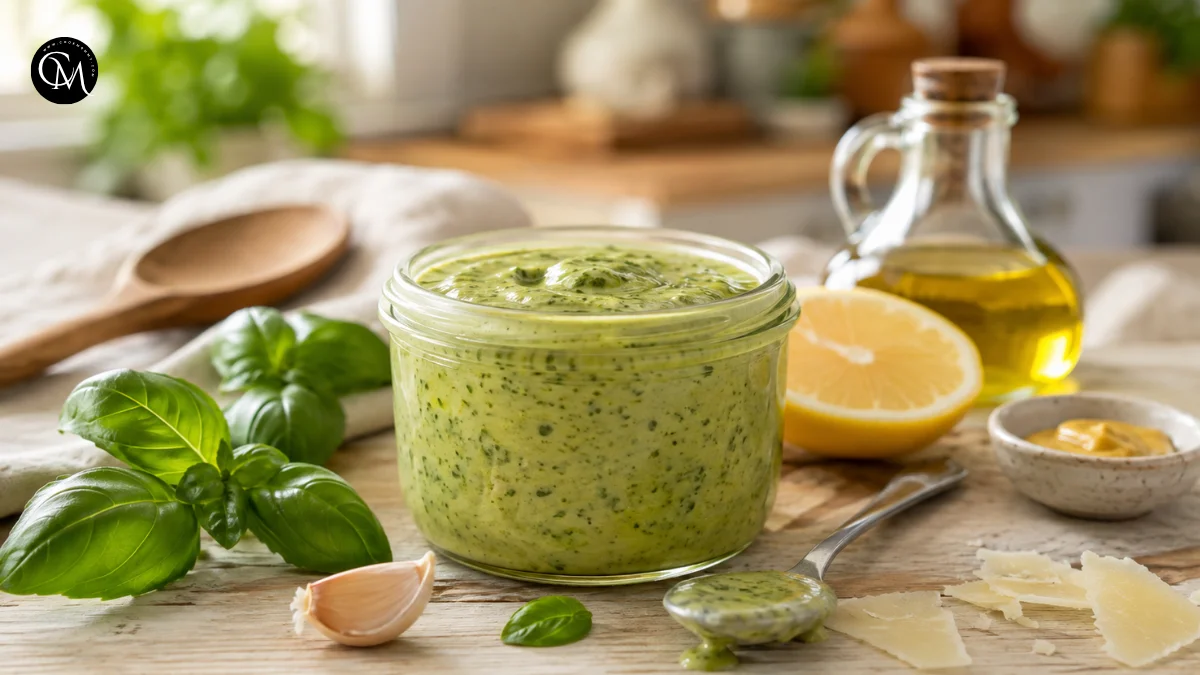
Can a homemade dressing made with just a handful of everyday ingredients and about 10 minutes of prep really taste better than many bottled versions? In my kitchen, the answer is absolutely yes. A good Basil Dressing has the kind of fresh, fragrant flavor that is difficult to preserve in a bottle for months. Fresh basil gives it a bright herbal character, while lemon, garlic, olive oil, and a touch of sweetness bring everything into balance.
What I like most about this recipe is its versatility. I can spoon it over a simple tomato salad at lunch, toss it with pasta for dinner, drizzle it over roasted vegetables, or use it as a quick sauce for grilled chicken.
The secret to excellent Basil Dressing is not adding more ingredients. It is learning how to balance acidity, fat, herbs, salt, and sweetness so every flavor has room to shine.
This recipe walks you through five simple techniques that make a noticeable difference in freshness, texture, and overall flavor.
Table of Contents
Ingredients for Homemade Basil Dressing
You do not need a long shopping list to make a flavorful dressing. Fresh ingredients and good proportions matter much more.
For about 1 cup of Basil Dressing, you will need:
- 2 packed cups fresh basil leaves
- 1/2 cup extra-virgin olive oil
- 2 tablespoons fresh lemon juice
- 1 tablespoon white wine vinegar or apple cider vinegar
- 1 small garlic clove
- 1 teaspoon Dijon mustard
- 1 teaspoon honey or maple syrup
- 1/2 teaspoon fine sea salt
- 1/4 teaspoon freshly ground black pepper
- 1–3 tablespoons cold water, as needed
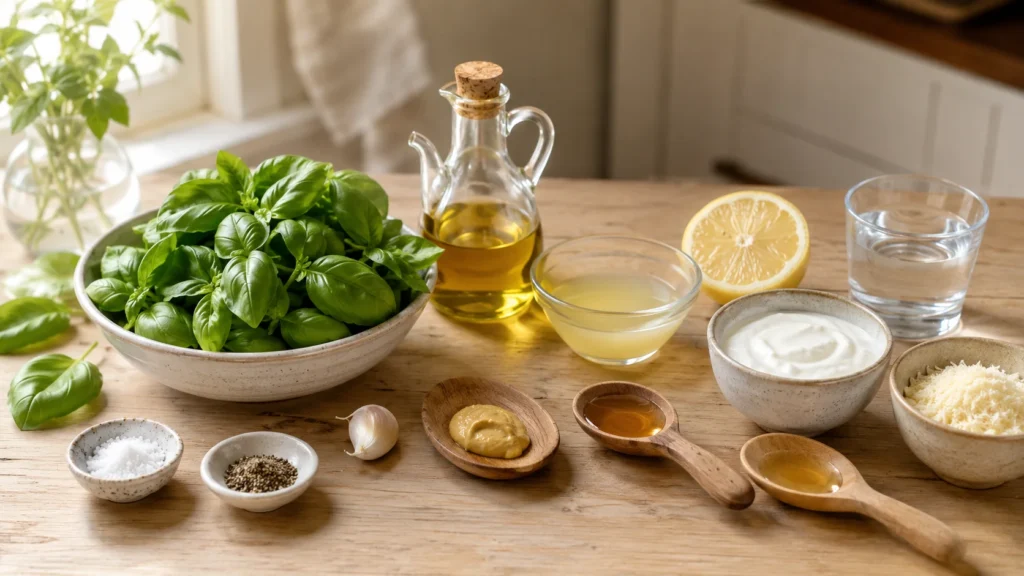
For an optional creamier finish:
- 2 tablespoons plain Greek yogurt
- 2 tablespoons finely grated Parmesan
Choose basil leaves that are bright green, fragrant, and free from dark spots. Tender leaves blend more smoothly and produce a cleaner herbal taste.
If you do not have lemon juice, lime juice can work, although it gives the recipe a slightly sharper flavor. Apple cider vinegar creates a fruitier finish, while white wine vinegar keeps the dressing light and delicate.
Maple syrup is an easy substitute for honey. For a dairy-free version, simply leave out yogurt and Parmesan.
Timing
One reason I make this dressing so often is that it requires very little time.
- Preparation time: 10 minutes
- Cooking time: 0 minutes
- Total time: 10 minutes
- Yield: About 1 cup
- Serving size: Approximately 2 tablespoons
Many homemade sauces require simmering, cooling, or reducing. Basil Dressing skips all of that. Everything is blended while fresh, making it especially useful for busy lunches and weeknight meals.
For the best flavor, however, I usually let it sit for about 5–10 minutes after blending. That brief resting period allows the garlic, herbs, lemon, and seasoning to settle into a more balanced combination.
How to Make Basil Dressing Step by Step
Step 1 – Prepare the Ingredients
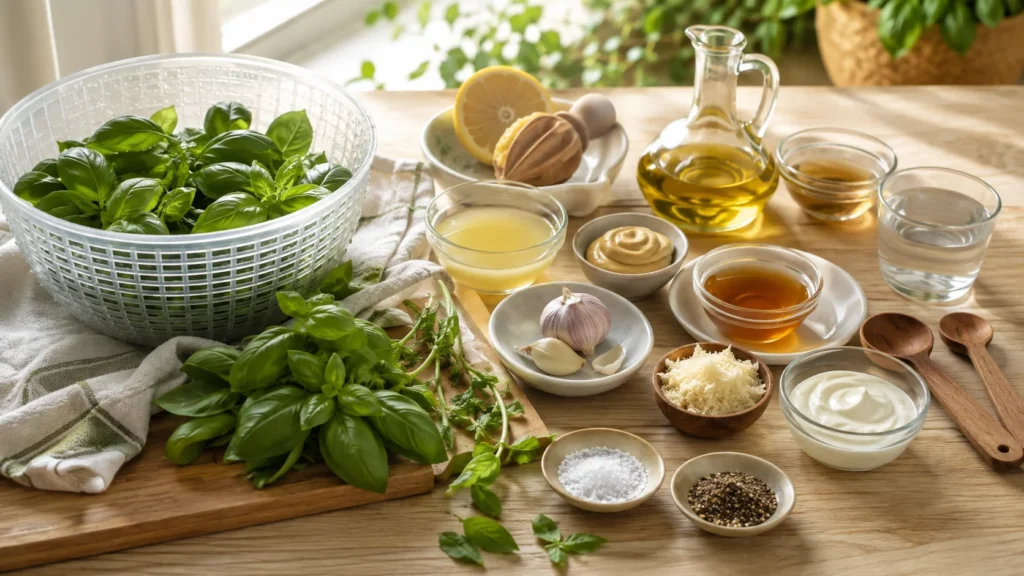
Start by washing the basil gently in cold water. Dry it very well using a salad spinner or clean kitchen towel.
This small step matters more than it seems. Excess water can dilute Basil Dressing and prevent the olive oil from blending evenly with the other ingredients.
Remove any thick or woody stems. Tender upper stems are fine to keep because they contain plenty of basil flavor.
Juice the lemon, peel the garlic, and measure everything before you begin blending. Having the ingredients ready also prevents the basil from sitting crushed or chopped for too long, which can cause it to darken.
Step 2 – Build the Flavor Base
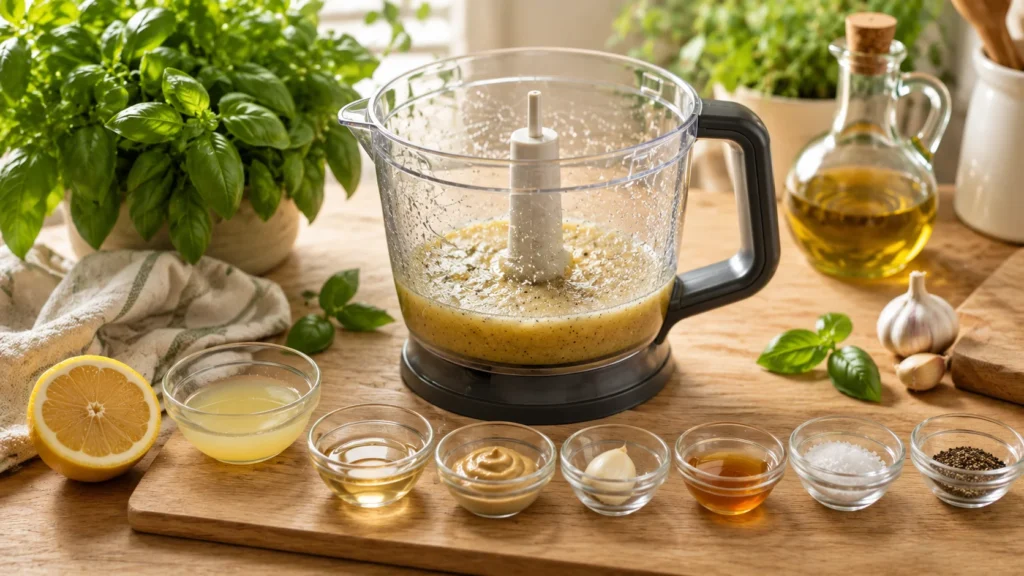
Add the lemon juice, vinegar, mustard, garlic, honey, salt, and black pepper to a blender or small food processor.
Blend for several seconds before adding the basil.
This creates the acidic flavor base of the dressing. Dijon mustard is particularly useful because it helps the oil and acidic ingredients combine more smoothly.
The honey is not there to make Basil Dressing taste sweet. Its purpose is to soften the sharp edge of the vinegar and lemon juice.
I recommend starting with one small garlic clove. Raw garlic becomes surprisingly powerful once blended, and too much can overwhelm the delicate basil.
Step 3 – Blend the Fresh Basil
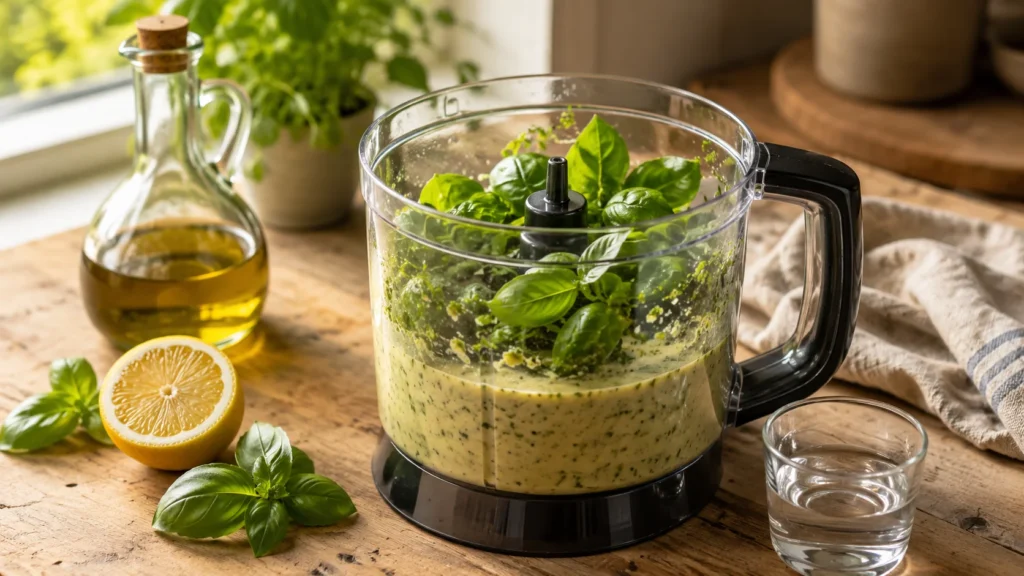
Add the basil leaves to the blender. Pulse several times rather than immediately blending at full speed. Once the leaves begin breaking down, blend just until the basil becomes finely chopped and evenly distributed.
Avoid running the blender unnecessarily long. The motor produces heat, and too much blending can gradually dull the fresh green color and delicate aroma.
For a rustic Basil Dressing, stop while tiny pieces of basil remain visible. For a smoother restaurant-style texture, blend slightly longer.
If the mixture becomes difficult to blend, add one tablespoon of cold water.
Step 4 – Add the Olive Oil and Combine
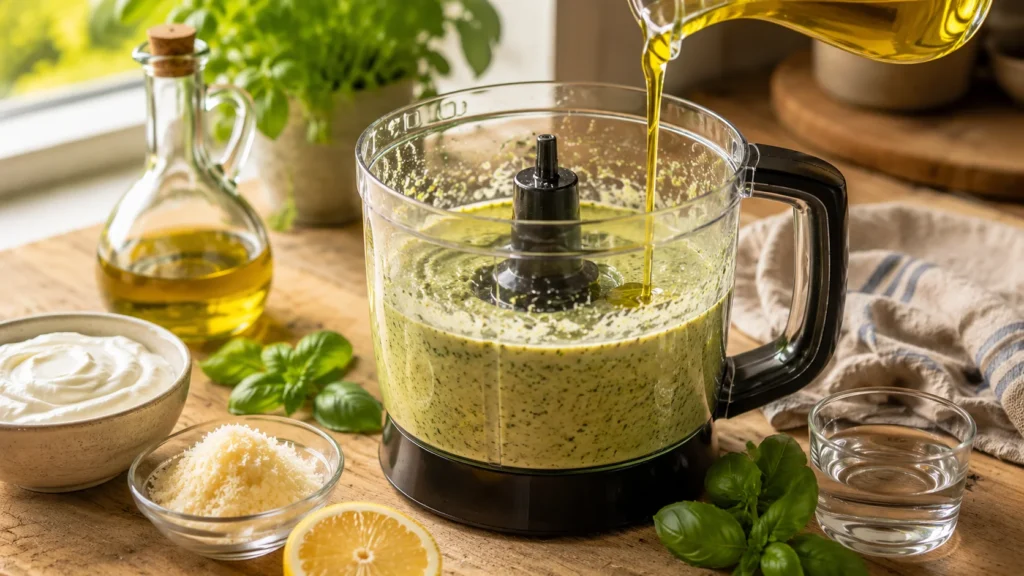
With the blender running on low speed, gradually pour in the olive oil. Adding it slowly helps create a smoother, more cohesive dressing rather than an oily mixture with separated liquid at the bottom.
Once combined, check the consistency.
If the Basil Dressing feels too thick for tossing with leafy greens, add cold water one tablespoon at a time. If you plan to spoon it over grilled vegetables or use it as a dipping sauce, keeping it slightly thicker works beautifully.
For a creamy version, blend in Greek yogurt at this stage.
Parmesan can also be added for a richer, savory flavor that works especially well with pasta salads and roasted vegetables.
Step 5 – Taste and Adjust the Seasoning
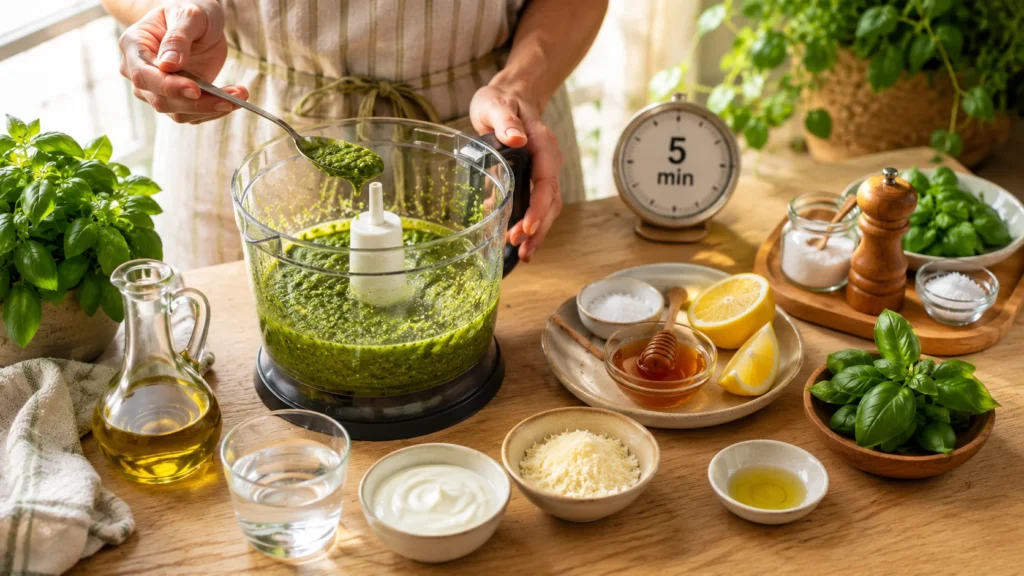
This is the step that turns a decent homemade dressing into one that tastes balanced. Taste a small spoonful.
If it tastes flat, add another pinch of salt or a squeeze of lemon. If the acidity feels aggressive, add a few drops of honey. If it tastes too heavy, a spoonful of cold water or lemon juice can brighten it.
Remember that Basil Dressing will taste slightly different once it is mixed with food. Salad greens, potatoes, pasta, grains, and grilled vegetables can absorb seasoning, so the dressing should taste pleasantly vibrant on its own.
Let it rest for about 5 minutes, taste again, and make one final adjustment before serving.
Nutritional Information
Approximate nutrition per 2-tablespoon serving:
- Calories: 120
- Total fat: 13 g
- Saturated fat: 2 g
- Carbohydrates: 2 g
- Sugars: 1 g
- Protein: Less than 1 g
- Sodium: Approximately 150 mg
- Fiber: Less than 1 g
These values are estimates and will vary depending on the exact olive oil, sweetener, mustard, and optional ingredients used.
Most of the calories in Basil Dressing come from olive oil. Because the flavor is concentrated, a relatively small amount is usually enough to coat a generous salad or finish a vegetable dish.
Healthier Alternatives
The basic recipe is already easy to adapt without losing its fresh flavor.
- For lower sugar, simply reduce the honey to 1/2 teaspoon or omit it if your basil is naturally sweet and your lemon is mild.
- For a lighter version, replace part of the olive oil with cold water or plain Greek yogurt. The dressing will become slightly less rich while remaining creamy and flavorful.
- Basil Dressing is naturally gluten-free when prepared with certified gluten-free mustard and other packaged ingredients.
- For a dairy-free recipe, avoid Parmesan and yogurt. A spoonful of tahini can provide extra body if you want a creamier texture.
- There is no whole-grain ingredient required in the dressing itself, but you can serve it with whole-grain pasta, brown rice, quinoa, farro, or whole-grain bread.
- For children who prefer milder flavors, use half a garlic clove and slightly less vinegar.
- For older adults or anyone who prefers a softer texture, blend the dressing completely smooth and thin it with a little water for easier drizzling.
Serving Suggestions
- Basil Dressing is much more useful than a basic green salad topping.
- Try tossing it with cherry tomatoes, cucumber, mozzarella, and white beans for a quick summer lunch.
- It is also excellent over grilled zucchini, asparagus, eggplant, bell peppers, or corn. The bright lemon and basil cut through the smoky flavor of grilled vegetables particularly well.
- For pasta, combine the dressing with warm cooked pasta and a splash of pasta water. Add tomatoes, Parmesan, or mozzarella for an easy meal.
I also like Basil Dressing with:
- Grilled chicken
- Roasted salmon
- Grain bowls
- Potato salad
- Caprese salad
- Chickpea salad
- Sandwiches and wraps
- Roasted potatoes
- Fresh bread
- Grilled shrimp
For entertaining, place it in a small serving bowl beside a vegetable platter rather than using a heavier creamy dip.
You can also explore related recipes such as homemade pesto, lemon vinaigrette, tomato salads, grilled vegetables, and fresh pasta salads to build an easy summer menu.
Common Mistakes to Avoid
- Using Wet Basil Water left on the leaves can dilute the dressing and weaken the flavor. Dry basil thoroughly before blending.
- Adding Too Much Garlic Raw garlic becomes stronger once blended. Start small and add more only after tasting.
- Over-Blending Running a high-powered blender for too long creates heat and can reduce the fresh character of Basil Dressing. Blend only until the desired texture is reached.
- Ignoring the Acid Balance Too little lemon or vinegar makes the dressing taste heavy. Too much makes it harsh. Taste before serving rather than relying only on measurements.
- Using Bitter Olive Oil Because olive oil is one of the main ingredients, its flavor matters. Choose a fresh extra-virgin olive oil that tastes pleasantly fruity rather than aggressively bitter.
- Forgetting to Taste After Resting Garlic and acidity become more noticeable after several minutes. Give the dressing a short rest, then adjust the seasoning one final time.
Storing Tips for Basil Dressing
Transfer leftover Basil Dressing to a clean airtight glass jar and refrigerate it promptly.
- For the freshest flavor, I recommend using it within 3–4 days.
- The olive oil may become cloudy or slightly thicker in the refrigerator. This is normal. Let the jar stand at room temperature for about 10 minutes, then shake or stir before serving.
- If you want to prepare ingredients ahead of time, wash and dry the basil in advance and store it loosely wrapped with a slightly damp paper towel in the refrigerator. Blend the dressing closer to serving time for the freshest color and aroma.
- Avoid repeatedly leaving the entire jar at room temperature for long periods. Instead, spoon out only the amount you plan to use.
- This recipe became one of my regular meals because I can turn a bowl of simple vegetables, leftover grains, pasta, or grilled protein into something that tastes fresh and finished without preparing another complicated sauce.
Conclusion
Homemade Basil Dressing proves that a flavorful sauce does not need a long ingredient list or complicated technique. Fresh basil, bright lemon, good olive oil, gentle acidity, and careful seasoning create a dressing that is vibrant, versatile, and ready in about 10 minutes.
The most important secrets are simple: dry the basil well, control the garlic, balance the acidity, blend only as much as necessary, and always taste before serving.
Use it on salads, pasta, grain bowls, grilled vegetables, sandwiches, or your favorite proteins.
Try this Basil Dressing the next time you have fresh basil on hand, then leave a comment or review sharing how you served it. Subscribe for more practical homemade recipes, kitchen tips, and simple ideas that make everyday cooking easier.
FAQs
Can I make Basil Dressing without a blender?
Yes. Finely chop the basil and garlic, then whisk them with the remaining ingredients. The texture will be more rustic but still delicious and fresh.
Can I make it without olive oil?
You can reduce the oil and replace part of it with Greek yogurt, tahini, or water, although the flavor and texture will be lighter.
Why did my dressing turn dark?
Basil naturally darkens after cutting and exposure to air. Excessive blending heat can speed this process, so blend briefly and refrigerate promptly.
Can I use dried basil instead of fresh basil?
Fresh basil is strongly recommended because it provides the bright aroma and green flavor that define this recipe. Dried basil creates a very different result.
Is this dressing good for pasta?
Yes. Toss Basil Dressing with warm or chilled pasta and add tomatoes, vegetables, mozzarella, Parmesan, chicken, or beans for a quick meal.
How can I make the dressing creamier?
Blend in Greek yogurt, Parmesan, avocado, or a small spoonful of tahini. Add these gradually so the fresh basil flavor remains noticeable.
Can I freeze Basil Dressing?
You can freeze small portions, although the texture may change slightly after thawing. Freeze in small containers and stir or blend briefly before serving.
Tried it before ?
There are no reviews yet. Be the first one to write one.