
Easy Mango Sticky Rice: 5 Tips for the Best Coconut Sauce
Did you know that just 2 tablespoons of extra coconut milk can noticeably change the thickness of a coconut sauce? When making Mango Sticky Rice, small adjustments to liquid, sugar, and heat can transform an ordinary dessert into something beautifully creamy.
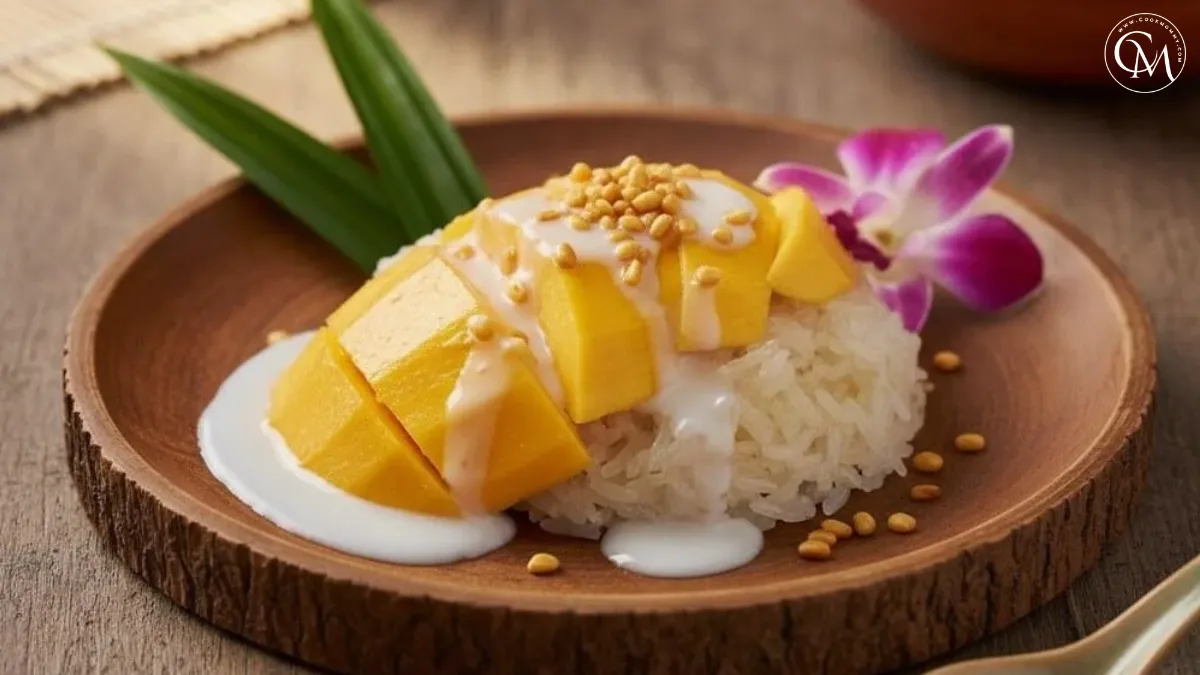
This beloved Thai dessert brings together three irresistible elements: tender, slightly chewy glutinous rice, fragrant coconut sauce, and naturally sweet, juicy mango.
The wonderful thing about Mango Sticky Rice is that you don’t need complicated techniques or expensive equipment to make it at home. The secret lies in choosing the right rice, steaming it properly, and preparing a coconut sauce that tastes rich without becoming overwhelmingly sweet.
In this guide, you’ll discover five practical cooking tips, easy ingredient substitutions, and simple solutions to common mistakes. New to Thai desserts or looking to improve your homemade version? This easy recipe guides you through every step with confidence.
Table of Contents
Ingredients List
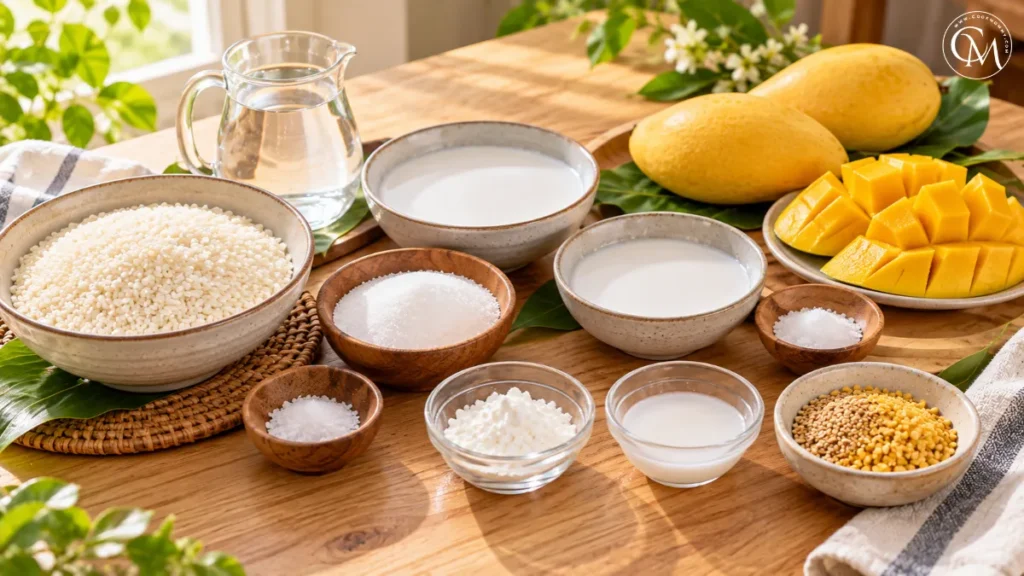
The best Mango Sticky Rice starts with a handful of fresh, flavorful ingredients.
For the sticky rice:
- 1 cup Thai glutinous rice (sweet rice)
- Water, for soaking and steaming
- ¾ cup full-fat coconut milk
- ⅓ cup granulated sugar
- ¼ teaspoon salt
For the coconut topping:
- ½ cup full-fat coconut milk
- 1 tablespoon sugar
- ⅛ teaspoon salt
- 1 teaspoon cornstarch mixed with 1 tablespoon water
For serving:
- 2 ripe mangoes, peeled and sliced
- 1 tablespoon toasted sesame seeds or crispy mung beans (optional)
Ingredient Tips and Substitutions
- Glutinous rice: Choose Thai sweet rice for its distinctive chewy texture. Regular jasmine rice won’t produce the same results.
- Coconut milk: Full-fat canned coconut milk provides the richest sauce. Light coconut milk works, but the topping will taste less luxurious.
- Mangoes: Ataulfo or Nam Dok Mai mangoes are excellent choices because they’re sweet, fragrant, and relatively smooth.
- Sugar: White sugar gives a traditional, clean sweetness. Coconut sugar adds a caramel-like flavor but slightly darkens the sauce.
- Cornstarch: This optional thickener creates a silky topping. Tapioca starch works as an alternative.
- For the best Mango Sticky Rice, prioritize ripe mangoes and good-quality coconut milk.
Timing
| Preparation Stage | Time |
|---|---|
| Active preparation | 15 minutes |
| Rice soaking | 4 hours or overnight |
| Steaming rice | 25–30 minutes |
| Sauce preparation | 10 minutes |
| Resting and assembly | 20 minutes |
| Total time | Approximately 5 hours, including soaking |
| Servings | 4 |
Time-saving tip: Soak the rice overnight and prepare the coconut topping while the rice steams. Most of the preparation time is hands-off.
Step-by-Step Instructions
Follow these five steps to make homemade Mango Sticky Rice with tender grains and a perfectly balanced coconut sauce.
Step 1: Prepare the Ingredients
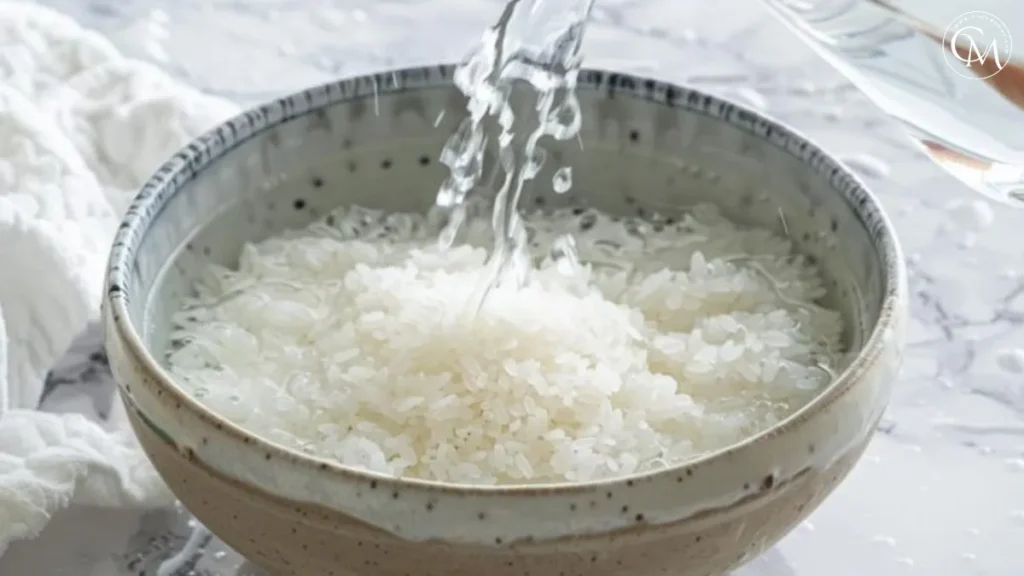
- Place the glutinous rice in a bowl and rinse it several times with cool water until the water becomes noticeably clearer.
- Cover the rice with plenty of fresh water and soak for at least four hours, preferably overnight.
- Soaking allows the grains to absorb moisture before cooking, helping them steam evenly without developing hard centers.
- Drain thoroughly before steaming.
- Meanwhile, peel the mangoes and cut them into attractive slices. Refrigerate the fruit until serving.
Kitchen tip: Choose mangoes that yield slightly when gently pressed. Extremely soft mangoes can become mushy when sliced.
Step 2: Build the Coconut Flavor Base
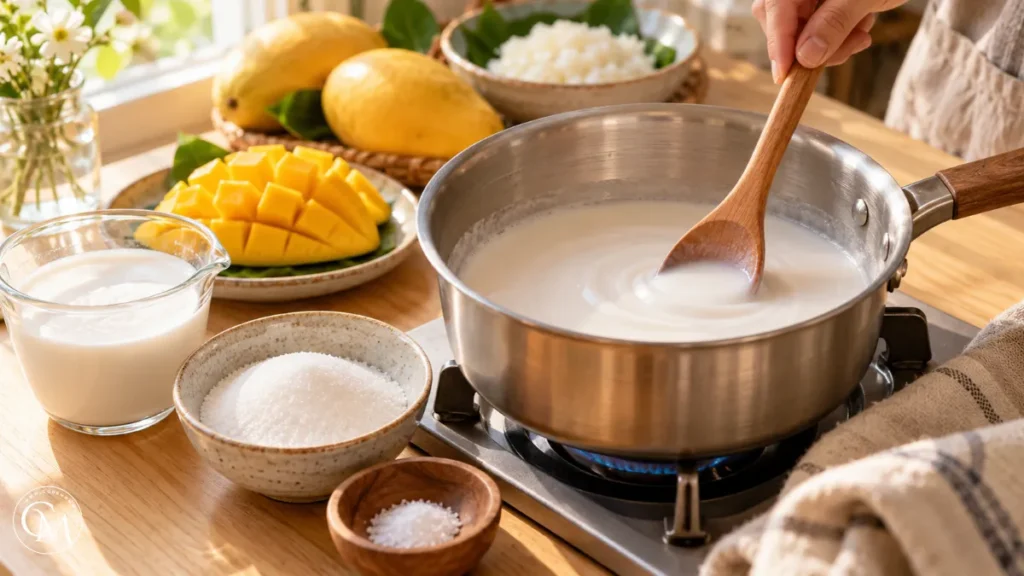
- In a small saucepan, combine ¾ cup coconut milk, ⅓ cup sugar, and ¼ teaspoon salt.
- Warm over medium-low heat, stirring gently until the sugar dissolves completely. Avoid boiling vigorously.
- Coconut milk contains fat and water, and excessive heat can encourage separation, creating an oily-looking sauce.
- Tip 1: Use gentle heat. A smooth, glossy coconut mixture develops more reliably when heated gradually.
- Tip 2: Balance sweetness with salt. Salt enhances the natural sweetness of coconut and mango without making the dessert taste salty.
- Set this mixture aside for the cooked rice.
Step 3: Cook the Sticky Rice
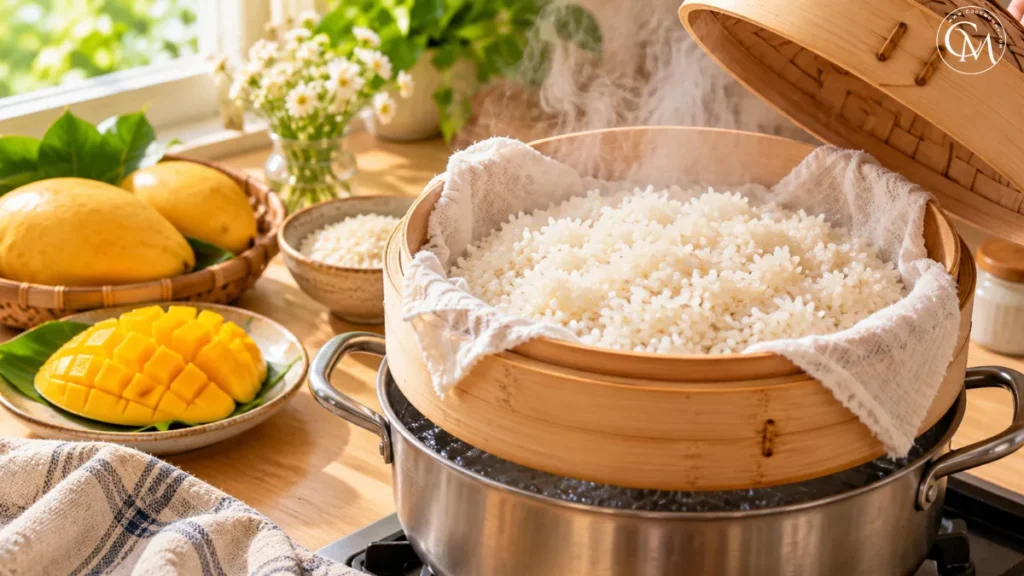
- Line a steamer basket with damp cheesecloth or a clean, thin kitchen towel.
- Spread the drained rice evenly, keeping it above the boiling water.
- Cover and steam for approximately 25–30 minutes, checking for doneness near the end.
- The finished grains should appear translucent, tender, and pleasantly chewy.
- If the center remains firm, continue steaming in five-minute increments.
- Tip 3: Steam instead of boiling. Steaming helps Mango Sticky Rice maintain its characteristic separate yet sticky grains.
- Avoid adding excessive water directly to the rice, which can create a mushy texture.
Step 4: Combine Everything
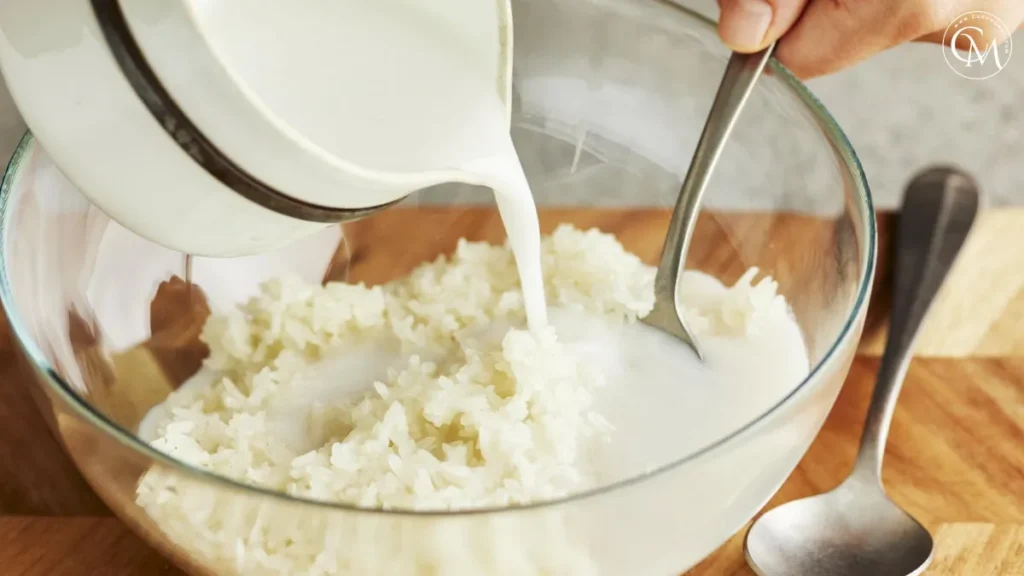
- Transfer the freshly steamed rice to a heatproof bowl.
- Pour the warm coconut mixture over the rice and gently fold until evenly coated.
- Cover and allow it to rest for approximately 15–20 minutes.
- During this period, the rice absorbs the sweet coconut liquid, creating its signature creamy texture.
- Meanwhile, prepare the topping by combining ½ cup coconut milk, 1 tablespoon sugar, and ⅛ teaspoon salt in a saucepan.
- Stir in the cornstarch slurry and heat gently until lightly thickened.
- Tip 4: Keep the topping pourable. It should coat a spoon lightly rather than resemble pudding.
Step 5: Finish and Adjust the Flavor
- Taste the coconut topping before serving.
- If it seems overly sweet, add a tiny pinch of salt. If it’s too thick, stir in a teaspoon of coconut milk.
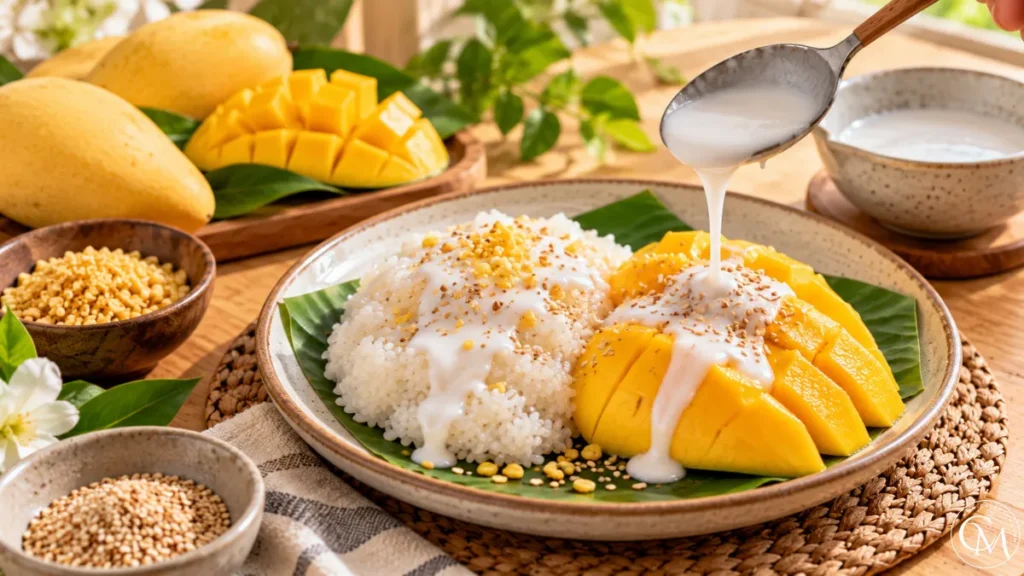
- Arrange the warm rice beside freshly sliced mango and drizzle the coconut topping over both.
- Finish with toasted sesame seeds or crispy mung beans for a delicate crunch.
- Tip 5: Serve with contrasting temperatures. Slightly warm rice and cool mango make Mango Sticky Rice especially satisfying.
- Serve immediately for the best texture and aroma.
Nutritional Information
The following estimates are for one serving of Mango Sticky Rice when the recipe is divided into four portions.
| Nutrient | Approximate Amount |
|---|---|
| Calories | 450–500 kcal |
| Carbohydrates | 75–85 g |
| Protein | 4–6 g |
| Total fat | 17–21 g |
| Saturated fat | 14–18 g |
| Fiber | 2–3 g |
| Sugar | 35–45 g |
These values vary depending on coconut milk brands, mango size, and portion sizes.
Mango contributes vitamin C and fiber, while coconut milk provides the dessert’s creamy richness. Although delicious and satisfying, this dessert is fairly rich in calories due to the combination of sticky rice, creamy coconut milk, and sugar.
Enjoying a moderate portion is an easy way to appreciate the flavor without sacrificing satisfaction.
Healthier Alternatives
You can adjust Mango Sticky Rice to suit different nutritional preferences while preserving much of its traditional character.
- Lower-sugar version: Reduce the sugar in the rice mixture by one-quarter. Very ripe mangoes naturally provide additional sweetness.
- Whole-grain alternative: Try black glutinous rice for more fiber and a nuttier taste. It generally requires longer soaking and cooking.
- Dairy-free option: Traditional Mango Sticky Rice already contains no dairy when prepared with coconut milk.
- Gluten-free option: Pure glutinous rice is naturally gluten-free despite its name. Check packaged ingredients for possible cross-contact.
- For children: Offer smaller servings with thin mango slices and slightly less sugar.
- For seniors: Cook the rice until comfortably tender and serve modest portions with soft, ripe mango.
Avoid replacing all the coconut milk with water, as this significantly reduces the dessert’s characteristic flavor.
Serving Suggestions
Presentation can make homemade Mango Sticky Rice feel like a restaurant-quality dessert.
- Classic Thai style: Arrange sticky rice beside mango slices and finish with glossy coconut sauce.
- Individual dessert cups: Layer coconut rice and diced mango in small glasses for parties.
- Colorful fruit platter: Add strawberries or kiwi for refreshing contrast.
- Crunchy finish: Sprinkle toasted sesame seeds, coconut flakes, or crispy mung beans on top.
- Mini dessert bowls: Serve smaller portions after a spicy Thai-inspired dinner.
For entertaining, prepare the ingredients separately and assemble just before serving.
A few fresh mint leaves can provide an attractive finishing touch, although they’re not traditional.
Common Mistakes to Avoid
Even a straightforward Mango Sticky Rice recipe can disappoint when a few important details are overlooked.
- Using regular rice Jasmine or basmati rice won’t recreate the chewy texture of Thai glutinous rice. Always check the package before cooking.
- Skipping the soaking process When the rice hasn’t soaked long enough, the grains may cook unevenly and stay hard in the middle. Allow at least four hours for more consistent results.
- Boiling coconut milk aggressively High heat can cause separation. Warm the mixture gently and stir regularly.
- Adding too much sugar Excessive sweetness can overpower ripe mango. Begin with the suggested quantity and adjust the topping carefully.
- Over-thickening the sauce Too much cornstarch creates a gummy texture. Start with one teaspoon and remember the sauce thickens further as it cools.
- Using underripe mangoes Firm, sour mangoes lack the sweetness that balances the rich coconut rice. Select fragrant, ripe fruit whenever possible.
Storing Tips for the Recipe
Mango Sticky Rice tastes best freshly prepared, but proper storage makes leftovers easier to enjoy.
- Refrigerating: Transfer the rice to a shallow, airtight container and refrigerate promptly, within two hours of cooking. Consume within 24 hours for the best quality.
- Storing mangoes: Refrigerate freshly cut mango in its own sealed container to keep its juices from making the sticky rice soggy.
- Reheating: Warm refrigerated rice thoroughly until steaming hot, adding a small splash of coconut milk to restore moisture. Reheat only once.
- Freezing: Freeze plain cooked sticky rice in individual portions if needed. Thaw safely in the refrigerator and reheat thoroughly. Fresh mango should be added afterward.
- Meal preparation: Soak the rice ahead of time, but steam it close to serving.
- This recipe makes a practical repeat dessert because the ingredients are accessible, the preparation is straightforward, and most components can be organized ahead of time.
Conclusion
Making delicious Mango Sticky Rice at home is surprisingly achievable when you understand a few essential techniques. The most important lessons are simple: choose genuine glutinous rice, soak it thoroughly, steam it carefully, and prepare the coconut sauce over gentle heat. Balancing sugar with a little salt also makes a noticeable difference.
With these five tips, you can create a Thai-inspired dessert featuring chewy rice, fragrant coconut milk, and beautifully ripe mango without complicated equipment. Whether you’re preparing a weekend treat, sharing dessert with family, or exploring traditional Thai flavors, this recipe offers plenty of opportunities to experiment.
Try this Mango Sticky Rice recipe, then leave a comment or review sharing your results and favorite topping. Subscribe for more approachable dessert recipes, practical kitchen advice, and homemade cooking inspiration.
FAQs
1. Can I make Mango Sticky Rice without a steamer?
Yes. Use a heatproof strainer or colander over a pot of boiling water, ensuring the rice stays above the water. Cover securely and steam until tender.
2. What rice works best for Mango Sticky Rice?
Thai glutinous rice, also called sweet rice, is the best choice. It develops the traditional chewy, sticky consistency that regular white rice cannot reproduce.
3. Can I use frozen mango?
Yes. Thaw frozen mango in the refrigerator and drain excess liquid before serving. Fresh ripe mango generally provides a firmer texture and more attractive presentation.
4. Why is my coconut sauce watery?
The sauce may contain too much liquid or insufficient thickener. Simmer gently and add a small amount of cornstarch slurry until it reaches a lightly pourable consistency.
5. Can I prepare Mango Sticky Rice ahead of time?
Yes, but keep the mango and coconut topping separate. Refrigerate cooked rice promptly, use it within 24 hours, and reheat thoroughly before assembling.
6. Is Mango Sticky Rice naturally vegan?
Yes. Traditional recipes use coconut milk rather than dairy, making the dessert naturally plant-based. Check any packaged toppings to ensure they contain no animal-derived ingredients.
7. How can I prevent sticky rice from becoming hard?
Avoid under-soaking and overcooking. Serve the rice fresh whenever possible, and add a little coconut milk when reheating to help restore its soft, chewy texture.
Tried it before ?
There are no reviews yet. Be the first one to write one.