

kombucha drink: How to Brew It Perfectly in 6 Steps
Did you know that homemade kombucha typically takes 7–14 days to ferment, yet preparing the tea itself takes less than 30 minutes? According to Colorado State University Extension, this traditional fermented beverage transforms ordinary sweet tea into a tangy, lightly sparkling refreshment through the action of beneficial bacteria and yeast. If you’ve ever wondered how to make a delicious kombucha drink at home, this beginner-friendly recipe will guide you through the entire process.
The secret isn’t complicated equipment or expensive ingredients. It’s understanding how tea, sugar, fermentation temperature, and a healthy SCOBY work together. Making your own kombucha drink also gives you more control over sweetness, flavor combinations, and ingredients than buying ready-made bottles.
Whether you prefer fruity flavors, gentle acidity, or refreshing natural bubbles, these six steps will help you build confidence in your first batch.
Table of Contents
Ingredients List
A great kombucha drink begins with simple ingredients and a clean fermentation environment.
Ingredients for approximately 12 cups:
- 12 cups filtered water: Provides a clean, neutral base without unwanted flavors.
- 3–5 black or green tea bags: Black tea creates a rich, traditional flavor, while green tea gives a lighter, more delicate finish.
- ¾ cup granulated cane sugar: Feeds the microorganisms responsible for fermentation.
- 1 healthy SCOBY: A symbiotic culture of bacteria and yeast that supports fermentation.
- 1 cup mature, unflavored starter kombucha: Introduces acidity and active microorganisms.
- Optional flavorings: Fresh ginger, strawberries, blueberries, mint, or lemon zest.
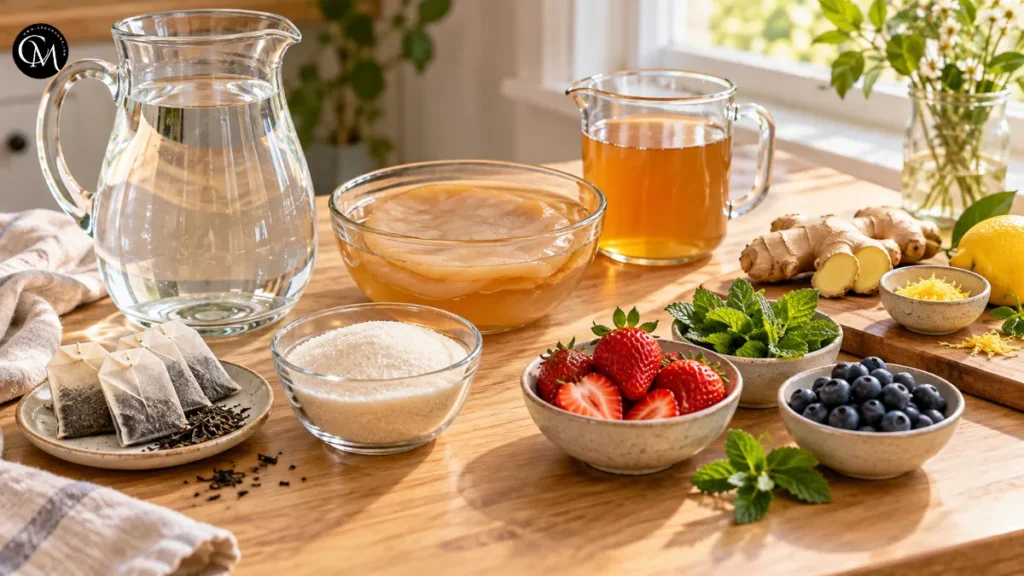
Essential equipment:
- One large, food-safe glass fermentation jar with adequate headspace
- Clean, tightly woven cloth or coffee filter
- Rubber band
- Large saucepan
- Thermometer
- Calibrated digital pH meter suitable for acidic liquids
- Clean, food-safe bottles
Ingredient Substitutions
Green tea can replace black tea, or you can combine both for a balanced flavor.
Organic cane sugar works well, but avoid replacing the entire sugar quantity with artificial sweeteners. The culture requires fermentable sugar to function.
For beginners, avoid flavored teas containing essential oils, which may interfere with SCOBY activity.
Timing
The best kombucha drink requires patience rather than extensive kitchen work.
| Stage | Estimated Time |
|---|---|
| Preparation | 15 minutes |
| Brewing tea | 10 minutes |
| Cooling | 1–2 hours |
| Primary fermentation | 7–14 days |
| Optional carbonation | 1–3 days |
| Total | Approximately 7–17 days |
The only cooking involved is heating water to prepare the tea. Fermentation happens afterward at room temperature.
For best results, maintain approximately 68–79°F (20–26°C). Temperature affects fermentation speed, so cooler kitchens may require additional time.
Step-by-Step Instructions
Step 1: Prepare Your Ingredients and Equipment
- Before preparing your kombucha drink, thoroughly wash your hands and clean your equipment.
- Use a food-safe glass jar without cracks or residue. Avoid reactive metal containers and decorative ceramics containing potentially unsafe glazes.
- Measure all ingredients before starting. This simple habit prevents last-minute mistakes and keeps the process organized.
- Make sure your SCOBY comes from a reputable supplier and is accompanied by adequate mature starter liquid.
Practical tip: Keep a small brewing notebook. Recording ingredient quantities, dates, temperatures, and acidity makes future batches easier to troubleshoot.
Step 2: Build the Sweet Tea Flavor Base
- Bring 4 cups of water just to a boil, then remove the saucepan from the heat.
- Add the tea bags and steep for approximately 5–10 minutes, depending on your desired strength.
- Remove the tea bags and stir in the sugar until completely dissolved.
- The sugar isn’t simply a sweetener. During fermentation, yeast breaks down sugars, while bacteria help produce the organic acids responsible for kombucha’s distinctive tang.
- Add the remaining 8 cups of cool filtered water to reduce the temperature.
Kitchen tip: Avoid excessively steeping tea, which can create bitterness that becomes more noticeable during fermentation.
Step 3: Cool the Tea and Add the SCOBY
- Allow the sweetened tea to cool completely to room temperature before introducing the culture.
- Excessive heat can damage the microorganisms needed to transform tea into a flavorful kombucha drink.
- Transfer the cooled tea into your clean fermentation jar.
- Add the mature starter liquid, followed by the SCOBY.
- The starter is essential because it introduces acidity that helps discourage unwanted microbial growth.
- A SCOBY may float, sink, or sit sideways. These positions alone do not indicate a problem.
Important: Use a calibrated pH meter to monitor acidity. The brew should reach pH 4.2 or below within seven days and remain above pH 2.5 for consumption.
Step 4: Combine, Cover, and Ferment
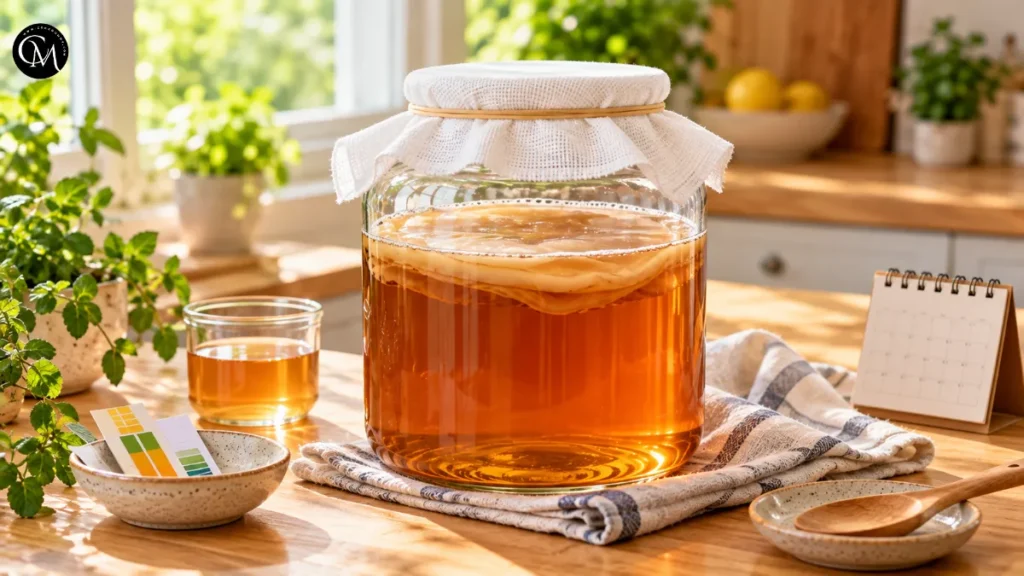
- Cover the jar with a tightly woven cloth or coffee filter and secure it with a rubber band.
- This allows airflow while helping keep insects and debris out.
- Place the jar away from direct sunlight in a clean location with a stable temperature.
- Allow your kombucha drink to ferment for approximately 7–14 days.
- As fermentation progresses, the tea gradually becomes less sweet and more acidic.
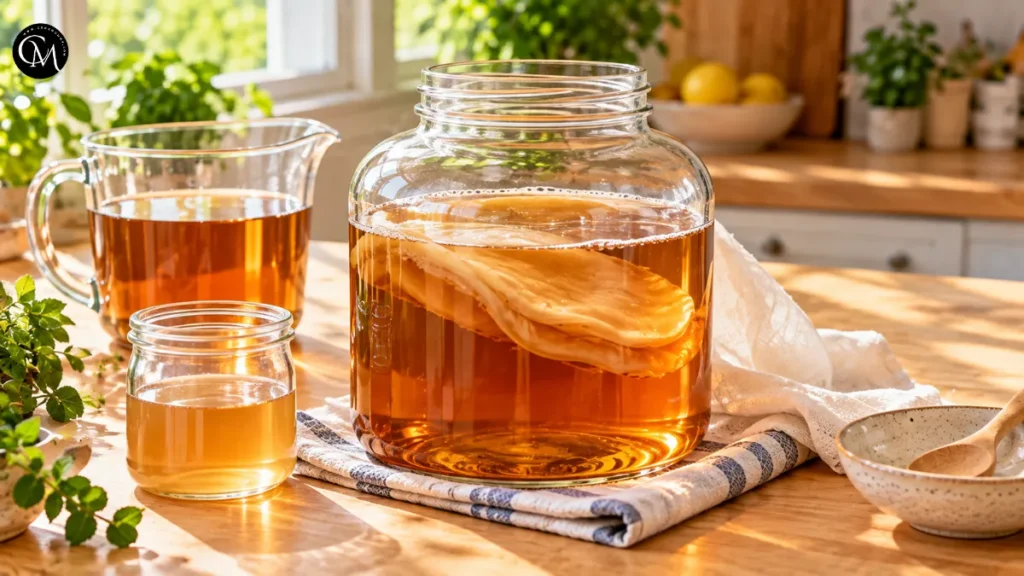
- A thin, pale layer may form across the liquid’s surface. This is often a developing SCOBY and is part of normal fermentation.
- Check acidity during fermentation. If the brew does not reach the recommended pH within seven days, discard it rather than attempting to rescue an uncertain batch.
Step 5: Check Flavor and Make Adjustments
- After approximately seven days, inspect your batch and measure its pH.
- When the acidity is within the recommended range, sample a small amount using a clean utensil.
- A well-balanced kombucha drink should taste pleasantly tart with some remaining sweetness.
- If the flavor is too sweet, additional fermentation may help. However, never allow acidity to fall below pH 2.5.
- Avoid introducing fresh fruit directly into the main fermentation jar. Fruit is better added after primary fermentation.
- Flavor tip: Fresh ginger creates a lively, warming finish, while berries add fruity aroma and natural sweetness.
- If you notice fuzzy blue, green, gray, brown, or black mold, discard the entire batch and SCOBY.
Step 6: Bottle, Refrigerate, and Enjoy
- Once your kombucha drink reaches the desired balance, carefully remove the SCOBY.
- Reserve the culture and enough mature liquid for your next batch.
- Transfer the finished tea into clean bottles.
- For extra flavor, add a small quantity of fruit juice, fresh ginger, or mashed berries.
- Refrigerating immediately is the simplest approach, especially for beginners.
- For additional carbonation, experienced brewers may use pressure-rated fermentation bottles for a carefully monitored secondary fermentation of 1–3 days.
- Be aware that sealed bottles can develop dangerous pressure, and continued fermentation may increase alcohol content.
- Refrigerate promptly and open chilled bottles cautiously.
- Your homemade fermented tea is now ready to serve!
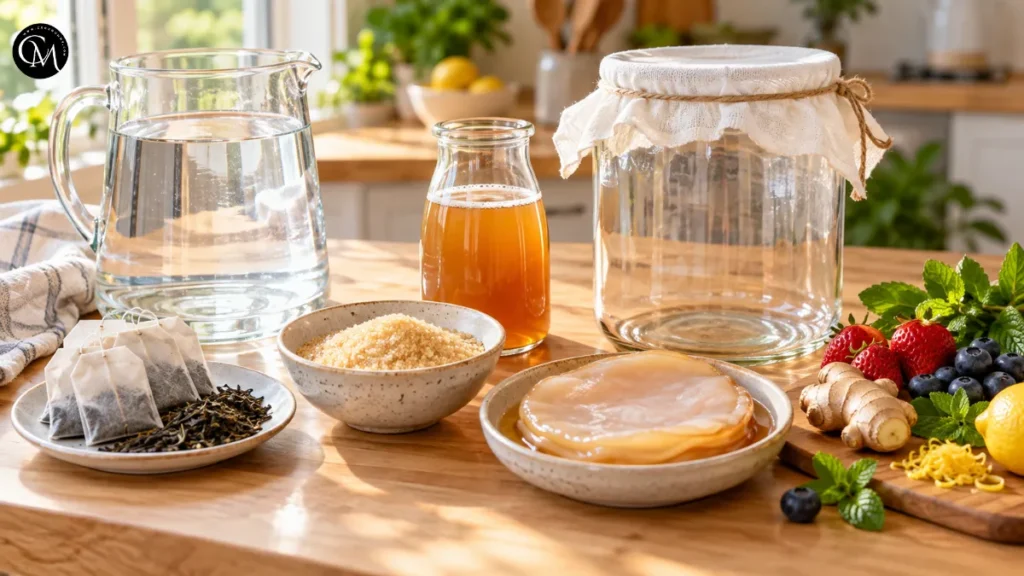
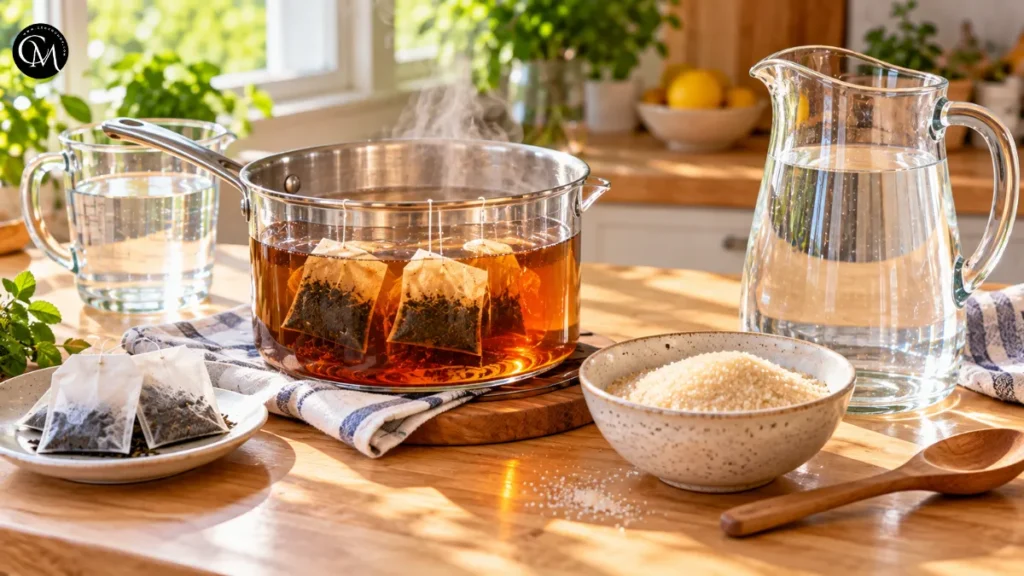
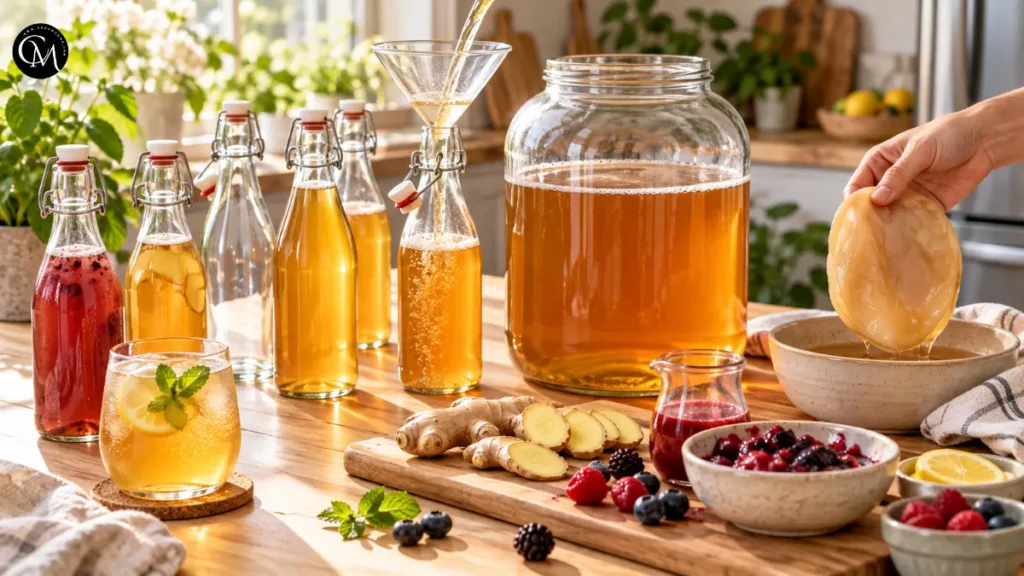
Nutritional Information
A homemade kombucha drink can be a lighter alternative to many sugary beverages, depending on fermentation and added flavorings.
Approximate nutrition per 8-ounce (240 ml) serving:
| Nutrient | Estimated Amount |
|---|---|
| Calories | 25–60 kcal |
| Carbohydrates | 6–15 g |
| Sugar | 5–14 g |
| Protein | 0 g |
| Fat | 0 g |
| Caffeine | Variable |
| Alcohol | Variable |
These estimates are illustrative rather than laboratory-tested values. Sugar, alcohol, and caffeine concentrations depend on ingredients and fermentation conditions.
Although kombucha contains fermentation-derived compounds and potentially live microorganisms, research has not established many of its advertised health benefits.
Enjoy it primarily as a refreshing beverage rather than a treatment for digestive or other medical conditions.
Healthier Alternatives
Customizing a kombucha drink allows you to match different taste preferences and dietary needs.
Lower-Sugar Choices
- Allow controlled fermentation to develop a pleasantly tart flavor rather than adding extra sugar after brewing.
- Use small quantities of berries, herbs, or citrus zest for flavor instead of sweetened syrups.
- Do not drastically reduce the sugar in the initial recipe because it is necessary for successful fermentation.
Dairy-Free and Gluten-Free Options
- Traditional kombucha contains no dairy or grain ingredients, making it naturally suitable for many dairy-free and gluten-free diets.
- However, check tea blends, flavorings, and packaged ingredients for possible additives or cross-contact.
Whole-Grain and Balanced Pairings
- Whole-grain substitutions don’t apply to this tea-based beverage, but you can serve it alongside whole-grain toast, oatmeal, or nutritious snacks.
- For children, pregnant individuals, immunocompromised people, or anyone who must avoid alcohol, homemade unpasteurized kombucha is not an appropriate choice because microbial safety and alcohol content cannot be guaranteed.
Serving Suggestions
A chilled kombucha drink is especially enjoyable when paired with foods that complement its acidity.
Try these combinations:
- Brunch: Serve alongside avocado toast, scrambled eggs, and fresh berries.
- Afternoon refreshment: Add fresh mint and a few frozen raspberries.
- Summer gatherings: Pour over ice with cucumber slices and lemon zest.
- Dinner: Pair with grilled vegetables, roasted chicken, or colorful grain bowls.
- Mocktail-style presentation: Combine with chilled sparkling water and a splash of citrus.
For entertaining, serve chilled in clear glasses so guests can appreciate its delicate color.
A thin slice of ginger or a sprig of rosemary makes an attractive finishing touch without overwhelming the fermented tea’s natural flavor.
Common Mistakes to Avoid
Even a simple kombucha drink recipe can go wrong when a few important details are overlooked.
- Adding the SCOBY to hot tea: Heat can damage the culture. Always cool the tea first.
- Using too little starter liquid: Insufficient acidity increases contamination risk. Follow a tested recipe and monitor pH.
- Ignoring fermentation temperature: Large temperature fluctuations produce unpredictable results.
- Using unsuitable equipment: Reactive containers or poorly cleaned jars can compromise the batch.
- Overlooking mold: Fuzzy growth is not normal SCOBY development. Discard contaminated batches.
- Over-carbonating sealed bottles: Excessive fermentation creates dangerous pressure. Use appropriate bottles and refrigerate promptly.
Helpful reminder: Trust measured acidity and proper sanitation rather than relying on appearance or smell alone.
Storing Tips for the Recipe
- To preserve the flavor of your kombucha drink, refrigerate it immediately after fermentation or any optional carbonation stage.
- Keep finished bottles at approximately 40°F (4°C) or colder.
- Refrigeration slows fermentation but does not necessarily stop it completely. Carbon dioxide and alcohol can continue developing over time.
- For the best quality, aim to enjoy refrigerated homemade batches within one to two weeks, while recognizing that this is a practical freshness guideline, not a guaranteed safety period.
- Store reserved SCOBY and starter liquid in an appropriate, clean culture-storage setup.
- Prepare tea ingredients ahead of time, but wait until the sweet tea is completely cooled before adding the culture.
- This recipe can become a regular kitchen project because the hands-on preparation is short, and each batch offers opportunities to experiment with new flavors.
Conclusion
Making a homemade kombucha drink is a rewarding way to explore traditional fermentation using everyday ingredients. With six manageable steps, you can turn sweetened black or green tea into a refreshing beverage with bright acidity, subtle sweetness, and optional natural fizz.
The most important lessons are simple: start with a healthy culture, measure ingredients carefully, maintain clean equipment, monitor temperature and pH, and refrigerate your finished batch. Once you’ve mastered the basic process, experiment with ginger, berries, or citrus to create flavors that suit your preferences.
Ready to give homemade fermentation a try? Gather your ingredients and follow this recipe for your first batch. Afterward, leave a comment or review sharing your favorite flavor combination, and subscribe for more approachable homemade recipes, kitchen tips, and fermentation guides.
FAQs
1. How long does a kombucha drink take to ferment?
Most homemade batches ferment for approximately 7–14 days, depending on temperature and culture activity. Check the pH regularly and only consume a properly fermented, uncontaminated batch.
2. Can I make kombucha without a SCOBY?
Fermentation requires an appropriate active culture. A mature starter liquid may contain the necessary microorganisms, but beginners should use a reputable SCOBY and starter kit for more predictable results.
3. Why does my kombucha taste too sour?
Excessive fermentation can produce strong acidity. Monitor fermentation time and pH carefully. If the pH falls below 2.5, do not drink the batch.
4. Can I use green tea instead of black tea?
Yes. Green tea produces a lighter, more delicate beverage, while black tea creates deeper flavors. A blend of both is another excellent option for beginners.
5. How do I make my kombucha drink fizzy?
Natural carbonation can develop during sealed secondary fermentation, but pressure can become dangerous. Use pressure-rated bottles, carefully monitor the process, and refrigerate promptly.
6. Is homemade kombucha completely alcohol-free?
No. Fermentation naturally produces alcohol, and homemade concentrations can exceed 0.5% ABV. Without proper testing, you cannot reliably determine the finished beverage’s alcohol content.
7. Can I reuse my SCOBY for another batch?
Yes, provided the culture remains healthy and uncontaminated. Reserve adequate mature starter liquid and follow proper sanitation procedures before beginning the next fermentation cycle.
Tried it before ?
There are no reviews yet. Be the first one to write one.