
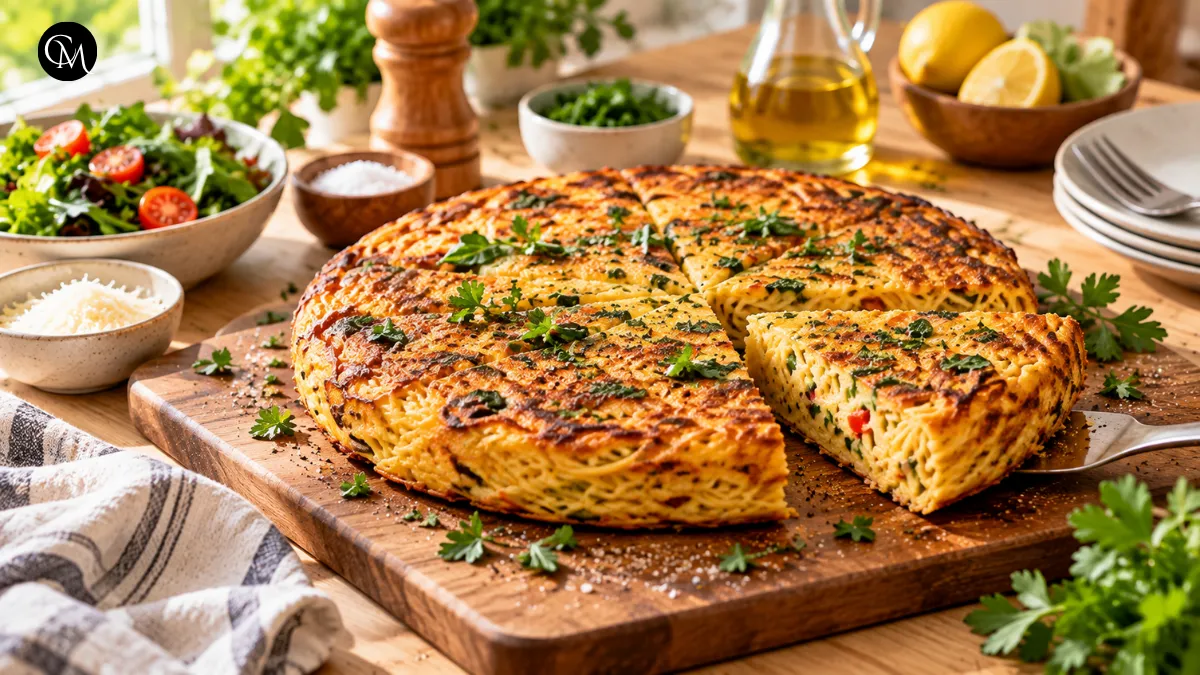
pasta omelette frittata: 7 Best Tips for Crispy Perfection
Did you know that just a little excess moisture can be the difference between a soft egg-and-pasta bake and a crisp, golden skillet meal? That is why a good pasta omelette frittata starts with more than simply mixing eggs and leftovers. The texture depends on dry pasta, a properly heated pan, enough oil, and controlled cooking.
I make this recipe when I have cooked pasta in the fridge but do not want another bowl of reheated noodles. It is quick, budget-friendly, flexible, and satisfying for breakfast, lunch, or dinner. This pasta omelette frittata gives leftover spaghetti or short pasta crisp edges, a tender center, and plenty of savory flavor.
Table of Contents
Ingredients List
For one 10-inch pasta omelette frittata, serving about 4:
- 3 cups cooked pasta, preferably chilled. Spaghetti, linguine, penne, fusilli, and rigatoni all work.
- 6 large eggs, beaten until smooth.
- 1/2 cup finely grated Parmesan or Pecorino Romano.
- 1/3 cup shredded mozzarella, optional for a softer center.
- 2 tablespoons olive oil for browning.
- 1 small shallot or 1/4 small onion, finely chopped.
- 1 garlic clove, minced.
- 2 tablespoons chopped parsley or basil.
- 1/2 teaspoon black pepper.
- 1/4 teaspoon fine salt, plus more if needed.
- Pinch of red pepper flakes, optional.
- Up to 1/2 cup cooked vegetables, spinach, mushrooms, or roasted peppers.
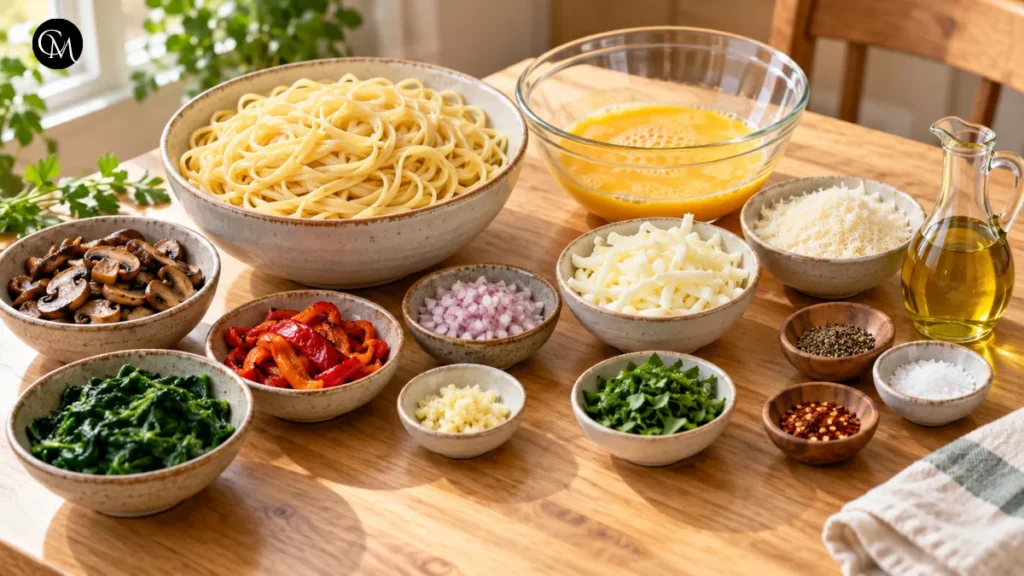
For substitutions, use dairy-free cheese or nutritional yeast instead of Parmesan. Gluten-free pasta works too. If your leftover pasta is already sauced, reduce the salt and cheese.
Timing
- Preparation time: 10 minutes
- Cooking time: 18–22 minutes
- Total time: about 30 minutes
- Servings: 4
Step-by-Step Instructions
Step 1 – Prepare the Ingredients
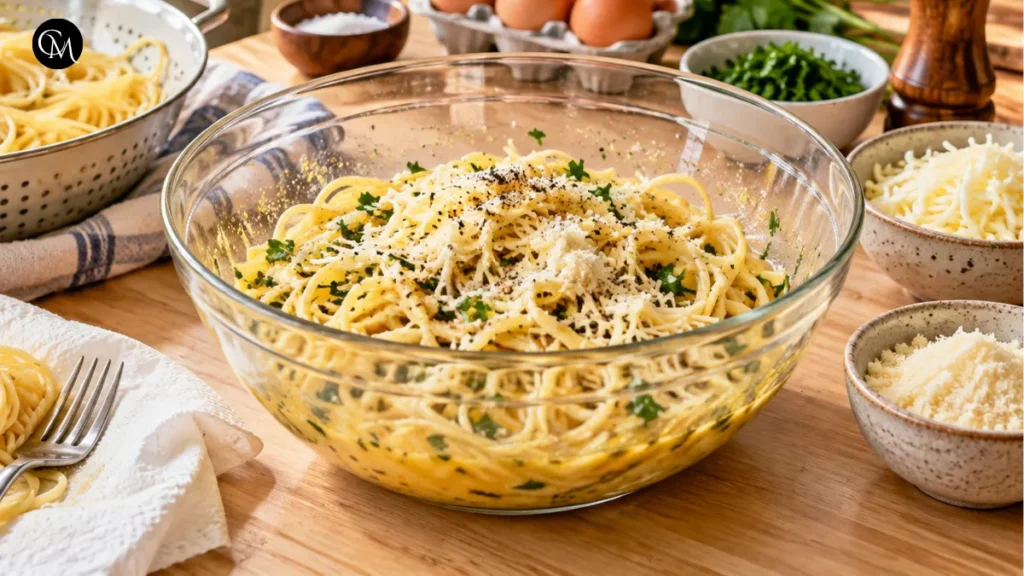
For the best pasta omelette frittata, separate any clumps of chilled pasta with your fingers or two forks. If it feels damp or heavily coated in sauce, blot it lightly. Excess moisture creates steam, and steam works against the crisp crust you want. Whisk the eggs with Parmesan, mozzarella, herbs, pepper, and salt, then fold in the pasta until evenly coated.
Tip 1: Use cool, relatively dry pasta. Cold noodles stay firmer and brown more easily, helping your pasta omelette frittata hold together without becoming mushy.
Step 2 – Build the Flavor Base
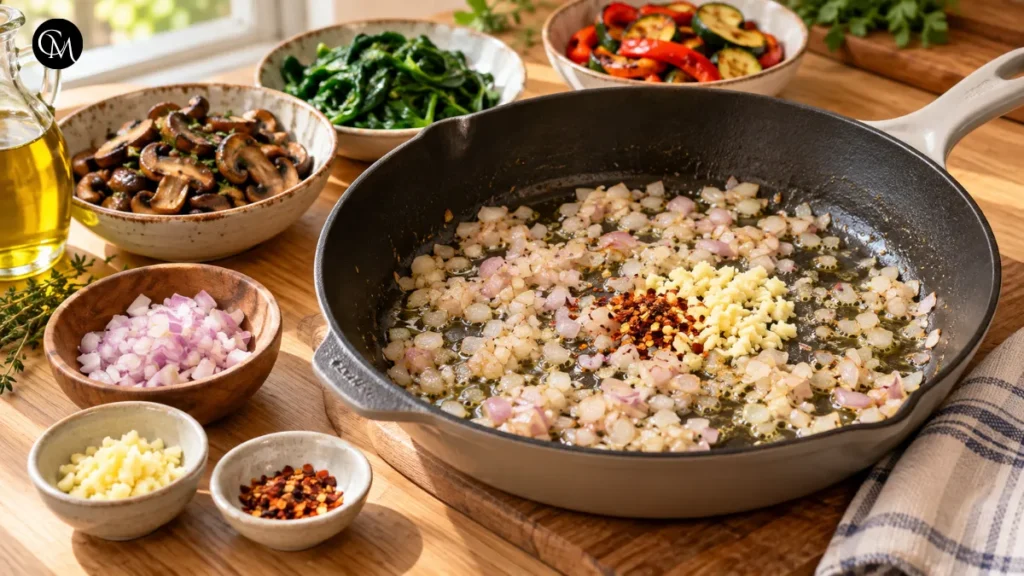
To build flavor in your pasta omelette frittata, heat a 10-inch nonstick or seasoned cast-iron skillet over medium heat. Add 1 tablespoon olive oil and cook the shallot for 2–3 minutes. Add garlic and red pepper flakes, then cook for about 30 seconds. If adding watery vegetables, cook off excess moisture.
Tip 2: Keep fillings dry so the center sets and the bottom crisps. Mushrooms, spinach, zucchini, and fresh tomatoes can release surprising amounts of liquid when heated, so cooking them first makes a noticeable difference.
Step 3 – Cook the Main Ingredient
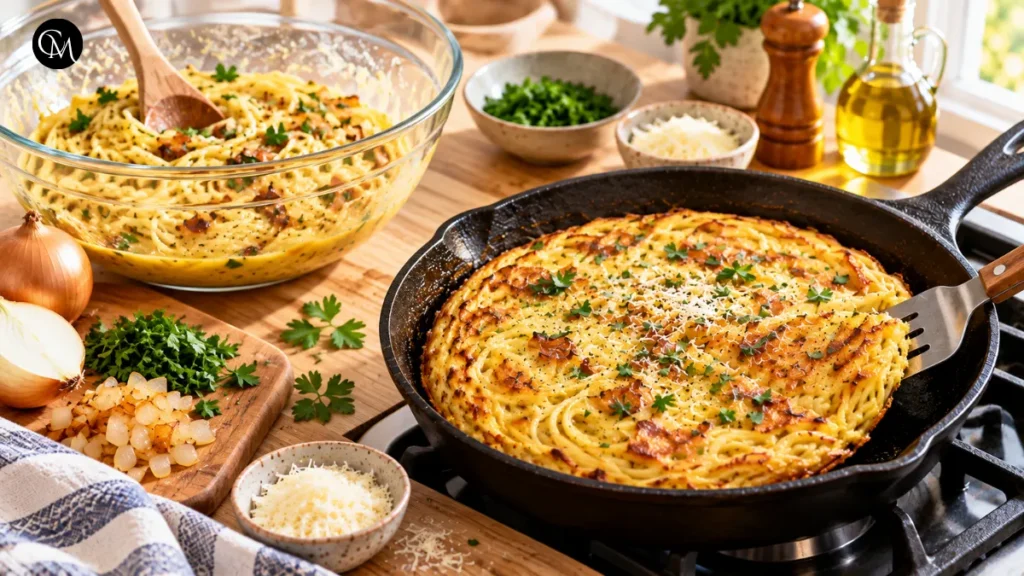
Stir the onion mixture into the egg and pasta bowl. Return the skillet to medium heat and add the remaining tablespoon of oil, swirling it over the base. When the oil looks glossy, pour in the mixture and spread it evenly. Press very lightly with a spatula, but do not pack it down.
Tip 3: Start with a properly heated pan. You should hear a gentle sizzle when the pasta hits the skillet. That immediate heat begins browning before the eggs have fully set.
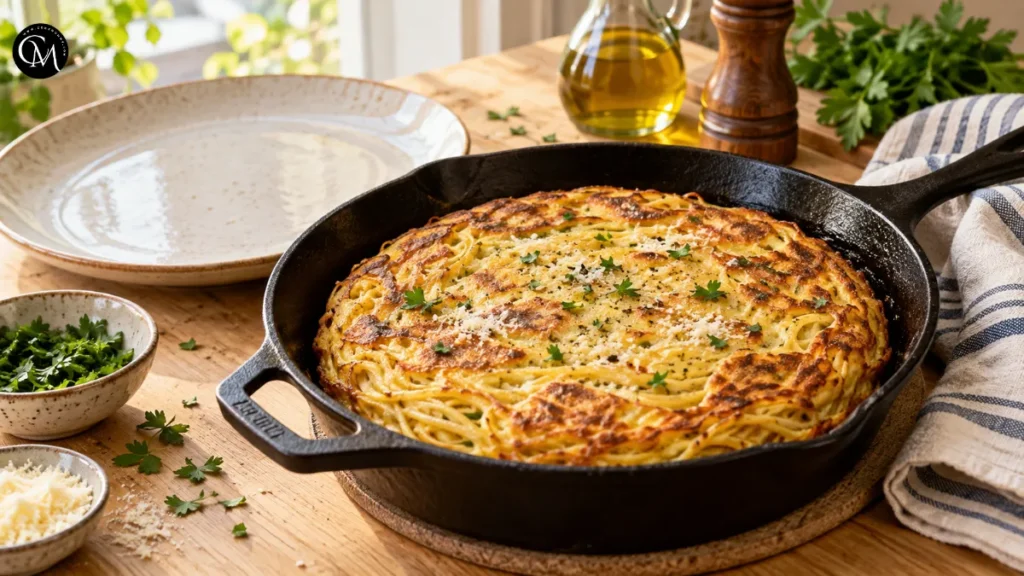
Cook undisturbed for 6–8 minutes. The outer edge should look firm and golden. Carefully lift one section with a spatula to check the base.
Tip 4: Keep the heat at medium. High heat can burn the bottom while leaving the middle runny; low heat may set the eggs before a crust develops.
Step 4 – Combine Everything and Finish Cooking
Once the bottom is golden and the top is mostly set, finish the pasta omelette frittata in one of two ways. For the easiest finish, broil an oven-safe skillet for 2–4 minutes until the top is firm and lightly browned. For stovetop cooking, slide the frittata onto a plate, invert it back into the skillet, and cook 4–5 minutes.
Tip 5: Do not flip too early. A partially set center can split when turned. Wait until the base feels firm and the edges release easily.
Step 5 – Finish and Adjust the Seasoning
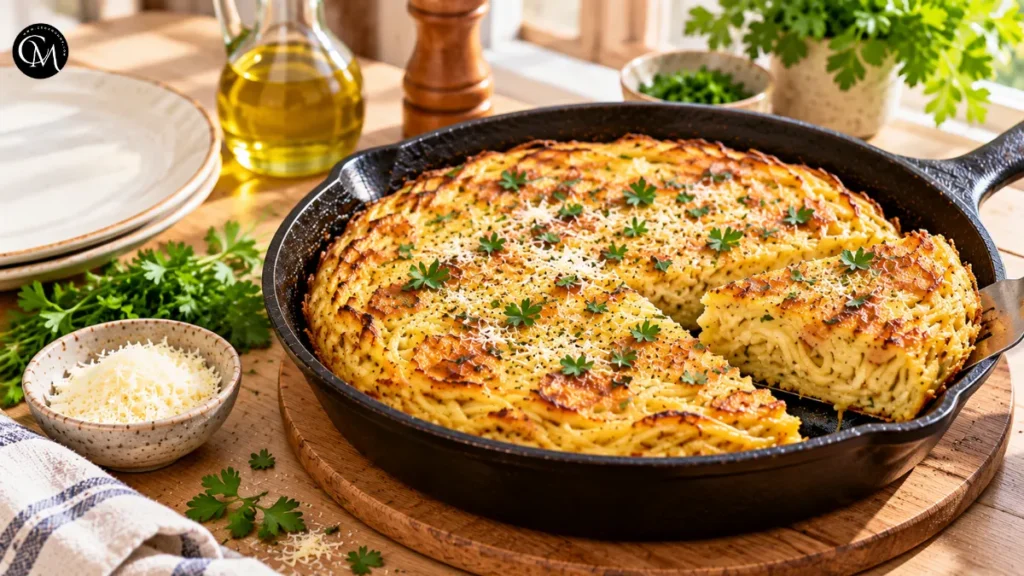
Transfer the cooked pasta omelette frittata to a board and rest it for 5 minutes before slicing. This allows the egg structure to settle and makes neater wedges. Taste before adding more salt because Parmesan, cured meat, and leftover pasta sauce may already contribute plenty.
Tip 6: Finish with something fresh. Chopped basil, parsley, black pepper, or a few drops of lemon juice brighten the richness of a pasta omelette frittata.
Tip 7: Let the pan do the work. Once the mixture is in the skillet, avoid constant stirring or lifting. Uninterrupted contact with the pan is what builds a crisp underside.
Nutritional Information
Approximate nutrition per serving, based on four servings without optional meat or vegetables:
- Calories: 390
- Protein: 19 g
- Carbohydrates: 34 g
- Fat: 20 g
- Saturated fat: 7 g
- Fiber: 2 g
- Sodium: 520 mg
These values vary with pasta type, cheese, sauce, and portion size. Serve your pasta omelette frittata with vegetables or salad for extra volume and variety.
Healthier Alternatives
- For a higher-fiber pasta omelette frittata, use whole-wheat pasta or a legume-based variety that holds its shape after chilling. The basic recipe contains no added sugar, so anyone reducing sugar mainly needs to check bottled sauces or sweetened add-ins.
- For a dairy-free pasta omelette frittata, replace the cheeses with dairy-free alternatives or nutritional yeast. For gluten-free cooking, use certified gluten-free pasta and check packaged add-ins.
- For children, skip chili flakes and add mild cheese, peas, or corn. For seniors who prefer softer food, choose small pasta shapes and cook just until set. For a lighter plate, add more vegetables and serve a smaller wedge with salad.
- One useful rule is to keep the egg-to-pasta ratio balanced. Removing too many eggs in an attempt to make the dish lighter can cause it to crumble rather than slice cleanly.
Serving Suggestions
- Serve the pasta omelette frittata hot with an arugula salad dressed with lemon and olive oil. The acidity and peppery greens balance the richness beautifully.
- For brunch, add sliced tomatoes, fruit, and coffee. For dinner, pair it with roasted vegetables, garlicky greens, or a tomato-cucumber salad.
- It also works at room temperature for picnics or lunchboxes. Cut it into small appetizer squares and finish with basil or tomato relish.
- I also like serving it with a spoonful of warm tomato sauce on the side rather than pouring sauce directly over the top. That way, the crisp crust stays intact.
Common Mistakes to Avoid
- Using wet pasta: Moisture creates steam instead of browning. Drain and cool pasta thoroughly.
- Adding too many fillings: Overloading a pasta omelette frittata makes it heavy and harder to flip.
- Starting with a cold skillet: A warm pan helps the crust begin forming immediately.
- Cooking over very high heat: The bottom can burn before the center sets.
- Flipping too soon: Wait until the edges are firm and the base feels stable.
- Cutting immediately: Rest for about 5 minutes so slices hold their shape.
Another mistake I see often is pressing the pasta too firmly into the pan. Gentle pressure helps create an even layer, but heavy compression produces a dense interior instead of the tender texture you want.
Storing Tips for the Recipe
- Cool leftover pasta omelette frittata before placing it in an airtight container. Refrigerate for up to 3–4 days. For the best texture, reheat slices in a lightly oiled skillet over medium-low heat or in an oven or air fryer until hot.
- A microwave works in a hurry, but it softens the crust. You can chop vegetables and grate cheese a day ahead, but mix the eggs just before cooking.
- If you are packing leftovers for lunch, allow the frittata to cool before sealing the container. Trapping steam while it is still hot can soften the browned exterior.
- This recipe became one of my regular meals because a pasta omelette frittata makes leftovers feel new: crisp edges, savory eggs, and room for whatever is already in the refrigerator.
Conclusion
A dependable pasta omelette frittata comes down to a few small decisions: use cool, dry pasta, avoid watery fillings, preheat the skillet, cook over moderate heat, and give the bottom enough uninterrupted time to brown. Those details create the contrast that makes the dish so appealing crisp outside, tender inside, and flavorful without requiring complicated ingredients.
Try this recipe with the pasta and vegetables you already have, then adjust the cheese, herbs, or seasonings to suit your kitchen. If you make it, leave a comment or review sharing your favorite combination and how the crust turned out. Subscribe for more practical leftover makeovers, simple recipes, and everyday cooking tips.
FAQs
Can I make pasta omelette frittata with freshly cooked pasta?
Yes. Drain it thoroughly and let it cool until it stops steaming. Cooler, drier pasta browns better and is less likely to make the egg mixture watery.
What pasta shape works best?
Spaghetti creates a classic layered texture, while penne, fusilli, and rigatoni give sturdy slices. The best option is pasta that is cooked but still holds its shape.
Can I use pasta that already has sauce?
Yes. Light tomato, pesto, or oil-based leftovers work especially well. Avoid very watery sauce and reduce added salt or cheese when the pasta is already strongly seasoned.
Do I have to flip the frittata?
No. Broiling the top is simpler and lowers the risk of breaking it. Just use an oven-safe skillet and watch closely because the surface can brown quickly.
How can I make the edges extra crispy?
Use a preheated skillet, enough olive oil to coat the bottom, medium heat, and dry pasta. Most importantly, leave the mixture undisturbed while the crust develops.
Can I freeze leftovers?
Yes, although refrigerated slices usually keep a better texture. Freeze cooled portions for about one month, then reheat in an oven or skillet to restore some crispness.
What can I add for more flavor?
Try mushrooms, roasted peppers, spinach, basil, chili flakes, or smoked cheese. Keep the add-ins relatively dry so the eggs stay firm and the exterior browns properly.
Tried it before ?
There are no reviews yet. Be the first one to write one.