
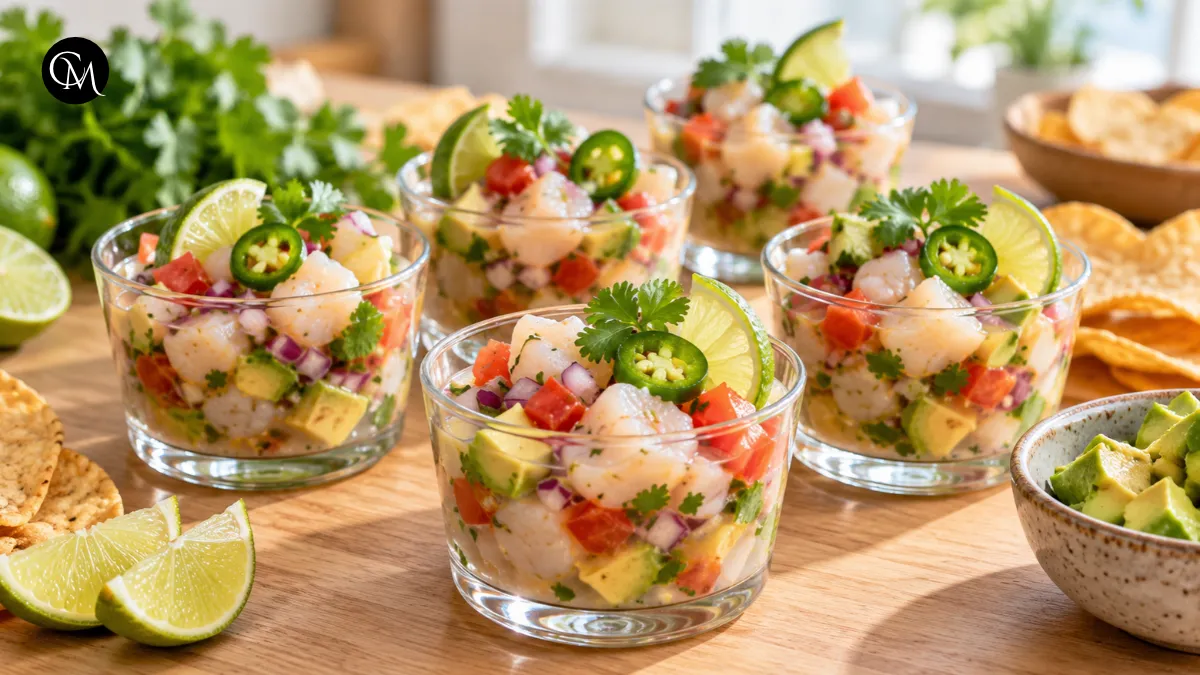
Mexican Scallop Ceviche: 6 Best Tips for a Zesty Recipe
Did you know citrus can turn scallops opaque and firm without heating them to the FDA’s recommended 145°F for seafood? That is why ceviche depends on more than lime juice alone. Acid changes seafood proteins and creates a “cooked” appearance, but it does not make raw shellfish equivalent to heat-cooked seafood.
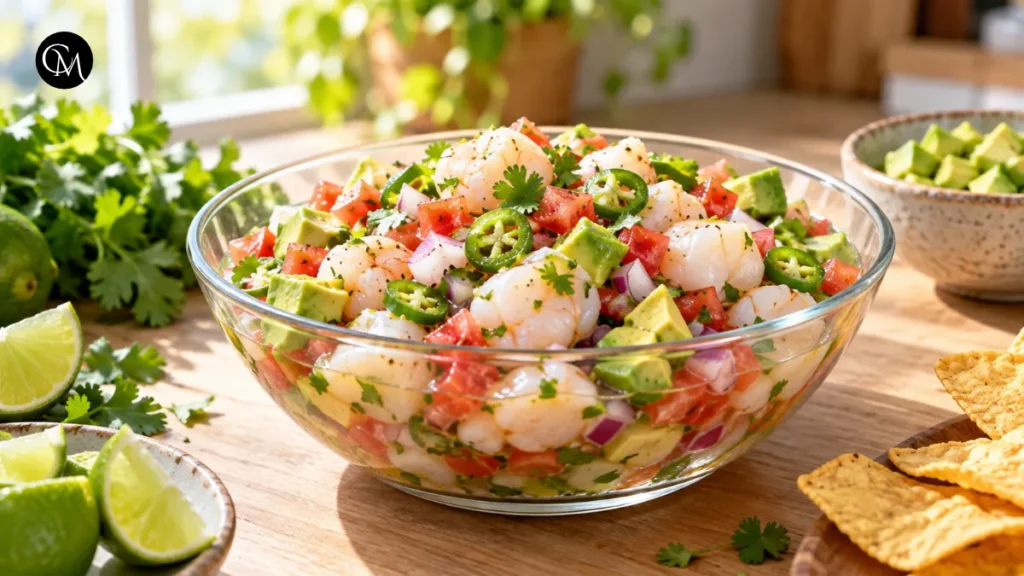
This Mexican Scallop Ceviche is bright, juicy, crisp, and pleasantly spicy, with sweet scallops balanced by lime, tomato, red onion, cilantro, jalapeño, and avocado. I love this Scallop Ceviche because it feels restaurant-worthy without complicated technique. The key is controlling scallop size, marinating time, and seasoning balance.
For food safety, buy very fresh scallops from a trusted source and keep them cold. The FDA advises cooking seafood to 145°F and notes that people at higher risk for foodborne illness should avoid raw or undercooked seafood.
Table of Contents
Ingredients List
For 4 appetizer servings:
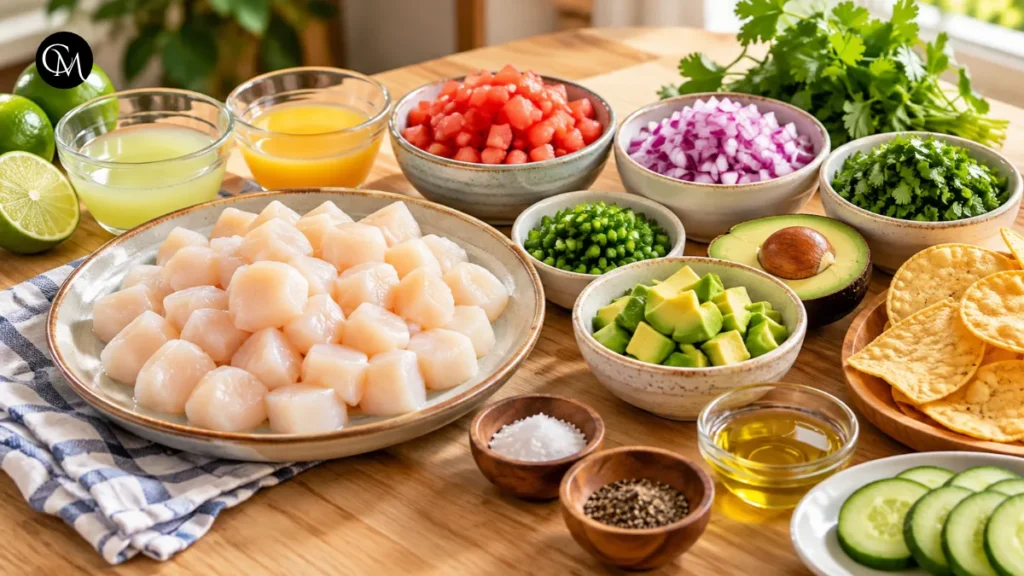
- 1 pound sea scallops, side muscles removed
- 1/2 cup fresh lime juice
- 2 tablespoons fresh orange juice
- 1 Roma tomato, seeded and finely diced
- 1/3 cup finely diced red onion
- 1 small jalapeño, finely minced
- 1/3 cup chopped fresh cilantro
- 1 small avocado, diced
- 1/2 teaspoon fine sea salt, plus more to taste
- 1/4 teaspoon freshly ground black pepper
- 1 teaspoon extra-virgin olive oil, optional
- Tortilla chips, tostadas, or cucumber rounds for serving
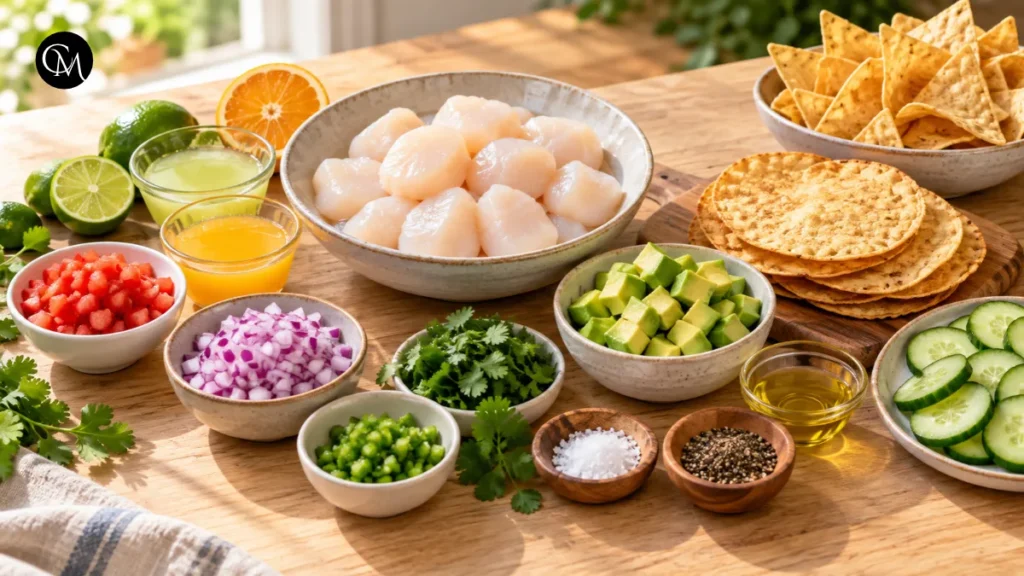
For the cleanest Scallop Ceviche flavor, choose dry-packed scallops when possible; they tend to release less liquid into the marinade.
Substitutions are easy. Serrano pepper can replace jalapeño for stronger heat, cucumber can replace tomato for extra crunch, and diced mango adds a sweeter tropical note. If cilantro is not your favorite, use flat-leaf parsley instead.
Timing
Preparation time: 20 minutes
Marinating time: 20–30 minutes
Cooking time: 0 minutes for the traditional version
Total time: 40–50 minutes
Scallop Ceviche is faster than many seafood appetizers because there is no stovetop cooking in the traditional method. Still, timing matters. Small scallop pieces firm up quickly, while prolonged soaking in strong citrus can make them tight and chalky.
Step-by-Step Instructions
Step 1 – Prepare the Ingredients
- Pat the scallops dry with paper towels, remove the small side muscle if attached, and cut them into roughly 1/2-inch pieces.
- Even sizing matters because acid reaches smaller pieces faster. If some chunks are much larger than others, you may end up with soft centers and overly firm edges.
- Dice the tomato, onion, jalapeño, and cilantro before adding citrus to the seafood. I wait to cut the avocado until the end so it stays creamy, fresh, and green.
Step 2 – Build the Flavor Base
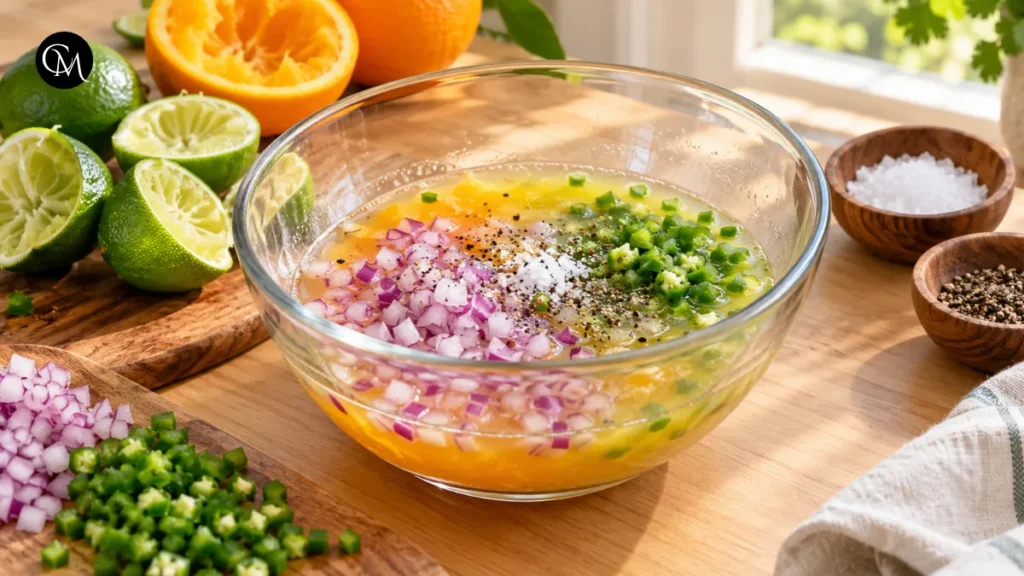
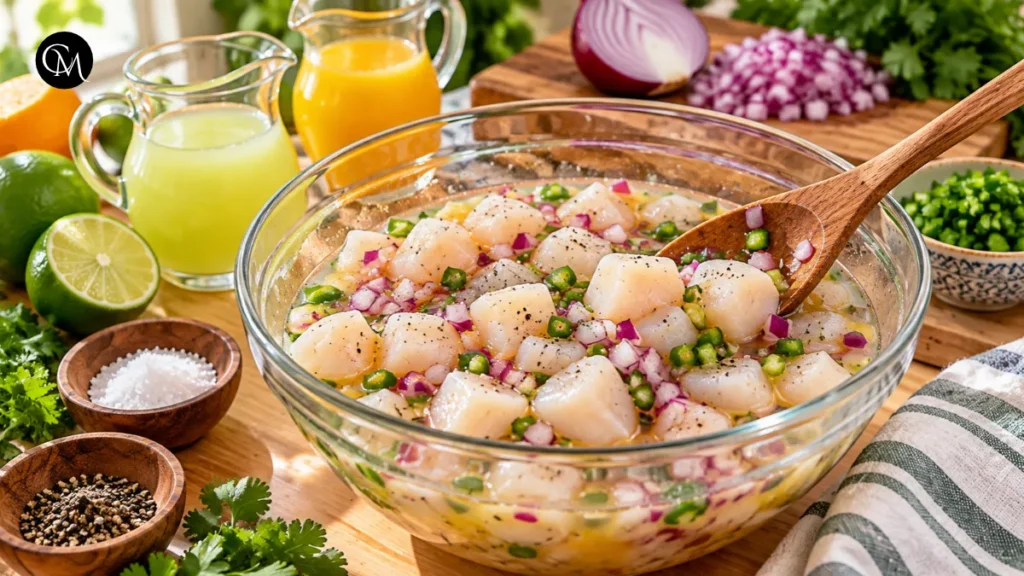
- Combine the lime juice, orange juice, red onion, jalapeño, salt, and pepper in a chilled glass or stainless-steel bowl. Let the mixture stand for about 5 minutes.
- That short pause softens the onion’s sharp bite and allows the salt to dissolve evenly. Lime delivers the dominant acidity, while orange adds just enough natural sweetness so the Scallop Ceviche tastes balanced rather than aggressively sour.
- Tip 1: Always use freshly squeezed citrus. Bottled lime juice can taste flatter and sometimes more bitter, which is noticeable in a simple seafood recipe.
Step 3 – Cook the Main Ingredient
- Add the scallop pieces to the citrus mixture and toss gently. Cover the bowl and refrigerate for 20–30 minutes, stirring once halfway through.
- The acid changes the scallops’ proteins, making the flesh firmer and more opaque. Think of this as a texture transformation rather than true heat cooking. Citrus does not provide the same food-safety step as bringing seafood to a proper internal temperature.
- Tip 2: Keep the bowl refrigerated during the entire marinating period. FDA food-safety guidance recommends keeping seafood chilled and marinating perishable foods in the refrigerator.
- For a heat-cooked Scallop Ceviche, gently cook the scallops until opaque and firm, chill them completely, and then continue with the recipe. This is the safer approach for pregnant people, young children, older adults, and people with weakened immune systems.
Step 4 – Combine Everything
- Once the scallops have reached the texture you like, fold in the diced tomato and cilantro. If the bowl looks excessively soupy, drain away a little of the extra citrus.
- Tip 3: Do not drown the seafood. Great Scallop Ceviche should look glossy and juicy, not like scallop soup.
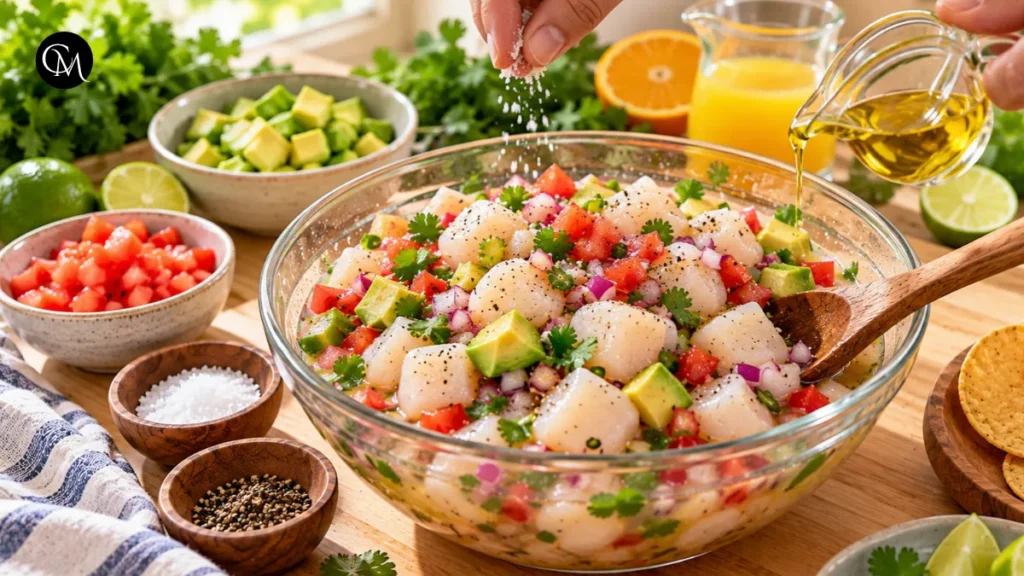
- Tip 4: Add the avocado only after the acidic ingredients are balanced. Fold it in gently so the cubes remain intact instead of disappearing into the marinade.
- Taste a spoonful containing scallop, onion, tomato, and citrus together. You want sweet seafood first, lively lime next, then fresh cilantro and a gentle chile finish.
Step 5 – Finish and Adjust the Seasoning
- Add more salt a small pinch at a time. If the mixture tastes too sharp, stir in another teaspoon of orange juice or a small drizzle of olive oil. If it tastes dull, a little more lime or salt usually wakes it up.
- Tip 5: Season after marinating as well as before. Strong acidity changes how we perceive salt, so the final adjustment makes a noticeable difference.
- Tip 6: Serve Scallop Ceviche cold and soon after finishing it. The texture is at its best while the scallops are tender and the vegetables still have plenty of snap.
Nutritional Information
Approximate nutrition per serving, based on four servings and excluding tortilla chips:
- Calories: 210
- Protein: 21 g
- Carbohydrates: 12 g
- Fat: 9 g
- Fiber: 4 g
- Sodium: 520 mg
- Sugars: 3 g
These numbers are estimates and will vary depending on scallop size, avocado quantity, salt, and portion size. Scallop Ceviche is naturally protein-forward, while avocado provides richness without the need for a heavy cream-based sauce.
Healthier Alternatives
- For a lower-sugar variation, skip the orange juice and add extra lime with a tablespoon or two of finely diced cucumber. The basic recipe already contains no added refined sugar.
- For a whole-grain option, serve Scallop Ceviche over brown rice, quinoa, or alongside baked whole-grain tortilla wedges instead of fried tortilla chips. These additions also make the recipe substantial enough for lunch.
- The recipe is naturally dairy-free and can easily be gluten-free when served with certified gluten-free corn tortillas, tostadas, cucumber slices, or lettuce cups.
- For children or diners who are sensitive to spice, omit the jalapeño and use fully cooked scallops. For lighter portions, serve the ceviche in cucumber cups or crisp lettuce leaves.
- Older adults or anyone who prefers softer textures may enjoy the vegetables diced extra finely. Choosing the heat-cooked scallop variation can also provide additional food-safety reassurance.
Serving Suggestions
- My favorite way to serve Scallop Ceviche is spooned over crisp tostadas with avocado and thinly sliced radishes. The crunch makes the tender scallops feel even more luxurious.
- For a party, divide small portions among chilled appetizer glasses or cups and finish each with a crisp tortilla strip. It looks polished without requiring complicated plating.
- For a light lunch, pile the ceviche over shredded romaine with cucumber, avocado, and a handful of crushed corn chips.
- To build a complete Mexican-inspired meal, pair it with grilled corn, black bean salad, fresh guacamole, or tomato rice. Sparkling lime water or a fruity agua fresca also works beautifully because neither overwhelms the delicate seafood.
- If you enjoy recipes like this, explore shrimp ceviche, grilled scallops, fish tacos, mango salsa, or homemade tostadas for your next seafood menu.
Common Mistakes to Avoid
- Using wet-packed scallops. Excess moisture can dilute the lime juice and leave the marinade watery.
- Cutting uneven pieces. Aim for approximately 1/2-inch chunks so the scallops develop a consistent texture.
- Marinating too long. More time does not necessarily produce better Scallop Ceviche. Extended exposure to citrus can make delicate scallops tough and chalky.
- Using bottled lime juice. Fresh lime provides a cleaner aroma and brighter acidity, both of which matter in a recipe with very few ingredients.
- Adding avocado too early. Acid and repeated stirring can quickly turn beautiful avocado cubes into mush.
- Ignoring temperature control. Seafood should remain properly refrigerated. FDA guidance recommends keeping refrigerators at 40°F or below and chilling perishable foods promptly.
Storing Tips for the Recipe
- Scallop Ceviche is best eaten the day it is prepared. Refrigerate leftovers promptly in a tightly covered container and keep the refrigerator at 40°F or below.
- Remember that lime juice continues affecting the seafood after storage. Even when your Scallop Ceviche remains chilled, the scallops will gradually become firmer as they sit in the acidic marinade.
- For the best flavor and texture, I prefer to finish leftovers within 24 hours. Discard seafood that develops unpleasant sour, rancid, strongly fishy, or ammonia-like odors. The FDA identifies those smells as warning signs that seafood should not be eaten.
- You can chop the onion, jalapeño, tomato, and cilantro several hours ahead and refrigerate them separately. Squeeze the citrus shortly before marinating to preserve its fresh aroma.
- This recipe became one of my regular meals because it gives me the lively, fresh feel of a restaurant seafood appetizer with surprisingly little hands-on work. On warm evenings, I can prepare the vegetables early and assemble dinner without heating the kitchen.
Conclusion
Mexican Scallop Ceviche proves that a short ingredient list can still deliver layers of flavor. Sweet scallops, fresh lime, chile, tomato, herbs, and creamy avocado create something light, refreshing, and satisfying. The biggest improvements come from choosing good seafood, cutting it evenly, keeping it properly chilled, and watching the marinating time instead of simply leaving it in citrus for hours.
Try this Scallop Ceviche as an appetizer, light lunch, or warm-weather dinner, then adjust the chile and citrus until it tastes perfect for your table. If you make the recipe, leave a comment or review and share your favorite variation. Subscribe for more practical seafood recipes, Mexican-inspired dishes, and dependable home-cooking tips.
FAQs
Can I use frozen scallops for ceviche?
Yes. Thaw high-quality frozen scallops overnight in the refrigerator, drain them well, pat them completely dry, and use them promptly after defrosting.
How long should scallops marinate in lime juice?
For roughly 1/2-inch pieces, 20–30 minutes usually gives Scallop Ceviche a pleasantly firm texture. Longer marinating can gradually make delicate scallops tougher.
Does lime juice make raw scallops completely safe?
No. Citrus changes seafood texture but does not replace heat cooking. People at higher risk for foodborne illness should choose properly cooked scallops.
Can I make this recipe ahead?
Prepare the vegetables several hours ahead, but marinate and combine the seafood closer to serving so the scallops stay tender and the vegetables crisp.
What can I use instead of cilantro?
Flat-leaf parsley is the easiest substitute. A small amount of fresh mint can also add a bright flavor, although the result will be less traditional.
Is Scallop Ceviche very spicy?
Not necessarily. Remove the jalapeño seeds and membrane for milder heat, omit it entirely for a gentle version, or substitute serrano for more heat.
What should I serve with ceviche?
Serve it with tostadas, tortilla chips, cucumber rounds, lettuce cups, avocado, or salad. Add rice, black beans, or grilled corn for a fuller meal.
Tried it before ?
There are no reviews yet. Be the first one to write one.