
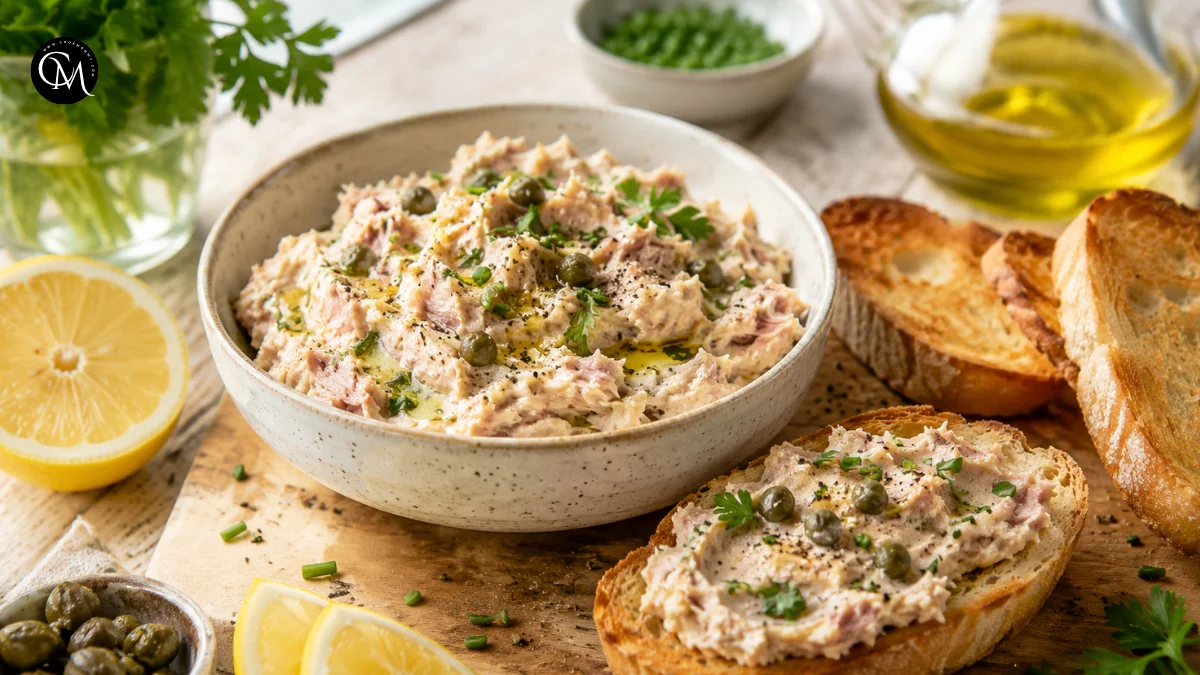
Tuna Rillettes: How 6 Steps Make This French Spread Easy
Have you ever wondered why a French-style appetizer can taste rich and sophisticated even when its main ingredient comes straight from a can? The answer is often less about complicated cooking and more about balancing fat, acidity, texture, and seasoning. Tuna Rillettes are a perfect example. With good-quality tuna, a creamy base, fresh lemon, herbs, and a few pantry staples, you can create a spread that feels far more elegant than the effort involved.
I like this recipe because it works equally well as a quick lunch spread, a make-ahead party appetizer, or something to serve with toasted bread when guests arrive unexpectedly. Unlike traditional meat rillettes, which can require slow cooking for hours, this tuna version comes together quickly while still delivering that soft, rich, spreadable texture.
The key is not simply mixing everything together. A few small techniques draining the tuna properly, softening the shallot, adding the creamy ingredients gradually, and allowing the mixture to rest make a noticeable difference in the final flavor.
Table of Contents
Ingredients for Tuna Rillettes
This recipe makes approximately 4 to 6 appetizer servings.
- 2 cans tuna in olive oil or water, about 280 g drained
- 4 tablespoons cream cheese, softened
- 2 tablespoons crème fraîche or sour cream
- 1 small shallot, very finely minced
- 1 tablespoon fresh lemon juice
- 1 teaspoon Dijon mustard
- 1 tablespoon finely chopped fresh parsley
- 1 tablespoon finely chopped chives
- 1 teaspoon extra-virgin olive oil
- ½ teaspoon finely grated lemon zest
- ¼ teaspoon freshly ground black pepper
- Salt, to taste
- 1 teaspoon capers, finely chopped, optional
- Toasted baguette slices, crackers, or vegetables for serving
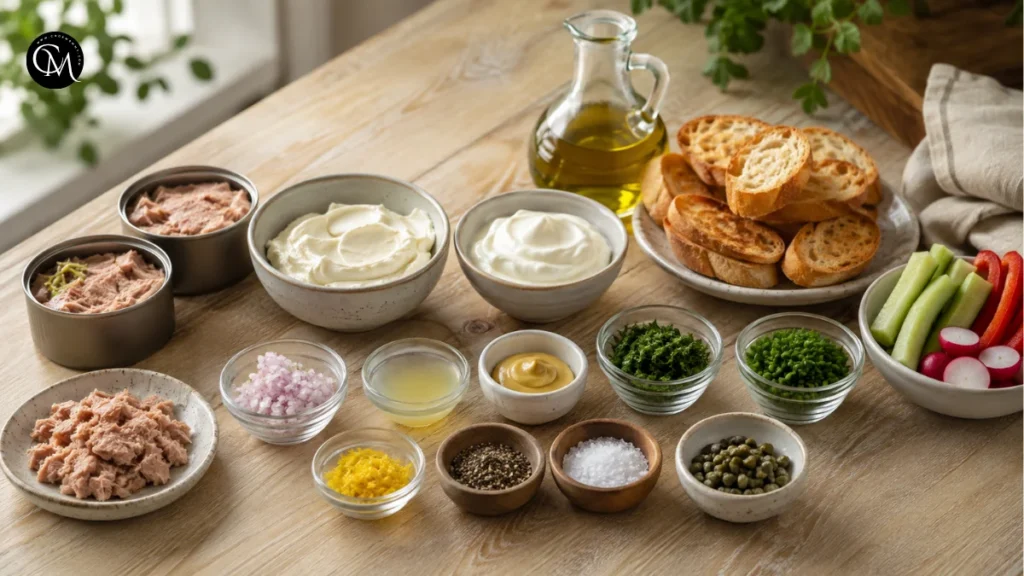
For especially flavorful Tuna Rillettes, I prefer tuna packed in olive oil because it tends to remain moist and tender. Tuna packed in water works too, especially if you want a slightly lighter spread.
Cream cheese gives the mixture body, while crème fraîche adds softness and a gentle tang. Greek yogurt can replace the crème fraîche, although the finished texture will be a little lighter.
If you do not have shallots, use a very small amount of finely chopped red onion. Dill can replace parsley or chives if you enjoy its fresh, slightly grassy flavor.
Timing
- Preparation time: 15 minutes
- Cooking time: 3–4 minutes
- Chilling time: 30 minutes
- Total time: About 50 minutes
The short chilling period is worth including because it gives the ingredients time to mingle. You can eat the spread immediately, but the flavor is noticeably more rounded after resting.
How to Make Tuna Rillettes Step by Step
Step 1 – Prepare the Ingredients Carefully
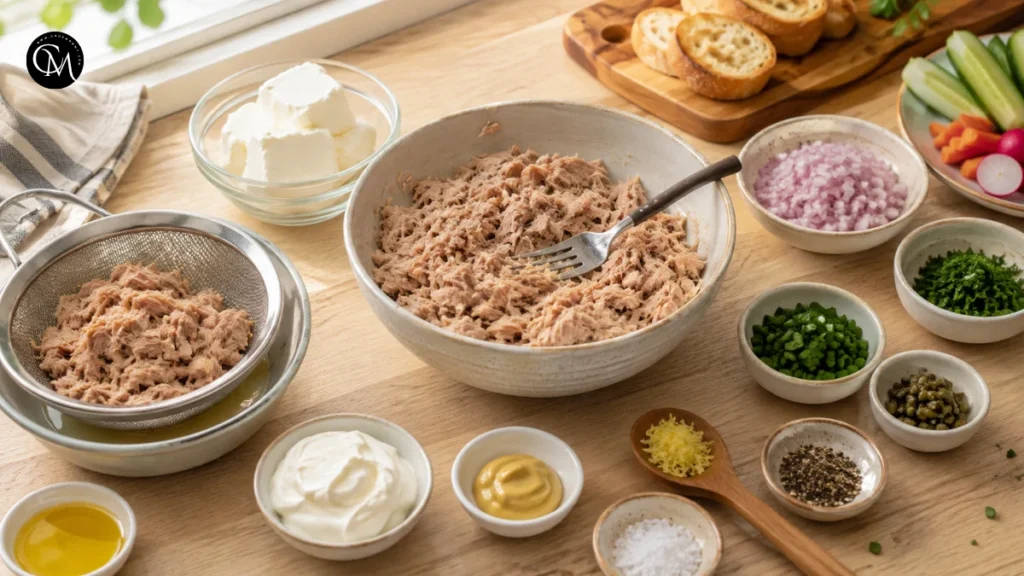
Drain the tuna thoroughly and transfer it to a medium bowl. If you are using tuna packed in olive oil, you can reserve about a teaspoon of the oil for later.
Use a fork to separate the tuna into small flakes, but avoid crushing it into a completely smooth paste. Good Tuna Rillettes should have a creamy base with a little natural tuna texture remaining.
Bring the cream cheese to room temperature before mixing. Cold cream cheese is harder to incorporate and may leave small lumps.
Finely chop the shallot, parsley, chives, and capers before you start. Having everything prepared makes it much easier to control the texture and seasoning as you work.
Step 2 – Build the Flavor Base
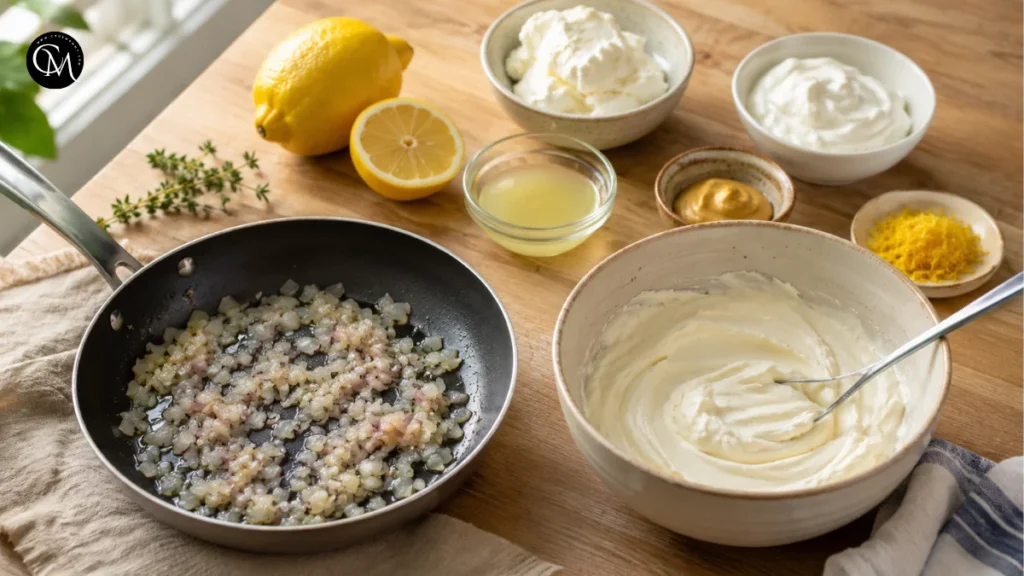
Warm the teaspoon of olive oil in a small skillet over low heat. Add the minced shallot and cook for about 2 to 3 minutes, just until softened. You are not trying to brown it.
This short cooking step removes some of the harsh bite of raw onion while keeping its sweetness and aroma. Shallots contain flavorful sulfur compounds that can taste sharp when raw, but gentle heat softens their intensity. Let the shallot cool for a few minutes before adding it to the creamy mixture.
In a separate bowl, stir together the softened cream cheese, crème fraîche, Dijon mustard, lemon zest, and lemon juice until smooth. This creates the flavor base for the Tuna Rillettes before the fish is added.
Step 3 – Prepare the Tuna for the Right Texture
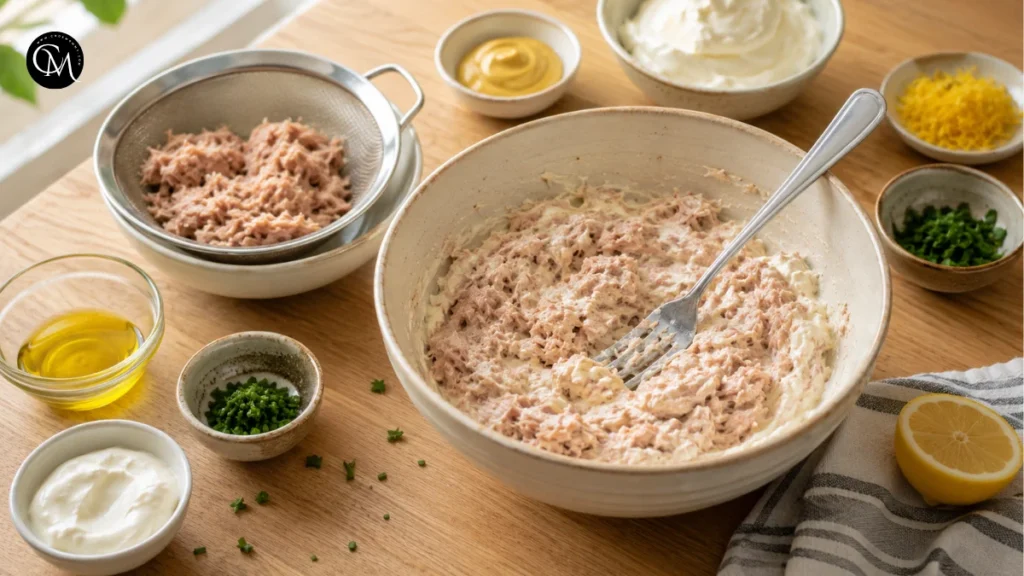
Add the drained tuna to the creamy base. Using a fork, gently fold and mash the mixture rather than vigorously stirring it. You want the tuna to break into smaller pieces while still leaving a few visible flakes.
Texture is one of the biggest differences between a good tuna spread and one that feels overly processed.
If you blend everything in a food processor for too long, the mixture can become dense and almost sticky. Hand mixing gives Tuna Rillettes a softer, more rustic French-style texture. If the tuna seems very dry, add about one teaspoon of the reserved olive oil or a little extra crème fraîche.
Step 4 – Combine Everything and Balance the Flavors
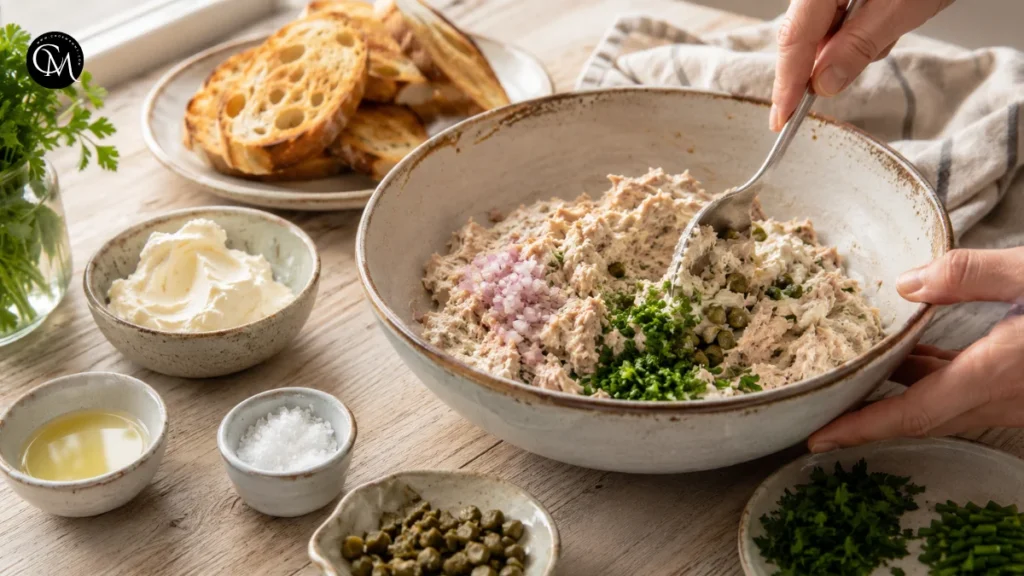
Add the cooled shallot, parsley, chives, and optional capers. Fold everything together until evenly distributed.
Taste the mixture before adding salt. Canned tuna, Dijon mustard, and capers can all contain enough salt that you may need very little additional seasoning. Now look for balance.
The tuna provides savory depth, the cream cheese adds richness, lemon contributes acidity, Dijon brings gentle sharpness, and the herbs keep the spread fresh.
If your Tuna Rillettes taste heavy, add a few extra drops of lemon juice. If they taste too sharp, stir in another teaspoon of cream cheese. That small adjustment can make the difference between a spread that tastes merely salty and one that tastes balanced.
Step 5 – Finish and Adjust the Seasoning
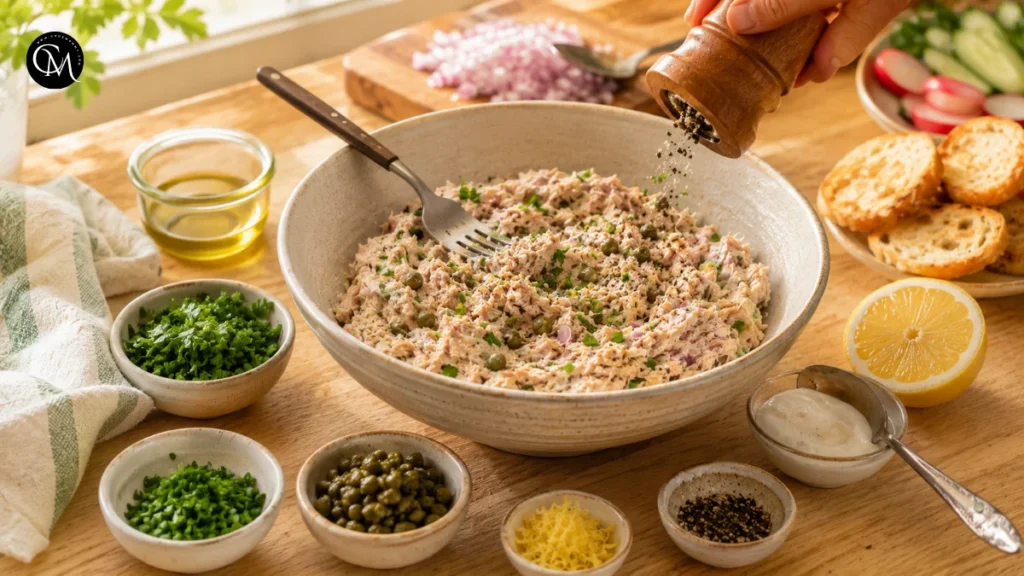
Add freshly ground black pepper and taste again. At this stage, I sometimes add a little more lemon zest instead of extra lemon juice. Zest gives brightness without increasing acidity.
For a more savory finish, add a few extra chopped capers. For something gentler, especially when serving children, omit the capers and reduce the Dijon mustard slightly.
A good rule with Tuna Rillettes is to season gradually. Once too much salt or mustard goes into the mixture, it is difficult to remove.
Step 6 – Chill Before Serving
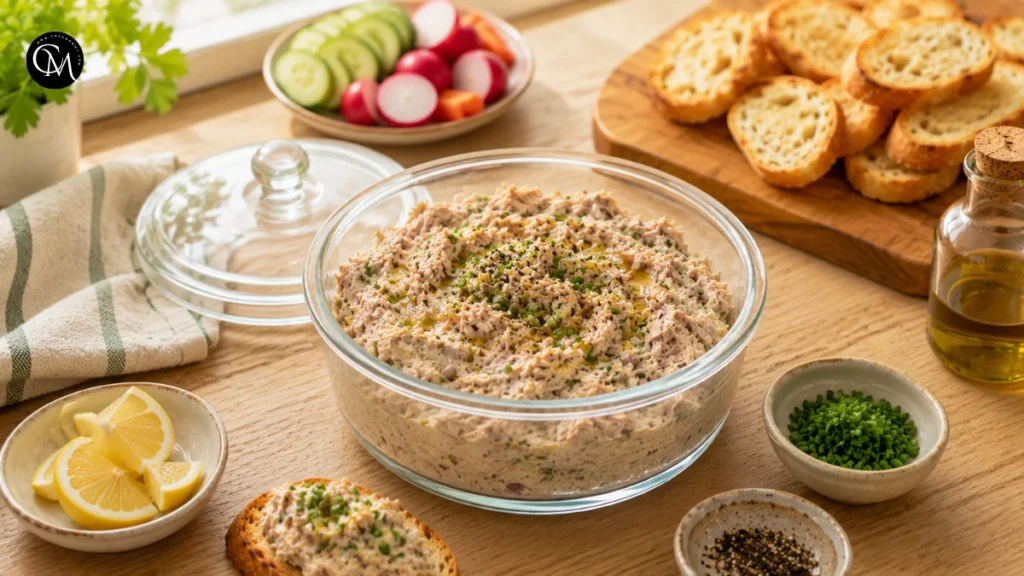
Transfer the mixture to a small serving bowl or glass container. Cover and refrigerate for at least 30 minutes. This final step matters more than it might seem.
Resting allows the shallot, lemon, herbs, mustard, and tuna to combine into a more unified flavor. The chilled cream cheese also firms slightly, creating the classic spreadable consistency.
Remove the Tuna Rillettes from the refrigerator about 10 minutes before serving. This takes away the refrigerator chill and makes the spread softer and more aromatic. Finish with chopped chives, a little cracked pepper, or a small drizzle of olive oil.
Nutritional Information
Approximate values per serving, based on 6 servings and excluding bread or crackers:
| Nutrient | Approximate Amount |
|---|---|
| Calories | 165 kcal |
| Protein | 17 g |
| Fat | 9 g |
| Saturated fat | 4 g |
| Carbohydrates | 3 g |
| Fiber | Less than 1 g |
| Sugars | 1 g |
| Sodium | 330 mg |
These values will vary depending on the tuna, cream cheese, crème fraîche, and serving size you use. Tuna Rillettes are naturally protein-rich because tuna is the main ingredient, while most of the fat comes from the dairy ingredients and olive oil.
For a more complete meal, serve the spread with vegetables, whole-grain toast, and a fresh salad rather than treating it only as a dip.
Healthier Alternatives
- One advantage of Tuna Rillettes is how easily the recipe adapts without losing its creamy character.
- For a lighter version, replace half of the cream cheese with thick Greek yogurt. It keeps the mixture creamy while reducing some of the richness.
- There is very little added sugar in the recipe already, so no sweetener is necessary. If your mustard contains added sugar and you are specifically limiting it, choose an unsweetened Dijon.
- For additional fiber, serve the spread with whole-grain baguette slices, seeded crackers, or rye toast.
- For a dairy-free version, use a plain dairy-free cream cheese with a neutral flavor and replace the crème fraîche with an unsweetened plant-based yogurt.
- The recipe itself is naturally gluten-free when all packaged ingredients are verified gluten-free. Serve it with cucumber rounds, carrot sticks, bell pepper strips, or gluten-free crackers.
- For children, keep the seasoning gentle and leave out the capers if needed. For older adults who prefer softer foods, serve Tuna Rillettes with soft whole-grain bread or tender cooked vegetables instead of very crisp crackers.
Serving Suggestions
- My favorite way to serve Tuna Rillettes is with thin slices of baguette brushed lightly with olive oil and toasted until the edges become crisp.
- For a lighter appetizer board, add cucumber rounds, radishes, cherry tomatoes, celery sticks, and endive leaves. Their crunch works especially well against the creamy tuna.
- You can also spoon the spread onto rye toast and top it with thin cucumber slices for an easy lunch.
- For entertaining, place the spread in a shallow ceramic bowl and create a small swirl on top with the back of a spoon. Finish it with fresh chives, black pepper, lemon zest, and a few capers.
- It looks polished without requiring complicated decorating.
- Another idea is to use Tuna Rillettes as a filling for small sandwiches, wraps, lettuce cups, or mini croissants.
Common Mistakes to Avoid
- Not draining the tuna well. Extra liquid can make the spread watery. Let the tuna sit in a strainer for a minute or gently press out excess moisture.
- Overmixing the tuna. A completely smooth purée loses the pleasant flaky texture that makes the spread interesting.
- Using cold cream cheese. Room-temperature cream cheese mixes more evenly and gives Tuna Rillettes a smoother consistency.
- Adding too much salt immediately. Tuna, Dijon, and capers already contribute saltiness. Taste before seasoning.
- Skipping the acid. Lemon juice is important because it cuts through the richness of the dairy and tuna.
- Serving it straight from the refrigerator. Extremely cold food has muted aromas. Give the spread about 10 minutes at room temperature before serving.
Storing Tips for Tuna Rillettes
- Store Tuna Rillettes in a clean airtight container in the refrigerator and use them within about 2 to 3 days for the best quality.
- Keep the spread chilled until shortly before serving, especially because it contains tuna and dairy ingredients.
- If you are preparing it for a gathering, you can make it the evening before. In fact, I often prefer the flavor the following day because the herbs, shallot, lemon, and mustard have had more time to blend.
- If a little moisture appears on the surface after refrigeration, simply stir the mixture gently before serving.
- Freezing is not ideal. Cream cheese and crème fraîche can become grainy or watery after thawing.
- This recipe became one of my regular meals because it turns pantry ingredients into something that feels genuinely special without requiring much planning. When I have tuna, lemon, and a little cream cheese on hand, lunch or an appetizer is already halfway finished.
Conclusion
Tuna Rillettes prove that a simple recipe can still feel elegant, flavorful, and useful in many different situations. With just a few ingredients and six manageable steps, you get a creamy French-inspired spread with savory tuna, bright lemon, fresh herbs, and just enough richness to make every bite satisfying.
The recipe is quick enough for weekday lunches but polished enough for entertaining, and it can easily be adjusted for lighter, gluten-free, or dairy-free meals.
Try making a batch and serve it with toasted bread, crunchy vegetables, or your favorite crackers. If you make it, leave a comment or review and share how you served yours. And if you enjoy practical recipes like this one, subscribe for more easy appetizers, spreads, and everyday meal ideas.
FAQs
Can I make Tuna Rillettes ahead of time?
Yes. Tuna Rillettes actually benefit from resting. Prepare them up to one day ahead, refrigerate in an airtight container, and remove them about 10 minutes before serving.
What type of tuna works best?
High-quality canned tuna packed in olive oil gives the richest texture and flavor. Tuna packed in water also works, although you may need a little extra creamy ingredient.
Can I make the recipe without cream cheese?
Yes. Thick Greek yogurt, ricotta, crème fraîche, or dairy-free cream cheese can work. The texture and richness will vary slightly depending on your substitution.
Why are my Tuna Rillettes too watery?
The tuna may not have been drained thoroughly, or too much lemon juice or crème fraîche may have been added. Stir in a little softened cream cheese to thicken them.
What can I serve instead of bread?
Serve the spread with cucumber slices, radishes, celery, bell pepper strips, endive leaves, gluten-free crackers, or lettuce cups for a lighter alternative.
Are Tuna Rillettes served hot or cold?
They are usually served chilled or cool rather than hot. For the best flavor and texture, let the spread sit at room temperature for about 10 minutes before serving.
Can I add other herbs or seasonings?
Absolutely. Dill, tarragon, parsley, chives, paprika, cayenne, or finely chopped pickles can all work. Add new seasonings gradually so the tuna remains the main flavor.
Tried it before ?
There are no reviews yet. Be the first one to write one.