
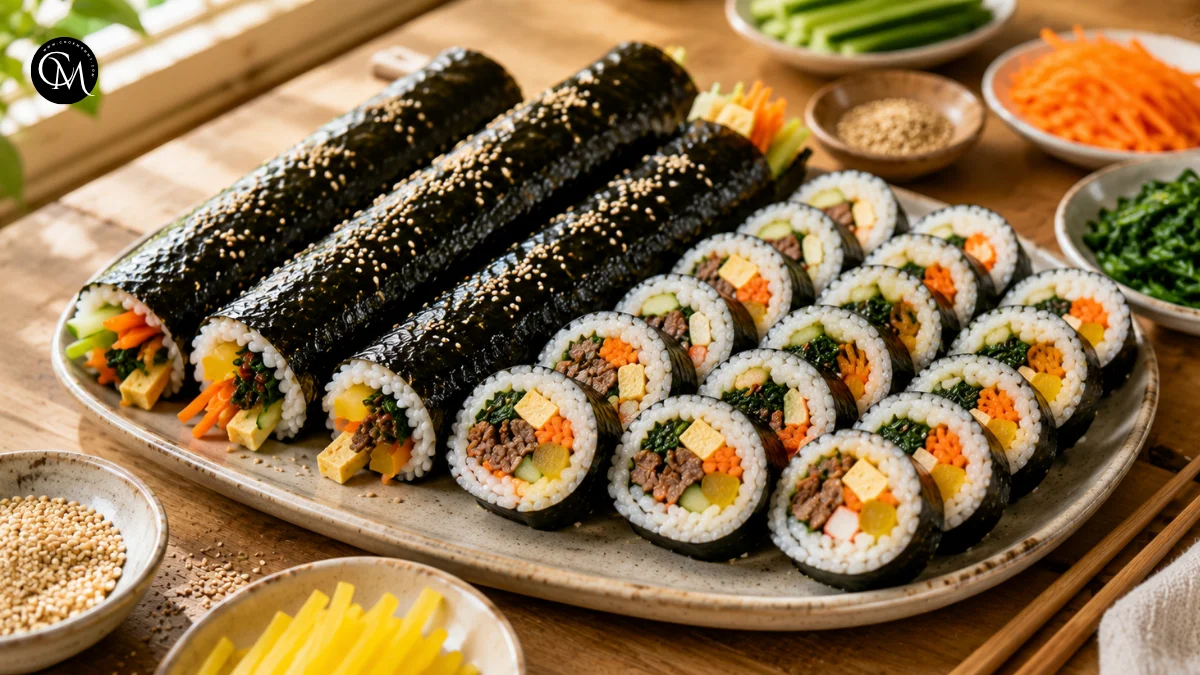
Korean kimbap: How 5 Easy Steps Create Delicious Rolls
Can one compact meal really deliver rice, vegetables, protein, seaweed, crunch, softness, and savory flavor in every bite? Korean kimbap proves that it can. A good roll is less about complicated technique and more about balance: properly seasoned rice, colorful fillings, careful rolling, and a light touch of sesame oil.
If your homemade rolls fall apart, taste flat, or become too dense, this guide will help. I make Korean kimbap when I want a practical lunch that feels fresh, satisfying, and easy to customize. Once the fillings are prepared, assembly becomes quick and almost rhythmic. The finished rolls work beautifully for lunchboxes, picnics, family meals, or an easy dinner.
The goal is not to overload the roll. It is to create clean layers of flavor and texture so every slice tastes balanced.
Table of Contents
Ingredients List
For 4 large rolls:
- 4 sheets roasted seaweed, or gim/nori
- 3 cups cooked short-grain white rice, warm
- 1 tablespoon sesame oil, plus a little for brushing
- 1/2 teaspoon fine salt
- 1 teaspoon sesame seeds
- 2 large eggs
- 1 medium carrot, cut into matchsticks
- 1 small cucumber, cut into long strips
- 4 strips yellow pickled radish, or danmuji
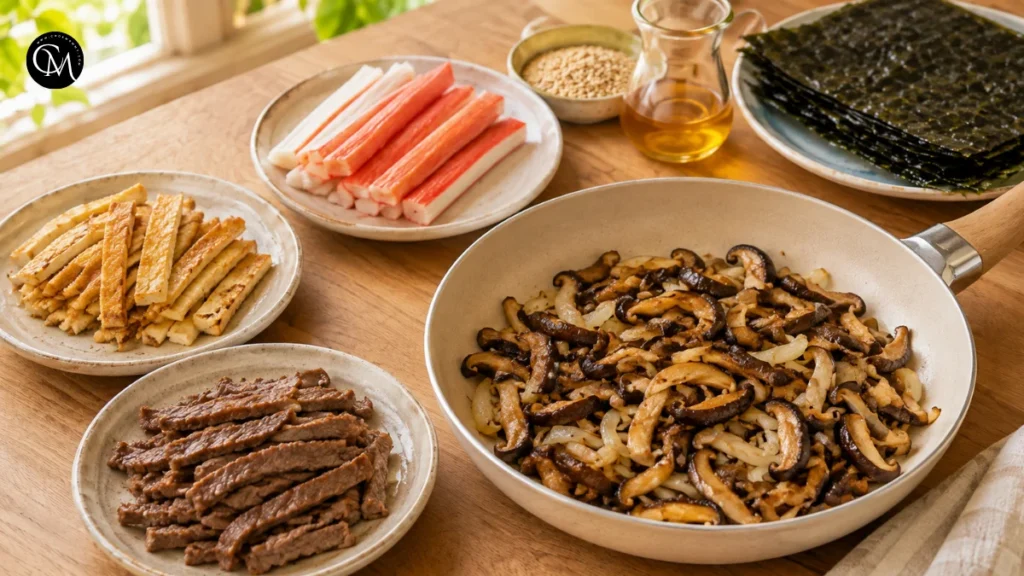
- 4 imitation crab sticks or 120 g cooked beef, chicken, or tofu
- 2 cups baby spinach
- 1 teaspoon neutral oil
- Extra sesame seeds for finishing
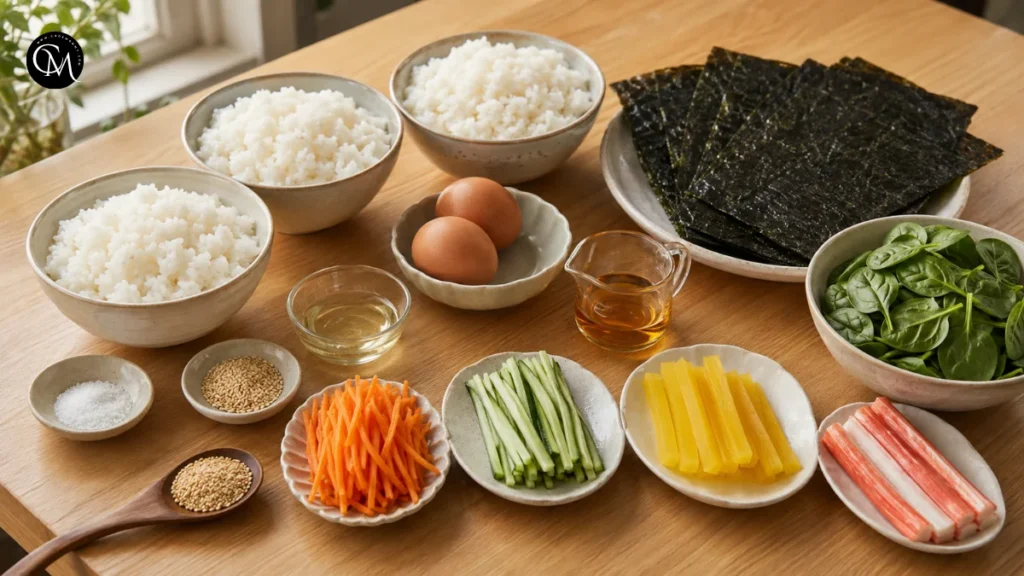
You can replace crab with tofu, mushrooms, tuna, cooked chicken, or thin beef strips. If danmuji is unavailable, lightly pickled cucumber adds a similar crisp, tangy contrast. For the best Korean kimbap, combine several textures rather than relying on one dominant filling.
Timing
- Preparation time: 25 minutes
- Cooking time: 15 minutes
- Total time: about 40 minutes
Korean kimbap is fairly quick once the rice is cooked. Most of the work is preparing several fillings separately, so I cook the rice first and handle the vegetables and protein while it rests.
Step-by-Step Instructions
Step 1 – Prepare ingredients
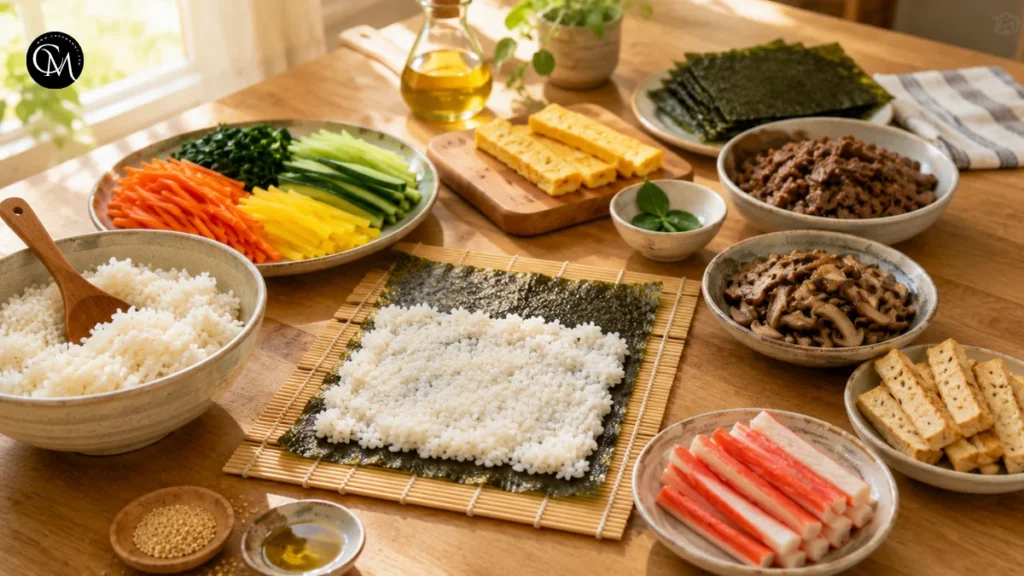
Cook the rice according to package directions. Let it rest for about 5 minutes, then transfer it to a wide bowl. Season gently with sesame oil, salt, and sesame seeds.
The rice should be warm, not steaming. Very hot rice softens the seaweed too quickly, while cold rice is harder to spread.
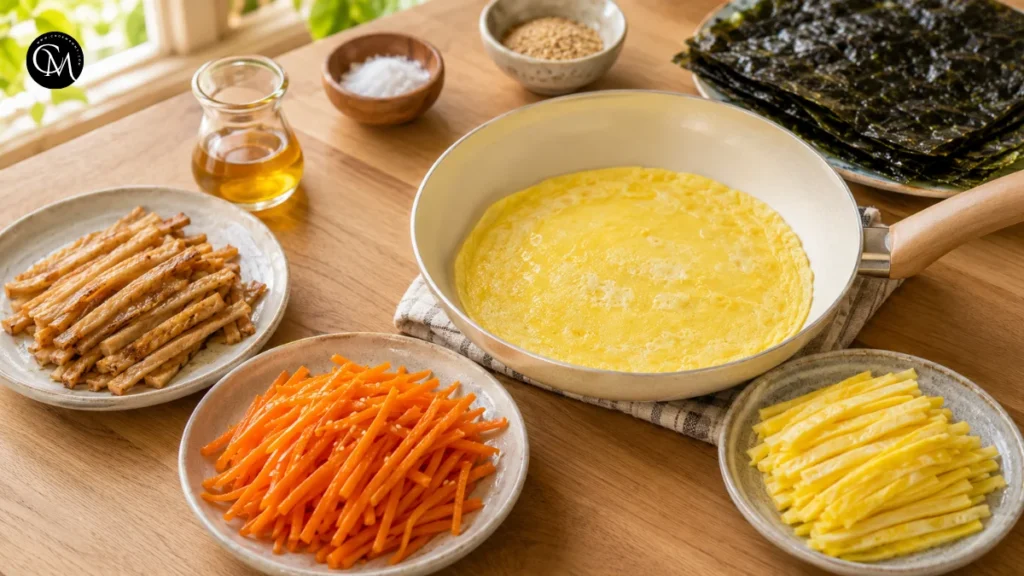
Blanch spinach for about 30 seconds, drain well, and squeeze out the water. Season lightly. Cut the carrot, cucumber, pickled radish, and protein into long, even strips.
Preparation matters because Korean kimbap rolls more neatly when every filling is ready before assembly begins.
Step 2 – Build flavor base
Beat the eggs with a pinch of salt and cook them in a lightly oiled skillet over medium-low heat as a thin omelet. Cool, then cut into strips.
Sauté the carrots for 2 to 3 minutes, just until slightly tender. If using beef, chicken, mushrooms, or tofu, season and warm them now.
Brief cooking removes raw harshness while preserving texture. Sesame oil adds aroma, but too much can overpower the rice and vegetables. Korean kimbap tastes best when no ingredient dominates.
Step 3 – Cook the main ingredient
If your main filling needs cooking, prepare it until fully done and lightly browned. Thin beef cooks quickly; tofu browns best after being patted dry; mushrooms should cook until excess moisture evaporates.
A wet filling can make Korean kimbap soggy, while overcooked protein makes the roll dry. Let hot ingredients cool slightly before assembly so steam does not soften the seaweed.
If you use imitation crab, no extra cooking is needed.
Step 4 – Combine everything
Place one seaweed sheet shiny-side down on a bamboo mat or clean cutting board. Spread about 3/4 cup seasoned rice over it, leaving 2 to 3 cm uncovered at the top.
Use damp fingers and spread the rice gently without mashing it. Arrange spinach, carrot, cucumber, egg, pickled radish, and protein across the lower third.
Lift the bottom edge and roll firmly over the fillings. Tuck gently, then continue rolling until sealed. Korean kimbap should be compact enough to hold its shape without squeezing the fillings out.
Step 5 – Finish & adjust seasoning
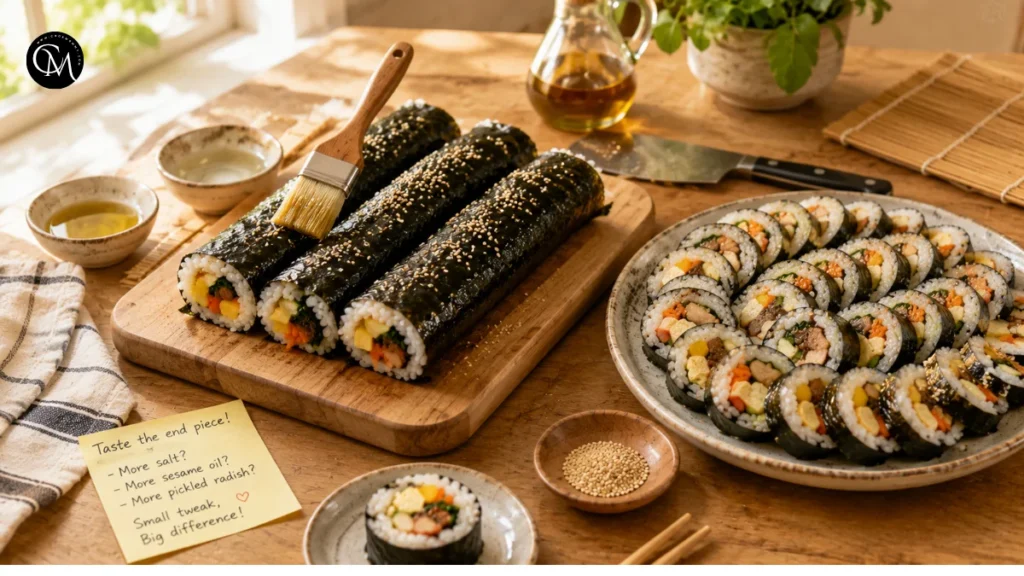
Brush each roll lightly with sesame oil and sprinkle with sesame seeds. Rest for 2 to 3 minutes before slicing.
Use a sharp knife lightly coated with sesame oil or water. Cut each roll into 8 to 10 pieces, wiping the blade when rice begins to stick.
Taste an end piece. If the flavor seems flat, the issue is usually under-seasoned rice or fillings. A small seasoning adjustment can make the next Korean kimbap roll noticeably better.
Nutritional Information
Approximate values per roll:
- Calories: 380–450 kcal
- Protein: 14–20 g
- Carbohydrates: 55–65 g
- Fat: 10–15 g
- Fiber: 4–6 g
- Sodium: 650–850 mg
These values vary with the protein, oil, rice portion, and pickled ingredients used. Korean kimbap combines carbohydrates, vegetables, and protein in one meal, but portion size and filling choices still make a meaningful difference.
Healthier Alternatives
- For less added sugar, choose unsweetened protein fillings and use less sweet pickled radish. You can replace part of the danmuji with cucumber.
- For more whole grains, use a blend of short-grain white rice and brown rice. Keeping some white rice helps preserve the sticky texture needed for rolling.
- Korean kimbap is dairy-free when made without cheese or creamy sauces. For a gluten-free version, use gluten-free tamari in seasoned proteins and check labels on imitation crab and pickled ingredients.
- For children, try mild egg, cucumber, carrot, and chicken. For lighter meals, increase vegetables and slightly reduce the rice. For seniors, choose tender fillings and cut smaller slices.
Serving Suggestions
- Serve Korean kimbap at room temperature with kimchi, cucumber salad, or a light soup. For lunchboxes, pair it with fruit, edamame, or lightly seasoned vegetables.
- For gatherings, arrange several filling combinations on one platter. I like one classic roll with egg and pickled radish, one tofu roll, and one spicy tuna-style version.
- You can also pair the rolls with mandu, Korean cucumber salad, or sesame spinach for a fuller meal.
Common Mistakes to Avoid
- Using steaming-hot rice: it can soften the seaweed and make slicing messy.
- Overfilling: too many ingredients make Korean kimbap difficult to seal.
- Leaving vegetables wet: excess moisture creates soggy seaweed.
- Pressing rice too firmly: compacted rice makes the roll heavy.
- Rolling too loosely: slices may fall apart.
- Using a dull knife: it crushes the roll instead of making clean cuts.
In my kitchen, overfilling is the mistake I see most often. A few extra strips quickly turn a manageable roll into one that will not close.
Storing Tips for the Recipe
- Korean kimbap is best eaten the day it is made because refrigerated rice firms up and the seaweed gradually loses its ideal texture. Store leftovers in an airtight container in the refrigerator for up to 24 hours.
- Let chilled slices sit at room temperature for 15 to 20 minutes before serving. Another option is to dip them lightly in beaten egg and pan-fry them.
- For meal prep, prepare vegetables and protein a day ahead, but season the rice and assemble shortly before eating.
- This recipe became one of my regular meals because it turns simple refrigerator ingredients into a colorful, portable meal without a complicated sauce or long cooking process.
Conclusion
Korean kimbap rewards good organization more than advanced cooking skill. Once the rice is seasoned, the fillings are ready, and the rolling technique becomes familiar, the process is easy and enjoyable.
Tender rice, crisp vegetables, savory protein, egg, sesame, and pickled radish create a satisfying mix of flavor and texture. Better still, the fillings can change according to your family’s preferences or what you already have available.
Try this Korean kimbap recipe for lunch, dinner, meal prep, or your next picnic. If you make it, leave a comment or review with your favorite filling combination, and subscribe for more practical recipes, cooking tips, and easy meal ideas.
FAQs
Can I make Korean kimbap without a bamboo mat?
Yes. Parchment paper or clean plastic wrap can work. A bamboo mat makes shaping easier, but steady hand pressure can still produce a neat roll.
What rice is best for Korean kimbap?
Short-grain white rice works best because it is sticky enough to hold the roll together while remaining tender rather than gluey.
Can I make Korean kimbap vegetarian?
Absolutely. Use egg, tofu, spinach, carrot, cucumber, mushrooms, avocado, or pickled radish. Combine contrasting textures so the roll stays satisfying.
Why does my kimbap fall apart when sliced?
It may be too loose, overfilled, or made with dry rice. Roll firmly, keep fillings moderate, and cut with a sharp knife.
Can I make Korean kimbap the night before?
Yes, although texture is best the same day. Refrigerate airtight, then let it warm slightly at room temperature before serving.
Is Korean kimbap the same as sushi?
No. Kimbap generally uses sesame-seasoned rice and cooked or pickled fillings, while sushi commonly uses vinegar-seasoned rice and different fillings.
What can I use instead of pickled radish?
Try cucumber pickles, lightly pickled carrots, or fresh cucumber. The flavor changes, but a crisp, tangy ingredient helps keep the roll balanced.
Tried it before ?
There are no reviews yet. Be the first one to write one.