
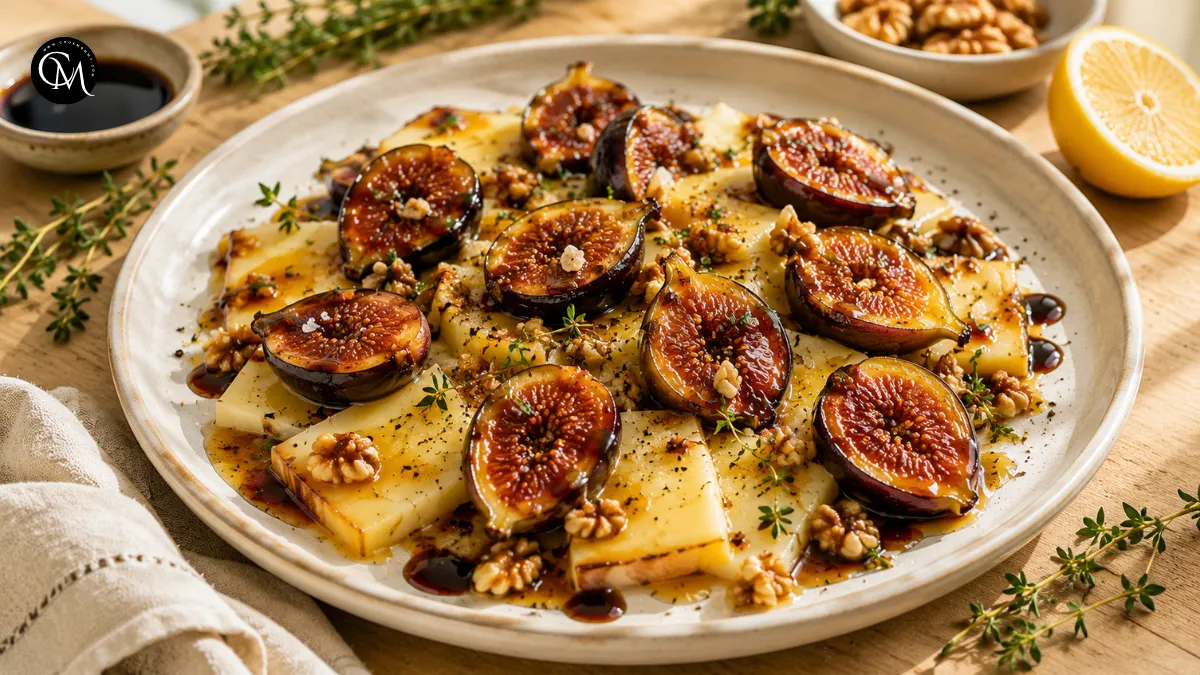
Caramelized Figs with Gouda Cheese: 5 Best Flavor Tips
Did you know fresh figs are nearly 80% water, yet a few minutes of heat can make their cut sides glossy, jammy, and deeply sweet? That contrast is why Caramelized Figs pair so well with Gouda. The fruit concentrates as it cooks, while the cheese adds buttery, nutty depth and a gentle salty finish.
This recipe is worth keeping because it looks dinner-party elegant but takes about 20 minutes. I use ripe figs, butter, honey, balsamic vinegar, thyme, and Gouda to create sweetness, acidity, salt, and richness without a complicated technique. Caramelized Figs can be served as an appetizer, brunch topping, or cheese-board centerpiece.
USDA-derived nutrition data lists raw figs at about 79% water, which helps explain why controlled heat matters: too much heat can make them collapse before they have time to brown properly.
Table of Contents
Ingredients List
For 4 appetizer servings:
- 8 fresh ripe figs, halved lengthwise
- 4 ounces (115 g) Gouda, thinly sliced
- 1 tablespoon unsalted butter
- 1 teaspoon extra-virgin olive oil
- 1 tablespoon honey or maple syrup
- 2 teaspoons balsamic vinegar
- 1 teaspoon fresh thyme leaves
- 2 tablespoons chopped toasted walnuts or pecans
- Flaky sea salt
- Freshly ground black pepper
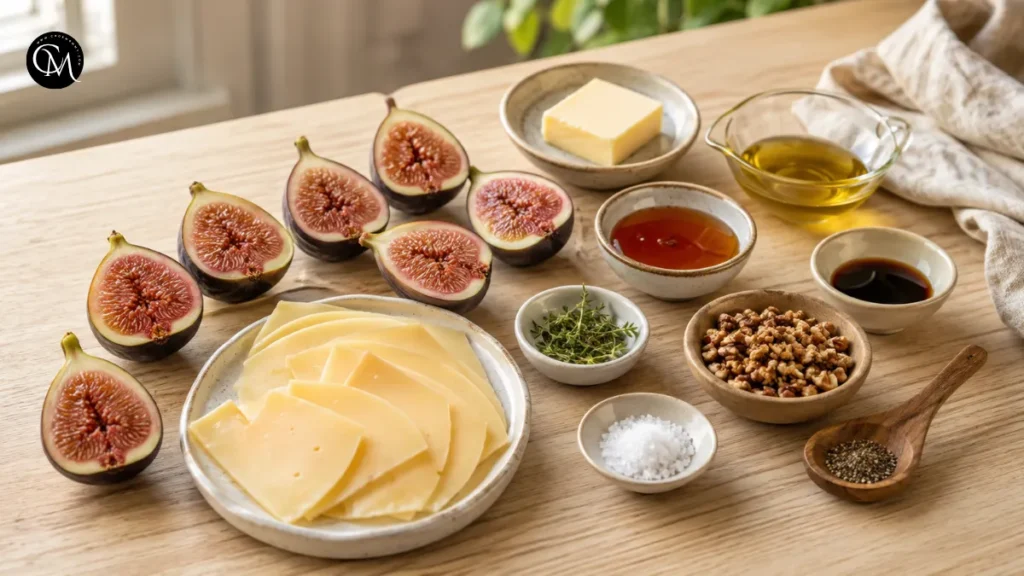
Choose figs that feel soft but not mushy. Black Mission, Brown Turkey, and green figs all work. For deeper flavor, use aged Gouda; for a creamier result, choose young Gouda. Havarti, fontina, mild cheddar, or Brie can stand in if needed.
Honey helps Caramelized Figs develop a shiny glaze, while balsamic keeps the sweetness balanced. Nuts are optional, but their crunch contrasts nicely with the soft fruit and cheese.
Timing
- Preparation time: 10 minutes
- Cooking time: 10–12 minutes
- Total time: about 22 minutes
Many baked fig appetizers take longer once oven preheating is included. This skillet method is faster because Caramelized Figs brown directly against the pan, building color and flavor quickly.
Step-by-Step Instructions
Step 1 – Prepare the Ingredients
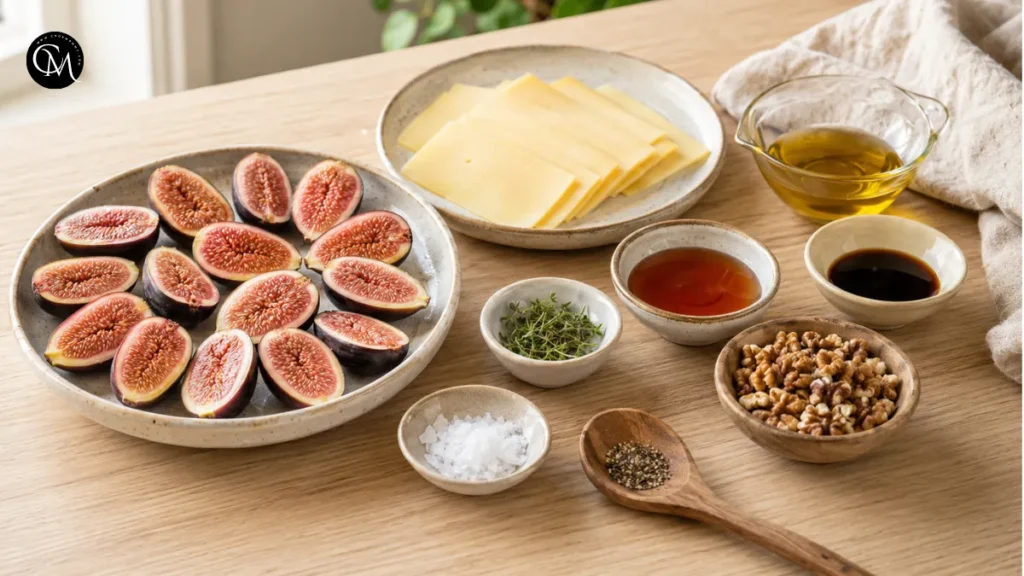
Rinse the figs gently, dry them thoroughly, remove the stems, and slice each one lengthwise. Drying is important because surface moisture creates steam, and steam works against browning.
Slice the Gouda before cooking and measure the honey, balsamic, thyme, and nuts. Caramelized Figs cook quickly, so having everything ready helps you avoid overcooking.
Step 2 – Build the Flavor Base
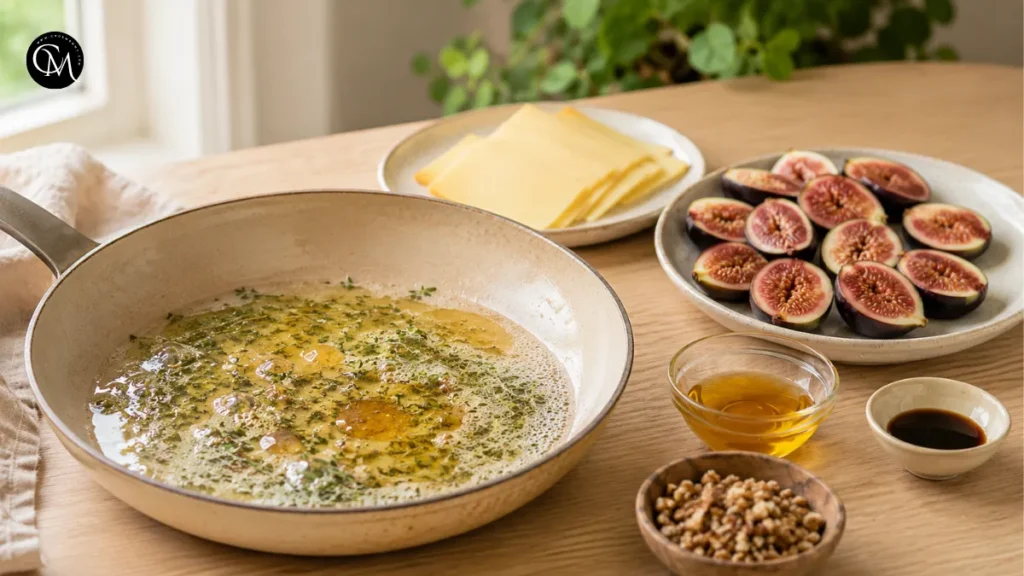
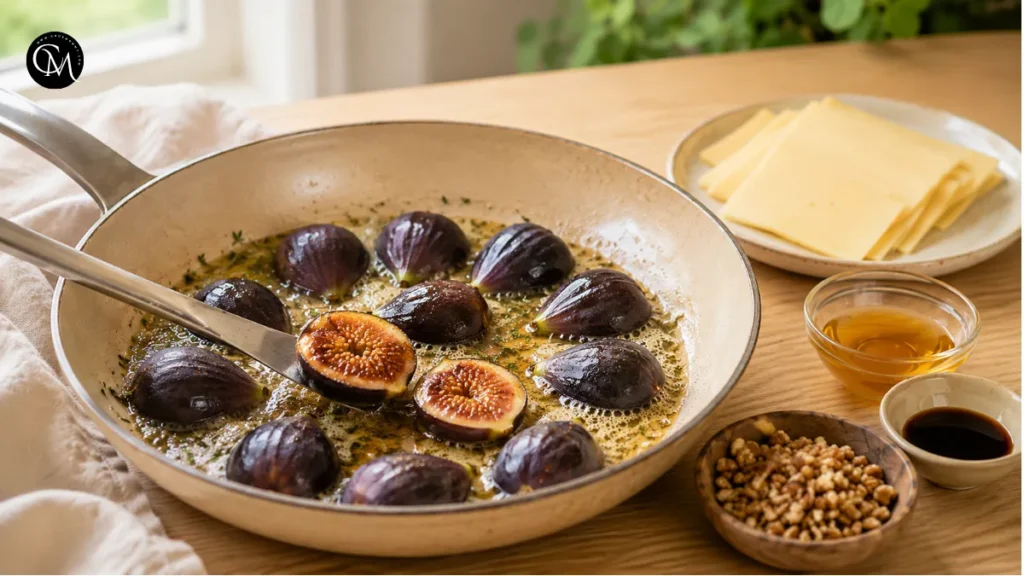
Heat a large skillet over medium heat. Add the butter and olive oil. When the butter begins to foam, stir in half the thyme, then add the honey and let it bubble for about 15 seconds.
Butter contributes nutty milk solids, while the oil moderates the cooking fat. The honey forms a thin glaze rather than a heavy syrup.
Keep the heat moderate. Very high heat can scorch the honey before the fruit softens, leaving you with a bitter glaze instead of the mellow caramel flavor you want.
Step 3 – Cook the Main Ingredient
Place the figs cut-side down in a single layer. Leave them undisturbed for 2–3 minutes. That steady contact is what develops attractive color. When the undersides are glossy and lightly bronzed, turn them carefully with tongs or a thin spatula.
Cook the rounded sides for another 1–2 minutes. Good Caramelized Figs should be tender around the edges but still juicy and intact in the center.
If they release excess liquid, briefly increase the heat rather than extending the cooking time. Cooking them for too long is more likely to turn the fruit into jam.
Step 4 – Combine Everything
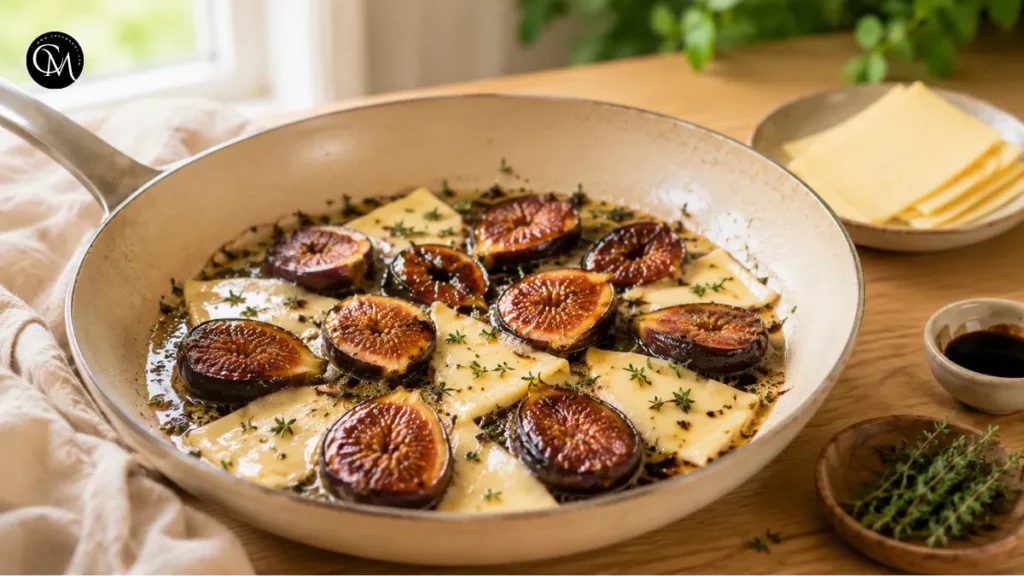
Lower the heat and drizzle the balsamic around the figs. Let it bubble for 20–30 seconds, then gently turn the fruit through the glaze. Arrange the Gouda between the warm figs. Cover the pan for 30–60 seconds, just until the cheese softens.
You want creamy edges, not a completely melted cheese sauce. Keeping some structure allows you to taste the Gouda separately from the fruit. At this stage, Caramelized Figs should taste sweet first, followed by tangy balsamic and savory, slightly salty cheese.
Step 5 – Finish and Adjust Seasoning
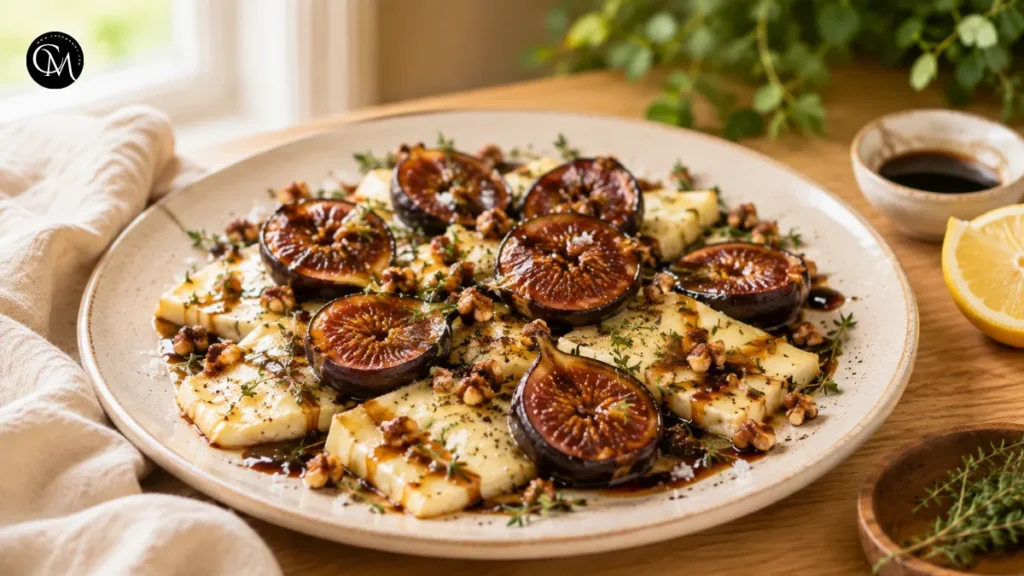
Transfer the figs and cheese to a warm plate. Spoon any remaining glaze from the skillet over the top. Finish with toasted nuts, the remaining thyme, freshly ground black pepper, and a very small pinch of flaky sea salt. Taste before adding extra honey. Very ripe figs may already be sweet enough.
If your Caramelized Figs taste too rich, add a few more drops of balsamic vinegar or a squeeze of fresh lemon juice. That little burst of acidity can make the entire plate taste brighter and more balanced.
Nutritional Information
Approximate nutrition per serving:
- Calories: 235–255 kcal
- Protein: 8–9 g
- Carbohydrates: 24–27 g
- Fiber: about 3 g
- Total fat: 13–15 g
- Saturated fat: 7–8 g
- Sodium: about 250–330 mg
- Sugars: about 20–22 g
These values are estimates and will vary with fig size, Gouda brand, portion size, and the amount of glaze served.
USDA-derived figures list raw figs at about 74 calories and 2.9 g of fiber per 100 g. Gouda provides approximately 356 calories and 24.9 g of protein per 100 g.
Caramelized Figs are fruit-forward, while the cheese contributes most of the protein, fat, calcium, and sodium. Think of the recipe as a flavorful appetizer rather than a dish where one ingredient needs to provide everything nutritionally.
Healthier Alternatives
- For a lower-sugar version, skip the honey and rely on ripe fruit. Caramelized Figs can still brown beautifully with butter alone, especially when the cut sides remain in contact with the skillet long enough.
- For a lighter plate, reduce the Gouda to 3 ounces and add arugula, spinach, or baby kale. The greens add freshness and allow smaller portions of cheese to feel satisfying.
- Serve with whole-grain crostini instead of white bread if you prefer a higher-fiber option.
- For gluten-free serving, pair the figs with certified gluten-free crackers or simply serve them over greens. The main recipe itself does not require flour or bread.
- For dairy-free Caramelized Figs, replace the butter with olive oil and choose a mild plant-based cheese that softens well when warmed.
- For children, young Gouda gives a milder flavor than aged varieties. You can also reduce the balsamic slightly.
- For seniors or anyone who prefers softer textures, omit the nuts or chop them very finely. Smaller portions work particularly well when this dish is part of a larger appetizer spread.
Serving Suggestions
- My favorite way to serve Caramelized Figs is on toasted sourdough with a thin slice of Gouda underneath. The bread catches the glaze, while its crisp edges prevent the appetizer from feeling too soft.
- For a dinner-party starter, arrange the figs over arugula with toasted walnuts, Gouda shards, and just a few drops of balsamic vinegar.
- They also pair beautifully with roast chicken or pork. In that setting, the warm fruit works almost like a quick homemade chutney and brings sweetness to a savory main course.
- For brunch, spoon Caramelized Figs over thick Greek yogurt and serve the Gouda on the side.
- For a cheese board, let the fruit cool for about five minutes before arranging it with crackers, grapes, toasted nuts, Gouda, and a mustardy condiment.
- That slight warmth makes the cheese more aromatic without creating a messy platter.
- If you enjoy sweet-savory combinations, explore related recipes such as baked Brie, fruit crostini, warm goat-cheese salads, or honey-roasted pears.
Common Mistakes to Avoid
- Using overripe figs. Very soft fruit can collapse quickly. Choose figs that yield gently when pressed but still hold their shape.
- Starting with wet fruit. Surface water encourages steaming instead of browning. Dry the figs carefully after rinsing.
- Crowding the skillet. Caramelized Figs need direct heat and enough room for moisture to escape. Cook in two batches if necessary.
- Moving the fruit too early. Give the cut sides 2–3 uninterrupted minutes so they can develop proper color.
- Using very high heat. Honey can burn surprisingly quickly, producing bitterness before the figs are ready.
- Over-melting the Gouda. Warm it only until softened so you keep a pleasant contrast between creamy cheese and tender fruit.
Storing Tips for the Recipe
- Caramelized Figs are at their best when served warm, but leftovers can be stored in an airtight container in the refrigerator for up to 2 days.
- Store extra Gouda separately when possible. This prevents juices from the figs from soaking into the cheese and affecting its texture.
- To reheat, place the figs in a skillet over low heat for 2–3 minutes. Gentle heat preserves their shape better than aggressive reheating.
- You can also cook the figs a few hours ahead, refrigerate them, then rewarm and add the Gouda immediately before serving.
- This recipe became one of my regular meals because it turns a handful of seasonal ingredients into something that feels special without requiring a long shopping list, complicated equipment, or much cleanup.
Conclusion
Caramelized Figs with Gouda Cheese proves that a memorable appetizer does not need a complicated technique. In about 20 minutes, ripe fruit becomes glossy and warm, Gouda adds creamy savory depth, and balsamic, thyme, and toasted nuts bring balance and texture. The recipe is easy to scale and flexible enough for brunch, dinner, or a cheese board.
Try these Caramelized Figs the next time fresh figs are in season, then adjust the cheese, herbs, or crunchy topping to suit your taste. If you make the recipe, leave a comment or review with your favorite variation, and subscribe for more practical seasonal recipes and straightforward cooking tips.
FAQs
Can I make Caramelized Figs with dried figs?
Fresh figs work best because they soften and brown without becoming chewy. Dried figs can be warmed in the glaze, but soak them briefly first and expect a denser texture.
What type of Gouda works best?
Young Gouda is mild and creamy, while aged Gouda has stronger nutty notes. Medium-aged Gouda is an excellent middle ground because it balances the sweetness without overpowering the fruit.
Can I prepare Caramelized Figs ahead of time?
Yes. Cook the figs several hours ahead, refrigerate them, then gently rewarm them in a skillet. Add Gouda, toasted nuts, and fresh herbs immediately before serving.
Why are my figs falling apart?
They may be too ripe, too wet, or cooked too long. Use slightly firmer fruit, pat it completely dry, and keep the cooking time relatively brief.
Can I make the recipe without honey?
Yes. Ripe Caramelized Figs contain enough natural sugar to become sweet and glossy in the pan. Skip the honey and finish with balsamic vinegar for contrast.
What herbs pair well with figs and Gouda?
Thyme is my first choice, but rosemary, basil, or a small amount of sage also works. Use herbs lightly so their aroma supports rather than masks the figs.
What can I serve with Caramelized Figs?
Try crusty bread, whole-grain crackers, arugula, toasted nuts, roast chicken, pork, or a simple cheese board. Their sweet-savory flavor makes them surprisingly versatile.
Tried it before ?
There are no reviews yet. Be the first one to write one.