
vegetable malai kofta curry: How 6 Steps Make It Perfect
Have you ever wondered why restaurant-style kofta stays tender inside while homemade versions sometimes crumble, turn dense, or disappear into the gravy? A small difference in moisture, frying temperature, and sauce consistency can completely change the final texture.
This vegetable malai kofta curry solves those common problems with six practical steps. It combines soft vegetable-and-paneer kofta with a silky tomato-cashew gravy enriched with cream and warming Indian spices. The result feels special enough for guests but is still manageable for a weekend family dinner.
What makes this recipe worth learning is the balance. The kofta should be crisp enough to hold together, yet tender inside. The sauce should taste creamy without becoming heavy, and the spices should complement rather than overpower the vegetables. Once you understand those three points, making a dependable vegetable malai kofta curry becomes surprisingly straightforward.
Table of Contents
Ingredients List
For the best texture, prepare the kofta mixture and gravy ingredients separately before you start cooking.
For the vegetable kofta
- 2 medium potatoes, boiled, cooled, and mashed
- 1 cup finely grated carrot
- 1 cup finely grated cauliflower
- ½ cup green peas, lightly mashed
- ½ cup grated paneer
- 3 tablespoons cornstarch
- 3 tablespoons breadcrumbs, plus more if needed
- ½ teaspoon garam masala
- ½ teaspoon ground cumin
- ¼ teaspoon chili powder
- ½ teaspoon salt
- 2 tablespoons chopped cilantro
- Oil for shallow or deep frying
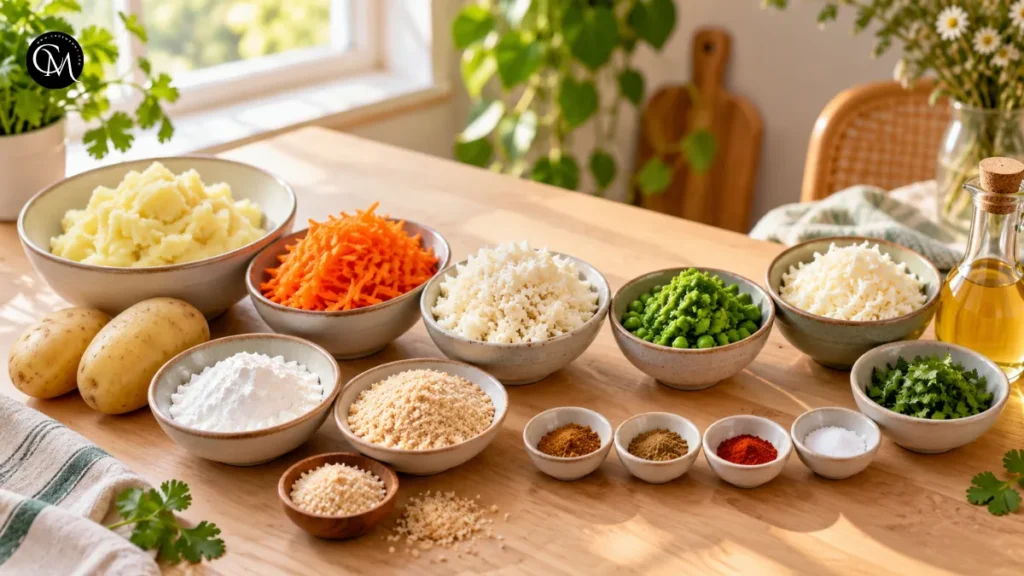
Squeeze excess moisture from the grated vegetables before mixing. This is one of the simplest ways to prevent vegetable malai kofta curry from developing soft, fragile kofta.
No paneer? Firm ricotta that has been well drained can work, although the texture will be softer. For a dairy-free version, use firm crumbled tofu.
For the creamy malai gravy
- 2 tablespoons butter or neutral oil
- 1 medium onion, roughly chopped
- 3 garlic cloves
- 1-inch piece fresh ginger
- 2 medium ripe tomatoes, chopped
- ¼ cup raw cashews
- 1 teaspoon ground coriander
- 1 teaspoon ground cumin
- ½ teaspoon turmeric
- ½ teaspoon Kashmiri chili powder
- 1 teaspoon garam masala
- 1 teaspoon sugar or honey, optional
- ¾ teaspoon salt, or to taste
- 1 to 1½ cups water
- ½ cup heavy cream
- 1 teaspoon crushed dried fenugreek leaves, or kasuri methi
- Fresh cilantro for serving
Cashews give the vegetable malai kofta curry its classic restaurant-style body. If necessary, substitute blanched almonds or sunflower seeds.
Timing
- Preparation time: 30 minutes
- Cooking time: 35 minutes
- Total time: approximately 1 hour 5 minutes
- Yield: 4–6 servings
A vegetable malai kofta curry takes slightly more preparation than a basic vegetable curry because the kofta are prepared separately. However, much of the recipe can be made ahead, which makes serving easier.
For a faster dinner, shape the kofta and prepare the gravy one day in advance. Keep them refrigerated separately and combine them only shortly before serving.
Step-by-Step Instructions for vegetable malai kofta curry
Step 1 – Prepare the ingredients carefully
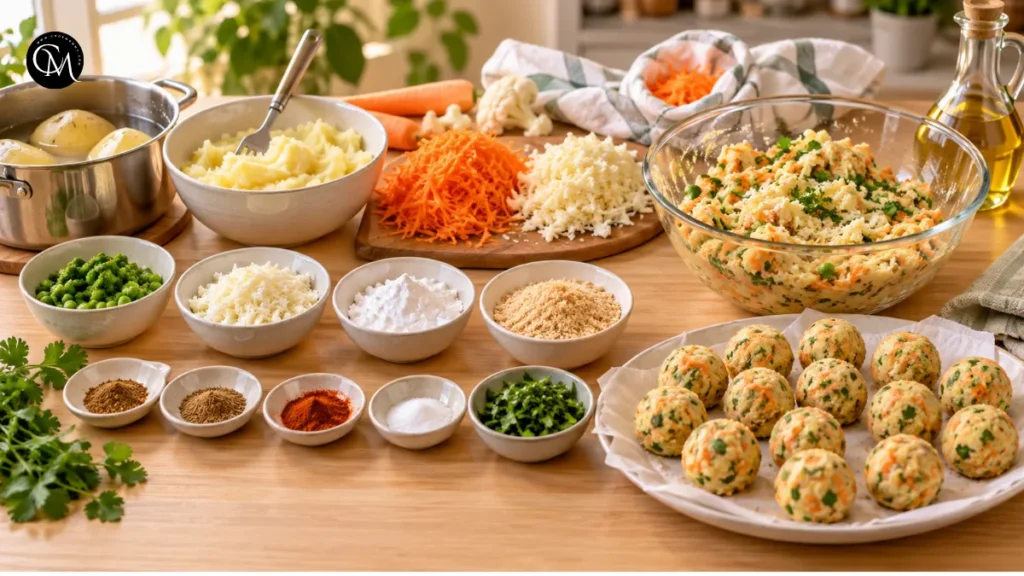
- Start by boiling the potatoes until fork-tender. Allow them to cool before mashing because steaming-hot potatoes can make the mixture sticky.
- Grate the carrot and cauliflower finely. Place them in a clean kitchen towel and gently squeeze out excess moisture. This small step matters more than adding extra flour later.
- Combine potatoes, vegetables, peas, paneer, cornstarch, breadcrumbs, cilantro, cumin, garam masala, chili powder, and salt.
- Mix lightly with your fingertips.
- The mixture for vegetable malai kofta curry should hold together when squeezed without feeling wet or gummy. If it remains sticky, add breadcrumbs one tablespoon at a time.
- Form approximately 14–16 small balls.
Step 2 – Build the flavor base
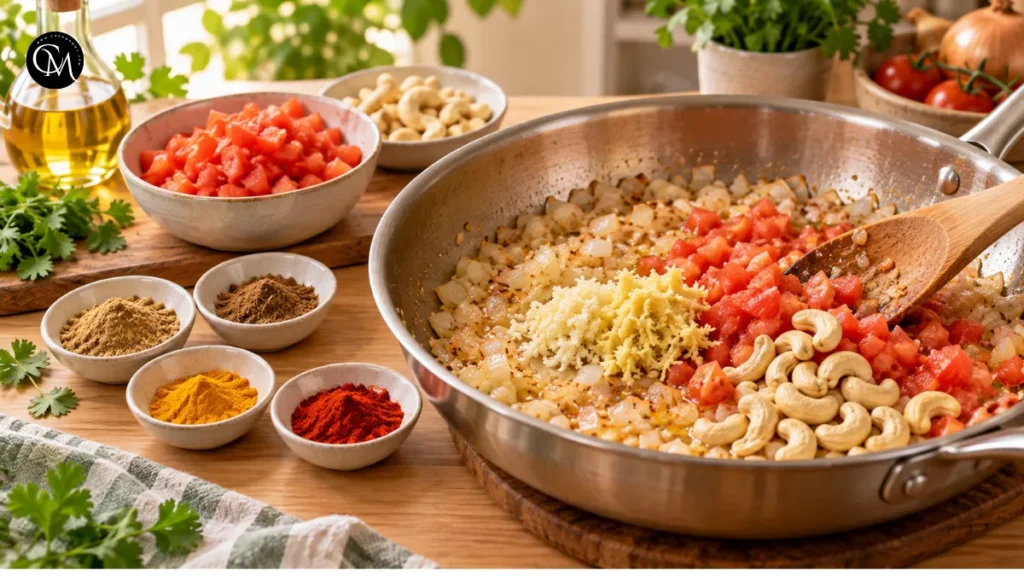
- Heat butter or oil in a large skillet over medium heat. Add the onion and cook for 5–6 minutes until soft and lightly golden.
- Add garlic and ginger and cook for about 30 seconds.
- Next, stir in tomatoes and cashews. Cook for 7–8 minutes, until the tomatoes soften and lose their raw smell.
- This cooking stage develops sweetness through gentle browning while removing harsh flavors from the onion and tomato. Rushing it often produces a vegetable malai kofta curry gravy that tastes sharp rather than rounded.
- Add coriander, cumin, turmeric, and Kashmiri chili powder. Cook for another 30 seconds before removing the pan from the heat.
Step 3 – Cook the kofta
- While the gravy mixture cools slightly, heat frying oil to approximately 175°C/350°F.
- Test one kofta before cooking the entire batch. If it breaks apart, return the mixture to the bowl and add another tablespoon of cornstarch or breadcrumbs.
- Fry the kofta in small batches for approximately 3–4 minutes, turning gently until evenly golden.
- Avoid overcrowding the pan. Adding too many balls lowers the oil temperature and encourages the kofta to absorb excess oil.
- Transfer them to a rack or paper towel.
- Properly cooked vegetable malai kofta curry should have kofta with a lightly crisp exterior and a soft, almost creamy center.
Step 4 – Blend and combine the gravy
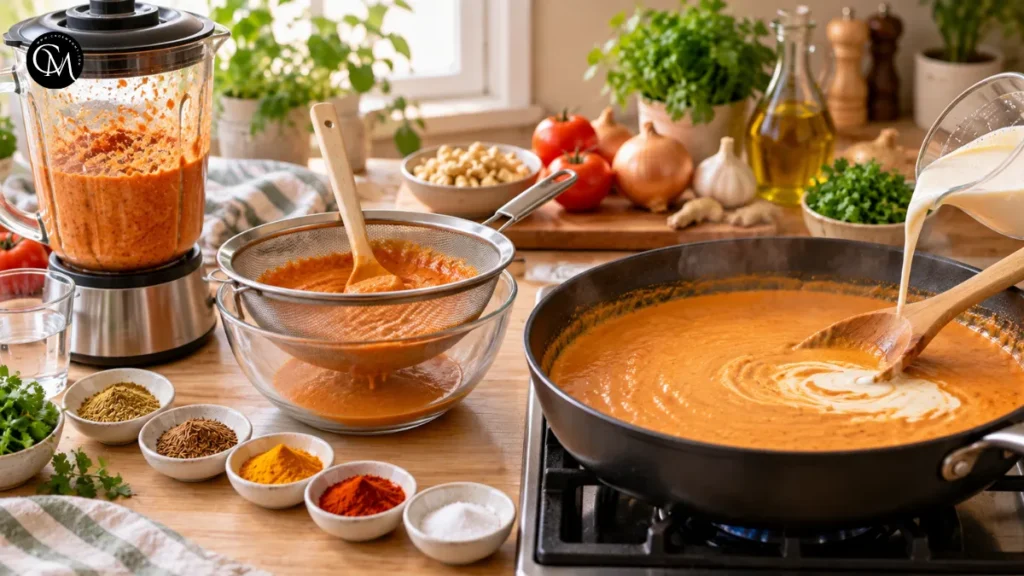
- Transfer the cooled onion-tomato mixture to a blender. Add about ½ cup water and blend until completely smooth.
- For an especially refined restaurant-style texture, pass the puree through a fine sieve.
- Return the sauce to the skillet over medium-low heat. Add another ½–1 cup water depending on your preferred consistency.
- Simmer gently for 5 minutes.
- The sauce should be slightly thinner than you eventually want because both cream and kofta will affect its consistency.
- Stir in the cream. At this point, the vegetable malai kofta curry should become noticeably smoother, lighter in color, and richer in aroma.
- Do not boil aggressively after adding the cream, as gentle heat helps maintain a silky sauce.
Step 5 – Finish and adjust the seasoning
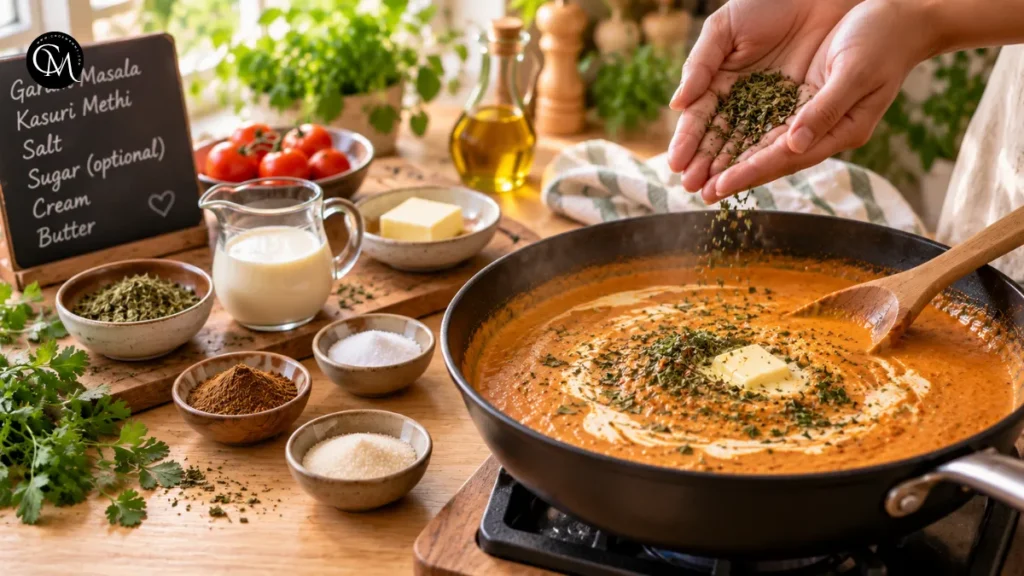
- Add garam masala and crushed kasuri methi.
- Rub the dried fenugreek between your palms before adding it. Crushing the leaves releases more aroma and spreads their distinctive flavor throughout the sauce.
- Taste before adding sugar. Good tomatoes may provide enough natural sweetness. If the sauce tastes noticeably acidic, ½–1 teaspoon sugar can balance it without making the curry sweet.
- Check the salt and consistency.
- A chef-style finishing trick is to add one tablespoon of cream or a small knob of butter just before serving. It gives vegetable malai kofta curry a glossy restaurant-style finish without requiring a large amount of extra fat.
Step 6 – Add the kofta and serve
- Do not leave fried kofta sitting in the sauce for a long period. They continue absorbing liquid and can eventually become too soft.
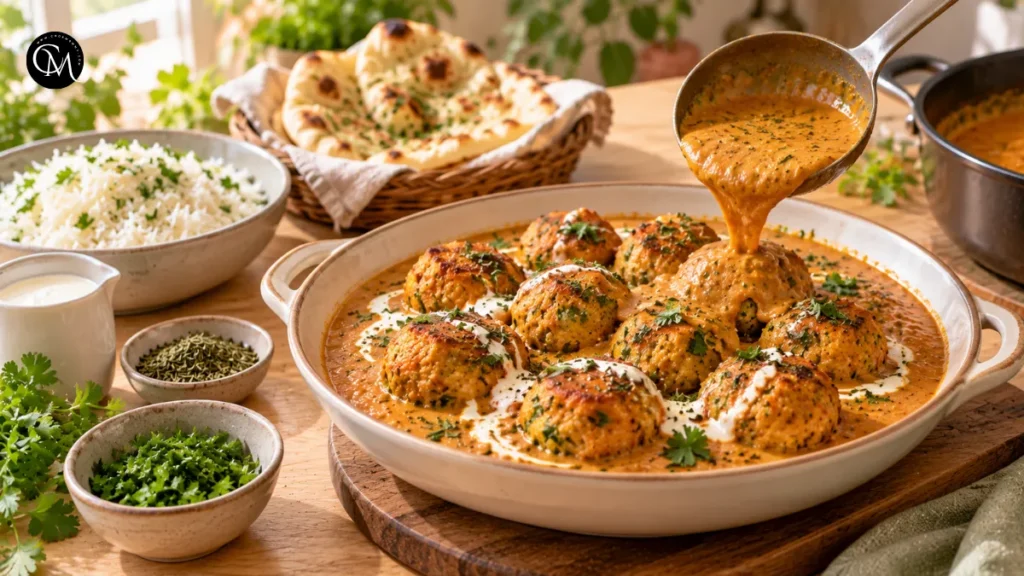
- For the best texture, arrange the hot kofta in the serving dish and spoon the warm gravy over them about 5 minutes before eating.
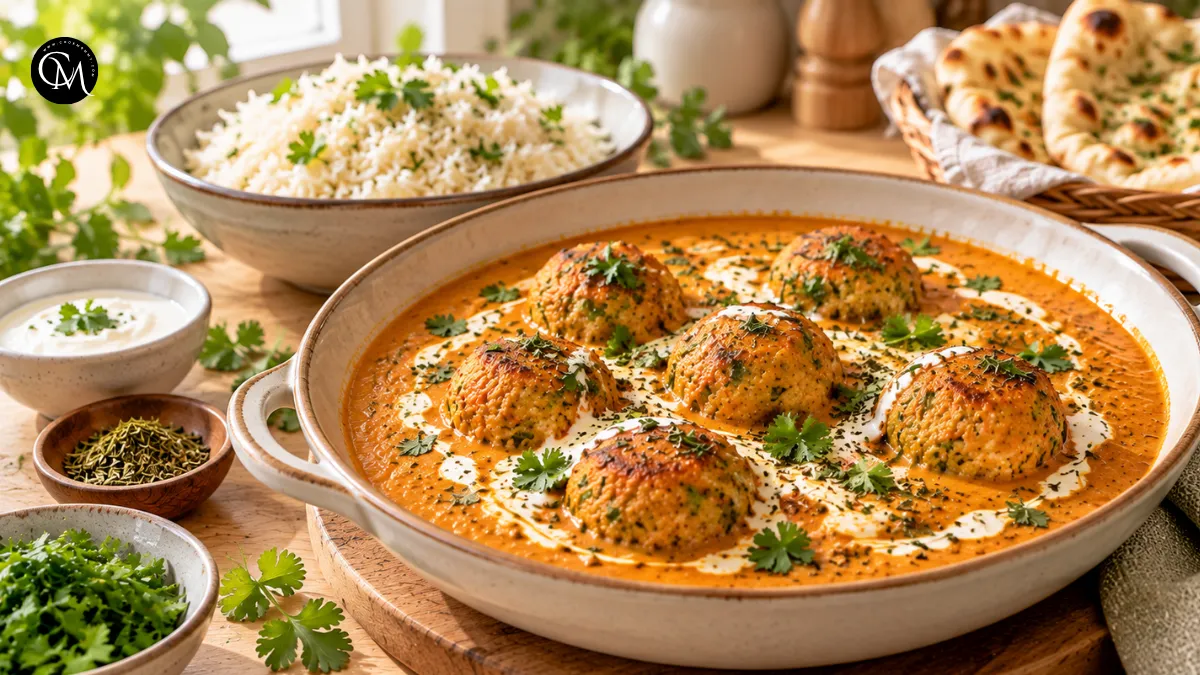
- Garnish the vegetable malai kofta curry with a swirl of cream, fresh cilantro, and a small pinch of kasuri methi.
- Serve immediately with naan, roti, paratha, or steamed basmati rice.

Nutritional Information
Approximate values per serving, based on 6 servings:
- Calories: 390–430 kcal
- Protein: 10–12 g
- Carbohydrates: 32–36 g
- Fat: 24–28 g
- Saturated fat: 9–11 g
- Fiber: 5–6 g
- Sodium: approximately 550–650 mg
Nutrition will vary according to frying method, portion size, paneer, cream, and the amount of oil absorbed by the kofta. Vegetable malai kofta curry is naturally rich, so pairing a moderate portion with vegetables or a fresh salad can create a more balanced meal.
Healthier Alternatives
- You can adjust vegetable malai kofta curry without losing its comforting character.
- For a lighter version, bake or air-fry the kofta instead of deep-frying. Brush them lightly with oil and bake at 200°C/400°F until golden, turning once.
- To reduce added sugar, simply omit it and use fully ripe tomatoes.
- For more whole grains, serve the curry with brown basmati rice, whole-wheat roti, or whole-grain flatbread rather than refined naan.
- For a dairy-free vegetable malai kofta curry, replace paneer with firm tofu, butter with oil, and heavy cream with unsweetened cashew cream or coconut cream.
- The basic recipe is naturally gluten-free if certified gluten-free breadcrumbs or extra cornstarch are used.
- For children, reduce the chili while keeping cumin, coriander, and mild garam masala for flavor. For seniors or anyone preferring softer food, make smaller, tender kofta and allow them to sit in the sauce slightly longer before serving.
Serving Suggestions
- My favorite way to serve vegetable malai kofta curry is with fragrant basmati rice and warm garlic naan because the rice absorbs the gravy while the naan is perfect for scooping up the remaining sauce.
- For a larger Indian-inspired dinner, add cucumber raita, sliced onions with lemon, roasted cauliflower, or a simple kachumber salad.
- If the curry is part of a celebration meal, pair it with jeera rice, vegetable pulao, dal, and mango chutney.
- For a lighter plate, serve one or two kofta with plenty of gravy, roasted vegetables, and a small portion of brown basmati rice.
Common Mistakes to Avoid
- Not squeezing the vegetables. Excess water is the most common reason kofta fall apart.
- Adding too much binder. Extra cornstarch may prevent breaking, but too much produces dense, rubbery kofta.
- Frying in cool oil. Aim for roughly 175°C/350°F. Lower temperatures increase oil absorption.
- Burning the spices. Ground spices need only about 30 seconds in the pan before liquid is added.
- Boiling the cream aggressively. Low, gentle heat keeps vegetable malai kofta curry smooth and prevents the gravy from separating.
- Adding kofta too early. Letting them soak for 20–30 minutes can turn beautifully crisp kofta into very soft dumplings. Add them shortly before serving.
Storing Tips for the Recipe
- Store the gravy and kofta separately whenever possible.
- The gravy keeps well in an airtight refrigerator container for up to 3 days. Reheat it gently over medium-low heat, adding a splash of water if it has thickened.
- Cooked kofta can be refrigerated separately for about 2–3 days. Reheat them in an oven or air fryer before adding the sauce.
- Freezing the gravy works better than freezing the fully assembled vegetable malai kofta curry. Freeze the sauce for up to 2 months, thaw overnight in the refrigerator, and add fresh cream during reheating if needed.
- This recipe became one of my regular meals because the sauce can be prepared ahead while the kofta turn an ordinary vegetable dinner into something that feels genuinely special.
Conclusion
A great vegetable malai kofta curry is all about managing moisture, building the gravy patiently, and combining the kofta with the sauce at the right moment. Follow those principles and you get tender vegetable kofta surrounded by creamy, aromatic tomato-cashew gravy rather than soggy dumplings or a heavy sauce.
The recipe also adapts easily to baked kofta, dairy-free ingredients, milder seasoning, or whole-grain sides, making it useful for both family dinners and special occasions.
Try the recipe and adjust the spice level and gravy consistency to suit your table. If you make it, leave a comment or review sharing how it turned out, and subscribe for more practical recipes, cooking techniques, and kitchen-tested tips.
FAQs
Can I make vegetable malai kofta curry ahead of time?
Yes. Prepare the gravy and kofta separately up to a day ahead. Reheat both independently and add the kofta to the hot gravy about five minutes before serving.
Why do my vegetable kofta fall apart while frying?
The mixture is probably too wet or the oil too cool. Squeeze vegetables thoroughly, cool the potatoes, add enough binder, and test one kofta before frying the batch.
Can I bake the kofta instead of frying them?
Yes. Brush or spray the kofta lightly with oil and bake at 200°C/400°F until golden, turning halfway through. They will be lighter but slightly less crisp.
What can I use instead of heavy cream?
Cashew cream gives vegetable malai kofta curry a similarly luxurious texture. Coconut cream also works, although it introduces a mild coconut flavor that changes the traditional taste.
Can I make this recipe without cashews?
Yes. Try blanched almonds, sunflower seeds, or a little extra cream. Each alternative changes the sauce slightly, but all can provide richness and a smooth texture.
Is vegetable malai kofta curry spicy?
It does not need to be. Kashmiri chili provides more color than intense heat. Reduce or omit it for children, then serve extra chili separately for adults.
What is the best side dish for malai kofta?
Basmati rice and naan are classic choices. Jeera rice, whole-wheat roti, cucumber raita, or a fresh kachumber salad also pair beautifully with the creamy gravy.
Tried it before ?
There are no reviews yet. Be the first one to write one.