
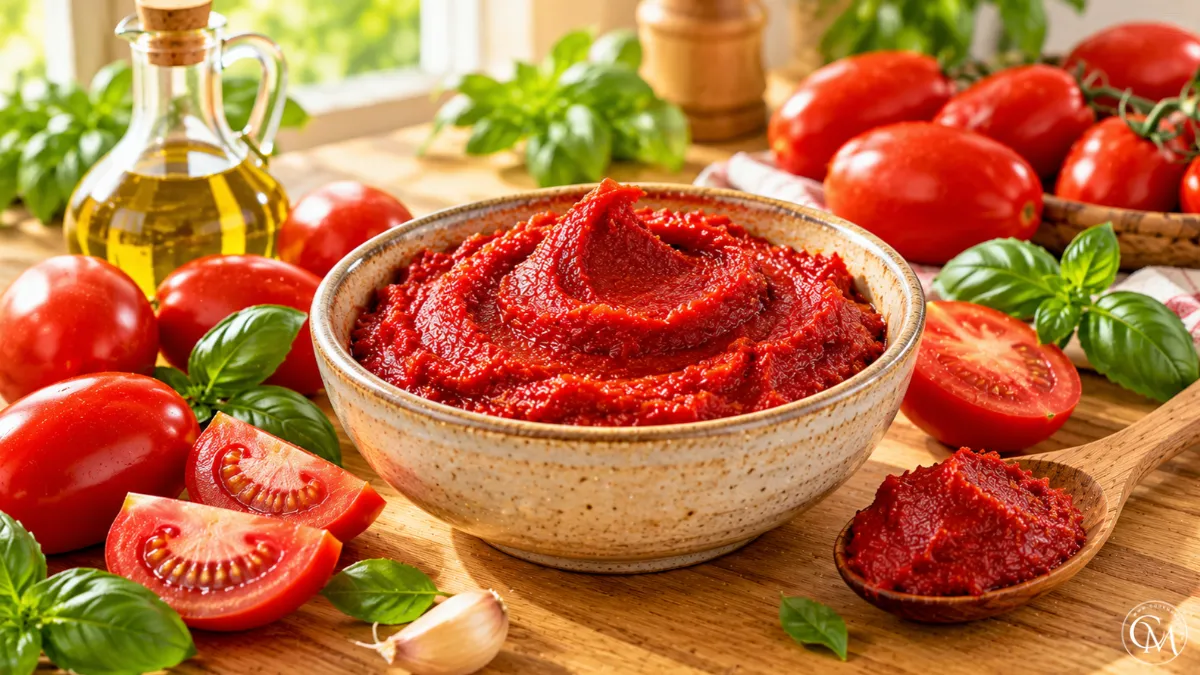
homemade Tomato Paste Recipe: 5 Best Tips for Rich Flavor
Did you know that fresh tomatoes contain approximately 94–95% water? That means the secret to making rich, flavorful Tomato Paste isn’t adding complicated ingredients it’s removing moisture while preserving the tomatoes’ natural sweetness and savory depth. If you’ve ever wondered why homemade tomato concentrate sometimes turns out watery, sour, or slightly bitter, you’re in the right place.
Making Tomato Paste from scratch is surprisingly straightforward. All you need are ripe tomatoes, a few pantry ingredients, patience, and the right cooking technique. Unlike many store-bought varieties, homemade paste gives you complete control over the seasoning, texture, and concentration.
This recipe focuses on five essential techniques: selecting the right tomatoes, developing flavor slowly, controlling moisture, achieving a smooth consistency, and seasoning at the proper stage. The result is a thick, intensely flavored paste that adds delicious depth to pasta sauces, soups, stews, and countless homemade dishes
Table of Contents
Ingredients List
Making delicious Tomato Paste requires only a handful of ingredients. The quality of your tomatoes matters far more than having a long shopping list.
Yield: Approximately 1–1½ cups | About 20–24 tablespoons
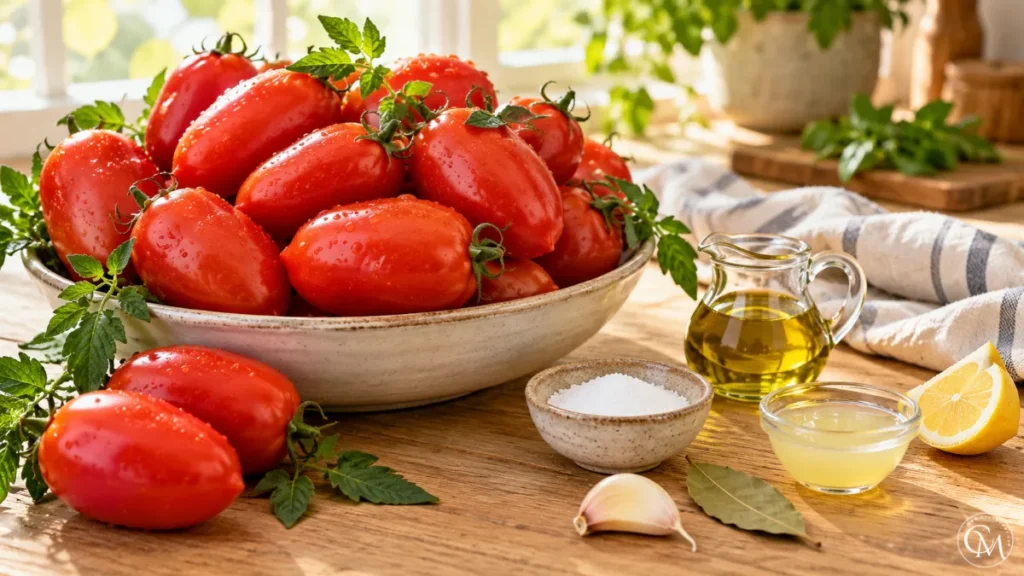
- 4 pounds (1.8 kg) ripe Roma tomatoes: Their firm flesh, lower moisture content, and naturally sweet flavor make them excellent for concentrating.
- 1 tablespoon extra-virgin olive oil (optional): Adds a delicate richness and helps create a rounded flavor.
- ½ teaspoon fine salt, or to taste: Enhances the tomatoes’ natural sweetness.
- 1 teaspoon fresh lemon juice (optional): Adds a brighter finish if the tomatoes taste overly sweet.
- 1 small garlic clove (optional): Provides subtle savory depth.
- 1 small bay leaf (optional): Introduces a gentle herbal aroma.
Ingredient Substitutions
- Can’t find Roma tomatoes? San Marzano-type tomatoes or other meaty plum varieties work beautifully.
- Regular garden tomatoes are also suitable, although their higher moisture content may require additional cooking time.
- For an oil-free version, omit the olive oil entirely. If you prefer a pure tomato flavor, skip the garlic, bay leaf, and lemon juice.
- Kitchen tip: Choose tomatoes that feel heavy, smell pleasantly ripe, and have deep red flesh. Avoid underripe fruit, which can produce an overly sharp result.
Timing
The secret to excellent homemade Tomato Paste is allowing enough time for moisture to evaporate without scorching the natural sugars.
| Preparation stage | Estimated time |
|---|---|
| Preparation | 15–20 minutes |
| Initial cooking | 25–35 minutes |
| Straining and reduction | 90–150 minutes |
| Total time | 2 hours 10 minutes–3 hours 25 minutes |
| Yield | 1–1½ cups |
- Cooking time varies depending on tomato variety, pan width, heat level, and desired thickness.
- A wide, heavy-bottomed pan generally reduces tomato puree faster than a narrow saucepan because it exposes more surface area for evaporation.
- Time-saving tip: Prepare and chop your tomatoes the night before. Refrigerate them in a covered container until you’re ready to cook.
Step-by-Step Instructions
Follow these five steps to make smooth, concentrated Tomato Paste with excellent flavor and consistency.
Step 1: Prepare the Ingredients
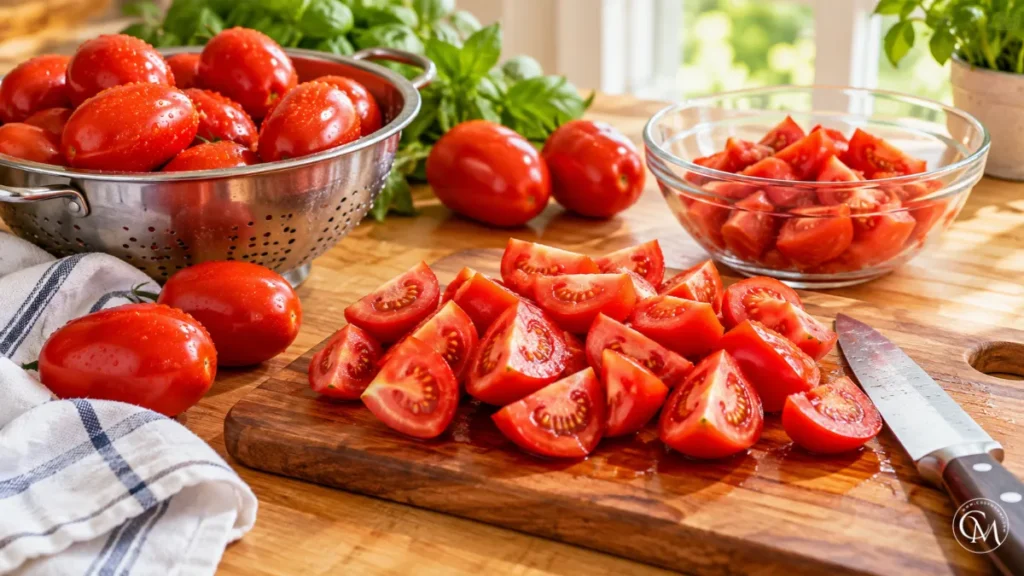
- Wash the tomatoes thoroughly under running water. Remove stems, cores, and any damaged areas.
- Cut each tomato into quarters or smaller pieces for even cooking. There’s no need to peel them yet.
- Uniform pieces soften at approximately the same rate, preventing some sections from sticking while others remain firm.
- Best tip 1: Use fully ripe, fleshy tomatoes. Their natural flavor becomes more pronounced as water evaporates.
Step 2: Build the Flavor Base
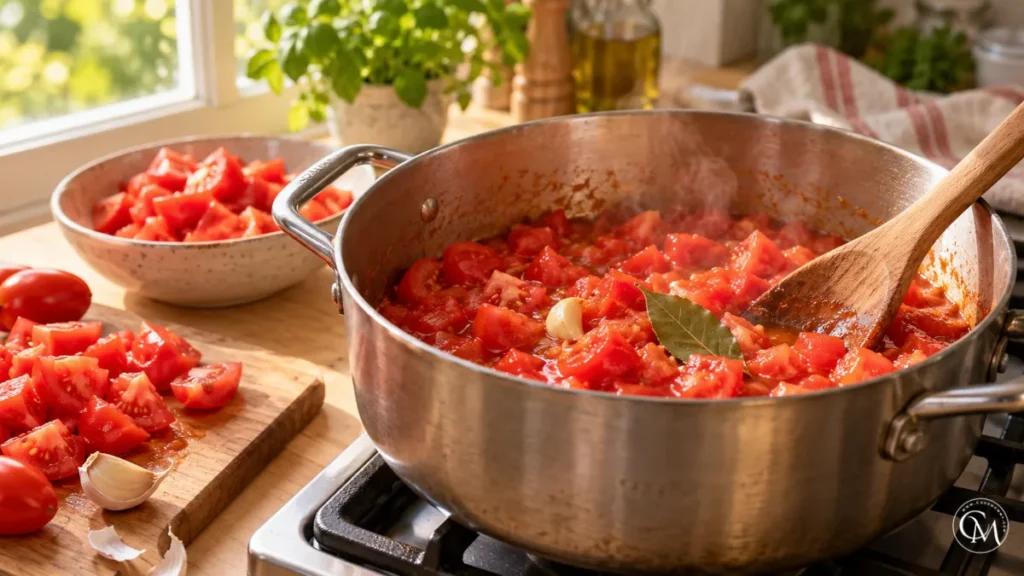
- Transfer the chopped tomatoes into a large, heavy-bottomed saucepan.
- Cook over medium heat, stirring occasionally, until the tomatoes release their juices and begin to soften.
- Add the garlic and bay leaf if using them.
- As the tomatoes heat, their cell structures soften and release liquid, creating the base for a concentrated sauce.
- Avoid adding water unless absolutely necessary to prevent sticking.
- Best tip 2: Start with moderate heat. Aggressive boiling can scorch the tomatoes before their flavors develop.
Step 3: Cook and Strain the Tomatoes
- Continue simmering for approximately 25–35 minutes, until the tomatoes become completely soft.
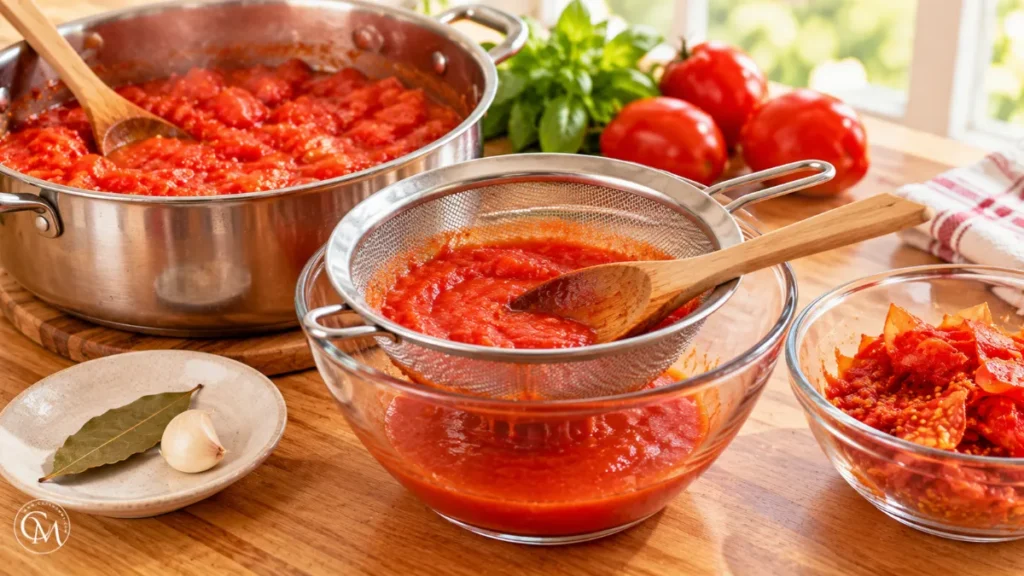
- Remove the bay leaf and garlic, then pass the mixture through a food mill or fine-mesh sieve.
- Press gently with a spoon to separate the smooth pulp from the skins and seeds.
- This produces a refined texture without unnecessary lumps.
- Best tip 3: Strain before the final reduction. Removing skins and seeds now is considerably easier than working with thick, sticky paste.
Step 4: Combine Everything and Reduce
- Return the strained puree to a wide saucepan and add the optional olive oil.
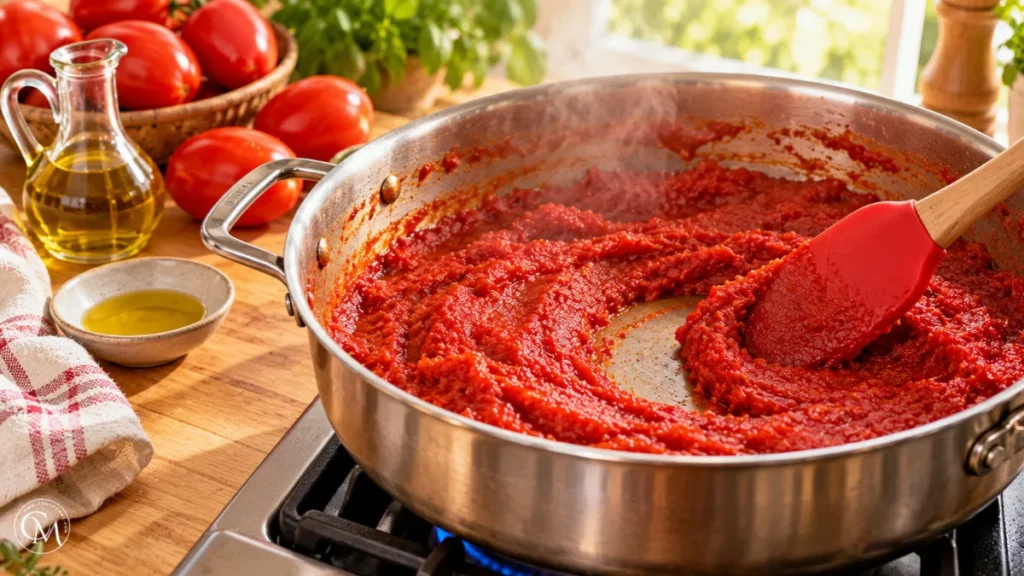
- Simmer uncovered over medium-low heat for approximately 90–150 minutes, stirring frequently.
- As the liquid evaporates, the puree gradually changes from a thin sauce into a thick, deep-red concentrate.
- Reduce the heat as the mixture thickens, and scrape the bottom regularly with a silicone spatula.
- Best tip 4: Watch the texture rather than the clock. Properly reduced Tomato Paste should hold its shape briefly when pushed across the pan.
Step 5: Finish and Adjust Seasoning
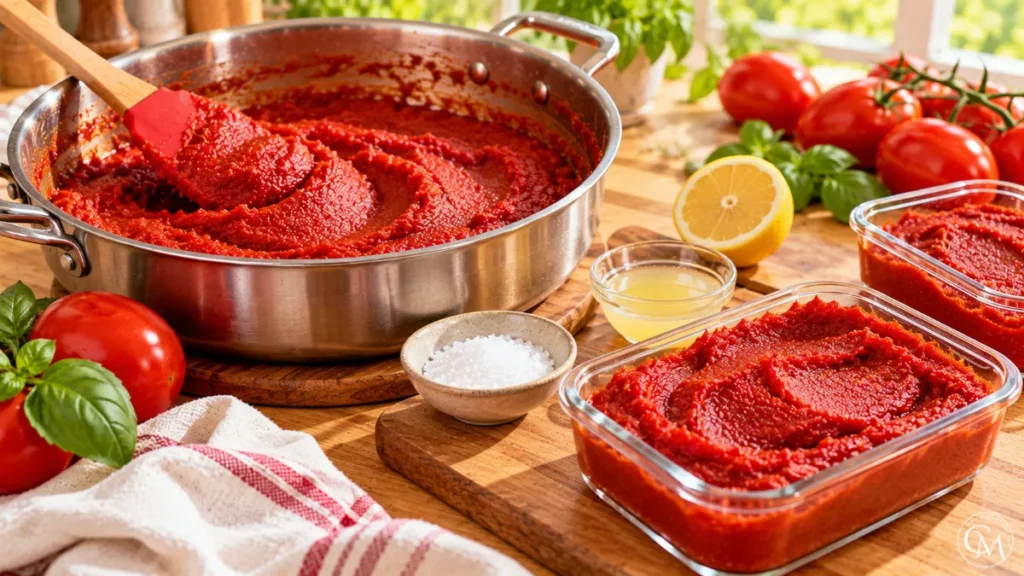
- When the mixture becomes thick and spreadable, remove it from the heat.
- Stir in the salt, taste carefully after slight cooling, and add a little lemon juice if desired.
- The finished Tomato Paste should taste intensely tomato-forward, slightly sweet, and pleasantly savory.
- Best tip 5: Season toward the end. Because reducing concentrates salt as well as flavor, early seasoning can produce an unexpectedly salty result.
- Transfer the finished paste into shallow, clean containers for prompt cooling.
Nutritional Information
Homemade Tomato Paste provides concentrated tomato flavor in relatively small servings.
The following values are approximate estimates for one tablespoon (about 16 grams) of the tomato-only version, without added oil.
| Nutrient | Approximate amount |
|---|---|
| Calories | 13 kcal |
| Carbohydrates | 3 g |
| Protein | 0.6 g |
| Total fat | 0.1 g |
| Fiber | 0.6 g |
| Natural sugars | 2 g |
| Sodium | Varies with added salt |
- Tomatoes naturally contain potassium, vitamin C, and lycopene, a pigment responsible for their red color.
- Cooking changes the nutrient profile, and concentration increases the amount of tomato solids in each spoonful.
- Actual values depend on the finished yield, ingredients, and serving size. These estimates are not laboratory measurements.
Healthier Alternatives
- One advantage of homemade Tomato Paste is how easily you can adapt it to different dietary preferences.
- For lower sugar: Choose naturally sweet, ripe tomatoes instead of adding refined sugar. Slow reduction develops sweetness without additional sweeteners.
- For lower sodium: Reduce or omit added salt. Garlic, basil, and oregano can provide extra aromatic flavor.
- For dairy-free cooking: The basic recipe contains no dairy ingredients, making it suitable for vegan pasta dishes, vegetable soups, and plant-based sauces.
- For gluten-free meals: The paste itself is naturally gluten-free when prepared with the listed ingredients. Pair it with gluten-free pasta, rice, or roasted vegetables.
- For whole-grain meals: Stir a spoonful into a sauce for whole-wheat pasta, brown rice, or barley.
- For children, use less salt and keep the seasoning mild. For older adults who prefer softer foods, blend the finished paste into smooth soups or sauces.
Serving Suggestions
Homemade Tomato Paste is more than a sauce ingredient. Its concentrated flavor makes it useful in many everyday meals.
- Pasta sauces: Stir 1–2 tablespoons into sautéed onions and garlic before adding crushed tomatoes.
- Homemade pizza: Thin the paste with water, olive oil, and dried oregano for a flavorful pizza base.
- Soups and stews: Add a spoonful to lentil soup, vegetable stew, or beef braises.
- Rice dishes: Mix into the cooking liquid for tomato-flavored rice or Mediterranean-inspired pilaf.
- Roasted vegetables: Blend a small amount with olive oil and spices before tossing with carrots, potatoes, or cauliflower.
For a particularly delicious sauce, briefly cook the paste in a little olive oil before adding other liquids. This develops deeper roasted notes.
For more inspiration, try pairing it with homemade marinara sauce, baked pasta, or a simple vegetable lasagna.
Common Mistakes to Avoid
Even a straightforward Tomato Paste recipe can go wrong if a few important details are overlooked.
- 1. Using underripe tomatoes: Pale, firm tomatoes often lack sweetness. Choose fully ripe varieties for better flavor.
- 2. Cooking over excessive heat: High temperatures can burn the concentrated sugars. Reduce the heat as the mixture thickens.
- 3. Using a narrow saucepan: A smaller exposed surface slows evaporation. A wide pan helps moisture escape efficiently.
- 4. Not stirring frequently enough: Thick puree sticks easily, especially during the final 30 minutes. Scrape the bottom regularly.
- 5. Adding too much salt early: Concentration intensifies seasoning. Taste and adjust only near the end.
- 6. Stopping before the paste thickens: A watery result behaves more like tomato sauce. Continue reducing until a spoonful holds a soft mound.
Remember that the volume can shrink dramatically during cooking. This is expected: the goal is concentrated flavor rather than a large quantity.
Storing Tips for the Tomato Paste
Proper storage helps protect the freshness, flavor, and quality of your homemade Tomato Paste.
- Refrigeration: Cool promptly in shallow containers, cover, and refrigerate at 40°F (4°C) or below. Use within 3–4 days.
- Freezing: Divide the paste into tablespoon-sized portions using a silicone ice cube tray. Once frozen, transfer to a labeled freezer-safe container and use within approximately three months for best quality.
- Meal preparation: Frozen portions can go directly into hot soups, stews, and simmering sauces.
- Never leave the finished paste at room temperature for extended periods or assume that covering it with oil makes it shelf-stable.
This recipe earns a regular place in a home-cooking routine because one small frozen portion can transform an ordinary weeknight meal into something noticeably richer.
Conclusion
Making homemade Tomato Paste is a rewarding way to turn simple, ripe tomatoes into a wonderfully versatile kitchen staple. With the right ingredients, gentle cooking, careful straining, and patient reduction, you can create a thick, flavorful concentrate without complicated equipment or unnecessary additives.
The five essential tips in this guide help you avoid common problems such as watery texture, burnt flavors, and excessive seasoning. Whether you’re preparing a comforting pasta sauce, enriching homemade soup, or adding depth to a family stew, a spoonful of this concentrated tomato goodness can make a noticeable difference.
Try this recipe the next time you have extra ripe tomatoes, and experiment with your favorite seasonings. If you make it, leave a comment or review sharing your results, and subscribe for more practical homemade recipes and cooking tips.
FAQs
1. What is the best tomato variety for homemade paste?
Roma and San Marzano-type tomatoes are excellent choices because their firm flesh and relatively low moisture content help create a thick consistency with less cooking time.
2. Can I make Tomato Paste without a blender?
Absolutely. A food mill or fine-mesh sieve removes skins and seeds while producing a smooth puree. You can also use a sturdy spoon to press softened tomatoes through the sieve.
3. Why is my homemade paste too watery?
Your tomatoes probably need additional reduction time. Continue simmering uncovered in a wide saucepan, stirring regularly, until excess moisture evaporates and the mixture becomes thick enough to hold its shape.
4. How long does homemade Tomato Paste last?
Store it in the refrigerator for 3–4 days, or freeze individual portions for approximately three months for best quality. Always use clean containers and refrigerate promptly after cooking.
5. Can I make this recipe without olive oil?
Yes. Olive oil is optional and can be omitted completely. Ripe tomatoes naturally develop rich flavor during slow reduction, so additional fat isn’t necessary for a delicious result.
6. Why does my homemade paste taste bitter?
Bitterness often develops when the mixture scorches or cooks over excessively high heat. Use a heavy-bottomed pan, lower the temperature as it thickens, and stir frequently to prevent burning.
7. Can I use homemade Tomato Paste instead of store-bought?
Yes. Substitute it tablespoon for tablespoon in most recipes, adjusting according to thickness and flavor intensity. Homemade versions vary, so taste the finished dish before adding extra salt or seasoning.
Tried it before ?
There are no reviews yet. Be the first one to write one.