
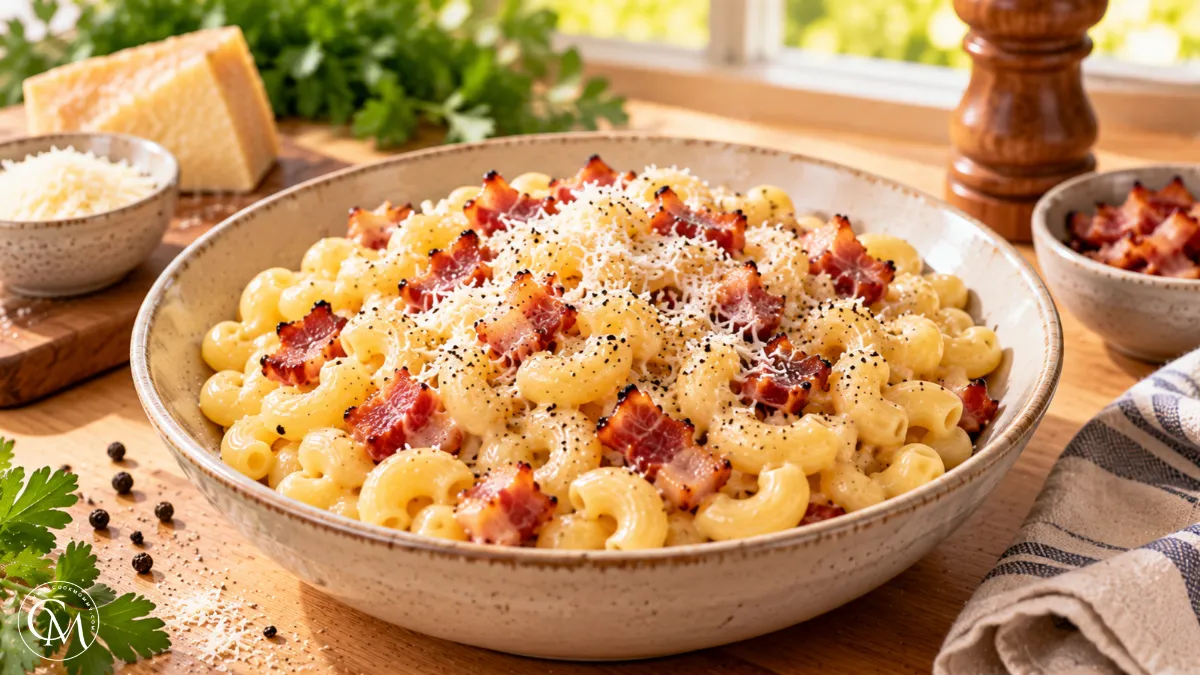
Macaroni Carbonara Sauce : 5 Easy Steps to Make It
If traditional carbonara can be made in about 40 minutes, why do so many home versions turn dry, grainy, or scrambled? The answer is technique, not complexity. Classic carbonara depends on eggs, hard cheese, rendered pork fat, and starchy pasta water forming a glossy emulsion rather than boiling into a cream sauce. A respected Italian recipe guide lists about 20 minutes of prep and 20 minutes of cooking for traditional carbonara.
This Macaroni Carbonara Sauce recipe applies that technique to elbow macaroni, whose curved shape catches sauce in every bite. It is a practical home-cook variation rather than a strict Roman carbonara. The keys are cooking the pasta just until tender, saving pasta water, and combining the egg mixture away from aggressive heat. Master those details and Macaroni Carbonara Sauce becomes a fast, reliable weeknight meal.
Table of Contents
Ingredients List for Macaroni Carbonara Sauce
For 4 servings:
- 12 ounces (340 g) elbow macaroni. Small shells or short rigatoni also work.
- 5 ounces (140 g) guanciale or pancetta, diced.
- 3 large egg yolks plus 1 whole egg for richness and structure.
- 1 cup (about 90 g) finely grated Pecorino Romano. Use half Parmesan for a milder flavor.
- 1 teaspoon freshly cracked black pepper, plus more for serving.
- Salt for the pasta water; use less than usual because the pork and cheese are salty.
- ¾ to 1 cup reserved pasta water, added only as needed.
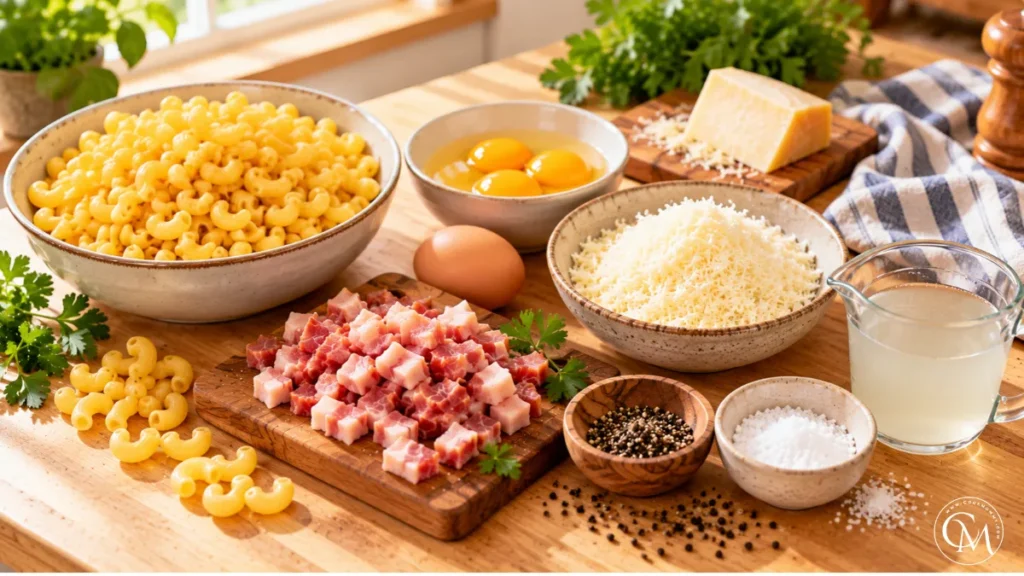
Traditional carbonara does not need cream; the creamy texture comes from eggs, cheese, fat, and pasta water. The same principle gives Macaroni Carbonara Sauce its silky finish.
Timing
Preparation time: 10 minutes
Cooking time: 15 minutes
Total time: about 25 minutes
Servings: 4
This streamlined version is quicker than some traditional recipes that allow around 40 minutes from prep through cooking.
Step-by-Step Instructions
Step 1 – Prepare the Ingredients
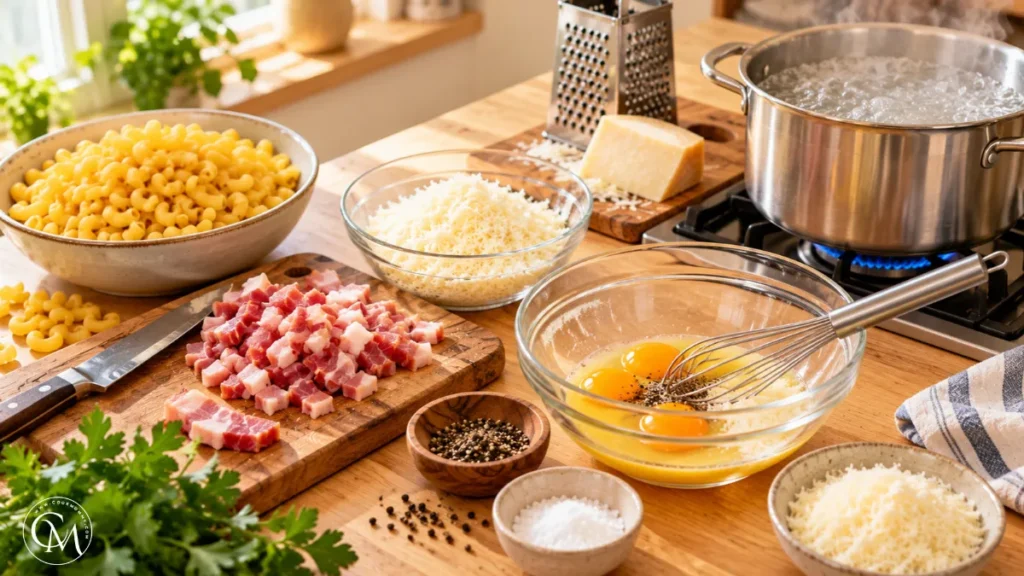
- Bring a large pot of water to a boil. Grate the cheese, cut the pork, crack the eggs into a bowl, and measure the pepper before cooking starts.
- Preparation matters because Macaroni Carbonara Sauce comes together quickly. Whisk the yolks and whole egg with three-quarters of the cheese and half the pepper until thick.
- Having everything measured before the macaroni finishes cooking makes the final stage much easier. Once the pasta is hot and ready, you want to move directly into mixing the sauce rather than stopping to grate cheese or find another bowl.
Step 2 – Build the Flavor Base
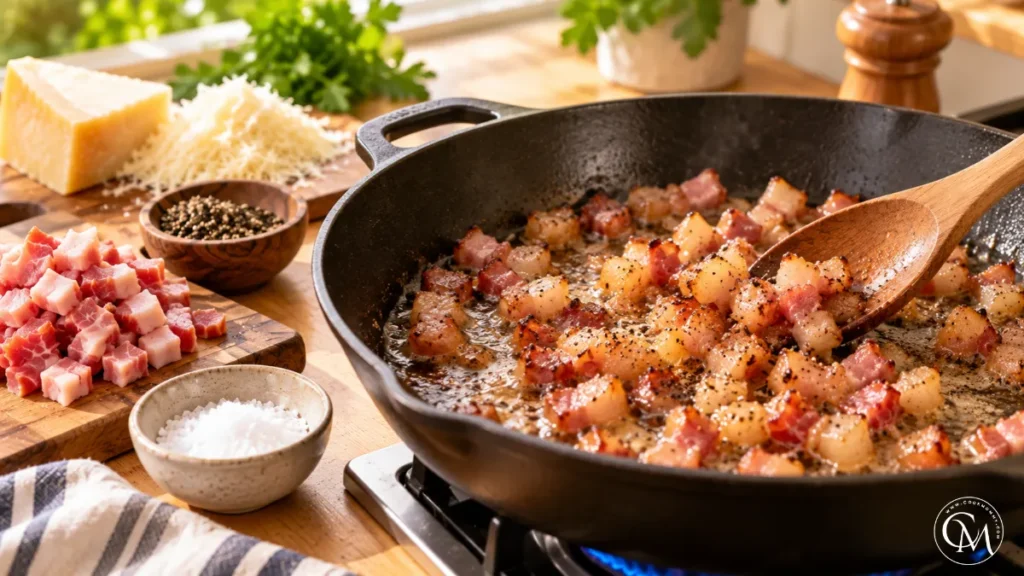
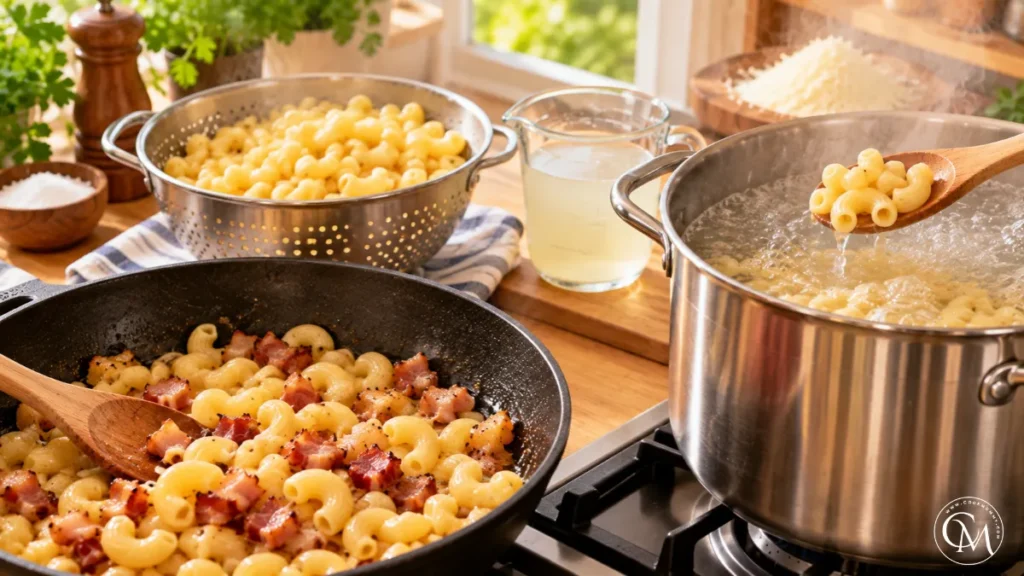
- Put the guanciale or pancetta in a cold skillet and turn the heat to medium. Cook for 5 to 7 minutes, stirring occasionally, until the fat renders and the edges turn golden.
- Slow rendering creates the savory base for Macaroni Carbonara Sauce. High heat can crisp the meat before enough fat is released. Remove the skillet from the heat, keeping the pork and fat together. Stir in pepper briefly to bloom its aroma.
- There is no need to add butter or olive oil when using a sufficiently fatty guanciale or pancetta. The rendered fat carries plenty of flavor and will later help coat the pasta.
Step 3 – Cook the Main Ingredient
- Salt the boiling water moderately and cook the macaroni until just al dente, checking it about one minute before the package time. It should be tender with a slight bite because it will continue warming in the sauce.
- Before draining, reserve at least 1 cup of pasta water. Its starch helps Macaroni Carbonara Sauce cling to the elbows. Drain without rinsing, then toss the macaroni with the rendered fat.
- Avoid rinsing the cooked pasta. The thin layer of starch on its surface is useful here because it helps the egg-and-cheese mixture adhere instead of sliding to the bottom of the pan.
Step 4 – Combine Everything
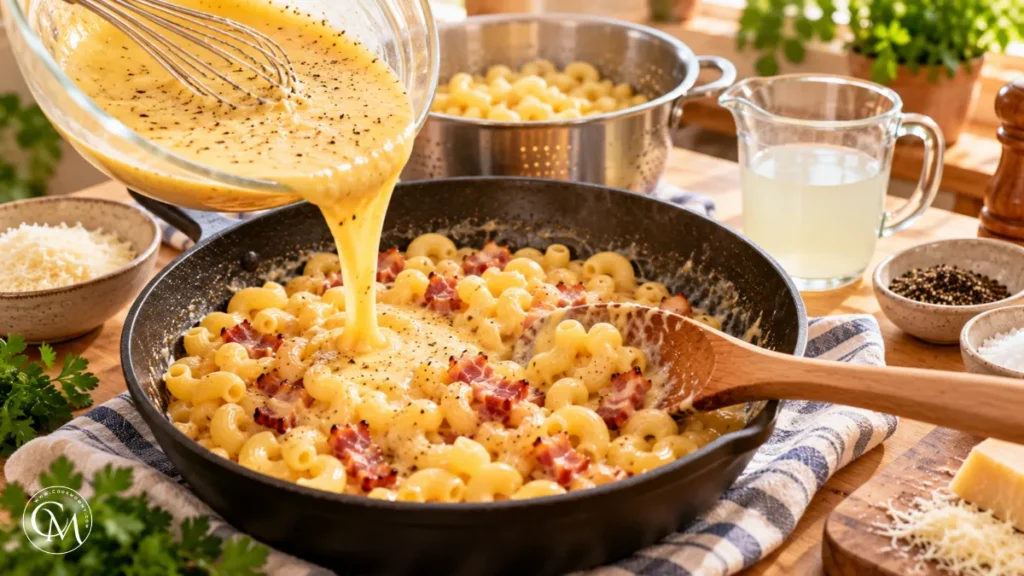
- Let the skillet sit off the heat for about 30 seconds. Whisk 2 tablespoons of hot pasta water into the egg-and-cheese mixture, then pour it over the macaroni.
- Toss continuously, adding reserved water 1 tablespoon at a time until the Macaroni Carbonara Sauce looks glossy and coats the pasta. Direct high heat can scramble the eggs, which is why classic carbonara methods emphasize mixing away from the flame. The heat stored in the pasta is usually enough to thicken the sauce.
- Taste before adding salt. Pecorino and cured pork already bring plenty of seasoning, while the pasta water controls consistency.
- The goal is not a pool of liquid at the bottom of the pan. Instead, every macaroni elbow should have a thin, shiny coating of sauce.
Step 5 – Finish and Adjust the Seasoning
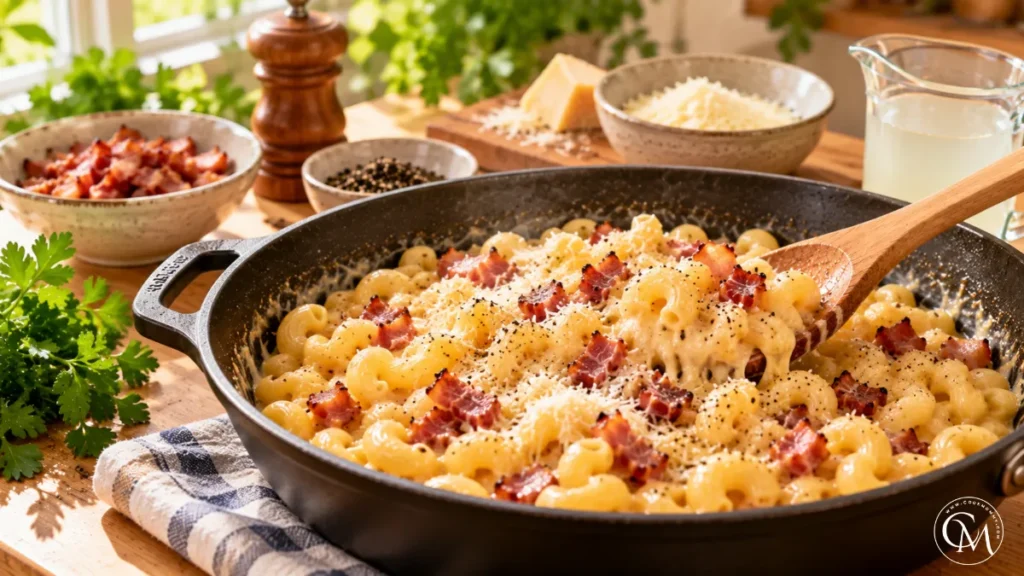
- Fold most of the crisped pork back into the pan, reserving a little for topping. Add the remaining cheese and more pasta water if the sauce tightens. Finish with freshly cracked pepper.
- Serve Macaroni Carbonara Sauce immediately in warm bowls because the sauce thickens as it cools. Aim for a slightly looser texture in the pan than you want on the plate.
- For a chef-style check, drag a spoon through the pasta. The sauce should leave a creamy trail. If thick, add pasta water by teaspoons; if loose, toss briefly off heat.
- That final adjustment is often what separates a silky bowl of pasta from one that feels dry or sticky.
Nutritional Information
Approximate values per serving:
- Calories: 620–680
- Protein: 25–29 g
- Carbohydrates: 58–64 g
- Fat: 30–36 g
- Saturated fat: 12–15 g
- Fiber: 2–3 g
- Sodium: about 900–1,200 mg
These are estimates because cheese brands, cured pork, portion sizes, and the amount of rendered fat used can vary. Macaroni Carbonara Sauce is a rich main course, so vegetables or a crisp salad make a natural accompaniment.
If accurate nutrition information is essential for your dietary needs, calculate the values using the exact brands and quantities you use at home.
Healthier Alternatives
- For lower sugar, little needs changing because the recipe contains no added sugar. Instead, keep side dishes unsweetened.
- For more fiber, use whole-wheat elbows. Their nutty flavor suits Pecorino and pepper, although they may need extra pasta water.
- For dairy-free cooking, use a dairy-free hard-cheese alternative that melts smoothly. The flavor changes, but the egg-and-water technique can still produce a creamy result.
- For gluten-free Macaroni Carbonara Sauce, choose sturdy corn- or rice-based elbows and reserve extra cooking water because starch levels vary.
- For children, reduce the pepper and blend Parmesan with Pecorino. For lighter portions, serve less pasta alongside roasted broccoli or zucchini. Seniors who prefer softer textures can cook the macaroni just beyond firm al dente without letting it become mushy.
- You can also stir in peas, spinach, or finely chopped roasted vegetables when serving. They are not part of traditional carbonara, but they can make this weeknight adaptation more flexible for different households.
Serving Suggestions
- Serve Macaroni Carbonara Sauce straight from the pan. Arugula with lemon gives a fresh, peppery contrast, while roasted broccoli, asparagus, green beans, or zucchini complement the savory pork.
- For family meals, put extra cheese and pepper on the table. Chopped parsley adds freshness, though it is a modern garnish. For lunch, pair a smaller portion with tomato-cucumber salad.
- Compare the technique with cacio e pepe to see how pasta starch changes sauce texture. Both recipes demonstrate why pasta water is much more than leftover boiling water: it can become an important part of the sauce itself.
- For guests, warm the serving bowls for a few minutes before plating. That simple step helps prevent the sauce from tightening immediately when the hot macaroni meets a cold dish.
Common Mistakes to Avoid
- Using high heat after adding eggs. Remove the pan from the burner first to avoid scrambling.
- Forgetting pasta water. Reserve at least a cup before draining so you can control consistency.
- Oversalting. Cured pork and Pecorino are already salty, so season the cooking water moderately.
- Adding all the water at once. Macaroni Carbonara Sauce can become thin quickly; add it by tablespoons.
- Using coarse pre-shredded cheese. Freshly grated cheese melts more smoothly.
- Waiting too long to serve. The sauce thickens as it cools, so plate the pasta promptly.
Another useful habit is tasting before making any final adjustment. Saltiness can vary significantly among cured meats and aged cheeses, so seasoning by habit instead of taste can make the finished dish unnecessarily salty.
Storing Tips for the Recipe
- Carbonara is best immediately, but leftovers can be stored. Transfer cooled Macaroni Carbonara Sauce to a shallow airtight container and refrigerate promptly. USDA guidance says prepared perishable foods and leftovers should be refrigerated within two hours, with the refrigerator at 40°F (4.4°C) or below.
- Use leftovers within 3 to 4 days. Reheat gently in a skillet over low heat with a spoonful of water, stirring often. The sauce will not return to its freshly made silkiness, but gentle heat limits drying.
- To prep ahead, grate the cheese, cut the pork, and measure the macaroni earlier in the day. Cook the eggs and pasta only when you are ready to eat.
- This recipe earns regular-meal status because the ingredients are familiar, the cooking time is short, and the technique becomes easy once you learn to control the heat.
Conclusion
Macaroni Carbonara Sauce shows how a comforting pasta dinner can come together without a long ingredient list or heavy cream. The best results depend on a few habits: render the pork slowly, cook the macaroni until just tender, save starchy water, and mix the eggs and cheese away from direct heat. Those small choices create a sauce that stays silky and clings to every curve.
Try this Macaroni Carbonara Sauce for your next quick dinner, then adjust the pepper, cheese, or pasta shape to suit your table. If you make it, leave a comment or review with your favorite variation. Subscribe for more practical pasta recipes, weeknight techniques, and approachable kitchen ideas.
FAQs
Can I make Macaroni Carbonara Sauce without guanciale?
Yes. Pancetta is the closest convenient substitute, For a meat-free version, brown mushrooms well and use a little olive oil for richness.
Can I use whole eggs instead of mostly yolks?
Yes, but the sauce will be lighter and less rich. A mix of yolks and one whole egg gives a useful balance of creaminess and structure.
Why did my carbonara eggs scramble?
The pan was probably too hot. Remove it from direct heat, wait briefly, and temper the egg mixture with hot pasta water before tossing.
Can I add cream to Macaroni Carbonara Sauce?
You can if you prefer, but it is unnecessary. Eggs, grated cheese, rendered fat, and starchy pasta water can create a smooth sauce without added cream.
What cheese works best?
Pecorino Romano gives the sharpest, saltiest flavor. Parmesan is milder. A half-and-half blend is practical when you want richness with a gentler finish.
How do I keep the sauce creamy when serving?
Serve immediately and keep warm pasta water nearby. If Macaroni Carbonara Sauce thickens before plating, toss in one or two teaspoons of water.
Can I make this recipe gluten-free?
Yes. Use a sturdy gluten-free elbow pasta, cook carefully to prevent breaking, and reserve extra cooking water because starch levels vary among brands.
Tried it before ?
There are no reviews yet. Be the first one to write one.