
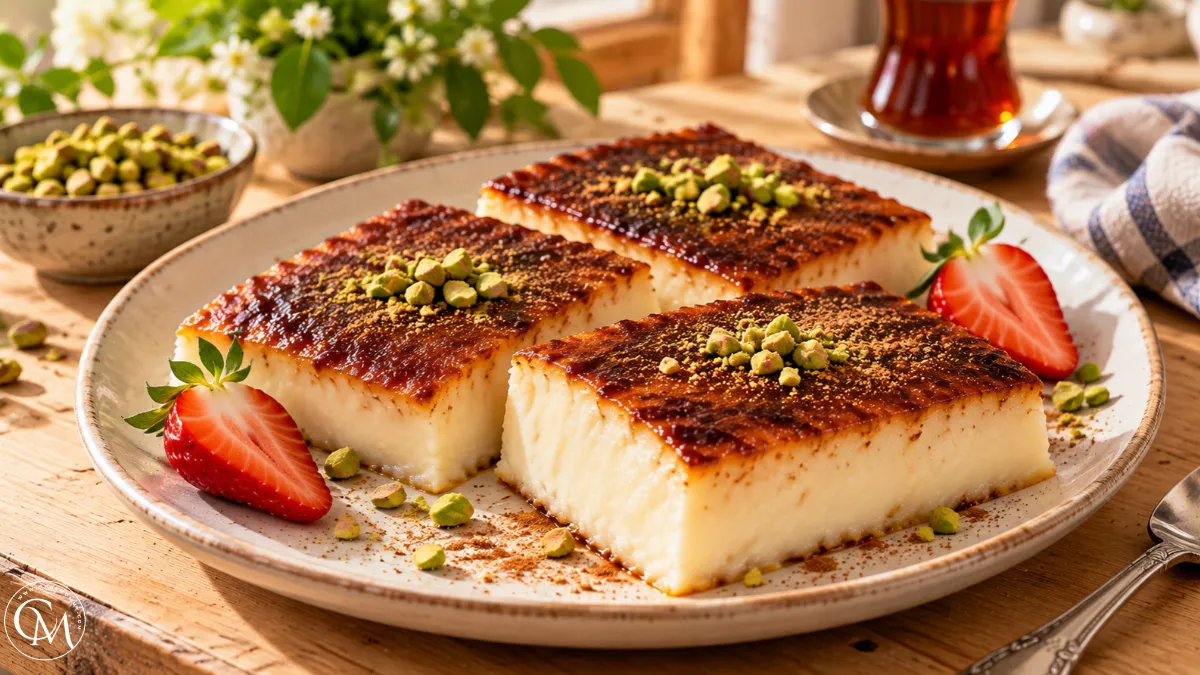
Turkish Kazandibi Pudding: 5 Best Tips for a Burnt Bottom
Did you know that the most distinctive part of a traditional Turkish milk pudding is the layer that looks slightly burnt? Unlike most desserts, where browning the bottom signals trouble, Turkish Kazandibi Pudding celebrates that beautifully caramelized finish.
The name kazandibi translates roughly to “bottom of the pot,” describing the golden-brown layer that gives this Turkish dessert its character. Imagine cutting into a cool, silky pudding and discovering a thin, deeply caramelized crust underneath. The contrast between creamy custard and toasted sugar makes every bite memorable.
The secret isn’t expensive ingredients or professional equipment. It’s controlling heat, choosing the right pan, and knowing exactly when to stop caramelizing. This homemade Turkish Kazandibi Pudding recipe walks you through the entire process, including five essential techniques for creating that signature burnt bottom without making it bitter.
Whether you’re exploring Turkish cuisine or looking for an impressive make-ahead dessert, this recipe is worth adding to your collection.
Table of Contents
Ingredients List
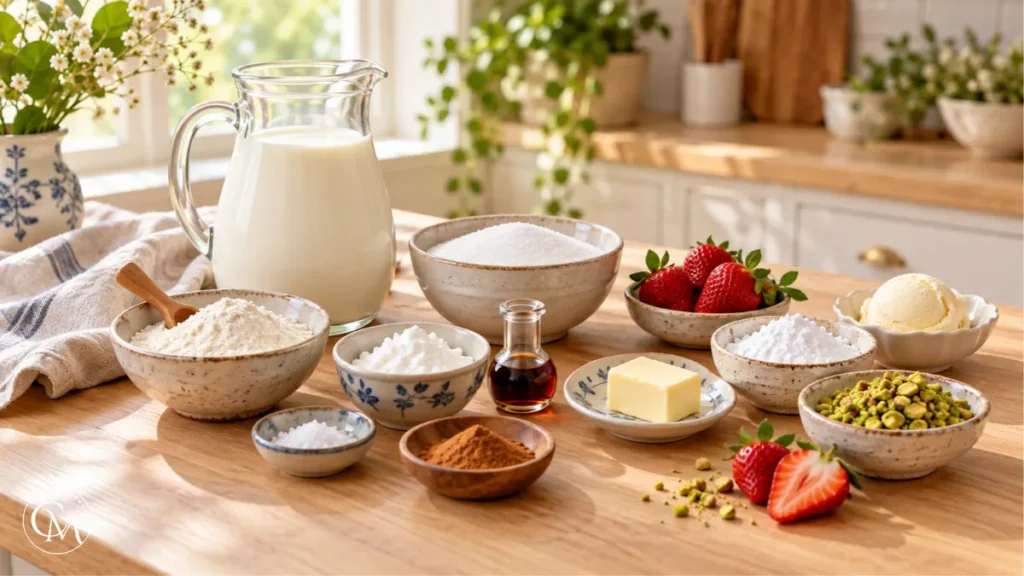
Making Turkish Kazandibi Pudding requires just a handful of affordable pantry ingredients.
For the Milk Pudding
- 4 cups (1 liter) whole milk – Creates a creamy, rich foundation.
- ½ cup (65 g) rice flour – Gives the pudding its characteristic smooth consistency.
- ¼ cup plus 2 tablespoons (55 g) cornstarch – Helps the custard thicken and hold its shape.
- ¾ cup (150 g) granulated sugar – Adds just the right touch of sweetness to the creamy pudding.
- 1 teaspoon vanilla extract – Adds a delicate, comforting aroma.
- A tiny pinch of salt – Enhances the overall flavor and keeps the dessert from tasting overly sweet.
For the Caramelized Bottom
- 1 tablespoon unsalted butter – Prevents excessive sticking.
- 3 tablespoons powdered sugar – Creates an even, golden caramel layer.
Optional Garnishes
- Ground cinnamon
- Chopped pistachios
- Fresh strawberries
- A small scoop of vanilla ice cream
Ingredient Substitutions
- For a dairy-free alternative, try unsweetened oat or soy milk. Cornstarch can replace rice flour by weight, although the final texture may be slightly different.
- Whole milk delivers the richest result, but 2% milk also works.
- For the most authentic homemade Turkish Kazandibi Pudding, start with the original ingredients before experimenting with substitutions.
Timing
Here’s how much time you’ll need to prepare this creamy Turkish dessert.
| Stage | Time |
|---|---|
| Preparation | 15 minutes |
| Cooking | 25–30 minutes |
| Cooling and refrigeration | 4 hours |
| Total time | Approximately 4 hours 45 minutes |
| Servings | 6 |
| Difficulty | Moderate |
- Most of the total time involves chilling rather than active cooking.
- Preparing Turkish Kazandibi Pudding earlier in the day gives the custard enough time to firm up, making slicing and serving easier.
Step-by-Step Instructions
The key to successful Turkish Kazandibi Pudding is developing two distinct textures: a silky milk custard and a thin, beautifully browned underside.
Gather a sturdy, thick-bottomed saucepan, a whisk, and a shallow metal skillet about 9 inches (23 cm) wide that is safe for stovetop cooking.
Step 1: Prepare Your Ingredients
- Measure everything before turning on the stove.
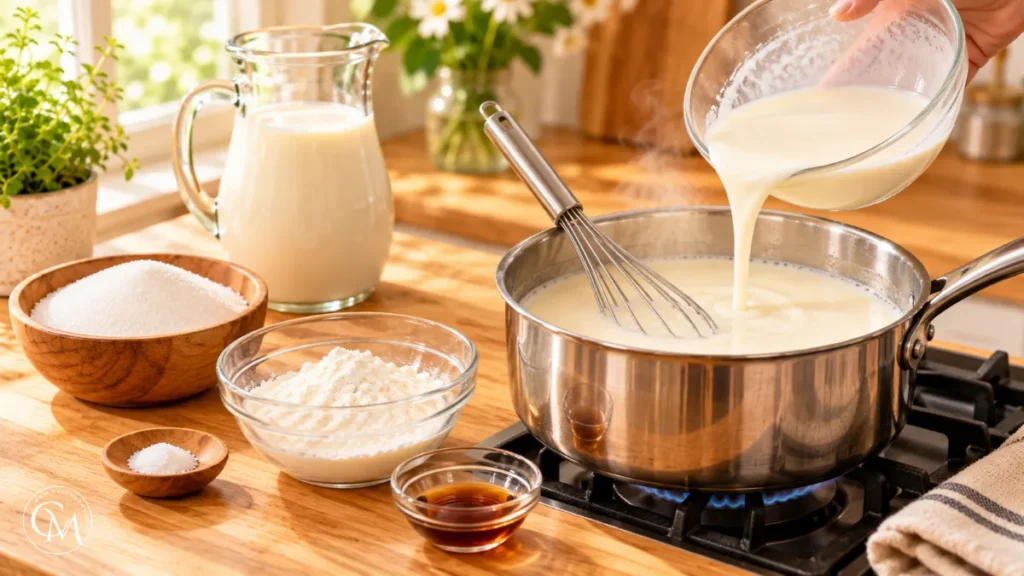
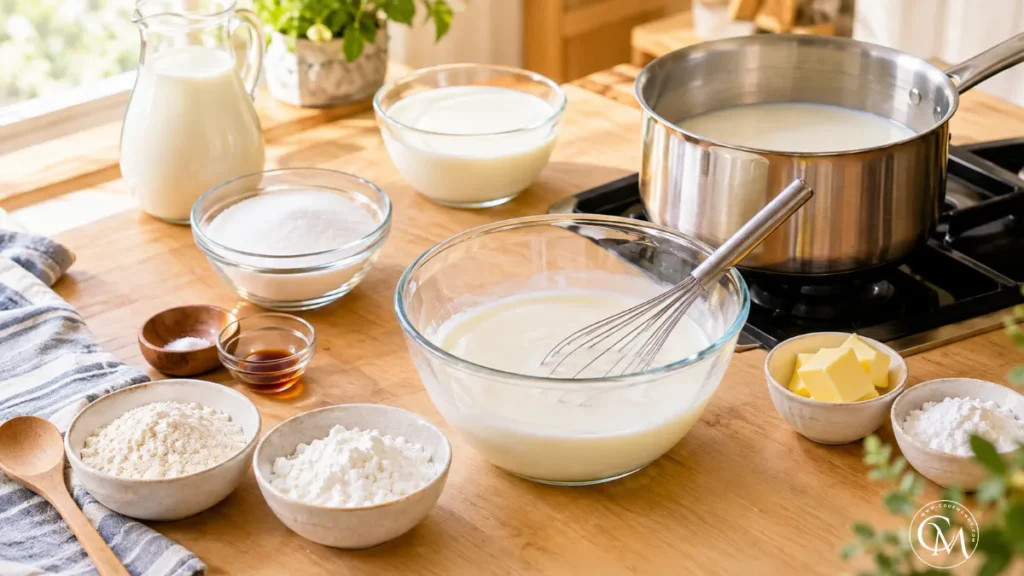
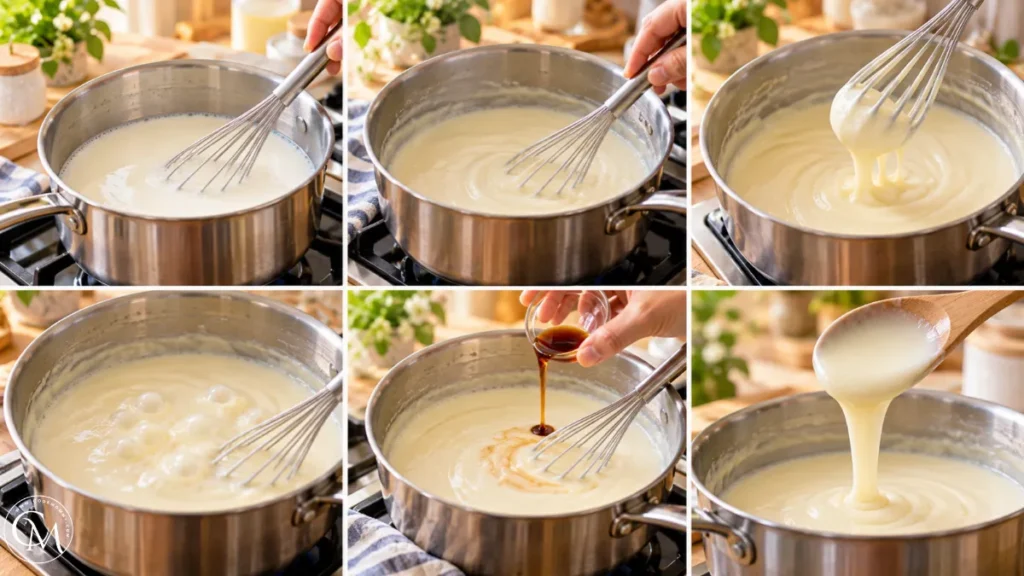
- In a mixing bowl, whisk the rice flour and cornstarch with approximately one cup of cold milk until completely smooth.
- Pour the remaining milk into a saucepan.
- Tip 1: Always mix starches with cold milk.
- Adding dry starch directly to hot milk encourages lumps. Cold liquid distributes the starch evenly, helping create that velvety custard texture.
- Keep the butter and powdered sugar nearby because the caramelization stage requires your full attention.
Step 2: Build the Creamy Flavor Base
- Stir the measured sugar and a pinch of salt into the saucepan with the rest of the milk.
- Gently heat the mixture over medium-low heat, stirring occasionally until the sugar melts completely into the milk.
- Gradually whisk in the cold starch mixture.
- Continue stirring as the milk heats.
- The mixture will eventually begin thickening because starch granules absorb liquid and swell when heated.
- Avoid boiling aggressively. Gentle cooking helps prevent scorching and creates a smoother result.
- Turkish Kazandibi Pudding should taste delicately sweet rather than sugary, allowing its caramelized layer to provide the strongest flavor.
Step 3: Cook the Pudding Until Thick
- Continue whisking for approximately 10–15 minutes, depending on your stove.
- The mixture should become glossy, thick, and creamy.
- You’ll know it’s ready when the whisk leaves visible trails that slowly disappear.
- Allow the pudding to bubble gently for another two minutes while stirring constantly. This helps eliminate any raw starch flavor.
- Remove from the heat and stir in vanilla.
- Texture check: The pudding should fall from a spoon in thick ribbons, not pour like ordinary milk.
- If it looks watery, continue cooking briefly. If excessively thick, whisk in a small splash of warm milk.
Step 4: Create the Signature Burnt Bottom
- This is where Turkish Kazandibi Pudding develops its famous flavor.
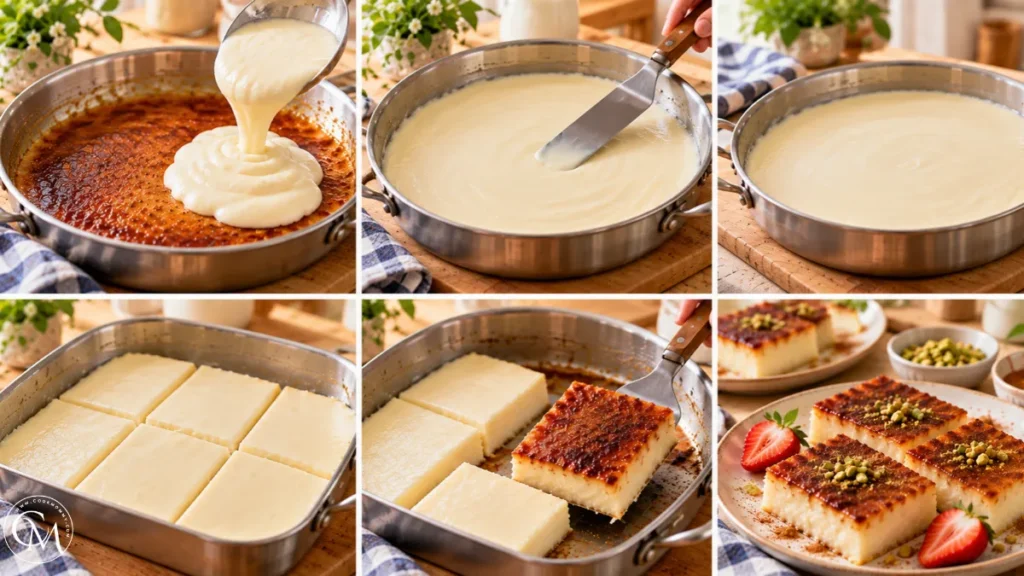
- Lightly grease your metal pan with butter, making sure the entire bottom is coated.
- Sift powdered sugar evenly over the butter.
- Spread approximately one cup of hot pudding across the surface in a thin, even layer.
- Place the pan over medium-low heat.
- As the sugar heats, it gradually melts and caramelizes against the pudding.
- Rotate the pan carefully to distribute heat evenly.
- Tip 2: Use a heavy, heat-safe metal pan. Thin cookware creates hot spots that can burn sugar unevenly.
- Tip 3: Keep the first pudding layer thin. A thinner layer allows more consistent caramelization.
- Tip 4: Move the pan regularly. Rotate it over the burner instead of leaving one area exposed to direct heat.
- Tip 5: Stop at deep golden brown. The caramel should smell pleasantly toasted, not harsh or smoky.
- Caramelization typically takes several minutes, but watch the color and aroma rather than relying entirely on a timer.
- Lift one edge gently with a heat-resistant spatula to check the underside. Avoid touching or tasting the hot caramel.
Step 5: Finish, Chill, and Serve
- Remove the pan from the heat once the bottom develops an even caramelized color.
- Carefully spoon the remaining warm pudding over the first layer.
- Spread gently without disturbing the caramelized surface underneath.
- Let the pan cool briefly, then refrigerate for at least four hours.
- Once chilled, cut Turkish Kazandibi Pudding into six rectangular portions.
- Slide a thin spatula underneath each serving and carefully turn it over so the browned surface faces upward.
- A light dusting of cinnamon adds warmth without overpowering the pudding’s delicate flavor.
- For clean slices, warm your knife slightly and wipe it between cuts.
Nutritional Information
The following values are approximate for one serving of Turkish Kazandibi Pudding, based on six portions.
| Nutrient | Approximate Amount |
|---|---|
| Calories | 330 kcal |
| Carbohydrates | 61 g |
| Protein | 7 g |
| Fat | 7 g |
| Sugar | 38 g |
| Fiber | Less than 1 g |
| Calcium | 190 mg |
- Nutritional estimates may differ based on the type of milk you choose, the products you use, and how generously you divide each serving.
- This dessert provides calcium and protein from milk but is also relatively high in added sugar.
- Enjoying a moderate portion alongside a balanced diet is a sensible approach.
Healthier Alternatives
You can adapt Turkish Kazandibi Pudding to different dietary preferences without sacrificing its signature character.
Lower-Sugar Version
- Reduce the granulated sugar from 150 g to 110–120 g.
- Keep the powdered sugar used for caramelization because it contributes directly to the distinctive browned bottom.
- This adjustment creates a less sweet custard while preserving the toasted flavor.
Dairy-Free Version
- For a dairy-free variation, swap traditional whole milk for an unsweetened oat or soy alternative.
- Choose a creamy variety for better consistency.
- Because plant-based milks behave differently when heated, the pudding may require minor adjustments to the starch quantity.
Gluten-Free Version
Rice flour and cornstarch are naturally gluten-free. Check packaging for cross-contact warnings if preparing the dessert for someone with celiac disease.
Whole-Grain Alternative
- A small amount of finely ground brown rice flour can replace part of the white rice flour.
- Expect a slightly grainier texture and more pronounced rice flavor.
- For children, serve smaller portions with fruit. For older adults who prefer softer desserts, allow the custard to chill thoroughly and serve it without attempting tight rolls.
Serving Suggestions
Turkish Kazandibi Pudding tastes particularly good when served cold. Its refreshing temperature balances the rich caramelized flavor.
Here are some enjoyable ways to serve it:
- Traditional Turkish style: Sprinkle with cinnamon and serve alongside Turkish coffee.
- Fresh and fruity: Add strawberries, raspberries, or orange segments for brightness.
- Nutty presentation: Scatter chopped pistachios over the caramelized surface.
- Restaurant-inspired: Serve a small portion with vanilla ice cream.
- Elegant dinner dessert: Arrange neatly rolled pieces on individual plates.
For an attractive presentation, make sure the golden-brown side remains visible. void overwhelming the pudding with heavy sauces. Its delicate milk flavor and toasted sugar crust deserve to stand out.
Common Mistakes to Avoid
Even experienced home cooks can encounter problems when preparing Turkish Kazandibi Pudding.
1. Using Excessively High Heat
- Strong heat may turn sugar black before the pudding develops its intended flavor.
- Use medium-low heat and rotate the pan frequently.
2. Not Stirring the Custard
- Milk and starch can stick to the saucepan bottom.
- Whisk continuously, especially once thickening begins.
3. Adding Too Much Caramelizing Sugar
- An excessively thick sugar layer can become hard, sticky, or bitter.
- Three tablespoons provide sufficient coverage for the recommended pan.
4. Using the Wrong Cookware
- Glass baking dishes are generally unsuitable for direct stovetop heating unless specifically designed for it.
- Choose a sturdy, stovetop-safe metal pan instead.
5. Skipping Refrigeration
- Warm pudding is difficult to slice and may collapse when removed.
- Allow at least four hours of chilling.
6. Overcooking the Caramel
- A dark amber color is desirable; blackened, acrid sugar is not.
- Remove the pan from heat when the aroma turns pleasantly nutty and caramelized.
- Remember that residual heat continues cooking the sugar briefly after the pan leaves the burner.
Storing Tips for the Recipe
Proper storage keeps Turkish Kazandibi Pudding creamy and prevents it from absorbing refrigerator odors.
Refrigerator Storage
- Place leftovers in a covered, food-safe container and refrigerate promptly.
- Enjoy within three to four days, provided the pudding has been handled and stored properly.
- Keep it refrigerated at 40°F (4°C) or below.
Can You Freeze It?
- Freezing is not recommended.
- Starch-thickened milk desserts can become watery or grainy after thawing.
- The caramelized layer may also lose its appealing texture.
Make-Ahead Tips
- Prepare the pudding the evening before serving.
- Allow the pudding to cool and set completely in its pan, then slice it into individual servings just before bringing it to the table.
- Kazandibi is especially practical for gatherings because nearly all the work can be completed ahead of time.
- Its simple ingredients, make-ahead convenience, and distinctive caramelized flavor are excellent reasons to make it a regular homemade dessert.
Conclusion
Making Turkish Kazandibi Pudding at home is a rewarding way to explore traditional Turkish desserts without complicated equipment or hard-to-find ingredients.
The secret lies in understanding the contrast between smooth milk custard and its signature caramelized bottom. With careful heat control, an evenly sugared pan, and enough chilling time, you can create a dessert that looks impressive and tastes wonderfully comforting. Remember the five essential tips: choose proper cookware, spread the initial pudding layer thinly, distribute heat evenly, monitor caramelization, and remove the pan before the sugar becomes bitter.
Ready to bring a taste of Turkey into your kitchen? Try this Turkish Kazandibi Pudding recipe, then share your results in the comments or leave a review. Subscribe for more approachable homemade desserts, practical cooking tips, and traditional recipes worth discovering.
FAQs
1. What is Turkish Kazandibi Pudding?
Turkish Kazandibi Pudding is a traditional caramelized milk dessert featuring a smooth, thick custard and a browned sugar layer. It’s typically chilled and served sliced or rolled with its caramelized side visible.
2. Why does kazandibi have a burnt bottom?
The caramelized underside provides a distinctive toasted flavor that balances the creamy pudding. The goal is controlled browning, not burning the sugar until it becomes black and bitter.
3. Can I make Turkish Kazandibi Pudding without rice flour?
Yes. You can substitute cornstarch for rice flour by weight, although the consistency may change. Rice flour contributes to the traditional texture, so using both usually produces a better-balanced result.
4. Why is my kazandibi pudding too runny?
Runny pudding usually results from insufficient cooking or incorrect starch measurements. Continue heating and whisking until thick and glossy, then refrigerate thoroughly before deciding whether it has set properly.
5. How do I prevent the caramelized bottom from sticking?
Choose a stovetop-safe pan, brush its surface with a thin coating of butter, and sprinkle the powdered sugar evenly across the bottom. Refrigerate until firm, then carefully release the edges and lift portions with a thin spatula.
6. Can I prepare kazandibi the day before?
Absolutely. Preparing the pudding the previous evening allows plenty of chilling time. Keep it covered in the refrigerator and cut individual servings shortly before presenting them.
7. Is Turkish Kazandibi Pudding served hot or cold?
It’s traditionally enjoyed chilled. Refrigeration helps the custard hold its shape and creates a pleasant contrast between the silky pudding and its richly caramelized underside.
Tried it before ?
There are no reviews yet. Be the first one to write one.