
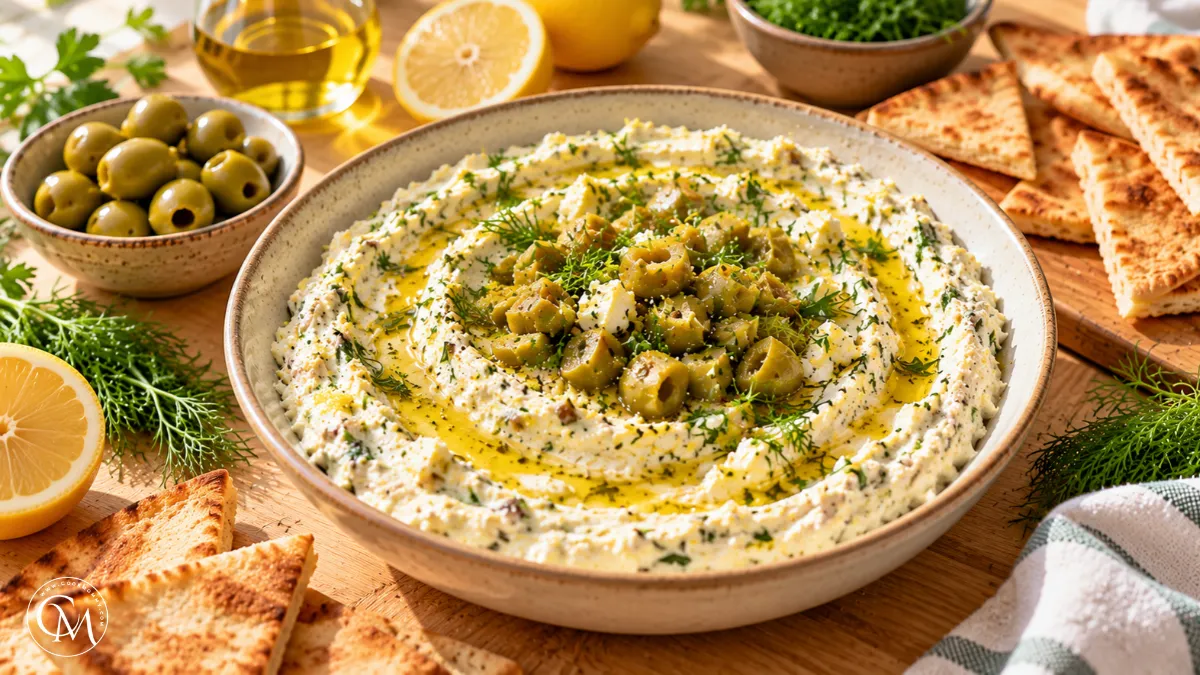
green olive feta dip: 5 Reasons It’s the Best Appetizer
What if you could make a creamy, restaurant-worthy appetizer in just 10 minutes, using fewer than 10 ingredients and absolutely no cooking? This green olive feta dip brings all those delicious Mediterranean flavors together in one simple, satisfying recipe.
Need something impressive for your next gathering without spending hours in the kitchen? This olive feta dip is a flavorful option that’s wonderfully easy to make. It combines tangy feta cheese, briny green olives, smooth Greek yogurt, fresh lemon juice, and aromatic herbs into one irresistibly creamy spread.
Unlike complicated appetizers that require baking or lengthy preparation, this recipe focuses on simple ingredients and balanced flavors.
Here are five reasons this dip deserves a place on your table:
- Quick preparation: Ready in approximately 10 minutes.
- A taste of the Mediterranean: Creamy feta and briny green olives come together for a rich, zesty bite.
- Versatile serving options: Perfect with pita bread, crackers, vegetables, and sandwiches.
- Easy customization: Adjust the texture, herbs, and seasonings to your preference.
- Made for gatherings: Whip it up in advance, keep it refrigerated, and let it soften briefly before your guests arrive.
Whether you’re hosting friends or preparing a quick afternoon snack, this olive feta dip offers big flavor with very little effort.
Table of Contents
Ingredients List
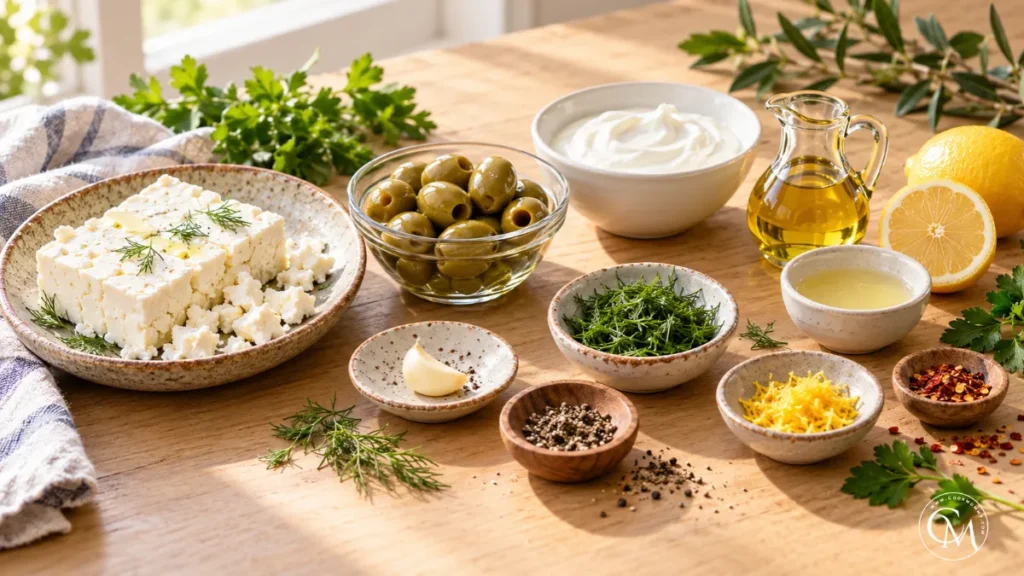
The beauty of this olive feta dip lies in its short ingredient list. Each ingredient contributes something important, from creamy texture to bright, salty flavor.
Ingredients (approximately 6 servings)
- 200 g (7 oz) feta cheese: Choose block feta packed in brine for the richest, creamiest results.
- 100 g (about ⅔ cup) pitted green olives: Firm, briny olives provide the signature savory flavor.
- ⅓ cup plain Greek yogurt: Adds creaminess and balances the saltiness.
- 2 tablespoons extra-virgin olive oil: Creates a silky texture and enhances the Mediterranean character.
- 1 tablespoon fresh lemon juice: Brightens the flavors without overpowering the cheese.
- 1 small garlic clove: Adds a gentle, aromatic kick.
- 1 tablespoon chopped fresh dill: Introduces a refreshing herbal note.
- ¼ teaspoon freshly ground black pepper: Adds subtle warmth.
- Optional garnish: Lemon zest, chopped parsley, extra olives, or red pepper flakes.
Easy ingredient substitutions
- If Greek yogurt isn’t available, use plain strained yogurt or a little sour cream. Kalamata olives can replace green olives, although they produce a darker, fruitier dip.
- Fresh parsley works beautifully instead of dill, while roasted garlic provides a sweeter, milder flavor.
- Kitchen tip: Taste your olives before blending. Their saltiness varies significantly depending on the variety and brine, so additional salt is rarely necessary.
Timing
- Prep time:10 min
- Cook time: 0 min
- Total time: 10 min
- Servings: 6
- Optional chilling: 20–30 minutes
- One advantage of this olive feta dip is that it requires no stove or oven. A food processor handles most of the work.
- If you’re preparing it for guests, refrigerating the finished dip for 20–30 minutes allows the garlic, herbs, and lemon to mingle.
Step-by-Step Instructions
Step 1 – Prepare the Ingredients
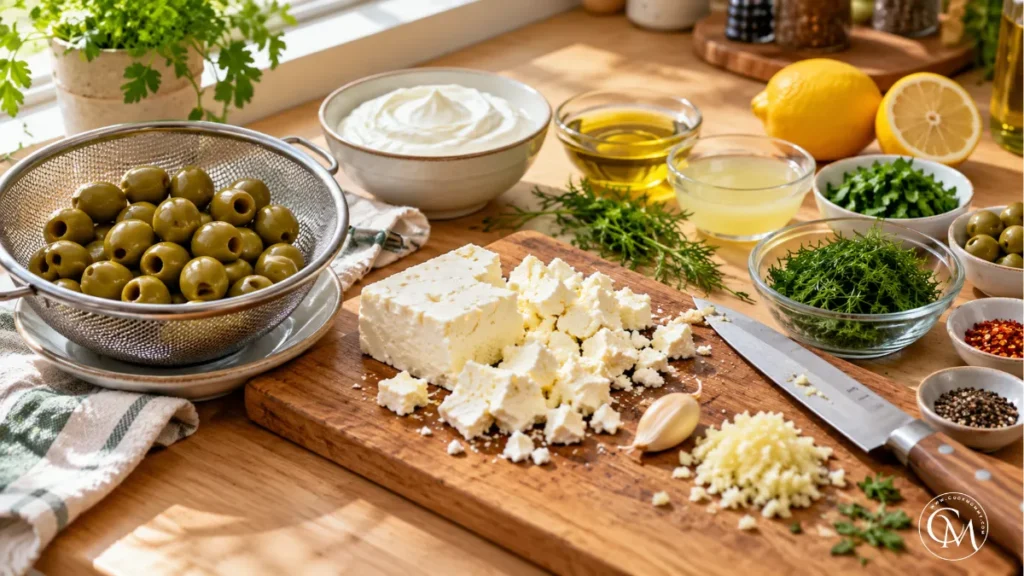
- Begin by draining the green olives thoroughly. Excess brine can make the dip watery and unnecessarily salty.
- Pat the olives dry with a paper towel, crumble the feta into smaller pieces, and finely chop the garlic.
- If your feta tastes especially salty, give it a quick rinse and pat it dry.
- Measure everything before blending. This simple preparation makes the process faster and prevents accidentally adding too much lemon juice or olive oil.
Step 2 – Build the Flavor Base
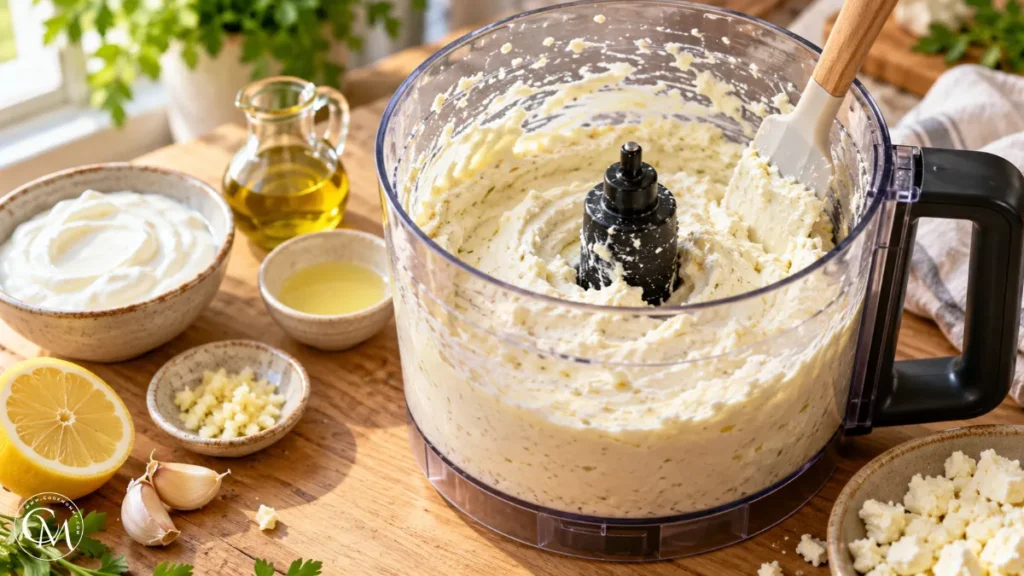
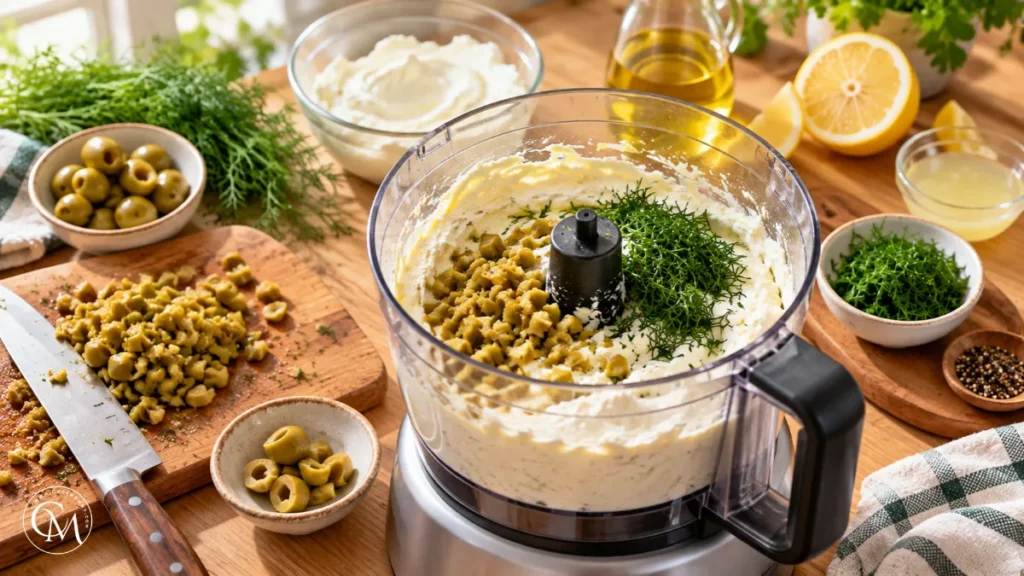
- Place the crumbled feta, Greek yogurt, garlic, lemon juice, and one tablespoon of olive oil into a food processor.
- Blend for approximately 30–45 seconds until mostly smooth.
- The yogurt introduces moisture, while the olive oil helps create a smoother mouthfeel. Processing also breaks down the feta’s naturally crumbly structure.
- Scrape down the sides of the processor to incorporate any remaining cheese.
- To achieve a silky olive feta dip, process the feta and yogurt until smooth before mixing in the chopped olives.
Step 3 – Prepare the Main Ingredient
- Traditional recipes sometimes cook their main ingredient, but this is a no-cook appetizer. The key technique here is processing the olives correctly.
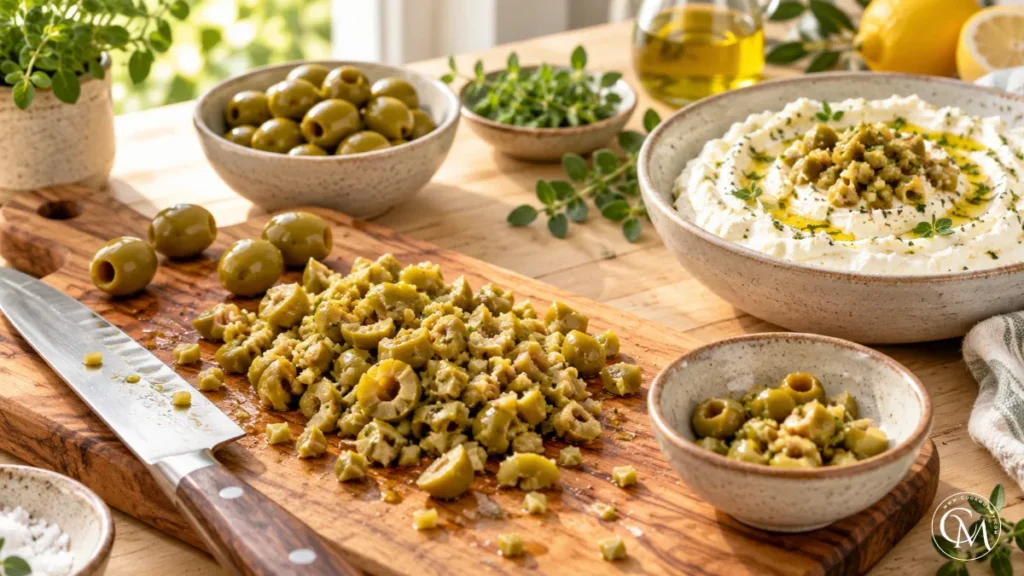
- Roughly chop the drained olives, reserving a tablespoon for garnish.
- For a rustic olive feta dip, leave the olive pieces slightly chunky. For a smoother spread, chop them more finely.
- Avoid turning the olives into a completely smooth paste unless that’s your preferred texture.
- Their small, tender pieces provide a pleasant contrast against the whipped feta.
Step 4 – Combine Everything
- Add the chopped green olives and fresh dill to the whipped feta mixture.
- Pulse three to five times, just until everything is evenly distributed.
- Taste before adding the remaining tablespoon of olive oil. If the mixture feels too thick, blend in a little more oil or a teaspoon of water.
- The ideal olive feta dip balances creamy, tangy, salty, and fresh flavors without allowing any single ingredient to dominate.
Step 5 – Finish and Adjust Seasoning
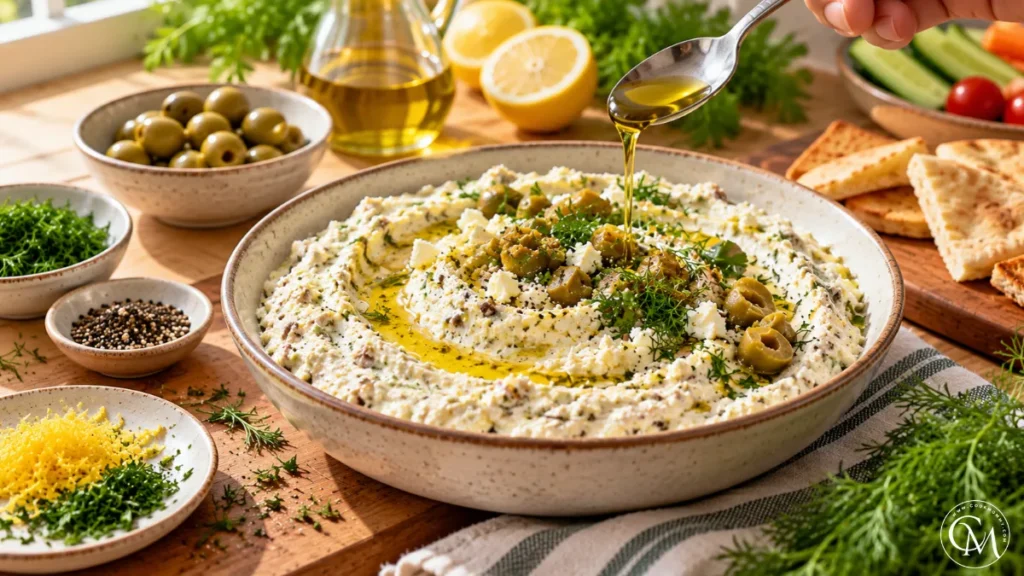
- Transfer the mixture into a shallow serving bowl and create a small swirl using the back of a spoon.
- Drizzle with olive oil, sprinkle with black pepper, and garnish with the reserved olives and herbs.
- Taste one final time. If it’s too salty, incorporate another spoonful of Greek yogurt. If it tastes flat, add a few drops of lemon juice.
- Serve immediately or refrigerate briefly for a firmer texture.
Nutritional Information
This olive feta dip contains protein from feta and yogurt, along with fats from olives and olive oil.
Approximate nutrition per serving, based on six servings:
| Nutrient | Approximate amount |
|---|---|
| Calories | 160 kcal |
| Protein | 6 g |
| Total fat | 14 g |
| Saturated fat | 6 g |
| Carbohydrates | 3 g |
| Fiber | 0.5 g |
| Sugars | 2 g |
| Sodium | 550 mg |
- These values are estimates. Actual nutrition depends on your feta, olive variety, and yogurt.
- Because feta and olives naturally contain substantial sodium, consider serving smaller portions alongside fresh vegetables and unsalted crackers.
Healthier Alternatives
- A few thoughtful adjustments make this olive feta dip suitable for different preferences without sacrificing its distinctive Mediterranean flavor.
- For lower sugar: Choose unsweetened Greek yogurt. This recipe contains no added sugar, although dairy contributes small amounts of naturally occurring sugars.
- For a lighter version: Replace some feta with additional low-fat Greek yogurt. The flavor becomes milder, but the consistency remains creamy.
- For whole-grain options: Pair the dip with whole-wheat pita, seeded crackers, or toasted whole-grain bread.
- For gluten-free diets: The dip can be naturally gluten-free when made with suitable ingredients. Serve with cucumber slices or certified gluten-free crackers.
- For dairy-free diets: Substitute plant-based feta and thick, unsweetened dairy-free yogurt. Check labels because plant-based cheese varies greatly in saltiness and texture.
- For children or anyone who prefers mild flavors, reduce the garlic and finely chop the olives. A softer, smoother consistency may also appeal to older adults who find crunchy accompaniments difficult to eat.
Serving Suggestions
- One reason this olive feta dip works so well is its flexibility. You can serve it casually for snacking or dress it up for an elegant gathering.
- For a traditional Mediterranean platter, surround the dip with warm pita wedges, sliced cucumbers, cherry tomatoes, and roasted peppers.
- For entertaining, spoon small portions onto toasted baguette slices and finish with lemon zest.
- It also makes an excellent sandwich spread. Spread it over warm flatbread, then layer on tender grilled vegetables, leafy spinach, and juicy roasted chicken.
- For a lighter lunch, add a generous spoonful to a grain bowl with quinoa, chickpeas, tomatoes, and fresh parsley.
- My favorite presentation tip is to use a wide, shallow bowl rather than a deep container. It gives the olive oil and herbs more room to shine.
Common Mistakes to Avoid
- Even a simple olive feta dip can disappoint when the ingredients or blending technique aren’t quite right.
- 1. Using overly salty olives: Taste and drain them first. Briefly rinsing very salty olives helps balance the finished recipe.
- 2. Adding too much liquid: Start with the recommended yogurt and oil quantities. Extra liquid can quickly create a runny mixture.
- 3. Overprocessing the olives: Excessive blending removes their pleasant texture and can make the dip resemble olive paste.
- 4. Using dry, pre-crumbled feta: Block feta generally blends more smoothly and provides a fresher, creamier result.
- 5. Skipping the final taste test: Feta and olive brands vary. Adjust acidity and seasoning after combining everything.
- 6. Serving it ice-cold: Allow refrigerated dip to soften briefly before serving for a creamier consistency and more noticeable flavor. Don’t leave it at room temperature for more than two hours.
Storing Tips for the Recipe
- Proper storage keeps your olive feta dip fresh, creamy, and ready for convenient snacking.
- Transfer leftovers into an airtight container and refrigerate promptly at 4°C (40°F) or below. For best quality, enjoy within three to four days.
- A small amount of liquid separation is normal. Give the dip a quick, gentle mix before bringing it to the table to bring back its smooth consistency.
- For meal preparation, you can drain and chop the olives one day ahead, then store them separately in the refrigerator.
- Freezing isn’t recommended because thawed yogurt and feta may become grainy or watery.
- This recipe became one of my regular meals because it’s easy to prepare ahead and transforms basic vegetables, bread, or grains into something satisfying. Keeping a small container ready also makes last-minute lunches considerably easier.
Conclusion
If you’re searching for an appetizer that combines simplicity, versatility, and unforgettable Mediterranean flavor, this olive feta dip is an excellent choice. With just a handful of ingredients and 10 minutes of preparation, you can create a creamy, tangy spread that works equally well for casual snacks, family gatherings, and elegant entertaining.
The combination of savory green olives, rich feta, refreshing herbs, and bright lemon makes every bite interesting. Better still, you can customize the ingredients to suit your preferences and dietary needs. Try this green olive feta dip the next time you’re planning an appetizer platter or need a quick homemade snack.
If you make it, leave a comment or review sharing your favorite variation. And don’t forget to subscribe for more easy Mediterranean recipes, practical cooking tips, and fresh appetizer ideas.
FAQs
1. Can I make olive feta dip without a food processor?
Yes. Mash the feta with a fork, mix in Greek yogurt and olive oil, then stir in finely chopped olives. The texture will be rustic rather than completely smooth.
2. What are the best olives for this recipe?
Pitted green olives such as Castelvetrano work beautifully because of their mild, buttery flavor. For a punchier olive flavor, choose Manzanilla olives, which add a pleasantly briny kick to every bite.
3. Can I prepare this dip the night before?
Absolutely. Prepare it up to one day ahead, refrigerate in an airtight container, and stir before serving. Add fresh herbs and olive oil just before presenting it.
4. How do I fix olive feta dip that’s too salty?
Blend in additional plain Greek yogurt or a little unsalted cream cheese. Serve with fresh vegetables or unsalted pita to balance the salty flavor.
5. Can I use low-fat feta cheese?
Yes. Low-fat feta works, but the finished dip may be less rich and slightly grainier. Adding a spoonful of Greek yogurt can help improve its texture.
6. Is this recipe suitable for a vegetarian diet?
Generally, yes, provided your feta is made with microbial or vegetarian rennet. Some traditional cheeses use animal rennet, so check the packaging before purchasing.
7. What can I serve with olive feta dip besides pita?
Try cucumber rounds, bell pepper strips, whole-grain crackers, toasted sourdough, or roasted potatoes. It also works beautifully as a spread inside wraps and vegetable sandwiches.
Tried it before ?
There are no reviews yet. Be the first one to write one.