
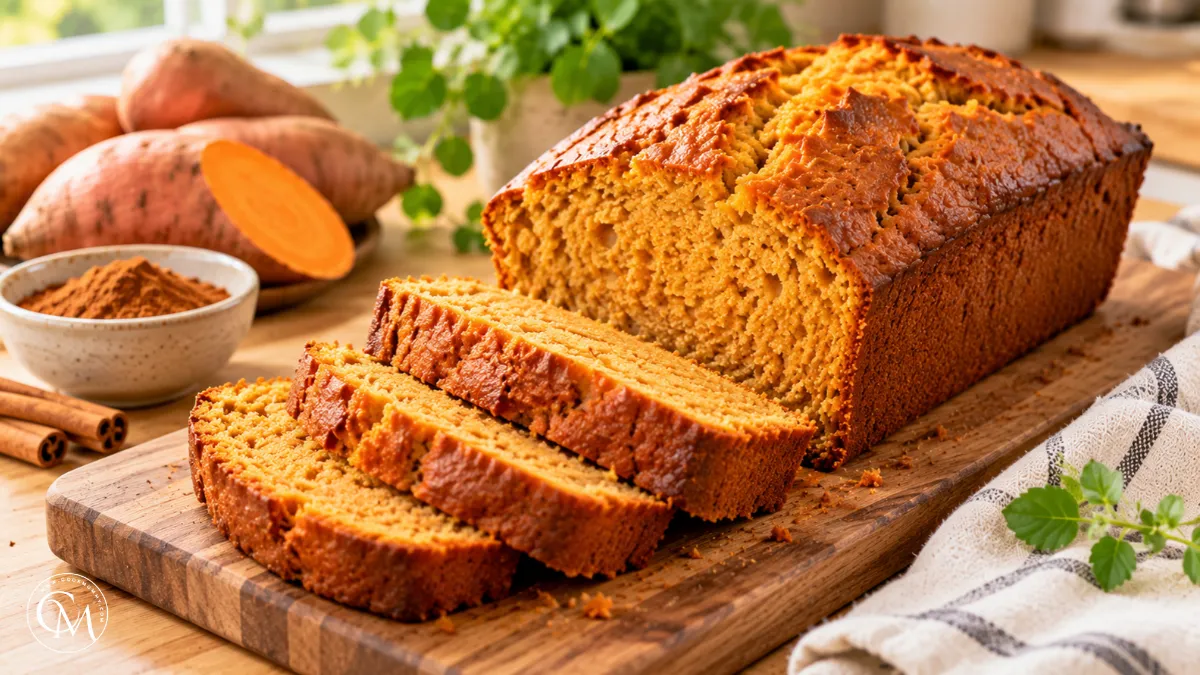
Gluten-Free Sweet Potato Bread: 5 Steps to the Best Loaf
Did you know that just one cup of mashed sweet potato can help create a wonderfully moist loaf without relying on traditional wheat flour?
If you’ve struggled with dry, crumbly gluten-free baking, this Sweet Potato Bread recipe might change how you think about homemade quick bread. Sweet potatoes provide natural moisture, gentle sweetness, and a tender texture that pairs beautifully with cinnamon and vanilla. The best part? You don’t need complicated ingredients or professional baking skills.
This easy gluten-free Sweet Potato Bread combines simple pantry staples with cooked sweet potatoes to create a golden loaf that’s perfect for breakfast, afternoon snacks, or a cozy dessert. Whether you’re new to gluten-free baking or looking for another way to enjoy sweet potatoes, these five practical steps will help you achieve delicious results.
Table of Contents
Ingredients List
Great Sweet Potato Bread starts with quality ingredients and the right balance of moisture, sweetness, and structure. This recipe makes one 9-by-5-inch loaf, approximately 10 slices.
Dry Ingredients
- 1¾ cups (245 g) gluten-free all-purpose flour: Choose a blend containing xanthan gum for better structure.
- ½ cup (100 g) brown sugar: Adds sweetness and a subtle caramel flavor.
- 1½ teaspoons baking powder: Helps the loaf rise evenly.
- ½ teaspoon baking soda: Encourages browning and supports a tender crumb.
- 1 teaspoon ground cinnamon: Adds warmth and comforting flavor.
- ½ teaspoon salt: Balances sweetness and enhances the other ingredients.
Wet Ingredients
- 1 cup (240 g) cooked, mashed sweet potato: Provides moisture, natural sweetness, and a beautiful orange color.
- 2 large eggs: Help bind the gluten-free batter.
- ⅓ cup (80 ml) neutral vegetable oil: Keeps the bread soft.
- ⅓ cup (80 ml) milk: Adds moisture and helps create a smooth batter.
- 1 teaspoon vanilla extract: Complements the sweet potato’s earthy sweetness.
Optional Additions
- ¼ cup chopped walnuts or pecans for crunch.
- ¼ teaspoon nutmeg for extra warmth.
- ⅓ cup dark chocolate chips for a sweeter treat.

Helpful substitution: Unsweetened almond milk works well instead of dairy milk. If your flour blend already contains xanthan gum, there’s no need to add more.
For the best texture, use thick mashed sweet potato rather than a watery purée.
Timing
One reason to love this Sweet Potato Bread is that most of the preparation involves simple mixing.
| Task | Time |
|---|---|
| Preparation | 15 minutes |
| Baking | 50–60 minutes |
| Cooling | 20 minutes |
| Total | 85–95 minutes |
| Yield | 10 slices |
These times assume your sweet potatoes are already cooked. Preparing fresh sweet potatoes adds approximately 35–50 minutes, depending on their size and cooking method.
Time-saving tip: Cook and mash the sweet potatoes the night before. Refrigerate them in an airtight container until you’re ready to bake.
Step-by-Step Instructions
Making gluten-free Sweet Potato Bread is surprisingly straightforward when you understand how the ingredients work together. Follow these five steps for a moist center, lightly golden crust, and satisfying homemade flavor.
Step 1: Prepare Your Ingredients and Baking Pan
- Preheat your oven to 350°F (175°C).
- Lightly grease a 9-by-5-inch loaf pan and line it with parchment paper, leaving some overhang for easy removal.
- Measure your ingredients before mixing. Gluten-free flour blends absorb moisture differently, so using a kitchen scale improves consistency.
- Allow refrigerated eggs and milk to approach room temperature. This helps the wet ingredients combine smoothly.
Kitchen tip: Avoid scooping flour directly from the bag. Spoon it into your measuring cup and level it, or weigh it for greater accuracy.
Step 2: Build a Warm, Flavorful Base
- In a large mixing bowl, combine the gluten-free flour, brown sugar, baking powder, baking soda, cinnamon, and salt.
- Whisk thoroughly to distribute the leavening agents and spices.
- In a separate bowl, whisk the eggs, oil, milk, and vanilla until smooth.
- The cinnamon creates a warm flavor foundation, while brown sugar contributes tenderness and promotes browning.
- Properly distributing baking powder and baking soda also helps prevent uneven rising.
Flavor tip: Add a small pinch of nutmeg for a bakery-style aroma without overpowering the sweet potatoes.
Step 3: Cook and Mash the Sweet Potatoes
- For the best Sweet Potato Bread, the sweet potato mixture should be smooth, thick, and free of large chunks.
- If starting with fresh sweet potatoes, pierce them with a fork and roast at 400°F (200°C) for approximately 40–50 minutes, until completely tender.
- Alternatively, microwave them until soft, turning occasionally.
- Let them cool enough to handle, remove the skins, and mash thoroughly.
- Allow the mash to cool before adding it to the batter.
- Roasting concentrates the natural sweetness and generally produces a thicker mash than boiling.
Texture tip: If your sweet potatoes seem watery, let excess moisture evaporate before measuring. Too much liquid can create a gummy center.
Step 4: Combine Everything Gently
- Add the cooled mashed sweet potato to the wet ingredients and whisk until reasonably smooth.
- Pour the wet mixture into the dry ingredients.
- Using a spatula, fold everything together until no dry flour remains.
- The batter should be thick, soft, and easily spreadable rather than runny.
- If adding nuts or chocolate chips, fold them in now.
- Gluten-free batter benefits from a brief five-minute rest, allowing the flour to absorb moisture.
Important: Don’t keep mixing after the ingredients are incorporated. Excessive mixing can affect the loaf’s texture and produce an uneven rise.
Step 5: Bake, Cool, and Finish
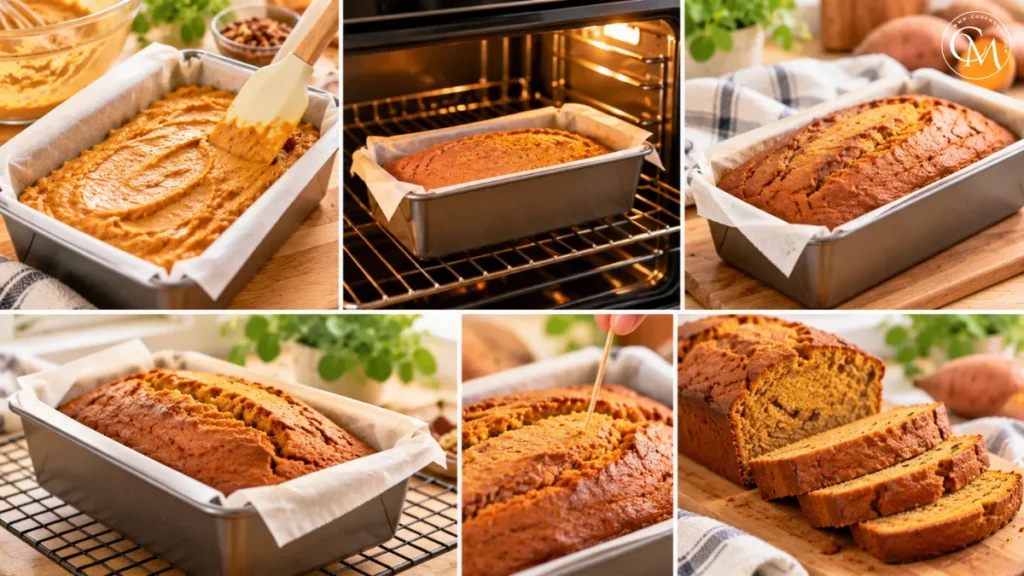
- Transfer the batter to your prepared pan and smooth the surface.
- Bake for 50–60 minutes, checking near the end.
- The top should look golden, and a toothpick inserted into the center should come out clean or with a few moist crumbs.
- For additional accuracy, the center should reach approximately 200–205°F (93–96°C).
- If the crust browns too quickly, loosely cover it with aluminum foil.
- Allow the Sweet Potato Bread to rest in its pan for 10 minutes before transferring it to a cooling rack.
- Cool for at least another 10 minutes, preferably longer, before slicing.
Baker’s advice: Cutting gluten-free bread while it’s very hot can make the interior appear gummy. Cooling gives the crumb time to firm up.




Nutritional Information
Sweet Potato Bread provides carbohydrates, some fiber, and nutrients naturally present in sweet potatoes.
The following estimates are based on 10 slices per loaf without optional toppings.
| Nutrient | Approximate amount per slice |
|---|---|
| Calories | 235 kcal |
| Carbohydrates | 35 g |
| Protein | 4 g |
| Total fat | 9 g |
| Fiber | 2 g |
| Sugar | 12 g |
| Sodium | 230 mg |
- Actual values depend on the flour blend, milk, oil, and serving size.
- Sweet potatoes naturally contain beta-carotene, which the body can convert into vitamin A. Enjoy this bread as part of a varied, balanced diet rather than relying on it as a major source of nutrients
Healthier Alternatives
- One advantage of homemade Sweet Potato Bread is the freedom to adjust ingredients according to your preferences.
- Lower sugar: Reduce the brown sugar to ⅓ cup. The sweet potato still contributes natural sweetness, although the loaf will taste less dessert-like.
- More whole grains: Replace up to ¼ cup of the flour blend with certified gluten-free oat flour. Expect a slightly denser crumb.
- Dairy-free: Use unsweetened almond, soy, or oat milk instead of dairy milk.
- Additional fiber: Add one tablespoon of ground flaxseed, along with a tablespoon of extra milk if needed.
- For children: Bake the mixture in muffin cups for convenient, smaller portions. Begin checking for doneness after 18–22 minutes.
- For older adults: Serve thin, soft slices with yogurt or another preferred accompaniment for an easy-to-eat snack.
- When substituting ingredients, change one component at a time. This makes it easier to understand how each adjustment affects the finished loaf.
Serving Suggestions
Fresh Sweet Potato Bread tastes wonderful on its own, but a few simple additions make it even more inviting.
- Breakfast: Toast a slice and spread it with almond butter.
- Afternoon snack: Pair it with tea, coffee, or warm milk.
- Weekend brunch: Serve with Greek yogurt, berries, and chopped pecans.
- Dessert: Warm a slice and finish with a light drizzle of maple syrup.
- Lunchbox treat: Pack a plain slice alongside fruit for a convenient snack.
For a comforting variation, lightly toast leftover slices in a skillet until the edges become golden. A small amount of cinnamon butter also brings out the bread’s naturally sweet flavor.
Common Mistakes to Avoid
Even a straightforward Sweet Potato Bread recipe can go wrong if a few important details are overlooked.
- 1. Using watery sweet potatoes Excess moisture can make the center heavy or gummy. Roast rather than boil when possible, and measure the mash after cooking.
- 2. Choosing an unsuitable flour blend Not every gluten-free flour works as a direct substitute for wheat flour. Use a baking blend designed for cup-for-cup replacement.
- 3. Adding hot sweet potato Hot mash can begin cooking the eggs prematurely. Cool it before combining with other wet ingredients.
- 4. Overfilling the loaf pan Leave enough room for rising. A standard 9-by-5-inch pan accommodates this recipe comfortably.
- 5. Underbaking the center A browned crust doesn’t always mean the inside is finished. Check the center using a toothpick or food thermometer.
- 6. Slicing too early Warm gluten-free bread is delicate. Allow adequate cooling for cleaner slices and a more stable crumb.
Storing Tips for the Sweet Potato Bread
- Proper storage helps Sweet Potato Bread retain its moisture without becoming sticky.
- Room temperature: Once completely cool, store in an airtight container for up to two days in a cool kitchen.
- Refrigerator: Refrigerate tightly wrapped slices for approximately four to five days.
- Freezer: Wrap individual slices and place them in a freezer-safe bag for up to three months for best quality.
- To reheat, thaw frozen slices and warm them briefly in a toaster or microwave.
- For meal preparation, bake one loaf, slice it after cooling, and freeze portions individually.
This recipe can become a regular breakfast option because the slices freeze conveniently, reheat quickly, and offer a practical way to use leftover cooked sweet potatoes.
Conclusion
Homemade gluten-free baking doesn’t have to be complicated or disappointing. This Sweet Potato Bread recipe combines naturally moist sweet potatoes, warm cinnamon, and everyday ingredients to produce a soft, flavorful loaf with minimal effort.
The key is simple: use properly cooked sweet potatoes, measure accurately, combine the batter gently, and allow enough baking and cooling time. Whether you serve it for breakfast, enjoy it with afternoon coffee, or freeze slices for later, this versatile recipe fits comfortably into a busy kitchen routine.
Ready to give it a try? Bake your own Sweet Potato Bread and experiment with your favorite additions. Leave a comment or recipe review to share how your loaf turned out, and subscribe for more approachable gluten-free recipes, baking tips, and homemade treats.
FAQs
1. Can I make Sweet Potato Bread without eggs?
Yes, you can experiment with flax eggs, using one tablespoon of ground flaxseed and three tablespoons of water per egg. However, the loaf may become denser, and results aren’t guaranteed.
2. Can I use canned sweet potato purée?
Absolutely. Choose plain, unsweetened sweet potato purée without added spices. Make sure it’s thick rather than watery, and measure one cup for the recipe.
3. Why is my gluten-free loaf gummy inside?
Excess moisture, insufficient baking time, or slicing while hot are common causes. Check the center for doneness and allow the loaf to cool before cutting.
4. Can I make this recipe into muffins?
Yes. Divide the batter among lined muffin cups and bake at 350°F (175°C) for approximately 18–22 minutes. Check the centers before removing them from the oven.
5. Is this Sweet Potato Bread suitable for people with celiac disease?
It can be, provided every ingredient is verified gluten-free and preparation avoids cross-contact with gluten-containing foods. Always check flour labels, baking ingredients, utensils, and shared equipment.
6. Can I freeze the finished bread?
Yes. Cool completely, slice, and wrap portions individually before freezing. For the best flavor and texture, enjoy within three months and thaw before reheating.
7. How do I keep Sweet Potato Bread moist?
Use thick mashed sweet potato, measure the flour carefully, avoid overbaking, and store the cooled loaf tightly wrapped. These habits help preserve its tender texture.
Tried it before ?
There are no reviews yet. Be the first one to write one.