
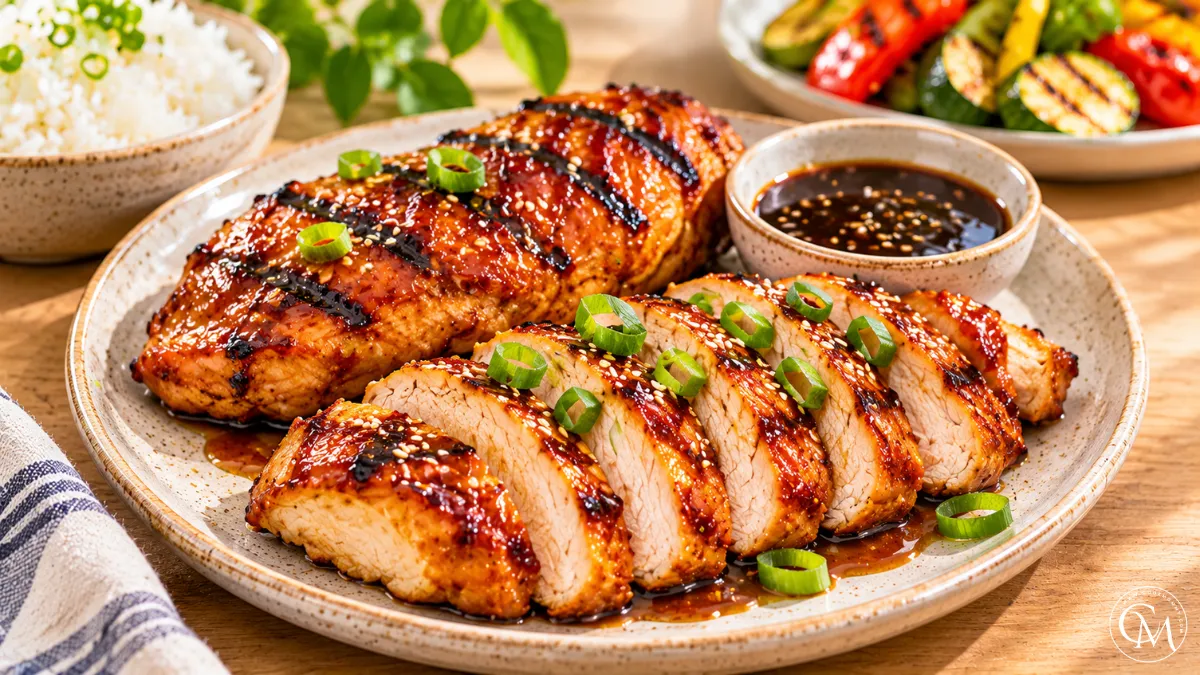
Best Grilled Teriyaki Chicken: 6 Ways How to Keep It Juicy
Did you know chicken is considered safely cooked at an internal temperature of 165°F, yet leaving it on the grill even a few minutes longer can quickly turn a juicy dinner into something dry and chewy?
That narrow window is exactly why Grilled Teriyaki Chicken can be surprisingly tricky. The sweet marinade caramelizes beautifully over high heat, but the sugars can also burn before the chicken finishes cooking. The solution is not complicated you simply need the right marinade, temperature, timing, and resting technique.
This Grilled Teriyaki Chicken recipe delivers tender chicken with smoky edges, a glossy sweet-savory glaze, and plenty of classic teriyaki flavor. More importantly, I’ll show you six practical ways to keep the meat juicy, whether you’re cooking chicken thighs or breasts. It is an easy choice for weeknight dinners, summer cookouts, meal prep, rice bowls, or family gatherings.
Table of Contents
Ingredients for Grilled Teriyaki Chicken
The best teriyaki flavor comes from balancing salty, sweet, tangy, and aromatic ingredients rather than making the sauce overly sugary.
For 4 servings, you’ll need:
- 1½ pounds boneless, skinless chicken thighs or chicken breasts
- ⅓ cup low-sodium soy sauce
- 3 tablespoons brown sugar or honey
- 2 tablespoons mirin
- 1 tablespoon rice vinegar
- 1 tablespoon sesame oil
- 2 cloves garlic, finely minced
- 1 tablespoon fresh ginger, grated
- 1 teaspoon cornstarch
- 1 tablespoon water
- 2 green onions, thinly sliced
- 1 teaspoon sesame seeds
- Neutral cooking oil for the grill
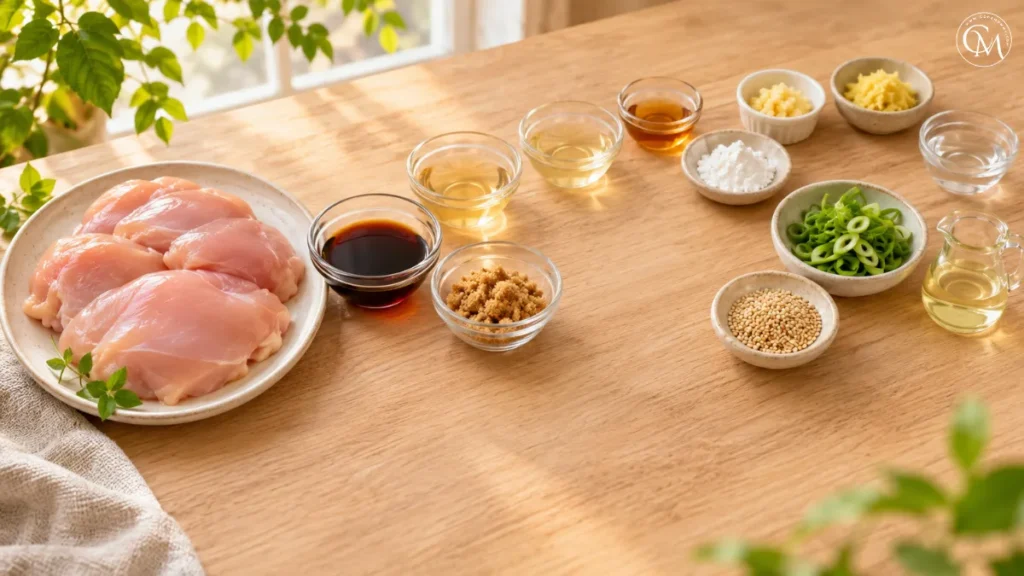
Chicken thighs are especially forgiving because their slightly higher fat content helps them stay moist over direct heat. Chicken breasts work well too, but pounding thicker pieces to an even thickness makes them easier to cook consistently.
No mirin? Substitute apple juice plus a small splash of rice vinegar. Tamari or certified gluten-free soy sauce works well for a gluten-free version.
Timing
Grilled Teriyaki Chicken is faster than many oven-roasted chicken recipes, especially if you prepare the marinade ahead.
- Preparation time: 15 minutes
- Marinating time: 30 minutes to 4 hours
- Cooking time: 10–14 minutes
- Resting time: 5 minutes
- Total active time: About 30 minutes
For the best balance of convenience and flavor, I usually recommend about one hour of marinating. Longer is not always better. Very acidic marinades can eventually change the chicken’s texture, so there is little advantage to leaving it overnight.
Step-by-Step Instructions
Step 1 – Prepare the Ingredients
- Trim away large pieces of excess fat, then pat the chicken dry with paper towels.
- If you’re using chicken breasts, place them between sheets of parchment paper and gently pound the thicker sections until each piece is roughly even. Uniform thickness matters because thin sections otherwise overcook while the thick center is still coming up to temperature.
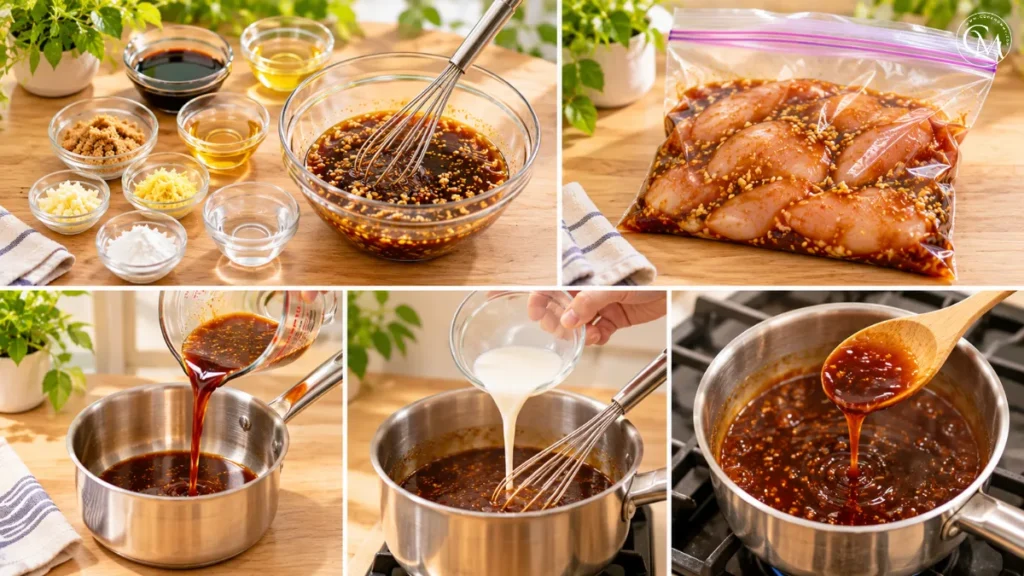
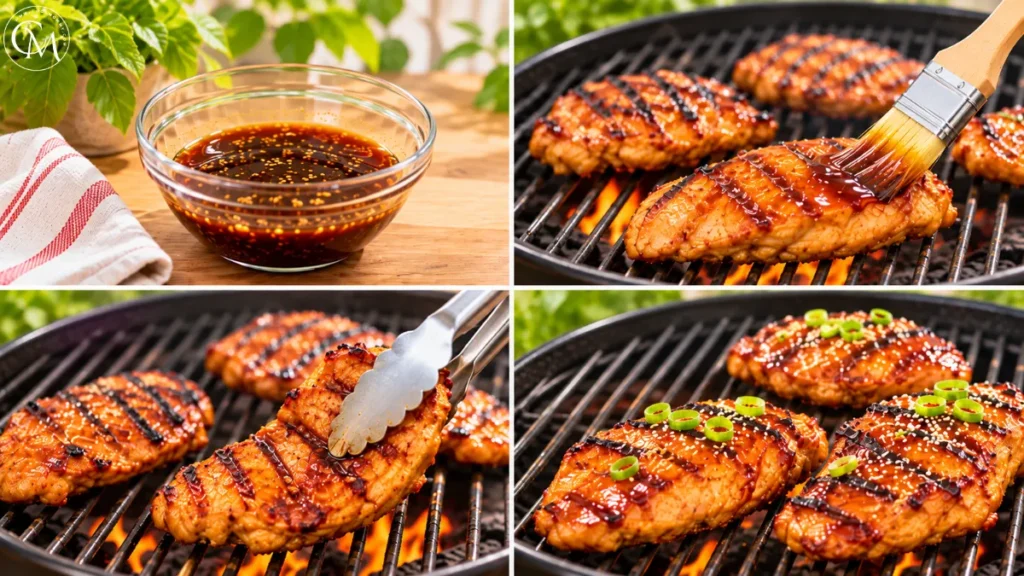
- Combine the soy sauce, brown sugar, mirin, rice vinegar, sesame oil, garlic, and ginger in a bowl.
- Reserve about ⅓ cup of this mixture before adding the raw chicken. This clean portion will become your finishing glaze.
- Add the chicken to the remaining marinade, coat it thoroughly, cover, and refrigerate for 30 minutes to 4 hours.
Step 2 – Build the Flavor Base
- Teriyaki works because several flavors reinforce one another. Soy sauce supplies salt and savory umami, sugar encourages caramelization, vinegar provides brightness, and ginger and garlic bring aromatic warmth.
- For flavorful Grilled Teriyaki Chicken, let the marinade cover as much surface area as possible. A resealable bag works especially well because you can press out excess air and keep the marinade against the meat.
- Meanwhile, pour the reserved clean marinade into a small saucepan.
- Mix the cornstarch with one tablespoon of cold water, then whisk it into the sauce. Simmer gently for 2–3 minutes until glossy and slightly thickened.
- This glaze is intentionally prepared separately from anything that touched raw poultry.
Step 3 – Grill the Chicken
- Preheat the grill to medium-high heat, roughly 400–425°F. Clean the grates and lightly oil them before adding the meat.
- Remove the chicken from the marinade and allow excess liquid to drip away. Too much wet marinade on the surface encourages flare-ups and can cause the sugar to scorch.
- Place the chicken directly over the heat.
- For thighs, grill approximately 5–7 minutes per side. Chicken breasts often need about 5–6 minutes per side, depending on thickness.
- Avoid repeatedly flipping or pressing the chicken with a spatula. Pressing squeezes flavorful juices out onto the grill instead of keeping them inside the meat.
- The most reliable way to check Grilled Teriyaki Chicken is with an instant-read thermometer inserted into the thickest section. Cook chicken to a safe internal temperature of 165°F.
Step 4 – Combine Everything
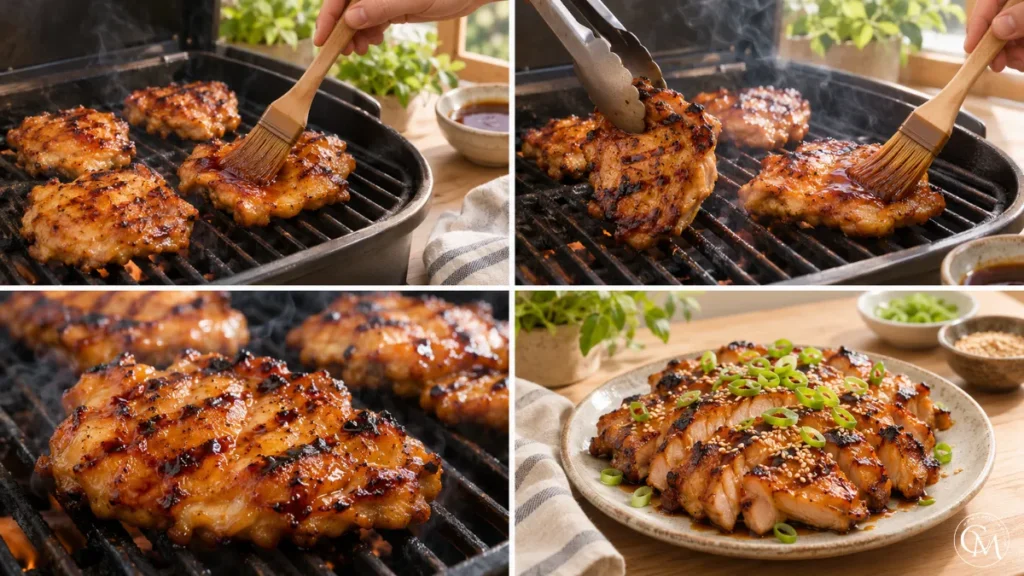
- During the last 1–2 minutes of cooking, brush the chicken lightly with the prepared teriyaki glaze.
- Adding the thick glaze toward the end is important. If you brush sugary sauce onto the meat too early, it can burn before the chicken cooks through.
- Flip once, brush the second side, and allow the glaze to become shiny and lightly caramelized.
- Good Grilled Teriyaki Chicken should have a contrast of savory meat, sweet glaze, gentle acidity, smoky char, and fresh aromatics rather than tasting overwhelmingly sweet.
Step 5 – Finish and Adjust the Seasoning
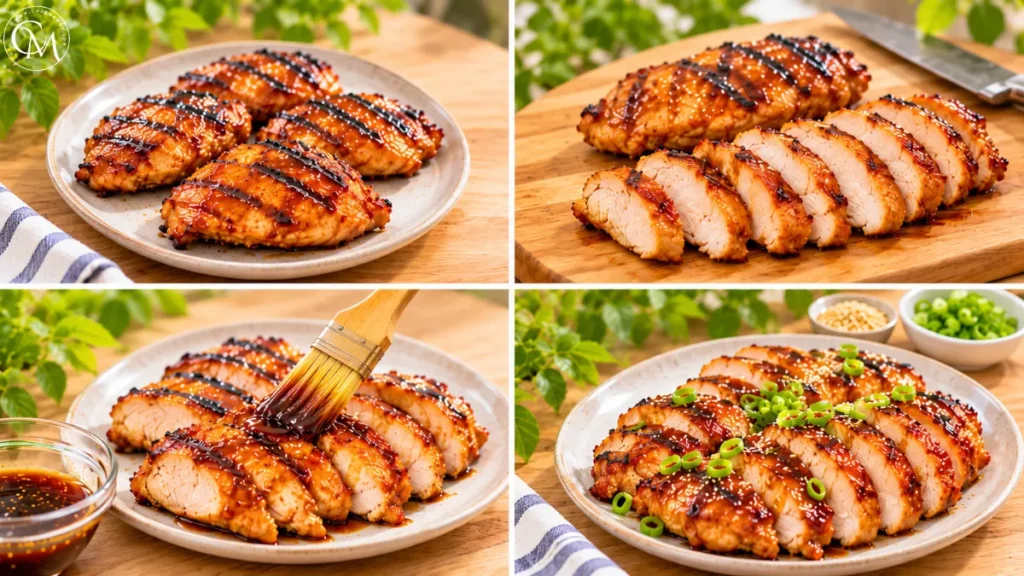
- Transfer the chicken to a clean plate and let it rest for about 5 minutes before slicing.
- Resting gives the moisture inside the meat time to redistribute. Slice immediately and those juices are more likely to end up on the cutting board.
- Brush with a small amount of warm teriyaki sauce, then finish with sliced green onions and sesame seeds.
- Taste before adding additional salt. Soy sauce already contributes plenty of seasoning, so the final adjustment may simply be a little rice vinegar for brightness or extra glaze for sweetness.
- For especially attractive Grilled Teriyaki Chicken, slice against the grain and spoon just enough glaze over the top to create shine without drowning the meat.

6 Ways to Keep Grilled Teriyaki Chicken Juicy
These six details make the biggest difference:
- Choose evenly sized chicken pieces so everything cooks at the same rate.
- Marinate for at least 30 minutes to build flavor without compromising texture.
- Use medium-high rather than extreme heat so the sugar doesn’t burn prematurely.
- Remove excess marinade before grilling to reduce scorching and flare-ups.
- Check doneness with a thermometer instead of relying only on cooking time.
- Rest the chicken for 5 minutes before slicing so more moisture stays inside.
When these techniques work together, Grilled Teriyaki Chicken develops caramelized edges while remaining tender in the center.
Nutritional Information
Approximate nutrition per serving, based on four servings:
- Calories: 370
- Protein: 35 g
- Carbohydrates: 18 g
- Fat: 17 g
- Saturated fat: 4 g
- Sugar: 13 g
- Sodium: 820 mg
- Fiber: Less than 1 g
Actual values depend on the cut of chicken, brand of soy sauce, amount of glaze used, and serving size.
Grilled Teriyaki Chicken provides substantial protein, while much of the sodium and added sugar comes from the sauce. Using low-sodium soy sauce and applying glaze moderately can make those amounts easier to control without sacrificing the signature teriyaki flavor.
Healthier Alternatives
- You can adapt this recipe without turning it into an entirely different meal.
- For a lower-sugar version, reduce the brown sugar or honey by about one-third. Ginger, garlic, rice vinegar, and sesame oil provide enough complexity that the sauce can still taste balanced.
- For more whole grains, serve Grilled Teriyaki Chicken over brown rice, quinoa, barley, or a brown-and-white rice blend. The nutty flavor pairs particularly well with the sweet glaze.
- For gluten-free cooking, replace standard soy sauce with gluten-free tamari and confirm that your mirin and other packaged ingredients are certified gluten-free.
- The recipe is naturally dairy-free when prepared with the ingredients listed.
- For children, keep the glaze mild and serve extra sauce on the side. For adults seeking lighter portions, increase the amount of grilled vegetables and reduce the rice serving. For seniors who prefer softer textures, chicken thighs can be especially tender when sliced thinly across the grain.
Serving Suggestions
- My favorite way to serve Grilled Teriyaki Chicken is over warm jasmine rice with grilled broccoli, zucchini, or bell peppers. The vegetables pick up some smoky flavor from the grill while balancing the sweetness of the sauce.
- For a colorful rice bowl, add shredded carrots, sliced cucumber, avocado, edamame, and green onions. A little sesame seed garnish provides crunch without competing with the chicken.
- You can also turn the recipe into:
- Teriyaki chicken lettuce wraps with crunchy vegetables
- Hawaiian-inspired bowls with grilled pineapple
- Noodle bowls with soba and steamed greens
- Meal-prep boxes with brown rice and broccoli
- Chicken sandwiches topped with crisp cabbage slaw
- For summer entertaining, I like pairing Grilled Teriyaki Chicken with grilled corn and a cucumber salad because both sides add freshness without making the meal too heavy.
- Consider linking this recipe to your homemade teriyaki sauce, grilled vegetable, Asian cucumber salad, or rice bowl recipes to help readers build a complete meal.
Common Mistakes to Avoid
- Using heat that is too high Teriyaki marinades contain sugar, which can darken quickly. Medium-high heat gives the chicken time to cook while still creating attractive grill marks.
- Grilling chicken straight from a dripping marinade A heavily coated surface can cause flare-ups. Let excess marinade drip away before the chicken reaches the grate.
- Cooking entirely by the clock Thickness varies dramatically. A thermometer is more dependable than assuming every chicken breast will finish in exactly 10 or 12 minutes.
- Glazing too early Apply thick teriyaki sauce near the end of grilling. Otherwise, the sugars can burn while the center remains undercooked.
- Cutting immediately Rest Grilled Teriyaki Chicken for about five minutes before slicing. It’s one of the easiest ways to preserve the juices you’ve worked to keep.
- Reusing raw marinade Never brush cooked chicken with marinade that has been in contact with raw poultry unless it has been thoroughly boiled. Reserving clean sauce at the beginning is simpler and safer.
Storing Tips for the Recipe
- Allow leftovers to cool, then transfer them to an airtight container and refrigerate promptly. Properly refrigerated cooked chicken is generally best used within 3–4 days.
- Store extra sauce separately when possible. This helps the chicken maintain a better texture rather than soaking in glaze for several days.
- To reheat Grilled Teriyaki Chicken, use gentle heat. A covered skillet with a tablespoon of water works particularly well because the steam helps prevent drying. The microwave also works—cover the chicken and heat it in short intervals rather than running it continuously at full power.
- For meal prep, prepare the marinade up to several days in advance and keep it refrigerated without the raw chicken.
- This recipe became one of my regular meals because the same batch can become a rice bowl one night, a salad or wrap the next day, and a quick lunch without feeling like the exact same meal twice.
Conclusion
Grilled Teriyaki Chicken proves that a simple homemade dinner can deliver big flavor without complicated techniques. A balanced ginger-garlic marinade, controlled grill temperature, late glazing, accurate temperature checks, and a short resting period are the keys to keeping every piece tender and juicy.
Once you understand those basics, the recipe is easy to customize with chicken thighs or breasts, different grains, fresh vegetables, and lighter sauce variations.
Try this Grilled Teriyaki Chicken the next time you want an easy weeknight meal or crowd-friendly cookout recipe. If you make it, leave a comment or review and share how you served yours. And subscribe for more practical recipes, grilling tips, and approachable home-cooking ideas delivered in future updates.
FAQs
Can I use chicken breasts instead of thighs?
Yes. Chicken breasts work well for Grilled Teriyaki Chicken, but pound them to an even thickness and monitor the internal temperature closely because lean breast meat dries faster.
How long should I marinate the chicken?
Thirty minutes to four hours is usually enough. The chicken gains plenty of teriyaki flavor without spending so long in the marinade that its exterior texture begins changing.
Can I make Grilled Teriyaki Chicken without an outdoor grill?
Yes. Use a grill pan or heavy skillet over medium-high heat. Cook until the chicken reaches 165°F, then brush on the glaze during the final minutes.
Why does my teriyaki chicken burn on the grill?
The sugar in teriyaki sauce caramelizes quickly. Use medium-high heat, remove excess marinade, and wait until near the end of cooking before adding the thick finishing glaze.
Can I prepare this recipe ahead of time?
Yes. Mix the marinade and sauce in advance, then refrigerate them separately. You can also marinate the chicken a few hours before grilling for an easier dinner.
What sides go well with teriyaki chicken?
Steamed rice, brown rice, grilled vegetables, cucumber salad, edamame, pineapple, and Asian-style slaw all complement the salty-sweet flavor without overwhelming the main dish.
How can I keep leftover chicken from drying out?
Reheat it gently in a covered skillet with a splash of water or extra teriyaki sauce. Short microwave intervals also help preserve the texture better than prolonged reheating.
Tried it before ?
There are no reviews yet. Be the first one to write one.