
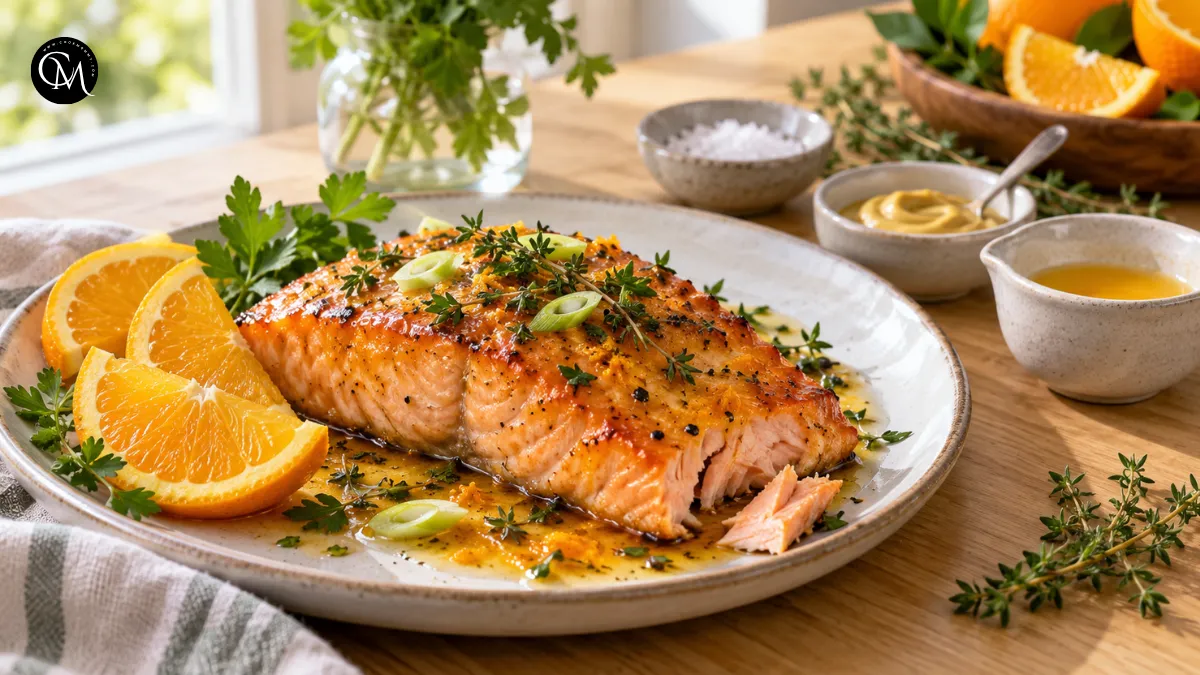
Orange-Infused Baked Salmon: 7 Best Ideas for Easy Dinner
Did you know salmon can go from silky and moist to dry in only a few extra minutes of baking? That narrow cooking window is exactly why a simple flavor-and-temperature strategy matters. Orange-Infused Baked Salmon solves two common weeknight problems at once: bland fish and complicated preparation. Fresh orange juice, fragrant zest, garlic, a touch of honey, and savory seasoning create a bright glaze that complements salmon without hiding its natural richness. The result is Orange-Infused Baked Salmon with a clean citrus finish rather than an overly sweet sauce.
This Orange-Infused Baked Salmon is worth keeping in your dinner rotation because it needs very little hands-on work, uses everyday ingredients, and pairs easily with vegetables, grains, or salad. The citrus also brings enough acidity to balance the fish’s natural richness, giving each bite a fresher, lighter finish.
Table of Contents
Ingredients for Orange-Infused Baked Salmon
For 4 servings, you will need:
- 4 salmon fillets, about 5–6 ounces each
- 1 large orange, zested and juiced
- 2 tablespoons fresh orange juice
- 1 teaspoon finely grated orange zest
- 1 tablespoon olive oil
- 1 tablespoon low-sodium soy sauce or tamari
- 2 teaspoons honey or pure maple syrup
- 2 garlic cloves, finely minced
- 1 teaspoon Dijon mustard
- 1/2 teaspoon smoked paprika
- 1/4 teaspoon freshly ground black pepper
- 1/4 teaspoon salt, or to taste
- 1 teaspoon chopped fresh thyme or parsley
- Orange slices, optional, for baking and serving
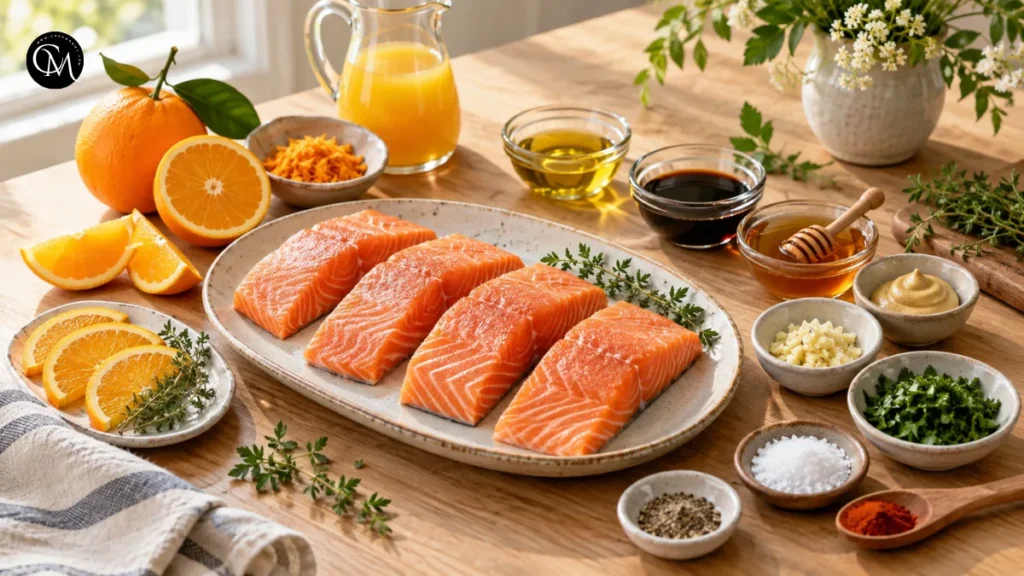
Use a fresh orange when possible; its zest gives the glaze a brighter aroma than bottled juice. For less sweetness, reduce the honey to one teaspoon. Tamari works for a gluten-free version, and whole-grain mustard can replace Dijon.
Timing
- Preparation time: 10 minutes
- Optional marinating time: 15 minutes
- Baking time: 10–14 minutes
- Total active time: about 25 minutes
Orange-Infused Baked Salmon is especially practical for busy evenings. Fillet thickness matters more than weight, so begin checking thin pieces around the 9- or 10-minute mark.
Step-by-Step Instructions
Step 1 – Prepare the Ingredients
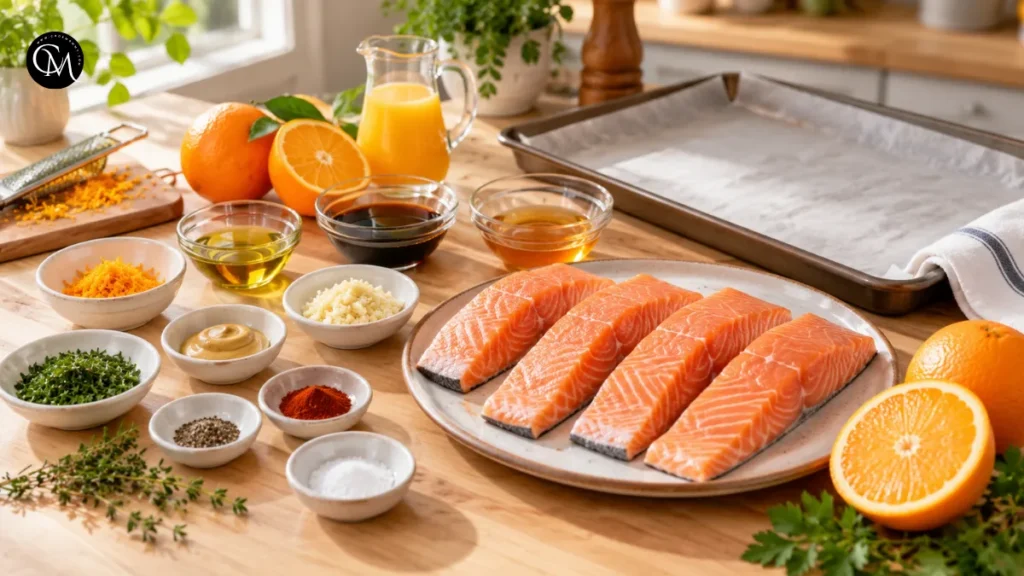
- Heat the oven to 400°F (200°C). Line a baking sheet or shallow baking dish with parchment paper or lightly oil it. Pat the salmon dry with paper towel before seasoning.
- Drying the surface matters because excess moisture dilutes the glaze. Place skin-on fillets skin-side down, and zest the orange before squeezing it.
- For evenly cooked Orange-Infused Baked Salmon, choose fillets of similar thickness. Remove thinner pieces a little earlier if needed.
- Having everything measured before you begin also prevents the salmon from sitting too long in the acidic citrus mixture while you search for ingredients.
Step 2 – Build the Flavor Base
- In a small bowl, whisk together orange juice, orange zest, olive oil, soy sauce, honey, garlic, Dijon mustard, smoked paprika, black pepper, and salt.
- The glaze balances citrus acidity, gentle sweetness, savory umami, and fat. Honey encourages a glossy finish, while too much juice can steam the fish instead of glazing it.
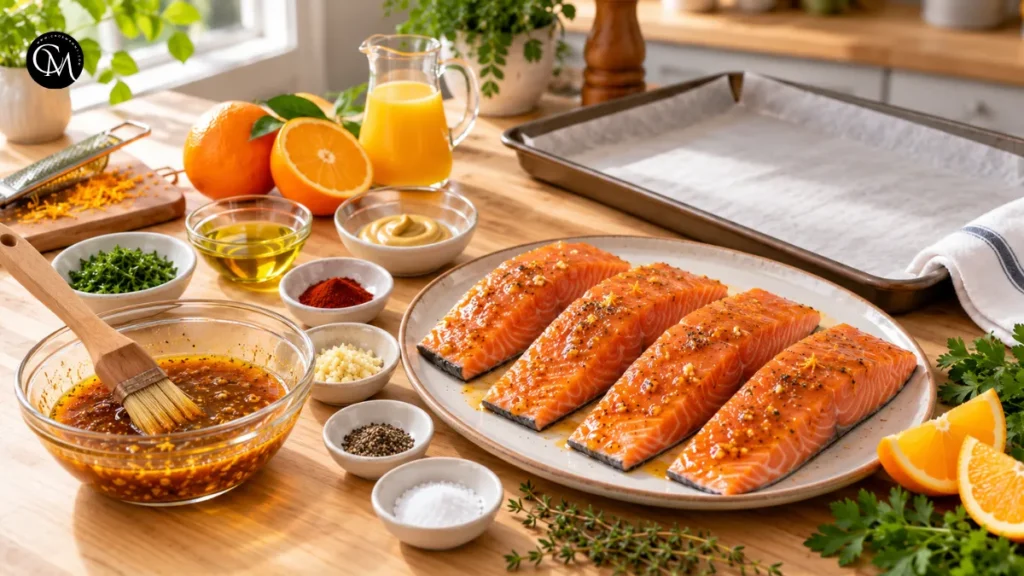
- Brush about two-thirds of the mixture over the fillets and rest for 10–15 minutes. Avoid a long citrus marinade because acid gradually changes the surface texture.
- This short marinating period gives Orange-Infused Baked Salmon plenty of flavor while preserving the salmon’s soft, flaky texture.
Step 3 – Cook the Main Ingredient
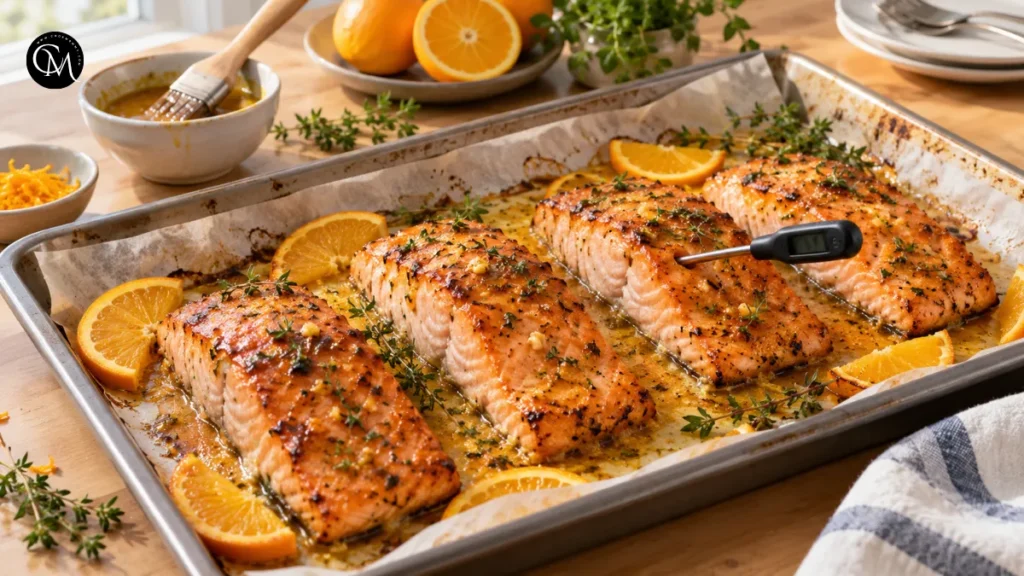
- Bake uncovered for 10–14 minutes, depending on thickness. Brush with the remaining glaze during the final 3–4 minutes.
- For light caramelization, broil for 30–60 seconds at the end, watching closely because honey darkens quickly.
- The best texture for Orange-Infused Baked Salmon is moist and easily flaked rather than chalky or dry. For food safety, fish should reach 145°F (63°C) at its thickest point.
- If using an instant-read thermometer, insert it sideways into the center of the thickest fillet rather than pushing it straight down from the top.
Step 4 – Combine Everything
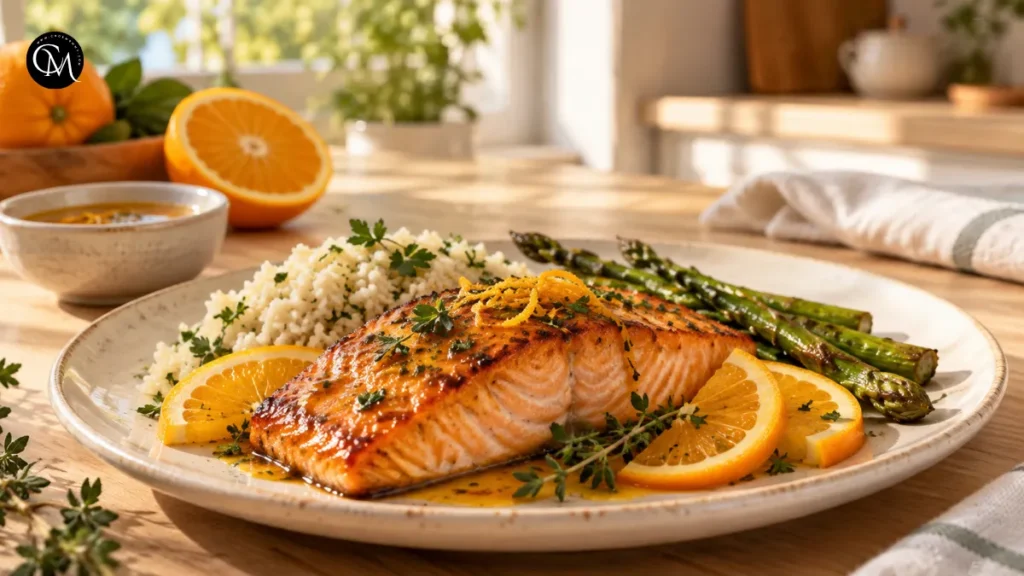
- Spoon a little warm pan glaze over each fillet and add fresh orange zest for brightness.
- Some citrus aroma softens during baking, so fresh zest restores that lively fragrance. When serving Orange-Infused Baked Salmon with rice, quinoa, or couscous, add a little pan juice to the grains too.
- This small detail helps bring the entire plate together. The grain absorbs the savory citrus juices while vegetables provide contrast in color and texture.
Step 5 – Finish and Adjust Seasoning
- Let the fish rest for 2–3 minutes before serving. Taste a small piece from the edge and adjust the seasoning if needed.
- If the glaze tastes too sweet, add a little salt or Dijon. If it seems too savory, brighten it with a small squeeze of fresh orange juice.
- Finish Orange-Infused Baked Salmon with parsley, thyme, or thinly sliced scallions. Fresh herbs add color and prevent the final dish from tasting heavy.
Nutritional Information
Approximate nutrition per serving, based on one 5–6 ounce salmon fillet and one-quarter of the glaze:
- Calories: 330–370
- Protein: 32–35 g
- Fat: 19–22 g
- Saturated fat: 3–4 g
- Carbohydrates: 7–10 g
- Sugars: 5–7 g
- Sodium: 350–500 mg
Values vary with fillet size, salmon species, and glaze quantity. Orange-Infused Baked Salmon offers substantial protein, while the citrus glaze adds flavor without requiring a heavy cream sauce.
Remember that nutritional values are estimates rather than exact measurements. Different brands of soy sauce, salmon varieties, and serving sizes can noticeably change the final numbers.
Healthier Alternatives
- To reduce added sugar, use one teaspoon of honey or omit it completely. Naturally sweet fresh orange juice may provide enough balance on its own.
- Reduced-sodium soy sauce can also help control the overall salt level.
- Orange-Infused Baked Salmon is naturally dairy-free. For gluten-free cooking, use certified gluten-free tamari instead of regular soy sauce.
- You can add whole grains through side dishes such as brown rice, quinoa, barley, or whole-wheat couscous.
- For children, keep the seasoning mild and serve extra sauce separately. For lighter meals, pair the fish with roasted vegetables or a crisp salad.
- For seniors or anyone who prefers softer textures, serve it with mashed sweet potato, tender carrots, steamed zucchini, or soft green beans.
- These adjustments change the meal without sacrificing the bright citrus flavor that makes the recipe appealing.
Serving Suggestions
- Orange-Infused Baked Salmon is easy to adapt to different occasions.
- For a quick weeknight plate, serve it with jasmine rice and roasted green beans. The rice catches the citrus glaze beautifully while the green beans add freshness and crunch.
- For a lighter dinner, build a salad with arugula, avocado, cucumber, orange segments, and a simple olive oil dressing.
- If you want something more comforting, pair the salmon with creamy mashed potatoes and sautéed spinach.
- For entertaining, arrange the fillets on a warm platter with thin orange rounds, fresh thyme, and herbed couscous. The colorful presentation looks special without requiring complicated decoration.
- Leftover Orange-Infused Baked Salmon also works well in grain bowls with quinoa, greens, sliced radish, cucumber, and fresh herbs.
- For lunch the next day, flake the cold salmon over mixed greens rather than reheating it. The chilled citrus flavor is surprisingly refreshing.
Common Mistakes to Avoid
- Using too much orange juice. A flooded baking dish steams the fish and weakens the glaze. Keep your citrus mixture concentrated.
- Baking every fillet for exactly the same time. Thickness controls cooking speed much more than appearance. Check thinner portions first.
- Skipping the surface-drying step. Wet salmon prevents the glaze from clinging properly and can create excess liquid in the pan.
- Marinating for too long. Citrus acid gradually changes the texture of fish. Fifteen minutes is usually enough to introduce flavor.
- Overbaking. Orange-Infused Baked Salmon continues to retain heat after leaving the oven, so start checking it early instead of waiting until the center looks dry.
- Forgetting final seasoning. Fresh zest, herbs, black pepper, or a small squeeze of orange added just before serving can noticeably brighten the entire dish.
Storing Tips for the Recipe
- Cool leftovers promptly and place them in an airtight container in the refrigerator for up to 3 days.
- You can also prepare the glaze one day ahead and store it separately in a sealed container. For the strongest aroma, add freshly grated orange zest shortly before cooking.
- Reheat Orange-Infused Baked Salmon gently in a covered baking dish at about 300°F (150°C) until warmed through. High heat can quickly dry out previously cooked salmon.
- For meal prep, prepare your rice or vegetables in advance but bake the salmon close to serving time whenever possible.
- This recipe became one of my regular meals because the preparation is short, the ingredients are manageable, and the finished fish feels special enough for a weekend dinner without creating extra kitchen work.
Conclusion
Orange-Infused Baked Salmon brings fresh, restaurant-style flavor to a weeknight meal without complicated preparation. Citrus, garlic, Dijon, gentle sweetness, and savory seasoning create a balanced glaze, while the short baking time makes the recipe practical for busy evenings.
Try it with rice, vegetables, salad, or whole grains, then adjust the orange, herbs, or sweetness to suit your taste. Once you understand the basic glaze, it is easy to personalize the recipe with your favorite herbs and side dishes.
If you make it, leave a comment or review and share what you served alongside it. Subscribe for more straightforward dinner recipes, practical cooking tips, and fresh meal ideas for real home kitchens.
FAQs
Can I use frozen salmon?
Yes. Thaw frozen salmon completely in the refrigerator, then pat it very dry before adding the glaze. Excess moisture from partially frozen fish can weaken the orange flavor.
Can I make Orange-Infused Baked Salmon without honey?
Absolutely. Leave out the honey for a sharper citrus flavor, or replace it with a small amount of maple syrup. Naturally sweet fresh orange juice may already provide enough sweetness.
Should I remove the salmon skin?
You do not have to. Baking salmon skin-side down helps protect the delicate flesh from direct heat and usually makes the cooked fillet easier to lift from the pan.
What vegetables pair best with this recipe?
Broccoli, asparagus, green beans, carrots, Brussels sprouts, and zucchini are excellent choices. Prepare them separately when necessary so the vegetables can finish cooking without forcing you to overbake the salmon.
Can I prepare the orange glaze ahead of time?
Yes. Mix the glaze up to one day ahead and refrigerate it in a covered container. Add a little freshly grated orange zest before baking for a brighter aroma.
How do I know when the salmon is done?
The flesh should separate easily when gently pressed with a fork. For food safety, use an instant-read thermometer and check that the thickest portion reaches 145°F (63°C).
Can I cook this recipe in an air fryer?
Yes. Air-fry at approximately 390°F (199°C) for about 7–10 minutes, depending on fillet thickness. Brush with extra glaze near the end and check doneness early.
Tried it before ?
There are no reviews yet. Be the first one to write one.
Tried it before ?
There are no reviews yet. Be the first one to write one.