
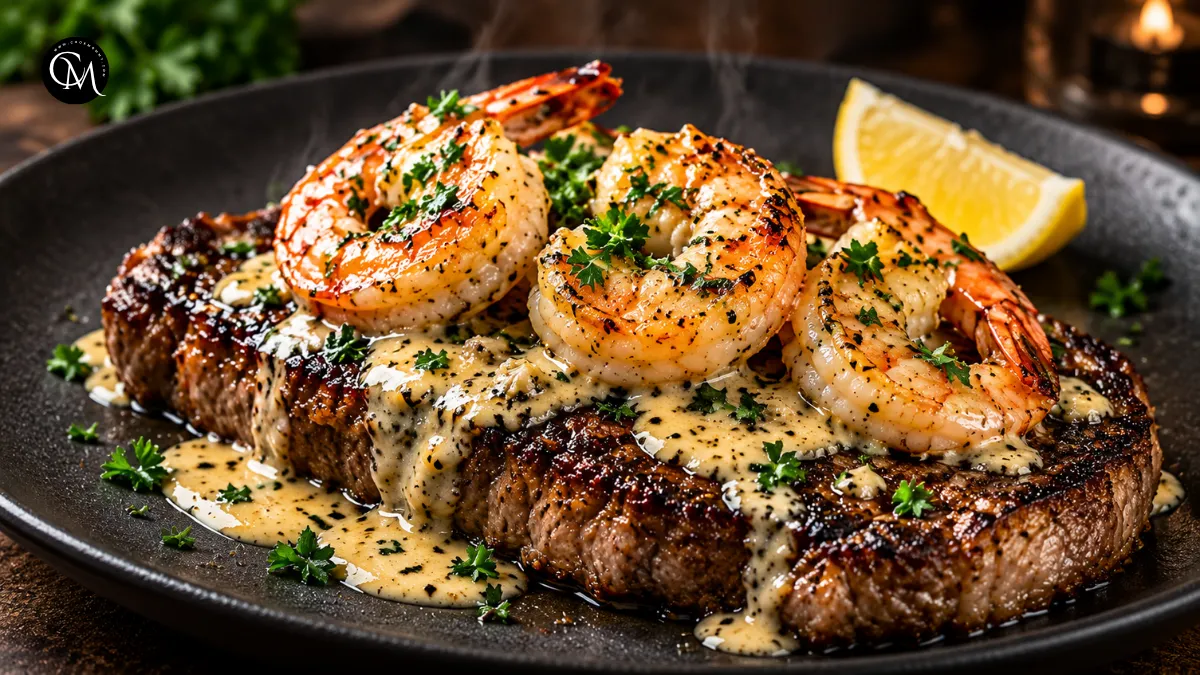
Steak with Shrimp and Lobster Sauce: 5 Amazing Tips
Did you know the USDA recommends cooking whole beef steaks to a minimum internal temperature of 145°F followed by a three-minute rest so why can surf and turf still feel easy to overcook? The real challenge is timing. Steak with Shrimp combines ingredients that cook at very different speeds, so each needs its own moment in the pan
This recipe pairs a deeply seared steak with juicy shrimp and a silky lobster cream sauce made from the same skillet. It feels restaurant-worthy but uses familiar ingredients and simple techniques. The five tips that matter most are straightforward: dry the steak, preheat the pan, cook shrimp briefly, reduce the sauce before adding cream, and adjust seasoning at the end.
If Steak with Shrimp has ever seemed too ambitious for date night or a special dinner, this method makes it manageable.
Table of Contents
Ingredients for Steak with Shrimp
This recipe makes 2 generous servings.
Steak and Shrimp
- 2 ribeye, New York strip, or sirloin steaks, 8–10 ounces each
- 8 ounces large shrimp, peeled and deveined
- 1 tablespoon high-heat oil
- 1 teaspoon kosher salt, plus more to taste
- 1/2 teaspoon black pepper
- 1/2 teaspoon smoked paprika
- 1 tablespoon unsalted butter
- 2 garlic cloves, lightly crushed
Ribeye gives Steak with Shrimp the richest flavor, while sirloin is a leaner, budget-friendly swap. Frozen shrimp work well when fully thawed and patted dry.
Lobster Sauce
- 5–6 ounces cooked lobster meat, chopped
- 1 small shallot, minced
- 1 garlic clove, minced
- 1/3 cup seafood or low-sodium chicken stock
- 1/2 cup heavy cream
- 1 teaspoon Dijon mustard
- 1 teaspoon fresh lemon juice
- 1 tablespoon unsalted butter
- 1 tablespoon chopped parsley or chives
- Pinch of cayenne, optional
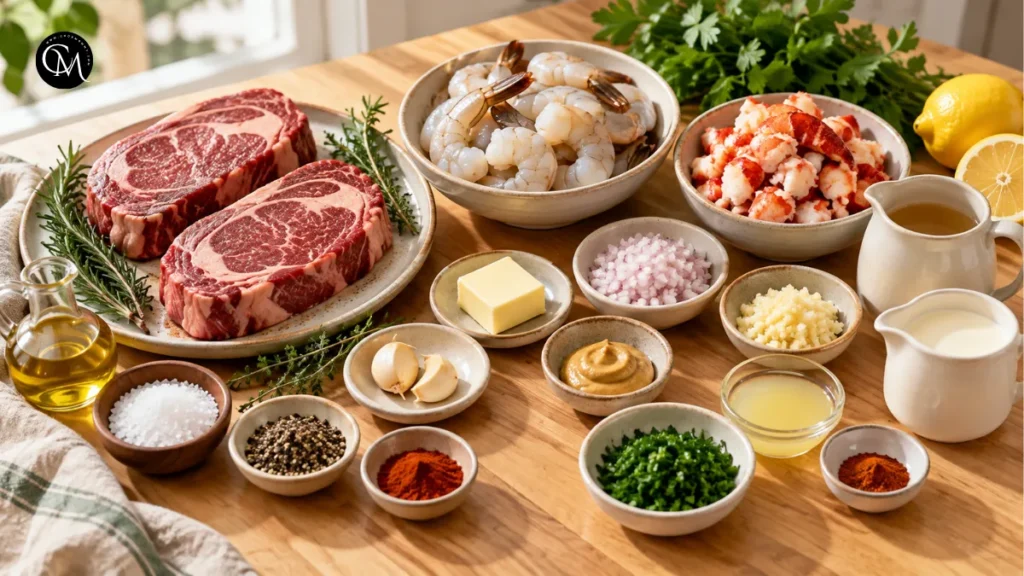
No lobster? Cooked crab is an excellent substitute. Half-and-half can replace heavy cream, although the sauce may need an extra minute to reduce.
Timing
- Preparation time: 15 minutes
- Cooking time: 20 minutes
- Total time: about 35 minutes
- Servings: 2
Prepare everything before heating the skillet. Steak with Shrimp moves quickly once cooking begins, so measuring the sauce ingredients first prevents overcooking.
Step-by-Step Instructions
Step 1 – Prepare Ingredients
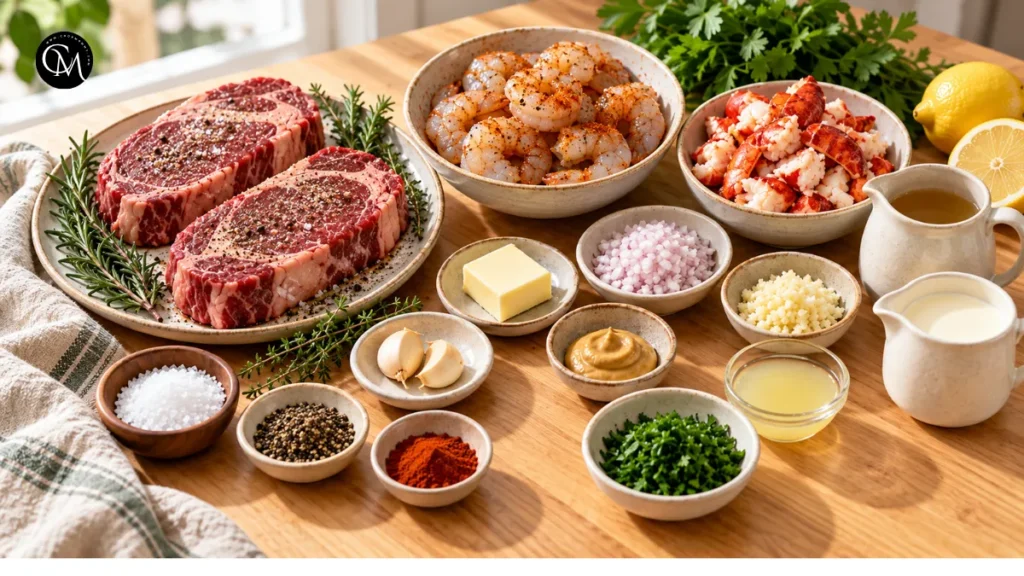
Take the steaks from the refrigerator about 20–30 minutes before cooking. Pat them very dry, then season with salt and pepper. Toss the shrimp with a little salt and smoked paprika.
A dry surface helps the beef brown instead of steam. For Steak with Shrimp, the crust also leaves flavorful browned bits for the sauce.
Measure the lobster, shallot, garlic, stock, cream, Dijon, and lemon before you start.
Step 2 – Build the Flavor Base
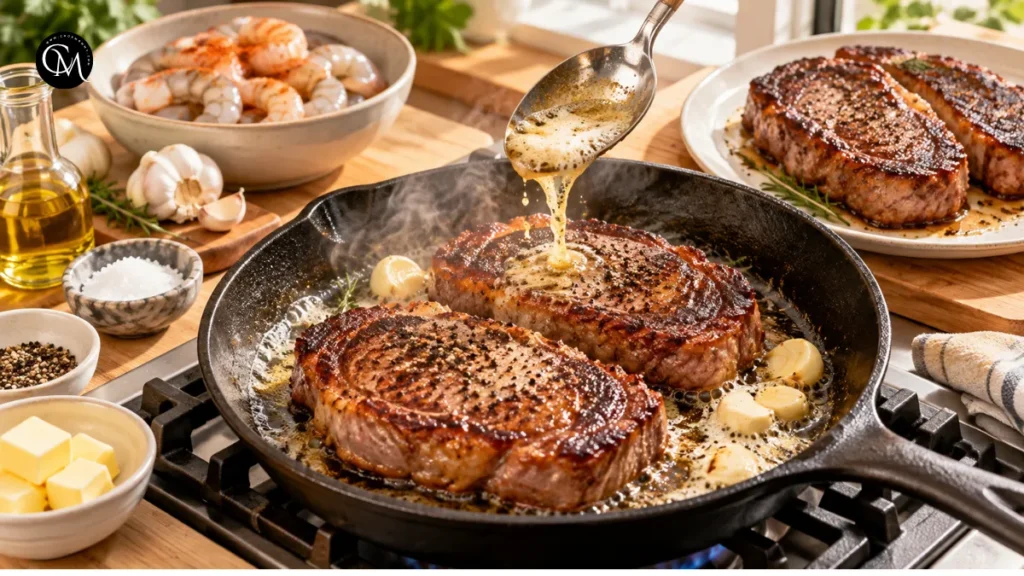
Heat a heavy skillet over medium-high heat. Add oil, then place the steaks in without crowding. Leave them undisturbed for 2–3 minutes to form a dark crust.
Flip, add butter and crushed garlic, and spoon the foaming butter over the beef. This browning develops savory flavor through the Maillard reaction and gives Steak with Shrimp a deeper steakhouse-style taste.
Transfer the steaks to a plate when done, following food-safety guidance. Let them rest while you finish the seafood and sauce.
Step 3 – Cook the Main Ingredients
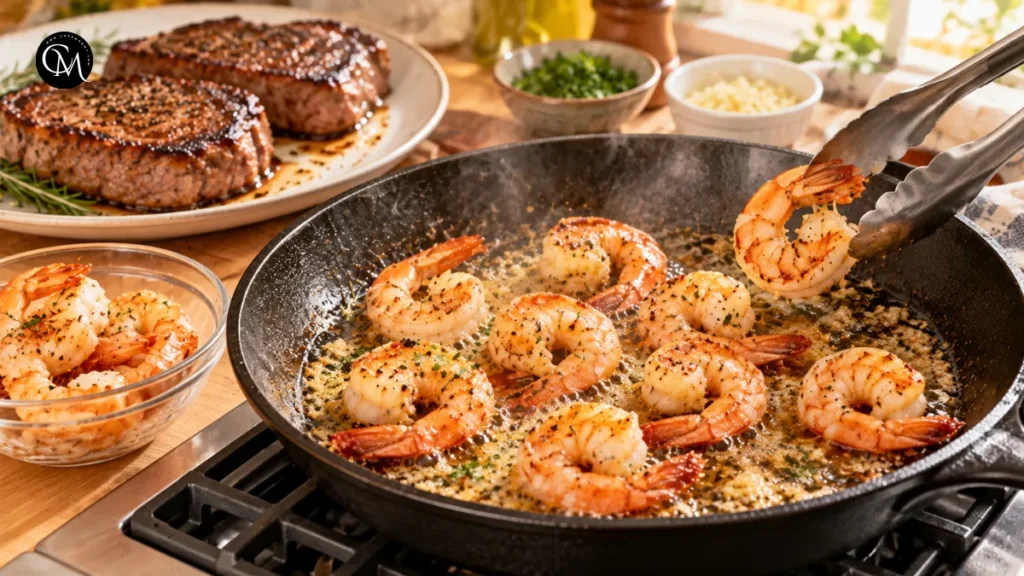
Lower the heat to medium. Add the shrimp and cook about 60–90 seconds per side, depending on size. Remove them once opaque and loosely C-shaped.
The biggest texture mistake with Steak with Shrimp is treating shrimp like beef. Shrimp cook in minutes and become rubbery when left too long. Removing them early keeps them tender.
Save any juices that collect beneath the resting steak.
Step 4 – Combine Everything
Add the shallot to the skillet and cook for one minute. Stir in minced garlic for 20–30 seconds. Add stock and scrape up the browned bits.
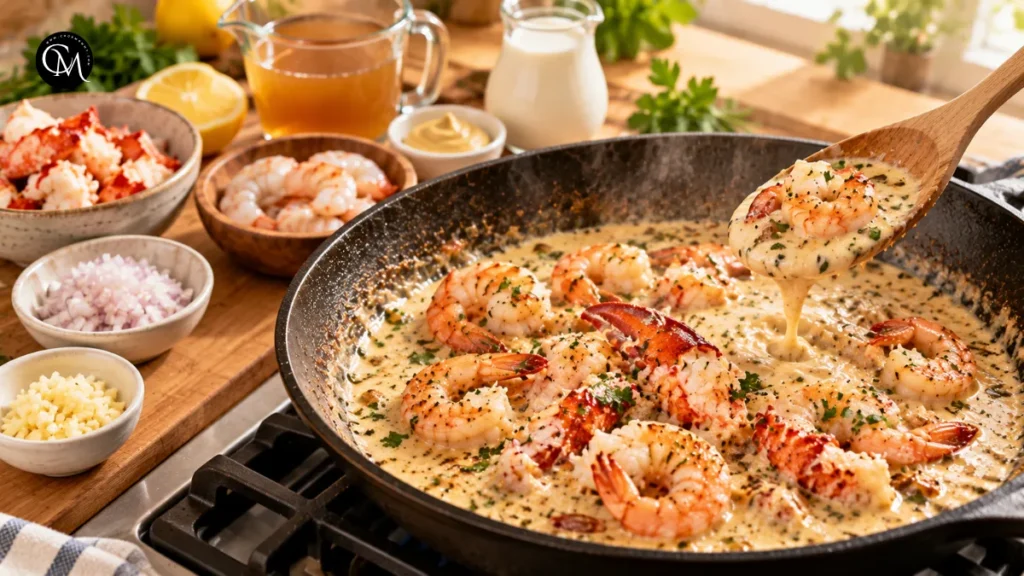
Reduce the stock by roughly half, then stir in cream and Dijon. Simmer gently for 2–3 minutes until the sauce lightly coats a spoon. Fold in lobster and shrimp just long enough to warm them.
This sequence keeps Steak with Shrimp balanced: pan drippings add depth, cream brings richness, Dijon provides gentle sharpness, and lobster adds sweetness.
Step 5 – Finish and Adjust Seasoning
Turn off the heat. Stir in butter, lemon juice, herbs, and the resting steak juices. Taste before adding salt because stock, butter, and pan drippings already contribute seasoning.
Slice against the grain if desired, then spoon the seafood sauce over the steak. Finish with black pepper or a little cayenne.
My favorite finishing tip for Steak with Shrimp is adding lemon at the end. Fresh acidity lifts the rich sauce without masking the lobster.
Nutritional Information
Approximate nutrition per serving:
- Calories: 850–950
- Protein: 70–80 g
- Carbohydrates: 7–10 g
- Fat: 58–68 g
- Saturated fat: 25–30 g
- Sodium: 900–1,150 mg
Steak with Shrimp is high in protein and relatively low in carbohydrates, but butter and cream make it a rich entrée. Values are estimates because steak cuts, portion sizes, and brands vary.
Healthier Alternatives
- To lighten Steak with Shrimp, choose sirloin or filet instead of a heavily marbled ribeye. Replace half the cream with unsalted stock and reduce the sauce slightly longer.
- There is no added sugar in the base recipe, so no sugar substitute is necessary. For whole-grain options, serve it with brown rice, quinoa, farro, or whole-wheat couscous.
- The core recipe can be gluten-free when the stock and Dijon are certified gluten-free. For a dairy-free version, use unsweetened dairy-free cooking cream and olive oil or plant-based butter.
- For children or seniors, slice the steak thinly, cut shrimp into manageable pieces, and skip cayenne. For lighter portions, fill half the plate with vegetables and use less sauce.
Serving Suggestions
- Steak with Shrimp pairs especially well with sides that catch the sauce without competing with it. Try garlic mashed potatoes, roasted asparagus, green beans, broccolini, or a lemony arugula salad.
- For date night, leave the steak whole, arrange shrimp on top, and spoon sauce around it so the crust stays visible. For family-style serving, slice the beef and spoon seafood sauce down the center.
- It also works as a steakhouse-inspired bowl with roasted potatoes and sautéed spinach. On a recipe blog, this is a useful place to link readers to mashed potatoes, roasted vegetables, or a steak-doneness guide.
Common Mistakes to Avoid
- Starting with wet steak. Surface moisture encourages steaming. Pat the beef thoroughly dry before it hits the pan.
- Using a lukewarm skillet. Steak with Shrimp needs strong initial heat for browning, followed by lower heat for delicate seafood.
- Overcooking shrimp. Remove them promptly and return them only when the sauce is ready.
- Boiling lobster. Cooked lobster needs warming, not simmering; too much heat makes it firm.
- Adding cream too early. Reduce the stock first so the sauce tastes concentrated, not watery.
- Oversalting at the start. Stock, butter, seafood, and steak juices all contribute seasoning, so taste at the end.
Storing Tips for the Recipe
- Cool leftovers promptly and store the steak and seafood sauce in separate airtight containers. Refrigerate for up to 3–4 days. Reheat the sauce gently with a splash of stock, and warm the steak separately.
- For prep-ahead convenience, peel the shrimp, chop the shallot, and measure the sauce ingredients one day ahead. Keep raw seafood cold and separate from ready-to-eat ingredients.
- This recipe became one of my regular meals because it creates a steakhouse-style dinner without complicated techniques or a sink full of pans. Steak with Shrimp feels celebratory, yet the workflow is practical enough for an ordinary evening.
Conclusion
Steak with Shrimp proves that a luxurious surf-and-turf dinner does not require restaurant equipment. The best results come from managing timing: dry and sear the beef well, cook the shrimp briefly, reduce the stock before adding cream, warm the lobster gently, and finish with fresh lemon.
Once you master that sequence, Steak with Shrimp is easy to adapt with your preferred steak cut, vegetables, or lighter sauce swaps. Try it for date night, a celebration, or a relaxed weekend dinner. Then leave a comment or review sharing which steak cut you used, and subscribe for more practical recipes, sauces, and home-cooking tips.
FAQs
Can I use frozen shrimp?
Yes. Frozen shrimp work well for Steak with Shrimp. Thaw completely, drain thoroughly, and pat dry before seasoning so the shrimp sear instead of releasing excess water.
What steak cut works best?
Ribeye is richest, strip steak balances tenderness and beefy flavor, and sirloin is leaner. A steak about one inch thick is convenient for predictable stovetop cooking.
Can I make the lobster sauce ahead?
Prepare the sauce base several hours ahead, but add lobster, shrimp, butter, and lemon while reheating. This keeps the seafood tender and the finish fresh.
What can I substitute for lobster?
Cooked crab is the closest swap, while scallops create another elegant variation. For a simpler dinner, skip lobster and make a creamy garlic shrimp pan sauce.
How do I keep the cream sauce from splitting?
Use gentle heat after adding cream and avoid a hard boil. Stir the finishing butter in off heat to create a smoother, glossier sauce.
Is this recipe gluten-free?
The main ingredients are naturally gluten-free, but check stock, Dijon, and seasonings. Choose certified gluten-free versions when cooking for someone with celiac disease.
What vegetables pair best with it?
Asparagus, broccolini, green beans, spinach, and roasted Brussels sprouts all balance the rich sauce. Keep the vegetables simply seasoned so the steak and seafood remain central.
Tried it before ?
There are no reviews yet. Be the first one to write one.