
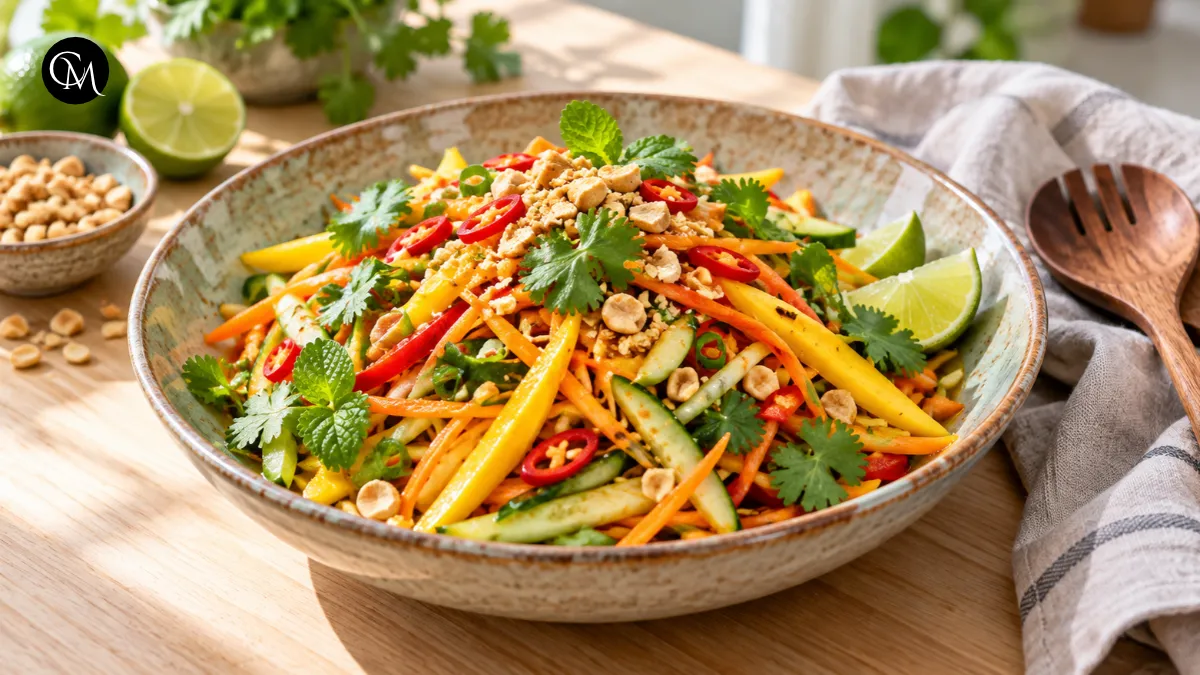
thai mango salad vegetarian: 5 Best Fresh Flavor Ideas
Can a 15-minute salad deliver sweet, sour, salty, spicy, and crunchy flavors in one bowl? This thai mango salad can. Ripe mango brings natural sweetness, lime adds acidity, fresh herbs add fragrance, and peanuts or cashews provide crunch.
This recipe is worth keeping because it is fast, flexible, and easy to adapt. Serve it as a light lunch, a colorful side, or a fresh contrast to richer foods. The five flavor ideas in this version are bright lime, mint and cilantro, gentle chili heat, toasted nuts, and crisp cucumber. Together, they make thai mango salad lively rather than simply sweet.
Table of Contents
Ingredients List
For 4 side-dish servings:
- 2 large ripe-but-firm mangoes, peeled and thinly sliced
- 1 small cucumber, julienned
- 1 small red bell pepper, thinly sliced
- 1 small carrot, shredded
- 2 spring onions, sliced
- 1/3 cup fresh cilantro
- 1/4 cup fresh mint
- 1/3 cup roasted unsalted peanuts or cashews
- 1 small red chili, sliced, optional
For the dressing:
- 3 tablespoons fresh lime juice
- 1 1/2 tablespoons light soy sauce or tamari
- 1 tablespoon maple syrup or brown sugar
- 1 teaspoon toasted sesame oil
- 1 small garlic clove, grated
- 1 teaspoon grated fresh ginger
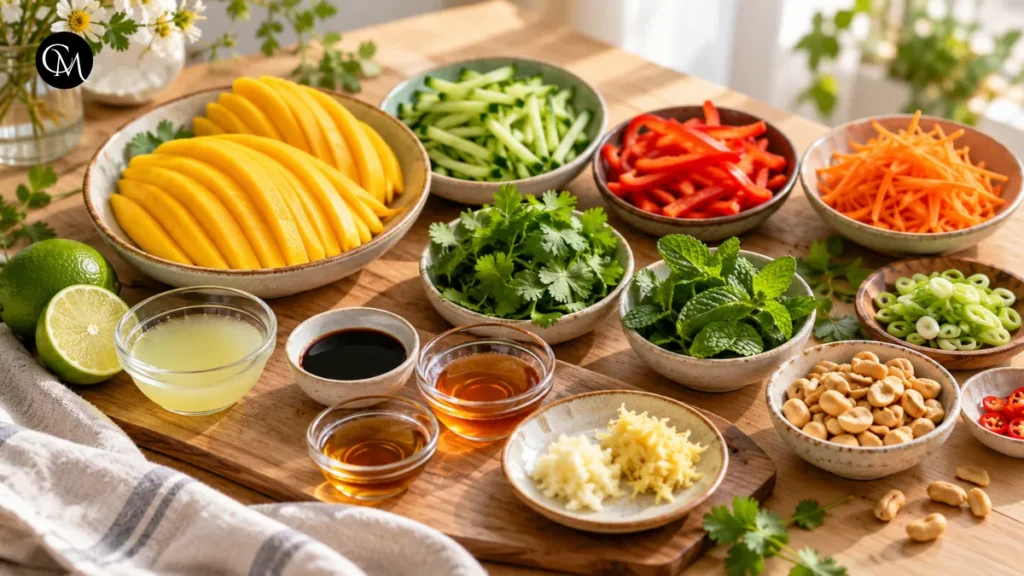
Choose mangoes that smell fragrant near the stem but still feel slightly firm. Very soft fruit can turn a thai mango salad mushy after tossing.
For substitutions, use sunflower seeds for a nut-free version and tamari for gluten-free cooking. If cilantro is not your favorite, add more mint or Thai basil. Green mango also works; add a little extra sweetener if needed.
5 Fresh Flavor Ideas for thai mango salad vegetarian
- Lime and ginger: Add lime zest and extra ginger for a brighter finish.
- Mint and Thai basil: Combine both for a cooling, aromatic flavor.
- Chili and sesame: Add sliced chili and a few drops of sesame oil for gentle heat.
- Cucumber and carrot: Extra raw vegetables add crispness and balance very ripe mango.
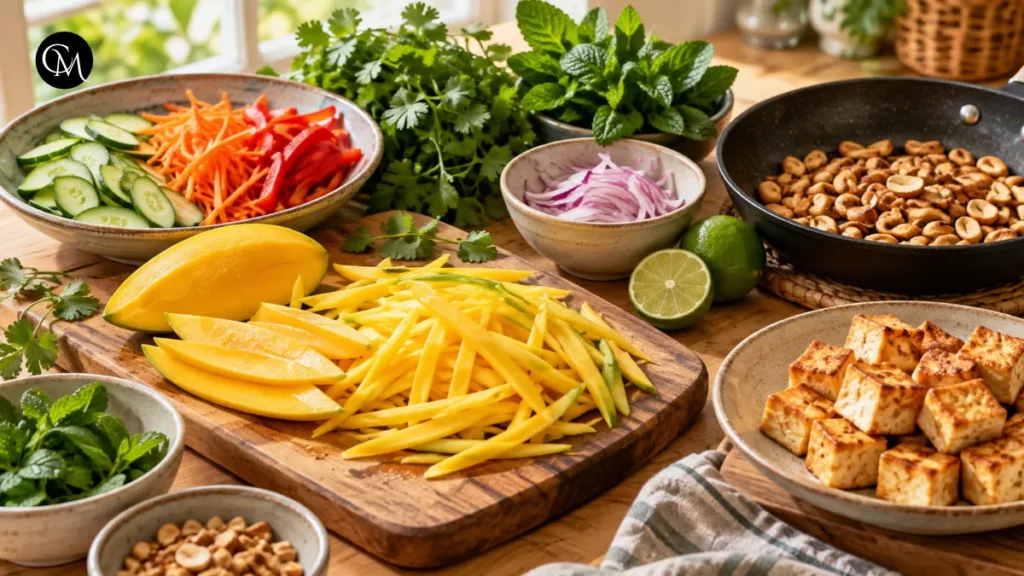
- Peanut and tofu: Add crispy tofu and crushed peanuts for a more filling vegetarian meal.
These variations let you adjust sweetness, heat, texture, and protein while keeping the core recipe fresh.
Timing
- Preparation time: 15 minutes
- Cooking time: 3–5 minutes if toasting nuts or cooking optional tofu; otherwise 0 minutes
- Total time: 15–20 minutes
- Yield: 4 side servings or 2 light lunches
Compared with salads requiring roasted vegetables, grains, or cooked protein, thai mango salad is quicker because most of the work is slicing and mixing.
Step-by-Step Instructions
Step 1 – Prepare ingredients
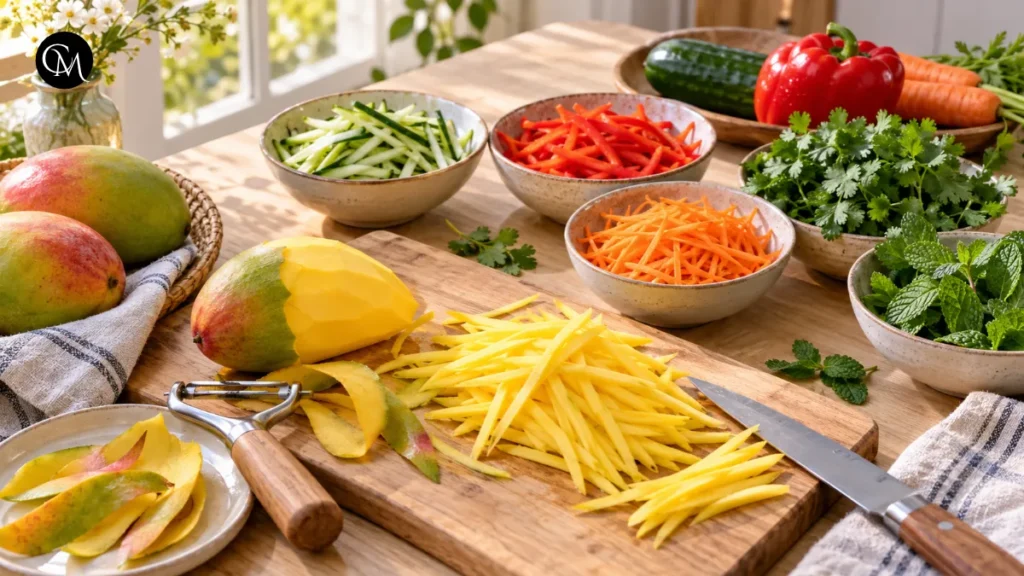
Wash and dry the vegetables and herbs. Peel the mangoes and slice them into thin strips rather than cubes. Thin pieces absorb dressing evenly and give each forkful a better mix of fruit, vegetables, and herbs.
Cut the cucumber, pepper, and carrot into similar-sized pieces. This small step makes homemade thai mango salad easier to toss and more pleasant to eat. Dry the herbs well so excess water does not dilute the dressing.
Step 2 – Build flavor base
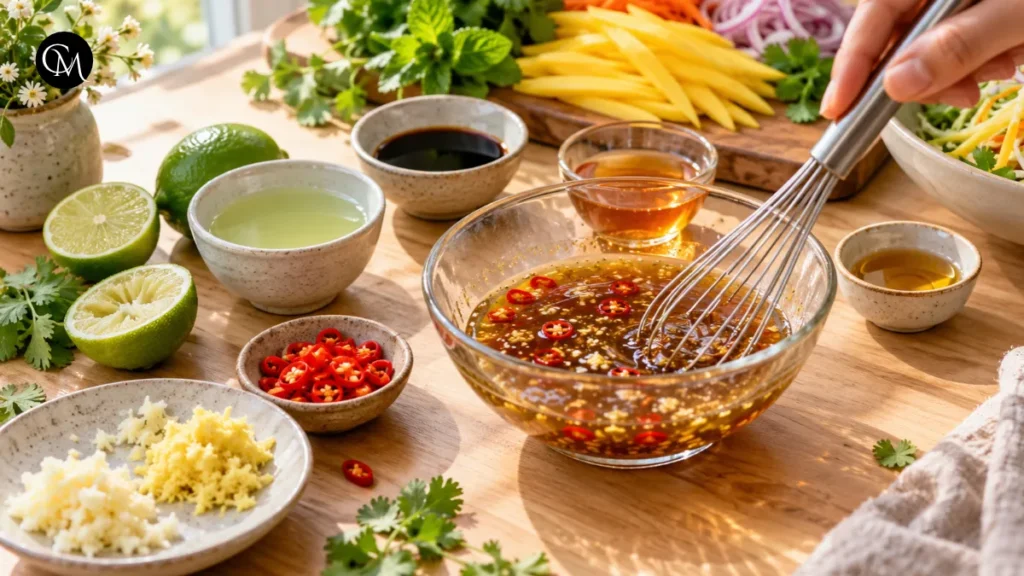
Whisk lime juice, soy sauce, maple syrup, sesame oil, garlic, and ginger in a small bowl. Taste before adding it to thai mango salad.
The balance matters: lime sharpens the mango, soy sauce offsets sweetness, and a little sugar softens harsh acidity. Sesame oil is strong, so one teaspoon is enough. For a spicier thai mango salad, mix in half the chili now.
Step 3 – Cook the main ingredient
The mango should stay raw. Cooking would soften the fruit and reduce the crisp, juicy texture that makes thai mango salad refreshing. Instead, toast the nuts for 2–3 minutes in a dry skillet. If adding tofu, sear cubes until golden and let them cool.
Cooling matters because hot tofu can wilt herbs and encourage the vegetables to release moisture.
Step 4 – Combine everything
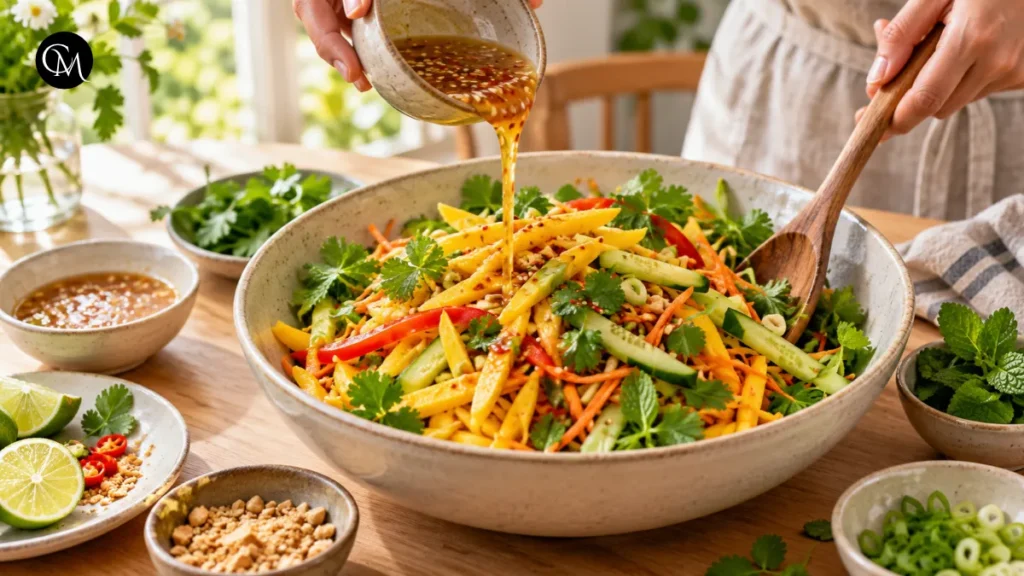
Add mango, cucumber, pepper, carrot, spring onions, cilantro, and mint to a large bowl. Pour over about three-quarters of the dressing and toss gently.
Do not mash the ingredients. Taste before adding the remaining dressing because mango sweetness varies. A balanced thai mango salad should taste sweet, tangy, salty, herbaceous, and lightly spicy rather than dominated by one note.
Step 5 – Finish & adjust seasoning
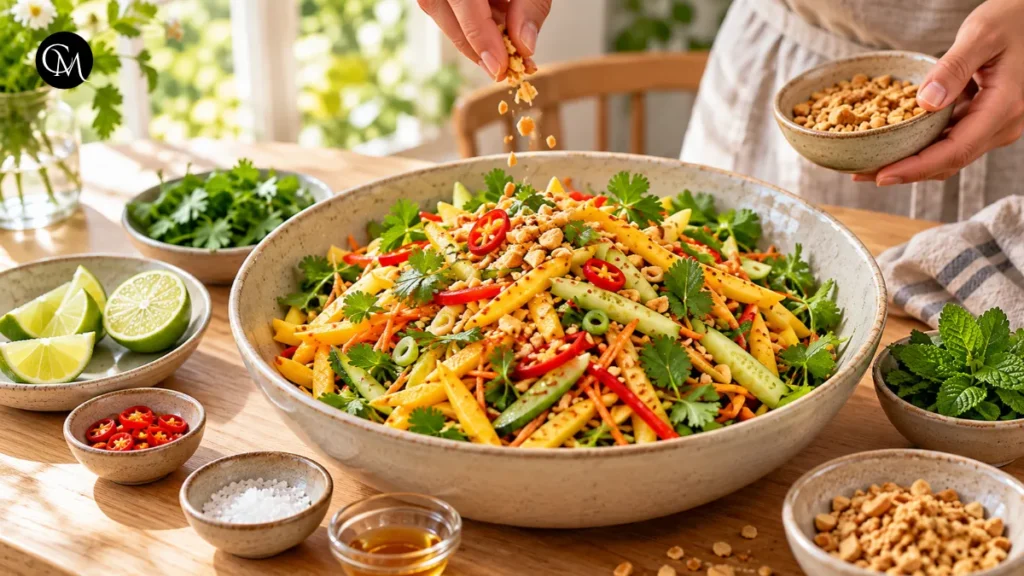
Fold in most of the toasted nuts just before serving and save some for the top. Add more chili if desired.
Taste again. If the salad seems flat, add lime or a pinch of salt. If it is too sharp, add a few drops of maple syrup. If it is too sweet, more lime and chili can restore balance.
This final adjustment helps thai mango salad taste fresh even when mango ripeness changes from batch to batch.
Nutritional Information
Approximate nutrition per side serving:
- Calories: 210
- Carbohydrates: 34 g
- Protein: 5 g
- Fat: 8 g
- Fiber: 5 g
- Sugars: 23 g
- Sodium: 400–500 mg
These are estimates and vary with mango size, nuts, and dressing quantity. Most sugar comes naturally from mango, while nuts add fat, protein, and crunch. Adding tofu or edamame increases protein.
Healthier Alternatives
- For a lower-sugar version, use slightly underripe mango and reduce the maple syrup to one teaspoon. Add extra cucumber, cabbage, or carrot for more volume and crunch.
- The base recipe contains no grain, but you can serve thai mango salad over brown rice or quinoa for a fuller meal. For gluten-free cooking, use certified gluten-free tamari. The recipe is naturally dairy-free; for a nut-free version, choose toasted pumpkin or sunflower seeds.
- For children, serve chili on the side. For older adults who prefer softer textures, use ripe mango, finely shredded carrot, and smaller chopped nuts. For lighter portions, serve the salad over leafy greens and add a modest portion of tofu or edamame.
Serving Suggestions
- Serve thai mango salad with jasmine rice, grilled tofu, vegetable spring rolls, or coconut soup. Its lime-forward dressing is especially useful beside rich or creamy foods because the acidity keeps the meal tasting fresh.
- For lunch, spoon it over lettuce and add edamame or crispy tofu. For entertaining, use a wide shallow bowl so the mango, herbs, peppers, and nuts stay visible.
- You can also serve it in lettuce cups or build a bowl with rice, avocado, steamed greens, and sesame seeds. Related recipes worth exploring include peanut noodles, vegetarian pad Thai, fresh spring rolls, and homemade chili-lime dressing.
Common Mistakes to Avoid
- Using overripe mango: Soft fruit can collapse during tossing. Choose fragrant but firm mangoes.
- Adding all the dressing at once: Start with about 75 percent and add more only if needed.
- Skipping the final taste: Lime acidity and mango sweetness vary, so adjust seasoning before serving.
- Tossing too aggressively: Gentle mixing keeps the fruit intact.
- Adding nuts too early: Dressing softens nuts, so add them just before serving.
- Making it too far ahead: Dressed thai mango salad is best within a few hours because salt and acid draw moisture from produce.
In my kitchen, the biggest improvement came from treating the dressing as adjustable rather than fixed. One extra squeeze of lime can transform an especially sweet batch of mango.
Storing Tips for the Recipe
- For the best texture, store sliced mango and vegetables in an airtight container and keep the dressing separate. The prepared components are best used within 1–2 days.
- Once dressed, thai mango salad is best eaten the same day. Refrigerate leftovers overnight if necessary, but expect softer mango and cucumber. Keep nuts and herbs separate when meal-prepping so they stay crisp and fragrant.
- This recipe became one of my regular meals because it turns a few supermarket ingredients into something colorful and refreshing without requiring several pans. On busy days, that mix of speed and fresh flavor is hard to beat.
Conclusion
This thai mango salad is quick, flexible, and full of contrast: juicy mango, crisp vegetables, fresh herbs, tangy lime, gentle heat, and toasted crunch. It works as a side, a light lunch, or the fresh element in a larger vegetarian meal, and the dressing is easy to adjust for different mangoes and spice preferences.
Try this thai mango salad once as written, then experiment with the five flavor ideas to make it your own. If you make it, leave a comment or review with your favorite variation. Subscribe for more simple vegetarian recipes, practical kitchen tips, and fresh meal ideas.
FAQs
Can I make thai mango salad ahead of time?
Yes. Slice the vegetables and mix the dressing up to a day ahead, but store them separately. Toss shortly before serving for the best texture.
Should I use ripe or green mango?
Both work. Ripe mango gives a sweeter, juicier salad, while green mango is firmer and tangier. Adjust the dressing sweetness to match your fruit.
Is thai mango salad naturally vegan?
This version is vegan because the dressing uses soy sauce and maple syrup instead of fish sauce. Check packaged ingredients if you follow a strict vegan diet.
What protein can I add?
Crispy tofu, edamame, roasted chickpeas, or tempeh work well. Let cooked additions cool before mixing so they do not wilt the herbs.
How do I make it gluten-free?
Use certified gluten-free tamari instead of regular soy sauce. The other basic ingredients are naturally gluten-free, but check labels on packaged toppings and sauces.
What can I use instead of peanuts?
Try cashews, pumpkin seeds, sunflower seeds, or sesame seeds. For a nut-free version, sunflower or pumpkin seeds provide excellent crunch.
Why is my salad watery?
Very ripe mango, wet herbs, or dressing added too early can create excess liquid. Dry ingredients well and toss the salad shortly before serving.
Tried it before ?
There are no reviews yet. Be the first one to write one.