
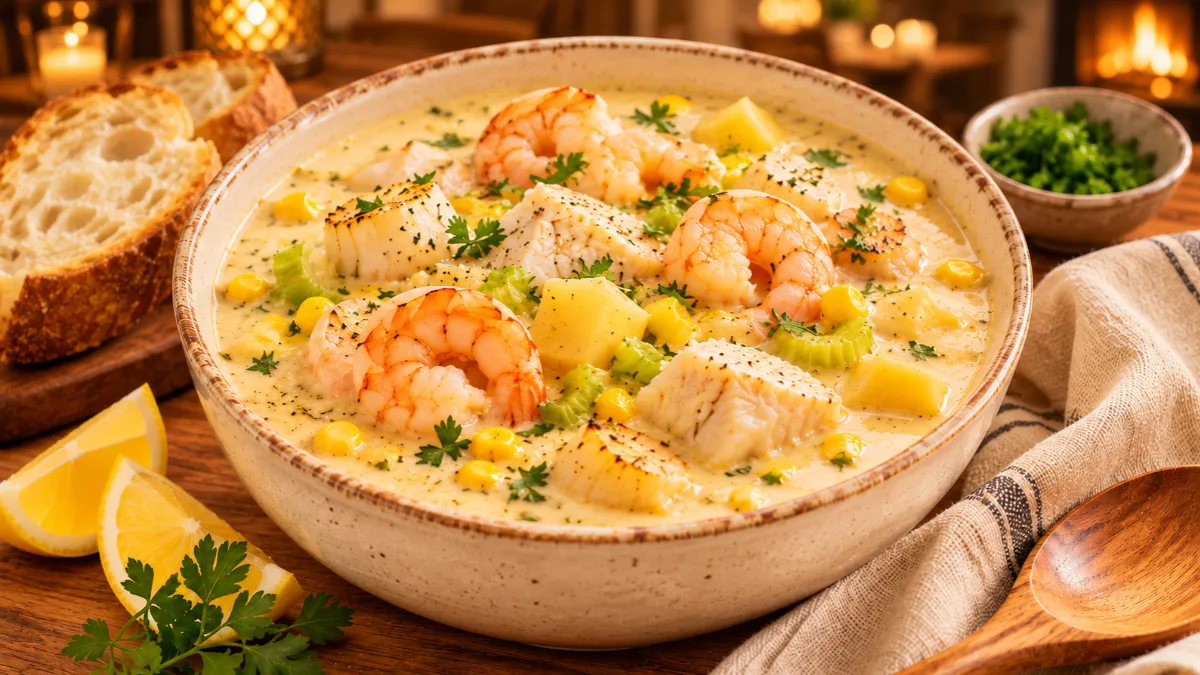
creamy seafood chowder: 5 Tips for Rich, Creamy Flavor
Here’s something surprising: shrimp need only 3–5 minutes to become tender and delicious, even though preparing a flavorful seafood chowder can take much longer. The secret to exceptional creamy seafood chowder isn’t cooking everything longer. It’s building a flavorful base, controlling the heat, and adding delicate seafood at precisely the right moment.
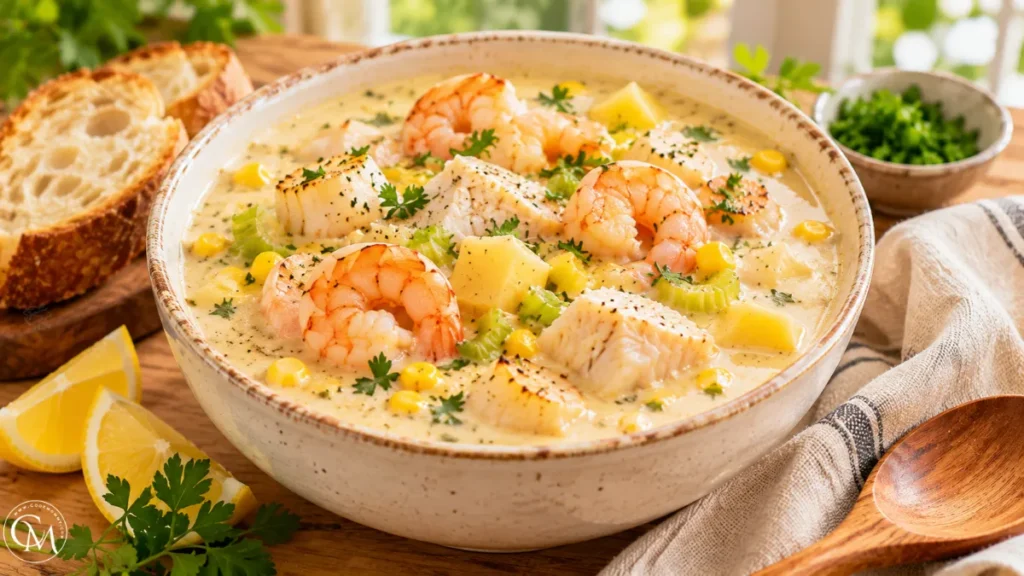
A great chowder should feel wonderfully comforting without being heavy. Picture tender shrimp, flaky white fish, sweet corn, and soft potatoes nestled in a silky, buttery broth. Every spoonful delivers fresh seafood flavor balanced with herbs and just enough cream.
The beauty of homemade creamy seafood chowder is that you don’t need expensive ingredients or professional cooking skills. With a handful of pantry staples and five practical techniques, you can create a restaurant-style meal in approximately 45 minutes.
Whether you’re planning a cozy family dinner or preparing something special for guests, this recipe delivers satisfying flavor with minimal fuss.
Table of Contents
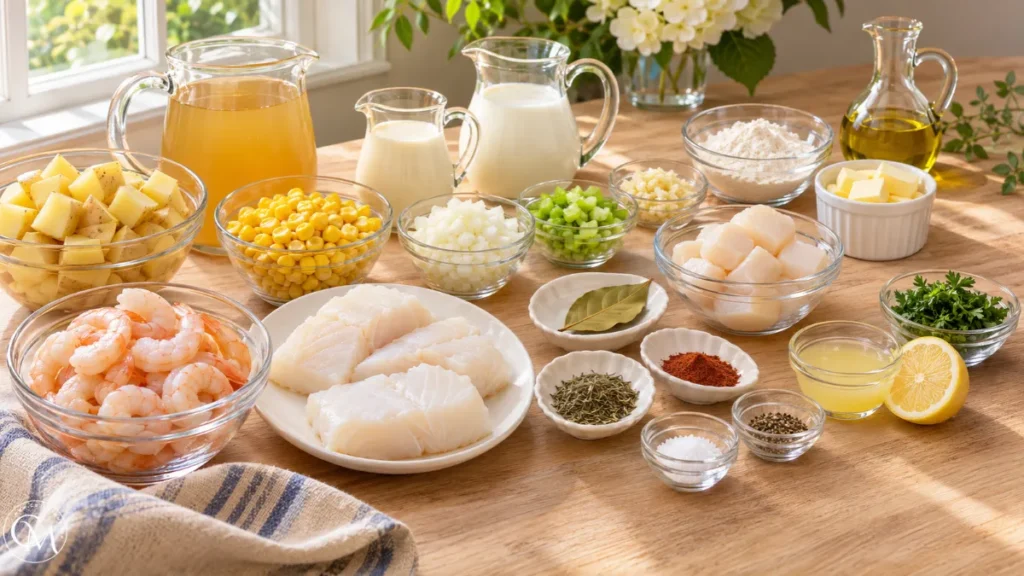
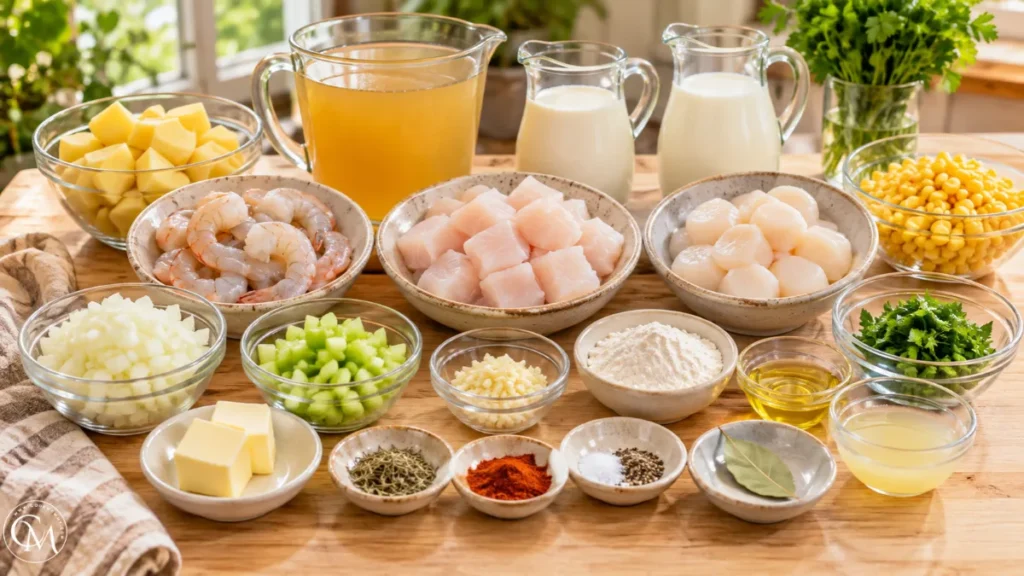
Ingredients List
Making delicious creamy seafood chowder starts with selecting ingredients that complement rather than overpower the seafood.
Seafood
- 225 g (½ pound) of medium-sized shrimp, with the shells and veins removed
- ½ pound (225 g) firm white fish, such as cod or haddock
- ½ pound (225 g) sea scallops or additional white fish
Vegetables and Aromatics
- 2 tablespoons unsalted butter
- 1 tablespoon olive oil
- 1 medium onion, finely diced
- 2 celery stalks, chopped
- 2 garlic cloves, minced
- 2 medium Yukon Gold potatoes, diced into ½-inch cubes
- 1 cup sweet corn kernels, fresh or frozen
Creamy Broth
- 3 cups low-sodium seafood or vegetable stock
- 1 cup heavy cream
- 1 cup whole milk
- 2 tablespoons all-purpose flour
- 1 teaspoon dried thyme
- 1 bay leaf
- ½ teaspoon smoked paprika
- Salt and freshly ground black pepper, to taste
- 1 tablespoon fresh lemon juice
- 2 tablespoons chopped fresh parsley
Ingredient Substitutions
- For a budget-friendly creamy seafood chowder, frozen mixed seafood works beautifully when properly thawed.
- Half-and-half can replace heavy cream for a lighter consistency, while finely diced carrots add natural sweetness. If seafood stock is unavailable, low-sodium vegetable broth makes a reliable substitute.
- Kitchen tip: Choose firm fish that holds its shape when simmered. Cod, haddock, and pollock are excellent options.
Timing
- Preparation 15 min
- Cooking 30 min
- Total 45 min
- With everything coming together in a single pot, this creamy seafood chowder makes a comforting homemade dinner without creating a pile of dishes.
- Preparing your ingredients before heating the pan keeps everything organized and prevents overcooking.
Step-by-Step Instructions
Follow these five steps to make creamy seafood chowder with a smooth broth, tender seafood, and beautifully balanced seasoning.
Step 1: Prepare Your Ingredients
- Begin by peeling and deveining the shrimp. Cut the white fish into approximately 1-inch pieces and remove any remaining bones.
- Cut the potatoes into similar-sized pieces to help them soften evenly as the chowder simmers. Finely chop the onion, celery, and garlic.
- When working with frozen seafood, let it defrost slowly in the fridge overnight, then gently remove excess moisture with paper towels.
- Keeping seafood pieces relatively uniform helps ensure everything reaches the correct doneness without becoming rubbery.
Tip 1: Prepare every ingredient before starting. Seafood cooks quickly, so having everything ready makes a noticeable difference.
Step 2: Build a Flavorful Base
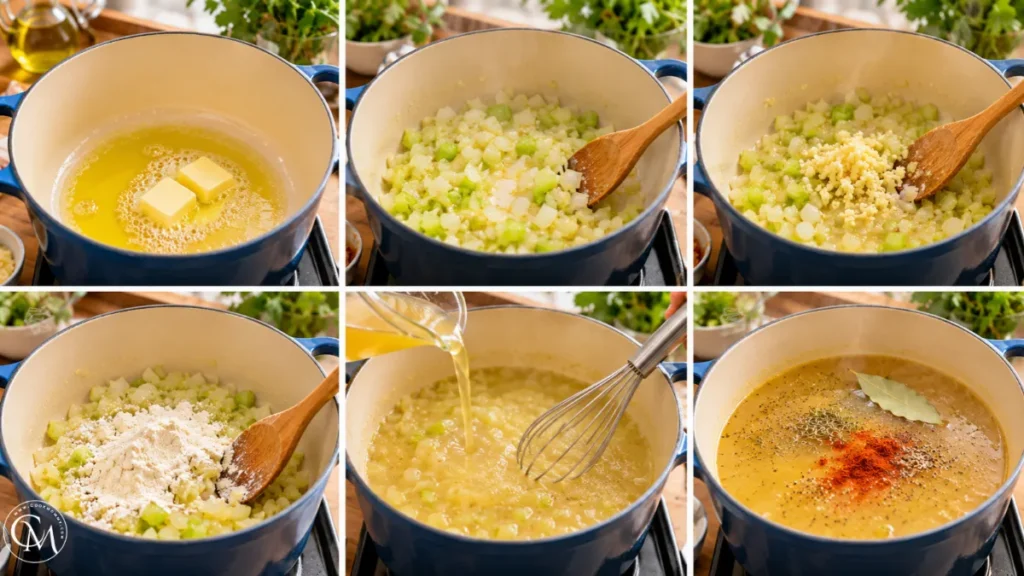
- Place a sturdy, deep cooking pot over medium heat, then add the butter and olive oil and allow them to warm together.
- Add the chopped onion and celery, cooking for approximately 5 minutes until softened. Add the freshly minced garlic, stirring gently for about half a minute until its aroma begins to develop.
- Dust the softened vegetables with flour, then keep stirring for roughly 60 seconds to cook away the raw flour taste.
- This technique creates a light roux, allowing the flour to absorb fat and gently thicken the broth.
- Gradually add the seafood broth, whisking as you pour to create a smooth mixture without flour clumps.
- Add the thyme, bay leaf, smoked paprika, and a small pinch of black pepper.
Tip 2: Avoid browning the garlic or flour. Gentle cooking develops sweetness and prevents bitter flavors from entering your creamy seafood chowder.
Step 3: Cook the Potatoes and Vegetables
- Gently stir the potato cubes and sweet corn into the bubbling broth, making sure everything is evenly distributed.
- Reduce the heat slightly and cook uncovered for approximately 12–15 minutes, stirring occasionally.
- The potatoes should become fork-tender without falling apart.
- Yukon Gold potatoes work particularly well because their naturally creamy texture contributes body to the soup.
- For a thicker consistency, gently mash a few cooked potato cubes against the side of the pot.
- This releases starch into the broth without requiring extra flour.
Tip 3: Maintain a gentle simmer rather than a rolling boil. Vigorous bubbling can break apart the potatoes and reduce your control over the chowder’s consistency.
Step 4: Combine the Seafood and Cream
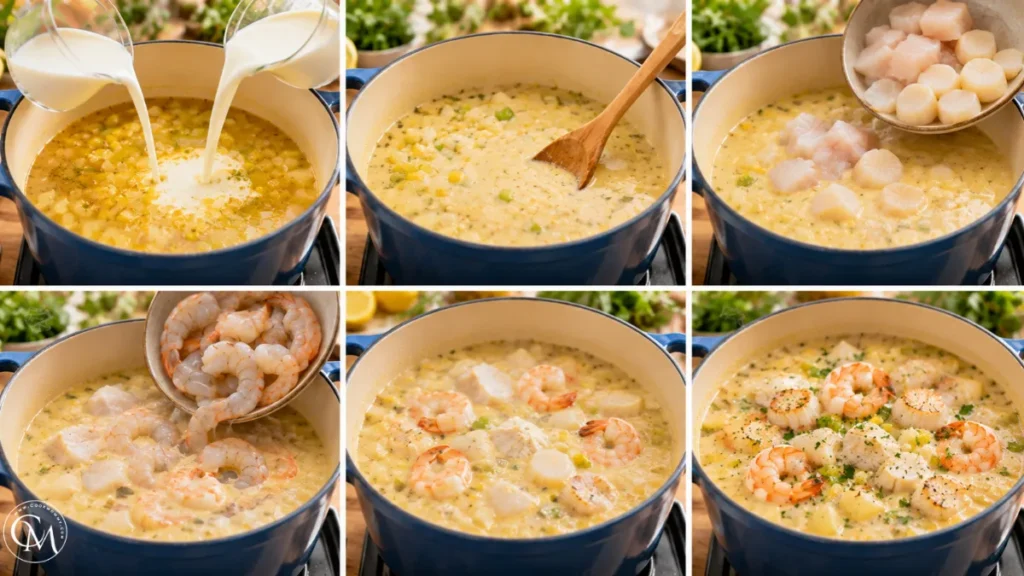
- Turn down the burner to medium-low, then gently incorporate the milk and rich cream into the warm broth.
- Stir gently until the broth becomes smooth and evenly blended.
- Add the fish and scallops first, allowing them to simmer gently for approximately 3 minutes. Then add the shrimp.
- Continue cooking for another 3–5 minutes, depending on the thickness of the seafood pieces.
- You’ll know the seafood is nearly ready when the shrimp develop a pink color and lose their transparency, while the fish separates into delicate flakes.
- For food safety, fish and shellfish should reach an internal temperature of 145°F (63°C).
Tip 4: Never allow creamy seafood chowder to boil aggressively after adding the dairy and seafood. Gentle heat helps maintain a silky texture and prevents tough, overcooked seafood.
Step 5: Finish and Adjust Seasoning
- Remove the bay leaf and turn the heat to low.
- Stir in fresh lemon juice, parsley, and additional salt or black pepper as needed.
- Taste before adding more seasoning. Seafood stock can already contain significant sodium.
- If the broth seems too thick, stir in a small amount of warm stock. If it seems thin, gently mash additional potatoes.
- Once cooking is complete, remove the pot from the burner and allow the chowder to settle for about three minutes before ladling it into bowls.
Tip 5: Add lemon juice at the end. Its fresh acidity balances the cream and brightens the seafood without overwhelming its natural sweetness.
Nutritional Information
The following values are approximate for one serving of creamy seafood chowder, assuming the recipe serves six.
| Nutrient | Approximate amount |
|---|---|
| Calories | 390 kcal |
| Protein | 28 g |
| Carbohydrates | 25 g |
| Total fat | 20 g |
| Saturated fat | 11 g |
| Fiber | 3 g |
| Sodium | 550 mg |
- These estimates vary depending on seafood selection, stock, cream, and portion size.
- Seafood contributes protein, while potatoes and corn provide carbohydrates and some fiber. Heavy cream supplies much of the dish’s richness and saturated fat.
- For more precise nutritional values, calculate the recipe using the exact ingredients and brands you purchase.
Healthier Alternatives
You can customize creamy seafood chowder without sacrificing its comforting texture.
- Lighter dairy: Replace half the heavy cream with additional milk to reduce richness while maintaining a smooth broth.
- Dairy-free: Use unsweetened oat milk and a modest amount of coconut cream. The coconut may introduce a subtle tropical flavor.
- Gluten-free: Replace flour with a cornstarch slurry or mashed potatoes for thickening.
- Lower sugar: Choose unsweetened dairy alternatives and corn without added sugar. No added sweetener is needed.
- Whole-grain option: Serve with whole-grain bread or crackers for extra fiber instead of adding refined bread on the side.
For children, cut seafood into manageable pieces and use milder seasonings. For older adults or anyone preferring softer foods, cook the vegetables until very tender and keep the seafood moist.
Serving Suggestions
- A bowl of creamy seafood chowder deserves simple sides that complement its delicate flavors.
- Warm sourdough bread is perfect for soaking up the broth, while buttery crackers add a pleasant crunch.
- For a lighter dinner, pair the chowder with a crisp green salad dressed in lemon vinaigrette.
- Hosting guests? Serve smaller portions as an appetizer, topped with fresh parsley and a few twists of black pepper.
- A little extra lemon zest also makes the bowl feel fresh and inviting.
Common Mistakes to Avoid
Even a straightforward creamy seafood chowder can lose its appeal when small cooking details are overlooked.
- Overcooking seafood: Shrimp and scallops become tough when simmered too long. Add them near the end and check their doneness carefully.
- Boiling the cream: Excessive heat may cause the dairy to separate. Maintain a gentle simmer after adding milk and cream.
- Using too much flour: Excess thickener creates a pasty texture. Start with the recommended amount and use mashed potatoes for adjustments.
- Cutting uneven potatoes: Large chunks remain firm while smaller pieces become mushy. Aim for consistent ½-inch cubes.
- Skipping acidity: Rich chowders sometimes taste flat. A tablespoon of fresh lemon juice can restore balance without making the soup sour.
- Adding excessive salt early: Stock contains varying amounts of sodium. Season lightly at first and adjust before serving.
Storing Tips for the Recipe
- Proper storage helps creamy seafood chowder maintain its flavor while reducing food waste.
- Allow leftovers to cool briefly, then transfer them into shallow, airtight containers. Refrigerate within two hours of cooking, or within one hour if the surrounding temperature exceeds 90°F (32°C).
- Keep refrigerated at 40°F (4°C) or below and use within 3–4 days.
- Reheat gently on the stovetop, stirring occasionally until the chowder reaches 165°F (74°C). Avoid repeated reheating.
- Freezing is possible, but cream-based soups may separate and seafood can become firmer after thawing. For best results, freeze the broth before adding seafood and dairy.
- This recipe became one of my regular meal choices because its simple ingredients make a comforting dinner possible without spending hours in the kitchen.
Conclusion
Homemade creamy seafood chowder brings together everything that makes comfort food memorable: tender seafood, soft potatoes, aromatic vegetables, and a rich, velvety broth. The five essential techniques are simple but effective. Prepare your ingredients first, build flavor slowly, simmer vegetables gently, protect the seafood from overcooking, and finish with fresh acidity.
With these small adjustments, you can create a satisfying seafood dinner that feels special without requiring complicated techniques or expensive equipment. Try this creamy seafood chowder recipe the next time you’re craving a warm, hearty meal. Experiment with your favorite seafood combinations and make the dish your own.
If you enjoy the recipe, leave a comment or review sharing your results and favorite additions. Don’t forget to subscribe for more comforting homemade recipes, practical cooking tips, and easy dinner inspiration.
FAQs
1. What makes creamy seafood chowder thick and creamy?
A combination of butter, flour, cream, and potato starch creates a smooth consistency. Gently mashing cooked potatoes naturally thickens the broth without requiring additional heavy cream.
2. Can I use frozen seafood for this recipe?
Yes! Frozen shrimp, fish, and scallops work well. Thaw them safely in the refrigerator, drain thoroughly, and pat dry before adding them to the chowder.
3. What seafood works best in creamy seafood chowder?
Shrimp, scallops, cod, and haddock are excellent choices. Combining firm white fish with shellfish creates appealing textures and a balanced seafood flavor.
4. Can I prepare the chowder ahead of time?
Absolutely. Prepare the vegetable and broth base ahead, refrigerate it, and gently reheat before adding fresh seafood and cream shortly before serving.
5. How do I prevent the seafood from becoming rubbery?
Keep the heat low and add seafood toward the end of cooking. Check its doneness carefully, as shrimp and small seafood pieces cook within minutes.
6. Can I make creamy seafood chowder without heavy cream?
Yes. Substitute whole milk or unsweetened oat milk and thicken with mashed potatoes. The result will be lighter but still pleasantly smooth and flavorful.
7. What can I serve with seafood chowder?
Crusty sourdough bread, oyster crackers, garlic toast, or a fresh green salad all pair beautifully. Choose lighter sides when serving the chowder as a main course.
Tried it before ?
There are no reviews yet. Be the first one to write one.