
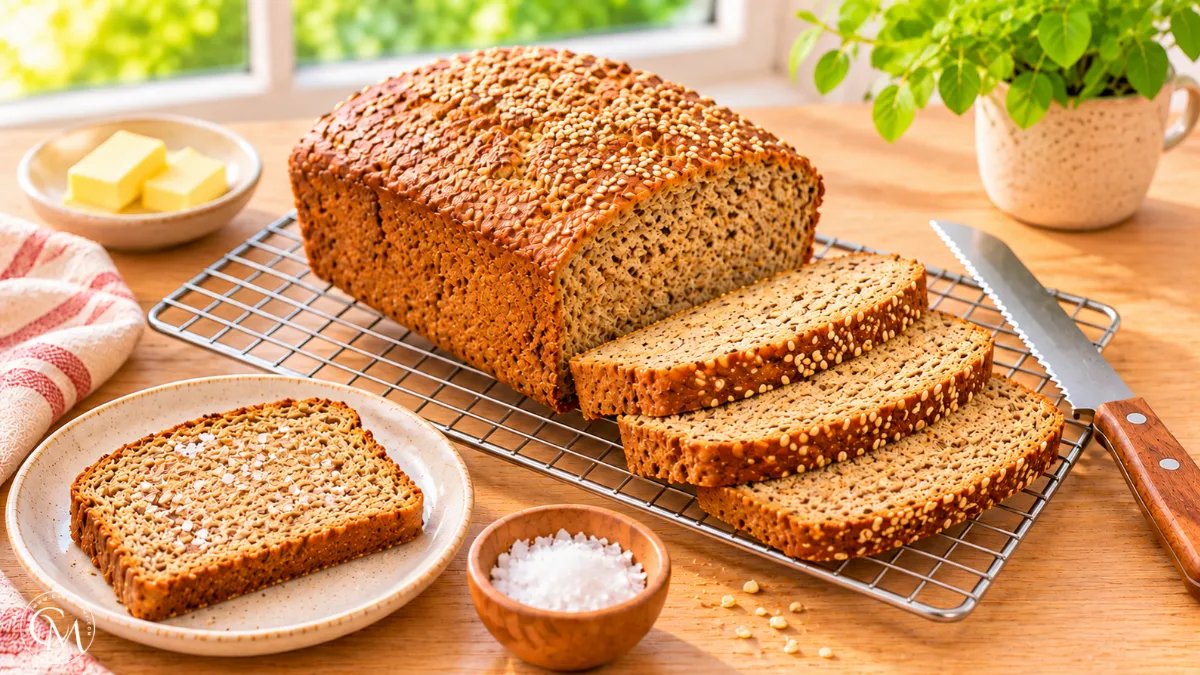
Keto Flaxseed Bread: 5 Steps to the Best Low-Carb Loaf
Did you know that 100 grams of flaxseed contains approximately 27 grams of dietary fiber, making it an interesting alternative to traditional bread flour? If you’ve been following a ketogenic diet, you probably know how frustrating it can be to find bread that’s low in carbohydrates without sacrificing flavor and texture.
That’s where Keto Flaxseed Bread comes in. This easy homemade recipe transforms simple ingredients into a delicious, nutty loaf with a tender crumb and a lightly crisp crust. Unlike traditional wheat bread, it doesn’t require yeast, kneading, or complicated rising techniques.
The best part? You can prepare the batter in about 15 minutes using ingredients commonly found in keto-friendly kitchens. Whether you’re making breakfast toast, preparing sandwiches, or looking for a satisfying side dish, Keto Flaxseed Bread offers a practical alternative to conventional bread.
In this guide, you’ll discover five straightforward steps, helpful baking tips, ingredient substitutions, and storage techniques to make your low-carb baking experience easier.
Table of Contents
Ingredients List for Keto Flaxseed Bread
Great homemade bread starts with quality ingredients. Fortunately, this recipe requires only a handful of everyday staples.
Main Ingredients
This recipe makes approximately 12 slices.
- 2 cups (about 200 g) ground flaxseed: The foundation of this recipe, providing a rich, nutty flavor and hearty texture. Golden flaxseed produces a lighter-colored loaf.
- 5 large eggs: Help bind the ingredients together while providing structure and moisture.
- 1 tablespoon baking powder: Creates air pockets that help the bread rise.
- 3 tablespoons olive oil: Adds tenderness and prevents an overly dry crumb.
- ½ cup (120 ml) warm water: Hydrates the flaxseed meal and helps create a workable batter.
- 1 tablespoon apple cider vinegar: Adds mild acidity and balances the earthy flaxseed flavor.
- ¾ teaspoon salt: Enhances the bread’s overall taste.
Optional Flavor Enhancements
- 1 teaspoon garlic powder for savory bread.
- 1 teaspoon dried rosemary or Italian seasoning.
- 1 tablespoon sesame seeds for a crunchy topping.
- ½ teaspoon cinnamon for a warm breakfast variation.

Ingredient Substitutions
- You can replace olive oil with melted coconut oil or avocado oil.
- For a milder flavor, choose golden flaxseed meal rather than brown flaxseed.
- Always use finely ground flaxseed instead of whole seeds. Whole flaxseeds don’t absorb liquid or bind the batter in the same way.
- Kitchen tip: Store ground flaxseed in an airtight container in the refrigerator or freezer. Its natural oils can become rancid, affecting the flavor of your finished bread.
Timing
Keto Flaxseed Bread is a quick bread, meaning it rises with baking powder rather than yeast.
| Preparation Stage | Time |
|---|---|
| Preparation | 15 minutes |
| Baking | 45–55 minutes |
| Cooling | 30 minutes |
| Total time | 90–100 minutes |
| Servings | 12 slices |
| Oven temperature | 350°F (175°C) |
- Although baking takes nearly an hour, most of that time is hands-off.
- For convenient meal preparation, bake the loaf in advance and refrigerate or freeze individual slices.
Step-by-Step Instructions for Keto Flaxseed Bread
Follow these five steps to create a flavorful loaf with a moist, sliceable texture.
Step 1: Prepare Your Ingredients
- Preheat your oven to 350°F (175°C).
- Line an 8½ × 4½-inch loaf pan with parchment paper, leaving enough overhang to lift the bread out easily.
- Measure your flaxseed meal, baking powder, salt, and remaining ingredients before mixing.
- Use room-temperature eggs when possible. They combine more smoothly with the oil and other liquids.
- Check that your baking powder is fresh because expired leavening can produce a dense loaf.
Pro tip: Measuring flaxseed meal by weight improves consistency. Too much ground flaxseed can create dry, heavy bread.
Step 2: Build the Flavor Base
- Crack the eggs into a large mixing bowl.
- Whisk vigorously for approximately one minute until slightly frothy.
- Add the olive oil, warm water, and apple cider vinegar. Continue whisking until the mixture looks smooth.
- The eggs provide structure, while the oil helps create a tender crumb.
- The vinegar introduces a gentle tang that complements flaxseed’s naturally earthy taste.
- For savory Keto Flaxseed Bread, stir in garlic powder, rosemary, or your favorite dried herbs.
- Avoid adding excessive seasonings, especially strong spices that could overpower the nutty flavor.
Step 3: Prepare the Flaxseed Mixture
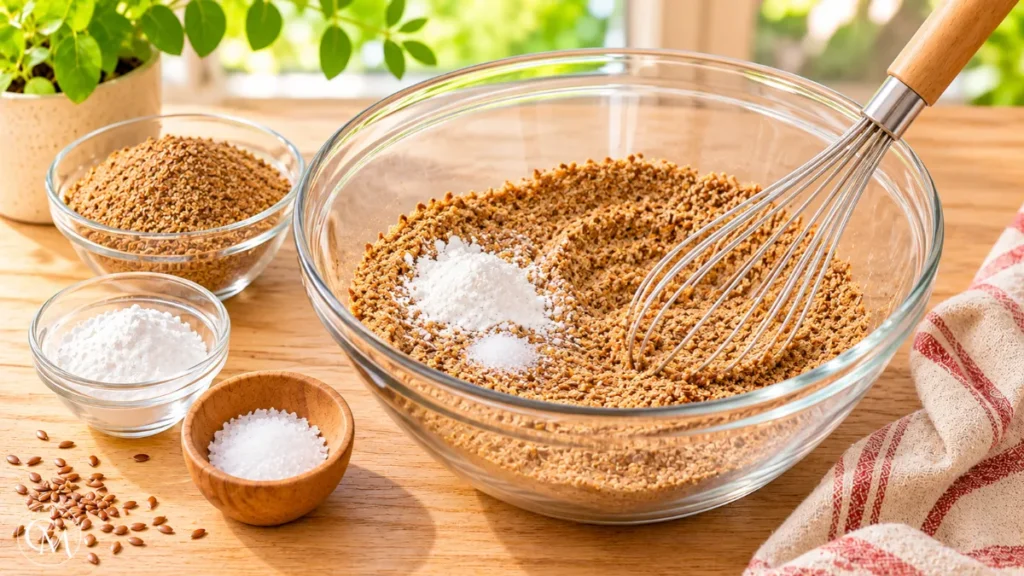
- In a separate bowl, combine the ground flaxseed, baking powder, and salt.
- Whisk thoroughly to distribute the baking powder evenly.
- This step matters because unevenly mixed baking powder can produce irregular air pockets.
- Ground flaxseed absorbs liquid rapidly and forms a gel-like consistency.
- That natural thickening property helps give Keto Flaxseed Bread its distinctive structure without wheat flour.
Texture tip: Break apart any clumps of flaxseed meal before adding it to the wet ingredients. A fine, consistent mixture creates a more uniform crumb.
Step 4: Combine Everything and Bake
- Gradually add the dry ingredients to the egg mixture.
- Stir with a spatula until everything is incorporated.
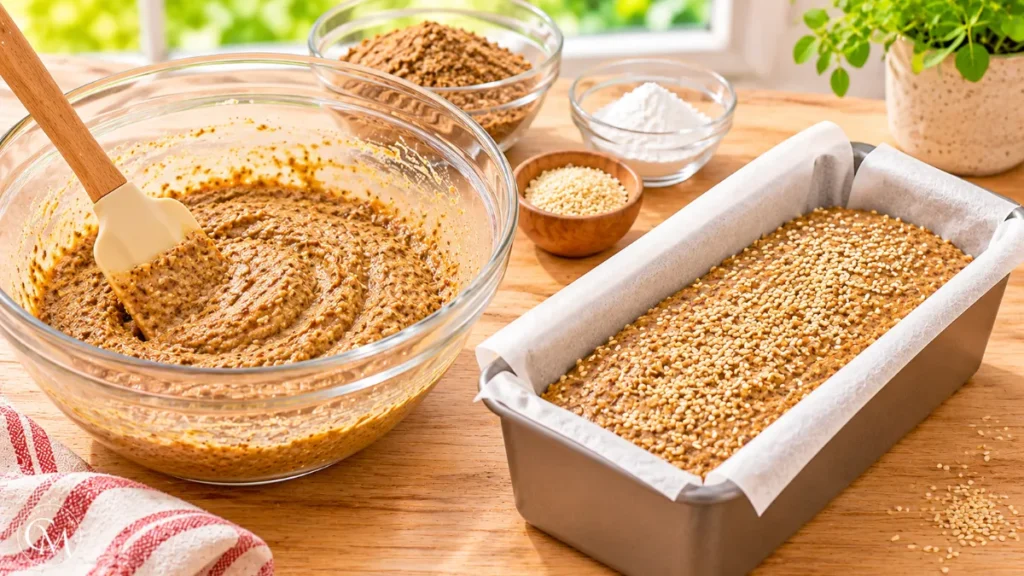
- The batter should look thick, moist, and spoonable rather than pourable like pancake batter.
- Let it rest for three minutes to hydrate.
- Transfer the mixture into your prepared loaf pan and smooth the surface.
- Sprinkle sesame seeds over the top if desired.
- Bake for 45–55 minutes, until the top feels firm and a toothpick inserted into the center comes out without wet batter.
- If the crust browns too quickly, loosely cover it with aluminum foil during the final 10 minutes.
Step 5: Cool, Slice, and Finish
- Remove the Keto Flaxseed Bread from the oven and let it rest in the pan for 10 minutes.
- Carefully lift it onto a wire rack and allow it to cool for at least another 20 minutes.
- Cooling is essential because the bread continues to firm as its internal moisture redistributes.
- Cutting too early may produce gummy slices.
- Use a sharp serrated knife and gentle sawing motions for clean results.
- Taste a cooled slice before adding toppings. A little salted butter or a pinch of flaky salt can enhance its natural flavor.


Nutritional Information
Keto Flaxseed Bread provides dietary fiber, plant-based fats, and protein from its combination of flaxseed and eggs.
Estimated Nutrition Per Slice
Based on 12 equally sized slices:
| Nutrient | Approximate Amount |
|---|---|
| Calories | 160 kcal |
| Total carbohydrates | 6 g |
| Dietary fiber | 5 g |
| Net carbohydrates | 1–2 g |
| Protein | 6 g |
| Total fat | 13 g |
| Sugar | Less than 1 g |
- These estimates depend on ingredient brands, flaxseed weight, and slice thickness.
- Net carbohydrates are calculated by subtracting dietary fiber from total carbohydrates.
- Flaxseed also contains alpha-linolenic acid (ALA), a plant-based omega-3 fatty acid.
- While this bread can fit into a carbohydrate-conscious eating plan, portion sizes and overall dietary balance still matter.
Healthier Alternatives
One advantage of Keto Flaxseed Bread is how easily you can customize it for different preferences.
Lower-Sugar Option
- The basic recipe contains no added sugar.
- Avoid sweetened toppings and choose unsweetened nut butter, avocado, or eggs instead.
Dairy-Free and Gluten-Free Options
- The original recipe contains no dairy ingredients or wheat flour.
- If you have celiac disease, choose certified gluten-free flaxseed meal and baking powder to reduce cross-contact risks.
Whole-Grain Alternative
- For someone who isn’t strictly following keto, replacing a small portion of flaxseed meal with whole-wheat flour creates a different bread with a more familiar wheat flavor.
- However, this substitution increases carbohydrates and changes the moisture requirements.
Family-Friendly Variations
- For children, add a little cinnamon and serve lightly toasted slices with unsweetened nut butter, where appropriate.
- For older adults who prefer softer textures, serve thin slices without heavily toasting them.
Serving Suggestions
- Keto Flaxseed Bread works beautifully for breakfast, lunch, or simple snacks.
- For breakfast: Toast a slice and top it with scrambled eggs, avocado, and black pepper.
- For lunch: Prepare a low-carb sandwich with grilled chicken, lettuce, cucumber, and homemade mayonnaise.
- For dinner: Serve warm slices alongside vegetable soup or roasted chicken.
- For snacks: Spread cream cheese over toasted bread and sprinkle with fresh herbs.
- My favorite serving idea for this style of bread is a lightly toasted slice with mashed avocado, lemon juice, and chili flakes.
- The mild acidity brightens the nutty flavor, while the creamy topping balances its hearty texture.
- If you enjoy experimenting with homemade bread, compare this recipe with almond flour bread or coconut flour muffins to discover which texture suits your preferences.
Common Mistakes to Avoid
Even straightforward recipes can go wrong. These practical tips will help you achieve better results.
- Using Whole Flaxseeds Whole seeds don’t create the same binding structure as ground flaxseed.
- Solution: Use finely milled flaxseed meal.
- Adding Too Much Water Excess liquid can leave the center gummy.
- Solution: Measure carefully and allow the batter to hydrate before baking.
- Overmixing the Batter Excessive stirring after combining everything can reduce the air incorporated into the eggs.
- Solution: Mix gently until no dry patches remain.
- Removing the Bread Too Early A browned crust doesn’t guarantee the center is fully baked.
- Solution: Check the middle with a toothpick and extend baking if necessary.
- Slicing While Hot 1Fresh Keto Flaxseed Bread can crumble when cut immediately.
- Solution: Let the loaf cool before slicing.
- . Using Old Flaxseed Meal Rancid flaxseed tastes bitter and unpleasant.
- Solution: Check freshness before baking and keep opened packages refrigerated.
Storing Tips for the Recipe
Proper storage helps preserve the soft texture and nutty flavor of Keto Flaxseed Bread.
- Refrigerator Storage
- Allow the loaf to cool completely.
- Place it in an airtight container or wrap individual slices tightly.
- Refrigerate for up to five days.
- Freezer Storage
- Separate slices with parchment paper and place them inside a freezer-safe bag.
- Freeze for up to three months for best quality.
- When ready to eat, toast individual slices directly from frozen or thaw them in the refrigerator.
- Meal Prep Advice
- You can measure the dry ingredients ahead of time and store them in a sealed container in the refrigerator.
- Keep wet ingredients separate until baking.
This recipe became one of my regular meal-prep choices because it makes everyday breakfasts and sandwiches easier without relying on store-bought low-carb bread.
Conclusion
Making Keto Flaxseed Bread at home is a practical way to enjoy a satisfying loaf while keeping carbohydrates relatively low. With five simple steps, basic pantry ingredients, and no yeast or kneading, this recipe makes homemade low-carb baking approachable for beginners.
Its nutty flavor, hearty texture, and versatile serving options make it particularly useful for breakfast toast, sandwiches, and meal preparation. Remember that the secret to better results lies in accurate measurements, proper batter hydration, complete baking, and sufficient cooling.
Whether you’re following a ketogenic eating plan or simply exploring alternatives to traditional bread, this recipe gives you plenty of room to experiment. Ready to bake? Try this Keto Flaxseed Bread recipe, share your results in the comments, and leave a review with your favorite toppings. Subscribe for more easy keto recipes, practical kitchen tips, and homemade low-carb baking ideas.
FAQs
1. Is Keto Flaxseed Bread suitable for a ketogenic diet?
Yes. Keto Flaxseed Bread uses flaxseed meal instead of traditional wheat flour, making it naturally lower in net carbohydrates. Always consider serving sizes and your individual daily carbohydrate goals.
2. Can I make this bread without eggs?
Eggs provide important structure, so replacing all five is challenging. Flax eggs may produce a much denser loaf. For an egg-free version, use a specifically developed eggless recipe.
3. Why is my flaxseed bread gummy inside?
A gummy center usually indicates excess moisture, underbaking, or insufficient cooling. Measure liquids accurately, check the center before removing the loaf, and allow adequate cooling before slicing.
4. Can I use almond flour instead of flaxseed meal?
Almond flour absorbs moisture differently and cannot replace flaxseed meal in equal quantities without adjustments. For reliable results, follow a bread recipe specifically formulated for almond flour.
5. How long does homemade flaxseed bread stay fresh?
When properly cooled and stored in an airtight container, it generally keeps for up to five days in the refrigerator. Freeze extra slices for longer storage and convenient meals.
6. Can I toast Keto Flaxseed Bread?
Absolutely! Toasting improves the outer texture and develops its nutty flavor. Use medium heat and watch closely because thin slices can brown quickly, especially when reheating from refrigerated storage.
7. Does Keto Flaxseed Bread taste like regular bread?
Not exactly. It has a more earthy, nutty flavor and denser texture than traditional wheat bread. However, its satisfying crumb works especially well with savory toppings and toasted sandwiches.
Tried it before ?
There are no reviews yet. Be the first one to write one.