
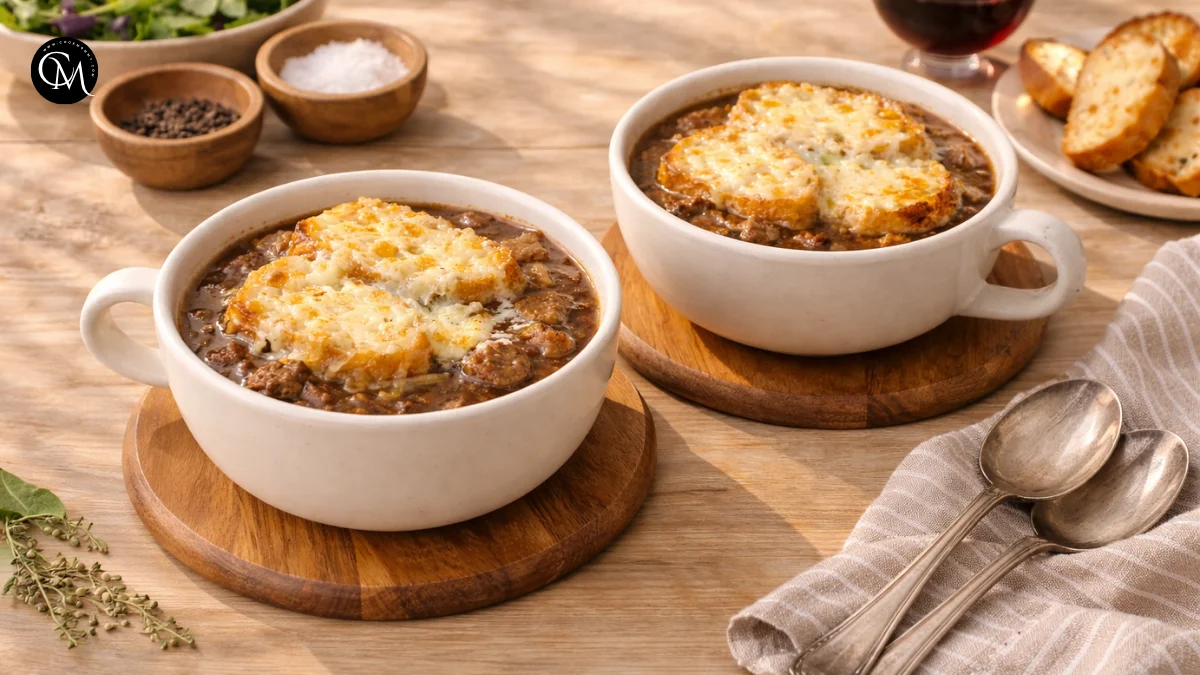
Easy French Beef Onion Soup: Why 5 Simple Steps Work
Did you know that deeply browned onions can create hundreds of flavor compounds, which is why a simple soup can taste like it simmered all day? That is exactly why this Beef Onion Soup recipe is worth your time. It takes a classic comfort dish and makes it practical for a home kitchen without losing the rich, savory character people love.
A good Beef Onion Soup is not just onions in broth. It is about patience, balance, and knowing when to let simple ingredients do their job. In this version, you get sweet caramelized onions, tender beef, a flavorful broth, and that cozy, slow-cooked aroma that makes the whole kitchen feel warmer. I have made this on cold evenings, busy Sundays, and even meal-prep days, and it always feels more special than the effort suggests. If you want a reliable soup with restaurant-style depth and realistic steps, this recipe delivers.
Table of Contents
Ingredients List
Here is everything you need for a flavorful homemade Beef Onion Soup:
- 2 tablespoons butter
- 1 tablespoon olive oil
- 4 large yellow onions, thinly sliced
- 2 garlic cloves, minced
- 300 to 400 grams beef stew meat or thinly sliced beef
- 1 tablespoon all-purpose flour
- 1 tablespoon tomato paste
- 1 teaspoon fresh thyme leaves or 1/2 teaspoon dried thyme
- 1 bay leaf
- 5 cups beef broth
- 1/2 cup water, as needed
- 1 teaspoon Worcestershire sauce
- Salt, to taste
- Black pepper, to taste
- 4 to 6 slices baguette
- 1 cup grated Gruyère, Swiss, or mozzarella
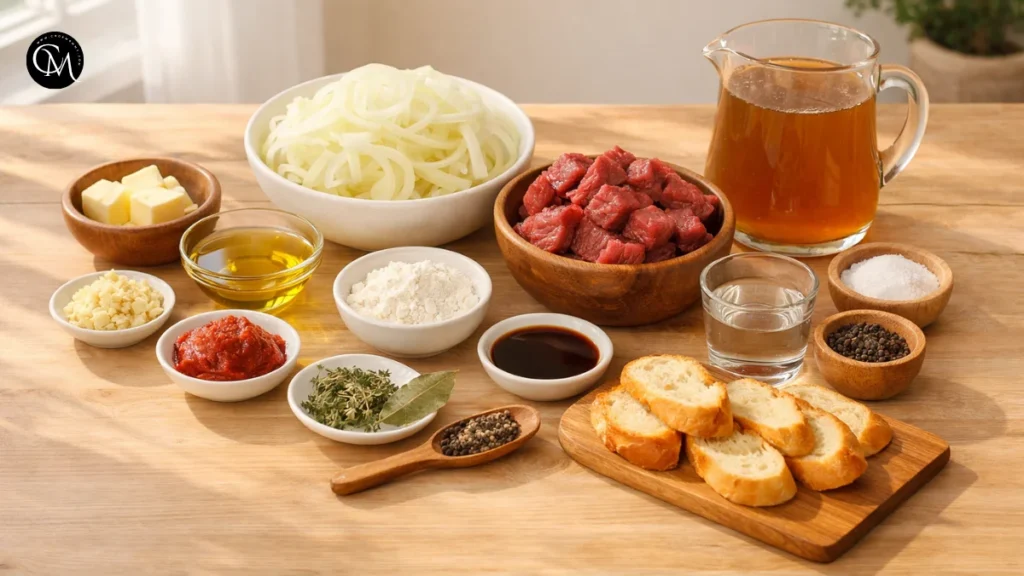
Useful substitutions
- Use red onions for a slightly sweeter finish, though yellow onions give the most classic flavor.
- Swap stew beef for leftover roast beef if you want a faster Beef Onion Soup.
- Use gluten-free flour or cornstarch slurry for a gluten-free version.
- Choose dairy-free butter and skip the cheese if needed.
- For a lighter version, reduce the cheese and toast the bread separately.
These ingredients are simple, but each one plays a role. The onions bring sweetness, the beef adds body, and the broth ties everything together into a deeply satisfying bowl.
Timing
This recipe is efficient for a soup with such rich flavor:
- Preparation time: 15 minutes
- Cooking time: 45 minutes
- Total time: 1 hour
Many traditional onion soups take longer because onion browning can be slow. This Beef Onion Soup still develops strong flavor in about an hour, which makes it more practical than many classic versions while still tasting layered and comforting.
Step-by-Step Instructions
Step 1 – Prepare ingredients
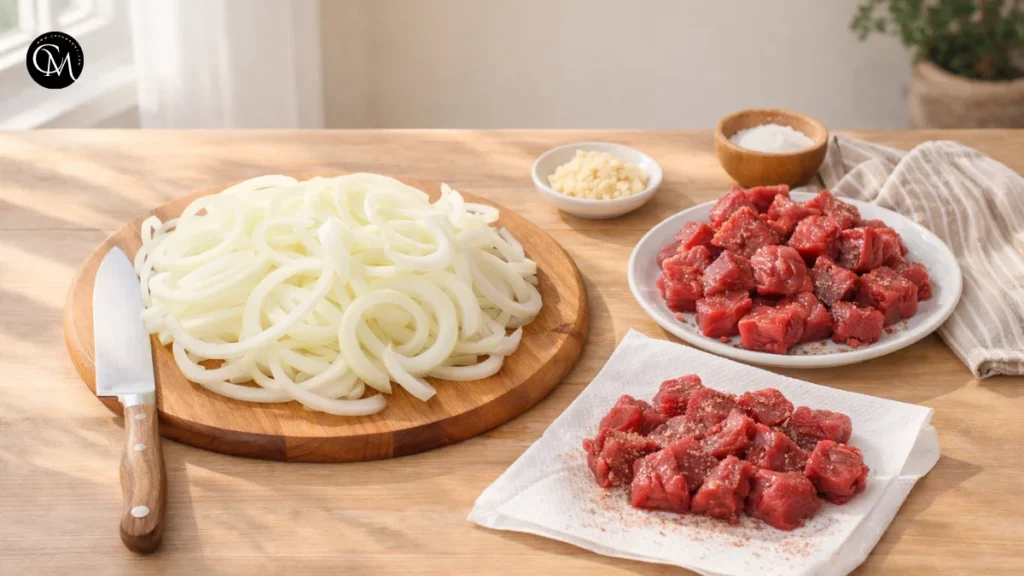
Slice the onions evenly, mince the garlic, and pat the beef dry with paper towel before seasoning it lightly with salt and pepper. Preparation matters more than many cooks realize. When onions are cut to a similar thickness, they cook at the same rate. When beef is dry, it browns better instead of steaming.
This step also helps your cooking feel calmer. Once the onions begin softening, the process moves steadily, so having everything ready keeps the soup smooth and stress-free.
Step 2 – Build flavor base
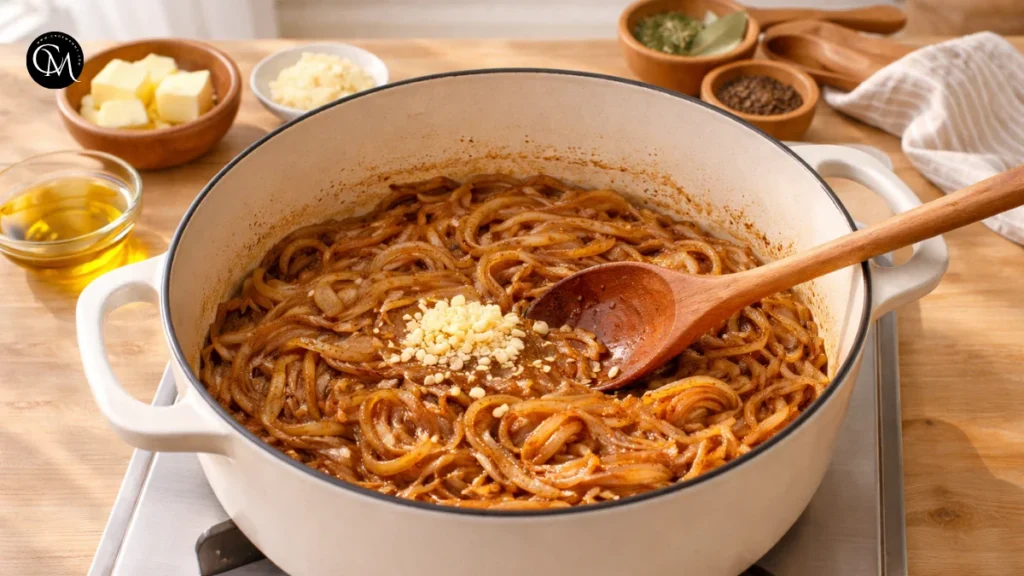
Heat the butter and olive oil in a heavy pot over medium heat. Add the onions and cook slowly for 20 to 25 minutes, stirring often. At first they will soften, then turn golden, then gradually become deep brown and sweet. Add the garlic during the last minute so it does not burn.
This is where the real character of Beef Onion Soup begins. Onion caramelization is cooking science in action. Slow heat breaks down the onions and draws out their natural sugars, creating the sweet-savory backbone that makes the broth taste full and complex. Do not rush this part. Pale onions will give you soup, but properly browned onions will give you a memorable soup.
Step 3 – Cook the main ingredient
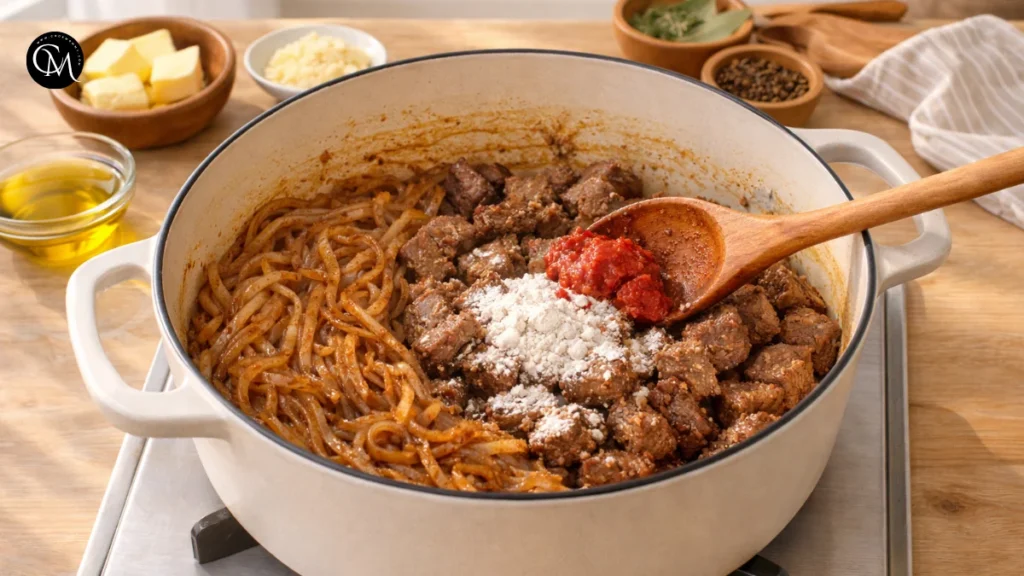
Push the onions slightly to the side and add the beef to the pot. Let it brown for a few minutes, stirring only when needed. Then sprinkle in the flour and stir well. Add the tomato paste and cook for another minute.
Texture matters here. A quick sear gives the beef better color and deeper flavor. The flour lightly thickens the broth so the soup feels silky rather than watery. The tomato paste does not make the soup taste like tomatoes; it simply adds a subtle savory depth that helps the Beef Onion Soup feel fuller and rounder.
Step 4 – Combine everything
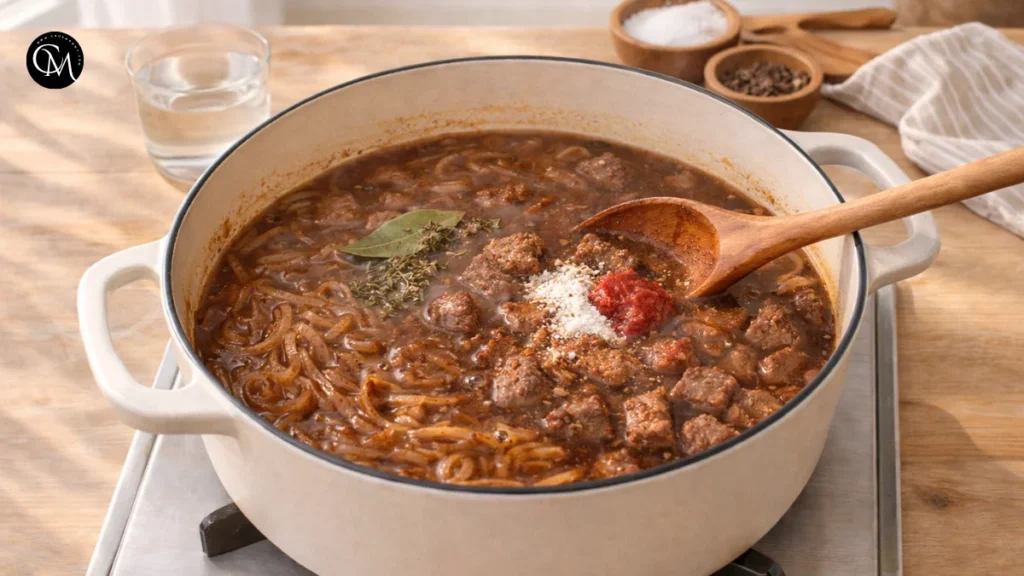
Pour in the beef broth and add thyme, bay leaf, and Worcestershire sauce. Stir well, scraping the bottom of the pot to release all the browned bits. Bring the soup to a gentle boil, then reduce the heat and simmer for 15 to 20 minutes.
This is the balancing stage. The onions bring sweetness, the beef brings richness, and the broth provides structure. If it tastes too strong, add a small splash of water. If it feels flat, a little more salt can wake it up. A good Beef Onion Soup should taste savory first, sweet second, and heavy never.
Step 5 – Finish and adjust seasoning
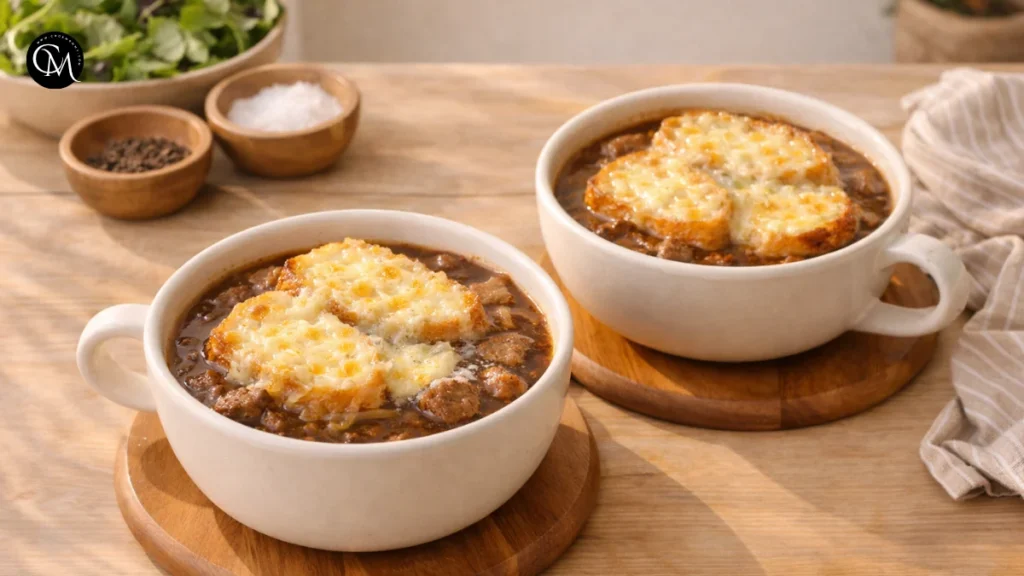
Taste the soup and adjust with salt and black pepper. Remove the bay leaf. Ladle the soup into oven-safe bowls, top with toasted baguette slices and grated cheese, then broil for 2 to 3 minutes until bubbly and lightly golden.
This final touch is what turns a simple pot of soup into something special. My chef-style advice is to season at the end with a light hand, especially if your broth is already salty. And do not overload the bread. One or two slices are enough to give that classic French-style top without making the whole bowl soggy.
Nutritional Information
Approximate nutrition per serving, based on 4 servings:
- Calories: 390
- Protein: 23 g
- Carbohydrates: 22 g
- Fat: 24 g
- Fiber: 3 g
- Sodium: 780 mg
These numbers will vary depending on the cheese, bread, and broth you use. This Beef Onion Soup is hearty and satisfying, with a good balance of protein and comfort. It is not meant to be a low-calorie dish, but it can fit well into a balanced meal, especially when paired with a simple salad or lighter side.
Healthier Alternatives
One reason I like this Beef Onion Soup recipe is that it adapts well without losing its cozy texture.
For lower sodium, use reduced-salt beef broth and season at the end. For a lower-fat version, use less cheese and choose lean beef. For gluten-free needs, skip regular bread and use gluten-free toast or leave the soup without a topping. For dairy-free cooking, use olive oil instead of butter and serve the soup with crisp toasted bread on the side.
If you are cooking for children, keep the onion browning gentle so the flavor stays sweet rather than too intense. For seniors, slice the onions thinly and cook the beef until very tender for easier eating. For people watching calories, serve smaller cheese portions and add extra broth and onions to keep the bowl generous.
These changes help the recipe meet different needs while keeping the spirit of Beef Onion Soup intact.
Serving Suggestions
Beef Onion Soup is rich enough to stand alone, but a few thoughtful pairings can make it even better.
Serve it with a crisp green salad dressed in lemon and olive oil for freshness. Pair it with roasted vegetables if you want a fuller dinner. A small plate of cucumber slices or tomatoes on the side can also brighten the meal.
For guests, I like serving Beef Onion Soup in smaller bowls as a starter before a simple chicken or potato dish. For cozy nights at home, I make it the center of the meal with extra toasted bread and a light dessert later. If you want a more rustic presentation, use deep bowls and let the cheese bubble over the edges slightly. It looks inviting and feels like something from a small bistro kitchen.
Common Mistakes to Avoid
Here are the most common issues that can affect Beef Onion Soup:
- Rushing the onions
This is the biggest mistake. If the onions do not brown properly, the soup will lack depth. - Using very high heat
High heat can burn the onions outside while leaving them undercooked inside. - Adding too much salt early
Broth reduces and cheese adds salt, so early over-seasoning can make the soup too sharp. - Skipping the browning on the beef
Pale beef gives less flavor and a flatter broth. - Using too much bread
Too much bread can turn the bowl heavy and soggy instead of balanced. - Forgetting to taste before serving
Small final adjustments in pepper, salt, or Worcestershire often make the biggest difference.
From experience, most soup problems come from impatience, not bad ingredients.
Storing Tips for the Recipe
Let the soup cool before storing. Keep the soup base in an airtight container in the fridge for up to 4 days. Store the bread and cheese separately so the topping stays fresh.
For freezing, freeze only the soup without bread or cheese for up to 2 months. Thaw overnight in the fridge and reheat gently on the stove. Then top with fresh bread and cheese before serving.
This recipe became one of my regular meals because the base stores so well and tastes even richer the next day. The onions continue blending into the broth, which gives leftover Beef Onion Soup an even deeper, rounder flavor. It is one of those rare meals that feels both comforting and practical.
Conclusion
Easy French Beef Onion Soup works because it focuses on a few smart steps instead of complicated technique. Slowly browned onions, properly cooked beef, a rich broth, and a simple cheesy topping create a soup that tastes far more impressive than the ingredient list suggests. It is cozy, flexible, and realistic for home cooks who want something dependable and deeply flavorful.
If you have been looking for a comforting dinner that feels classic without being difficult, this Beef Onion Soup is a great one to try. Make a batch, adjust it to your taste, and see how a few simple techniques can change the final result. If you try it, leave a comment or review and share how you served it. Subscribe for more practical recipes, kitchen tips, and cozy meal ideas.
FAQs
Can I make Beef Onion Soup ahead of time?
Yes. The soup base actually tastes better after a day in the fridge. Add the bread and cheese only when reheating and serving.
What cut of beef works best?
Stew meat, sirloin strips, or thin slices of roast beef all work well. Choose tender cuts for the best texture.
Can I skip the cheese topping?
Absolutely. The soup will still be flavorful. The cheese adds richness, but the broth and onions are the real stars.
Why are my onions not turning brown?
Usually the heat is too high or too low, or the pan is overcrowded. Give them time and stir regularly.
Is Beef Onion Soup very heavy?
It can be hearty, but not overly heavy if you control the bread and cheese portions and serve it with a light side.
Can I make this recipe gluten-free?
Yes. Use gluten-free flour or cornstarch and top with gluten-free bread, or serve the soup without bread.
How do I make the flavor deeper?
Let the onions brown fully, use a good-quality broth, and do not skip tasting at the end for salt and pepper balance.
Tried it before ?
There are no reviews yet. Be the first one to write one.