
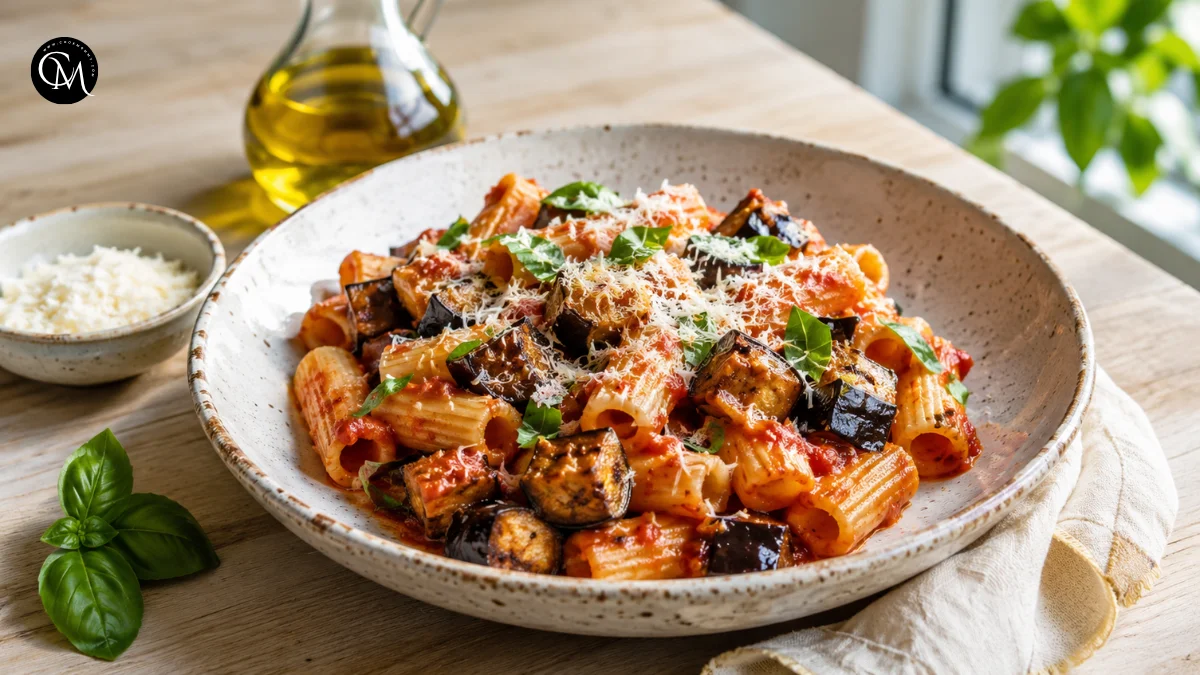
Pasta alla Norma: How 4 Ingredients Create Magic
Can four humble ingredients really create a pasta dish that tastes like it came from a small Sicilian trattoria? That is the beauty of Pasta alla Norma. With eggplant, tomato, basil, and salty cheese, this classic Sicilian pasta proves that simple food can feel deeply satisfying when every ingredient is treated with care.
What makes Pasta alla Norma special is not complexity. It is balance. The eggplant turns silky and rich, the tomato sauce brings brightness, the basil adds freshness, and the cheese gives the dish its final savory finish. This recipe is worth making when you want a comforting vegetarian dinner that feels rustic, elegant, and full of Mediterranean flavor without needing a long shopping list.
Table of Contents
Ingredients List
For the best Pasta alla Norma, choose ingredients that taste good on their own. Since this recipe is simple, quality matters.
- 12 oz pasta, such as rigatoni, penne, or spaghetti
- 1 large eggplant, cut into cubes or thick half-moons
- 2 tablespoons olive oil, plus more if needed
- 3 garlic cloves, finely sliced or minced
- 1 can crushed tomatoes, about 14–15 oz
- ½ teaspoon salt, plus more for pasta water
- ¼ teaspoon black pepper
- ¼ teaspoon red pepper flakes, optional
- Fresh basil leaves, torn by hand
- ½ cup grated ricotta salata, or pecorino if needed
- Optional: a pinch of sugar if tomatoes taste too sharp
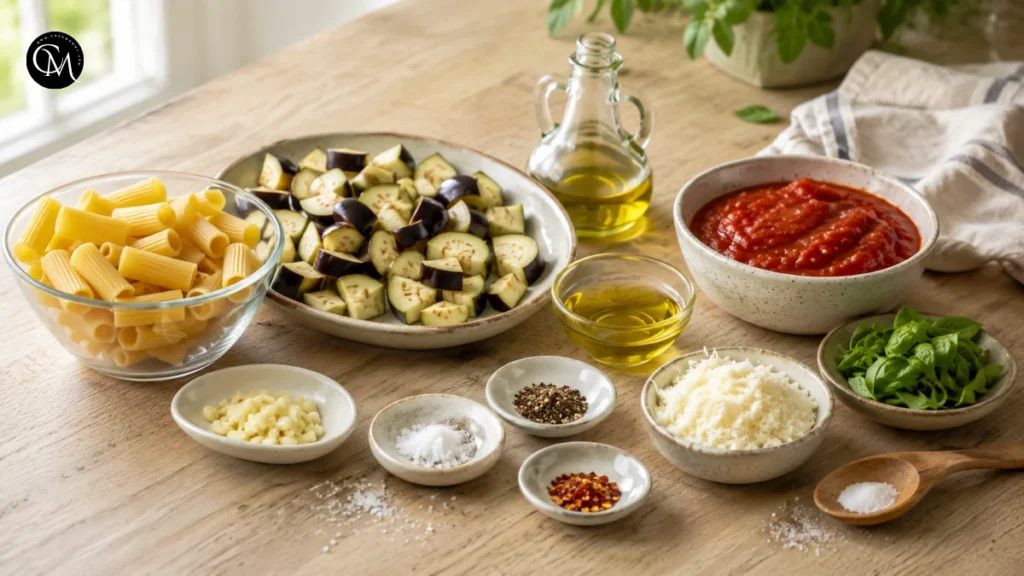
Substitutions: Use zucchini if eggplant is unavailable, though the flavor will be lighter. Pecorino Romano works if you cannot find ricotta salata. For a milder finish, use Parmesan, but expect a less traditional taste.
Timing
- Preparation time: 15 minutes
- Cooking time: 30 minutes
- Total time: 45 minutes
A typical baked pasta can take over an hour, but Pasta alla Norma gives you a rich, comforting result in less time. Most of the flavor comes from browning the eggplant properly and simmering the tomato sauce just long enough to become deep and fragrant.
Step-by-Step Instructions
Step 1 – Prepare ingredients
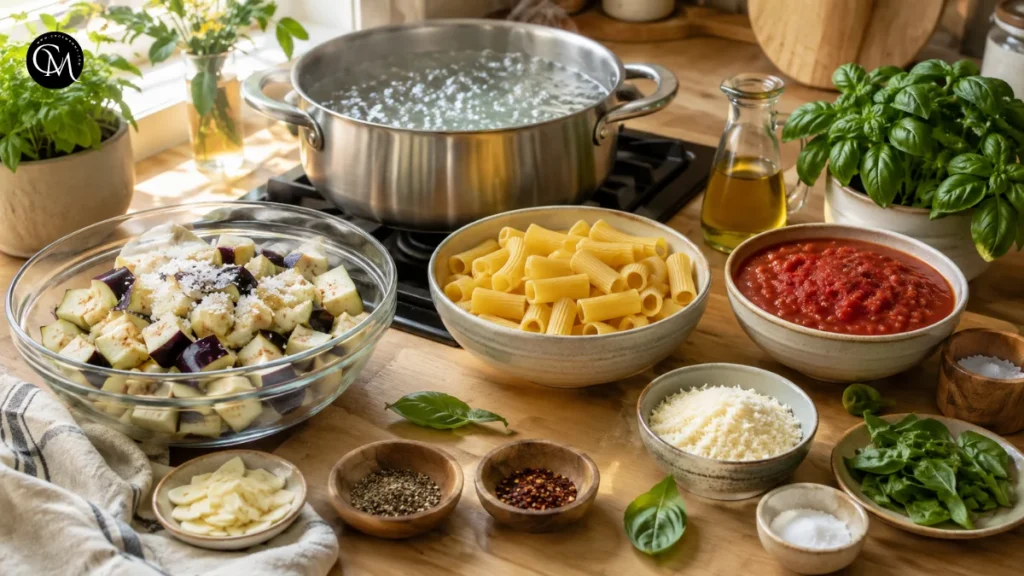
Start by cutting the eggplant into even pieces. This helps everything cook at the same speed. If your eggplant is very large or slightly bitter, sprinkle it lightly with salt and let it sit for 15–20 minutes, then pat it dry.
Fill a large pot with water, season it well with salt, and heat it until it reaches a steady boil. The water should taste pleasantly salty because this is your first chance to season the pasta from the inside. Prepare the basil, cheese, and sauce ingredients first so everything is ready when cooking begins. Having everything ready before you start helps the recipe move smoothly and keeps the kitchen calm.
Step 2 – Build flavor base
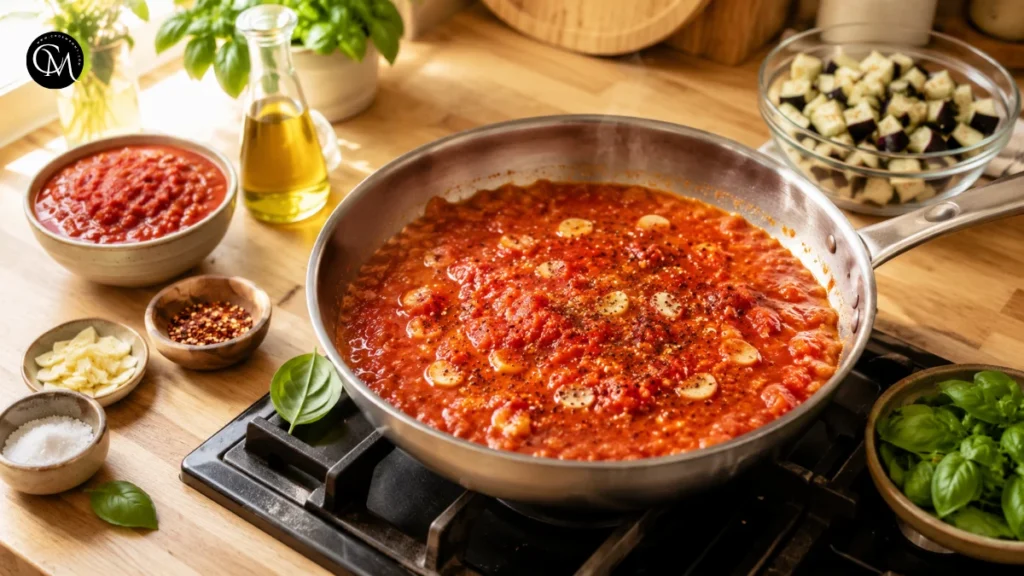
Warm olive oil in a large skillet over medium heat. Add the garlic and cook gently until fragrant, about 30 seconds. Do not let it burn because burnt garlic can make the sauce taste harsh.
Add the crushed tomatoes, black pepper, red pepper flakes, and a small pinch of salt. Let the sauce simmer while you cook the eggplant. This short simmer helps the tomato flavor become sweeter and more rounded. The science is simple: heat reduces excess water and concentrates natural sugars, giving the sauce a fuller taste.
Step 3 – Cook the main ingredient
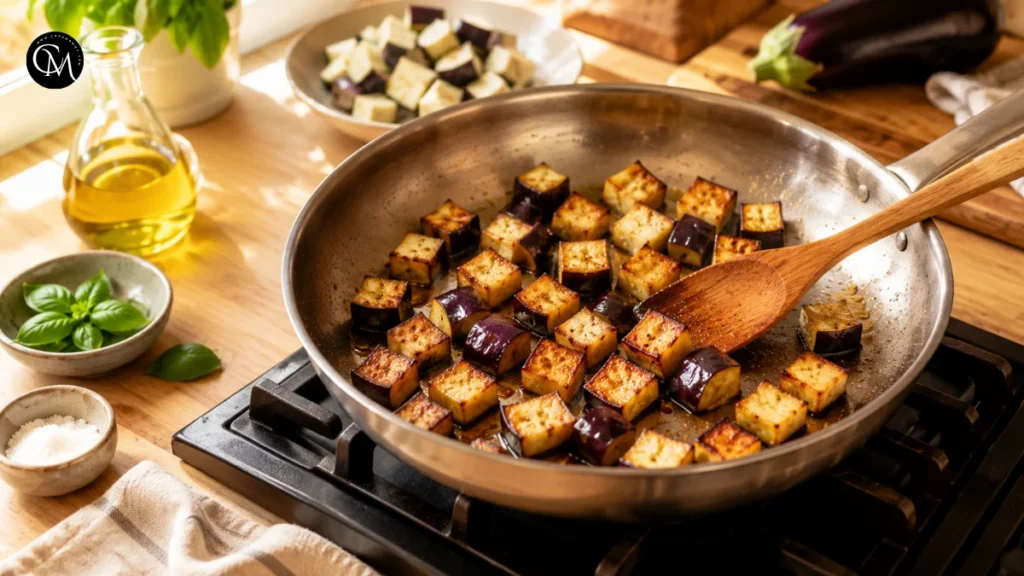
In another skillet, heat olive oil over medium-high heat. Add the eggplant in a single layer. Avoid crowding the pan because crowded eggplant steams instead of browns. Cook until golden on the outside and soft inside, turning as needed.
Texture is the secret to great Pasta alla Norma. The eggplant should not be dry or mushy. It should have lightly caramelized edges and a creamy center. If the pan looks dry, add a small drizzle of oil, but do not soak the eggplant.
Step 4 – Combine everything
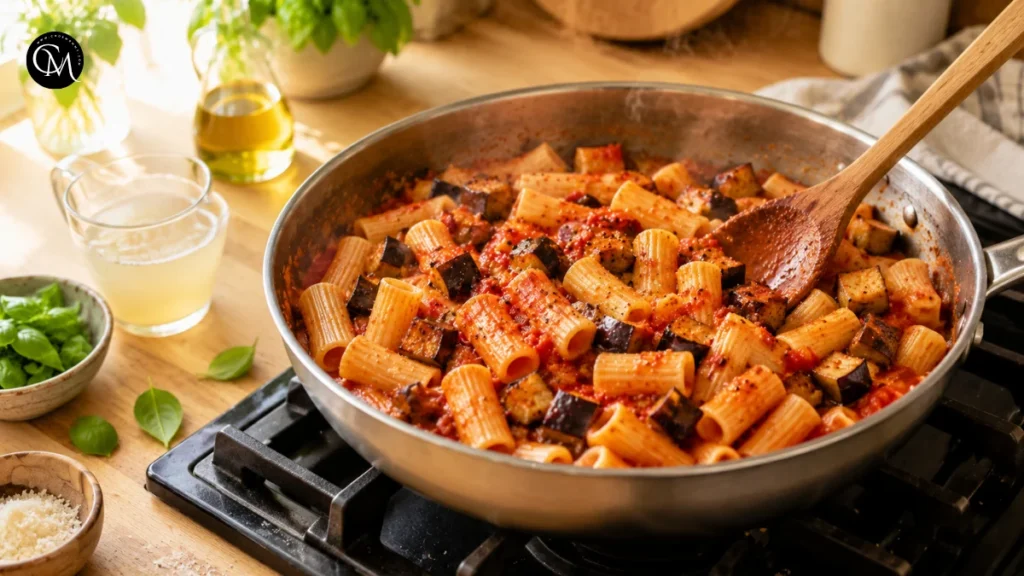
Cook the pasta until al dente, then reserve about ½ cup of pasta water before draining. Add the cooked eggplant to the tomato sauce and stir gently. Then add the pasta.
Pour in a splash of pasta water and toss until the sauce coats every piece. This step helps the sauce cling to the pasta instead of sitting at the bottom of the bowl. In Pasta alla Norma, the balance should be rich but not heavy, saucy but not watery.
Step 5 – Finish & adjust seasoning
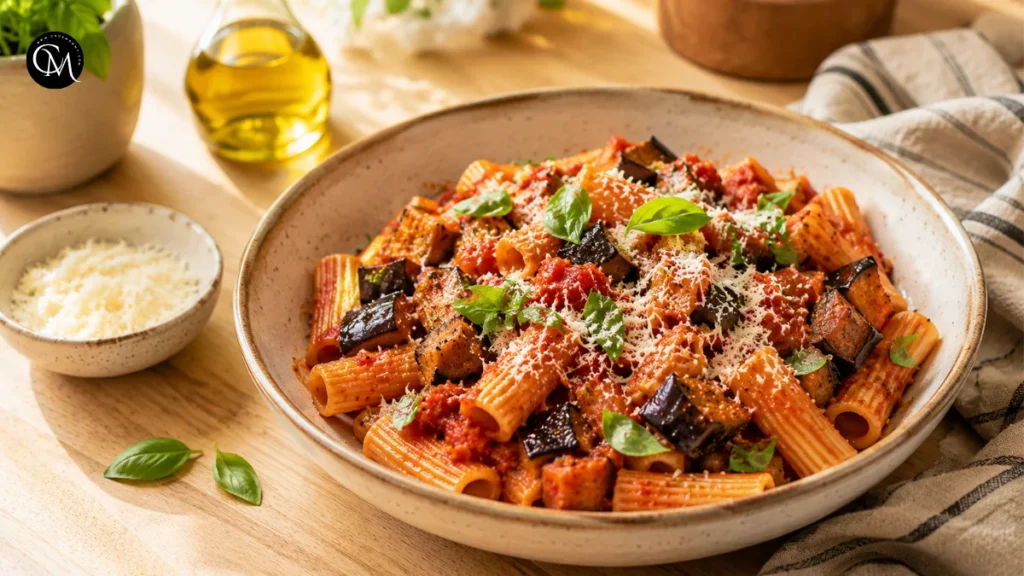
Turn off the heat and add torn basil. Taste before serving. Add more salt, black pepper, or a small pinch of sugar if the sauce tastes too acidic.
Serve with grated ricotta salata over the top. A chef-style tip: add the cheese at the end, not during heavy cooking, so it keeps its bold, salty character. This final touch gives Pasta alla Norma its classic savory finish.
Nutritional Information
Approximate values per serving, based on 4 servings:
| Nutrient | Amount |
|---|---|
| Calories | 430 |
| Protein | 13 g |
| Carbohydrates | 62 g |
| Fat | 15 g |
| Fiber | 8 g |
| Sodium | 520 mg |
These values can change depending on pasta type, cheese amount, and how much oil the eggplant absorbs. Pasta alla Norma is naturally meatless and offers fiber from eggplant and tomatoes, making it a satisfying option for a balanced homemade meal.
Healthier Alternatives
You can make Pasta alla Norma lighter without losing its soul. For a whole-grain option, use whole-wheat pasta. It adds a nutty flavor and more fiber. For a gluten-free version, use chickpea pasta, lentil pasta, or a good-quality gluten-free penne.
For a dairy-free version, skip ricotta salata and finish with toasted breadcrumbs, nutritional yeast, or a sprinkle of chopped olives for salty depth. For a lighter version, bake the eggplant until golden rather than cooking it in a pan with extra oil. Toss cubes with a small amount of olive oil, spread them on a baking sheet, and roast until golden.
For children, cut the eggplant smaller so it blends more easily into the sauce. For seniors or anyone who prefers softer textures, simmer the eggplant a few extra minutes in the tomato sauce.
Serving Suggestions
Serve Pasta alla Norma warm in shallow bowls with extra basil and cheese on top.Serve it with a bright green salad and lemon vinaigrette to add freshness beside the creamy eggplant.
For a cozy dinner, pair it with garlic bread or toasted sourdough. For a lighter meal, serve smaller portions beside grilled vegetables. For guests, bring the pasta to the table in a wide bowl and add basil and cheese just before serving. It feels generous, colorful, and inviting.
This dish also works well for family meals because it is vegetarian but still hearty enough for people who usually want something filling.
Common Mistakes to Avoid
Crowding the eggplant: This is the biggest mistake. Eggplant needs space to brown. Cook in batches if needed.
Adding too much oil at once can make the eggplant heavy because it soaks up fat very quickly. Add oil slowly and let the heat do the work.
Skipping pasta water: Pasta water helps the sauce become silky and cling to the noodles.
Overcooking the pasta: Keep it al dente because it will continue softening slightly when mixed with the sauce.
Adding basil too early: Fresh basil loses its bright flavor with too much heat. Add it at the end.
Forgetting the salty cheese: Ricotta salata gives Pasta alla Norma its signature finish, so use a flavorful substitute if needed.
Storing Tips for the Recipe
Keep leftover Pasta alla Norma chilled in a sealed container and enjoy it within three days. For best texture, keep a small splash of reserved pasta water or plain water nearby when reheating. Warm it gently in a pan, adding liquid little by little until the sauce loosens.
The sauce and eggplant can be made in advance and kept in separate containers, then tossed with hot pasta when it is time to serve. This keeps the pasta from becoming too soft.
This recipe became one of my regular meals because it tastes special without being difficult. It uses everyday ingredients, but the final dish feels comforting, homemade, and full of character.
Conclusion
Pasta alla Norma is proof that a few simple ingredients can create something memorable. With tender eggplant, rich tomato sauce, fresh basil, and salty cheese, every bite feels warm, balanced, and deeply satisfying. It is a wonderful recipe for weeknights, meatless dinners, or relaxed weekend cooking.
Try this recipe when you want classic Italian comfort without complicated steps. After making it, leave a comment or review with your favorite twist, whether you roasted the eggplant, used whole-grain pasta, or added extra basil. Subscribe for more practical, flavor-focused recipes that make home cooking easier and more enjoyable.
FAQs
Can Pasta alla Norma be prepared in advance?
Yes. Make the sauce and eggplant ahead, then cook fresh pasta before serving. This keeps the texture better and prevents the dish from becoming too soft.
What cheese is best for Pasta alla Norma?
Ricotta salata is traditional because it is firm, salty, and slightly tangy. If you cannot find ricotta salata, pecorino Romano or Parmesan can add a similar salty finish.
Can baked eggplant be used instead of fried eggplant?
Absolutely. Roasting is easier, uses less oil, and still gives the eggplant golden edges with a soft center.
What pasta shape works best?
Rigatoni, penne, and spaghetti all work well. Short pasta holds the sauce nicely, while spaghetti gives a more classic, elegant feel.
Is Pasta alla Norma vegetarian?
Yes, it is traditionally vegetarian. Just check that your cheese is suitable for your dietary preference, as some cheeses use animal rennet.
How do I stop eggplant from tasting bitter?
Use fresh, firm eggplant. If it is large, salt it briefly, let it rest, then pat it dry before cooking.
Can I make Pasta alla Norma gluten-free?
Yes, simply replace regular pasta with a gluten-free option made from rice, corn, chickpeas, or lentils. Cook carefully so it stays firm and does not break.
Tried it before ?
There are no reviews yet. Be the first one to write one.