
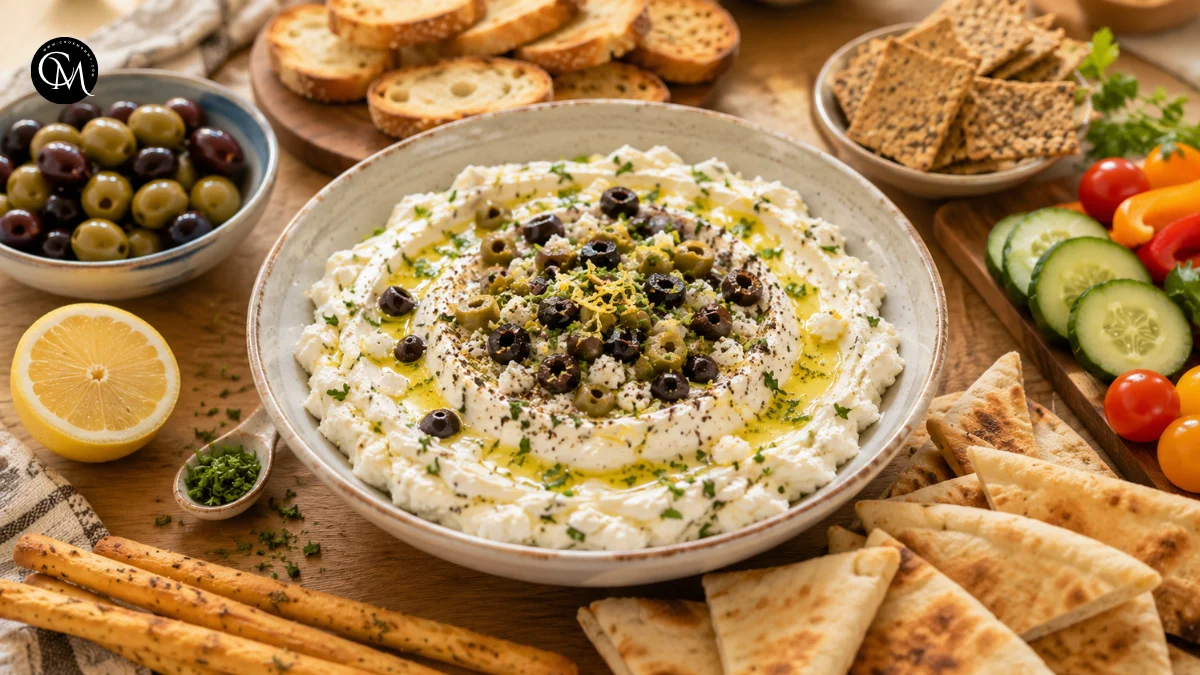
Olive and cheese spread: 6 Easy Ideas for Parties
Can a party appetizer prepared in just 15 minutes taste as satisfying as a hot dip that takes nearly an hour to make? In my experience, it absolutely can. A well-balanced Olive and cheese spread combines creamy cheese, briny olives, fresh herbs, and bright lemon into an appetizer that feels special without creating extra work.
This recipe is worth keeping because it solves several common hosting problems. It requires no cooking, can be prepared ahead, travels well, and works with everything from crackers and toasted bread to crisp vegetables. It is also easy to scale for a quiet family snack or a crowded party table.
The key is not simply stirring cheese and olives together. Good texture, controlled moisture, and balanced seasoning make the difference. Once you master the basic Olive and cheese spread, you can serve it in six creative ways for birthdays, holidays, brunches, or casual gatherings.
Table of Contents
Ingredients List
This recipe makes approximately eight appetizer servings.
- 225 g cream cheese, softened
- 100 g feta cheese, crumbled
- ¾ cup pitted green olives, drained
- ¼ cup pitted black olives, drained
- 1 tablespoon extra-virgin olive oil
- 1 tablespoon fresh lemon juice
- 1 small garlic clove, finely grated
- 2 tablespoons chopped fresh parsley
- 1 tablespoon chopped chives or green onion
- ½ teaspoon dried oregano
- ¼ teaspoon freshly ground black pepper
- 1 to 2 tablespoons plain Greek yogurt, if needed
- Lemon zest and chopped herbs for garnish
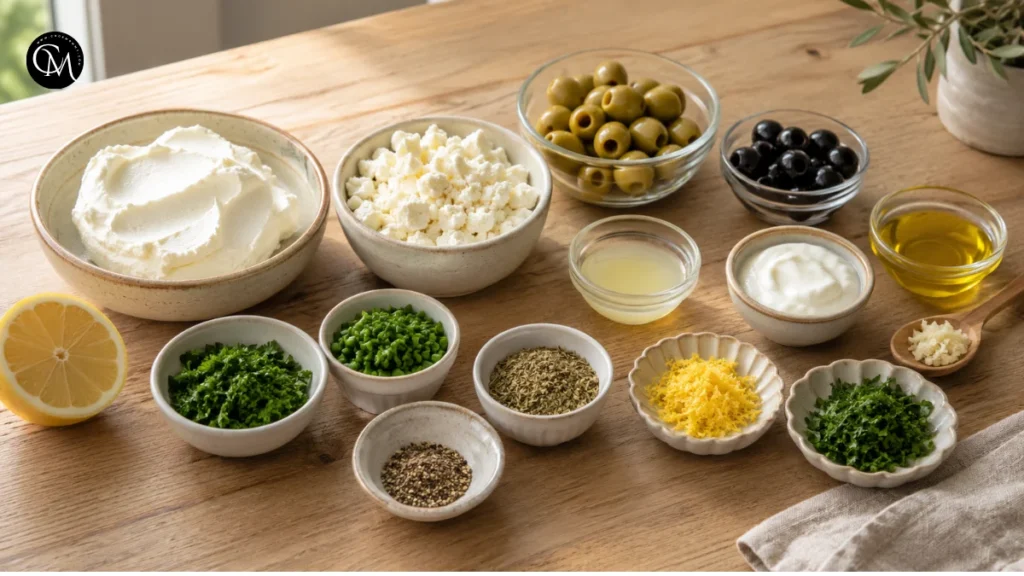
Choose olives you already enjoy eating on their own. Mild green olives create a softer flavor, while Kalamata olives provide a stronger Mediterranean character.
For a less salty Olive and cheese spread, rinse the olives briefly under cool water and pat them completely dry. Ricotta can replace part of the cream cheese for a lighter consistency. Goat cheese can replace the feta when you want a tangier finish.
Timing
- Preparation time: 15 minutes
- Cooking time: 0 minutes
- Optional chilling time: 30 minutes
- Total time: 15 to 45 minutes
Many baked party dips require 25 to 40 minutes in the oven, plus preparation and cooling. This Olive and cheese spread is faster because all the ingredients are mixed cold. Chilling is optional, but it gives the herbs, garlic, and lemon time to season the cheese evenly.
Step-by-Step Instructions
Step 1 – Prepare the ingredients
Leave the cream cheese at room temperature for 20 to 30 minutes. It should become soft enough to stir but should not feel warm or oily.
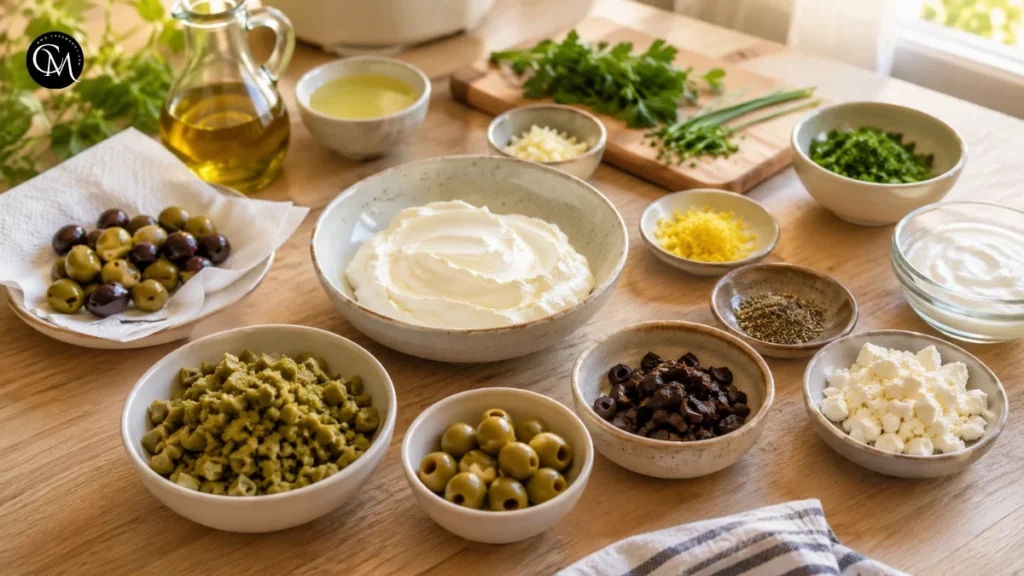
Drain the olives thoroughly and pat them dry with paper towels or a clean kitchen cloth. Excess brine can make the finished mixture watery and overly salty.
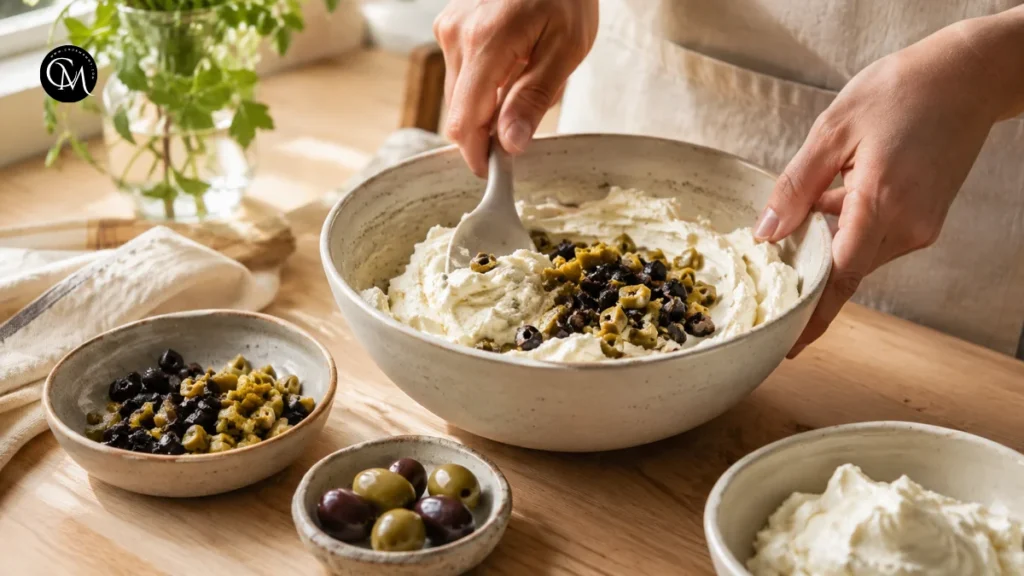
Finely chop about two-thirds of the olives. Leave the remaining olives slightly chunky. The smaller pieces distribute flavor through the cheese, while the larger pieces provide texture and make the Olive and cheese spread more interesting to eat.
Prepare the garlic, herbs, lemon juice, and zest before you begin mixing. Having everything ready helps you avoid overworking the cheese.
Step 2 – Build the flavor base
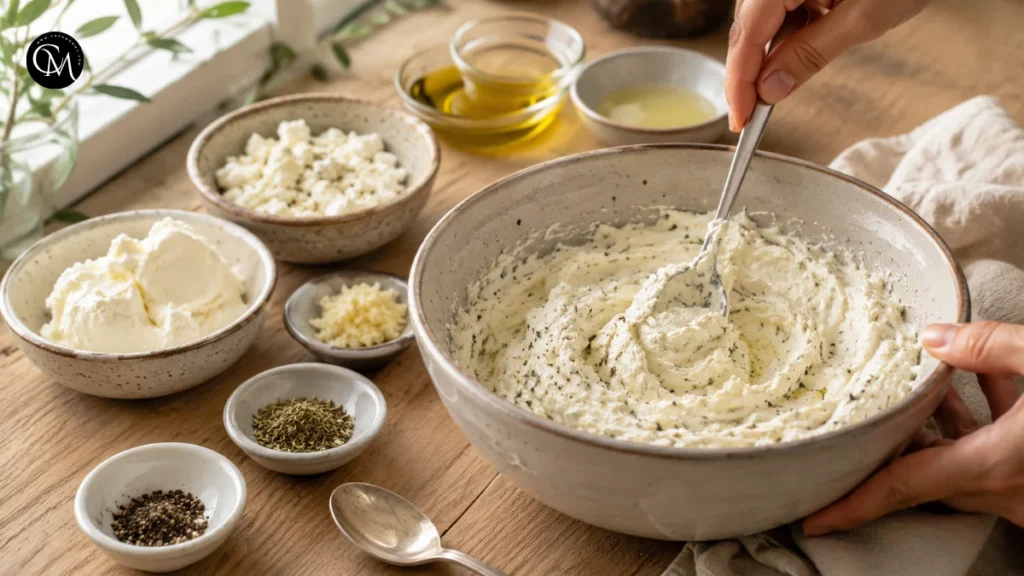
Place the softened cream cheese, feta, olive oil, lemon juice, garlic, oregano, and black pepper in a medium bowl. Stir firmly with a spoon or beat briefly with a hand mixer until mostly smooth.
Softened cream cheese blends more evenly because its fat and moisture are less firm at room temperature. Feta adds saltiness and acidity, while olive oil creates a silkier texture. Lemon juice cuts through the richness and keeps the flavor from feeling heavy.
Taste the cheese mixture before adding salt. Olives and feta vary considerably in sodium, and most batches require no additional seasoning.
Step 3 – Add the olives
Fold the chopped olives into the cheese base using a spoon or flexible spatula. Avoid processing everything in a blender until completely smooth.
Overblending can release too much olive moisture, produce a muddy color, and remove the pleasant contrast between creamy cheese and firm olive pieces.
For a lighter, whipped Olive and cheese spread, beat the cheese base for 30 to 45 seconds before folding in the olives by hand. This adds a little air without destroying their texture.
Step 4 – Combine everything
Add the parsley and chives, then fold gently until the herbs are evenly distributed. If the mixture feels too thick, add Greek yogurt one teaspoon at a time.
The ideal consistency should hold its shape in a serving bowl but spread easily across a cracker without breaking it. Adding too much yogurt at once can dilute the flavor and make the mixture runny.
Taste again. A balanced Olive and cheese spread should begin with creamy, tangy cheese, followed by briny olive flavor and a clean herbal finish.
If the mixture tastes too salty, add more cream cheese or Greek yogurt. If it feels too rich, add a small amount of lemon juice. Make adjustments gradually.
Step 5 – Finish and adjust the seasoning
Cover the bowl and refrigerate it for 30 minutes when possible. Before serving, leave it at room temperature for about 10 minutes and stir once.
Cold temperatures reduce how strongly we perceive flavor, so taste the spread again after chilling. Add lemon zest for brightness, black pepper for warmth, or a teaspoon of olive oil if the texture feels too firm.
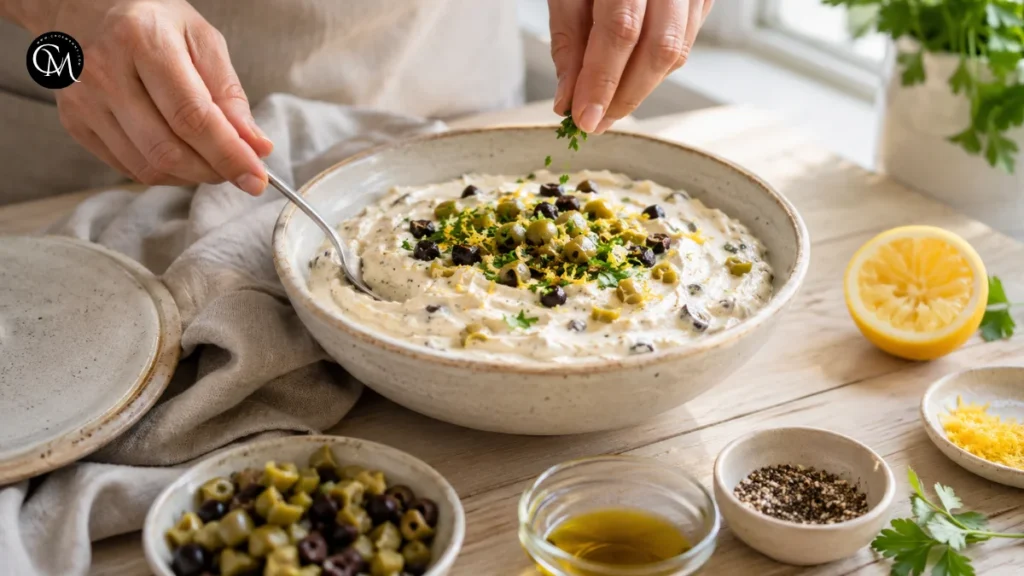
Reserve a few chopped olives and herbs for the top. This simple finishing touch makes the Olive and cheese spread look fresh and lets guests immediately recognize its main ingredients.

Six Easy Ideas for Parties
- Mediterranean appetizer platter Place the spread in the center of a large board and surround it with warm pita wedges, cucumber slices, cherry tomatoes, roasted peppers, grapes, and breadsticks.
- Olive crostini Spread it over toasted baguette slices. Finish each piece with chopped tomatoes, fresh herbs, toasted walnuts, or a very light drizzle of honey.
- Stuffed vegetable bites Spoon the mixture into cucumber cups, halved mini peppers, or hollowed cherry tomatoes. These colorful bites are easy to pick up and require no plates.
- Party pinwheels Spread Olive and cheese spread over soft tortillas. Add spinach or roasted pepper strips, roll tightly, refrigerate, and cut into small slices.
- Mini sandwiches Use it as a filling for tea sandwiches with cucumber, arugula, tomatoes, or grilled vegetables. Cut the sandwiches into small triangles or squares.
- Individual appetizer cups Divide the spread among small ramekins or serving cups. Add vegetable sticks, crackers, or mini breadsticks to each portion for convenient serving.
Nutritional Information
Approximate values per serving, based on eight servings:
| Nutrient | Approximate Amount |
|---|---|
| Calories | 165 kcal |
| Protein | 5 g |
| Fat | 15 g |
| Saturated fat | 7 g |
| Carbohydrates | 3 g |
| Fiber | 1 g |
| Sodium | 430 mg |
These values will vary depending on the cheeses and olives selected. Because feta and olives can contain significant amounts of salt, pairing the Olive and cheese spread with fresh vegetables or unsalted crackers can create a more balanced appetizer.
Healthier Alternatives
- For a lighter version, replace half of the cream cheese with plain Greek yogurt, whipped cottage cheese, or part-skim ricotta. Add softer ingredients gradually so the spread stays thick enough for dipping.
- The basic recipe contains very little sugar and does not require a sweetener. Avoid sweetened yogurt or flavored cream cheese, which may alter its savory character.
- Serve the spread with whole-grain crackers, seeded toast, or whole-wheat pita for additional fiber. For a gluten-free version, use certified gluten-free crackers, corn chips, cucumber slices, carrots, or bell pepper strips.
- A dairy-free Olive and cheese spread can be made with thick plant-based cream cheese and dairy-free feta. Taste before seasoning because some dairy-free cheeses are already quite salty.
- For children, use mild green olives and reduce the garlic. For seniors or anyone who prefers softer foods, serve the mixture at room temperature with soft bread, tender roasted vegetables, or cucumber slices.
- For portion-conscious guests, spoon the spread into cucumber cups or small individual bowls rather than placing it beside a large basket of crackers.
Serving Suggestions
- This appetizer tastes best when it is cool but not refrigerator-cold. Remove it from the refrigerator 10 to 15 minutes before serving so the cheese softens and the herbs become more aromatic.
- For a relaxed gathering, place the Olive and cheese spread in a shallow ceramic bowl. Create a swirl with the back of a spoon, drizzle lightly with olive oil, and scatter chopped olives and parsley over the top.
- A shallow bowl is easier for guests to reach than a narrow, deep container. At a larger party, divide the recipe between two or three smaller bowls and place them in different areas of the table.
- Serve it with crisp vegetables, pita wedges, toasted baguette slices, pretzels, breadsticks, or plain crackers. It also pairs nicely with roasted nuts, tomato-based appetizers, grilled vegetables, and fresh salads.
Common Mistakes to Avoid
- Not draining the olives: Extra brine makes the mixture loose, wet, and too salty.
- Using cold cream cheese: Firm cheese is difficult to mix and often creates lumps.
- Adding salt immediately: Feta and olives may already provide enough seasoning.
- Blending until completely smooth: Overprocessing removes texture and can make the color dull.
- Using too much raw garlic: Garlic becomes stronger while the spread rests.
- Serving it directly from the refrigerator: Very cold cheese tastes firmer and less flavorful.
I have found that moisture control is the most important step. Even a small amount of leftover olive brine can noticeably change the texture of an otherwise well-made Olive and cheese spread.
Storing Tips for the Recipe
- Store leftovers in an airtight container in the refrigerator for up to three days. Pressing food-safe wrap directly against the surface can reduce drying and help preserve the aroma of the herbs.
- Stir the spread before serving because a small amount of moisture may gather around the edges. Freezing is not recommended. Cream cheese and feta can separate after thawing, creating a grainy or watery texture.
- To prepare ahead, drain and chop the olives one day in advance and refrigerate them separately. The complete Olive and cheese spread can be assembled the night before your event.
- For the freshest presentation, add the final lemon zest, herbs, olive oil, and chopped olive garnish shortly before serving.
- This recipe became one of my regular meals because it turns simple refrigerator ingredients into a satisfying snack, sandwich filling, or party appetizer without requiring any cooking.
Conclusion
The best party food does not need to be complicated. This Olive and cheese spread uses a few familiar ingredients to create a creamy, tangy, and savory appetizer with plenty of Mediterranean flavor. It takes only 15 minutes to prepare, can be made ahead, and works with bread, crackers, vegetables, sandwiches, and party platters.
Pay attention to olive moisture, salt levels, texture, and serving temperature, and the results will taste fresh rather than heavy. Begin with the classic recipe, then choose one of the six serving ideas to suit your occasion.
Try the recipe for your next gathering and leave a comment or review sharing which olives you used. Subscribe for more reliable appetizers, practical party ideas, and approachable home-cooking recipes.
FAQs
Can I make Olive and cheese spread the night before?
Yes. Prepare it up to 24 hours in advance, refrigerate it in an airtight container, and add the fresh garnish shortly before serving.
Which olives work best in this recipe?
Green olives provide a bright, mild flavor, while Kalamata olives add deeper, fruitier notes. Combining both creates a more complex and balanced taste.
Can I use only one type of cheese?
Yes. Cream cheese alone creates a mild spread, while feta, goat cheese, or ricotta can be added for more tanginess, saltiness, or softness.
How can I reduce the salty flavor?
Rinse and dry the olives, choose a lower-sodium feta, and add extra cream cheese, ricotta, or Greek yogurt until the flavor is balanced.
Is the recipe gluten-free?
The spread itself is generally gluten-free, but always check ingredient labels. Serve it with vegetables, corn chips, or certified gluten-free crackers.
Can I use Olive and cheese spread in sandwiches?
Yes. It works especially well with cucumber, tomatoes, spinach, arugula, grilled vegetables, roasted chicken, or turkey in wraps and sandwiches.
What can replace the cream cheese?
Thick ricotta, whipped cottage cheese, soft goat cheese, or plant-based cream cheese can work, although each substitution will slightly change the final texture.
Tried it before ?
There are no reviews yet. Be the first one to write one.