
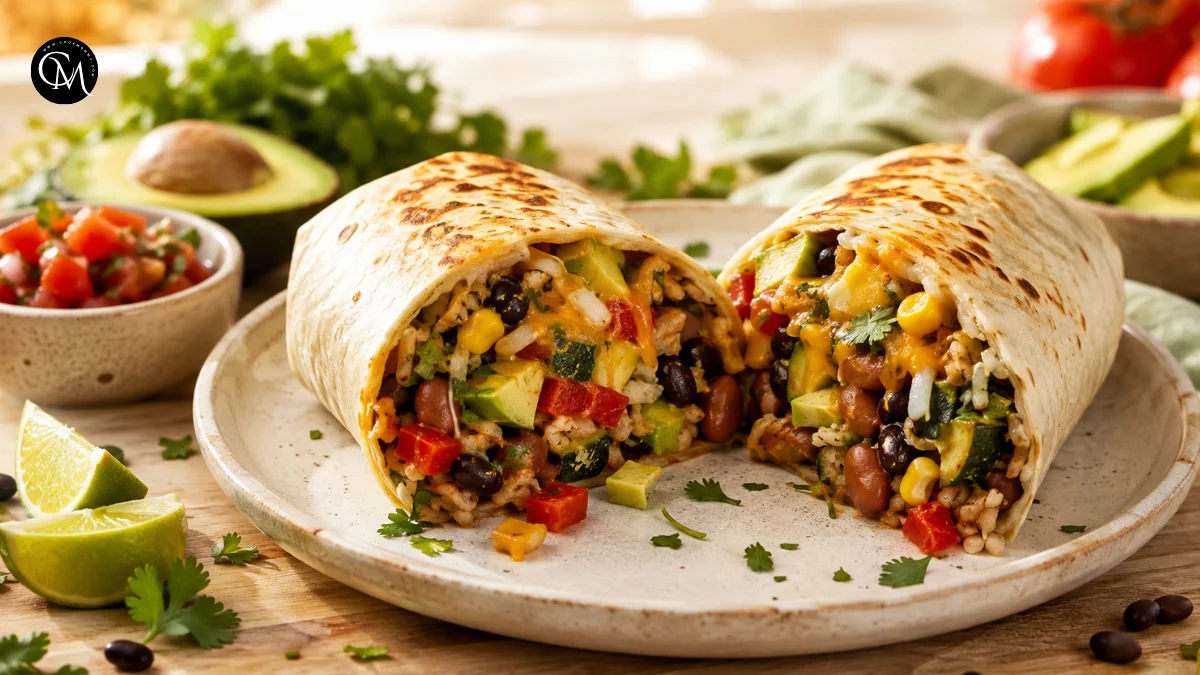
vegetable bean burrito: 5 Best Secrets for Perfect Filling
Did you know that one cup of cooked black beans can provide roughly 15 grams of protein and about 15 grams of fiber, yet a poorly prepared burrito filling can still taste surprisingly bland? The difference usually comes down to technique rather than piling on more ingredients.
A good vegetable bean burrito should have layers of flavor: tender beans, lightly caramelized vegetables, warm spices, a little acidity, and enough moisture to keep everything satisfying without turning the tortilla soggy.
This recipe has become one of my favorite solutions for busy lunches and casual family dinners because the filling is inexpensive, adaptable, and easy to prepare ahead. More importantly, it tastes like a meal you actually want to eat rather than a collection of healthy ingredients wrapped in a tortilla.
The five secrets below focus on building flavor gradually, controlling moisture, and finishing the filling properly.
Table of Contents
Ingredients for the Best vegetable bean burrito
This recipe makes about 6 medium burritos.
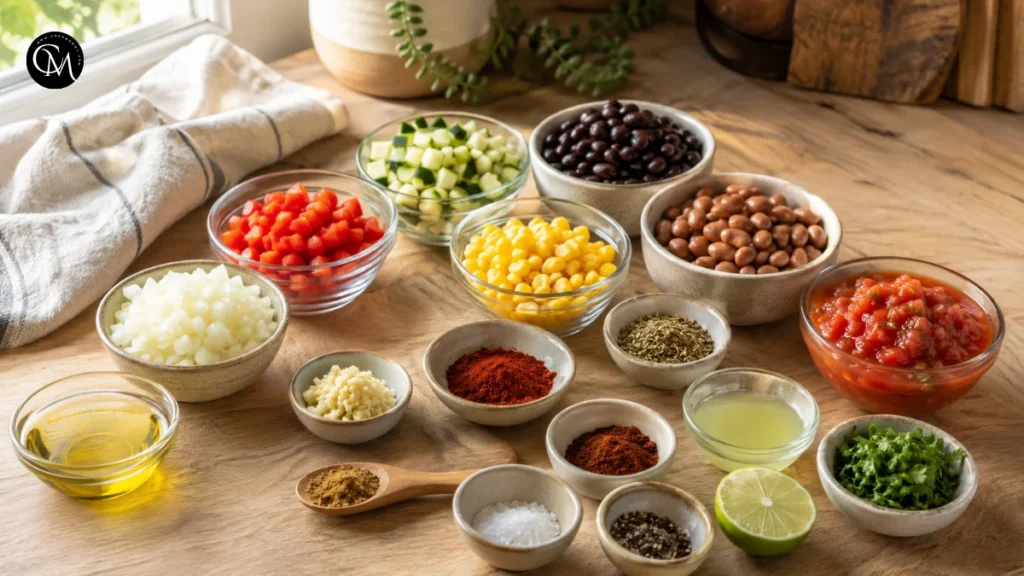
For the filling
- 1 tablespoon olive oil
- 1 medium yellow onion, finely diced
- 1 red bell pepper, diced
- 1 small zucchini, diced
- 2 garlic cloves, minced
- 1 teaspoon ground cumin
- 1 teaspoon smoked paprika
- ½ teaspoon chili powder
- ½ teaspoon dried oregano
- 2 cups cooked black beans, drained and rinsed
- 1 cup cooked pinto beans, drained and rinsed
- ¾ cup corn kernels, fresh, frozen, or drained canned corn
- ½ cup tomato salsa
- 1 tablespoon fresh lime juice
- ½ teaspoon salt, plus more to taste
- ¼ teaspoon freshly ground black pepper
- 2 tablespoons chopped fresh cilantro
For assembling
- 6 medium or large flour tortillas
- 1½ cups cooked brown or white rice
- 1 cup shredded cheddar or Monterey Jack cheese
- 1 small avocado, sliced or mashed
- Extra salsa for serving
- Plain Greek yogurt or sour cream, optional
The mix of black beans and pinto beans gives the vegetable bean burrito a more interesting texture than using only one variety. Black beans stay relatively firm, while pinto beans become softer and help bind the filling.
Easy substitutions
No zucchini? Use mushrooms or diced summer squash. Kidney beans can replace pinto beans, while chickpeas create a firmer, slightly nuttier filling.
For a spicier version, add diced jalapeño or a pinch of cayenne. If cilantro is not your favorite, chopped parsley or green onions work well.
Timing
- Preparation time: 15 minutes
- Cooking time: 20 minutes
- Assembly time: 10 minutes
- Total time: About 45 minutes
A homemade vegetable bean burrito is surprisingly manageable on a weeknight. Cooking the filling itself takes only about 20 minutes, especially if your rice is already prepared.
For even faster meals, cook the filling and rice during weekend meal prep. When dinner time arrives, you only need to warm the mixture, fill the tortillas, and roll.
Step-by-Step vegetable bean burrito Instructions
Step 1 – Prepare the ingredients
Before heating your skillet, dice the onion, bell pepper, and zucchini into pieces of roughly the same size. Drain and rinse the beans thoroughly and measure the seasonings.
This small amount of preparation makes a noticeable difference. Vegetables cook quickly, so stopping halfway through to chop garlic can leave your onions overcooked while other ingredients remain raw.
Pat very wet vegetables dry if necessary. Excess moisture is one of the main reasons a vegetable bean burrito becomes soft or difficult to roll. Warm the tortillas briefly before assembling. A warm tortilla is more flexible and much less likely to crack.
Step 2 – Build the flavor base
Heat the olive oil in a large skillet over medium heat. Add the diced onion and bell pepper with a small pinch of salt. Cook for about 4–5 minutes, stirring occasionally, until the onion softens and the pepper starts developing lightly browned edges.
Add the zucchini and cook for another 3 minutes. Now add the garlic, cumin, smoked paprika, chili powder, and oregano. Stir constantly for about 30 seconds.
Heating dried spices briefly in oil helps release their aromatic compounds. Instead of tasting dusty or separate from the filling, the seasonings become part of the whole dish.
This simple step is one of the easiest ways to give a vegetable bean burrito deeper flavor without adding heavy sauces.
Step 3 – Cook the beans and vegetables
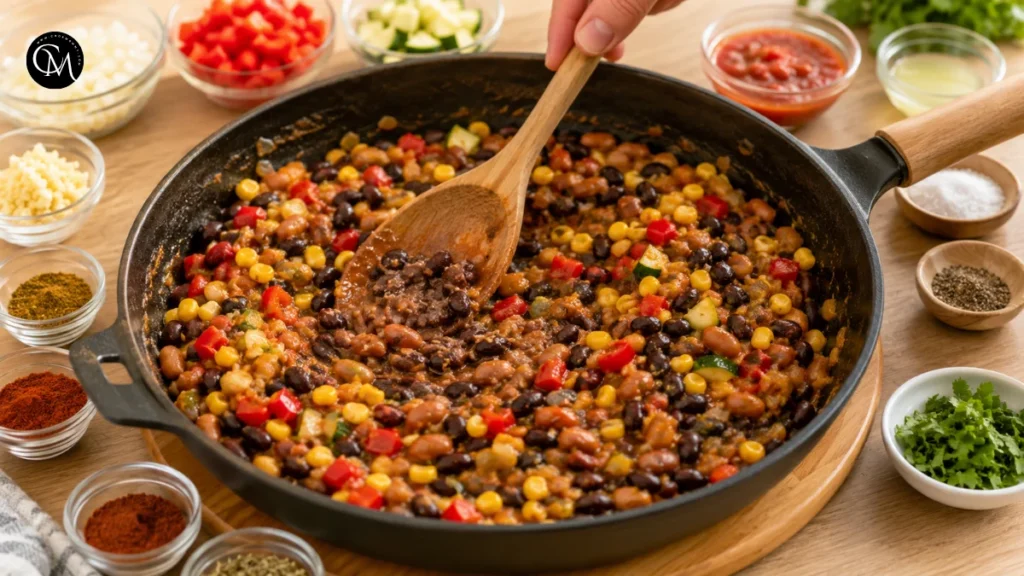
Add the black beans, pinto beans, and corn to the skillet. Cook for 4–5 minutes, stirring occasionally. Use the back of your spoon to lightly mash about one-quarter of the beans. Do not mash everything.
You want some beans to stay whole for texture while a smaller amount becomes creamy. The mashed beans absorb seasoning and help hold the filling together, making the finished vegetable bean burrito much easier to eat.
If the mixture looks dry, add one or two tablespoons of water. If it looks watery, continue cooking uncovered for another minute or two. The finished mixture should look moist but not wet.
Step 4 – Combine everything
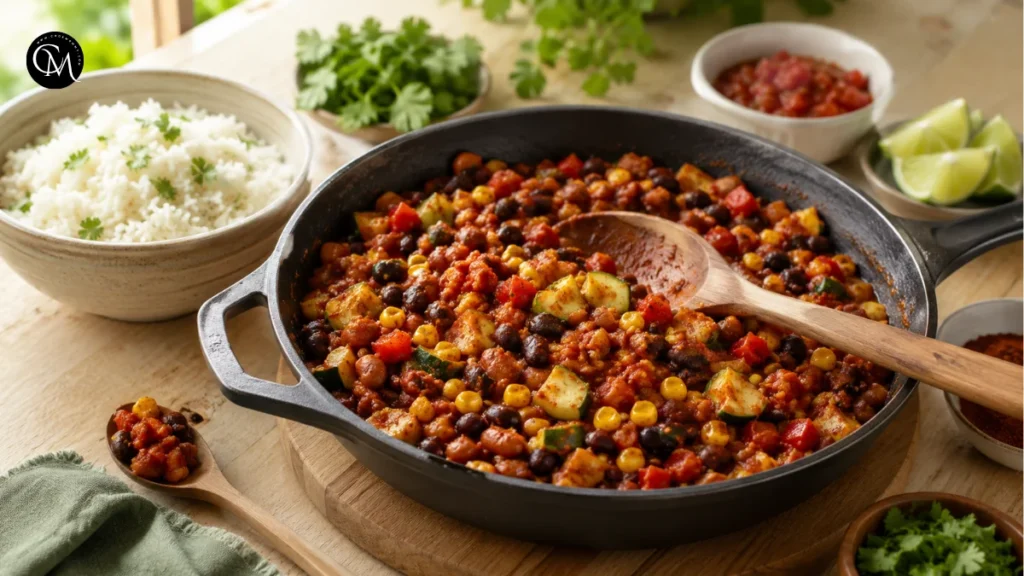
Stir in the salsa and cook for another 2–3 minutes. At this point, taste the filling before adding anything else.
You should notice sweetness from the cooked peppers and corn, earthiness from the beans, smoky notes from the paprika, and gentle warmth from the cumin and chili powder.
Add the cooked rice if you prefer everything mixed together, or keep the rice separate for layering during assembly. I usually keep it separate because it gives the vegetable bean burrito more noticeable layers of texture. Remove the skillet from the heat.
Step 5 – Finish and adjust the seasoning
Add the lime juice, cilantro, black pepper, and additional salt if needed. Adding lime at the end preserves its fresh acidity. If it cooks too long, that bright flavor becomes much less noticeable. Taste again.
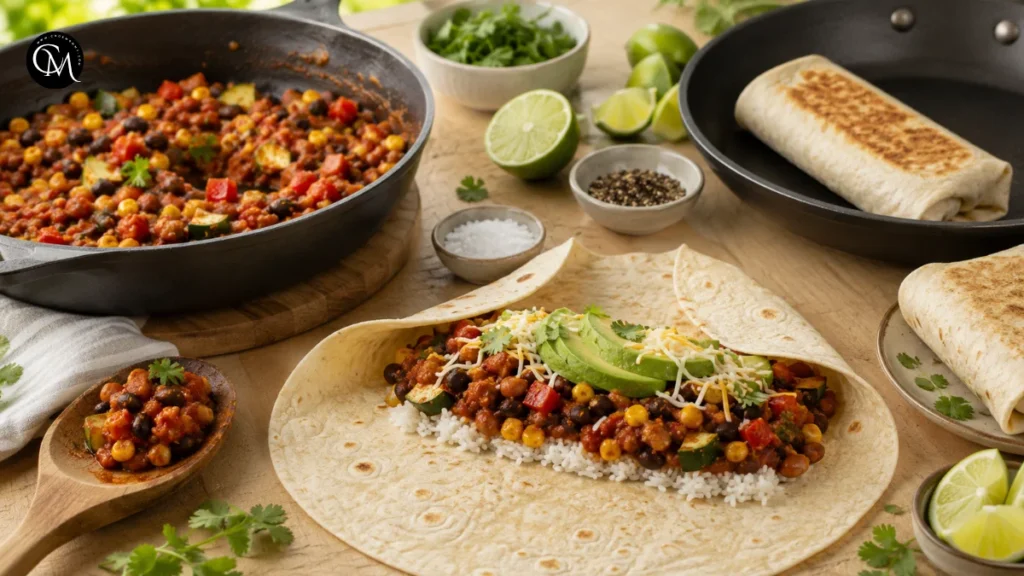
If the filling seems flat, it often needs salt or acidity rather than more chili powder. To assemble each vegetable bean burrito, place a tortilla on a flat surface and add a small layer of rice slightly below the center. Spoon approximately ¾ cup of filling over the rice.
Add cheese, avocado, or your preferred toppings. Fold the sides inward, bring the bottom edge over the filling, and roll tightly. For a lightly crisp exterior, place the rolled burrito seam-side down in a dry skillet for 1–2 minutes per side.
Nutritional Information
Approximate nutrition per burrito will vary according to tortilla size, cheese, avocado, and toppings.
For one medium vegetable bean burrito made with rice and a moderate amount of cheese:
- Calories: approximately 450–500 kcal
- Protein: 16–19 g
- Carbohydrates: 65–72 g
- Fiber: 12–15 g
- Fat: 13–16 g
- Saturated fat: approximately 5 g
- Sodium: approximately 650–800 mg
Beans, vegetables, corn, and whole grains provide a satisfying combination of carbohydrates, plant protein, and fiber. Sodium can vary substantially depending on canned beans, salsa, cheese, and tortillas, so using low-sodium ingredients makes it easier to control.
Healthier Alternatives
One advantage of a vegetable bean burrito is how easily you can adjust it without losing the qualities that make it satisfying.
- Lower-sugar option Most burrito ingredients contain very little added sugar, but some packaged tortillas and salsas include sweeteners. Check labels and choose versions without unnecessary added sugar.
- Whole-grain option Replace white rice with brown rice, quinoa, or a brown rice-quinoa mixture. Whole-wheat tortillas are another simple option. Warm them first because some whole-grain tortillas are slightly less flexible.
- Dairy-free version Skip the cheese and sour cream. Add extra avocado, guacamole, dairy-free yogurt, or a spoonful of creamy cashew sauce.
- Gluten-free version Use certified gluten-free corn tortillas or gluten-free wraps. Smaller corn tortillas are easier to handle if you serve the filling taco-style rather than attempting a very large burrito.
- For children, reduce the chili powder and serve toppings separately so they can build their own meal.
- For anyone preferring a lighter portion, turn the same vegetable bean burrito filling into a bowl over lettuce, rice, or roasted vegetable
- For seniors who prefer softer textures, cook the vegetables a few minutes longer and mash a greater portion of the beans.
Serving Suggestions
- Serve the vegetable bean burrito with crunchy shredded lettuce, fresh tomato salsa, guacamole, pickled onions, or a simple cabbage slaw.
- For dinner, I like pairing it with a crisp side salad dressed with lime and olive oil. The acidity balances the warm bean filling particularly well.
- For lunch meal prep, serve half a burrito with fruit, cucumber slices, or roasted vegetables.
- You can also turn the filling into a burrito bowl. Layer rice, beans, vegetables, avocado, salsa, cheese, and chopped lettuce in individual bowls and let everyone choose their own toppings.
- If you enjoy Mexican-inspired meals, this filling is also useful for quesadillas, tacos, stuffed peppers, and nachos, so making a double batch rarely feels repetitive.
Common Mistakes to Avoid
- Leaving too much liquid in the filling Watery salsa or vegetables can quickly soften tortillas. Cook the filling until excess moisture evaporates before assembling.
- Skipping the spice-blooming step Adding spices at the very end produces less developed flavor. Let cumin, paprika, and chili powder heat briefly in the oil.
- Overfilling the tortilla More filling does not automatically create a better vegetable bean burrito. Overstuffing makes rolling difficult and usually causes the sides to split. Leave a few centimeters of empty tortilla around the filling.
- Using cold tortillas Cold tortillas crack more easily. Warm each tortilla for about 10–20 seconds in a microwave or briefly in a dry skillet.
- Mashing every bean A completely mashed mixture can feel heavy and pasty. Keep most of the beans intact and mash only enough to create a natural binder.
- Forgetting acidity Beans and rice can taste heavy without something fresh. A tablespoon of lime juice added after cooking makes the flavors noticeably brighter.
Storing Tips for the Recipe
- Store leftover filling separately from the tortillas whenever possible.
- Transfer cooled filling to an airtight container and refrigerate it for about 3–4 days. Rice should also be cooled promptly and refrigerated in a sealed container.
- For longer storage, freeze the bean filling in individual portions for up to about 2–3 months. Thaw overnight in the refrigerator and reheat thoroughly in a skillet or microwave.
- You can also freeze an assembled vegetable bean burrito. Leave out watery ingredients such as fresh salsa, lettuce, and sour cream before freezing. Wrap each burrito securely and store in a freezer-safe container.
- This recipe became one of my regular meals because it solves the familiar problem of wanting something inexpensive and vegetable-packed without feeling as though dinner is simply a bowl of beans. The browned vegetables, spices, lime, and creamy-crisp bean texture make it satisfying enough to repeat.
Conclusion
A flavorful vegetable bean burrito depends less on complicated ingredients and more on a few smart cooking techniques. Browning the vegetables, blooming the spices, lightly mashing some of the beans, controlling moisture, and finishing with lime create a filling that tastes balanced and stays easy to roll.
It is also a practical recipe for busy households because the ingredients are affordable, the filling can be prepared ahead, and almost every component can be adjusted to suit different preferences.
Try the recipe with your favorite beans, vegetables, and toppings, then make it your own. If you prepare it, leave a comment or review sharing the combination you enjoyed most. Subscribe for more practical, flavor-focused recipes and weeknight cooking ideas.
FAQs
Can I make a vegetable bean burrito ahead of time?
Yes. Prepare the filling up to three days ahead and refrigerate it separately. Reheat before assembling so the tortillas stay soft rather than becoming soggy during storage.
What beans work best in vegetable bean burrito filling?
Black beans and pinto beans create an excellent combination of firm and creamy textures. Kidney beans, cannellini beans, or chickpeas can also work depending on your preference.
How do I keep my burrito from becoming soggy?
Cook excess liquid out of the filling, drain canned ingredients thoroughly, and avoid adding too much salsa or sour cream inside the tortilla before storing.
Can I make this recipe without rice?
Absolutely. Leave the rice out and add extra beans, sautéed vegetables, lettuce, quinoa, cauliflower rice, or avocado depending on the texture and portion size you prefer.
Can I freeze assembled burritos?
Yes. Freeze them without fresh lettuce, sour cream, or watery salsa. Wrap tightly, store in a freezer-safe container, and reheat thoroughly before serving.
How can I make the filling spicier?
Add jalapeño with the onions, increase the chili powder, or mix in cayenne, chipotle powder, or your favorite hot sauce. Add heat gradually so it does not overpower the vegetables.
What is the best way to reheat a burrito?
For the best texture, microwave until the center is hot, then place the burrito in a dry skillet for a minute or two per side to restore a lightly crisp exterior.
Tried it before ?
There are no reviews yet. Be the first one to write one.