
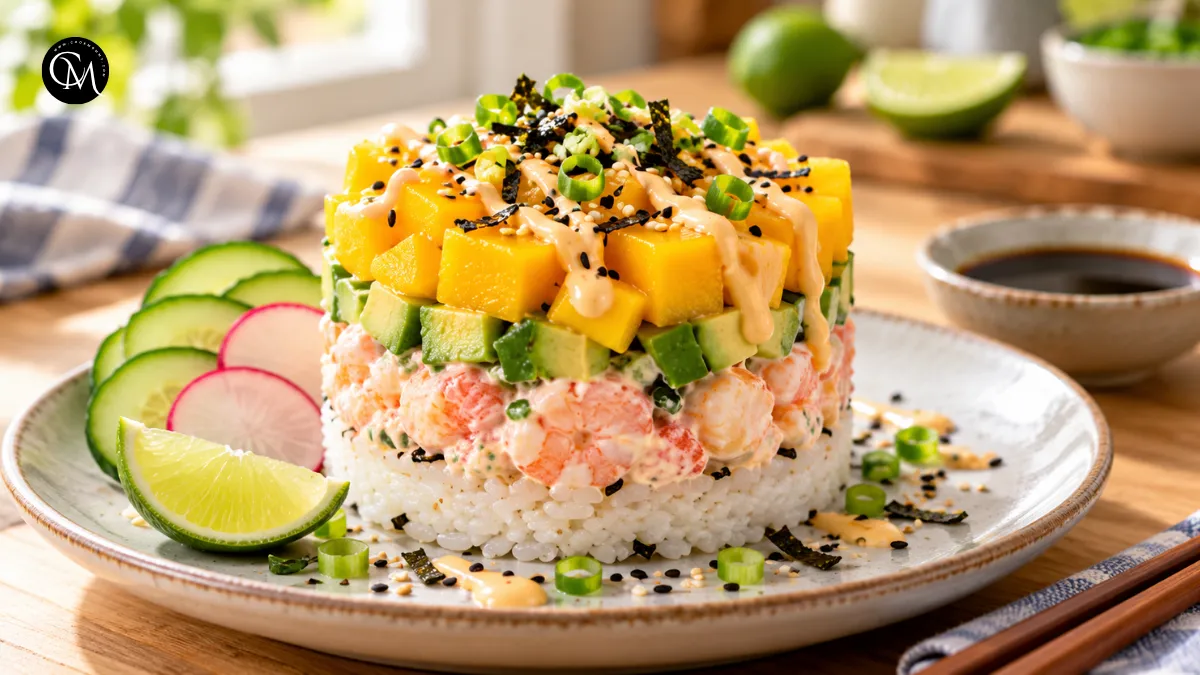
Mango Shrimp Sushi Stack: 5 Steps for a Quick Healthy Meal
What if you could put a sushi-inspired dinner on the table in about 30 minutes without rolling a single sheet of nori? That is the appeal of this Shrimp Sushi Stack. It layers seasoned rice, juicy shrimp, creamy avocado, crisp cucumber, and sweet mango into a meal that looks impressive but uses simple home-kitchen techniques.
The recipe is worth keeping because it balances convenience with texture and flavor. Rice gives the dish structure, shrimp adds savory protein, avocado brings richness, cucumber adds crunch, and mango provides a bright sweet contrast. You can adjust the spice, toppings, and portions for children, lighter meals, or entertaining. A measuring cup or ramekin does the shaping, so no sushi mat is required.
Table of Contents
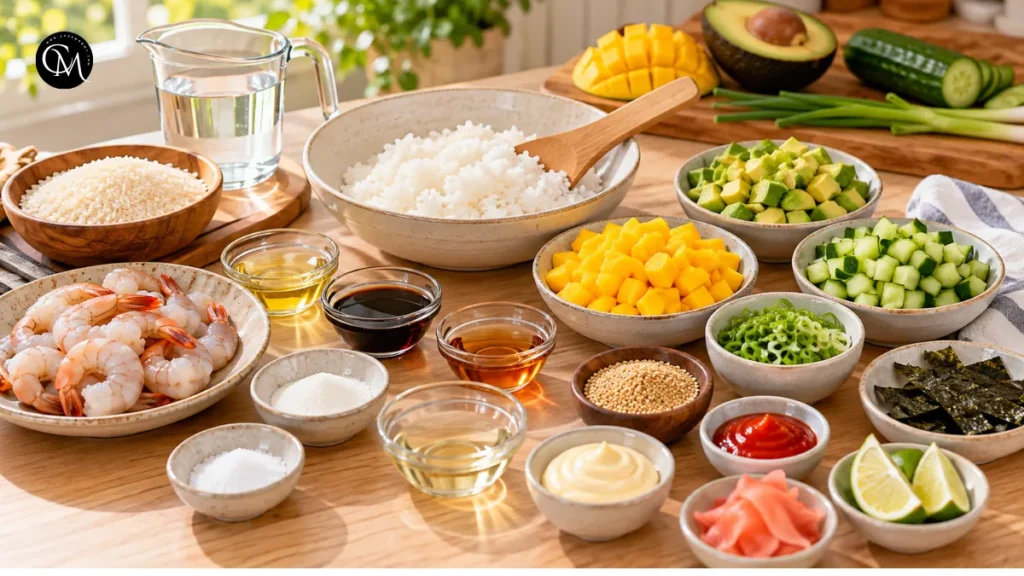
Ingredients List
For 4 servings:
- 1 cup uncooked sushi rice
- 1 1/4 cups water, or as directed on the package
- 2 tablespoons rice vinegar
- 1 teaspoon sugar
- 1/2 teaspoon fine salt
- 1 pound large shrimp, peeled and deveined
- 1 teaspoon avocado, canola, or other neutral oil
- 1 tablespoon low-sodium soy sauce or tamari
- 1 teaspoon toasted sesame oil
- 1 ripe mango, diced
- 1 ripe avocado, diced
- 1/2 English cucumber, finely diced
- 2 scallions, thinly sliced
- 1 tablespoon sesame seeds
- 1 to 2 teaspoons sriracha, optional
- 2 tablespoons mayonnaise, optional
- Nori strips, lime wedges, or pickled ginger for serving
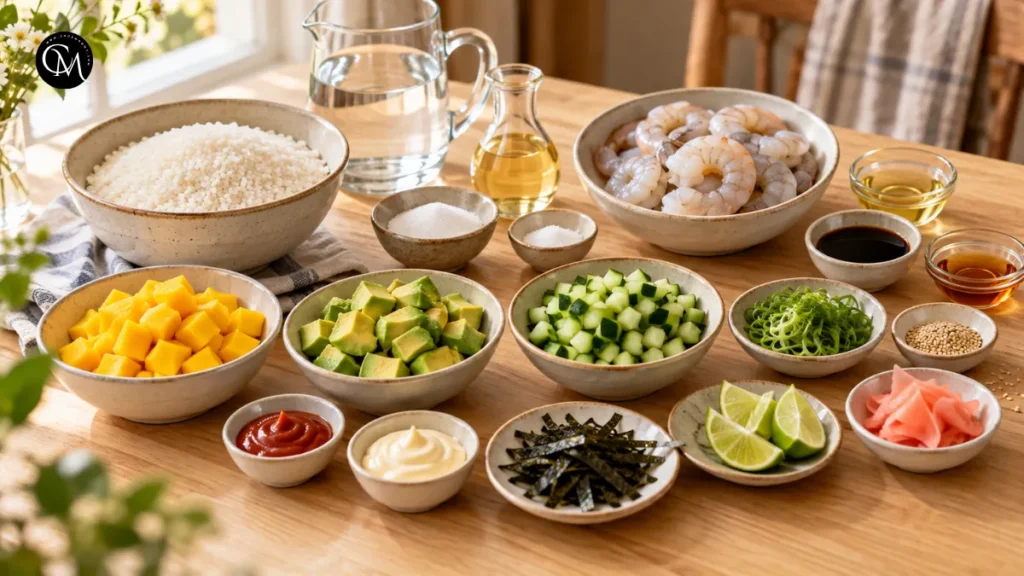
For the best Shrimp Sushi Stack, use mango that gives slightly when pressed but is not mushy. Frozen shrimp work well; thaw and dry them thoroughly. Short-grain white rice is the best substitute for sushi rice, while brown rice gives a nuttier result. No avocado? Try shelled edamame. Pineapple can replace mango.
Timing
- Preparation time: 15 minutes
- Cooking time: 15 minutes
- Total time: about 30 minutes
This Shrimp Sushi Stack is quicker to assemble than rolled sushi because there is no mat work or rolling. Prepare the produce and sauce while the rice cooks.
Step-by-Step Instructions
Step 1 – Prepare Ingredients
Rinse the sushi rice under cool water until the runoff is mostly clear, then cook according to the package directions. Rinsing removes excess surface starch, helping the rice stay pleasantly sticky without becoming gummy.
While it cooks, dice the mango, avocado, and cucumber into small, even pieces. Uniform pieces help the Shrimp Sushi Stack hold its shape and give each bite a balanced mix of textures.
Stir together the rice vinegar, sugar, and salt, then gently fold the mixture into the warm rice. Let it cool for several minutes so it does not soften the avocado or release excess moisture from the vegetables.
Step 2 – Build the Flavor Base
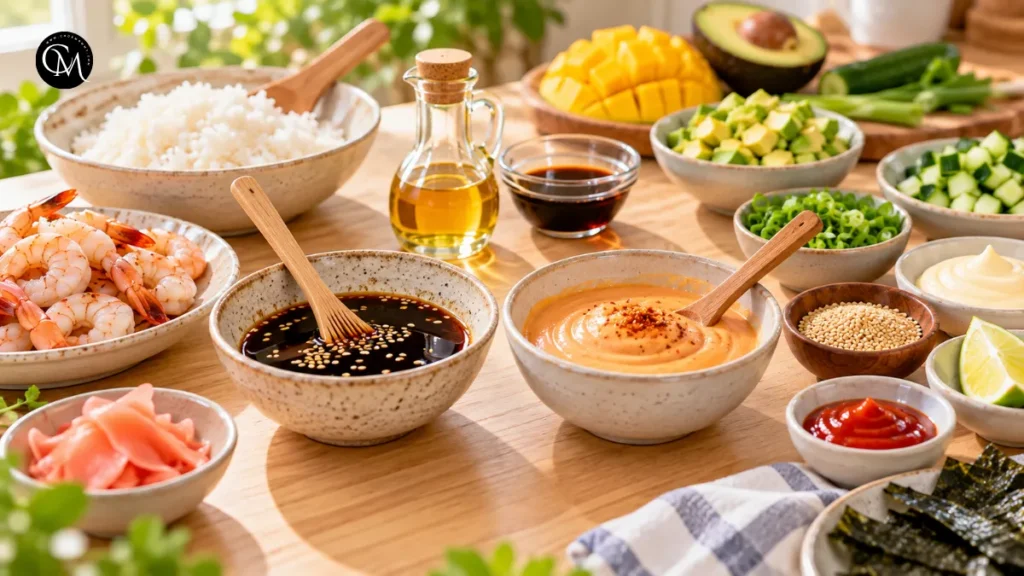
Mix the soy sauce with sesame oil. For optional spicy mayo, combine mayonnaise and sriracha separately.
The flavor base works through contrast: soy sauce brings salt and umami, sesame oil adds aroma, vinegar sharpens the rice, and mango contributes sweetness. A balanced Shrimp Sushi Stack should let each ingredient remain noticeable.
Step 3 – Cook the Main Ingredient
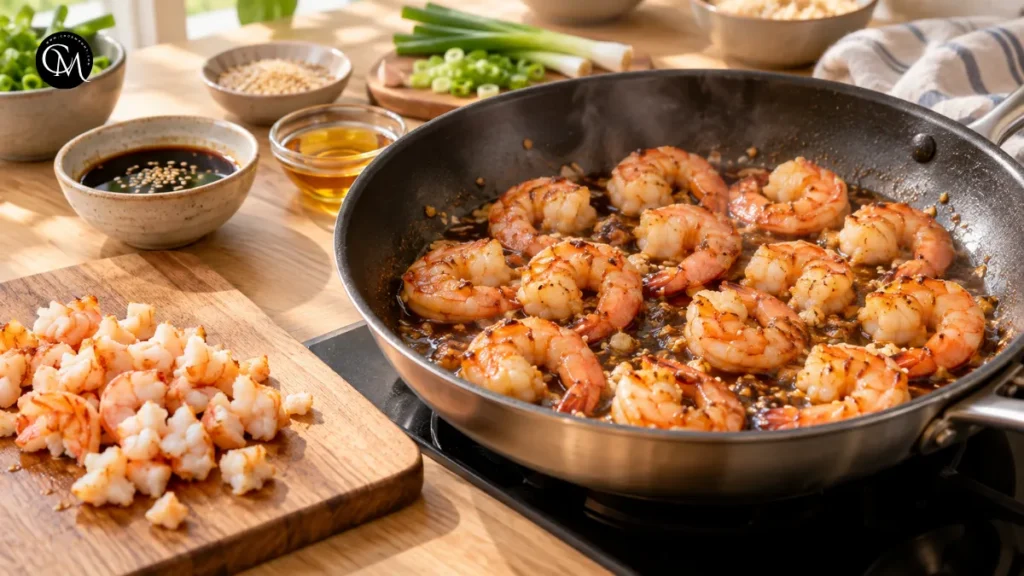
Pat the shrimp dry and toss with neutral oil. Heat a skillet over medium-high heat, add the shrimp in one layer, and cook about 1 to 2 minutes per side, depending on size.
During the final 30 seconds, add the soy-sesame mixture and toss to coat. Remove the shrimp once opaque and curled into a loose C shape. Overcooking makes shrimp rubbery, especially when served in a room-temperature Shrimp Sushi Stack.
Cool briefly, then chop large shrimp into bite-size pieces.
Step 4 – Combine Everything
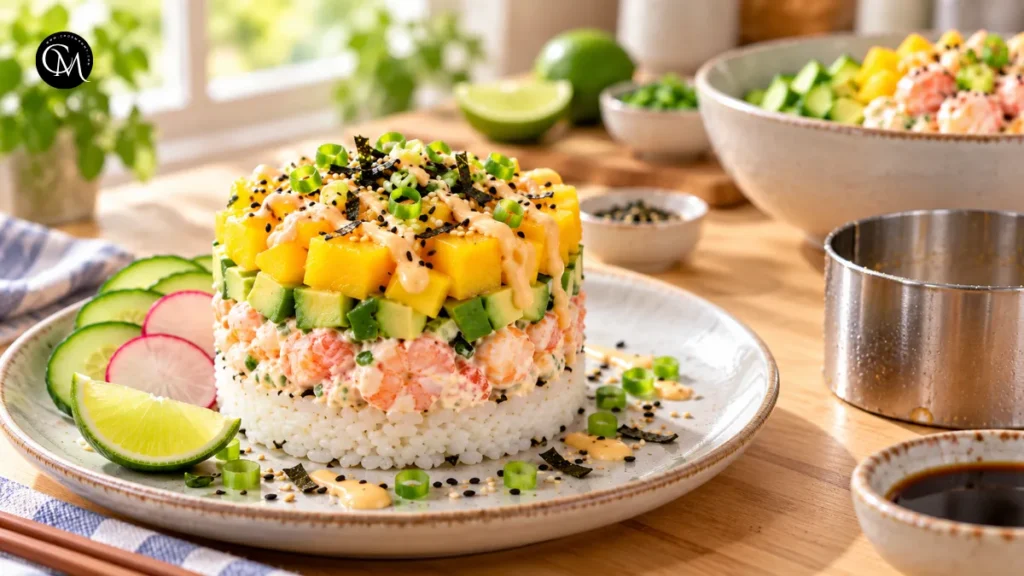
Lightly oil a one-cup measuring cup or ramekin. Add mango and cucumber, followed by avocado, shrimp, and seasoned rice. Press each layer gently without crushing the rice.
Place a plate over the mold, flip, and lift the mold straight up. The Shrimp Sushi Stack should release as a compact, colorful tower.
If presentation is not important, serve the same ingredients in a bowl for faster assembly.
Step 5 – Finish & Adjust Seasoning
Top with scallions, sesame seeds, nori, and a light drizzle of spicy mayo. Keep extra soy sauce on the side instead of soaking the stack.
Taste before adding salt. The rice and soy sauce already provide seasoning, while lime juice can brighten the Shrimp Sushi Stack without increasing sodium. For extra crunch, finish with more cucumber or thinly sliced radish.
Serve promptly for the freshest avocado and best rice texture.
Nutritional Information
Approximate nutrition per serving, based on four servings and excluding optional spicy mayo:
- Calories: about 410
- Protein: 27 g
- Carbohydrates: 58 g
- Fat: 8 g
- Fiber: 5 g
- Sugars: 10 g
- Sodium: 620 mg
Actual values vary with ingredient brands, portion sizes, and the amount of avocado or mango used. A Shrimp Sushi Stack combines protein, grains, produce, and fat in one meal, but these figures are estimates rather than a laboratory analysis.
Healthier Alternatives
- For lower added sugar, reduce or omit the teaspoon of sugar in the rice seasoning. Ripe mango already adds natural sweetness, so the Shrimp Sushi Stack remains flavorful.
- For a whole-grain version, use short-grain brown rice or a half brown-rice, half sushi-rice blend. Brown rice is less sticky, so cook it until fully tender and press the mold a little more firmly.
- The recipe is dairy-free if you use standard dairy-free mayonnaise or skip the creamy sauce. For a gluten-free Shrimp Sushi Stack, use certified gluten-free tamari and check packaged condiments carefully.
- For children, leave out sriracha and serve components separately if preferred. For smaller portions, use a half-cup mold and add more cucumber or shredded cabbage. For seniors who prefer softer textures, peel the cucumber, dice ingredients finely, and keep the shrimp tender.
Serving Suggestions
- Serve a Shrimp Sushi Stack with steamed edamame, miso soup, seaweed salad, or shredded cabbage dressed with rice vinegar. These sides add variety without competing with the mango and shrimp.
- For entertaining, make smaller stacks in half-cup molds and set out lime wedges, pickled ginger, radish slices, nori, and spicy mayo so guests can customize them.
- For a build-your-own sushi bowl night, keep the components separate and let everyone choose their own proportions.
- Explore salmon sushi bowls, cucumber avocado rolls, or mango salsa for more inspiration.
Common Mistakes to Avoid
- Leaving shrimp wet: Moisture encourages steaming instead of browning. Pat shrimp thoroughly dry.
- Overcooking shrimp: Large shrimp often need only a few minutes. Remove them as soon as they are opaque.
- Using piping-hot rice: It can soften vegetables and discolor avocado. Cool the rice until warm.
- Cutting pieces too large: Small, even pieces help a Shrimp Sushi Stack stay together.
- Adding too much sauce: Excess soy sauce makes the rice soggy and can overpower mango.
- Pressing too firmly: Compact layers gently; crushing the rice creates a dense texture.
Storing Tips for the Recipe
- Store components separately in airtight containers for the best texture. Cooked shrimp and rice can generally be refrigerated for 3 to 4 days when cooled and stored properly, while cut avocado is best used within a day.
- Cool cooked rice promptly, and do not leave shrimp or rice at room temperature for long periods. If reheating rice, heat it thoroughly, then let it cool slightly before assembling another Shrimp Sushi Stack.
- Prep cucumber, scallions, sauce, and cooked rice a day ahead. Cut mango and avocado closer to serving for better color and texture.
- This recipe can easily become one of your regular meals because the components are flexible, the cooking is quick, and leftovers turn naturally into a sushi bowl the next day.
Conclusion
The Mango Shrimp Sushi Stack delivers the freshness and visual appeal of sushi without the work of rolling. In about 30 minutes, you get seasoned rice, juicy shrimp, creamy avocado, crisp cucumber, and sweet mango in a meal that feels special enough for guests but practical for a weeknight.
Once you know the layering method, you can adjust the heat, swap the grain, change the toppings, or serve everything as a bowl. Try this Shrimp Sushi Stack when you want a colorful meal with plenty of texture and contrast. If you make it, leave a comment or review with your favorite topping combination, and subscribe for more approachable recipes, kitchen tips, and fresh meal ideas.
FAQs
Can I make a Shrimp Sushi Stack ahead of time?
Yes. Store the rice, shrimp, fruit, and vegetables separately, then assemble shortly before serving so the avocado stays fresh and the rice does not absorb extra moisture.
Can I use frozen shrimp?
Absolutely. Thaw frozen shrimp completely, drain them well, and pat them dry before cooking. Removing surface moisture improves browning and helps the seasoning cling evenly.
What rice works best?
Sushi rice or another short-grain white rice gives the stickiest texture. Short-grain brown rice also works, although the finished stack will be firmer and slightly less cohesive.
Can I make this recipe gluten-free?
Yes. Replace regular soy sauce with certified gluten-free tamari, and check mayonnaise, sriracha, nori seasonings, and other packaged toppings for gluten-containing ingredients.
How can I keep avocado from browning?
Cut avocado shortly before serving and gently toss it with a little lime juice. Store leftovers tightly covered with as little air exposure as possible.
What can I use instead of mango?
Try pineapple, ripe peach, or orange segments. Choose fruit that is sweet and juicy but still firm enough to hold its shape in the stack.
Can I serve it without stacking?
Definitely. Spoon the same rice, shrimp, mango, avocado, and cucumber into bowls. You keep the same flavors and textures while skipping the molding and flipping step.
Tried it before ?
There are no reviews yet. Be the first one to write one.