
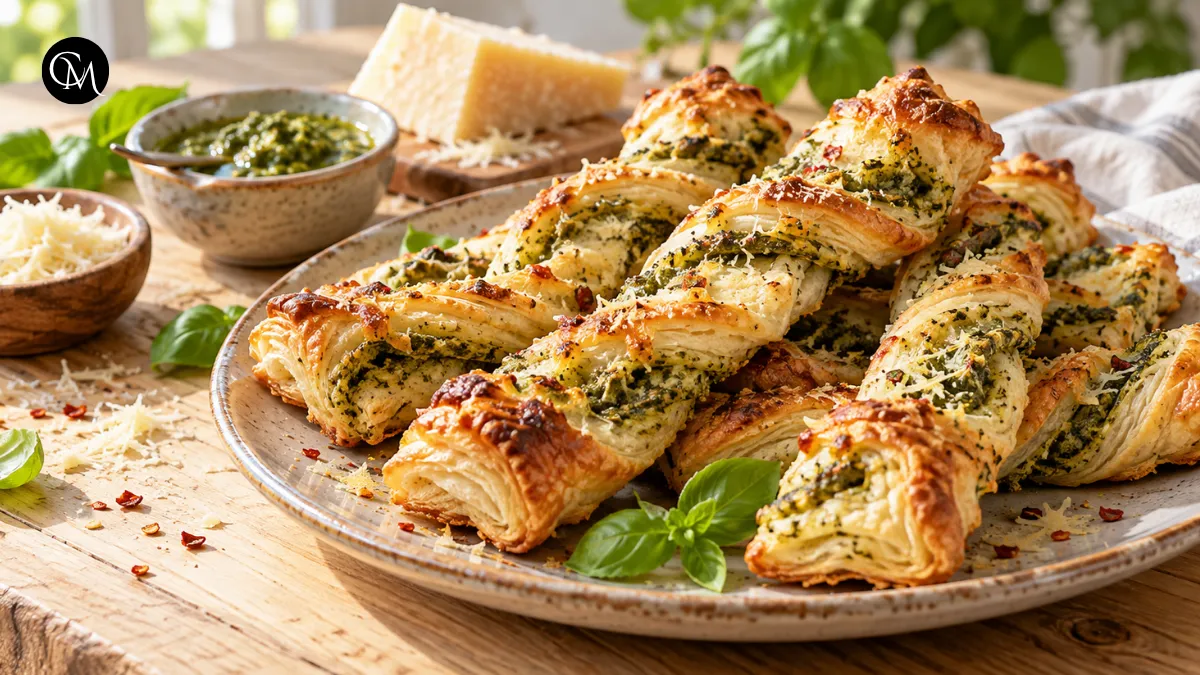
pastry twists with Pesto Parmesan cheese
Can a snack made with just a handful of ingredients deliver the crisp texture, rich flavor, and party-worthy presentation of a much more complicated appetizer? With puff pastry, the answer is surprisingly often yes. A standard sheet of puff pastry contains dozens of delicate laminated layers, and when those layers hit a hot oven, trapped steam helps them separate into the crisp, airy texture that makes homemade pastry snacks so satisfying.
These pastry twists are one of my favorite examples of getting maximum flavor from minimal effort. Buttery puff pastry is layered with fragrant basil pesto and nutty Parmesan cheese, then twisted and baked until deeply golden around the edges.
They work just as well for an afternoon snack as they do for a holiday appetizer, lunchbox addition, picnic bite, or last-minute party food. Better still, the recipe is flexible enough to accommodate different cheeses, spreads, and dietary preferences.
If you have ever ended up with soggy puff pastry or twists that unravel in the oven, the details below will help. Temperature, filling quantity, spacing, and handling all make a noticeable difference.
Table of Contents
Ingredients List
You only need a short list of ingredients to make approximately 12–16 pastry twists, depending on how wide you cut them.
- 1 sheet puff pastry, about 250–300 g, thawed but still cold
- 3 tablespoons basil pesto
- ½ cup finely grated Parmesan cheese
- 1 egg, beaten
- 1 teaspoon water
- ½ teaspoon garlic powder, optional
- ¼ teaspoon freshly ground black pepper
- 1 teaspoon sesame seeds or everything seasoning, optional
- Flour, only as needed for rolling
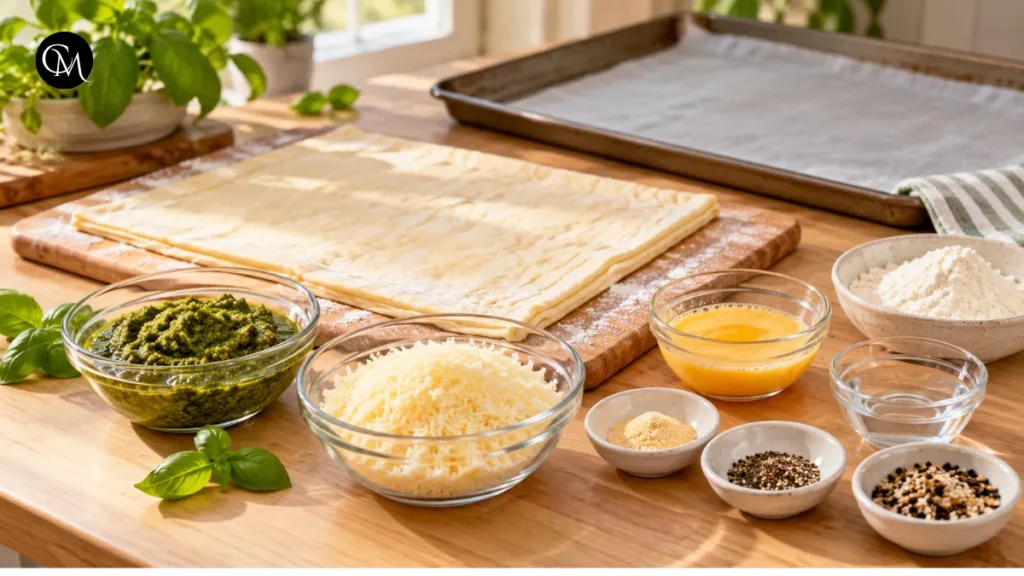
Cold puff pastry is important because the butter or fat between its layers needs to remain firm until baking. If the dough becomes greasy or very soft, return it to the refrigerator for 10–15 minutes before continuing.
For substitutions, swap Parmesan for Pecorino Romano if you enjoy a sharper, saltier flavor. A mild grated cheddar can also work, although the finished twists will taste less traditionally Italian.
You can replace basil pesto with sun-dried tomato pesto, spinach pesto, or a nut-free pesto. Avoid very watery sauces because excess moisture can prevent pastry twists from becoming crisp.
Timing
Preparation time: 15 minutes
Chilling time: 10 minutes, optional but recommended
Baking time: 15–18 minutes
Total time: About 30–40 minutes
Compared with many homemade savory pastries that require mixing dough, resting, shaping, and filling, this recipe is relatively quick because store-bought puff pastry handles the time-consuming laminated dough work for you.
Most of the preparation is simple assembly. Once the pastry twists are shaped, the oven does the rest.
Step-by-Step Instructions
Step 1 – Prepare the Ingredients
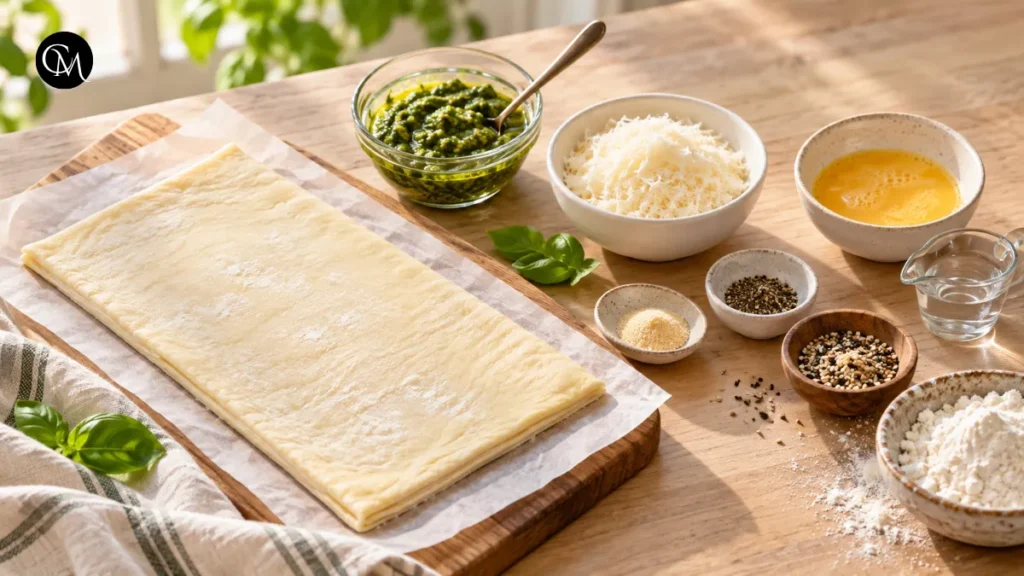
- Preheat the oven to 400°F or 200°C. Line a large baking tray with parchment paper.
- Take the puff pastry from the refrigerator only when you are ready to work with it. Lightly flour your work surface if necessary and unfold or roll the pastry into an even rectangle.
- Keeping the dough cold is more than a convenience. Puff pastry relies on distinct layers of dough and fat. When cold pastry enters a hot oven, the moisture turns to steam and pushes those layers apart.
- Pat very oily pesto lightly with a spoon if you notice excess oil sitting on top. Grate the Parmesan finely so it distributes evenly rather than falling out when you twist the dough.
- Good preparation makes shaping pastry twists faster, cleaner, and much less frustrating.
Step 2 – Build the Flavor Base
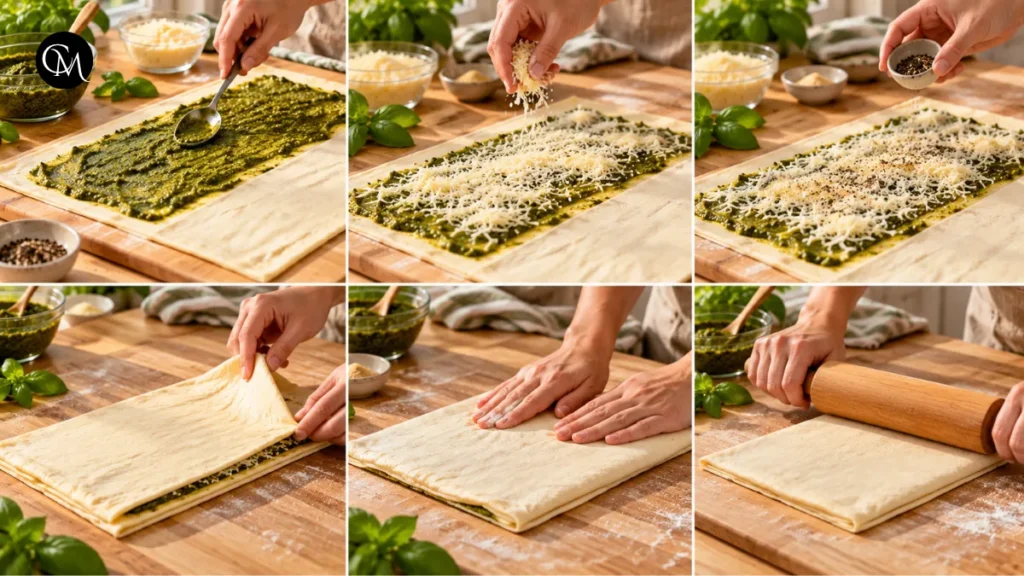
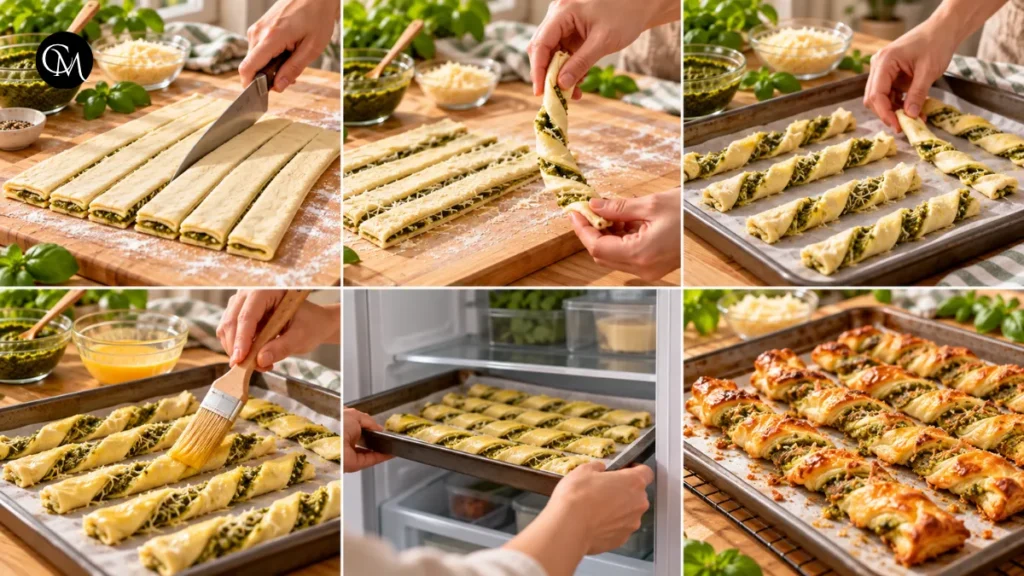
- Spread the pesto in a thin layer over half of the pastry sheet, leaving approximately ½ inch around the edges.
- Sprinkle the Parmesan evenly over the pesto. Add garlic powder and black pepper if using.
- The key here is restraint. Adding more pesto may sound like an easy way to create stronger flavor, but an overloaded filling often produces greasy, soft pastry. Puff pastry needs room for steam to move between its layers.
- Fold the uncovered half of the pastry over the filled half, creating a sandwich of dough, pesto, and cheese. Press gently with your hands or roll once or twice with a rolling pin.
- This thin filling layer gives pastry twists concentrated flavor without overwhelming their crisp structure.
Step 3 – Cook the Main Ingredient
- Cut the folded pastry into strips approximately ¾ to 1 inch wide.
- Hold each strip at both ends and twist it three to four times. Place it on the prepared baking tray, leaving approximately 1½ inches between pieces.
- If the dough feels soft while you shape it, place the tray in the refrigerator for 10 minutes before baking. This quick chill is one of the easiest ways to improve definition and flakiness.
- Whisk the egg with one teaspoon of water. Brush a light layer over the exposed pastry.
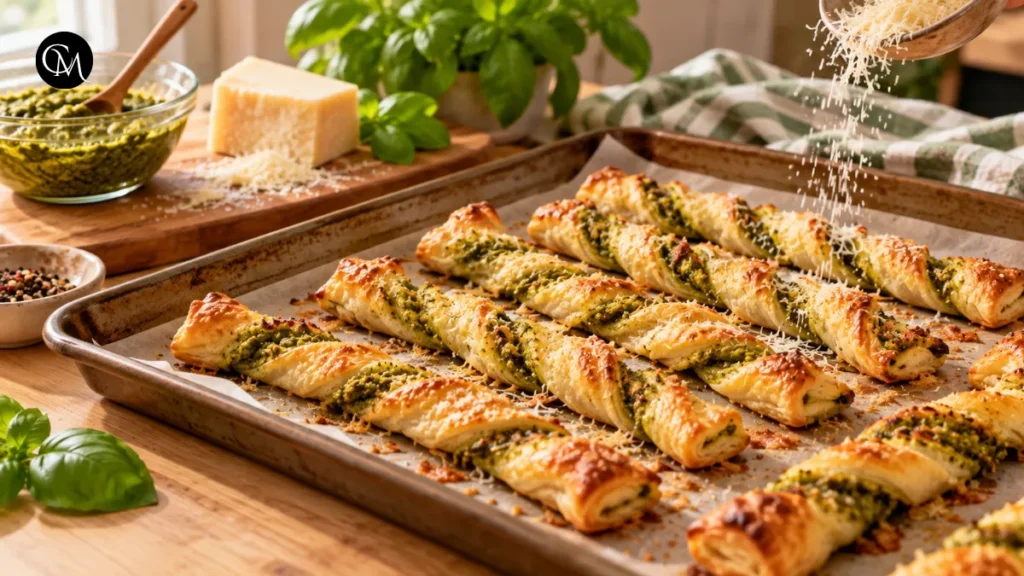
- Bake the pastry twists for 15–18 minutes, or until puffed and golden brown. Look at the sides as well as the tops: pale sides usually mean the interior layers need another minute or two.
Step 4 – Combine Everything
- As the puff pastry expands, the Parmesan melts into the pesto and creates savory, crisp pockets between the layers.
- If you want extra cheese, sprinkle a small amount of Parmesan over the twists during the final three minutes of baking rather than piling it on before baking. This gives you fresh toasted-cheese flavor without weighing down the dough.
- For the best balance, remember that pesto already contains strong ingredients such as basil, garlic, cheese, olive oil, and often nuts. Parmesan adds saltiness and umami, so additional salt is usually unnecessary.
- Well-made pastry twists should taste rich without feeling excessively oily or salty.
Step 5 – Finish & Adjust Seasoning
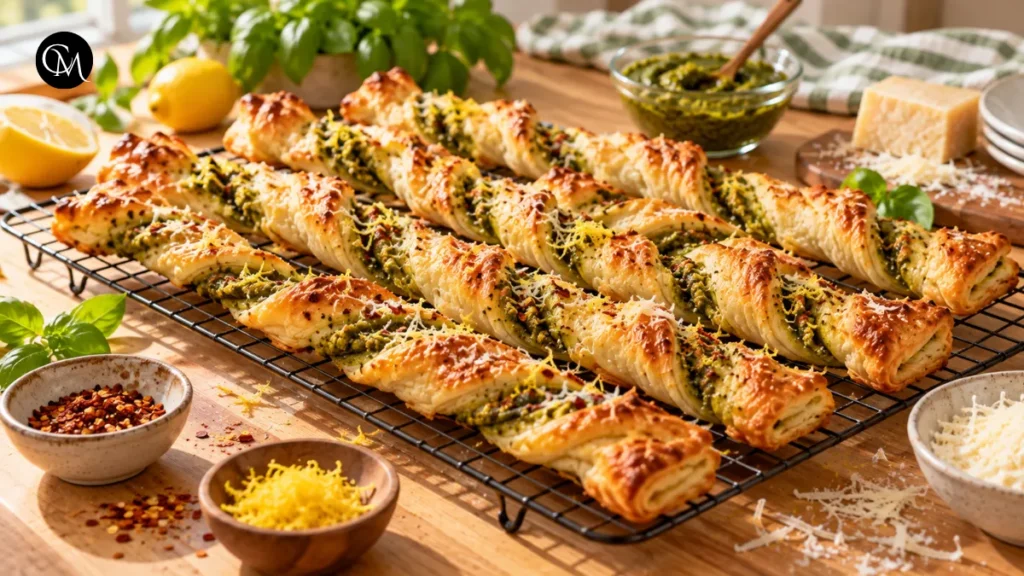
- Transfer the baked twists to a cooling rack and leave them for five minutes.
- Cooling them directly on the hot baking tray for too long can trap steam underneath, softening their crisp bottoms.
- Taste one while it is still warm. For brightness, add a tiny amount of finely grated lemon zest. For gentle heat, sprinkle with crushed red pepper flakes. Freshly grated Parmesan also works well as a final garnish.
- These small finishing touches can make pastry twists taste more polished without adding complicated ingredients.
Nutritional Information
Approximate nutrition per twist, based on 14 servings:
- Calories: 125–145
- Protein: 3–4 g
- Carbohydrates: 10–12 g
- Fat: 8–10 g
- Saturated fat: 3–4 g
- Sodium: 180–230 mg
- Fiber: About 1 g
Values vary depending on the puff pastry, pesto, cheese, and serving size you use.
These pastry twists are intended as a savory snack or appetizer rather than a complete meal. Pairing them with vegetables, fruit, soup, or a protein-rich dip can create a more balanced plate.
Healthier Alternatives
- Small ingredient adjustments can make this recipe fit different eating preferences while keeping its satisfying texture.
- For a lower-sugar option, there is little to change because classic pesto and Parmesan puff pastry contains minimal added sugar. Still, check packaged pesto and pastry labels if reducing added sugar is important to you.
- For a whole-grain version, use whole-wheat puff pastry if available. Expect a slightly denser, nuttier result. Another option is using whole-grain flatbread dough, although the texture will be breadier rather than flaky.
- For dairy-free pastry twists, choose dairy-free puff pastry, vegan pesto, and a plant-based Parmesan alternative. Nutritional yeast can also provide savory flavor, although it will not melt exactly like cheese.
- For gluten-free versions, use certified gluten-free puff pastry and verify that your pesto and seasonings are gluten-free.
- For children, reduce garlic and red pepper and cut the dough into shorter strips. For older adults who prefer softer foods, bake until golden but not deeply crisp and serve with a smooth dip. For calorie-conscious portions, make thinner, shorter twists and serve them beside fresh vegetables.
5 Best Snack Ideas and Serving Suggestions
One reason I return to pastry twists so often is that the same batch can work in several different situations.
- Serve them with warm tomato soup. The buttery layers and pesto flavor make a delicious alternative to grilled cheese or crackers.
- Add them to a party board with cherry tomatoes, olives, cucumber slices, mozzarella, roasted peppers, and a yogurt-based dip.
- Pack cooled pastry twists into lunchboxes with grapes, sliced vegetables, and a boiled egg for a convenient savory component.
- Serve them alongside scrambled eggs or a vegetable frittata for brunch. Their crisp texture works especially well beside softer egg dishes.
- Pair them with marinara sauce for dipping during movie nights or casual gatherings.
For entertaining, I like arranging the twists upright in a wide glass or small serving jar lined with parchment. It makes an inexpensive homemade appetizer look more intentional and keeps guests from handling multiple pieces at once.
You could also explore related recipes such as puff pastry pinwheels, baked cheese straws, pesto flatbread, or savory palmiers if you enjoy this style of quick appetizer.
Common Mistakes to Avoid
The biggest problems with pastry twists usually come from temperature, moisture, or overfilling.
- Using warm pastry. Soft dough stretches rather than twisting cleanly and can bake unevenly. Chill it briefly whenever it becomes sticky.
- Adding too much pesto. A thick layer releases more oil and moisture, which can produce soggy centers.
- Cutting uneven strips. Different widths bake at different speeds. Aim for strips of roughly equal size.
- Crowding the baking tray. Puff pastry expands as it cooks. Leave approximately 1½ inches between pieces for better airflow and browning.
- Underbaking. Golden tops can appear before the inner layers are fully crisp. Check the sides and bottoms before removing the tray.
- Serving immediately from the oven. Giving pastry twists a few minutes on a cooling rack allows escaping steam to preserve their crisp texture.
In my kitchen, the difference between an average batch and an excellent one usually comes down to keeping the dough cold and resisting the temptation to overfill it.
Storing Tips for the Recipe
- Store completely cooled pastry twists in an airtight container at room temperature for up to one day. For longer storage, refrigerate them for up to three days, although refrigeration can soften puff pastry.
- To restore crispness, place them in a 350°F or 175°C oven for about five minutes. An air fryer also works well for small batches. Microwaving is convenient but tends to make puff pastry chewy instead of crisp.
- You can prepare the twists several hours ahead, place them on a parchment-lined tray, cover loosely, and refrigerate until baking time.
- For longer make-ahead storage, freeze shaped, unbaked twists on a tray until firm, then transfer them to a freezer-safe container. Bake from frozen, adding a few extra minutes as needed.
- This recipe became one of my regular meals because it turns ingredients I often already have puff pastry, pesto, and cheese—into something that feels special without requiring a long preparation session.
Conclusion
These pesto Parmesan pastry twists prove that a useful homemade snack does not need a complicated ingredient list. With cold puff pastry, a thin layer of pesto, finely grated Parmesan, and a properly heated oven, you can create crisp, savory twists that work for parties, lunchboxes, brunches, soups, and casual snacking.
The recipe is also easy to personalize. Change the pesto, adjust the cheese, add gentle spice, or use dietary substitutions that suit your household.
Try these pastry twists the next time you need a quick appetizer and experiment with your favorite flavor combination. If you make them, leave a comment or review sharing what you changed or served alongside them. Subscribe for more practical recipes, baking tips, and easy snack ideas you can confidently make at home.
FAQs
Can I make pastry twists ahead of time?
Yes. Shape them several hours ahead, refrigerate them on a covered baking tray, then brush with egg wash and bake shortly before serving for the best texture.
Can I use homemade pesto?
Absolutely. Homemade pesto gives pastry twists a fresher basil flavor. Keep it fairly thick and avoid excessive olive oil so the puff pastry stays crisp rather than becoming greasy.
Why did my puff pastry twists turn soggy?
Too much pesto, warm dough, overcrowding, or underbaking can cause sogginess. Use a thin filling layer, keep the pastry cold, space pieces apart, and bake until well browned.
Can I freeze pastry twists?
Yes. Freeze shaped, unbaked twists until firm, then store them in a freezer-safe container. Bake directly from frozen and allow a few additional minutes for full browning.
What cheese works instead of Parmesan?
Pecorino Romano provides a sharper flavor, while mature cheddar creates a richer result. Choose a firm, finely grated cheese so it melts evenly without releasing too much moisture.
What dipping sauce goes well with them?
Marinara, whipped feta, garlic yogurt, hummus, or a mild roasted-red-pepper dip all pair nicely with pesto and Parmesan while adding contrasting flavor and texture.
How do I keep pastry twists crispy after baking?
Cool them on a wire rack so steam can escape. If they soften later, reheat them briefly in a moderate oven or air fryer rather than microwaving them.
Tried it before ?
There are no reviews yet. Be the first one to write one.